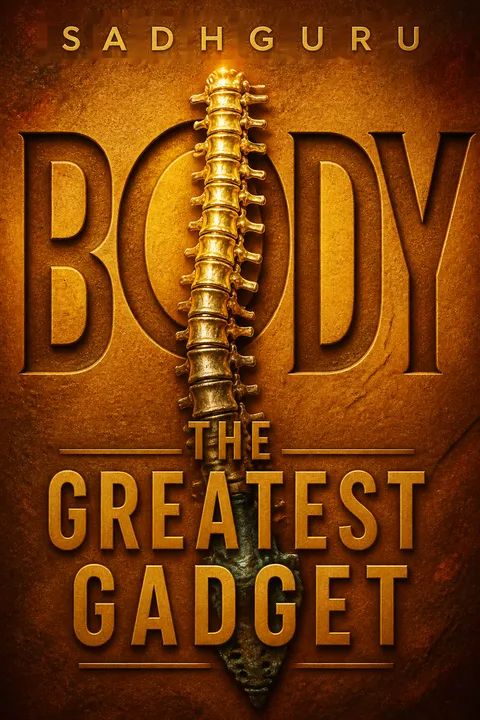


Key Takeaways
Treat the mind as an instrument, not as your identity
A tool, not a self. The book treats the mind as an activity built from accumulated impressions, not a fixed inner object. Its intelligence can organize experience, but identification with thoughts, roles, and beliefs can turn that activity into a source of distress. The aim is not to suppress thought, but to gain enough distance to use it deliberately.
Labels distort perception. A comic tale shows a royal barber persuading a king that a crow carries messages from the dead. The king accepts the story so completely that he nearly sacrifices his clever court jester, Tenali Ramakrishna, who escapes by hiding beneath a funeral pyre. The story illustrates how readily a trusted identity or belief can override judgment.
The distinction between having a thought and being defined by it has a close counterpart in cognitive defusion, a technique used in acceptance-based therapy. A person can notice a frightening thought without treating it as a fact or command. That shift creates room for choice without requiring the thought to disappear. The book's emphasis on identity is especially useful when beliefs are socially reinforced. Still, some identities, such as family or community ties, can provide belonging and practical support. The useful target is rigid identification, not connection itself.
Stay fully involved in life without letting labels narrow your concern
Involvement is not entanglement. The book rejects the idea that freedom requires withdrawing from people or experience. It argues that involvement can deepen life, while identification makes involvement selective: a person cares intensely for what is “mine” and resists what is outside that boundary. Its proposed shift is to participate wholeheartedly without letting labels decide what deserves attention.
Willingness changes experience. The same event can feel welcome or unbearable depending on whether a person meets it willingly, the book argues. It uses the image of a circus troupe whose performers must commit fully to their movements for the act to work. Selective engagement, in this view, diminishes aliveness; openness to ordinary surroundings can make even small moments vivid.
This argument usefully separates emotional openness from dependence. In psychology, secure attachment and healthy boundaries can coexist: people can care deeply while retaining a sense of self and the ability to say no. That distinction prevents “be involved with everything” from becoming a demand for limitless availability. The book is strongest when it challenges numb withdrawal as a route to peace. Its broad claim that suffering follows from unwillingness needs more care, however, since grief, illness, and injustice are not simply chosen attitudes.
Practice distance from thought instead of demanding a silent mind
Make space through practice. The book presents meditation as a way to experience the body and mind as processes, rather than as the whole self. Its named practice, Isha Kriya, is a short seated exercise intended to cultivate that distance. It asks practitioners to sit comfortably upright, breathe gently, and use two inward phrases: one with each inhalation, the other with each exhalation.
Follow a simple sequence. The practice continues with seven sustained “A” sounds, then several quiet minutes of sitting. The full session takes about 12 to 18 minutes. The book recommends doing it twice daily for 48 days, or once daily for 90 days, and advises not to interrupt the session to chase thoughts or bodily sensations. These are the book's instructions, not a guarantee of specific results.
The practical strength of this exercise is that it does not require winning an argument with every passing thought. Mindfulness-based therapies similarly train attention to notice mental events without immediately reacting to them. Regular practice can help some people relate differently to stress, although results vary and meditation is not a substitute for mental health care. The book's language of separating “you” from mind and body is a spiritual interpretation. Readers can try the attentional exercise without needing to accept that metaphysical claim.
Use logic for practical problems, not as the only test of reality
Thought has limits. The book distinguishes mental alertness, which helps with practical tasks, from awareness, which it describes as direct aliveness and perception. It argues that thought mostly rearranges information already gathered through the senses, while lived experience is not reducible to that process. Its provocation is that people can spend much of life thinking about experience instead of experiencing it.
Keep logic in its lane. Logic is presented as useful for handling material questions, but too limited to settle every question of value or meaning. The book points out that perception depends on comparison: “large” and “small,” for example, change with the observer's scale. This does not make reasoning useless. It asks readers to notice when a tool for analysis is being treated as a complete account of life.
The distinction between measurement and meaning is valuable, but the contrast between logic and experience can be overstated. Scientific reasoning is not merely a pile of facts; it also tests interpretations against evidence, corrects bias, and distinguishes vivid impressions from reliable conclusions. At the same time, data alone cannot decide what a person ought to value. A mature approach uses analysis to check claims and first-person experience to understand what matters, rather than asking either one to do both jobs.
Train the body as a perceptual instrument, not merely a possession
More than flesh and bone. The book calls the body a “gadget” because it sees it as a complex instrument with capacities beyond ordinary survival. It organizes the body through five yogic layers, or koshas: the food-based physical body, the mental body, the energy body, a subtler transitional layer, and a nonphysical dimension associated with bliss. These are parts of a yogic map, not categories established by modern anatomy.
Attention changes the relationship. The author says that treating the body as an object of pride or shame can obscure the possibility of working with it deliberately. In the book's account, yoga aligns bodily, mental, and energetic processes so that deeper experience becomes available. It compares underused human capacities to a phone whose owner relies on only a small fraction of its functions, while presenting inner development as the main opportunity.
The layered model gives readers a memorable way to consider how physical sensation, mood, attention, and energy interact. Contemporary research also studies embodied cognition, the ways bodily states can shape perception and decision-making. That makes the broad invitation to attend to the body intelligible without validating every layer as a literal structure. The model's value is partly interpretive: it organizes experience and suggests practices. It becomes less reliable when claims about subtle bodies are presented as biological facts rather than as yogic concepts.
Let posture and breath shape attention, rather than treating yoga as exercise
Movement with purpose. The book presents yogasanas, or yoga postures, as ways to arrange the body and influence one's state, not simply as fitness exercises. It describes Hata yoga as balancing qualities associated with sun and moon, and says the body can be trained to sit with ease and steadiness. A posture, in this view, is a practical condition for attention, not a display of flexibility.
Breath links body and mood. The book observes that breathing patterns change with emotion and proposes that consciously changing the breath can influence how a person feels and thinks. It also describes Ida and Pingala as paired energy channels and Sushumna as a central channel in its yogic physiology. These are specialized concepts in the book's framework, not structures recognized in standard anatomy.
The breath claim has a useful, testable core: slow, deliberate breathing can affect arousal and help some people regulate stress. Posture also communicates and can influence comfort, though claims that a specific pose reliably elevates consciousness are harder to establish. This distinction helps preserve the practice without overstating its mechanism. Yoga can support mobility, balance, and attention, but its benefits depend on instruction and individual health. Treating it as exercise alone may miss its contemplative dimension; treating every energetic explanation as settled science goes too far in the other direction.
Treat human life as unfinished, with freedom that must be used consciously
A possibility, not a finished state. The book argues that humans are not fixed in character: the same person can act generously in one moment and cruelly in another. It frames this flexibility as freedom, but also as a source of confusion and self-created suffering. Where an animal's life is portrayed as largely instinct-guided, a human being must choose what to become.
A spiritual origin story. The book recounts the tradition of Adiyogi, the first yogi, sitting in stillness until seven persistent seekers had prepared themselves to learn. After many years of practice, he is said to have taught them yoga, a method for consciously transforming one's experience. The narrative's point is not that everyone must accept its history, but that development can be approached as a deliberate practice.
The idea of a person as unfinished connects with developmental psychology, which studies how capacities and habits change across a lifetime. The emphasis on agency can be motivating: identity need not be a life sentence. Yet freedom is never exercised in a vacuum. Poverty, trauma, disability, and mental illness can constrain choices, and they should not be recast as failures of consciousness. The most humane reading is that people have some capacity to shape responses, while circumstances determine how much room they have to do so.
Investigate illness carefully, but never mistake spiritual practice for medical care
The book's health model. It separates infectious illness, which it says comes from outside the body, from chronic conditions, which it often connects to mental patterns or an imbalance in the energy body. It describes yogic practices as ways to support health and recounts people reporting improvement after changing attitudes or practicing yoga. These are the author's claims and anecdotes, not proof that a disease is self-created or that a practice cures it.
Do not confuse relief with a cure. The book criticizes healers who remove symptoms without addressing what it considers their deeper cause. It also warns that seeking powers or acting as a healer can distract from spiritual practice. Whatever the spiritual argument, symptoms need qualified medical assessment. Meditation, movement, or other practices may complement care when safe, but should not replace diagnosis, medication, or treatment recommended by a clinician.
This section needs a clear evidence boundary. Stress and emotion can influence pain, sleep, and some disease processes, but that does not mean a patient caused an illness or can resolve it through attitude alone. The mind-body connection is a reason to consider integrated care, not to blame patients or dismiss pathology. The book's distinction between symptom relief and underlying causes can prompt useful questions. Its claims about energy imbalances and rapid cures, however, should not guide medical decisions without reliable clinical evidence.
Use the five elements as a yogic map, not a laboratory explanation
A traditional model. The book describes creation through five elements: earth, water, fire, air, and space. It uses this “five-cornered” picture to connect the body with the wider world and to suggest that different patterns of the same elements yield different forms of life. Bhuta shuddhi, meaning cleansing the elements, is presented as a foundational yogic process for bringing them into balance.
Remember material dependence. The text links this model to practices such as contact with the earth, attention to water, and reverence for space. Its purpose is to make a person more conscious of the conditions that sustain life. Claims in the book about water carrying emotional or spiritual qualities should be understood as part of its worldview, not as established scientific findings.
The elements can work as a symbolic map of dependence: bodies need air, water, food from the earth, warmth, and space to live. That framing resonates with ecological thinking, which treats human health as connected to environmental conditions rather than sealed inside an individual. But the classical elements are not the chemical elements of modern science, and symbolism cannot establish a physical mechanism. Keeping those meanings distinct lets the model invite reflection without lending unsupported claims the authority of laboratory science.
Test food by its effects on your body, not by dietary slogans
Observe, then adjust. The book advises readers to notice how food affects their energy and alertness instead of following dietary rules based only on ideology. It favors vegetarian foods and recommends including fresh, uncooked foods, suggesting 30 to 40 percent as a useful share. It also advises eating with gratitude for the life that food sustains. These recommendations reflect the author's approach, not a universal nutrition prescription.
Use the body as one source. The book contrasts feeling agile after eating with feeling sluggish and needing stimulants to stay alert. That observation can help people notice patterns in their own routines. But the book's broader advice about meal size, chewing, and limiting cooked or stored foods should be adapted cautiously. Nutritional needs vary with age, health, access, culture, and activity, and bodily sensations alone may not reveal deficiencies or medical risks.
Personal observation can make nutrition less ideological: a brief food log, for example, may help identify how meal timing or particular foods affect energy. Yet intuitive feedback is imperfect. Hunger, fullness, and fatigue can be shaped by stress, illness, medication, and expectation, while dietary requirements differ substantially. The book's preference for fresh plant foods overlaps with many healthful eating patterns, but a fixed raw-food percentage is not necessary for everyone. Practical experimentation works best alongside reliable nutrition guidance, especially for people with medical conditions.
Analysis
This book is best read as a spiritual guide assembled from conversations, stories, and practical instructions, not as a single scientific theory. Its recurring argument is that suffering grows when people mistake accumulated thoughts, social identities, and bodily processes for the whole of themselves. Yoga, in this account, is a set of methods for creating distance from those processes while becoming more, not less, involved in life. That combination is the book's distinctive tension: it recommends disidentification without withdrawal, and discipline without treating the body as an enemy.
The strongest practical thread is attentional. The reader is invited to notice thought, breath, posture, food, and reactivity, then test whether those observations change experience. The Isha Kriya instructions give that invitation a concrete form. Stories such as Tenali Ramakrishna's escape from the king's delusion make the risks of unquestioned belief memorable, while the Adiyogi narrative supplies a mythic account of deliberate human development.
The book also moves freely between spiritual metaphor and claims about physiology, disease, energy, and perception. Those registers should not be collapsed. The five-layer body and elemental model can function as maps for reflection, but they are not equivalent to anatomical or chemical descriptions. Anecdotes about symptom relief do not establish cures, and claims about water memory or subtle energy require evidence beyond the text. Medical care should remain grounded in qualified clinical evaluation.
A fair reading therefore neither accepts every metaphysical claim as fact nor dismisses the book's practical insights because some claims are unsupported. Its durable contribution is a question: can a person experience thoughts and bodily states as processes to work with, rather than as an identity that dictates every response? For readers willing to try its practices while keeping a clear boundary between spiritual interpretation and empirical evidence, the book offers a coherent discipline of attention, participation, and self-observation.
Review Summary
Body the Greatest Gadget receives high praise for its profound insights into yoga, spirituality, and the human body's potential. Readers appreciate Sadhguru's witty and practical approach, explaining complex concepts with clarity. The book offers a new perspective on the body's connection to the cosmos and ancient wisdom. Many find it eye-opening, addressing topics like the five elements, memory of water, and Vedic lifestyle. While some criticize repetition or lack of practical guidance, most reviewers consider it a must-read for spiritual seekers and those interested in holistic well-being.
People Also Read








Glossary
Isha Kriya
guided seated meditationA short meditation practice described in the book. It combines gentle breathing with inward phrases distinguishing the practitioner from body and mind, followed by seven sustained “A” sounds and a period of quiet sitting. The book recommends a regular daily schedule. Its promised spiritual or health effects are claims of the text, not guaranteed outcomes.
Kosha
layer of human experienceA yogic term for a layer or sheath through which human existence is described. The book outlines five: the food-based physical body, the mental body, the energy body, a subtler transitional body, and a nonphysical dimension associated with bliss. This is a spiritual framework for interpreting experience, not a set of anatomical structures established by modern medicine.
Hata yoga
yoga of bodily balanceThe book's term for a yogic discipline that uses postures and related methods to balance qualities symbolized as sun and moon. It distinguishes this practice from exercise or body shaping alone, presenting postures as ways to steady the body and influence attention and experience. The text emphasizes instruction, awareness, and ease in a posture.
Bhuta shuddhi
cleansing the five elementsA yogic process whose name means cleansing the elements. In the book, it refers to practices intended to bring the five elements of earth, water, fire, air, and space into balance within a person. The author presents it as a foundational method from which other yogic practices develop. Its elemental language belongs to a traditional spiritual model.
Sushumna
central energy channelA central channel in the book's yogic account of the energy body. It is described alongside Ida and Pingala, paired channels associated with contrasting qualities. The text presents Sushumna as a route toward inner balance and a less reactive state. It is a concept in yogic physiology, not a physical passage identified by standard anatomy.
Vasana
underlying personal tendencyA term the book uses for tendencies shaped by accumulated impressions, or karma. It links these tendencies to recurring patterns in how a person behaves and responds to circumstances. The text says awareness can interrupt such patterns rather than leaving a person to follow them automatically. Its use here is spiritual and interpretive, rather than a clinical diagnosis.
Koorma Nadi
subtle body-breath connectionA yogic term used in the book for a subtle connection between the living person and the physical body, described through the breath. The author distinguishes it from the sensation of air moving through the nose and lungs. This is a spiritual explanation of embodiment, not a structure or mechanism established by conventional physiology.
About the Author


Download PDF
Download EPUB
.epub digital book format is ideal for reading ebooks on phones, tablets, and e-readers.








