

Key Takeaways
A child's racial category can be a crime only because power says so.
The law reached home. At nine, Noah was thrown from a moving minibus with his mother and baby brother as they escaped a driver threatening them. His mother wrapped herself around the baby as they landed and ran. The scene captures the danger surrounding an ordinary family life in apartheid South Africa, where rules and violence could follow people into the street.
Birth made the rule visible. Noah’s black Xhosa mother and Swiss-German father broke laws against interracial relationships. To keep her son from being identified as mixed, his mother invented a birthplace in a black homeland. His birth certificate excluded his father, and public outings with either parent risked questions from police. “Born a crime” describes a legal system that treated a child’s existence as an offense.
What's striking is how bureaucracy turns an invented racial boundary into a practical force: a birth certificate determines who can travel together, where a child can go, and which family ties must stay hidden. That is a useful reminder that categories are not merely labels when institutions attach consequences to them. At the same time, the memoir does not suggest that mixed identity automatically dissolves racial hierarchies. Noah's family still has to navigate the power those classifications carry.
Expose how power makes neighbors compete for scraps of belonging.
Division was deliberate. Apartheid classified people by race and tribe, assigned unequal rights, and separated communities. Black South Africans were a large majority, but the system reinforced divisions among groups with different languages and histories. Colored people occupied an especially precarious position: denied white status, yet sometimes given privileges withheld from black people. Such distinctions encouraged people to blame one another for exclusion rather than confront the system that imposed it.
The conflict outlived the law. After apartheid began to fall, Noah witnessed violence between the ANC and Inkatha Freedom Party. He describes those clashes through tribal divisions, especially between Xhosa and Zulu communities, while acknowledging a complicated political history. His larger point is that the end of formal segregation did not instantly undo the suspicions and rivalries it had cultivated.
The memoir makes a sharp distinction between prejudice as personal dislike and division as political design. When access to safety or status is rationed, groups can be persuaded to police one another on behalf of the people controlling the ration. This resembles a broader insight from social psychology: group boundaries can become more powerful when people believe scarce rewards depend on them. Still, solidarity cannot be summoned by simply exposing the trick. Material inequalities and old grievances require repair, not just recognition.
Use language to cross boundaries others built.
Speech changed the encounter. Noah grew up hearing and learning several of South Africa’s languages. His mother used Afrikaans to answer a shopkeeper who assumed black customers might steal. Noah used Zulu in a more dangerous moment: he overheard men planning to rob him, then addressed them in their own language. Their suspicion shifted when they realized he could speak as they did.
Language carries belonging. Apartheid-era schools often taught children only in their home languages, deepening divisions among black communities. Noah learned that speaking someone’s language could interrupt the assumption that a person with a different appearance must be a stranger. He describes adapting his speech to the people around him as becoming a chameleon, a social strategy for moving among groups without changing his skin.
Linguistic accommodation can create trust because it signals attention to another person’s world, not just a desire to be understood. Sociolinguists study this kind of convergence: speakers adjust their language or accent to reduce social distance. Noah’s stories show the practical stakes of that skill, from avoiding suspicion to finding conversation across racial lines. But fluency is not equality. A person can speak the local language perfectly and still face discrimination, so communication opens a door without guaranteeing fair treatment.
Give children a map of possibility larger than their neighborhood.
His mother widened the map. Noah’s mother had been rejected by her family as a child and sent to live in the Transkei, where she faced hunger and exhausting farm work. English and a mission-school education helped her find factory work, then secretarial training and a job in an office, despite laws that restricted black women’s options.
Exposure made freedom imaginable. She filled her son’s life with books, taught him English, and took him to places black people were not expected to go, including ice rinks and wealthy white neighborhoods. She chose a name for him with no prescribed family meaning, hoping he could make his own path. Her point was not that access was equal, but that a child should know the ghetto was not the whole world.
This is an account of expanding a child’s possible selves: the futures a person can imagine for someone like them. Education and exposure matter partly because they enlarge that imagined range. The mother’s example also challenges the idea that aspiration alone solves inequality; she needed English, schooling, a job, and access to books to turn possibility into practical options. Her determination is powerful, but it should not become an excuse for societies to leave structural barriers for individual families to overcome alone.
Let lived belonging challenge the labels other people assign you.
The label never settled it. Noah looked colored to many people, but he was raised by a black mother, surrounded by black relatives, and spoke several African languages. In a colored neighborhood, some residents mocked him for identifying with black culture; others resented his English and his connection to white life. He was repeatedly treated as an outsider in places where he seemed, at first glance, to belong.
A schoolyard clarified the choice. At a new school, Noah initially entered the top classes, which were mostly white. At recess, he found that black students were separated into different classes. He asked to move into their group, even after a counselor warned that it could limit his future. The decision did not erase his mixed background, but it helped him name where he felt accepted.
The episode shows that identity is partly self-understanding and partly a social negotiation. Labels can open doors or close them, but daily relationships also teach people where they feel recognized. The school’s class placement reveals how apparently neutral measures of academic ability can reproduce racial divisions. Noah’s choice is an assertion of belonging, not proof that identity is freely chosen without constraint. People can carry multiple affiliations, and no single decision has to settle every part of who they are.
Talent needs tools, access, and a route beyond mere survival.
A tool unlocked a market. As a teenager, Noah was already selling food to classmates and had a knack for connecting people. His friend Andrew showed him how to upgrade a computer and gave him a CD writer, an expensive piece of equipment at the time. Noah used it to copy music, make mixes, and build a network of sellers. By matric, the business brought in about 500 rand a week, giving him choices he had not had before.
Access multiplied existing ability. Andrew supplied equipment and practical knowledge, not a guarantee of success. Noah still had to learn, work, and find customers. The contrast mattered: apartheid had denied many black students the education and technology available to white families. Talent could be present, but without resources it had far fewer ways to become useful.
The story fits the capability approach in economics, which distinguishes having talent from having the real means to use it. A computer, a mentor, and a market can convert skill into agency. That is more precise than either blaming poverty on personal failure or assuming resources automatically produce success. Andrew’s help mattered because Noah could act on it. The wider lesson is that opportunity depends on both individual initiative and an environment that supplies usable tools.
Measure work by the choices it opens, not the hours it consumes.
Hustling filled every hour. After school, Noah and his friends sold CDs, lent small sums, and traded goods in Alexandra, a densely populated township. Their deals required constant movement and attention, yet often produced only enough money for the next day. The work felt busy and inventive, but Noah was no closer to affording university. A police raid later destroyed his computer and music collection, wiping out much of the business.
A face changed the moral math. The group sometimes resold stolen goods, telling itself that white owners had insurance. Noah began to question that reasoning when a stolen camera contained family photographs. Its contents made the unseen owners feel specific. He could not bring himself to sell it. The episode exposed how easily survival and rationalization can blur the people harmed by a transaction.
The distinction between activity and progress is useful well beyond informal economies. Work can demand ingenuity while leaving a person with little security or upward mobility. Noah also resists a simple moral split between respectable people and criminals: in the township, illegal exchange sits inside a landscape of unemployment and unmet needs. That context explains the appeal of hustling but does not make its harms disappear. The camera matters because moral judgment becomes harder to evade once the affected person is no longer abstract.
Love someone without mistaking closeness for ownership.
Fufi had another life. Noah loved his dog Fufi and believed she was his alone. One day he followed her over a wall to another home, where a child also claimed her as his dog. Noah learned that Fufi had been visiting the other family regularly. Because she was deaf, she did not respond when either boy called her. Noah felt betrayed, but Fufi had not been deceiving him; she had simply formed another connection.
Affection is not possession. Noah’s mother negotiated to bring the dog home, but the encounter changed how he understood love. Caring for someone does not mean controlling every part of that person’s life. The story is funny and small beside the memoir’s political history, yet it gives an intimate version of the same question: how can people remain connected without claiming ownership over one another?
The story gives emotional shape to a principle familiar in attachment theory: security is not the same as control. Relationships are stronger when affection leaves room for separate needs and experiences. The analogy has limits, since a child’s bond with a pet is not equivalent to adult intimacy, but that is part of its usefulness. A low-stakes heartbreak lets Noah encounter jealousy and autonomy before the emotional costs are larger. Love can be real without making the loved one a possession.
Say what matters before silence hardens into regret.
Waiting cost him a chance. Noah spent years close to Zaheera, a classmate he secretly loved. He planned to ask her to a school dance years in the future, convinced that patience would eventually reveal his feelings. Before he acted, her family moved to America. A friend then told him that Zaheera had also liked him. What hurt was not a clear rejection, but the unanswered possibility created by his silence.
Time cannot be interviewed back. As an adult, Noah searched for his father after years apart. He first tried to recover facts by asking questions, but his father showed him that a relationship grows through shared time and ordinary attention. They resumed meals and quiet afternoons, and Noah found that his father had kept a scrapbook of his career. Some lost time could be bridged, but it could not be recreated.
Regret is a counterfactual emotion: it compares what happened with an imagined alternative. That comparison can clarify priorities, but it can also become a trap if every missed opportunity is treated as a life-defining failure. Noah’s stories distinguish the cost of silence from the fantasy that one brave sentence controls the future. Speaking honestly improves the chance of connection; it cannot guarantee reciprocation. The practical lesson is to act on meaningful possibilities while remembering that outcomes remain partly outside anyone’s control.
Treat abuse as a trap shaped by fear, dependence, and failed institutions.
Leaving was not simple. Noah’s stepfather became violent, while his mother faced police who repeatedly treated domestic assault as a private family matter. She feared that leaving could expose her and her children to greater danger. From the outside, Noah once saw her decisions as choices she could simply reverse. He later understood that fear, social pressure, children, and the absence of reliable protection can make every option dangerous.
The system failed her repeatedly. After his mother was shot in the head by her former husband, she survived and recovered. He pleaded guilty to attempted murder but received probation and served no prison time. The family’s experience shows the gap between formal law and real protection. The memoir ends not by making violence meaningful, but by holding together a mother’s courage, her survival, and the institutions that failed to keep her safe.
The section challenges a common but harmful simplification: that leaving an abusive relationship is merely a matter of willpower. Research on coercive control describes how threats, financial pressures, isolation, and concern for children can narrow a survivor’s options. Institutions can either widen those options or make them more precarious. The mother’s resolve is remarkable, but resilience should not be romanticized as a substitute for protection. Her story asks readers to judge choices in context and to take institutional failure seriously.
Analysis
Born a Crime works as both a coming-of-age memoir and a ground-level account of how a state makes ideology tangible. The governing machinery of apartheid appears not only in laws and official categories, but in the details of ordinary movement: who can walk with whom, which school a child enters, where a family can live, and what a parent must pretend in public. Noah’s childhood scenes make those abstractions legible without turning the book into a policy manual.
Its structure is associative rather than strictly chronological. A story about church, a broken car, or a mischievous child can open onto state violence, language politics, or economic exclusion. Humor is not a decorative break from the painful material. It is a method of seeing contradictions clearly, including the absurdity of racial classification and the complicated tenderness of family life. The reader laughs, then notices what the joke has made visible.
The memoir’s strongest recurring figure is Patricia Noah. Her defiance creates room for her son to imagine more than the options apartheid presents. Yet the narrative does not make her willpower a universal solution. She can be resourceful and still encounter poverty, sexism, abuse, and police indifference. That tension prevents the story of individual courage from swallowing the structural critique.
As history, the account is necessarily selective. A memoir can show how a system feels inside one family, but it cannot establish that every community or political conflict followed the same pattern. Noah’s explanations are compressed for clarity, and readers should distinguish his personal interpretation from a complete national history. The book’s particular achievement is different: it shows how public systems enter private relationships, and how a person can inherit their categories while learning to question them. Its closing emphasis on survival does not erase institutional failure. It leaves the reader with both the intimacy of one family’s experience and the uncomfortable scale of the forces shaping it.
Review Summary
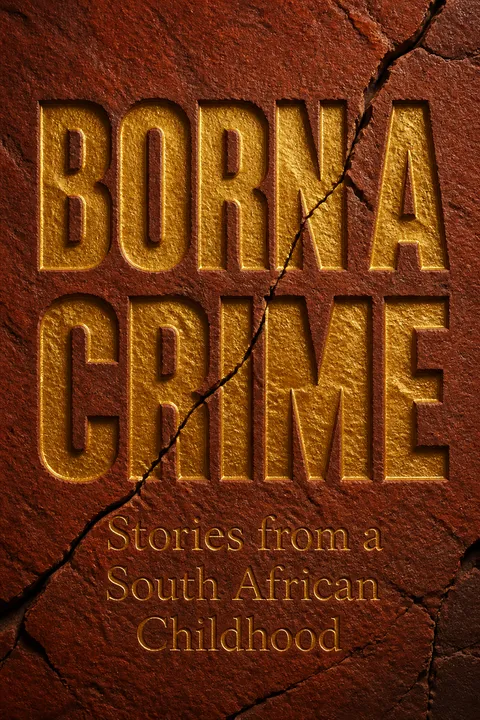
Born a Crime is a highly praised memoir by Trevor Noah about his childhood in South Africa during and after apartheid. Readers found it insightful, funny, and moving, particularly Noah's stories about his strong-willed mother. Many appreciated learning about South African history and culture through Noah's personal experiences. The audiobook narrated by Noah himself was especially recommended. While some found the non-linear structure and adolescent sections less engaging, most considered it a powerful, eye-opening read that skillfully blends humor and serious topics.
People Also Read





Glossary
Apartheid
state-enforced racial hierarchySouth Africa’s system of legally enforced racial segregation and white rule. It classified people by race, restricted where they could live and work, controlled movement, and assigned unequal rights. Noah describes it as a coordinated system of law and policing, not simply private prejudice.
Bantu schools
segregated, restricted schoolingSchools established under apartheid for black South African children. As Noah describes them, they offered limited education, emphasizing basic skills and practical labor while excluding much science, history, and civics. Their curriculum reflected the system’s assumption that black students should be prepared for subordinate work rather than equal participation.
Colored
apartheid racial classificationA racial category used in South Africa for people regarded as neither black nor white, including people with mixed ancestry. Under apartheid, classification shaped people’s rights and where they could live. Noah was mixed by parentage but was not officially registered as mixed, and he describes being treated as colored in some settings.
Pass laws
controls on black movementApartheid laws requiring black South Africans to carry identification and restricting where they could travel, work, and live. Noah’s mother risked arrest for being in areas or at times when her presence was not permitted. The rules helped control labor and keep black people under surveillance.
Black tax
supporting family across generationsA term Noah says his mother used for the financial burden of helping relatives recover from generations of deprivation. Instead of using earnings only to build an independent future, a person may need to provide for family members whose opportunities were restricted. The idea links personal finances to accumulated historical inequality.
Chameleon
social and linguistic adaptationNoah’s metaphor for adapting his speech and manner to different groups. Although his appearance did not change, speaking another person’s language could alter how that person perceived him and help him move between communities. The strategy helped him connect with people, but did not remove the racial barriers around him.
Spaza shops
informal neighborhood storesSmall, often home-based grocery businesses common in townships. They sold necessities in affordable quantities, such as a portion of bread or a few eggs, because customers often could not afford larger purchases. Noah presents them as part of a local economy created amid scarce formal services and limited incomes.
Shebeens
informal neighborhood barsUnlicensed bars commonly operated from homes in South African townships. They provided places to drink and socialize outside formal commercial venues. In Noah’s account, they are part of the improvised community economy that developed where official services and businesses were limited.
Cheese boys
township boys seen as privilegedTownship slang for young men considered relatively comfortable because their families could afford small luxuries, such as cheese. The label distinguished them from people seen as more authentically poor or streetwise. Noah uses the term to show how class and belonging were negotiated even within communities facing broad economic exclusion.
FAQ
What's Born a Crime about?
- Memoir of Trevor Noah: Born a Crime is a memoir by Trevor Noah, detailing his experiences growing up in South Africa during and after apartheid.
- Mixed-Race Identity: It explores his identity as the son of a black mother and a white father, which was illegal under apartheid laws.
- Themes of Race and Humor: The book delves into race relations and identity, using humor to navigate and convey the complexities of his upbringing.
Why should I read Born a Crime?
- Unique Perspective: Trevor Noah provides a rare insight into life under apartheid from the viewpoint of a mixed-race child.
- Engaging Storytelling: His use of humor makes the narrative both entertaining and thought-provoking, keeping readers engaged.
- Cultural Relevance: The themes resonate beyond South Africa, touching on universal issues of race, family, and resilience.
What are the key takeaways of Born a Crime?
- Impact of Apartheid: The book offers a detailed look at how apartheid laws shaped personal lives and societal dynamics.
- Resilience and Identity: Noah's journey emphasizes resilience and the acceptance of his mixed identity, encouraging readers to embrace their uniqueness.
- Humor as a Tool: It showcases how humor can be a coping mechanism in difficult situations, allowing for reflection and joy amidst adversity.
What are the best quotes from Born a Crime and what do they mean?
- "The genius of apartheid...": This quote highlights the manipulative tactics of apartheid, fostering division among racial groups to maintain control.
- "I was born a crime.": It encapsulates Noah's existence as a mixed-race child in a society that criminalized his very being.
- "If you don’t have a father...": This speaks to the importance of seeking role models and mentors, emphasizing that family can be chosen.
How does Trevor Noah describe his relationship with his mother in Born a Crime?
- Strong Bond: Noah shares a deep and loving relationship with his mother, who was pivotal in shaping his identity.
- Lessons in Resilience: She taught him about strength, independence, and standing up for oneself, instilling a sense of self-worth.
- Humor and Tough Love: Their relationship is characterized by humor, with his mother using wit to address serious issues.
What role does language play in Born a Crime?
- Cultural Identity: Language is a significant theme, as Noah navigates multiple languages and dialects throughout his life.
- Breaking Down Barriers: Speaking various languages allowed him to bridge gaps between different racial and cultural groups.
- Reflection of Society: Language is shown as a reflection of cultural heritage and social dynamics, uniting and dividing people.
How does Born a Crime address the theme of belonging?
- Struggle for Acceptance: Noah's mixed-race identity often left him feeling like an outsider in both black and white communities.
- Finding Community: He learns to navigate different social circles, ultimately finding acceptance among those who appreciate him.
- Embracing Differences: The book encourages embracing unique identities, showing that true belonging is about authenticity.
What are some of the challenges Trevor Noah faced growing up in South Africa?
- Racial Discrimination: Noah faced prejudice and misunderstanding due to his mixed-race identity, often being bullied and ostracized.
- Economic Hardship: Growing up in a poor family, he struggled with financial instability and basic needs.
- Family Dynamics: His family life was complicated by his father's absence and his mother's struggles as a single parent.
How does Born a Crime explore the concept of family?
- Non-Traditional Structures: Noah's family dynamics were shaped by apartheid laws, emphasizing that family is defined by love and support.
- Mother-Son Relationship: The strong bond with his mother is characterized by mutual respect, love, and shared experiences.
- Impact of Absence: He reflects on his father's absence, exploring how family can be found in friendships and chosen relationships.
What lessons does Trevor Noah learn throughout Born a Crime?
- Resilience in Adversity: He learns the importance of resilience and adaptability, embracing his identity in a complex world.
- Value of Education: Education and knowledge are emphasized as tools for empowerment, instilled by his mother.
- Power of Humor: Noah discovers humor as a powerful coping mechanism, shaping his career as a comedian.
How does Born a Crime depict the impact of apartheid on families?
- Legal Restrictions: The memoir illustrates how apartheid laws dictated the lives of families, especially mixed-race ones.
- Social Isolation: Families affected by apartheid often faced isolation, cut off from communities and support systems.
- Cultural Identity: Apartheid shaped cultural identities and relationships, complicating Noah's sense of belonging.
What role does Trevor Noah's mother play in Born a Crime?
- Strong Influence: Patricia, Noah's mother, is central to his life, shaping his values and worldview.
- Nonconformist Attitude: She challenges societal norms, fostering Noah's independence and critical thinking.
- Source of Humor: Her personality and interactions with Noah provide much of the book's humor, finding joy in adversity.

Download PDF
Download EPUB
.epub digital book format is ideal for reading ebooks on phones, tablets, and e-readers.








