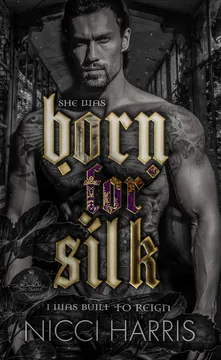


Plot Summary
A Promise at the Abbey
At eighteen, Rome2 joins his father,15 King Turin,15 on a campaign to a Common settlement ravaged by Endigos. The Trade offers repairs and protection, but also removes infants from families who cannot care for them. A young girl, Odette,10 asks Rome2 to protect her baby sister,1 warning him that the child cannot have Opi.
Rome2 promises to look after the infant1 and watches the Guards carry her away. On the journey home, he sees a Silk Girl’s branded body among the dead, and suspects his father’s15 visit was tied to the raid. He cannot yet see how the promise, the corpse, and the babies belong to the same machinery of rule.
Rome’s first act of imagined mercy is compromised from the start: the Trade rescues vulnerable infants by taking them from their families, then calls the transfer protection. His promise to Odette is personal, but the institution makes the child a resource. The dead Silk Girl hints that the king’s benevolence and the system’s violence may be intertwined. Rome’s unease begins as a question about his father’s motives, while his impulse to save someone quietly becomes the thread connecting his childhood to Aster.
Tuscany's Empty Vow
At the Estate, Rome2 arrives as the newly revealed heir and watches his ten-year-old half-sister,3 Tuscany,3 welcomed as the future Queen.3 The ceremony promises her status and reverence, but her role requires her to have no partner or children. Rome2 leaves her bedroom uneasy after finding Trade Master Cairo5 overseeing preparations.
At first-light, he sees his father15 emerge from Tuscany’s3 room carrying a glass vase. Rome2 breaks past the Guards and finds his sister3 naked, bleeding, and being helped into a bath after her reproductive organs have been removed. The damage fixes his understanding of kingship: keeping Tuscany3 safe will mean hiding the truth from her, and he will never forgive himself for arriving too late.
The public pageant and the private surgery expose the same political logic from opposite sides. Tuscany is elevated as a sacred mother while being denied the possibility of motherhood; her body is made into a symbol by first being altered without meaningful consent. Rome’s failure to intervene becomes a defining wound, and the vase gives him a concrete image of power concealed behind ritual. His later protectiveness grows from guilt as much as affection, a motive that can become shelter or control.
The King Holds Her Hand
Nineteen years later, Aster,1 a small, observant Silk Girl raised inside a protected aviary, faces the ceremony that officially assigns her breeding Trade. Bullied by Iris6 and worried about the tattoo’s pain, she hesitates. Rome,2 now the king,2 steadies her hand while the mark is applied and learns that she is allergic to Opi.
He recognizes the unusual detail but does not connect it aloud to his old promise.2 Aster,1 overwhelmed by his attention, asks to accompany him. Rome2 refuses for now, yet studies her closely and warns her that envy among the girls is real. She leaves the ceremony branded for her future role, but the encounter has made the king2 himself part of the future she imagines.
Aster’s first meeting with Rome is not simply attraction; it is a collision between her private curiosity and a ceremony designed to make obedience feel chosen. His hand makes the painful mark bearable, so care and authority arrive in the same gesture. Her request to leave the aviary shows that she wants more than a protected life, even before she can name what freedom might cost. The inherited Opi allergy quietly links this meeting to Rome’s earlier promise.
The Glass House Breaks
Aster’s1 oldest refuge is a pond where she feeds a strange, injured bird and retrieves those that die against the aviary’s glass. Iris6 and other girls resent the attention Rome2 gave her; during a bullying attack, Iris6 wounds Aster1 between the thighs and threatens her Silk Girl status. Their Wardeness16 later takes Aster1 and Iris,6 secretly, to a nursery where retired Silk Girls raise infants.
The visit briefly softens the girls’ hostility, but the van is attacked on the return journey. Aster,1 Iris,6 and the Wardeness16 are dragged to an abandoned abattoir, where Endigos keep captives alive as food. With no help in sight, Aster1 has to turn her training and quick reading of people toward survival.
The pond establishes Aster’s instinct to care for creatures that are damaged, trapped, or overlooked, while the aviary makes her own confinement visible. Iris’s assault shows how a system that forbids jealousy does not remove it; it only deprives the girls of honest ways to acknowledge and manage it. The nursery offers a glimpse of tenderness and possible future friendship, then the ambush tears away the Wardeness’s protection. Aster’s ability to observe becomes more useful than the obedient composure she was taught.
A Mark Down the Drain
At the abattoir, Aster1 keeps an Endigo boy talking and pretends she might choose life with him, buying time while she studies the building’s floor drains. He cuts the Silk Girl mark from her wrist to prove she is no longer Trade property. Aster1 pushes the branded skin into a drain, hoping workers will find it and trace her disappearance.
The Endigos then cut her tongue, and infection leaves her feverish. Rome2 receives news that two Silk Girls have vanished and leads the raid himself. He finds Aster1 unconscious, carries her out, and recognizes the Opi allergy, violet eyes, and age of the baby1 he once promised to protect. Aster1 wakes at the Estate with her wounds treated, but her old identity has been physically stripped away.
Aster survives by using the very skills her institution meant to direct toward pleasing men: attention, patience, and the ability to read a person’s wants. Her choice to send the mark downstream turns a tool of ownership into a desperate signal. Rome’s rescue fulfills his childhood promise, yet the coincidence also exposes how little control either of them has over the systems that placed them together. The grafted wrist becomes an unsettled question: is identity imposed by a mark, or made by the person who survives its removal?
A Heart for Odio
After recovering from fever, Aster1 enters the Estate’s Silk Girl household, where she meets Ana,7 Daisy,8 and Blossom9 and discovers how lords visit veiled women to produce heirs whose identities remain secret. At the carnival, she wins a bloody artificial heart from a game and offers it to Odio,11 Rome’s2 enormous eagle.
The bird11 accepts it, but Rome2 raises a rifle before lowering it, then privately punishes Aster1 for drawing attention. Lord Darwin18 has also touched her; Rome2 has him brought before them and killed, then publicly explains the execution as necessary against rogue alliances. Aster1 sees both the danger of Rome’s2 possessiveness and his willingness to reshape politics around it, without yet knowing what place he intends for her.
The heart game turns Aster’s ease with danger into a public breach of decorum. She reads Odio as a creature rather than a weapon, but the crowd reads the encounter as a threat to order. Rome’s response reveals that his protectiveness is inseparable from ownership, and Darwin’s death makes private desire a matter of state violence. The contrast between Aster’s instinctive kindness and Rome’s coercive methods establishes the central tension of their bond: intimacy gives him a reason to feel, but not automatically a gentler way to act.
The First Silk Girl
When Rome2 does not visit Aster1 during the first nights of the breeding cycle, she assumes he chose Iris6 and collapses from grief and confusion. Trade Master Cairo5 examines her, confirms she is physically untouched, and reveals that the Silk Girl who gave birth to her escaped the Trade and had children in a Common community.
Aster1 is one of the infants the Trade reclaimed. Rome2 arrives before Cairo5 can reassign her, admits that no other Silk Girl has been his, and chooses Aster1 for his own heirs.
Their first sexual encounter frightens and overwhelms her, but Rome2 listens when she signals distress and explains her pleasure. Their connection becomes more than a secret arrangement, even as Aster1 must learn to separate the Trade’s assigned purpose from what she herself wants.
Aster’s mistaken belief that Rome has rejected her exposes how completely the Trade has trained her to measure worth through selection. Cairo’s revelation complicates her identity without resolving it: she was raised as a Silk Girl, but her birth began outside the system that claims her. Rome’s choice protects her from reassignment, yet his language of possession preserves the same structure in a more personal form. Their intimacy begins to alter that structure only when Aster’s signals matter and Rome responds to them.
The Queen on the Grass
Aster1 notices Tuscany3 alone in a courtyard, holding a toy eagle and grieving Rome’s2 frequent absences. She lies beside the Queen,3 asks what name she would choose as a flower, and gives her a rare moment of ordinary companionship. Rome2 finds them together, orders Aster1 away, and forbids her from using Tuscany’s3 name.
Kong4 escorts Aster1 back, then explains that he let the conversation continue because he was considering what Tuscany3 wanted. Rome2 later admits he lost his temper, takes Aster1 to eat, and comforts her instead of sending her away. Their bond deepens as he teaches her about her own body and acknowledges that she matters to him. Aster1 begins to imagine that the Queen,3 too, might reach beyond the role imposed on her.
Aster offers Tuscany something the ceremonial Queen cannot easily receive: attention without worship and conversation without an assigned purpose. Rome’s anger comes from fear, but it repeats the isolation he claims to prevent. His apology matters because it follows an actual injury and includes changed behavior, not merely reassurance. Still, the episode leaves a tension unresolved: Aster can soften the people around her, but she cannot heal them by herself or substitute affection for their own choices.
Lavender Names the Bully
Aster1 becomes pregnant with Rome’s2 child, while Rome2 leaves the Estate on a campaign. At the Black Matter Tower, he finds Lavender,14 a former aviary girl dying after toxic exposure in the mines. Lavender14 confesses that Iris,6 Ivy, and she had once pinned Aster1 down and tried to break her seal of purity.
Rome2 kills Lavender14 after hearing the confession, then returns to the Estate and orders Iris6 arrested for the attack and for deceiving the Crown. Aster1 learns Iris6 may face execution and pleads for mercy. Rome2 spares her life but sends her to the Black Matter Tower, where she is assigned to bear an heir for its lord.20 Aster’s1 appeal preserves Iris,6 but it cannot erase the harm or restore the friendship they never managed to build.
The confession gives Aster’s private scars public weight, but Rome’s response remains shaped by punishment rather than repair. He believes violence can protect Aster, even as his killing of a dying witness demonstrates how little distance remains between justice and vengeance in his rule. Aster’s plea is not absolution; she separates mercy from trust and accepts that Iris may remain dangerous. Her compassion is a choice, not proof that the injury was trivial.
Ana Loses Her Son
Ana7 gives birth to a son, Cardiff, while Aster,1 Daisy,8 and Blossom9 wait nearby. The doctors place the baby in Ana’s7 arms, but Cairo5 soon arrives and transfers him to a Sired Mother, following the Trade’s rule that Silk Girls do not raise their own children. Ana’s7 grief empties the room, and Aster1 recognizes that her own coming child may be taken in the same way.
She confronts Rome2 and asks whether he will take their baby too. He promises that they will keep their child, though neither knows yet how he can overturn generations of procedure. He also agrees to let Aster1 and Tuscany3 see the Windmill Forest. Ana7 slowly returns to the others, helped by Aster’s1 quiet companionship and the puzzle they complete together.
Cardiff’s removal converts a doctrine Aster had studied into an intimate loss she can no longer keep abstract. The Trade’s logic protects children by assigning their care to specialists, but it treats the mother’s attachment as disposable. Aster’s grief is partly anticipatory: she sees her own future in Ana’s empty arms. Rome’s promise therefore becomes a moral commitment, not simply a romantic gesture, and the puzzle offers a small practice in rebuilding connection while the larger system remains intact.
Odette Knows the Baby
Rome2 takes Aster,1 the pregnant Ana,7 and Tuscany3 to see the Windmill Forest. A Redwind storm forces them to shelter in the same old abbey where Rome2 first met Odette,10 though Colt,17 the man he remembers, has died. The community welcomes the travelers into its church, and Tuscany3 receives the affection of girls who have never met their Queen.3
During the night, Odette10 recognizes Aster’s1 violet eyes and tells her that she is the baby sister1 she once asked Rome2 to protect. Odette10 also accuses him of taking infants from the community. Before the family can speak privately, gunfire signals an Endigo attack. Rome2 sends the women into a bunker, asking Aster1 to protect the people there while he remains above to fight.
The abbey brings the novel’s opening promise back into the present, but the reunion is not a simple homecoming. Odette remembers the transfer as loss, while Rome remembers it as protection, exposing how sharply the same act changes meaning depending on who holds power. Tuscany’s welcome shows a different kind of authority, one based on being seen rather than obeyed. The approaching attack interrupts recognition before Aster and Odette can build a relationship, forcing Aster to act before she can settle what her origins mean.
The Eagle Falls
From the bunker, Aster1 watches through a periscope as Rome,2 Kong,4 and the Guards fight Endigos in the storm-dark compound. Odio11 attacks from above until the eagle11 is hit and crashes to the ground. Rome2 is also shot repeatedly while trying to reach him. Trade reinforcements arrive, and Aster1 leaves the bunker to find the king2 and his eagle11 lying side by side.
She apologizes for urging the journey, but Rome2 comforts her and asks whether she forgives him. Tuscany3 joins them as doctors carry Rome2 away for emergency treatment. Aster1 watches the tank depart, fearing both the man she loves2 and the future child he promised she could keep. For once, the king’s2 strength cannot make the outcome certain.
The battle strips away the image of Rome as an invulnerable ruler. Aster’s earlier bond with Odio now gives his fall emotional force, while Rome’s attempt to reach the bird shows loyalty that is not merely political. Her apology reveals how quickly she takes responsibility for dangers she did not cause. The scene also turns the promise of keeping their child into a fragile hope: Aster must face the possibility that love may not be enough to protect the people it binds together.
The Crown Makes Room
Rome2 survives surgery and returns to the Estate, while Cairo5 reveals that Odio11 was also saved through controlled gene therapy and mechanical implants. Rome2 suspects Cairo5 arranged the earlier abduction to force the king2 and Aster1 into a bond, though the full plan remains uncertain.
He demands that his children stay at the Estate and that their mothers be allowed to visit. Cairo5 agrees to test new rules in exchange for Rome2 supporting his own succession. Rome2 also spares Iris6 from execution, leaving her at the mining tower to fulfill a different breeding role.
Tuscany3 chooses a campaign to meet the people she has only ruled from the Estate, with Kong4 as her protector; Ana7 joins the Queen’s3 Army. The household begins to imagine a life in which the Trade’s children can remain close to their mothers.
The resolution is a negotiation, not a revolution. Rome uses royal power to carve out an exception for his family, but Cairo’s price makes clear that every reform remains entangled with institutional interests. The arrangement challenges the Trade’s separation of birth mothers and children without dismantling its larger structure. Tuscany and Ana’s new purposes matter for the same reason: they choose active roles rather than simply being guarded or defined by their former assignments.
Epilogue
Two months later, Aster1 undergoes a Caesarean delivery at the Estate. Rome2 waits outside the operating room, frantic after fighting Odio11 when the eagle11 tried to block the doctors. Once admitted, he grips Aster’s1 hand while the doctors deliver their son.
Rome2 initially refuses to hold the baby, afraid that he will not want to give him back. Aster1 names him Athens, and Rome2 finally accepts the child, amazed by how completely the tiny boy fits in his enormous hands.2 The king2 who once treated heirs as instruments of the Crown now has to learn fatherhood through touch.
Athens’s birth fulfills Aster’s deepest hope, but the emotional resolution belongs equally to Rome. His hesitation is not indifference; it is fear of attachment and loss, the same fear that once made him keep Tuscany isolated. When he takes the baby, his hands become capable of care as well as force. The ending does not claim that one child transforms the whole Trade. It shows a private change with public implications: the king begins to imagine an heir as someone to love, not merely a legacy to secure.
Analysis
Born for Silk builds its romance inside a state that has made intimacy administrative. The Trade assigns purpose, conceals fathers, removes newborns from their mothers, and describes these practices as protection. Its system is not presented as merely cruel: it provides food, shelter, medical care, and a defense against the Redwind and Endigos. That genuine utility is what makes its control persuasive. The characters cannot reject the Trade without also confronting the dangers it has managed for them.
Aster’s1 central development is not a simple escape from conditioning. She continues to value the Silk Girls’ work and wants to carry a child, but she gradually asks whether service must erase attachment. Her care for birds, Tuscany,3 and Ana7 repeatedly turns private attention into a challenge to prescribed roles. Rome2 changes in the opposite direction: he begins as a king2 who treats people as property and learns that his own desire for a family conflicts with the rules he enforces. His possessiveness remains troubling, even when it becomes protective. The novel makes that contradiction part of the romance rather than pretending love automatically corrects power.
The recurring birds sharpen this conflict. The aviary promises safety but prevents flight; Odio11 represents force and loyalty beyond human institutions; the dead bird gives Aster1 a memory through which she interprets vulnerability. Against the Trade’s confidence that every life can be assigned a useful place, the story insists that attention itself can be meaningful. Aster’s1 questions matter because they help people become visible to one another, not because they instantly repair a damaged society.
The ending offers a limited reform rather than a clean revolution. Rome2 bargains for his children to remain near their mothers, while Cairo5 protects the institution by making change conditional. That compromise leaves the wider structure standing, but alters what the royal family believes is possible. The novel’s emotional promise is therefore small and concrete: a mother may hold her child, a queen3 may travel beyond her walls, and a king2 may learn that safeguarding a life is different from owning it.
Review Summary
Reviews for Born for Silk are mixed, averaging 3.84 stars. Fans praise the unique dystopian world-building, the possessive and obsessed hero Rome, the size difference, age gap, and steamy breeding kink scenes. Many compare it to The Handmaid's Tale and Mad Max. Critics cite flat character development, convoluted world-building requiring a glossary, and Rome sleeping with other women after meeting the heroine. The eagle companion, Odio, is a fan favorite. Most agree the HEA ending satisfies, though some feel the story lacks conflict and momentum.
People Also Read






Characters
Aster
Curious Silk GirlAster is observant, imaginative, and quietly stubborn, with a mind that keeps asking questions even when her training tells her not to. Raised inside the Silk Aviary, she learns ballet, reproductive care, and composure, but her private bond with an injured bird reveals a more instinctive capacity for empathy. She wants Meaningful Purpose, yet she also wants to see beyond the glass and decide what her life means. Her small stature and uncertain social instincts make her easy to underestimate. Aster’s tenderness does not make her passive: she studies people, improvises under danger, challenges Rome2, and offers companionship to women whose pain the system tries to hide.
Rome
Volatile kingRome is the genetically enhanced ruler of the Cradle, trained to endure the Redwind and command through fear. He treats emotional restraint as part of kingship, yet his fierce loyalty to Tuscany3 and his response to Aster1 reveal how much feeling he has buried beneath the role. His instinct is to protect by controlling access, movement, and risk, which can make his care frightening as well as sincere. Rome values strength, survival, and legacy, but Aster’s1 questions press him to recognize that a person cannot be reduced to a useful body or political function. His central conflict is whether tenderness can coexist with power without becoming another form of possession.
Tuscany
Isolated QueenTuscany is Rome’s2 younger half-sister and the Queen of the Cradle, raised to embody beauty, maternal devotion, and public reverence. Beneath the ceremonial role, she is withdrawn and emotionally fragile, often retreating from people rather than risking the demands they place on her. She misses Rome2 but also lives within the limits he imposes in the name of keeping her safe. Aster1 approaches her without worship, giving Tuscany room to speak as a person rather than a symbol. Her carefulness around touch and her fear of the outside world reveal how protection can preserve life while narrowing it.
Kong
Loyal GuardianKong is Rome’s2 enormous, battle-hardened Guardian and one of the few people willing to challenge him directly. He values Rome’s2 survival but understands that the king’s2 recklessness can endanger the Crown and everyone tied to it. His loyalty is expressed through warning, physical protection, and an unusually deep concern for Tuscany3. Kong’s bluntness gives him a role as both safeguard and moral counterweight: he sees the costs of Rome’s2 isolation even when Rome2 refuses to name them.
Cairo
Master of the TradeCairo is the Trade Master, a polished strategist who manages law, secrets, and the institution’s hidden agents. He regards procedure as a tool for keeping a fragile society functioning, and he can make coercive policies sound orderly and necessary. His intelligence makes him difficult to read; he anticipates how personal choices may affect the Crown and uses that knowledge to negotiate. Cairo is not simply a bureaucrat opposed to feeling. He understands emotional leverage and is willing to redirect it toward the Trade’s survival.
Iris
Rival Silk GirlIris is a tall, red-haired Silk Girl whose confidence rests on prized Xin De traits and an impeccable family record. She is competitive and status-conscious, especially when she feels Aster1 receives attention she believes she has earned. The Aviary’s vows forbid jealousy, leaving Iris little room to acknowledge insecurity without disguising it as moral superiority. She can be cruel, but she is also shaped by a world that treats girls as candidates to be selected and ranked. Her presence tests whether Aster1 can distinguish compassion from trust.
Ana
Tender Silk GirlAna is a warm, thoughtful Silk Girl who speaks openly about feelings and pays attention to the needs of her companions. Her pregnancy gives her a strong connection to the other girls, and she is especially gentle with Aster1. Ana questions the assumption that love is a weakness, though she knows attachment can make a Silk Girl vulnerable. She offers Aster1 practical kindness without demanding that Aster1 become more conventional or composed.
Daisy
Careful companionDaisy is a blonde Silk Girl who takes vows and protocols seriously because she believes rules can protect the women in her care. Her instinct is to steady others with facts and caution, not to shame them. As Aster’s1 trust grows, Daisy becomes part of a close female collective in which certainty can be questioned without abandoning one another.
Blossom
Warm companionBlossom is an affectionate Silk Girl with a generous manner and a knack for easing tense conversations. She is less devoted to strict interpretations of the vows than Daisy8, and more willing to let people experience love while it lasts. Her welcome helps Aster1 feel that the Silk Girls might become a real community rather than a set of rivals.
Odette
Independent believerOdette is a young woman from a Common community who retains her faith despite the Trade’s contempt for religious belief. She is brave enough to speak to the king2 and protective of the children around her. Her devotion gives her a moral language outside the Trade’s system of Meaningful Purpose, while her life among Common people makes her wary of promises made by rulers.
Odio
King's giant eagleOdio is Rome’s2 immense, genetically modified eagle, trained by neither manners nor ceremony into a tame creature. He is fiercely loyal, observant, and dangerous to strangers, but Aster’s1 ease around birds lets her approach him without the fear that governs the court. His presence makes Rome’s2 authority visible in the sky, while his bond with the king2 suggests a loyalty deeper than obedience.
Paisley
Aster's WatcherPaisley is Aster’s1 Watcher, assigned to monitor her health, daily routine, and safety. She takes her Trade seriously and is often anxious about the consequences of failing her duties. Her care is sincere, though she must operate inside a system that supervises Silk Girls closely. Aster’s1 trust gradually gives Paisley room to act as more than an observer.
Turin Two
The king's half-brotherTurin Two is Rome’s2 half-brother and Warden of the Estate. He is politically alert, socially confident, and less easily unsettled by Rome2 than many of the king’s2 subjects. His position gives him a practical role in protecting the Estate, while his relationship with Rome2 allows him to speak with familiarity as well as caution.
Lavender
Former Aviary girlLavender is a former Silk Girl whose time in the Aviary was shaped by rivalry and group pressure. She is an important witness to the ways resentment can turn into harm, and to the guilt that can surface when people face the consequences of their choices.
Turin
Rome's fatherTurin is Rome’s2 father and the former King of the Cradle, a formidable war leader whose authority depends on emotional restraint and physical force. To his young heir2, he represents both the scale of the office and the personal costs hidden beneath royal ritual.
The Silk Wardeness
Aviary caretakerThe Silk Wardeness manages the girls’ education and daily life inside the Aquilla Aviary. She believes in their future roles and tries to guide them toward cooperation, even when secrecy and rigid rules limit what she can tell them.
Colt
Common community leaderColt leads the independent Common settlement Rome2 visits during his first campaign. He grieves the violence his people have suffered while trying to make choices outside the Trade’s protection. His decisions reveal the painful tradeoff between independence and security.
Lord Darwin
Half-tower lordDarwin is a senior lord from the Half-tower, whose authority includes control of a politically sensitive region. His presence among Rome’s2 Collective illustrates how personal conduct and tower politics can quickly become matters of royal consequence.
Han
Abbey community leaderHan leads the Common community that shelters Rome’s2 party during a storm. He believes people should risk helping strangers, even when doing so puts his own settlement in danger. His faith in communal decency contrasts with the Trade’s guarded calculations.
Lord Coober
Mining tower lordCoober governs the Black Matter Tower, where miners work amid toxic conditions and Silk Girls face particular risks. His tower shows how a Trade assignment can endanger the very people the system claims to protect.
Plot Devices
Meaningful Purpose
Purpose as social controlThe Trade assigns each citizen a lifelong role and presents service as the route to safety, worth, and spiritual fulfillment. This structure explains why people accept work, why Silk Girls surrender children, and why Aster1 initially wants to fulfill her breeding role. It also gives the novel its central measure of change: when characters ask what they personally want, they challenge an entire system that has taught them to treat individual desire as a threat. Rome’s2 authority and Aster’s1 future both depend on how far the Trade can bend without breaking.
The Silk Girl Veil
Anonymity protects heirsSilk Girls are raised for reproduction, then visited in private by veiled lords so neither mother nor child can identify the father. The children are removed after birth and raised by Sired Mothers, keeping heirs anonymous until adulthood and preventing personal claims from disrupting the Trade. The practice shapes Aster’s1 expectations about sex, motherhood, and her own body. It becomes the institutional obstacle Rome2 must confront when he promises that their child will remain with them.
The Redwind and Aviary
Safety built from confinementThe Redwind makes travel and life outside protected towers dangerous, so the Trade shelters Silk Girls beneath glass and walls. The aviary shields Aster1 from weather and violence, but it also limits her contact with the wider world and encourages her to mistake containment for peace. The dead birds that strike the glass turn that contradiction into a recurring image. When Aster1 is forced beyond the protected enclosure, the skills and curiosities cultivated in secret become essential to her survival.
Odio the Eagle
Loyalty made visibleOdio is both Rome’s2 battle companion and a public emblem of royal power. His size and violence make him terrifying to crowds, yet his independent judgment distinguishes loyalty from simple obedience. Aster’s1 calm approach to him reveals her unusual ability to meet danger without treating every creature as an enemy. His bond with Rome2 also exposes a tender attachment the king2 rarely shows openly.
The Upside-Down Bird
A private measure of survivalAster’s1 earliest memory is finding a dead bird in the pond inside the aviary. She continues retrieving fallen birds for an injured, mutated raptor, giving the small creatures a kind of purpose even in death. The image returns when Aster1 must decide whether to endure, escape, or protect someone else. It also reflects her habit of making meaning from what she sees, even when the world offers no comforting explanation.
About the Author
Other books by Nicci Harris

Download PDF
Download EPUB
.epub digital book format is ideal for reading ebooks on phones, tablets, and e-readers.








