

Key Takeaways
Chance sets the crisis; character is made in the response.
Four lives, one rupture. In spring 1940, Albert Camus was an unknown writer, Jacques Monod an unfocused doctoral student, François Jacob a medical student, and André Lwoff a microbiologist. The German invasion tore apart their ordinary plans. Jacob escaped to join the Free French and was wounded in Normandy, which ended his surgical ambitions and redirected him toward research. Camus and Monod joined the Resistance in very different roles. Lwoff sheltered Allied airmen and provided Monod a hiding place.
History does not grant virtue. War created the conditions for their choices, but it did not make those choices inevitable. Their later achievements grew from talent, opportunity, friendship, and decisions made under pressure. Carroll’s title joins chance, the events nobody controls, with necessity, the demands those events impose.
What's striking is the book's refusal to treat achievement as a clean ascent. A Nobel laureate's career begins amid accidents, interrupted plans, and danger, not a tidy blueprint. That makes the story useful beyond biography: circumstances shape which choices are available, but they do not dictate the response. The framing also needs care. Catastrophe can expose courage, but it does not become valuable because some survivors later flourish. Many people suffered without receiving such a second act.
Resistance begins when ordinary people turn their skills into public action.
Different work, shared risk. Camus used journalism to edit and write for the underground paper Combat, urging readers to oppose occupation and collaboration. Monod organized sabotage, weapons, and eventually Resistance operations. Lwoff hid downed Allied airmen, while Jacob left France to fight abroad. Geneviève Noufflard, a young musician, became a courier carrying messages through streets where a single mistake could expose an entire network.
Small acts had strategic force. Resistance was not only symbolic. Eisenhower estimated its military contribution as comparable to fifteen divisions, about 150,000 troops, and the book reports that roughly 24,000 resistants died fighting for France. Sabotage later disrupted rail movement before the Normandy landings. Yet the Resistance also repaired a defeated nation’s sense of agency. Its members acted without knowing when liberation would come.
The story expands the meaning of resistance beyond the armed fighter. Editing, sheltering, carrying intelligence, and disrupting transport each used different skills to weaken occupation and sustain civic courage. This is a powerful model of collective action: large outcomes often depend on specialized contributions that look modest in isolation. The numbers, however, cannot settle the moral question by themselves. A movement's strategic value does not erase the danger its actions could bring to civilians, or make every tactic equally defensible.
Treat life's absurdity as a reason to act, not to surrender.
Camus starts with mortality. Tuberculosis gave him an early, personal knowledge of vulnerability. In The Myth of Sisyphus, he asks how life can matter when death is certain and the universe offers no clear answer. He rejects both suicide and appeals to unprovable guarantees. His alternative is revolt: to live consciously, create, and act despite the absence of ultimate assurance. The mythic Sisyphus, condemned to repeat a futile task, becomes an image of choosing how to meet one's condition.
Revolt becomes solidarity. Camus's wartime novel The Plague turns occupation into an epidemic and shows people resisting a shared threat through ordinary, sustained work. Meaning is not a prize handed down from outside; it is made through attention to life and responsibility toward others. His optimism is therefore hard-won, not cheerful denial of suffering.
Camus's answer is less a proof that life has meaning than a discipline for living without proof. That distinction matters. It keeps his argument from collapsing into easy optimism: grief and injustice remain real, while action remains possible. The Plague also shifts revolt from private defiance toward cooperation, showing how solidarity can generate purpose without requiring agreement about religion or metaphysics. The challenge is that individual courage cannot repair every structural wrong. A personal stance needs institutions and collective action to become durable change.
Make one precise question do the work of a grand theory.
A puzzling pause mattered. Monod studied bacteria fed two sugars. Instead of using both at once, they grew on one, paused, then resumed growth on the other. He called this two-stage pattern diauxy. By changing the ratio of sugars and observing how the growth phases shifted, he tested whether the bacteria used the foods in sequence. The delay suggested that cells needed to produce an enzyme for the second sugar.
Test explanations, not reputations. Monod set out competing possibilities, derived what each should predict, and designed experiments to distinguish them. His early work did not reveal the molecular mechanism, but it turned a familiar growth curve into a tractable problem. The question of how a cell responds to food eventually led him toward the control of genes and proteins.
The research story shows why a narrow question can be intellectually ambitious. Monod did not begin by claiming to explain life; he noticed an anomaly, measured it carefully, and let the next question arise from the result. That pattern is useful wherever complex systems tempt observers to jump straight to sweeping explanations. A caveat is important: elegant experiments depend on their assumptions and tools. A clear result can still leave the mechanism unresolved, so precision should invite further inquiry rather than premature certainty.
When ideology dictates results, science becomes propaganda in a lab coat.
Lysenko made politics a test of biology. Soviet agronomist Trofim Lysenko rejected established genetics and claimed that environmental changes could be passed rapidly to descendants. His ideas appealed to leaders who wanted nature to be reshaped to meet political and agricultural goals. In 1948, Soviet authorities made his doctrine official and expelled or silenced geneticists who opposed it. The scientist Nikolai Vavilov had already died in prison.
Monod challenged the claim publicly. A former Communist and Resistance fighter, he argued in Combat that Lysenko's ascent had no sound scientific basis. The danger was not simply that one theory was wrong. State power had turned a testable claim into mandatory truth, punishing people who questioned it. The episode sharpened Monod's conviction that evidence must remain independent of church, state, and party.
The Lysenko episode makes a distinction often blurred in public debate: scientific disagreement is not the same as politicized control of what may count as evidence. The decisive failure is not that a hypothesis proves false, but that criticism becomes punishable and results are settled by authority. That lesson applies even when a favored theory promises useful outcomes. Still, science is practiced by institutions and people, not outside society. Independence requires protections, open scrutiny, and accountability, not faith that researchers are automatically impartial.
Test how genes switch off before guessing how they switch on.
A failed model sharpened the answer. Monod, François Jacob, and Arthur Pardee studied E. coli bacteria that produce the enzyme needed to use lactose. Their PaJaMa experiments transferred normal and altered genes between bacterial cells. They expected one mutation to create a substance that activated enzyme production. Instead, certain results showed that the normal gene blocked production, while an inducer relieved that block.
Repression explained the switch. They proposed that a repressor, a protein that prevents genes from being expressed, binds to an operator, a DNA site where that control acts. When an inducer interferes with the repressor, the genes can produce proteins. Jacob named a coordinated set of genes controlled in this way an operon. The model explained how cells avoid making enzymes they do not need, and it predicted genetic effects that could be tested.
The conceptual reversal is the memorable part: regulation need not mean pushing production forward; it can mean removing a brake. That is a broadly useful model for systems in which apparent activation may actually come from lifting inhibition. The team also gains credibility by allowing the experiments to defeat Monod's preferred explanation. The model was initially inferred from genetic behavior, not from a directly observed molecular switch. Its strength came from making predictions that subsequent experiments could challenge, rather than from metaphor alone.
Look for shared logic across problems that appear unrelated.
Jacob joined two research puzzles. He had studied bacteriophage lambda, a virus that can remain dormant inside bacteria and later become active. Monod studied bacterial enzymes that appear when particular sugars are available. Jacob saw a possible common mechanism: in both cases, a repressor could keep genes silent until a signal released them. Their proposed operon model connected these systems and explained coordinated gene control.
The gap between gene and protein remained. Rapid enzyme production suggested that genetic information needed a short-lived carrier between DNA and the ribosome, the cell's protein-making machinery. Jacob called the hypothetical carrier X. Experiments by Jacob and Sydney Brenner at Caltech showed that newly made RNA associated with existing ribosomes. They named this information-carrying molecule messenger RNA. Their work turned a speculative link into an experimentally supported account of how genetic instructions reach protein-making machinery.
The discovery depends on analogy used carefully. Similar patterns in virus activation and enzyme production suggested a shared mechanism, but analogy alone could not establish it. The researchers translated the comparison into predictions, then tested those predictions across systems. This is a strong example of theoretical imagination disciplined by experiment. It also shows how scientific progress can come from joining communities and methods that have been working separately. The risk is overgeneralization: a mechanism that works in bacteria offers a powerful clue, not automatic proof that every organism works identically.
Make solidarity concrete: risk time, money, and safety for others.
Friendship crossed disciplines. Camus and Monod became close after the war through a shared opposition to totalitarianism. Camus offered philosophical and literary companionship; Monod brought scientific knowledge to their arguments about Soviet attacks on genetics. Their friendship was not merely agreement. It connected people who could bring different kinds of evidence and influence to the same moral questions.
Monod acted on that commitment. After Hungary's 1956 revolution was crushed, he helped Agnes Ullmann and her husband, Tamás Erdös, escape. Early schemes failed, including an attempt to use a Danube boat. Monod raised money, worked with intermediary André Kövesi, and helped plan a later escape hidden in a camping trailer. Hungarian customs searched the trailer but did not find them. The couple reached Austria, then settled in France. Monod described the effort as a matter of human dignity.
This episode gives friendship a demanding definition: not warmth alone, but practical responsibility when another person's safety is at stake. Monod's scientific network became a channel for money, planning, and refuge. That is an unusually clear example of social capital used for humanitarian ends. It also highlights the moral value of competence. Good intentions were not enough; the escape required patience, secrecy, and trusted intermediaries. The risks were real, and success was uncertain, which is precisely why the choice carried weight.
Reject systems that excuse present cruelty with promised future justice.
Camus opposed political murder from either side. In The Rebel, he traced how revolutions that begin by rejecting injustice can become systems that justify killing and repression in the name of a future utopia. His criticism of Soviet labor camps and fabricated trials widened the breach with Jean-Paul Sartre, who continued to see the Soviet Union as part of a necessary struggle against exploitation. The argument was not abstract: Hungarians faced executions after their revolt was crushed.
His principle had limits and costs. Camus opposed the death penalty and tried to protect writers and civilians, including in Hungary. In Algeria, he condemned violence by both nationalists and the French state, but his hope to preserve Algeria within France drew criticism from independence supporters. His humanism demanded restraint, yet it could not dissolve the political conflict or satisfy those seeking liberation.
Camus's strongest contribution is a moral constraint: a promised future cannot make present victims disappear from the ethical ledger. That principle resists the familiar move by which movements treat individual lives as expendable material for historical progress. The section also benefits from its unresolved Algerian case. Camus's commitment to civilians and opposition to executions did not supply a political solution acceptable to both sides. Moral consistency can expose cruelty, but it cannot by itself determine borders, power-sharing, or the shape of a just settlement.
Science removes cosmic guarantees, not the human duty to choose.
Monod carried biology into philosophy. In Chance and Necessity, he argued that mutations arise unpredictably, while natural selection favors some outcomes over others. Humans, like other species, emerged through this process rather than according to a detectable biological plan. He called the chance in variation and the necessity of selection the joint logic of evolution.
A scientific account does not prescribe a life. Monod concluded that the universe supplies no prewritten human purpose, so people must choose the values by which they live. He favored knowledge, creativity, and freedom. That conviction was public as well as theoretical: after receiving the Nobel Prize, he campaigned for family planning and university reform, and supported students during the May 1968 unrest. His life joined scientific inquiry to civic responsibility, without pretending that either could guarantee a just world.
Monod's argument is strongest when it separates explanation from obligation. Biology can explain how humans arose without demonstrating a cosmic intention, but that finding does not by itself prove which ethical values should govern society. Monod acknowledges the gap and makes a deliberate proposal: protect freedom so people can pursue knowledge and creation. The proposal is coherent, though not self-evidently compulsory. Other traditions can defend human dignity without relying on biological purpose. The enduring question is how plural societies justify shared values when no single authority can settle them.
Analysis
Brave Genius is a braided biography, wartime history, science narrative, and philosophical argument. Its central achievement is to make the connections among these strands feel causal without claiming they were inevitable. The Occupation gives Camus and Monod occasions to act; scientific work gives them ways to test claims; friendship gives their separate forms of expertise a common moral direction. Jacob's career adds an important counterpoint: a young man who enters science through war injury and curiosity, rather than through a settled academic plan.
The book's most persuasive parallel is between resistance to political dogma and resistance to premature scientific certainty. Monod's response to Lysenko and his laboratory practice share a commitment to testing claims against evidence, though the stakes and methods differ sharply. The PaJaMa work illustrates that commitment especially well: a favored hypothesis fails, and the failure makes a better model possible. The resulting account of gene regulation also becomes a story about imagination, because invisible entities such as repressors and operators were inferred through predictions before they could be directly isolated.
The narrative's moral center is Camus's refusal to let future promises justify present cruelty. Yet his Algerian position reveals a real limit: moral restraint does not automatically resolve competing claims to political sovereignty. Likewise, Monod's scientific account of evolution can undercut claims of biological design, but it cannot logically dictate a social ethic. His preferred values of freedom, knowledge, and creation are argued commitments, not experimental results. That distinction strengthens rather than weakens the book. It shows how evidence can clarify the world, while ethical action still requires human judgment, solidarity, and responsibility. The lives here are exemplary not because they solved these problems, but because they kept acting while the answers remained incomplete.
Review Summary
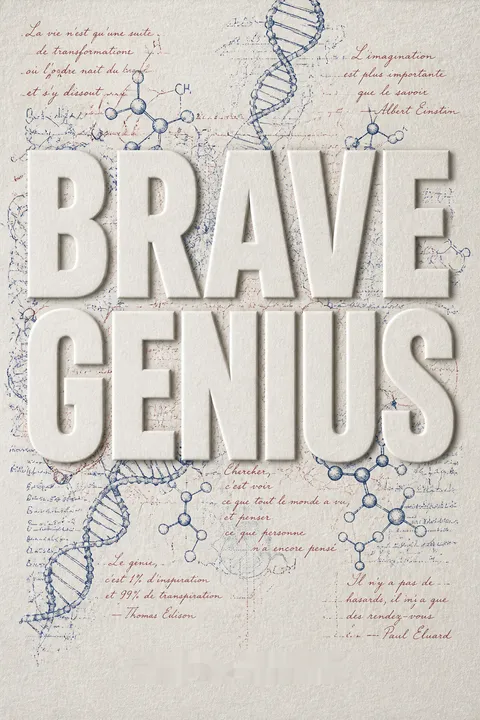
Brave Genius is a dual biography of Albert Camus and Jacques Monod, exploring their roles in the French Resistance, scientific discoveries, and philosophical contributions. Reviewers praise Carroll's meticulous research and engaging narrative, highlighting the book's blend of history, science, and philosophy. Many find the World War II sections particularly compelling. Some critics note the book's length and occasional tangents, but most recommend it for its inspiring portrayal of two brilliant minds. The book offers insights into the intersections of science, literature, and 20th-century European history.
People Also Read







Glossary
Chance and Necessity
Evolution by variation and selectionMonod's description of evolution as the interaction of unpredictable genetic variation and the nonrandom filtering of natural selection. Mutations arise without regard to whether they help an organism; their consequences become consequential through survival and reproduction. Monod uses this biological account to challenge the idea that humanity's emergence followed a detectable preordained plan.
diauxy
Two-stage bacterial growthA pattern Monod observed when bacteria were supplied with certain pairs of sugars. The bacteria first grew using one sugar, paused, then resumed growth using the second. The pause suggested that cells had to produce or activate machinery for the less-preferred nutrient, making the phenomenon a route into studying how cells control enzyme production.
enzyme induction
Nutrient-triggered enzyme productionThe production of an enzyme in response to a substance associated with its activity. In Monod's studies, E. coli produced enzymes for using lactose when lactose was available. The term replaced the older phrase enzyme adaptation because the response did not mean that organisms acquired inherited traits from their environment.
Lysenkoism
Ideology imposed on heredityThe Soviet biological doctrine associated with Trofim Lysenko, who rejected established genetics and promoted the idea that environmental conditions could rapidly produce inheritable changes. Soviet authorities endorsed his position and persecuted geneticists who dissented. Monod treated the episode as an example of political power replacing scientific evidence with an official orthodoxy.
PaJaMa
Gene-transfer experimentsThe name given to experiments by Arthur Pardee, François Jacob, and Jacques Monod on genetic control of lactose-enzyme production in E. coli. By transferring normal and mutated genes between bacterial cells, they tested competing explanations for induction. Their results helped establish that a gene could produce a repressor that prevents enzyme synthesis until an inducer relieves the block.
repressor
Protein that blocks gene expressionA regulatory protein that prevents the expression of particular genes. In the lactose system studied by Jacob and Monod, the repressor binds to a specific DNA region and keeps enzyme-producing genes inactive when lactose is absent. An inducer interferes with this repression, allowing the genes to be expressed.
operator
DNA site for repressionThe DNA sequence that acts as the binding site for a repressor in the gene-control model developed by Jacob and Monod. When the repressor occupies the operator, nearby genes are kept inactive. Mutations in the operator can disrupt that control, allowing adjacent genes to be expressed without the usual signal.
operon
Co-regulated group of genesA group of structural genes controlled together by a shared operator and repressor, typically because the genes participate in a related biological process. Jacob and Monod developed the concept while studying lactose metabolism in bacteria. The operon model explained how one regulatory mechanism could coordinate the production of multiple proteins.
messenger RNA
RNA carrying genetic instructionsA short-lived RNA molecule that carries information copied from DNA to ribosomes, where proteins are assembled. Jacob and colleagues proposed this intermediate to explain how genetic instructions reach protein-making machinery. Experiments showing newly made RNA associated with existing ribosomes helped support the idea and clarify the direction of information flow from genes to proteins.
absurd condition
Human meaning, indifferent universeCamus's term for the tension between people's desire for order, purpose, and explanation and a universe that provides no clear response. He argues that acknowledging this conflict need not lead to despair or religious certainty. Instead, lucid awareness can support freedom, creation, and active engagement with the finite life people actually have.
FAQ
What's Brave Genius about?
- Dual Biography Focus: Brave Genius intertwines the lives of Albert Camus, a philosopher and writer, and Jacques Monod, a molecular biologist, during World War II and beyond. It highlights their roles in the French Resistance and their eventual Nobel Prize recognitions.
- Themes of Courage and Friendship: The book emphasizes courage, friendship, and the quest for meaning amidst chaos. It shows how extraordinary circumstances can reveal the genius within individuals.
- Historical Context: Set against the Nazi occupation of France, it explores the moral dilemmas faced by intellectuals and scientists, and how Camus and Monod navigated their fields while contributing to the Resistance.
Why should I read Brave Genius?
- Inspiring True Stories: The book presents the real-life stories of two remarkable figures who made significant contributions to literature and science, offering a narrative of resilience and creativity.
- Insight into Intellectual Resistance: It provides a unique perspective on how intellectuals and scientists responded to moral crises, offering insights into philosophical and ethical questions of the time.
- Rich Historical Detail: Sean B. Carroll's well-researched account is filled with historical context, appealing to those interested in history, philosophy, and the human spirit.
What are the key takeaways of Brave Genius?
- Courage in Adversity: The book illustrates that true genius often emerges in times of crisis, as seen in the lives of Camus and Monod, who stood up for their beliefs during the war.
- Interconnectedness of Science and Art: It highlights the relationship between scientific inquiry and artistic expression, showing how both contribute to understanding the human condition.
- Moral Responsibility: The narrative emphasizes the moral responsibilities of individuals in society, particularly during oppressive regimes, reflecting a commitment to truth and justice.
What are the best quotes from Brave Genius and what do they mean?
- “Genius is present in every age”: This quote underscores the potential within individuals to rise to greatness when faced with challenges, suggesting that extraordinary talent exists in all times.
- “The struggle toward the heights is enough to fill a man’s heart”: From Camus, this quote suggests that the pursuit of meaning and purpose in life is what gives it value, encapsulating his philosophy of embracing life’s absurdity.
- “We should count time by heart-throbs”: This quote emphasizes living fully and passionately, encouraging readers to engage deeply with their experiences and emotions.
How did Camus and Monod contribute to the French Resistance?
- Camus’s Role in Journalism: Camus worked for the underground newspaper Combat, using his writing to inspire resistance against the occupiers, believing in the power of words to mobilize people.
- Monod’s Military Involvement: Monod joined the Communist Francs-Tireurs et Partisans and became a high-ranking officer in the French Forces of the Interior, organizing sabotage operations against the Germans.
- Collaboration and Friendship: Their friendship and mutual respect fueled their commitment to the Resistance, understanding the importance of their fields in the fight for freedom.
What philosophical themes are explored in Brave Genius?
- Absurdism and Meaning: The book delves into Camus’s philosophy of absurdism, which posits that life is inherently meaningless, yet individuals must create their own meaning.
- Moral Responsibility: It explores the moral obligations of individuals in the face of injustice, as both Camus and Monod grappled with their roles as intellectuals during the occupation.
- Friendship and Solidarity: The narrative emphasizes the importance of friendship and solidarity in times of crisis, illustrating how personal relationships can inspire courage and resilience.
How did the war impact Camus’s writing?
- Catalyst for Creativity: The war prompted Camus to write significant works like The Myth of Sisyphus and The Stranger, deeply influencing his philosophical outlook.
- Themes of Isolation and Absurdity: The sense of isolation and absurdity during the war is reflected in his characters and narratives, mirroring his own struggles.
- Political Engagement: The war compelled Camus to engage politically through his writing, using his platform to advocate for freedom and justice, particularly in his editorials in Combat.
What scientific discoveries did Monod make?
- Enzyme Adaptation: Monod’s research led to insights into how bacteria adapt to different sugars, identifying mechanisms for enzyme production based on available nutrients.
- Messenger RNA: Along with François Jacob, Monod contributed to understanding messenger RNA, laying the foundation for modern molecular biology and genetics.
- Impact on Genetic Engineering: His discoveries influenced genetic engineering and biotechnology, impacting how scientists understand gene regulation and expression.
How did the relationship between Camus and Monod evolve throughout Brave Genius?
- Mutual Respect: Their relationship was characterized by deep mutual respect, with Camus referring to Monod as “the only true genius” he had known.
- Shared Experiences: Facing the challenges of the Nazi occupation, they found common ground in their commitment to the Resistance, strengthening their bond.
- Legacy of Friendship: Their friendship transcended individual achievements, highlighting the importance of personal connections in times of crisis.
What was the significance of the Nobel Prizes awarded to Camus and Monod?
- Recognition of Genius: The Nobel Prizes symbolized recognition of their extraordinary contributions to literature and science, reflecting the heights of human creativity and intellect.
- Cultural Impact: Camus’s Nobel Prize in Literature and Monod’s in Physiology or Medicine underscored the cultural and scientific significance of their work.
- Inspiration for Future Generations: The awards serve as inspiration, demonstrating the power of resilience, creativity, and moral conviction in the face of adversity.
How does Brave Genius connect literature and science?
- Philosophical Underpinnings: The book illustrates how Camus's existentialist ideas influenced Monod's scientific approach, showing parallels in their quests for understanding.
- Shared Experiences: Their experiences in the French Resistance shaped their respective fields, emphasizing personal conviction in literature and science.
- Interdisciplinary Dialogue: The narrative encourages dialogue between humanities and sciences, suggesting insights from one field can enrich the other.
What is the operon model discussed in Brave Genius?
- Definition of Operon: The operon model, discovered by Monod and Jacob, explains how genes are regulated, consisting of structural genes, a promoter, and an operator.
- Mechanism of Action: In the absence of an inducer, a repressor binds to the operator, preventing transcription; when an inducer is present, it allows gene expression.
- Significance in Biology: The operon model revolutionized understanding of gene regulation, impacting molecular biology, genetics, and biotechnology.
Download PDF
Download EPUB
.epub digital book format is ideal for reading ebooks on phones, tablets, and e-readers.








