

Key Takeaways
Treat Buddhism as an experiment in attention, conduct, and understanding.
A path to test. This guide presents Buddhism less as worship of a creator and more as a practical path for seeing experience clearly, acting with care, and reducing distress. Its central invitation is to examine teachings in lived experience rather than accept them only because a teacher said them.
A story of balance. Siddhartha Gautama, the guide's account says, left a protected royal life after encountering aging and death. He tried severe fasting, found it unhelpful, and turned toward meditation and a balanced way of practice called the Middle Path. The story frames Buddhism as inquiry shaped by experience, not escape from ordinary life.
The emphasis on testing ideas through practice is a strong bridge between spiritual learning and reflective inquiry. It asks the reader to notice whether a teaching changes attention, choices, or relationships, rather than treating belief as proof. Yet Buddhism is also a family of religions with rituals, devotional practices, and varied views of the sacred. Calling it simply nonreligious can flatten that diversity. The most useful framing is therefore not that Buddhism is or is not a religion, but that this guide foregrounds its practical and experiential dimensions.
Use the Four Noble Truths to locate suffering's cause and its remedy.
A diagnosis, then a path. The Four Noble Truths describe suffering or dissatisfaction, its causes, the possibility of its ending, and a path toward that ending. The guide compares them to medicine: recognize the condition, investigate its source, consider whether it can cease, and follow a course of practice.
Do not delay the response. In the Poisoned Arrow parable, a wounded man refuses treatment until he learns every detail about who shot him and what kind of bow was used. The Buddha's point is that speculation can distract from addressing immediate suffering. The truths are not merely ideas to memorize. They are a framework for asking what hurts, what sustains it, and what action might help.
The medical sequence is memorable because it turns a worldview into a usable method. It resembles problem-solving in which observation precedes intervention, and it discourages both denial and helpless rumination. The arrow story also marks a boundary around questions that may be fascinating but do not change the next helpful step. That boundary should not be mistaken for a ban on philosophical inquiry. It is a question of timing and purpose: does speculation clarify experience, or does it postpone care?
Take the Middle Path: train insight, ethical conduct, and concentration together.
Eight linked practices. The Noble Eightfold Path is the guide's central program for reducing suffering. Its eight elements are right view, resolve, speech, conduct, livelihood, effort, mindfulness, and concentration. They are grouped as wisdom, moral virtue, and meditation, but are meant to support one another rather than function as a simple checklist.
Balance over extremes. Siddhartha's move away from severe fasting illustrates the Middle Path: neither indulge every desire nor punish the body in pursuit of spiritual progress. In daily life, the path asks a person to consider not only what they believe, but how they speak, earn a living, direct attention, and respond to difficulty. Progress is measured in practice, not in a claim of spiritual achievement.
This integrated structure resists a common modern split between private calm and public behavior. Concentration is not treated as sufficient if speech or livelihood harms others, while ethical intentions need attention and discipline to become reliable conduct. That makes the path social as well as inward. Its challenge is breadth: eight principles can sound abstract until translated into specific decisions. A brief review of one conversation, work choice, or reactive moment can make the framework more actionable than trying to perfect every element at once.
Meet pain honestly, then question the craving that makes it stick.
Three faces of dukkha. The guide uses the Buddhist term dukkha for suffering and dissatisfaction. It includes direct pain, the frustration of change disrupting what someone wants, and the deeper unease of relying on experiences that cannot stay fixed. A canceled trip, for instance, can hurt not only because plans changed, but because expectations had become something to cling to.
Notice the cycle. Pleasure is not condemned; the problem is demanding that pleasure, success, or relationships remain exactly as they are. The Four Noble Truths connect craving and clinging with recurring dissatisfaction, then point toward the possibility of loosening that grip. The practical move is not to deny grief or pain, but to see how expectation can add a second layer of distress.
This account is most persuasive when it distinguishes pain from the extra struggle created by insisting that reality conform to a preferred outcome. That distinction is compatible with many approaches to coping: an event may be unavoidable while one's interpretation and next action remain open to examination. The guide sometimes describes emotions as unreal or false, which risks invalidating ordinary grief and fear. A gentler reading is that feelings are real experiences, but they are not permanent facts or complete descriptions of the self.
Treat karma as intentional cause and effect, not a cosmic verdict.
Choices have consequences. In the guide, karma primarily means intentional action through thought, speech, and behavior, while karmaphala names its results. Karma is not a divine sentence or a guarantee that every good act earns immediate happiness. Circumstances have many causes, and the way someone responds to them creates further consequences.
An office example. Janice is frustrated by a coworker's lateness and poor work. She shares her complaint with colleagues, who adopt the same hostility; the conflict then spreads to management. The example shows how an irritated thought can become speech, influence a group, and shape a workplace. Noticing that chain can help interrupt it before a reaction becomes a pattern.
The office story makes karma intelligible without relying on supernatural reward or punishment. It resembles social contagion: attitudes spread through groups, and small acts can alter the conditions others face. This reading also preserves agency without pretending that individuals control every outcome. A necessary caution is that karma should not be used to explain why victims suffer or to imply that hardship is deserved. Its practical value lies in examining one's own intentions and conduct, not judging another person's misfortune.
Practice mindfulness by noticing stress before it chooses your response.
Attention in the present. Mindfulness means deliberately noticing what is happening now, including bodily sensations, thoughts, emotions, and surroundings. The guide recommends first identifying personal signs of stress, such as a racing heart or spiraling thoughts, then recording when they arise and what seems to trigger them.
A small practice. In breathing meditation, sit comfortably, attend to the natural breath, and notice the abdomen rise and fall. When attention wanders, return to the breath without criticizing the distraction. Walking meditation applies the same attention to each step and breath. The aim is not to force calm, but to recognize a reaction early enough to choose a response instead of acting automatically.
The method pairs awareness with self-observation: a stress log can reveal patterns, while breath attention offers a way to pause inside them. This is more precise than the vague instruction to relax because it gives attention a concrete anchor. It also avoids turning meditation into a test of perfect concentration. The guide's broad promises about health and anxiety are stronger than the evidence presented in its text; mindfulness can be a useful practice, but persistent or severe distress may call for professional support as well.
Loosen the fixed self, but don't confuse Buddhist rebirth with a soul.
Anatta means non-self. The guide introduces anatta as the teaching that no permanent, independent essence can be found in a person or other changing phenomena. Body, feelings, perceptions, and mental habits shift; seeing them as a fixed identity can strengthen possessiveness and fear of loss.
A tension in the guide. It also sometimes describes a true inner self traveling from life to life, while elsewhere explaining rebirth without a permanent soul. Those claims do not sit comfortably together. A clearer distinction is that Buddhist rebirth, as described in the book's more careful passages, is continuity shaped by causes and actions, not a fixed soul moving unchanged into a new body. The traditions differ in how they explain that continuity.
This distinction matters because non-self is not simply a claim that nothing exists or that personal experience is meaningless. It challenges the idea of an unchanging owner behind experience while leaving room to discuss continuity and responsibility. The book's shifting language can confuse beginners, especially when it uses soul-like language to make rebirth familiar. The productive question is what persists through change without becoming an eternal, self-contained entity. Different Buddhist schools answer that question differently, so humility is more accurate than false certainty.
Turn compassion into habits of speech, restraint, generosity, and patience.
Ethics made practical. The Five Precepts advise against killing, taking what is not given, sexual misconduct, false speech, and intoxicants that impair awareness. They are presented as training commitments, not punishments imposed by a deity. The Eightfold Path adds practical standards for truthful, helpful speech and work that does not cause harm.
Practice what you value. The guide also describes the Three Poisons: delusion, greed, and ill will. It pairs them with wisdom, generosity, and loving-kindness as ways to counter their influence. Mahayana practice highlights the bodhisattva, a person oriented toward helping others move toward liberation. Together, these ideas make compassion observable: tell the truth carefully, pause before harming, and give without making gratitude the price.
The ethical framework is valuable because it converts broad goodwill into behaviors that can be noticed and revised. Its attention to speech is especially practical: harm often travels through gossip, contempt, or careless certainty before it becomes a dramatic act. The precepts also invite interpretation across different lives, rather than requiring every practitioner to share identical circumstances. Still, moral discipline should not become self-punishment. The aim is to reduce harm and cultivate awareness, while recognizing that learning often involves mistakes and repair.
Choose a Buddhist tradition for its practice, not its exotic appearance.
Different routes, shared questions. The guide surveys Theravada, Mahayana, Vajrayana, and Zen. It associates Theravada with analysis and insight practice, Mahayana with the bodhisattva ideal, Vajrayana with ritual and specialized techniques, and Zen with seated meditation and koan practice. Zen is generally a Mahayana tradition, rather than a wholly separate major vehicle.
Make practice ordinary. The book describes chanting, bowing, offerings, and a home meditation space as possible supports, not necessities for everyone. Its simplest daily routine is modest: set an intention, meditate, recall the ethical principles during the day, and reflect on experience at night. Yoga may also support bodily awareness, but the text distinguishes Buddhist meditation from yoga's broader Indian religious and physical traditions.
This overview helps readers see that Buddhism is not a single uniform method, and that forms of practice carry different assumptions and communities. The guide's taxonomy is useful for orientation but simplifies a complex history, particularly by placing Zen beside the larger vehicles. Rituals can be meaningful ways to organize attention and belonging, yet their value depends on context rather than appearance. A beginner is better served by learning what a practice asks of them and finding qualified guidance for demanding methods than by collecting symbols or techniques.
Analysis
The book's strongest organizing idea is practical rather than doctrinal: suffering can be examined, its causes can be noticed, and conduct can be trained in response. The Four Noble Truths supply a memorable diagnostic sequence, while the Eightfold Path connects private attention to public ethics. Stories such as the poisoned arrow and the office gossip episode make abstract causation easier to retain. The guidance on breath, walking, journaling, and the Five Precepts gives the reader ways to test the ideas in ordinary life.
Its accessibility comes with a cost. Buddhism is described at times as a philosophy rather than a religion, even though Buddhist communities include devotional, ritual, monastic, and cosmological traditions. The book also compresses varied schools into a simple map and occasionally treats uncertain claims about karma, rebirth, meditation, and health as settled. Most notably, it alternates between denying a permanent self and proposing an inner self that survives death. That tension matters because non-self is not a decorative concept; it shapes how Buddhist accounts of continuity and responsibility differ from the idea of an immortal soul.
The adaptation therefore preserves the guide's practical core while keeping distinctions visible. Dukkha is not merely dramatic pain, mindfulness is not a cure-all, and karma is not a license to blame people for suffering. Read charitably, the book offers a beginner's toolkit: observe experience, investigate attachment, choose less harmful actions, and practice compassion. Read critically, it is an introductory interpretation rather than a definitive account of Buddhism. Its most durable contribution is the invitation to test whether greater attention and ethical restraint make life less reactive and relationships less harmful, without mistaking one author's simplified map for the whole tradition.
Review Summary
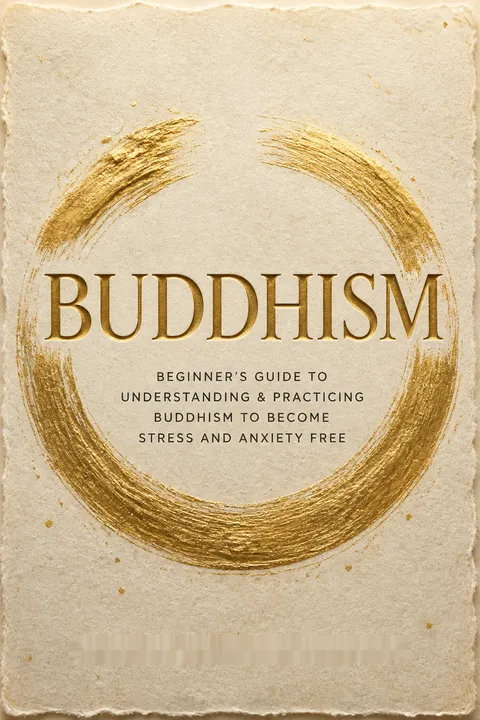
Buddhism by Michael Williams receives mixed reviews. Many readers find it a good introduction to Buddhist principles, praising its accessibility and practical advice on meditation and yoga. Some appreciate the book's respectful tone and its impact on their daily lives. However, others criticize it for being too basic in some areas while overly complex in others. Some readers express disappointment with the lack of depth in explaining certain concepts and the absence of comprehensive references to Buddhist texts. Overall, it's generally seen as a helpful starting point for those new to Buddhism.
People Also Read





Glossary
Four Noble Truths
A map of suffering and releaseA central Buddhist teaching organized as four linked claims: suffering and dissatisfaction occur; craving and related causes sustain them; suffering can cease; and a path of practice leads toward that cessation. The guide presents the truths as a practical diagnosis, inviting readers to identify distress, examine its conditions, and try a way of responding.
Noble Eightfold Path
Eight connected practicesThe Buddhist path described through right view, resolve, speech, conduct, livelihood, effort, mindfulness, and concentration. The guide groups these under wisdom, ethical conduct, and meditation. They are interdependent disciplines rather than a sequence of steps that must be completed once and then left behind.
Dukkha
Suffering and dissatisfactionA Buddhist term for suffering, stress, or the unsatisfactory quality of experience. The guide describes direct pain, distress when circumstances change, and the deeper instability of relying on changing conditions for lasting satisfaction. Dukkha does not mean that every moment is equally painful or that joy should be rejected.
Karma
Intentional action and consequenceIn the guide, karma refers especially to intentional actions of thought, speech, and behavior, and to their effects on oneself and others. It is presented as a dynamic process of cause and consequence, not a divine judgment or fixed fate. Responses to present circumstances can create further consequences.
Anatta
The teaching of non-selfA Buddhist term meaning non-self. It points to the absence of a permanent, independent essence that remains unchanged behind a person's bodily and mental experience. In this guide, the term is sometimes confused with a lasting inner self; those are different claims. Non-self is not simply a denial that people or experiences exist.
Nirvana
Liberation from the firesThe guide's term for liberation from suffering and the cycle of samsara, associated with the ending of greed, aversion, and delusion. It describes nirvana primarily as a state of release, not a physical destination. Buddhist schools vary in how they explain its nature and its relation to death and rebirth.
Three Poisons
Roots of harmful reactionA Buddhist framework naming delusion, greed, and ill will as deep sources of craving and suffering. The guide associates delusion with confusion about reality, greed with compulsive desire, and ill will with hostility or aversion. It pairs them with wisdom, generosity, and loving-kindness as counter-practices.
Five Precepts
Basic ethical training commitmentsFive guidelines for lay Buddhist conduct: refrain from killing, taking what is not given, sexual misconduct, false speech, and intoxicants that impair awareness. The guide frames them as voluntary training commitments rather than divine commands. Traditions and practitioners may interpret their application in particular contexts.
Bodhisattva
One committed to others' liberationIn Mahayana Buddhism, a bodhisattva is an aspirant oriented toward awakening and the liberation of other beings, not solely personal release. The guide uses this ideal to emphasize compassion as a central purpose of practice. Traditions differ in how they describe bodhisattvas, their vows, and their role.
Download PDF
Download EPUB
.epub digital book format is ideal for reading ebooks on phones, tablets, and e-readers.








