

Key Takeaways
Start a sentence with 'but' when the contrast needs a clean turn
The answer is yes. The book’s title poses a familiar grammar worry, then answers it plainly: a sentence may begin with 'but.' The word can connect a new sentence to the thought before it, making a contrast or qualification easy to follow. That choice is not a grammatical lapse simply because a teacher or handbook once discouraged it.
Purpose beats taboo. The larger lesson is to ask what a construction does for readers rather than reject it on sight. A sentence beginning with 'but' can sound natural and direct; in another place, a different transition may fit better. The decision belongs to the writer’s meaning and voice, not to a blanket ban.
What's useful here is the distinction between a word's grammatical category and its job in a passage. Readers process language through relationships between ideas, and a sentence-initial conjunction can make that relationship explicit. The same principle applies to transitions such as 'and' or 'so': their position alone does not determine whether prose is sound. The caution is that permission is not a recommendation to use the same opening repeatedly. A device that clarifies one contrast can become a verbal tic when it carries every turn.
Edit for readers, not for a rule's abstract symmetry
Correct depends on context. A form that suits a legal contract may feel stiff in a graphic novel or a blog. Even editors who agree that accuracy matters can disagree about punctuation, capitalization, hyphenation, and abbreviations. The book treats such choices as editorial judgment, not a hunt for one universal answer.
Helpfulness is a test. If a familiar abbreviation such as US needs no explanation, spelling it out just to satisfy a mechanical pattern may slow the reader without adding meaning. Conversely, redefining an acronym in a section heading can help someone who has forgotten it. The same choice can be needless in one place and useful in another, depending on what readers are likely to know at that moment.
This approach resembles design work: a convention is valuable when it helps people use an object, not merely because it is symmetrical. In editing, the reader is the user, and friction can be cognitive as well as visual. A rule can still protect consistency across a long document, but its purpose should remain legible. The editor's judgment is strongest when it can explain the likely reader benefit, rather than appealing to personal taste as if taste were a law.
Let clarity outrank mechanical consistency when the two collide
Consistency has limits. The Q&A considers whether numbers in a sentence should be spelled out or shown as numerals. When several numbers cluster together, numerals may be easier to scan, even if a general rule would spell them out. The editor weighs the passage’s existing patterns, the work required to revise the whole document, and the chance of introducing new inconsistencies.
Punctuation also carries meaning. In a sentence describing a design with compound functional elements and compound stylistic elements, a comma helps readers see the two groups correctly. A tidy rule against that comma would leave a harder sentence. Consistent styling is useful, but it is not a substitute for clear relationships between ideas.
Consistency reduces the small interpretive decisions readers must make, much as a stable interface makes repeated tasks easier. But uniformity can also conceal distinctions or produce awkward prose. The stronger editorial question is not whether a pattern is perfectly regular, but whether a departure helps the reader enough to justify its cost. That judgment should account for the document as a whole: one unusual numeral may be harmless, while dozens of shifting conventions can make a manuscript feel untrustworthy.
Rewrite tangled phrases before trying to rescue them with punctuation
Punctuation cannot repair every sentence. Business phrases such as 'future-state document' can leave readers unsure whether the document concerns a future condition or a future version of a state. A hyphen may show that words belong together, but it cannot supply a clear relationship that the wording has not expressed. Rewriting the phrase in ordinary language is often the better fix.
Word order matters too. A sentence about Richard Feynman’s art placed 'in the mid-eighties' beside his status as a graduate student seemed to suggest that he was a student in his sixties. The commas were defensible, but the sentence invited a comic misreading. Moving the time phrase closer to the event removed the confusion.
This is a practical application of the difference between local correction and structural revision. Punctuation can mark a relationship, but readers first need to infer what the writer means. When a sentence repeatedly demands rereading, changing its architecture is usually more efficient than adding signs around it. The limit is that not every unusual phrase needs smoothing: technical language may be necessary for a specialist audience. The test is whether the intended readers understand it without doing avoidable repair work.
Treat grammar rules as tools, not inherited superstitions
Some prohibitions have no solid basis. The book identifies the ban on ending a sentence with a preposition as a grammar superstition, not a rule demanded by authoritative grammar. Forcing a sentence into an awkward shape to avoid that ending can make it less readable.
Meaning controls tense and number. When a past-tense verb introduces a statement that remains true, shifting every subordinate verb into the past can falsely suggest that the truth has expired. Likewise, 'any' can refer to one missing item or several, depending on the noun it replaces. These cases show why editors should examine what a sentence means before imposing a mechanical formula.
The distinction between grammar and prestige is important: some supposed rules persist because they sound formal, not because they improve comprehension. Descriptive linguistics helps clarify how speakers actually use constructions, while editing asks whether a particular usage suits its audience and purpose. That does not make every usage equally effective in every setting. Formal conventions can help readers anticipate a document's register, but they should be defended as audience choices, not passed off as laws of language.
Make citations honest maps, not costumes for unusual evidence
Represent the source you have. A food label or live performance may be legitimate evidence even if a style manual has no exact sample citation. Rather than force it into a misleading template, describe details that help readers locate or identify it, such as the brand, event, place, or date. For a story published as words tattooed on volunteers, a clear explanation may be more useful than pretending it is an ordinary book.
Show the chain of evidence. If a quotation comes through a book that reproduces an archival document, and the original cannot be checked, the citation should reveal that route. Each intermediary separates the researcher from the original source, so readers deserve to know how the evidence reached the page.
A citation is both a retrieval device and a claim about provenance. This makes the book's flexibility more rigorous than it may first appear: an unconventional source needs a truthful description, not a counterfeit appearance of standardization. The same principle matters in digital research, where copied material can circulate far from its origin. A citation cannot guarantee that a source is accurate, but it lets readers inspect the path and judge the evidence for themselves.
Keep quotations faithful and make every attribution traceable
A quotation is evidence, not raw material to tidy. The Q&A advises against changing a source’s spelling or number style just to match the surrounding book. Court testimony may need to remain close to what was spoken, especially when accuracy is central; if extensive cleanup is appropriate in less formal work, paraphrasing may be clearer than disguising edits as a transcript.
Credit the source that actually created the words. An epigraph using a lyric sung by Lauryn Hill should not imply that she wrote it if the lyric came from another artist. The singer can be credited as the performer, but the wording should distinguish performance from authorship. Accurate attribution respects both the reader and the source.
Quotation marks create a compact promise: the words inside them have a specific relationship to a source. Editing can make a quotation more readable, but silent changes blur the line between evidence and editorial reconstruction. Attribution also has layers, including writer, performer, editor, and transmitter. Naming the relevant roles is more informative than treating a famous voice as automatic proof of authorship. Selection and context still shape any quotation, so faithful wording alone does not make its use neutral.
Record unsettled style choices so the same decision stays consistent
Authorities do not always agree. Dictionaries and style manuals may spell the same compound differently, and capitalization can vary across reference works. The book’s advice is not to pretend every dispute has a final answer. Look up uncertain forms, choose an approach that works across the document, and record it in a style sheet.
A style sheet turns judgment into a repeatable practice. It helps an editor remember decisions about compounds, capitalization, and other recurring details, rather than reopening the same debate on every page. Proper names and titles may also use forms that diverge from a preferred house style. Consistency means applying a considered choice within the work, not forcing every outside source to match it.
A style sheet functions like a small decision log. In team settings, it preserves institutional memory and makes editorial changes easier to audit. That is especially valuable where dictionaries conflict or a publisher's convention differs from a source's official styling. The discipline is not to record every whim, but to capture decisions likely to recur. Without that distinction, a style sheet can become an administrative burden rather than a tool for coherent prose.
Build references and indexes around how readers actually search
The reader should reach the information quickly. An index entry for an endnote should point to the page where the note appears, not merely to the page containing its callout. A broad entry with dozens of page numbers is also of little help; breaking it into subentries lets readers find a specific aspect of a subject. The book warns that 'passim,' meaning a subject appears throughout, rarely tells the searcher where to look.
Bibliographies serve discovery. A reference should preserve information readers need to identify a source, while avoiding invented details when information is missing. The exact form can vary, but its practical purpose remains: help someone locate and assess the material behind a claim.
This takeaway treats reference matter as information architecture rather than back-of-book ceremony. Indexes and bibliographies succeed when they reduce the distance between a reader's question and the relevant evidence. Search engines can locate titles, but they do not replace a well-structured index that distinguishes topics within a book. At the same time, no indexing convention fits every project. The editor must know the likely reader and the kinds of distinctions that reader will need to retrieve.
Analysis
This book is a practical reference assembled from questions rather than a linear theory of English. Its shape matters: each dispute arrives with a concrete problem, and the editors answer in a voice that is candid, sometimes teasing, and rarely willing to pretend that every choice has one correct solution. The recurring argument is that editing is a form of applied judgment. Grammar, punctuation, citation systems, and typography provide shared conventions, but the editor must still ask what a reader will understand, what evidence a citation represents, and whether consistency is helping or merely looking tidy.
The format makes that argument persuasive because the problems are small enough to recognize and consequential enough to expose the limits of rules. A comma can redirect a sentence, a citation can obscure how evidence was obtained, and an index can either guide or frustrate. The humor lowers the temperature around these disputes, allowing the reader to see that editorial certainty can be more theatrical than useful. The book’s most durable contribution is not a replacement rulebook. It is a hierarchy of priorities: preserve meaning, respect the source, serve the reader, and use convention where it supports those aims. That hierarchy also needs a boundary. The guidance comes from experienced editors working within the Chicago tradition, especially for formal publishing. It should not be mistaken for a complete account of every English variety, genre, or institutional style. A legal document, a novel, and a scientific paper can make different demands. The Q&A format offers examples of expert reasoning, not controlled evidence that one solution works universally. Its strongest use is therefore as a model of how to think: identify the real ambiguity, understand the audience, consult relevant authorities, and make a choice that can be defended. The book's wit makes that discipline memorable, while its repeated permission to choose keeps style from hardening into superstition.
Review Summary
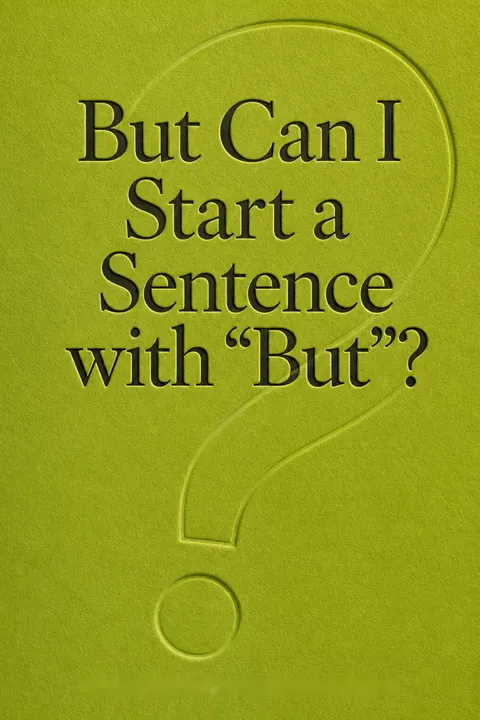
"But Can I Start a Sentence with 'But'?" is a witty and informative book based on the Chicago Manual of Style's Q&A section. Readers praise its humor, practical advice, and common-sense approach to grammar and style. Many find it both entertaining and educational, appreciating the editors' snarky responses to questions. The book is seen as a useful reference for writers and editors, offering flexibility in applying style rules. While some readers found it short, most enjoyed its blend of humor and grammatical guidance, making it a refreshing take on the typically dry subject of style guides.
People Also Read


Glossary
initialism
abbreviation spoken as lettersAn abbreviation formed from the initial letters of a phrase and pronounced as separate letter names. The book treats initialisms as words in their own right for many editorial decisions, including pluralization and possessive forms. For example, an editor can pluralize an initialism with a final s without reconstructing the grammar of every word in its expanded form.
restrictive
needed to identify the nounA word or phrase is restrictive when it narrows which person or thing a noun refers to. In 'Ruth's friend Tom,' the name may identify which friend is meant. Restrictive material is not merely extra description, so punctuation that sets it apart can change the sentence's meaning.
nonrestrictive
extra information about the nounA word or phrase is nonrestrictive when it adds information about a noun without identifying which person or thing is meant. In traditional punctuation, commas often mark such material as supplementary. The book notes that contemporary comma use can be flexible, which makes some sentences ambiguous and may call for a rewrite.
double genitive
of phrase with possessiveA construction that combines an of phrase with a possessive form, as in 'a picture of the king's.' It is an established English pattern, not necessarily an error. The construction can distinguish a picture belonging to or associated with the king from a picture that simply depicts him.
grammar superstition
unsupported grammar prohibitionA supposed rule that is repeated as a grammatical requirement despite lacking support from authoritative grammar. The book uses the term for the prohibition against ending a sentence with a preposition. Avoiding such a construction can make prose awkward without making it more grammatical or clear.
down style
lowercase wherever practicalA capitalization approach that favors lowercase forms unless a specific reason supports capitals. The Chicago tradition applies it to many titles, offices, and generic terms. It is a house-style preference, not a universal language rule, and other publishers may capitalize the same words differently.
passim
scattered throughoutA Latin term used in references or indexes to indicate that a subject appears in multiple places throughout a work. The book cautions that it is usually unhelpful as an index entry: readers already know the topic recurs, but still need precise locations or organized subentries to find particular information.
Download PDF
Download EPUB
.epub digital book format is ideal for reading ebooks on phones, tablets, and e-readers.








