

Key Takeaways
Make the reader need the next scene, not admire the setup.
Give the story a live question. A novel’s central engine is the reader’s desire to know what happens next. That question may be emotional, like whether a guarded person can risk intimacy, or physical, like whether a trapped character can escape. The genre matters less than the pressure and consequence. A protagonist facing a life-changing problem gives the plot room to build; a specialist correcting a minor plumbing error may not sustain a whole novel.
Cut toward the chase. The authors mock openings that introduce a full family, daily routines, or philosophical musings before anything consequential happens. Begin close to the event that changes the protagonist’s situation. Starting in media res means opening amid active events, then supplying necessary background once the reader has a reason to want it.
The useful test is not whether a scene contains action, but whether it changes what the reader expects, fears, or wants. A quiet conversation can create momentum if it forces a decision; a chase can feel inert if its outcome is obvious. This distinction helps writers avoid confusing noise with narrative pressure. The authors’ page-turning standard is intentionally demanding, though it should not reduce every scene to a cliffhanger. Readers also need pauses, provided those pauses deepen the stakes rather than postpone the story.
Start near the first consequential choice, then earn the backstory.
Make the present carry the past. The book’s train-bound doctor spends pages recalling family history and career doubts while the visible action remains a man sitting on a train. The problem is not that his past is irrelevant in principle. It is that the story asks readers to absorb it before showing why it matters. Often, a long stretch of explanation can be compressed into a paragraph, or moved into a scene where the information affects a decision.
Let history surface under pressure. Childhood, family secrets, and formative experiences can give behavior depth, but they should not become a queue of explanatory episodes. The reader needs enough context to understand the choice at hand, not an exhaustive account of how the character became who they are. Reveal the past when it changes the meaning of the present.
This is a lesson in information timing. Readers generally tolerate complexity when curiosity has already been activated, because they can attach new facts to a question they care about. Background delivered too early has no such anchor. Yet the principle is not a ban on slow openings or reflection: a novel may deliberately make waiting, memory, or delay its subject. The craft question is whether the apparent pause itself creates meaning, not whether the protagonist is physically moving.
Treat every emphasized detail as a promise the ending must answer.
Control what readers notice. The book calls a conspicuous but unused detail the Gum on the Mantelpiece. In fiction, readers assume that an unusual object, a striking gesture, or an unexplained problem was deliberately included. If it draws attention and then has no consequence, readers can feel misled. A planted clue is different: a red herring is an intentional false lead that redirects suspicion while remaining part of the story’s world.
Close the loops you open. A sibling’s addiction, a missing pet, or a troubling object can each create an expectation of resolution. These threads need an arc, even when they remain secondary. Too many such promises can overwhelm the central story, so emphasize only what the novel can afford to develop. Misdirection works best when the apparent clue belongs naturally to the characters and setting.
Fiction trains readers to treat salience as evidence. A detail that receives unusual attention feels more meaningful than an ordinary detail, so narrative emphasis creates an implicit contract. That contract can be exploited for surprise, but surprise is satisfying when the earlier clues still make sense in retrospect. This is why a fair misdirection differs from arbitrary concealment. The writer controls the reader’s attention, but not without responsibility for the expectations that control creates.
Let trouble compound long enough for its solution to matter.
Protect the pressure. A plot can feel thin when it follows only a couple through a narrow sequence of dates, or when one character carries every scene alone. It can also become unreadable when too many storylines arrive before their connections are clear. The book’s satirical labels describe both extremes, along with a third failure: complications that appear and vanish almost immediately. If a character loses a job, for instance, an instant replacement leaves little time for the loss to matter.
Make outcomes grow from causes. A hero’s specialized ability should be established before it saves the day. Unlikely coincidences need roots in earlier events, and a stated plan should not simply unfold without resistance. Give problems time to affect relationships and choices. Then let their resolution emerge from what the protagonist has done, rather than from a stranger or surprise rule arriving at the last moment.
Plot complexity is not a matter of maximizing the number of problems. It is about preserving causal and emotional continuity: one event changes the conditions of the next, and the protagonist’s response has a cost. This resembles systems thinking, where an intervention has effects beyond its immediate target. Still, a plot does not need perfect causal neatness. Randomness can be artistically important, particularly when a story is about luck or chaos. The essential distinction is whether contingency belongs to the novel’s design.
Build people from specific limits, not résumé traits or moral perfection.
Make each person particular. Generic descriptions, fashionable interests, and long inventories of clothes rarely make characters memorable. A distinctive detail can do more: someone who resents being forgettable tells the reader more than a neutral height and hair color. History can inform behavior, but it should not function like a simple diagnosis that explains every choice. Likewise, a protagonist who is endlessly generous, talented, and self-sacrificing can feel less human than someone whose virtues come with inconvenient limits.
Give supporting characters a job. Friends should differ in voice and function, not merely appear as a crowd. Love interests need more than physical appeal, and antagonists need motives a reader can recognize, even when their actions are harmful. A token good quality does not make a cruel villain complex. Complexity comes from understandable motives and behavior that fits the person, not from a checklist of admirable traits.
Specificity is more persuasive than a pile of adjectives because it lets readers infer character rather than receive a verdict. The same applies to moral complexity: a believable antagonist is not necessarily sympathetic, and an imperfect protagonist need not be softened into a charming rogue. One caution is that the book’s commercial instincts sometimes treat familiar reader expectations as universal. Writers working in satire, romance, or experimental fiction may intentionally violate those expectations, but the violation still needs to feel purposeful rather than accidental.
Make prose concrete enough to picture, but lean enough to keep moving.
Replace labels with evidence. Calling a city extraordinary does not show what makes it different. A concrete image, such as a specific shopfront, smell, or street habit, gives readers something to imagine. Description should select the details that reveal a place or person, not inventory every object in a room. The opposite mistake is bare summary: reporting that a character drove away and later settled down gives the reader a sequence of events, not an experience.
Let language serve the scene. Unfamiliar vocabulary, strained metaphors, clichés, and repeated explanations can call attention to the author instead of the story. Use a word only when it means what the sentence needs, and revise for clarity. The same restraint applies to punctuation, brand names, food, clothing, and incidental actions. Slow down for what matters; move quickly past what does not.
The strongest prose often makes its work disappear. Readers do not need maximal description; they need the right sensory and interpretive cues to build a coherent scene. This is a form of selective attention, not minimalism for its own sake. The book’s advice usefully resists both thesaurus-driven ornament and skeletal summary, although its comic attacks on ornate writing should not be mistaken for a rule against lyricism. A stylistic risk becomes a strength when it expresses the novel’s subject and remains intelligible.
Keep each scene inside one mind and let dialogue sound spoken.
Orient the reader. A point of view is the position from which the reader receives a scene. If a novel stays close to one character, suddenly revealing another person’s private thoughts can feel like an unexplained camera cut. Rapidly switching between two people’s inner lives can make it difficult to identify with either. Choose a perspective for the scene and respect what that character can know. Interior thoughts should deepen the action, not repeatedly restate the same fear or feeling.
Trust simple dialogue tools. Speech tags mainly identify who is speaking; ordinary verbs such as said rarely distract. Characters should not deliver biographies to people who already know them, explain every emotion aloud, or speak in identical polished sentences. Read dialogue aloud, trim routine greetings, and use dialect sparingly. Emotional reactions matter, but their intensity should fit the event rather than turn every minor inconvenience into catastrophe.
Point of view is not merely a technical choice. It regulates intimacy, uncertainty, and the reader’s access to evidence. Restriction can create suspense because information arrives at the same pace as the viewpoint character’s understanding. Dialogue performs a similar social function: people conceal, soften, repeat, and evade, not just transmit facts. These observations support naturalism without requiring transcripts of real conversation. The scene still needs shaping, since everyday speech contains far more repetition and filler than most readers want to follow.
Make the fictional world obey its own history, geography, and budget.
Build what the reader cannot supply. A familiar modern setting needs less explanation than an invented planet or a distant historical period. The farther the world is from the reader’s experience, the more the writer must establish its customs, physical environment, and social rules. Research should prevent anachronisms and give specialized characters the language and knowledge their work requires. It should also be filtered: a scientist need not explain every process she knows whenever she looks at a tree.
Make ordinary facts add up. Characters need plausible ways to afford their homes, travel, and hobbies. Social class and cultural habits should not be assembled from clichés or borrowed screen images. The author needs more background knowledge than the novel displays, so that details feel natural rather than inserted for a lecture. Establish what matters, then let characters live inside it.
Worldbuilding works best when it is experienced as constraint, not as a brochure. A setting becomes convincing when it shapes what characters can do, what they notice, and what their choices cost. This also explains why small errors can matter: a single out-of-period object can weaken trust in a carefully built historical world. At the same time, exhaustive accuracy is not the only goal. Research earns its place when it clarifies character or action, rather than competing with the story for attention.
Let theme emerge from consequences, not speeches or symbolic neon.
Make ideas part of the story. A novel about a person’s choices can carry a theme without announcing a universal lesson before the plot begins. The book warns against endings that explain what the preceding events supposedly proved, as well as symbols arranged so plainly that every character and object seems to carry a label. A sudden insight triggered by a perfectly timed sign or coincidence can feel planted by the author rather than discovered by the character.
Let readers do some work. A theme becomes persuasive when actions and consequences give it shape. Characters may express beliefs, but long speeches that simply repeat the plot’s moral flatten both the character and the idea. Political or ethical concerns can belong in fiction, yet opponents should not exist only to be ridiculous, and every scene should not be forced to endorse one position.
A theme gains force through implication because readers participate in connecting pattern to meaning. That participation is not a demand for ambiguity at all costs: a novel can take a clear moral position. The craft problem arises when the story stops dramatizing a conflict and begins prosecuting a case. Characters then lose the freedom to surprise, and the reader is reduced to an audience for a conclusion already decided. A well-made argument in fiction still allows human motives to be more complicated than its thesis.
Use sex, comedy, and formal tricks only when execution justifies the risk.
Know the form’s demands. The book treats sex scenes, jokes, and self-conscious experiments with fiction as high-risk choices. A sex scene needs a reason to occupy the reader’s attention, such as changing a relationship or advancing the plot; repeating the same encounter adds little. A scene that avoids both honest desire and deliberate omission can become awkwardly clinical. Comedy also depends on timing and proportion. Having characters laugh uproariously cannot make a weak joke work, and a physical gag may be vivid on screen but lifeless on the page.
Choose experiments deliberately. A novel that draws attention to itself as a constructed object can be effective, but novelty alone is not a lasting effect. If a technique interrupts immersion, it should offer something more than the fact that it is unusual.
These forms expose the gap between intention and effect. A writer may intend eroticism, wit, or formal daring, while the reader experiences embarrassment, indifference, or confusion. The advice to omit a weak effect is sound, but omission is not the only artistic option: deliberate awkwardness, discomfort, or disruption can be the point. The deciding question is whether the effect creates meaning that a quieter technique cannot. Risk is productive when it is controlled, not when the manuscript simply assumes the audience will supply the missing skill.
Treat the submission packet as a professional pitch, not a confession.
Present the work with confidence. A query letter should briefly explain the novel, its likely audience, and the writer’s relevant credentials. Apologizing for flaws, boasting about future awards, or attaching an unrelated life story distracts from the book. A synopsis should show the actual chain of major events, including the ending, rather than list every scene or hide the resolution behind promises of surprise.
Respect the process. First-time novelists are usually better served by finishing and revising the manuscript before approaching agents or publishers. Correct errors, use conventional formatting, and research which professionals handle the relevant genre. Do not send unsolicited full manuscripts where guidelines request a query first, pay an agent to read the work, or assume a publishing outcome is guaranteed. The authors’ practical rule is simple: publishing is a business, so behave like a professional.
The submission advice extends the book’s central concern with reader attention into the commercial setting. An agent or editor encounters the query as evidence of judgment, clarity, and preparation, not merely as packaging around the manuscript. That makes concise presentation part of the craft. The publishing landscape changes, and the book’s 2008 assumptions about routes to market should not be treated as timeless. Its durable counsel is narrower: understand the venue, communicate the project accurately, and do not let insecurity or bravado obscure the work.
Analysis
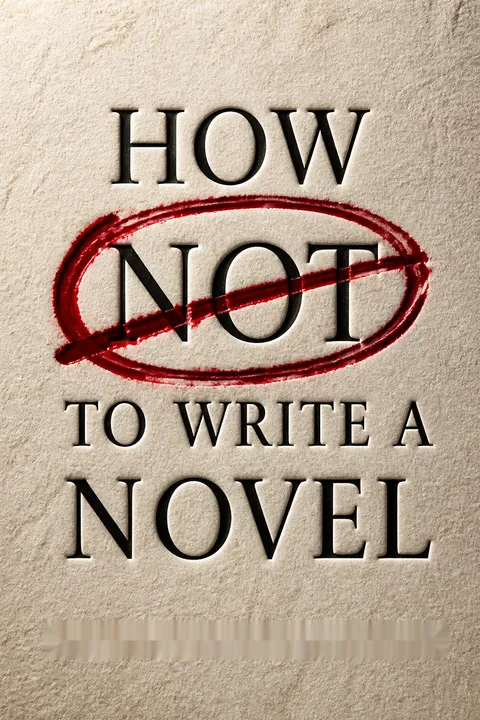
How Not to Write a Novel is a craft manual built from negative examples. Instead of prescribing a single formula, Mittelmark and Newman turn recurring editorial frustrations into comic cautionary scenes, then explain the underlying failure. That structure is unusually memorable: an absurd example makes an abstract problem visible, while its correction gives the writer a practical diagnostic. The book’s organizing claim is that fiction depends on managing reader attention. Plot creates questions, details create expectations, character behavior must feel motivated, and style must deliver information without repeatedly exposing its machinery.
Its strongest contribution is the distinction between a choice and an effect. Writers may intend a slow opening, a lyrical passage, a surprise, or a richly researched world; the relevant question is what the reader can actually perceive and infer. The focus on causality, proportion, and audience expectation is useful well beyond commercial fiction. It encourages revision as diagnosis: identify where curiosity weakens, where a detail creates an unpaid debt, or where the author’s knowledge has displaced the character’s experience.
The book’s comic certainty is also its limitation. The advice often assumes a reader seeking conventional narrative momentum and an editor evaluating commercial fiction. Experimental, meditative, or deliberately opaque novels may reject those norms for coherent artistic reasons. Some satirical examples also lean on dated cultural assumptions, and their sharpness can obscure the more general craft point. The authors themselves frame their guidance as observations rather than laws, a distinction worth preserving. The most productive use of the book is not to obey every warning, but to ask whether a departure is intentional, legible, and worth its cost. Its lasting lesson is editorial self-awareness: know the effect a choice creates, not merely the effect the writer hopes it creates.
Review Summary
How Not to Write a Novel receives mostly positive reviews for its humorous approach to identifying common writing mistakes. Readers appreciate the witty examples and practical advice, finding it both entertaining and instructive. Some criticize the book for being too basic or patronizing, while others note its usefulness for aspiring writers. The exaggerated examples and sarcastic tone are praised by many but considered off-putting by a few. Overall, reviewers recommend it as a lighthearted guide for novice writers and an enjoyable read for literary enthusiasts.
People Also Read




Glossary
The Waiting Room
Delayed story actionA beginning that spends too long on reflection, travel, or background before the central story becomes active. The term points to a mismatch between the protagonist’s apparent activity and the reader’s need for consequential events. The remedy is to identify the first important change and begin closer to it, moving necessary context into scenes where it matters.
The Gum on the Mantelpiece
Unpaid narrative promiseA conspicuous detail that leads readers to expect significance, but receives no payoff. Because readers assume that unusual details were deliberately selected, an apparently important object, problem, or gesture can create a promise even when the author did not intend one. The writer can resolve the detail, reduce its emphasis, or remove it.
The Red Herring on the Mantelpiece
Purposeful false clueA misleading clue deliberately used to draw attention away from the true explanation. Unlike an accidental unresolved detail, it is intended to create surprise and should remain integrated into the story. The clue should belong naturally to the novel’s world, and the people or relationships it implicates should receive appropriate resolution.
Monogamy
A plot with too few threadsThe book’s satirical label for a novel whose plot follows too few characters and activities, often leaving the protagonists’ relationship as the only meaningful source of events. The result can feel narrow and unlike lived experience. Adding other relationships or pressures can give the story texture, provided each thread contributes to the novel rather than becoming clutter.
Onanism
Isolated protagonist narrativeA more extreme form of the book’s plot problem called Monogamy. One character spends most of the novel alone, thinking about personal dissatisfaction without meaningful interaction with other people. The term is used satirically to describe narratives in which interior reflection substitutes for dramatic exchange and external pressure.
Serial Monogamy
Complications quickly erasedA plot pattern in which a problem appears and is almost immediately solved, preventing readers from becoming invested in its consequences. A lost job, relationship conflict, or practical obstacle may be introduced only to disappear at once. The term encourages writers to let worthwhile complications endure long enough to affect choices and create meaningful resolution.
The Orgy
Too many plotlinesThe book’s humorous name for a novel overloaded with characters, viewpoints, and storylines whose connections are difficult to follow. Complexity can make a fictional world feel broad, but unintegrated threads burden the reader. Each plotline should contribute to the main narrative or to a clearly shaped larger design.
The Underpants Gnomes
Missing causal stepsA gap between a story’s starting situation and its desired outcome, where the author skips the events that would make the change believable. Characters may suddenly reconcile, transform, or succeed without the reader seeing how. The correction is to write the intervening decisions and consequences, even if they lead to an ending different from the one originally planned.
Magic-onomics
Unexplained character wealthThe unexplained money that allows characters to maintain expensive lifestyles, travel, or hobbies without a credible source of income or resources. Readers may accept wealth as part of a deliberate fantasy, but unexplained financial convenience can weaken the fictional world. Establish a plausible source that fits the character and story.
Auto-Hagiographical Novel
Self-flattering autobiographical fictionA novel closely modeled on the author’s life that presents its protagonist as unfairly misunderstood, unusually gifted, or destined for vindication. The term adapts hagiography, a reverential account of a person’s life, to describe fiction that functions as wish fulfillment rather than transformed personal material. Its warning is to give private experience the complexity and distance that make it compelling to others.
FAQ
What's "How Not to Write a Novel" about?
- Guide to Avoid Mistakes: "How Not to Write a Novel" by Howard Mittelmark and Sandra Newman is a guide that highlights 200 common mistakes aspiring novelists make and offers advice on how to avoid them.
- Focus on What Not to Do: Instead of traditional writing advice, the book focuses on what not to do, using humor and examples to illustrate pitfalls.
- Structure and Content: The book is divided into sections covering plot, character, style, perspective, and the world of the novel, each with specific examples of errors.
- Practical and Humorous: It combines practical advice with humor, making it an engaging read for both novice and experienced writers.
Why should I read "How Not to Write a Novel"?
- Learn from Mistakes: The book provides insights into common writing errors, helping you learn from others' mistakes rather than making them yourself.
- Improve Writing Skills: By understanding what not to do, you can refine your writing skills and create more compelling and publishable work.
- Engaging and Entertaining: The humorous approach makes it an enjoyable read, offering both entertainment and education.
- Broad Applicability: The advice is applicable to writers of all genres, making it a valuable resource for any aspiring novelist.
What are the key takeaways of "How Not to Write a Novel"?
- Avoid Common Pitfalls: The book identifies and explains 200 common mistakes in novel writing, providing clear examples and solutions.
- Focus on Clarity and Engagement: It emphasizes the importance of clear, engaging writing that keeps readers interested and turning pages.
- Character and Plot Development: Offers insights into creating believable characters and plots that resonate with readers.
- Practical Writing Tips: Provides practical tips on style, perspective, and voice to enhance the quality of your writing.
How does "How Not to Write a Novel" address plot development?
- Beginnings and Setups: The book discusses the importance of strong beginnings and setups, warning against starting with mundane or irrelevant details.
- Complications and Pacing: It highlights the need for well-paced plots with meaningful complications that keep readers engaged.
- Endings: The authors stress the importance of satisfying endings that resolve the plot without resorting to clichés or deus ex machina.
- Avoiding Redundancy: Emphasizes cutting unnecessary scenes and focusing on the core story to maintain narrative momentum.
What advice does "How Not to Write a Novel" give on character development?
- Avoid Stereotypes: The book advises against creating stereotypical or one-dimensional characters, encouraging depth and complexity.
- Realistic Motivations: Characters should have believable motivations and flaws, making them relatable and engaging.
- Character Arcs: It stresses the importance of character development and growth throughout the story.
- Supporting Characters: Offers tips on creating memorable sidekicks and significant others who enhance the protagonist's journey.
How does "How Not to Write a Novel" suggest improving writing style?
- Clarity Over Complexity: The book advises using clear, straightforward language rather than overly complex or pretentious vocabulary.
- Avoiding Clichés: It warns against relying on clichés and encourages original, vivid descriptions.
- Dialogue Tips: Provides guidance on writing realistic dialogue that reflects character and advances the plot.
- Consistent Voice: Emphasizes maintaining a consistent narrative voice that suits the story and characters.
What are some specific methods or advice from "How Not to Write a Novel"?
- "Radical Surgery for Your Novel": Suggests cutting unnecessary scenes and focusing on the main plot to improve pacing.
- "The Red Herring on the Mantelpiece": Advises using red herrings effectively to add depth and intrigue to the story.
- "The Padded Cell": Discusses the challenges of writing in the age of cell phones and how to handle technology in plots.
- "The Democracy": Warns against using too many points of view, which can confuse readers and dilute the narrative.
What are the best quotes from "How Not to Write a Novel" and what do they mean?
- "We are merely telling you the things that editors are too busy rejecting your novel to tell you themselves." This quote highlights the book's purpose: to provide candid advice that writers might not hear from editors.
- "Do not think of us as traffic cops, or even driving instructors. Think of us instead as your onboard navigation system." This metaphor suggests that the authors aim to guide writers through the complexities of novel writing.
- "If you have made a point in one way, resist the temptation to reinforce it by making it again." This advice emphasizes the importance of avoiding redundancy in writing.
- "The only legitimate reason to do that is if the word you have chosen is the best word to express the idea." This quote underscores the importance of word choice and precision in writing.
How does "How Not to Write a Novel" address the use of perspective and voice?
- Consistent POV: The book stresses the importance of maintaining a consistent point of view to avoid confusing readers.
- Avoiding Head-Hopping: It warns against frequently switching perspectives, which can disrupt the narrative flow.
- Narrative Voice: Offers advice on developing a strong narrative voice that aligns with the story's tone and style.
- Interior Monologue: Discusses the effective use of interior monologue to reveal character thoughts and emotions without overwhelming the reader.
How does "How Not to Write a Novel" tackle the theme and message in writing?
- Subtlety Over Preaching: The book advises against overtly preaching a message, suggesting that themes should emerge naturally from the story.
- Symbolism: Encourages the use of subtle symbolism rather than heavy-handed metaphors that can distract from the narrative.
- Avoiding Clichéd Themes: Warns against relying on overused themes and encourages originality in conveying messages.
- Integration with Plot: Emphasizes that themes should be integrated with the plot and character development for a cohesive story.
What does "How Not to Write a Novel" say about setting and world-building?
- Avoid Over-Description: The book advises against excessive description that can slow down the narrative.
- Consistency in World-Building: Stresses the importance of creating a consistent and believable world, especially in fantasy and historical fiction.
- Relevance to Plot: Encourages settings that enhance the plot and character development rather than existing as mere backdrops.
- Avoiding Anachronisms: Warns against anachronisms in historical settings that can break the reader's immersion.
How does "How Not to Write a Novel" suggest handling research and historical accuracy?
- Thorough Research: The book emphasizes the importance of thorough research to create believable historical or technical details.
- Avoiding Info-Dumps: Advises against overwhelming readers with excessive information that doesn't serve the story.
- Integrating Research: Encourages integrating research seamlessly into the narrative to enhance authenticity.
- Balancing Fact and Fiction: Discusses the balance between historical accuracy and creative storytelling in historical fiction.
Download PDF
Download EPUB
.epub digital book format is ideal for reading ebooks on phones, tablets, and e-readers.








