

Key Takeaways
Treat currency trust as social infrastructure, not a technical detail
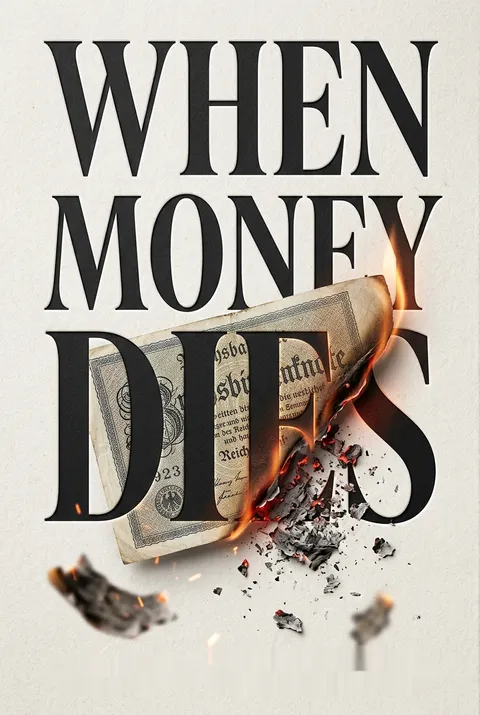
Money coordinates daily life. In 1913, the mark was roughly on a par with several European currencies. By the end of 1923, it was worth about one-millionth of its former value. The huge figures were hard to grasp, but the consequences were immediate: prices changed within a day, shops refused cash, and households hurried to exchange wages for goods.
Belief shapes behavior. People often said the dollar was rising, rather than recognizing that the mark was falling. Many kept using the currency they knew because they had little choice. As confidence collapsed, people spent money faster, prices raced ahead, and sellers increasingly demanded goods or foreign currency instead. The crisis destroyed not only savings, but the shared confidence that made money useful.
Money works as a coordination system: its usefulness depends on people expecting that others will accept it tomorrow. That makes confidence economically consequential, not merely a mood. The episode also shows why public trust cannot be restored by slogans alone. The government must be able to support its promises through credible fiscal and monetary institutions. Still, describing hyperinflation as a crisis of confidence should not obscure its material causes. People lost faith for good reason: the state kept issuing money against obligations it could not meet.
Borrowing without taxes hid wartime costs, then made peace harder
War bills were deferred. Germany suspended the mark’s conversion into gold in 1914 and created channels for issuing money and credit. The government relied heavily on war loans and Treasury bills instead of taxation. Its campaign urged citizens to exchange gold valuables for the war effort, while turning private savings into claims on the state.
The bill kept growing. By 1917, the money in circulation was five times its 1913 amount. Annual tax revenue did not even cover the growing interest burden on wartime debt. When defeat came, the new republic inherited these liabilities, weakened productive capacity, and a financial system already primed to expand credit. The choice to postpone the cost of war did not erase it. It shifted the cost into post-war instability and a punishing loss of savings.
The fiscal choice matters because borrowing can obscure who pays and when. Taxes make the cost of public decisions visible; inflation spreads it more opaquely across holders of money and fixed claims. That opacity can make deficit finance politically attractive, especially during war. Yet the distinction is not simply between virtuous taxation and harmful borrowing. Governments may need to borrow in emergencies. The danger in Germany was the persistent mismatch between public promises, revenue, and monetary discipline, with no convincing plan to restore balance after the emergency.
Reparations worsened inflation, but domestic policy made it combustible
External pressure was real. The Treaty of Versailles removed territory and resources and imposed reparations. In 1921, Germany’s total liability was set at 132 billion gold marks. Uncertainty about payments, Allied sanctions, and French pressure repeatedly shook confidence in the mark. Reparations were not an imaginary burden, and the terms made recovery harder.
They were not the whole cause. Wartime inflation had begun before reparations were settled. After the war, governments continued running deficits, subsidizing transport and food, and extending credit to businesses. Tax collection was ineffective, while powerful industrial interests resisted policies that might reduce their advantages. Reparations often served as the easiest explanation for the currency’s fall, but the choices made in Berlin helped turn pressure into a self-reinforcing crisis.
This distinction is essential to sound historical reasoning. External constraints can narrow a government’s options without determining its decisions. The reparations conflict shaped expectations and intensified political instability, while domestic fiscal choices governed how the state financed itself. A single-cause explanation would miss both. There is also a useful caution here: when a crisis has several causes, blaming the most visible outside actor can become politically convenient, even if it offers no remedy for domestic imbalances. Explanations can be accurate in part and still conceal responsibility.
Inflation rewards asset owners and punishes people paid in promises
The losses were unequal. Workers with unions could win frequent wage increases, although prices often rose before their next pay adjustment. Pensioners, civil servants, professionals, and savers had fewer ways to protect themselves. In Austria, Anna Eisenmenger watched family securities lose value and traded household valuables for food. In Germany, foreign visitors could find goods astonishingly cheap, while locals with fixed incomes struggled to buy necessities.
Some converted cash into property. Farmers, industrialists, and speculators could exchange depreciating marks for land, machinery, shares, or foreign currency. Mortgage debts shrank in real terms, benefiting borrowers while creditors lost. These outcomes were not evidence that everyone prospered. They show how inflation redistributes wealth according to access to assets, information, and bargaining power, not simply according to work or need.
Inflation is often discussed as an average rise in prices, but households experience it through their particular balance sheets. A wage earner with bargaining power, a pensioner with fixed income, and a business owner holding real assets face different versions of the same shock. This distributional lens clarifies why aggregate signs of prosperity misled observers. It also prevents a simplistic moral judgment of every person who bought goods or assets: self-protection was rational, yet widespread defensive behavior made collective recovery more difficult.
Delay stabilization until crisis, and fear begins to govern politics
Every setback found a scapegoat. As savings vanished and food became harder to obtain, Germans blamed farmers, workers, industrialists, foreigners, political opponents, and Jews. The assassination of finance minister Walther Rathenau in 1922 intensified the atmosphere of political violence. Inflation did not invent anti-Semitism or extremism, but it gave agitators a population already frightened, angry, and disillusioned with the republic.
Daily insecurity weakened civic ties. Families sold possessions, people hid food, and public officials struggled to live on salaries that had lost their value. Tax evasion and illegal trade became widespread strategies for survival. Fergusson traces how prolonged uncertainty eroded trust between classes and in government. The damage came not only from a single dramatic crash, but from years in which each new low was announced as temporary and followed by another.
Economic insecurity can change political judgment by making order feel more urgent than procedural legitimacy. In that setting, simple stories of betrayal may travel farther than complicated explanations of budgets, credit, and reparations. The book’s account connects material hardship to political vulnerability without treating people as automatons. That distinction matters: distress can create an opening for extremists, but it does not dictate which movement succeeds. Institutions, leaders, and choices still shape the outcome. The historical warning is about susceptibility, not inevitability.
The Ruhr resistance turned a fiscal crisis into a printing emergency
Occupation disrupted production. In January 1923, French and Belgian troops entered the Ruhr after Germany failed to meet deliveries. The region supplied most of Germany’s remaining coal and steel. Berlin called for passive resistance: workers were to stop cooperating, and the government would support them. This united Germans briefly, but it also cut off production, exports, tax revenue, and essential supplies.
The state financed the standoff with money it could not sustain. As wages and benefits for the occupied region mounted, the Reichsbank issued ever more notes. Prices surged, wages lagged, and workers demanded payment frequently so they could spend it before its value fell. By late summer, the mark’s decline had become extreme. Resistance was politically difficult to abandon, but continuing it made the currency crisis much worse.
The Ruhr episode shows how a national security response can become a fiscal trap. Once leaders publicly frame resistance as a test of honor, backing down carries political costs; continuing carries material costs that compound daily. This is a coordination problem as much as a financial one: workers, businesses, and citizens need to know whether the state can sustain its position. The narrative also complicates easy judgments about passive resistance. It initially produced solidarity, but solidarity could not substitute for the coal, revenue, and credible money the economy needed.
A new currency needs fiscal restraint, not just a new name
Germany hit the limit. In November 1923, Hjalmar Schacht helped introduce the Rentenmark, which was supported by mortgages on agricultural and industrial property rather than convertible gold. The paper mark was stabilized at a rate of one trillion marks to one gold mark. The new currency was not a straightforward claim on assets, yet people began to accept and hold it rather than spend it immediately.
Credibility came from policy as well as paper. The Reichsbank stopped discounting Treasury bills, cutting off the government’s easiest source of new money. Budget discipline and the end of subsidies for passive resistance helped make the promise believable. The supply of other forms of money did not instantly stop growing, and the Rentenmark itself was not convertible into gold. Its success depended on public acceptance and a credible limit on state borrowing.
The currency reform illustrates the power of institutional signals. A new unit can coordinate expectations when people believe it marks a change in the rules, not just a cosmetic redesign. But a label cannot bear the whole burden: the state also has to constrain the deficit that previously undermined money. This is why the Rentenmark’s imperfect backing did not make it meaningless, and why a technically sound currency can still fail if policy contradicts its promise. The episode invites a practical question: what observable commitment makes a stabilization pledge credible?
Stabilization restored trade, but exposed the unemployment inflation had hidden
The first relief was tangible. Once the currency stabilized, farmers began bringing food to cities, shops refilled, and queues eased. In Austria, League-backed reform had already shown that a stable currency could return even while the money supply continued to expand for a time. In Germany, stabilization also restored confidence, but it did not revive every business or repair every balance sheet.
The adjustment was painful. By Christmas 1923, more than 1.5 million people were registered as unemployed in unoccupied Germany, with the actual total likely higher. Firms built on cheap credit and subsidized costs struggled when money, wages, transport, and taxes had real value again. The Stinnes industrial empire collapsed in 1925, and registered unemployment exceeded two million in 1926. Monetary order was necessary for recovery, but it revealed losses that inflation had postponed and concealed.
The contrast between stabilization and recovery is a crucial distinction. Ending runaway price rises improves the conditions for exchange, but it does not instantly make unproductive firms viable or restore depleted savings. Inflation can disguise weak businesses by making borrowing unusually cheap in real terms; once that distortion ends, closures and job losses become visible. At the same time, unemployment is not a painless technical side effect. Any account of successful stabilization must include who bears its immediate costs and whether social support can prevent adjustment from becoming another political crisis.
Inflation weakened Weimar, but mass unemployment gave Hitler his electoral opening
The political legacy was serious, not automatic. Inflation helped erode confidence in the republic, devastated the middle classes, and let Hitler present himself as an answer to disorder. His 1923 putsch failed, and the return of stable money briefly calmed political passions. Fergusson rejects the claim that inflation alone caused Hitler’s rise: other countries endured similar currency crises without producing the same outcome.
The later depression changed the stakes. Germany’s post-stabilization recovery relied heavily on foreign loans and was vulnerable to their withdrawal. The economic dislocation and mass unemployment of the early 1930s gave the Nazis the electoral opening they had lacked during the inflation itself. The book’s argument is cumulative: hyperinflation helped weaken democratic legitimacy and normalize radical politics, while later unemployment made political victory possible.
This careful separation of conditions from causes is one of the book’s strongest historical judgments. Catastrophe can discredit institutions and strengthen movements that promise simple solutions, but it cannot by itself explain why one leader or party gains power. The distinctions among political opportunity, organizational strategy, and mass voting prevent a false lesson that currency instability mechanically produces dictatorship. The experience also warns against reading a brief return to calm as proof that deeper vulnerabilities have disappeared. Stability repairs coordination; it does not automatically repair democratic legitimacy.
Analysis
Fergusson’s account is strongest when it treats inflation as a lived process rather than a graph. The mark’s collapse appears in fiscal reports, diplomatic cables, and the changing calculations of households trying to buy food. These perspectives make visible a central political-economic mechanism: repeated monetary accommodation can preserve employment and postpone defaults for a time, but it also shifts losses onto savers, fixed-income households, and creditors, while weakening confidence in the state’s promises.
The narrative resists two tempting simplifications. Reparations mattered, but did not explain the wartime origins of inflation or the domestic decisions that perpetuated it. Inflation damaged Weimar democracy, but did not make Hitler’s victory inevitable. This distinction between an enabling condition and a sufficient cause is analytically valuable. The account links economic instability to political radicalization while leaving room for contingent choices, institutions, and later events, especially the mass unemployment of the Depression.
Its most unsettling insight is that the decisive threshold was political as well as monetary. Leaders repeatedly judged immediate unemployment or social unrest more dangerous than continued currency expansion. Each postponement narrowed the practical room for reform, until stabilization required severe disruption and authoritarian powers. That pattern resembles a broader problem of delayed adjustment: policies that suppress visible pain can accumulate hidden costs, making eventual correction more abrupt.
There are limits to the frame. The book’s concentration on monetary breakdown can make inflation appear to explain too much of a society already battered by war, defeat, territorial loss, and revolution. Its vivid accounts of suffering establish the human stakes, but do not prove that every social fracture flowed from the currency. The most defensible reading is therefore neither that money alone destroyed Weimar nor that inflation was a mere sideshow. It was a powerful amplifier, changing incentives and expectations while interacting with political conflicts that had other roots.
People Also Read









Glossary
Mark gleich Mark
Paper and gold treated equallyA Reichsbank principle that treated a paper mark as equivalent to a gold mark, regardless of the paper currency’s collapsing purchasing power. The doctrine helped conceal the difference between a note’s stated face value and its real value, encouraging people to think of depreciation as rising prices rather than a loss of confidence in the mark.
Notgeld
Emergency local moneyTemporary money issued by German municipalities, states, or businesses when the Reichsbank could not provide enough notes for wages and transactions. Some issues were authorized and backed by the Bank; others were not. As new issues multiplied, these local currencies added to monetary confusion and threatened efforts to establish a stable national currency.
Ruhrkampf
German passive resistance in RuhrThe campaign of passive resistance that followed the French and Belgian occupation of Germany’s Ruhr industrial region in January 1923. Workers and officials were encouraged not to cooperate with the occupiers, while the German government subsidized the population. The policy briefly united the country but disrupted production and revenue and greatly increased the government’s financial burden.
Rentenmark
New German stabilization currencyA German currency introduced in November 1923 to restore confidence after the paper mark’s collapse. Rather than being convertible into gold, its notes were supported by mortgages on agricultural and industrial property. Its credibility depended substantially on limiting government borrowing and convincing the public that the rules behind the currency had changed.
Devisenzentrale
Foreign-exchange control officeAn office established in Austria, and later imitated in Germany and Hungary, to regulate foreign-currency transactions. Such agencies tried to manage exchange rates and constrain speculation. Their controls could also obstruct legitimate trade, and fixing an official rate below the market rate often failed to persuade holders of foreign currency to sell.
Winkelbankiers
Back-street currency dealersInformal currency dealers who operated outside the official stock exchange during Germany’s inflation. They made money from differences between buying and selling rates for foreign currencies and became influential in a market where people sought alternatives to the depreciating mark. Authorities’ efforts to restrict them often drove the trade further underground.
Dolchstoss
Myth of betrayal in defeatThe post-war German claim that the Army had not been defeated in the field but had been betrayed by civilian politicians and others at home. The book describes how this myth damaged the legitimacy of the new republic and gave reactionary movements a powerful explanation for defeat, political change, and economic hardship.
Hyperinflation
Extremely rapid price inflationA phase of inflation so severe that prices rise at an extraordinary rate and money rapidly loses its usefulness as a store of value and medium of exchange. The book cites economist Phillip Cagan’s convention that hyperinflation begins when prices first rise by more than 50 percent in a month. Germany’s 1923 crisis far exceeded that threshold.
Download PDF
Download EPUB
.epub digital book format is ideal for reading ebooks on phones, tablets, and e-readers.








