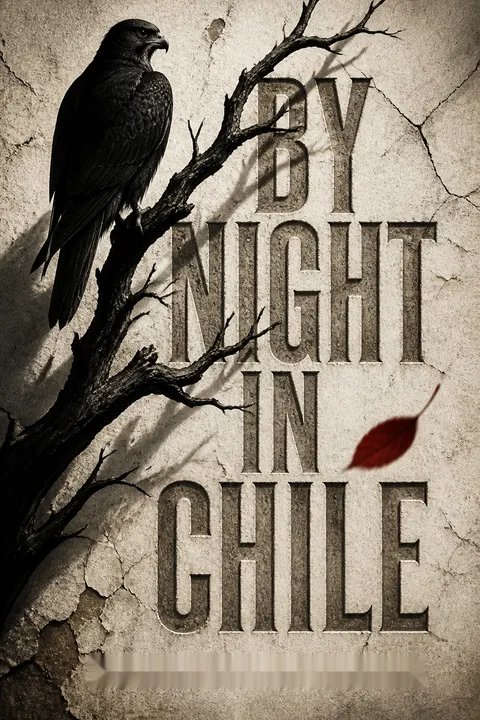


Plot Summary
A Cassock at Là-bas
As he lies gravely ill, Sebastián Urrutia Lacroix begins defending himself against an accuser he calls the wizened youth. His memories reach back to age thirteen, when he chose the priesthood despite his father’s opposition, and to his first meeting with Farewell, Chile’s imposing literary critic.
Farewell invites the newly ordained priest to his country estate, where Urrutia finds himself among writers and, briefly, the poet Pablo Neruda reciting beneath the moon. When farmworkers seek his help for a sick child, Urrutia retreats into a perfunctory religious answer and leaves them.
Later, Farewell’s unwelcome touch unsettles him, but Urrutia stays silent. The weekend gives him literary access and admiration, alongside early evidence of how readily he retreats from uncomfortable demands.
The estate gives Urrutia two kinds of initiation: entry into an elite literary circle and an encounter with people whose needs cannot be answered by literary prestige. He remembers Neruda as a revelation, yet the farmworkers’ request receives little attention. His later insistence on responsibility is already at odds with his behavior. The cassock signals authority, but it does not make him brave; it can just as easily become a shelter from direct obligation.
The Hill of Empty Heroes
Urrutia becomes a literary critic, publishing reviews under the name H. Ibacache while reserving Sebastián Urrutia Lacroix for his own poetry. Farewell introduces him to a story about a prosperous shoemaker who dreams of building a cemetery and monument to the empire’s heroes.
The emperor approves, then provides no support; the shoemaker spends his fortune on the abandoned project and is eventually found dead in its crypt. Urrutia carries the story as an image of ideals left to collapse.
In Santiago, his own days grow dull and sleepless, his writing turns disturbing, and he wanders the city in a cassock. Raef and Etah, business intermediaries with church connections, offer him a European study mission on church preservation, and he accepts.
The shoemaker’s monument is a miniature of Urrutia’s faith in cultural institutions: grand promises can outlast the people who make them, while those who serve the project bear its cost. Yet Urrutia does not turn the parable into a critique of power. He treats it as literary wisdom. His worsening boredom suggests a self increasingly unable to reconcile his public role as a measured critic with the darker material pressing into his private life.
Falcons Above the Churches
Urrutia travels through Europe to study ways of protecting churches, and in several towns he finds priests using falcons to drive pigeons from historic buildings. The method works, but its violence shadows the practical success.
In Burgos, the elderly Father Antonio doubts whether killing pigeons can be justified when they symbolize the Holy Spirit. As Antonio lies feverish, Urrutia frees his falcon, Rodrigo, which rises and kills birds before disappearing into the night. Antonio dies, and Urrutia leaves without explaining what happened to the falcon.
In France, another raptor kills a white dove meant to open a sporting event, upsetting the officials and spectators who had assigned the bird a peaceful meaning. Urrutia continues his travels, but dreams of falcons and suffering follow him home.
The falcons turn a technical report into a test of judgment. Each priest decides where preservation ends and cruelty begins, while Urrutia observes more than he resolves. Releasing Rodrigo looks like compassion, but it also removes the bird from Antonio’s care without certainty about its fate. The dead dove in France further exposes the gap between symbolic purity and actual life. Urrutia’s European mission trains him to catalogue methods, not to settle the moral conflict they embody.
Greeks Through the Coup
Back in Chile, Urrutia watches Salvador Allende win the presidency and responds by retreating into Greek literature. While he reads, the country moves through nationalization, shortages, strikes, political killings, and escalating street conflict.
The military coup eventually bombs the presidential palace, and Allende dies. Urrutia looks out at the altered city and feels relief that the upheaval has stopped, then prays for the living and the dead. Soon afterward, he and Farewell attend Neruda’s funeral, where political anger presses against the cortege and Farewell weeps for the poet.
Urrutia’s own poems also change, filling with violent and unsettling images. His outward life remains composed, but the country’s rupture has entered his imagination without prompting him to challenge the new rulers.
Urrutia’s reading is not simply an escape from politics; it becomes a method for making political events seem safely remote. He places Chile’s upheaval beside ancient texts, as if historical distance could turn crisis into an orderly sequence. His relief after the coup reveals the cost of that strategy: an end to visible disorder feels like peace even when violence and repression continue. The disturbing poems register what his public composure refuses to name.
Marx Lessons After Dark
After the coup, Raef and Etah return with a secret assignment: Urrutia is to teach basic Marxism to the members of the military Junta, including General Augusto Pinochet. He accepts, then travels under military escort to a guarded house for a series of late-night lessons.
He explains Marx, Engels, Lenin, Stalin, and other political theorists to Pinochet, General Leigh, Admiral Merino, and General Mendoza. Pinochet sometimes listens closely and describes himself as a reader and writer, while other officers take notes or fall asleep.
When the classes end, Urrutia asks himself whether teaching the regime’s leaders was necessary or wrong. He confides in Farewell, despite the secrecy warnings. A rumor spreads through Santiago, but the literary community largely ignores it as the country settles into silence.
The lessons invert the expected relation between knowledge and power. Urrutia supplies the Junta with the concepts it wants to understand, while Pinochet presents study as preparation for defeating political enemies. Urrutia’s doubts surface only after the service is complete, and his confession to Farewell seeks judgment without accepting public accountability. The rumor’s weak response matters: the culture around him has already learned to absorb compromise as ordinary, leaving his private conscience to carry what public life declines to examine.
The Party Above the Basement
During the curfew years, writer María Canales opens her large Santiago home to artists and writers for late-night gatherings. Her husband, the North American businessman Jimmy Thompson, is often away, while their two young sons are brought downstairs for guests to admire.
Urrutia attends occasionally and notices that the older boy, also named Sebastián, seems withdrawn and unwell. He feels concern but does not investigate. At one gathering, a drunken guest loses his way through the house and finds a blindfolded, injured man tied to a metal bed in the basement.
The guest returns upstairs without alerting anyone. Only later do accounts of the prisoner circulate among the literary crowd. The convivial salon and the hidden room occupy the same house, but the guests choose the party’s safety over the implications of what they have seen.
The house’s architecture makes the story’s moral arrangement literal: a cultivated room above, a place of coercion below. The writers’ gatherings are not merely adjacent to danger; they depend on habits of not asking what lies outside the social scene. Urrutia’s concern for the child is real but passive, and the guest who finds the prisoner converts discovery into silence. Their failure is not ignorance alone. It is a practiced preference for returning to the room where conversation can continue.
The House Becomes Evidence
After democracy returns, it becomes known that Jimmy used the basement as a DINA interrogation site and was involved in political assassinations. He is arrested in the United States, confesses, and enters witness protection; María is left behind as former friends avoid her.
Urrutia visits her at the deteriorating house. She acknowledges that she knew what Jimmy was doing, explains that prisoners were usually interrogated rather than killed there, and describes the children hearing the electricity cut out while she watched television with them.
She still wants to discuss her unfinished novel, but journalists ask about the basement. When she offers to show it to Urrutia, he refuses and leaves. Her former salon is now a ruin, yet his visit ends with another refusal to look directly at what happened.
The revelation does not produce a clean division between guilty and innocent. Jimmy’s crimes are explicit, María admits prior knowledge, and the writers’ past presence acquires a different meaning. Urrutia’s visit could have become an act of witness, but he declines the basement and leaves María’s account unresolved. Her insistence on literature is compromised, yet it also exposes how the cultural circle had treated art as a reason to gather while failing to confront the violence that made those gatherings possible.
The Youth in the Bed
As he returns in memory to Farewell’s funeral, the empty estate, and María’s abandoned house, Urrutia keeps asking whether there is any solution to what has happened. In his present illness, the wizened youth who has accused him grows quiet. Urrutia begins to recognize that the accuser may not be an outsider at all, but the part of himself that has remained unheard beneath his defenses.
He cannot rise from bed to resume teaching or writing. Instead, faces from his life pass through his mind, including people he admired, harmed, ignored, or failed to protect. The monologue that began as an attempt to clear his name ends with his self-justification giving way to a violent rush of memory and accusation.
The final recognition dismantles the distance Urrutia has maintained between himself and the critic who condemns him. The youth is not a convenient opponent to defeat but the judgment his own narrative has kept outside its frame. His memories join literary prestige, political collaboration, and ignored suffering into one personal history. The ending offers no absolution, only the collapse of the story he told to preserve his innocence.
Analysis
By Night in Chile turns the life story of a priest and critic into an examination of how educated people make accommodation sound like judgment. Urrutia does not lack intelligence or moral vocabulary. He can identify literary ambition, recognize suffering, and teach the theory of political revolution. His failure lies in the gap between perceiving a situation and accepting the consequences of acting within it. The farmworkers, the falconers, the military students, and the guests at María’s parties each expose a different version of that gap.
The book also challenges the idea that literature stands outside history. Farewell’s parables and Neruda’s poetry give Urrutia ways to imagine cultural permanence, but books cannot protect the people whose suffering remains unspoken. The literary gatherings at María’s home make this contradiction physical: art and hospitality occupy the rooms above an interrogation space. The writers’ silence helps preserve their social world even as it leaves victims unseen.
Urrutia’s circular narration is essential to this critique. He begins by insisting on his responsibility and purity, then recounts choices that complicate both claims. His eloquence becomes a defensive instrument, arranging complicity as duty and passivity as lack of knowledge. When the wizened youth emerges as a possible part of himself, the book refuses the comfort of an external villain. The final reckoning is not a verdict delivered from outside, but the return of truths his own narration has tried to keep buried.
Review Summary
By Night in Chile receives high praise for its political satire and stylistic brilliance. Written as a single-paragraph deathbed confession by Father Sebastian Urrutia Lacroix, a priest, poet, and critic, the novella explores complicity during Pinochet's dictatorship. Reviewers admire Bolaño's poetic prose, dark humor, and use of metaphor—particularly falcons hunting pigeons. The narrative examines moral silence among Chilean intellectuals who socialized while torture occurred beneath them. Most readers find it haunting and powerful, though some struggle with its stream-of-consciousness style and dense literary references. The book demonstrates Bolaño's mastery in condensing political critique into compact, fever-dream prose.
People Also Read



Characters
Sebastián Urrutia Lacroix
Priest and self-defenderA Chilean priest who also writes poetry and literary criticism under the name H. Ibacache. Urrutia prizes classical learning, social respectability, and the appearance of measured judgment. He is attentive to books and reputations, yet often evasive when another person’s need requires more than a polished answer. His recollections reveal a mind skilled at arranging experience into explanations, but less able to distinguish explanation from moral responsibility.
Farewell
Gatekeeper of lettersChile’s celebrated literary critic and Urrutia’s mentor. Farewell possesses wealth, confidence, and a formidable memory for writers, which gives him authority in the circles Urrutia longs to enter. He encourages Urrutia’s critical ambitions while embodying the mixture of elegance, appetite, and self-interest that shapes the literary establishment. His stories offer Urrutia ways to interpret ambition and history, though not necessarily ways to act.
Pablo Neruda
The nation's poetChile’s most famous poet, whom Urrutia encounters at Farewell’s estate. Neruda’s presence confirms the literary world’s grandeur in Urrutia’s eyes, and his poetry becomes a formative memory. He stands within the same cultural elite that Urrutia admires, while his stature gives the young priest an early glimpse of how literary authority can shape national identity.
Raef
A broker of assignmentsA business intermediary who approaches Urrutia during a period of exhaustion and introduces him to a church-related European research opportunity. Raef is efficient and socially persuasive, using professional contacts to make unusual assignments seem routine. His manner helps connect Urrutia’s clerical and literary life to institutions of political power.
Etah
A broker of assignmentsRaef’s associate, who explains the practical terms of the European study mission and later helps arrange Urrutia’s secret teaching work. Etah is precise and persistent, pressing Urrutia toward agreement by framing each task as a solution to an institutional need. His calm businesslike manner helps disguise the political weight of the work he arranges.
Augusto Pinochet
The uniformed pupilThe military ruler of Chile and the most prominent of Urrutia’s unusual students. Pinochet presents himself as a serious reader who wants to understand the political ideas associated with his opponents. His combination of command and curiosity unsettles Urrutia, who is accustomed to treating literature and scholarship as separate from the coercive reach of government.
María Canales
Host with divided roomsA young writer and generous hostess who draws Santiago’s artists and intellectuals to her home during the curfew years. María wants recognition as a writer and values the company of people who share her cultural interests. She is also a mother trying to maintain domestic life amid circumstances her guests do not fully see. Her charm and ambition make her gatherings inviting, while her silences complicate any simple account of hospitality.
Jimmy Thompson
The absent husbandMaría Canales’s North American husband and the father of their two sons. A businessman who is often away, Jimmy appears at the edges of the literary gatherings rather than as their center. His reserve and professional distance make him easy for guests to treat as background, a quality that fits the guarded social world surrounding the family.
Father Antonio
Falconer in doubtAn elderly priest in Burgos who keeps a falcon to protect a church from pigeons. Antonio’s religious concern for the pigeons’ symbolic meaning conflicts with the practical purpose of the bird. His hesitation gives Urrutia a vivid example of faith colliding with the consequences of a supposedly useful solution.
The wizened youth
The unheard literary accuserA shadowy young figure who confronts Urrutia in his sickroom and condemns the story he tells about himself. Urrutia describes him as an adversary, but the youth’s force comes from his refusal to accept the priest’s careful explanations. He represents a younger literary and moral perspective that Urrutia cannot easily dismiss.
General Leigh, Admiral Merino, and General Mendoza
The Junta’s other studentsThe military leaders who attend Urrutia’s lessons alongside Pinochet. Leigh engages actively with the material, Merino contributes questions, and Mendoza tends to take notes quietly. Their differing responses give the secret classes the feel of a political institution trying to learn from ideas it opposes.
Plot Devices
The sickroom monologue
A defense that becomes confessionUrrutia’s illness frames the book as an extended effort to answer an accuser and preserve his reputation. His memories move between eras, associations, and recurring images rather than following a clean chronology. This form lets the reader hear how he edits his own actions even as details undermine his claims of innocence. The frame also makes his final self-recognition a consequence of the narrative itself: the more he explains, the harder it becomes to keep the accuser separate from himself.
The falcons
Order maintained through violenceThe European priests’ falcons are introduced as practical tools for protecting historic churches from pigeons. Their success repeatedly produces moral unease: Father Antonio questions the killing, Urrutia releases Rodrigo, and another falcon kills a ceremonial white dove. The birds connect preservation to control, exposing the cost hidden inside a solution that appears efficient. They also recur in Urrutia’s dreams, carrying the unsettled consequences of what he witnessed back into his Chilean life.
The Judas tree
A country marked by betrayalIn a dream, the dying Father Antonio identifies a bare tree as the Judas tree while Rodrigo watches from its branches. Urrutia later understands the image as an emblem of Chile: a nation still rooted in fertile ground yet made to seem dead by betrayal. The image links the falcon episode to the political violence and silences that follow. It gives Urrutia an intuitive recognition of national damage, though recognition alone does not make him act.
María’s house
Culture built above tortureThe house first functions as a welcoming refuge where writers gather during curfew, drink, and discuss art. Its basement later reveals the concealed violence operating beneath that convivial surface. The contrast makes the guests’ silence part of the plot, not merely a thematic backdrop, and forces Urrutia to confront how cultural life can continue beside political cruelty. This device reveals a major secret about Jimmy’s work and therefore contains a plot spoiler.
Download PDF
Download EPUB
.epub digital book format is ideal for reading ebooks on phones, tablets, and e-readers.








