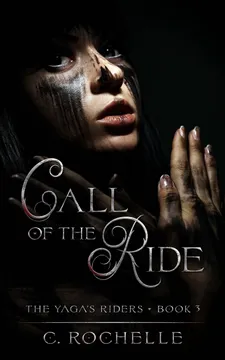


Plot Summary
The Rider in the Darkness
Smoke still fills the Facility when Vasilisa searches the wreckage for Nox, whose darkness absorbed the blast that stopped his father, Matthew. His bond with her seems severed. Asa and Taneer pull her from the ruined room before she can search any longer, then put her to sleep so they can get her safely away. At home, Vasilisa refuses to believe Nox is dead, but cannot feel him.
The forest is still being consumed by the Devouring, and the captive Mother Goddess is still needed to heal it. Vasilisa also keeps secret the riddle Koschei gave her after she offered herself in exchange for information. Grief cannot cancel the work ahead: the three surviving Riders must go to London and bring down Matthew’s operation.
The opening makes loss tangible before it explains the wider crisis. Vasilisa’s first instinct is to search the wreckage, even when the people holding her are also grieving; her refusal to leave is both devotion and a bid to deny an irreversible fact. The rescued recruits, the damaged forest, and the hidden riddle establish that private pain is occurring inside a public emergency. Her secrecy about Koschei’s terms anticipates a recurring flaw: she equates taking responsibility with acting alone. The story begins not with a clean mission briefing, but with a woman trying to keep love and duty from becoming competing claims.
Veles Names the Way
At a tense council, shifter leaders accuse the humans of abusing their kind, while Vasilisa insists that she and her remaining Riders will still pursue the Facility’s leaders. She suddenly realizes Veles, god of the underworld, may know whether Nox survived.
At a sacred grove, Vasilisa, Asa, and Taneer combine their powers through their bond to reach the Nav. Their intimacy intensifies that connection, and the two men’s horns remain visible afterward, a sign that their divinity is growing.
Veles confirms that Nox has not died: he overused his darkness and became trapped within it. Marena explains that a London medium, Cassandra Moonstone, may be able to bring him back. She also warns that Vasilisa’s power is still incomplete, making the search urgent.
The grove turns intimacy into a practical form of magic, but the scene does not reduce connection to a convenient spell. The Riders reach Veles because their bodies, powers, and trust act together, while Nox’s absence remains the wound organizing their choices. Veles gives them hope and immediately makes that hope conditional: Nox is alive, but beyond ordinary reach. The horns mark a visible change that the characters did not plan, so power arrives alongside uncertainty rather than mastery. Marena’s intervention also links the personal rescue to the larger threat, showing that the same group must recover its missing member and become strong enough to repair a dying world.
Cassandra Calls Him Back
Marena carries the group to London, where Vasilisa learns that she owns the hotel Anthia chose for them. The city exposes her to crowds and attention she has avoided for centuries, but her Riders help her move at her own pace.
At Cassandra’s occult shop, the medium recognizes the invisible Nox and warns him to stop interfering while she prepares a retrieval spell. The spell requires royal blood. Anthia, Vasilisa’s sharp-tongued swan-shifter friend, supplies it, and Cassandra paints signs over Vasilisa, Asa, and Taneer before instructing them to pull Nox through their shared bond.
Vasilisa reaches into the darkness and hauls him back into the room. Nox is alive, but Vasilisa meets him with formal distance instead of relief, leaving their reunion painfully unfinished.
The rescue depends on a resource Anthia did not know she possessed, so the first return from the darkness also opens a second mystery. Cassandra’s ritual translates affection into effort: Vasilisa cannot simply wish Nox home; she must gather the others and pull against the force holding him. Yet reunion does not instantly repair the relationship. Vasilisa’s reserve reflects the cost of having been left with grief and unanswered questions, while Nox’s return cannot erase the danger he chose to face alone. The scene resists the romance convention of treating survival as automatic reconciliation. The group has recovered its missing member, but emotional trust remains an unfinished task.
Liu’s Lab Ambush
Asa and Nox stake out the London laboratory run by Mr. Liu, which Asa suspects is connected to the Facility’s experiments. Matthew arrives with armed men, orders the lab cleared, and leaves before Asa can take a shot. Nox recognizes the danger too late: attackers have surrounded their hiding place.
He conceals them with darkness, but a bullet strikes him as they escape. Asa’s horse, Praline, carries them out through the air. Back at the hotel, Nox heals in the bath, where Vasilisa confronts him over his habit of sacrificing himself.
She admits that she needs time to trust him, and he admits he fears losing her. Their bond strengthens again. Meanwhile, Marena examines Anthia’s memories and discovers the Facility’s experiments have left her carrying a dangerous secret about her parentage.
Matthew’s ambush reveals that Nox’s danger is not merely a consequence of his earlier sacrifice. His father is still able to find and test him, turning their family relationship into an extension of the Facility’s laboratory. Nox and Asa survive because Nox uses his new power and Asa’s horse appears when needed, but survival costs them the chance to capture Matthew. The bath scene then gives the action a relational consequence: Vasilisa names her need for time, and Nox has to hear it without converting protection into control. Anthia’s buried history expands the antagonist’s threat from individual violence toward the systematic exploitation of supernatural bodies.
A Swan’s Hidden Blood
Marena enters Anthia’s damaged memories and sees that the Facility has subjected her to severe abuse and blood collection. She reveals to the others that Anthia’s unusual parentage could let Matthew’s people study whether humans and shifters can have children.
Anthia, usually quick with a cutting remark, retreats under the weight of what was done to her. Nox accompanies her and Marena to Cassandra, where the medium helps him discover that Matthew implanted a tracking device in his body when he was a child.
Nox pulls it out with his darkness and crushes it, ending Matthew’s ability to follow him through it. On the parallel visit, Taneer and Asa meet Taneer’s mother, Zehra. Her visions identify Thames Head as the source named in Koschei’s riddle, and reveal the old prophetic pattern behind the Riders.
Anthia’s story changes the moral scale of the conflict. The Facility is not simply a prison or a weapons program; it treats bodies as information and imagines reproduction as another instrument of human dominance. Her silence is not consent, and Marena’s careful access to memory makes the group confront knowledge without forcing Anthia to recount every injury aloud. Nox’s tracker reveals the same logic applied to him from childhood: Matthew has regarded even his son as a specimen. The parallel visit to Zehra shows that family secrets can preserve guidance as well as cause harm. Her vision gives the group a route forward, but also confirms that their lives have been shaped by a prophecy they did not understand.
The Fae Divides the Riders
At an elaborate dinner hosted by the Fae who calls himself Ulysses, Vasilisa and her Riders learn that the helpful guide has been steering them through their journey. He gives them blue rose oil, then uses it to send the men away for encounters with their own unfinished histories.
Vasilisa must locate the Sevenfold Spring, not merely the official marker for Thames Head. She follows her intuition to a dry well at Trewsbury Mead and calls water up from an earlier season, but Ulysses tells her that the riddle still requires nature’s proper timing.
Meanwhile, Nox and Asa meet Mokosh in the Great Womb and confront her for shaping their lives without telling them the truth. Taneer is sent to Veles, where the god admits he fathered him with Zehra and apologizes for staying away.
Ulysses’ trickery forces the characters to stop treating guidance as a substitute for self-knowledge. He gives Vasilisa a task that cannot be solved by reaching the most famous landmark; she must listen to her own intuition, even when the first answer proves incomplete. The men’s journeys similarly turn inherited roles into questions they can challenge. Nox and Asa resent Mokosh for withholding the truth, while Taneer has to meet a father who is both divine and absent. Their revelations are not tidy reconciliations. They expose the cost of being created for a purpose without informed consent, while allowing each man to decide what relationship, if any, he wants with the parent who shaped him.
The Heel Stone Beckons
When the Riders reunite, Vasilisa has collected water but still lacks the right moment to use it. They discover that the teal necklace the Fae returned to her came from a ritual site associated with a heel stone. The riddle’s instruction to point her heel toward the sun at its highest position directs them to Stonehenge.
Their progress is interrupted when Marena finds them and reports that her twin, Jarilo, has collapsed after investigating the laboratory. At the hotel, he revives after Anthia’s presence and vines trigger a memory of her Facility trauma; he is shocked by her fear and withdraws.
Asa recalls that the lab’s cold-storage room contained dangerous material, and Nox recognizes that Matthew’s special ammunition may have been made to hurt demigods. The group now knows the human enemy is testing weapons against divine power.
The heel stone gives physical shape to a riddle that has so far resisted literal solutions. Vasilisa and the Riders can follow clues only by combining observation with inherited knowledge, and the necklace connects her personal history to an older ritual geography. Jarilo’s collapse then demonstrates that the danger has escalated beyond shifters. His accidental use of vines also shows how an apparent romantic gesture can reproduce the bodily helplessness Anthia endured, even without deliberate intent. The scene asks the group to distinguish intention from impact: Jarilo may not mean to harm her, but her fear is real. Meanwhile, the special bullets reveal a strategic vulnerability that makes the coming confrontation more than a contest of raw power.
Cassandra’s Double Life
As Jarilo recovers, the group learns that the lab’s cold room held a potent experimental substance, and Asa recalls being taken there during an earlier delivery. Taneer uses his emerging psychic ability to enter Nox’s memory. He sees Matthew give Nox experimental bullets and hear him speak with Cassandra about a London meeting.
The apparent betrayal sends the Riders to Cassandra’s shop, where she explains that she once gave Matthew a vision connecting him to Vasilisa’s legend. He twisted that warning into a delusion that he could become all three Riders and rule through immortality.
Cassandra admits she failed to recognize the full danger, but Marena confirms she is telling the truth. Taneer then reads Matthew’s belief that humans must dominate every supernatural species. His memory points the group toward the White Tower.
Cassandra’s history demonstrates how partial knowledge can become dangerous when a listener turns prophecy into permission. Matthew takes a vision about his role in the Riders’ story and converts it into a claim of ownership, making destiny serve his appetite for power. Cassandra’s failure is not that she possessed no insight, but that she mistook warning for harmless eccentricity for too long. Taneer’s new ability emerges through shared memory rather than solitary effort, extending the book’s recurring idea that connection makes knowledge possible. The revelation also sharpens Matthew’s ideology: his experiments are not neutral research but an attempt to enforce a hierarchy in which humans control every other form of life.
The White Tower Falls
The four Riders enter the Tower of London under cover of Nox’s darkness. Taneer’s intuition leads them to the White Tower, where they find Matthew torturing a captured shifter while three followers chant around him. The Riders kill the followers and free the prisoner.
Matthew claims he has altered himself with shifter genes and threatens to keep other captives hidden unless Vasilisa joins him. Taneer reads his mind and takes the locations of the remaining holding sites, removing Matthew’s leverage.
Vasilisa tears away the armor Matthew wore to imitate the kings displayed in the tower. Nox chooses a plain gunshot through his father’s heart rather than prolonged revenge. Asa and Taneer dispose of the body, while the rescued wolf is sent back to her clan.
The Tower’s royal displays give Matthew a stage for the fantasy he has built around himself: he dresses as a ruler while treating living beings as property. Vasilisa strips that costume away, but the more consequential defeat is Taneer’s seizure of the prison locations. Information, not spectacle, breaks Matthew’s control over the captives. Nox’s decision to kill him quickly rejects the logic of the Facility, which turned suffering into a tool and called it useful. Yet the act does not erase Nox’s history with his father. His choice is a boundary, not a cure. The rescued wolf also makes the victory concrete while reminding the group that other prisoners remain beyond the tower.
Shifters Join the Hunt
After Matthew’s death, the Riders report to the shifter leaders that his operation has been broken but other prisoners still need rescue. Vasilisa admits that the former Yaga buried a piece of Koschei’s death, causing the Devouring, and promises to find it.
Even Luperca, who had distrusted Vasilisa because she was once human, apologizes and offers her wolves for the coming missions. Anthia volunteers to train and fight with the wolf clan, despite Jarilo’s attempt to decide what risks she may take.
The group also learns that Veles’s bombs can sever the connection between an object and its realm, but their effect on living beings is uncertain. Taneer recognizes that the solstice and the heel stone are their next opening, so the Riders set out for Stonehenge.
The alliance with the clans is earned through accountability, not a claim to authority. Vasilisa names the former Yaga’s role in the forest’s ruin and offers a specific promise to repair it; Luperca answers by revising her prejudice and contributing fighters. Anthia’s choice to join the wolf mission asserts that survival cannot mean permanent exclusion from danger. Jarilo’s protective impulse repeats the very pattern the Riders are learning to resist: care becomes coercion when it overrides another person’s agency. Veles’s bombs add a volatile tool to the plan, but their uncertain effect on life makes power itself a risk. The coming ritual therefore depends on judgment and cooperation, not force alone.
Stonehenge at Solstice
The Riders reach Stonehenge before dawn and use blue rose oil to deepen the bond among them. As their combined powers intensify, the ancient stones glow, and the necklace’s place in the riddle becomes clear: its jagged setting fits a hole in the heel stone when the sun aligns with it.
Vasilisa drinks the water from Thames Head at the appointed moment, expecting a direct view of Koschei’s hidden death. Instead, she sees the same forest destruction she has witnessed before.
The others cannot identify its meaning, and she leaves the stones disappointed, though the ritual has strengthened their shared abilities. They return toward Vasilisa’s forest with the clue unresolved, unaware that the vision is not a map of a place but a memory tied to the Facility.
The ritual rewards the Riders with unity but withholds the answer they hoped to receive. That distinction matters: their enhanced power is not the same as complete understanding. The riddle’s pun on the heel stone makes the solution dependent on attention to language, landscape, and timing, while the vision demands an additional act of interpretation. Vasilisa is accustomed to treating failure as evidence that she must try harder alone; here, the group shares the uncertainty without yet being able to resolve it. The scene also aligns the Riders’ intimacy with a landscape that predates them. Their bond matters, but it does not make the world instantly legible.
The Witch Faces Koschei
Back at her hut, Vasilisa notices a nesting doll left on the windowsill and confronts Koschei alone. He claims her deal prevents the Riders from helping and insists that finding his hidden death will make her his. Vasilisa recognizes that the vision from Stonehenge showed the Facility grounds during her escape with Nox.
To understand why she can alter time, she drinks the remaining blue rose oil and reaches the Great Womb. Her dead mother and Mokosh reveal that Mokosh blessed Vasilisa at birth so she could touch time beyond the gods’ rules. Becoming Yaga was Vasilisa’s own act, not their plan. The blessing is what makes her capable of opposing Koschei, and the memory of the Facility finally gives her a place to search for his death.
Vasilisa’s journey from riddle to revelation revises her understanding of agency. She was blessed for a purpose, but she was not simply carried into the Yaga’s role by other powers; she chose that transformation herself. This distinction prevents prophecy from swallowing her personhood. Her mother’s presence also reframes sacrifice: the blessing was given in hope of protecting the world, but Vasilisa still has to decide what to do with the life that resulted. Koschei tries to use a contract to isolate her, yet his claim depends on her accepting his account of what she is. The memory of escaping the Facility offers a counterstory rooted in her actual choices.
Death Buried Beneath the Facility
Vasilisa returns to the Facility with her Riders and uses their combined powers to uncover a buried doll that resembles the one from her childhood. She stops time, reaches back to the moment the former Yaga buried Koschei’s death, and removes it from her grasp. Then she detonates Veles’s bomb against herself, severing her bond to her Riders and dragging Koschei into the darkness realm with her.
Mokosh explains that Vasilisa’s human life was hers by right of the birth blessing, so Koschei never owned the claim he made. Back in the living world, Vasilisa summons the dead Koschei had sent to the Nav. They join her Riders, Marena, and Jarilo in a hunt that drives the deathless creature into the sea, where a great beast pulls him under.
The climax makes Vasilisa’s apparent surrender a calculated use of the rules Koschei has relied upon. She honors the agreement’s demand for separation, then reveals that his claim was never legitimate because her birth blessing preceded it. The time stop also gives her a way to alter the original act of concealment rather than merely search the present for an object. Her choice to summon Koschei’s victims turns his long history of evasion into the force that defeats him. The Riders do not rescue her from the climax; they fight beside her once she has chosen the terms. Agency here is neither solitude nor obedience, but a deliberate use of both memory and alliance.
The Hunt Ends at Sea
After Koschei is dragged into the depths, Vasilisa sends the summoned dead back to the Nav and feels the veil strengthen. Mokosh begins restoring the forest, while the Riders return to the shifter clans with Matthew’s captured locations and a plan to free the remaining prisoners. Vasilisa admits to her men that she loves them, and Nox accepts that her dangerous plan was also one he might have made.
The four return to the hut with their bond restored, no longer treating Vasilisa’s independence and the Riders’ protection as opposing forces. The main threats have been stopped, but the rescue work remains unfinished. Anthia continues training with the wolves, and the surviving allies begin rebuilding lives damaged by the Facility.
The resolution does not pretend that defeating two antagonists repairs every consequence. The forest can heal because the death has been removed, but the captives still need rescue and Anthia still carries the effects of imprisonment. Vasilisa’s love confession matters because she gives it without using it as a farewell or a shield; she allows intimacy to exist alongside her independent decisions. Nox’s forgiveness similarly does not erase their conflict, but it makes future disagreement possible without turning it into abandonment. The ending’s homecoming is therefore provisional and active. The characters have won enough safety to begin the slower work of restoration, and the chosen family they formed becomes the means of continuing it.
Epilogue
Four months later, Anthia attends Vasilisa’s birthday gathering in the forest hut. The Riders celebrate with irreverent gifts, including a bone ring from Asa and yarn Nox chose for Vasilisa’s neglected loom. Anthia sees that her friend has found safety and affection, but she is still recovering from the Facility and knows other shifters remain captive.
She trains with the wolves and grows closer to Kazimir, while trying not to dwell on her confusing attraction to Jarilo. Before leaving, she keeps Cassandra’s sealed letter unopened and chooses to trust that her own future is still hers to shape.
Anthia’s viewpoint shifts the ending away from the victorious couple and back toward the people the central conflict has not yet healed. The birthday gifts make love concrete: Asa offers a token of shared danger, while Nox notices Vasilisa’s abandoned craft and helps her return to it. Anthia can celebrate that happiness without pretending her own trauma has vanished. Training gives her a route from victimhood toward capability, while her uncertain feelings for Jarilo complicate any simple recovery narrative. The unopened letter preserves a future question rather than closing every thread. Her final movement into the night mirrors Vasilisa’s earlier insistence that inherited expectations need not dictate what comes next.
Analysis
Call of the Ride treats destiny as a force that can explain a life without fully owning it. Vasilisa is blessed for a purpose, but she chooses to become Yaga; the distinction matters because her agency is neither absolute independence nor passive submission to prophecy. The gods, the Fae, and even her enemies repeatedly try to describe what she is for. Her growth comes from learning to use inherited power while refusing the isolation that once made survival possible.
The Riders embody different forms of intimacy under pressure. Nox protects by acting before he can be abandoned, Asa serves because usefulness feels safer than asking to be wanted, and Taneer uses humor to secure a place in the group. Vasilisa's secrecy and their reflexes collide because each has learned a different defense against loss. The romance becomes meaningful when the group recognizes that a shared bond does not erase individual consent or the need to communicate.
The Facility extends that question of ownership into politics. Matthew's experiments make bodies into data and difference into a justification for domination. His ideology is not an abstract villain's creed; it is enacted through trackers, bullets, cages, and the exploitation of shifters. Anthia's experience reveals the intimate cost of that system, while the clans' eventual cooperation shows how trust can be rebuilt through accountability and practical action.
The book's recurring objects connect these conflicts: the doll links Vasilisa's human history to the buried death, the necklace joins personal inheritance to sacred geography, and the water riddle makes attention itself a form of power. Resolution arrives not because one hero becomes invulnerable, but because Vasilisa combines memory, intuition, allies, and a willingness to alter the past. The forest's healing is therefore both magical repair and a model of collective responsibility. The final work remains unfinished, but chosen family gives the characters a way to continue without pretending that survival has erased harm.
Review Summary
Call of the Ride concludes the Yaga's Riders trilogy, receiving praise for its humor, spice, and satisfying resolution. Readers appreciated the character growth, especially Vasilisa's development. The unique Slavic folklore elements and world-building were highlights. Some found the ending anti-climactic, while others loved the emotional journey. The spicy scenes were noted as plentiful and varied. Overall, fans expressed sadness at the series' end but satisfaction with the conclusion, eagerly anticipating potential spin-offs or future works in the same universe.
Characters
Vasilisa
The time-bending YagaOnce human and now Baba Yaga, Vasilisa protects a sacred forest and the shifters who depend on it. Centuries of isolation taught her to guard her feelings and solve danger without asking anyone to share the burden. Her three fated Riders unsettle that self-reliance, offering not only desire but forms of trust she has never practiced. Vasilisa is neither a passive vessel for prophecy nor untouched by the damage she causes; she can be fierce, secretive, and wrong. What drives her is a deep attachment to the living world and a determination to take ownership of her choices. Her struggle is to let love make her more connected without letting it take her agency away.
Nox
The shadowed protectorNox is a Russian demigod whose command of darkness makes him formidable and whose history with Matthew makes trust difficult. Raised by a loving grandmother before entering the Facility, he learned to bury grief beneath discipline, violence, and a desperate hope for paternal approval. His bluntness and possessiveness often conceal fear rather than certainty. He is fiercely loyal to Taneer and Asa, and his bond with Vasilisa forces him to confront the difference between protecting someone and deciding for them. Nox wants belonging but expects loss, so he often acts first and explains later. Beneath his intimidating presence is a man trying to recover the capacity to feel without mistaking vulnerability for weakness.
Asa
The steady southern sunAsa is a disciplined marksman with heat-based powers and a quiet, observant manner. His relationship with Taneer gives him a history of tenderness and trust, while his connection to Vasilisa draws out a more openly devoted side. He is often the group's practical leader, particularly when tension threatens to turn into confusion. Asa's politeness is not passivity: he can be decisive, dangerous, and willing to challenge people who misuse their authority. His deepest drive is to be useful to those he loves, but that can become self-erasure when he measures his worth only by what he gives. Vasilisa's attention helps him imagine that being wanted is enough.
Taneer
The laughing light-bringerTaneer is an irreverent, affectionate demigod whose light and humor can soften even the most hostile room. He shares a long-standing romantic bond with Asa and brings warmth to Nox and Vasilisa without demanding that they become less difficult. His jokes are genuine pleasure, but also a practiced way to stand out and make himself welcome. Taneer is more perceptive than his clowning suggests, and his emerging psychic ability gives that intuition practical force. He wants to be recognized as more than a useful recruit or an entertaining middle son. His openness makes him a natural bridge among the Riders, while his own questions about parentage and purpose remind the group that destiny can wound even those who seem most comfortable with it.
Anthia
The prickly swan survivorAnthia is Vasilisa's oldest friend, a swan shifter who uses sharp wit and immaculate self-possession to keep others at a distance. Her loyalty is deeper than her manners suggest: she has risked herself for Vasilisa and remains present even when grief makes her uncomfortable. The Facility's imprisonment leaves her with fragmented memories, guilt, and questions about identity, all of which challenge the defensive persona she has relied on. Anthia resists being managed, especially by men who confuse concern with authority. Her recovery depends on restoring choice, physical confidence, and relationships she can enter on her own terms. Humor remains part of her armor, but it is no longer the only way she can speak.
Marena
The dream-walking goddessMarena is the goddess of winter's death, rebirth, and dreams, and an ally who moves easily between divine realms and human concerns. Her cheerful manner hides a clear understanding of the costs of divine family politics. She helps Vasilisa reach London, explains Nox's condition, and handles Anthia's memories with care rather than spectacle. Marena's loyalty to Veles and her twin Jarilo complicates her position within the pantheon, especially when their disputes become personal. She tends to defuse tension with humor, but she does not mistake levity for safety. Her warmth makes her a bridge between the Riders and the gods, while her own uncertain parentage gives her a stake in belonging.
Veles
The underworld's irritable godVeles rules the Nav and is a powerful, sharp-tongued god who prefers control and distance to emotional entanglement. He provides the Riders with crucial knowledge, weapons, and access to the underworld, though his help usually arrives wrapped in impatience. His distrust of the Riders' growing divinity masks a more complicated history with family and responsibility. Veles is slow to admit affection, and often hides uncertainty behind authority. His interactions with Taneer and Marena expose the gap between divine power and the ordinary human need for acknowledgment. He is capable of changing, but not by pretending his past choices caused no harm.
Koschei
The deathless bargain-makerKoschei is an ancient, elusive being who hides his death and treats bargains as instruments of possession. His patience allows him to make other people believe they are choosing freely while he narrows their options. He understands power as ownership, whether he is dealing with Vasilisa, Mokosh, or the creatures whose lives conceal his vulnerability. His humanlike appearance conceals a predatory nature, and his riddles are designed to keep others moving according to his timetable. Koschei is dangerous not only because he is difficult to kill, but because he persuades people to accept the rules he has written.
Mokosh
The distant Mother GoddessMokosh is the great Mother Goddess, associated with the earth, women's work, birth, and fate. Her concern for the world's survival can make her treat individuals as pieces in a necessary design, including her own sons. She has lived among humans and raised Asa, yet her divine purpose and concealments complicate the meaning of that care. Mokosh is neither simply nurturing nor simply cold; she can love while withholding information, believing that the larger danger justifies her methods. Her relationship with Nox and Asa exposes how a mother's protection can still feel like manipulation when a child is denied the truth.
Matthew
The human supremacistMatthew is the director behind the Facility and Nox's father, a calculating man who regards supernatural beings as obstacles to human dominance. He uses the language of scientific progress and collective good to disguise experiments that treat captives as raw material. His influence over Nox began when Nox was young, making their conflict personal as well as ideological. Matthew's ambition is not satisfied with ordinary authority; he wants to reshape the hierarchy of living beings around himself. He is most dangerous when he frames cruelty as necessity and expects others to confuse obedience with loyalty.
Cassandra Moonstone
The disaster-seeing mediumCassandra is a flamboyant London medium who runs an occult emporium and has known Taneer's family for decades. Her second sight warns her of disaster, though it does not always explain what she sees or when it will happen. She helps retrieve Nox, guides the group toward answers, and admits that her earlier vision contributed to Matthew's delusions. Cassandra's style is teasing and chaotic, but she takes supernatural danger seriously once she understands its scale. Her history illustrates the limits of foresight: seeing a role in a prophecy is not the same as understanding how someone will choose to use it.
Zehra
Taneer's visionary motherZehra is Taneer's loving mother, a gifted seer who has learned to live with knowledge that arrives through dreams and intuition. Her bond with Cassandra helped her understand her visions, but she kept important parts of her history from her son. Zehra is warm and hospitable, often expressing care through food and family ritual. When Taneer asks about his origins, she does not deny the difficulty of the truth. Her visions give the Riders practical direction, while her presence helps Taneer see that his life is not ordinary simply because he once felt overlooked.
Jarilo
The flirtatious spring godJarilo is Marena's twin, a god associated with spring, fertility, agriculture, and war. He is confident, provocative, and accustomed to testing boundaries, particularly with Anthia. Beneath his teasing is a powerful sense of family loyalty, though he can mistake persistence for charm and protection for permission. His sudden vulnerability after investigating the Facility forces him to depend on others and recognize the harm his actions can cause. Jarilo is capable of warmth and courage, but his growth depends on learning that another person's refusal is not an invitation to try a different tactic.
Ulysses
The meddling Fae guideUlysses is a Fae host and trickster who guides the group while refusing to make the journey comfortable. He separates the Riders for encounters with unresolved family histories and gives Vasilisa challenges that require more than following directions. His humor can conceal useful knowledge, and his habit of withholding explanations tests the characters' patience as much as their intuition. Ulysses treats human affairs with apparent amusement, yet repeatedly intervenes when the group's survival or progress is at stake. He is most helpful when he refuses to do the work for them.
Luperca
The guarded wolf leaderLuperca leads the wolf shifters and speaks from a long memory of human violence against supernatural communities. Her suspicion of Vasilisa grows from the witch's human origins and from the forest's worsening condition. Luperca is not casually cruel; she is a leader who believes caution is necessary to keep her people alive. When evidence changes her understanding, she can acknowledge her mistake and offer practical support. Her character shows how justified historical fear can harden into unfair judgment, and how trust requires both honesty and willingness to revise a belief.
Gerard
Anthia's devoted fatherGerard leads the swan shifters and is Anthia's father in the family sense, whether or not their bond is defined by blood. He worries over her safety and grieves when she is taken, sometimes to her irritation. His care gives Anthia a relationship that can survive questions about ancestry, even when neither of them knows how to discuss those questions.
Harbison
The occultist with contactsHarbison is an occultist who has dealt in Vasilisa's dream tea and knows Cassandra's circle. His interest in communicating with the dead helps reveal how quickly human curiosity can become dangerous when the boundaries between realms weaken. He also assists Marena when Jarilo is brought back injured.
Kazimir
The watchful wolf warriorKazimir is a tundra wolf and one of Luperca's guards. He watches Vasilisa during the tense clan gathering, then thanks Anthia for helping save his sister. His respect and interest offer Anthia a less coercive connection than the one she fears with Jarilo.
Plot Devices
The Riders' Bond
Shared power and passageVasilisa's bond with Nox, Asa, and Taneer carries emotion across distance and allows the four to combine their abilities. It first makes Nox's apparent death devastating, then gives the surviving Riders a way to summon Veles and eventually pull Nox out of the darkness. The bond also changes as the characters learn to trust one another, supporting telepathic communication and shared power. Its limits matter: Nox's disappearance weakens Vasilisa's connection to him, and Koschei claims her bargain prevents the others from helping. The device makes intimacy a practical force, but does not remove the need for consent, judgment, and individual choice.
Koschei's Riddle
A map hidden in wordsKoschei gives Vasilisa a riddle about drinking from a sevenfold source and pointing her heel toward the sun at its height. Zehra's vision identifies Thames Head, while a necklace and the heel stone direct the Riders to Stonehenge at the solstice. The wording requires attention to place, season, and timing, rather than a simple journey to a named spring. Drinking the water produces a vision that initially seems unhelpful, but later proves to be a memory of the Facility grounds. The riddle therefore delays the answer while training Vasilisa to interpret intuition and memory together.
The Hidden Death
Immortality's buried weaknessKoschei's death is hidden outside himself, making him difficult to defeat and allowing him to use bargains to control others. The former Yaga buried it beneath the Facility, where Vasilisa eventually recognizes it as a doll connected to her own past. The object cannot be found through ordinary searching; Vasilisa has to interpret the vision from Thames Head, return to the Facility, and use her ability to stop time. Removing the death from the original moment of concealment undermines Koschei's security and exposes the limits of his claim over her.
Veles's Bombs
Severing objects from realmsVeles creates bombs that can sever an object or place from the realm it occupies. The Riders intend to use them against the Facility, but Nox absorbs a blast meant for Matthew and becomes trapped in darkness. The bomb's effect later makes it possible for Vasilisa to enter that realm with Koschei and challenge his claim. Because the gods have not fully tested the devices on living beings, each use carries uncertainty. The bombs provide a concrete mechanism for crossings between worlds while making the cost of unchecked power visible.
Blue Rose Oil
A doorway for visionsBlue rose oil prepares the characters for journeys beyond ordinary waking perception. Ulysses uses it to separate the Riders and force them to confront unfinished family histories, while Vasilisa uses the remaining oil to reach the Great Womb and speak with her mother and Mokosh. It makes memory, prophecy, and spiritual travel part of the plot's causal machinery rather than abstract atmosphere. Its effects are not a substitute for interpretation: the visions give clues, but the characters still have to decide what those clues mean and what action to take.
About the Author


Download PDF
Download EPUB
.epub digital book format is ideal for reading ebooks on phones, tablets, and e-readers.








