

Plot Summary
The Villain Gets Foiled
Xander, a brilliant marine biologist and secret villain called Doctor Antihero, loses another Bay research mission when Captain Masculine destroys his WaveRunner. At home, his neighbor Kai notices his fixation on the hero and makes him a Bangers dating profile.
She matches him with Butch, a handsome young finance worker whose earnest profile promises fried chicken and awkward conversation. Butch is secretly the city’s celebrated superhero, though neither man knows the other’s identity.
He studies Xander’s amber-eyed photograph, accepts the invitation, and sends an over-formal message suggesting a date. Xander answers by teasing him about serial killers and obedience. Butch, unexpectedly aroused by Xander’s praise, agrees to meet. For both men, the match begins as a distraction from lives chosen by others.
The opening joke about a villain’s failed scheme gives way to a more consequential failure: neither man controls the life he publicly inhabits. Xander turns irritation and isolation into a dating profile; Butch risks stepping outside a script written by his family and employers. Their disguises create comic asymmetry, but the deeper irony is that each is already searching for someone who can recognize the person beneath the role. The app does not simply bring opposites together. It offers two tightly managed people an unsanctioned choice, one small enough to feel safe and large enough to unsettle both.
The Diner’s First Yes
At the Tick Tock Diner, Xander discovers that Butch’s nervousness is not reluctance but eagerness to please. He invites Butch to order what he wants, then checks directly that the inexperienced man truly wants sex with another man. Butch explains that no one has asked what he wants before, and gives his answer without being rushed.
Their attraction becomes physical after Xander’s car is stolen by his sister, Violentia, forcing them to walk to Butch’s nearby penthouse. When Xander sees how unhappy Butch looks in the expensive apartment, he nearly retreats. Butch kneels and asks him to stay. Xander responds with care as well as desire, and the two spend the night together. Butch wakes to find Xander gone.
The date’s defining turn is not seduction but the interruption of an assumption. Butch expects the dominant partner to decide everything; Xander insists that desire must be spoken and chosen. That correction exposes the intimacy deficit beneath Butch’s polished life: he has been trained to perform, not to consent as an autonomous adult. Xander’s brief urge to flee the penthouse shows that he, too, uses detachment as protection. Yet he stays when Butch asks. Their first bond is therefore built not only on erotic roles but on a new exchange of authority: Xander can lead, while Butch retains the right to want.
Breakfast Means Return
Xander leaves early to buy breakfast, then gets delayed when Violentia returns his stolen car and reports that their father wants a meeting. Butch sees them from his high-rise and fears Xander has another lover.
Xander explains the misunderstanding, brings the food upstairs, and asks Butch to eat before answering his demanding boss. Butch obeys, surprised by how readily he follows Xander’s care. They compare their family-controlled finances and work, while Xander reveals his marine biology research aims to remove human pollution from Awakener’s Bay.
Butch jokes that the project sounds villainous, then admits he wants another date. Xander saves his number in Butch’s phone and promises to pick him up after work. The relationship shifts from a one-night encounter toward a chosen routine.
Breakfast functions as a small corrective to abandonment. Butch wakes alone, a familiar uncertainty, but Xander returns with food and makes care tangible rather than sentimental. His insistence that Butch eat challenges the hero’s habit of subordinating bodily needs to institutional demands. Their parallel dependence on family money also complicates the apparent contrast between rich playboy and corporate employee: both live inside systems that provide privilege in exchange for obedience. The scene turns attraction into recognition. Each man glimpses the other’s private frustration, and the return visit matters because it gives Butch evidence that intimacy need not vanish when the immediate pleasure is over.
A Date Becomes Exclusive
On their second date, Xander takes Butch to an elegant restaurant, where Butch admits he wants to understand his attraction and become more confident with him. Xander listens instead of joking away the confession, establishes a safe word, and lets Butch help define the boundaries of their intimacy.
They spend the night at Xander’s apartment, where Butch discovers Xander’s cat, Meowson, and sees the guarded man’s softer habits. The next day, Xander brings Butch to the polluted cove where he studies microplastics and tells him about the work.
Butch shares that family expectations shaped his job, though he cannot explain further. Xander asks them to date only each other. Butch deletes Bangers, and they agree to build the relationship together.
Exclusivity arrives alongside disclosure, not as a claim of ownership imposed by Xander. Butch asks to be taken seriously as a learner and participant, and Xander’s willingness to listen marks a change in his habitual control. The beach then joins the romantic plot to Xander’s ethical life: his concern for wildlife reveals a form of empathy his family has discouraged. Butch’s parallel concern for the shoreline creates an unexpected point of recognition. Their bond is growing through shared values, yet the scene preserves the central tension: both disclose enough to connect while withholding the identities and obligations that govern their lives.
The Hero Falls Inland
Biggs Enterprises summons Butch to face Agent Penetrate, a supervillain whose strength has killed seven heroes. Butch defeats him in a televised battle, burning him before he can strike again, but the fight leaves Butch badly injured.
His employer sends him to his parents’ estate to recover, where his mother keeps his phone from him and his father pressures him toward a politically useful match. Xander, unable to reach him, watches another fight from his therapist’s office as Captain Masculine kills Red Renegade with startling fury.
Butch eventually calls from the estate, and Xander welcomes him back. Their separation has been painful for both. Butch begins to understand that his attachment is more than a convenient escape from work and family.
The battle makes visible the bargain beneath Butch’s public glory. He protects the city, but Biggs controls his assignments and his parents treat his body as both family property and political capital. The physical injury is not just a cost of heroism; it exposes how little authority he has over his own recovery. Meanwhile, Xander’s view of Captain Masculine complicates his hatred of heroes. He sees uncontrolled violence behind the public performance and finds it compelling rather than reassuring. The paired scenes reveal that both men are drawn to what their official identities conceal, even as their fascination remains dangerous and unspoken.
The Beach They Share
Once Butch is back in the city, Xander brings him to a secluded stretch of Awakener’s Bay to collect samples for his pollution research. Butch recognizes that the trash harms wildlife and tells Xander he, too, has been forced into a career chosen by his parents. Neither can explain the full truth about work, but their partial honesty deepens their trust.
Xander asks Butch to leave Bangers and date only him; Butch agrees and admits he wants the same. A call from Biggs interrupts the moment, sending Butch to an emergency. Xander drives him toward the Navy Yard, uneasy when Butch’s panic suggests the call is more than routine. Their shared beach becomes a place of intimacy, but duty still has the power to pull them apart.
The cove is more than a romantic setting: it is the one place where Xander’s private work and Butch’s public life briefly meet without institutional supervision. Their concern for pollution gives them a shared moral language before either can fully reveal the systems they serve. Yet the interrupted conversation shows the limit of intimacy built on incomplete knowledge. Butch can describe coercion without naming its source; Xander can explain his research without mentioning his villain identity. The scene therefore makes trust feel both real and provisional. They choose each other, but the world around them continues to summon them by titles.
A Family Dinner Trap
Xander’s sister has already warned him that their father expects a meeting, while Butch’s parents continue steering him toward Gemstonia Lincoln. The couple’s private lives collide when Xander brings Butch to the Suarez family compound for dinner.
Violentia’s face is instantly recognizable to Butch from Biggs’ villain files, and Xander confirms she is his sister. Xander’s mother, Signe, identifies Butch as Captain Masculine and privately warns him to behave. Butch understands that his boyfriend is Doctor Antihero, a hidden member of the notorious Suarez clan.
Though the family probes his work and background, Xander defends him. Their father, Ender, then summons Xander to his laboratory and asks him to adapt his pollution ray to detect DNA. The request makes Xander suspect his invention will serve a darker purpose.
The dinner destroys the couple’s convenient division between private romance and public conflict. Butch arrives expecting an intimidating family, but finds himself seated among the people his employers have trained him to hunt. Xander, meanwhile, must watch the person he loves enter the world that has always treated him as a disposable outsider. The family’s questions turn hospitality into interrogation, while Ender’s sudden interest in the ray gun signals that Xander’s scientific work is not safely separate from power. Their secret identities do not merely create a surprise; they expose how each man’s social world has been built on a mutually reinforcing fiction.
The Archives Bite Back
Xander visits his family’s archives to find a way for a supe and a human to marry, while Butch independently searches the United Super Nations records for laws affecting heroes and villains. At the archive, Butch finds documents showing that such unions have been rejected as biologically impossible.
Xander is searching nearby for the same legal answer, though neither admits it. When a Biggs official insults Butch, Xander releases a surge of power that shakes the records room.
Biggs summons them to his office, where Butch’s father, Harold Holt, appears and orders Xander away with him. On the roof, Harold attacks Xander with wind, but Xander instinctively counters it. He learns Harold is Vortexio and is told, falsely, that Captain Masculine caused Butch’s injuries.
The archive sequence turns romance into a legal and political problem. The lovers’ parallel searches show that each is already imagining a future together, even while both conceal their intentions. The documents do not simply deny marriage; they reveal that institutions define intimacy through categories designed by those with power. Xander’s outburst at the official is a first public sign that his body no longer fits the powerless identity his family assigned him. Harold’s false accusation then weaponizes Xander’s protectiveness, redirecting his anger toward the very person he loves and setting the couple on a path toward confrontation.
Masks Come Off
While Xander struggles with his emerging powers, Butch is ordered by Biggs and his father to eliminate Doctor Antihero. Rather than obey immediately, he confronts the masked villain at their beach. Antihero removes his mask, revealing Xander, and accuses Captain Masculine of hurting Biggs employees.
Butch is stunned by the truth and ashamed of his own role in enforcing the corporation’s orders. Convinced Xander could never forgive the hero who has killed at Biggs’ command, Butch says that Butch Hawthorne is already dead and flies away.
At home, Harold announces that Butch is to marry Gemstonia. Butch refuses, and his mother, Tabitha, explains that his connection to Xander may be an inventus bond, a rare power match that families try to destroy before it can fully form.
The beach confrontation makes the romance answer to its most painful question: can love survive the truth of what each person has done? Butch cannot yet imagine that Xander might accept his history as a state-sanctioned killer, so he chooses disappearance before rejection can be spoken. His lie that Butch is dead is both self-punishment and a last attempt to protect Xander from a hero’s violence. Tabitha’s explanation reframes their bodily pull as a recognized supe bond, but the revelation is not a simple guarantee of destiny. It shows that powerful families have long treated love as a threat precisely because it can create power beyond their control.
The Inventus Returns
Believing Xander may be dead or lost to him, Butch returns to the Suarez compound to confess that he is Captain Masculine and beg forgiveness. Xander is reeling from the claim that Butch has died, but recognizes him when he arrives in uniform and removes his mask.
The two reconcile before Xander’s family can decide what to do with their guest. Ender then straps Butch to an examination table and aims Xander’s modified ray at him. Xander refuses to stand aside.
When Ender attacks, Xander discovers he can absorb and return other supes’ powers through his bond with Butch. He freezes Ender, injures Signe, frees Butch, and blasts a path through the laboratory wall. They escape together, while Xander destroys the ray gun so it cannot be used against anyone else.
The reunion works because both men arrive having chosen truth over safety. Butch risks entering a hostile compound; Xander refuses the family’s command to sacrifice him. The laboratory makes the threat literal: Ender intends to turn their connection into an experiment and their bodies into evidence. Xander’s new ability emerges through reciprocal trust, not solitary mastery. He can draw on Butch’s strength because Butch gives it, and he uses the power to free them rather than secure a family advantage. Destroying the ray gun also marks Xander’s first clear refusal to let his intelligence remain a tool for inherited violence.
Wolfgang Changes Sides
At Xander’s hidden warehouse, his older brother Wolfgang arrives and reveals that he has killed Ender, exploiting the paralysis Xander inflicted. Wolfgang says he kept Xander’s powers secret from their parents because he believed Xander might one day be strong enough to challenge them.
He also explains that Xander can return energy and draw power from nearby supes, abilities intensified by a fully bonded inventus. Butch and Xander learn that their families’ control extends beyond their homes: the Holts have bound Butch to Biggs since before his birth and arranged his marriage to Gemstonia.
Wolfgang offers to help undo the contracts, though his support is self-interested. The couple accepts his assistance because they need legal evidence and a way out of the political trap.
Wolfgang complicates the simple division between family loyalty and betrayal. His protection of Xander began as strategy, yet it also preserved the brother he once tried to kill. His account makes the Suarez household legible as a system in which children are weapons, alliances are transactions, and survival can masquerade as affection. Butch’s contract echoes that system from the hero side: the supposed defenders of the city are also subject to hereditary control. Their bond offers an alternative source of power, but Wolfgang’s help reminds them that every alliance has a price and that escaping domination does not automatically produce trust.
The Case Against Biggs
Butch and Xander meet Sylvano Ricci, a United Super Nations official, at the cemetery where Sylvano’s father is buried. He gives them his father’s notes from the Franco case.
Franco Marisi, once the villain Iron Axe, had sought to become a hero and marry Tabitha, Butch’s mother, but vanished before the USN could complete research into whether heroes and villains were biologically different. The notes also document the original contracts that bound heroes to human governments. Sylvano explains that the labels depend on whether supes signed those contracts, not on biology.
Meanwhile, Wolfgang kills Gemstonia and frames Signe, intensifying the public scandal around Butch’s disappearance. Vortexio claims Doctor Antihero kidnapped his son, turning the lovers’ private escape into a public crisis.
The cemetery’s evidence shifts the conflict from personal prejudice to institutional design. The hero-villain distinction is revealed as a political classification maintained through contracts, not a natural difference in kind. Franco’s disappearance shows how a proposed scientific challenge to that system was suppressed before it could change public understanding. Sylvano’s records give Butch and Xander a way to contest the story that has governed their lives, while Wolfgang’s murder of Gemstonia exposes the danger of using the same coercive methods in the name of liberation. Their allies can help dismantle the system, but they can also reproduce its violence.
The Ravine Turns
Vortexio takes Kai to Dead Man’s Ravine and threatens to drop her unless Butch and Xander surrender. Butch confronts his father and rejects the claim that a hero must obey him. When Vortexio lets Kai fall, Xander flies after her and carries her to safety, proving he can use his newly awakened powers without Butch beside him.
Butch keeps Vortexio occupied until Xander returns. Signe arrives to fight Vortexio, furious over Ender’s death, and Xander shares her ice power through his bond.
Together, Xander, Butch, and Signe overwhelm Vortexio. Signe and Vortexio fall into the river during their final struggle, and Signe freezes the water around them. Butch and Xander leave the ravine alive, grieving the collapse of their families but choosing one another.
The climax tests whether the couple’s bond can become a source of action rather than merely protection from separation. Xander’s rescue of Kai is crucial: he acts from care without waiting for Butch to lend him strength, embodying the heroism he once dismissed as impossible. Butch, meanwhile, refuses his father’s authority in public. Signe’s intervention is morally complicated, driven by old grief as well as loyalty to her children. The battle ends the inherited contest through violence, not reconciliation, but the lovers’ decision afterward rejects the more damaging inheritance: they will not keep reproducing their parents’ wars as the organizing principle of family.
A City Unbound
After Kai is checked at a hospital, Butch and Xander publicly identify themselves as Captain Masculine and Doctor Antihero, transforming a scandal about a missing groom into a story the city can judge for itself. Sylvano uses the evidence they recovered to bring Biggs Enterprises’ contracts before the USN.
The agreements binding the Holt family to Biggs are ruled invalid, and a wider inquiry begins into similar arrangements elsewhere. Butch chooses to defend the city as a volunteer rather than a corporate possession.
Xander redirects Butch’s inherited fortune into a Rose Island nature preserve, protecting coastal habitat from wealthy developers. They settle into Xander’s apartment with Kai nearby, while Xander continues his pollution research. Their future rests on public accountability and private care, not on family permission.
The resolution does not pretend that defeating individual villains automatically repairs a political order. Instead, the story links personal freedom to documentary evidence, public testimony, and the dismantling of inherited contracts. Butch’s choice to keep serving the city matters because he separates the work of protection from Biggs’ ownership of him. Xander’s environmental preserve similarly turns wealth once tied to coercive families into a concrete public good. Their home remains deliberately modest, an intimate counterweight to the compounds and towers where others tried to govern them. The ending imagines freedom not as withdrawal from responsibility, but as the right to choose whom and what one serves.
Epilogue
Weeks later, Xander meets Butch on a rooftop after Butch visits his mother, who has begun building a gentler life with Sylvano. Butch admits he wants to take Xander’s surname. Xander reveals that he has planned a proposal, though his first ring is a diamond-studded cock ring rather than a conventional band.
He promises a proper ring the next day and asks Butch to marry him. Butch delays his answer until they are alone, turning the proposal into one more playful negotiation between them. Before going to see a stage production of The Rocky Horror Show with Kai and her new girlfriend, they head home together.
The proposal translates the book’s central reversal into comedy: the symbols of respectable marriage are not rejected, but delayed while the couple chooses a form that belongs to them. Xander plans a conventional ring, yet cannot resist beginning with an erotic joke; Butch answers with teasing rather than dutiful compliance. Their private negotiation contrasts with the forced engagement that once treated marriage as a public contract between families. The mention of Tabitha and Sylvano suggests that kinship can be remade after coercion, while Kai’s place in their plans extends the found family beyond the couple. The ending leaves them not outside intimacy’s rules, but free to make their own.
Analysis
The novel’s central romance is organized around a collision between private consent and public coercion. Xander and Butch begin by negotiating desire in a diner, where Xander explicitly gives Butch room to choose. That small exchange becomes a counter-model to the institutions governing both men: Butch is bound to Biggs by a contract signed before his birth, while Xander’s family treats him as a resource despite having concealed his existence. Their erotic roles might appear to reproduce dominance and submission, but the relationship repeatedly distinguishes chosen surrender from imposed obedience. Butch can yield because Xander listens; Xander can care because Butch does not demand that he perform respectability.
The superhero setting makes social categories concrete. Hero and villain are not reliable descriptions of moral character, but labels supported by contracts, media narratives, and inherited privilege. Biggs sells civic safety while using Butch as a controlled weapon. The Suarez family calls its own violence loyalty. The archive materials expose this arrangement as political history rather than biological destiny, and the Franco case shows that even the attempt to investigate the distinction can be suppressed. In this world, identity is less an essence than a position within a system that rewards some forms of violence and criminalizes others.
The inventus bond gives the lovers an embodied alternative to those inherited structures. Its power is reciprocal: neither partner simply possesses the other’s strength. Yet the bond is not a substitute for agency. Butch and Xander still have to decide whether to tell the truth, refuse their families, and accept the consequences of action. Xander’s environmental work extends that ethic beyond the couple. His concern for polluted wildlife is the first evidence that compassion was present before love made it visible. Butch’s donation of his accumulated fortune turns the same care into material repair.
The ending does not cleanse the story’s violence. It redirects responsibility toward public accountability, voluntary service, and chosen kinship. The lovers cannot undo what they have done, but they can stop confusing obedience with virtue and inheritance with destiny.
Review Summary
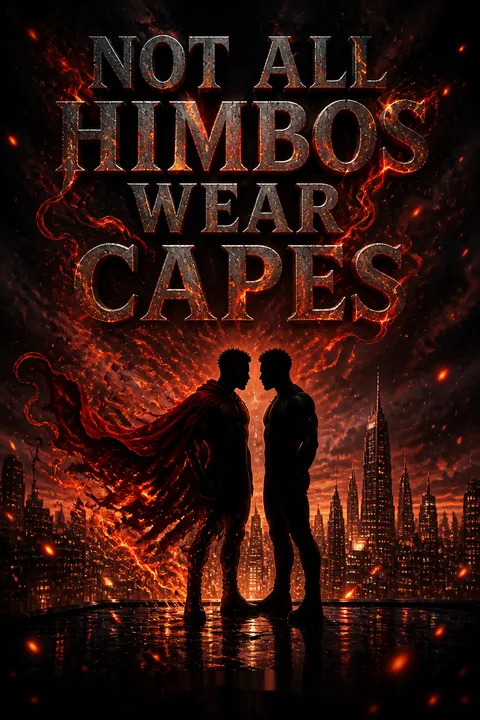
Not All Himbos Wear Capes receives mostly positive reviews, with readers praising its unique superhero/villain romance, humor, and steamy scenes. Many enjoy the world-building, character dynamics, and the balance of action and romance. Some criticize the pacing, instalove, and excessive daddy kink. Readers appreciate the grumpy/sunshine dynamic and the exploration of identity and family expectations. While some find it over-the-top or cringeworthy, others describe it as a fun, entertaining read. The book's reception is mixed but generally favorable, with many excited for the next in the series.
People Also Read



Characters
Xander Suarez
The sharp-tongued scientistXander is an exceptionally intelligent marine biologist whose private work focuses on removing pollution from Awakener’s Bay. He is also Doctor Antihero, a secretive villain who has learned to turn sarcasm, invention, and emotional distance into armor. His family’s power and cruelty have left him skeptical of tenderness, though his care for wildlife and his cat, Meowson, reveals a compassion he does not easily extend to people. He enjoys control and knows how to command a room, but his humor often conceals fear of being unwanted or used. Butch unsettles that carefully managed independence by offering warmth without demanding that Xander become respectable first.
Butch Holt
Big City’s golden championButch is a powerful superhero known publicly as Captain Masculine, raised to embody strength, restraint, and civic devotion. Beneath the polished image, he is earnest, inexperienced in intimacy, and accustomed to letting parents and employers decide what his life should be. His sweetness is not stupidity; it reflects how carefully he has been trained to avoid displeasing others. With Xander, he discovers that obedience can be chosen rather than demanded and that vulnerability need not cancel strength. He is drawn to Xander’s confidence and candor, while his own openness gives Xander a reason to risk trust. Butch’s central tension is between the duty imposed on him and the person he wants to become.
Kai
The matchmaking neighborKai is Xander’s pink-haired neighbor and closest friend, a nosy, theatrical presence who creates his dating profile and refuses to let him retreat into isolation. Her teasing is invasive, but it also signals a familiarity that Xander rarely permits anyone else. She is perceptive about the people around her and uses humor to turn awkwardness into connection. Kai enjoys drama, performance, and the private details of Xander’s romantic life, yet her loyalty becomes tangible when she offers practical help and emotional support. She represents a chosen friendship that exists outside both the superhero hierarchy and Xander’s family.
Wolfgang Suarez
The calculating eldest brotherWolfgang, known as the Hand of Death, is Xander’s eldest sibling and one of the most dangerous members of the Suarez family. He speaks with dry precision and treats family politics as a long game requiring patience, leverage, and careful observation. His unnerving composure makes it difficult to tell where calculation ends and attachment begins. He is not guided by conventional morality, but he has his own strict understanding of loyalty and protection. His interest in power is unmistakable; so is his capacity to surprise those who assume he feels nothing.
Signe Suarez
The ice-cold matriarchSigne, publicly known as Glacial Girl, is Xander’s mother and a formidable supervillain whose authority shapes the Suarez household. She is sharp, strategic, and accustomed to treating relationships as alliances with consequences. Her attention can feel like an interrogation, especially to anyone outside her family. Though she prizes power and family standing, she carries a history that complicates her certainty about the rules she enforces. Her care is difficult to distinguish from calculation, which makes every gesture of warmth feel consequential.
Ender Suarez
The world-ending patriarchEnder, called Apocalypto Man, is Xander’s father and a supervillain whose immense power has made him accustomed to unquestioned authority. He regards family members as assets in a larger contest and expects their work to serve his ambitions. His interest in Xander’s inventions reflects his belief that intelligence, like physical strength, should be directed toward the family’s use. Ender’s calm manner is more intimidating than theatrical anger because it makes extreme cruelty seem routine.
Harold Holt
Butch’s demanding fatherHarold, known as Vortexio, is Butch’s father and a former protector of Big City. He commands immense windpower and approaches parenthood through discipline, legacy, and strategic alliances. Harold believes his son’s public role carries obligations that outweigh private desire. His polished authority reflects a world in which superheroes can be celebrated as symbols while being controlled as employees and heirs. He is most dangerous when he frames coercion as responsibility.
Tabitha Arella
Butch’s guarded motherTabitha, known as Smoldering Siren, is Butch’s mother and a former superhero with powerful fire abilities. She is usually formal and emotionally restrained, shaped by the political bargains surrounding her family. Her concern for Butch is real but often arrives entangled with caution and withheld information. She understands the costs of being treated as a strategic asset, even when she struggles to challenge the system openly.
Solomon Biggs
The corporate city-makerSolomon Biggs leads Biggs Enterprises, the corporation that governs Big City and employs Butch as its champion. He is a polished executive who presents institutional control as civic responsibility. His management style reduces even extraordinary heroes to workers expected to answer assignments, produce reports, and protect the company’s public image. Biggs rarely needs to raise his voice because the machinery around him already enforces his authority.
Sylvano Ricci
The principled USN officialSylvano is a senior official at the United Super Nations, committed to its role as a neutral forum for disputes among heroes, villains, and governments. He is warm, observant, and more willing than Biggs to question the arrangements that govern supes. His connection to his late father’s work gives him a personal investment in preserving evidence and pursuing fair treatment. He treats Butch as a person rather than a corporate asset.
Gemstonia Lincoln
The arranged matchGemstonia is a superhero whose family sees her marriage to Butch as a valuable alliance. Her powers involve drawing gems from the earth and using them to create energy-bearing vapors. She is polished and media-conscious, comfortable in the public world of heroic reputation. Her role reflects how young supes can be drawn into family plans before they have much say in their futures.
Dr. Ownit
Xander’s blunt therapistDr. Ownit is Xander’s cognitive therapist, a perceptive listener who notices the beliefs and evasions beneath his sarcasm. His cluttered office contrasts with his disciplined attention to Xander’s emotional patterns. He encourages Xander to question the conviction that caring and heroism are beyond him.
Violentia Suarez
The volatile sisterViolentia, known as Ultra Violent, is Xander’s older sister, a formidable fighter whose temper can turn her surroundings into weapons. She delights in provocation and enjoys testing her brother’s composure, though she remains connected to the Suarez family’s code. Her humor is as sharp as her capacity for violence, making her both a disruptive presence and an unpredictable ally.
Meowson
Xander’s adopted catMeowson is Xander’s fluffy Himalayan cat, who arrived on his fire escape and chose to stay. The prickly cat reflects Xander’s own preference for closeness on carefully controlled terms, while his affection for it reveals his capacity for quiet caretaking.
Agent Penetrate
The bullet-force villainAgent Penetrate is a supervillain from the Strickland clan with immense strength and nearly impenetrable skin. His history of killing heroes makes him a serious threat and the sort of opponent Biggs assigns to Butch when the city needs a spectacle of strength.
Red Renegade
The revenge-seeking villainRed Renegade is a member of the Strickland family who confronts Captain Masculine after a previous loss. His attack exposes the fury that can sit behind the hero’s carefully managed public image.
Tobias Johnson
Biggs’ sharp-tongued agentTobias is a Biggs-connected official at the USN who uses his position to monitor and belittle Butch. His contempt shows how bureaucratic power can humiliate even the celebrated hero it claims to employ.
Felix
The deli flirtFelix works at the Sun-Mart deli and flirts with Xander while serving his favorite fried chicken. His brief presence contributes to the comic warmth of Xander’s neighborhood and its ordinary routines.
Chantal
The elegant hostessChantal manages the front of the house at Xander’s favorite restaurant. Efficient and socially perceptive, she helps shape the couple’s second date while remaining alert to the people and status games around her.
Betsy
The defiant family chefBetsy is the Suarez family chef, a lesser villain whose cooking and quiet defiance give Xander a rare source of comfort at the compound. She refuses to let the family’s cruelty dictate every detail of the meal.
Franco Marisi
The vanished reformerFranco Marisi, once known as Iron Axe, was a former villain who sought to change sides and marry Tabitha. His case became a test of whether the official divisions between heroes and villains could withstand scrutiny.
Baltasar, Gabriel, and Andre Suarez
Xander’s younger siblingsXander’s younger brother Baltasar and twin siblings Gabriel and Andre are members of the Suarez family. Each belongs to a household where power, rivalry, and danger shape ordinary family life. Their presence reinforces the scale and intensity of the clan surrounding Xander.
Plot Devices
Bangers
An accidental matchmakerKai creates a dating profile for Xander and matches him with Butch, whose own profile was made during a sleepless moment of dissatisfaction. The app brings together two men who would otherwise meet only as enemies in costume. It supplies the story’s comic first coincidence, but its deeper function is to create a space where each can experiment with choice before either understands the other’s public identity.
Masks and aliases
Identity as protectionSupersuits and concealed civilian identities protect heroes and villains from retaliation, while also keeping their personal lives divided from their public roles. Butch and Xander begin dating without knowing they are Captain Masculine and Doctor Antihero. When the identities emerge, the secrets force each to reconsider the other’s actions, loyalties, and capacity for love.
Inventus bond
Shared power, shared riskAn inventus is a rare pairing between equally matched supes whose abilities can pass between them and grow stronger through connection. Butch and Xander feel an intense need to remain near each other before they understand why. The bond provides the physical means for Xander to awaken his powers and resist stronger family members, while giving their relationship a political importance that makes powerful people seek to break it.
Biggs family contracts
A hereditary leashContracts signed by the Holt family bind Butch to Biggs Enterprises before his birth, making his superhero career appear voluntary while restricting his ability to leave. The contracts connect private family decisions to the city’s corporate rule and to the broader hierarchy separating heroes from villains. Sylvano’s recovered records expose that system as political rather than biological, creating a legal route toward freedom.
The DNA ray
Science turned into leverageXander develops a ray gun to remove microplastics from the Bay without harming living organisms. Ender asks him to adapt it to detect DNA, revealing how a tool designed for environmental repair can be redirected toward family power. The invention links Xander’s scientific identity to the larger conflict and forces him to decide who may use his work and for what purpose.
Villainous Things Series
About the Author


Download PDF
Download EPUB
.epub digital book format is ideal for reading ebooks on phones, tablets, and e-readers.








