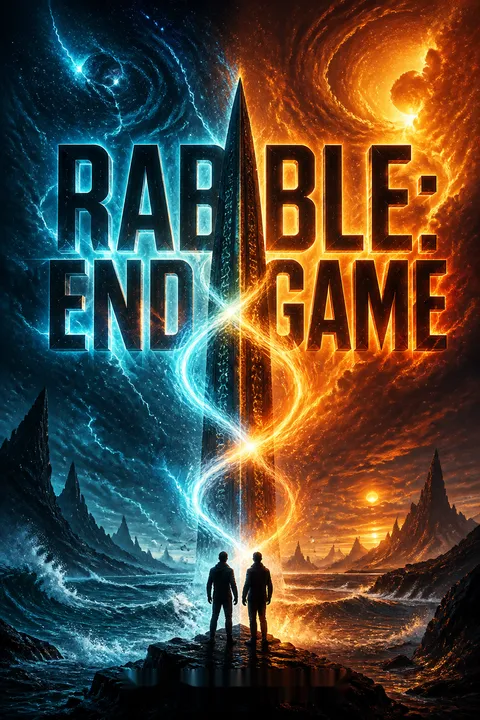


Plot Summary
Corsets Before the Vows
While Xander and his superhero fiancé, Butch, prepare for their destination wedding, Simon takes charge of the clothes, schedule, and nearly every decision. Butch quietly pushes back by inviting Micah, a hero who vanished into space, and Micah’s partner, Ziggy. Their arrival could bring the groom’s estranged alien father, Theo, face to face with him.
Xander tries to keep the day playful, but Butch is already uneasy about how little of the wedding feels like his. Elsewhere, Baltasar notices unfamiliar scales appearing on his body. He fears his shapeshifting is changing beyond his control, and worries Zion, his lizard-like partner, may no longer want him.
The wedding starts as a celebration but immediately exposes the difference between being included and having agency. Simon’s planning is meant as care, yet Butch’s silence lets other people define a day that belongs to him. The invitation is his first small act of authorship. Baltasar’s emerging scales extend the same anxiety into the body: change may be desirable in fantasy but frightening when it arrives without consent. Both men conceal their fear to protect relationships they value.
Scales Beneath the Skin
On the drive to a lakeside cabin, Baltasar finally lets Zion see how frightened he is by the scales and the new organ forming with them. He has hidden the changes because he fears becoming an unfamiliar creature will cost him Zion’s love. Zion calms him with affection and makes clear that Baltasar’s changing body is not a threat to their bond.
The reassurance gives Baltasar enough safety to stop fighting his own desire, though it does not explain what is happening or how far the transformation will go. He keeps part of his fear to himself, leaving the couple loving and close, but not yet fully honest about the danger he imagines.
Baltasar’s fear is not simply of becoming physically different. He assumes love depends on remaining recognizable and attractive to the person who first chose him. Zion’s acceptance challenges that bargain, but reassurance cannot replace disclosure. The moment shows how intimacy can soothe shame while leaving its source untouched. Baltasar is briefly able to inhabit pleasure without solving the mystery, a pause that makes the later transformation both more startling and more emotionally consequential.
A Guest List Under Contract
Before the group leaves, Andre asks for the wedding guest list on Theo’s behalf. Theo wants to know whether Ziggy will attend, though he disguises his concern beneath jokes and provocation. Simon has secretly removed Ziggy and Micah from the list, expecting Theo to behave badly if they meet.
Wolfgang catches the deception and replaces it with a controlled compromise: Ziggy must sign a confidentiality contract, and an earlier agreement already bars him from harming the family. On the island, Micah and Ziggy arrive by spaceship, where Simon greets Ziggy as a relative while warning him that the history between him and Theo remains dangerous. Theo and Ziggy still avoid their first reunion.
The guest list becomes a proxy for a question nobody can comfortably ask: can an estranged family member be welcomed without pretending the past is settled? Simon’s deletion is an attempt to control risk by controlling information. Wolfgang’s contract offers a third path, using rules to make room for a meeting rather than prevent it. Theo’s jokes are protective camouflage; his request through Andre reveals that beneath his performance he is frightened of what Ziggy’s presence will demand.
A Storm Bought with Praise
A forecast cyclone threatens the remote resort, whose fragile huts offer little shelter. Wolfgang and Zion consider asking Zion’s mother, Jacqueline, to divert it, although Wolfgang distrusts her and resents owing her anything.
Their walk gives the two clan leaders an unusual exchange of confidences: Wolfgang explains the limits of his lethal touch, while Zion admits that kindness, not vengeance, has kept him from killing his parents for past abuse. They approach Jacqueline together.
Wolfgang reminds her that Micah and Ziggy’s combined abilities could be useful; Zion offers the public credit she craves if she redirects the weather. Jacqueline accepts, but the storm continues to hang offshore, an unresolved danger beneath the wedding preparations.
The conversation contrasts two learned models of power. Wolfgang trusts threat and control because those tools once kept his siblings alive; Zion resists becoming the kind of ruler who answers every injury with violence. Their exchange does not make them agree, but it permits trust to grow through vulnerability. The bargain with Jacqueline shows how status can be traded as currency. Its incomplete result also warns that a leader’s promise is not proof of loyalty or control.
The Alien at the Beach
Kai, Xander and Butch’s pregnant surrogate, is exhausted by the physical changes that have suspended her acting and dancing life. Violentia, Xander’s sister, tries to support her, and their friendship carries a tenderness neither woman has named. Theo appears at the beach and, to provoke the group, reveals his nonhuman form to Kai.
She faints; the baby is unharmed, but Xander and Butch rush her to the infirmary. Theo has another reason for watching her: after Kai once activated his alien cube, he secretly tested her for hidden powers and noticed something unusual about the pregnancy. He keeps that observation to himself, while Kai wakes to an even wider gulf between her ordinary life and the supe world surrounding her.
Kai’s vulnerability is not a lack of courage. She is carrying the physical and social costs of a decision made to help people she loves, while others treat her body as a convenient part of their plans. Theo’s showmanship turns that imbalance into a literal collapse. His secret examination compounds it: even concern for the baby becomes another reason people study Kai without asking. Violentia’s practical care offers a counterexample, attentive to Kai as a person rather than a vessel.
A Resonance Crosses Lines
Micah and Gabriel, one of the psychic Suarez twins, already share a teasing friendship and an attraction neither has fully admitted. During the island gatherings, their connection intensifies into a resonance associated with the alien bonds that link their partners, Ziggy and Theo. Andre notices and manipulates their thoughts to encourage the attraction, even putting Gabriel to sleep without permission.
Micah objects when he realizes Gabriel is being used as a puppet, and Gabriel confronts Andre about his need to dominate and protect his twin. Once awake, Gabriel admits his desire openly and asks to kiss Micah. Ziggy accepts that the attraction is real and agrees they will explore it together, rather than treating it as betrayal.
The attraction is not presented as a simple magical excuse for infidelity. The story makes consent and communication the dividing line between a shared desire and Andre’s coercive interference. Micah’s refusal to let Gabriel’s unconsciousness count as permission interrupts a family habit of treating psychic access as harmless. Gabriel’s direct request then turns an involuntary pull into a chosen encounter. The bonds explain the intensity, but they do not make decisions for the people living inside them.
Fried Chicken, Then a Corpse
At the rehearsal dinner, Kai finally confronts Xander for treating her pregnancy as a logistical matter. He brought her to the island against medical advice and secretly arranged to combine their apartments without asking whether she wanted to live there. Butch realizes how much he has failed to notice, while Xander defends himself until Kai storms into the kitchen.
Her scream brings the wedding party running. They find Felix, the deli cook Xander flew in for the fried chicken, dead on the floor beside Theo. Ziggy leads the examination, and Xander uses Micah’s powers to build testing equipment. The poison, called pharmakon, appears in Isaiah’s hot sauce, but its timing and Kai’s untouched plate suggest she was the intended target.
The murder arrives at the exact point when Kai has begun insisting that her needs count. That timing makes the crime feel less like detached mystery than an attack on bodily autonomy. Xander’s good intentions have become another form of unilateral control, and Kai’s anger forces the couple to see its cost. The evidence complicates the easy suspect: Isaiah brought the sauce, but someone poisoned it later. The investigation must therefore distinguish access from guilt while protecting the person singled out.
Two Lizards, One Chase
As the investigation continues, Baltasar leaves the resort alone to control the changes he has concealed. His body shifts fully into a giant green Lacertus, and Zion finds him after spotting his new form in the jungle. Zion has also manifested wings while protecting Isaiah from a strange jungle disturbance, revealing that his own powers are changing.
Baltasar’s terror gives way to desire when Zion makes clear he still wants him; the two mate in their altered forms, and the act steadies Baltasar’s bond and fear. Their reconciliation does not erase the strain between them. Zion remains increasingly volatile as clan leader, and Baltasar has to wonder whether the pressure surrounding the wedding is changing more than their bodies.
The transformation turns Baltasar’s private shame into a visible fact no one can manage for him. His partner’s acceptance matters because it is demonstrated through action, not abstract reassurance. Yet the scene does not equate sexual intensity with a cure: the questions about power and control remain. Zion’s wings likewise reveal that the body can hold capacities its owner never knew to claim. Both transformations challenge the family’s tendency to define people by the forms they already understand.
The Hand Leaves Office
As the storm and murder investigation deepen, Wolfgang’s exhaustion finally surfaces. He tells Theo that he is considering stepping back from running the Suarez clan, a role he accepted to protect his siblings but that has consumed his life. Theo understands the ache of being trapped by an assigned purpose and offers a trade: he will help Wolfgang loosen his grip on the role if Wolfgang helps him repair what he has broken with Ziggy.
Elsewhere, Ziggy gives Simon a supe name, La Main de Fer, meaning the Iron Fist, and Simon accepts the identity as a mark of belonging. Wolfgang’s choice to rest is not abandonment; it is an attempt to let Simon and the wider family carry responsibility with him.
Wolfgang’s authority has been built on the assumption that protection requires his constant vigilance. His exhaustion exposes the hidden cost of that model: a leader can preserve a family and still prevent it from sharing the work of being one. Theo’s offer matters because it recognizes Wolfgang’s wish for freedom without mocking it. Simon’s new name provides another form of inheritance, not a title imposed by blood but one bestowed through chosen kinship.
Permission in the Morning
At a beach gathering, Zion’s anger toward Isaiah and his parents leaves the family uneasy, while Baltasar’s transformation exposes another secret. In the aftermath, Micah and Gabriel’s attraction becomes harder to dismiss. Andre has secretly kept Gabriel asleep and filled his dreams with Micah, claiming he meant to help. Micah wakes furious that his consent was bypassed and challenges Andre’s control over his twin.
Gabriel backs Micah’s right to choose and tells Andre that he misses taking a dominant role in their relationship. Only after the three discuss what they want does Gabriel kiss Micah. Ziggy accepts the developing connection, and Theo and Andre begin considering a shared intimacy that leaves Gabriel room to express himself.
The sequence makes desire ethically legible by separating it from manipulation. Andre’s strategy may produce the outcome he wants, but it damages the trust that outcome depends on. Micah’s protest restores Gabriel’s agency, and Gabriel’s admission reveals that being protected has sometimes meant being confined to a role he no longer wants. Their chosen kiss is therefore more than a romantic payoff. It is a negotiation over who gets to interpret another person’s needs.
Daisy Sees the Spy
While Simon discusses the accusations against Isaiah with Ziggy, a frightened Daisy appears and disappears before their eyes. She admits that invisibility has begun emerging when she feels threatened, and that she was hidden in the lodge kitchen on the night Felix died. Daisy saw someone tamper with the hot sauce, then heard her grandparents discussing how they had arranged for Isaiah to bring it so suspicion would fall on him.
Simon brings the wedding party together on the beach, where Daisy can identify what she witnessed. Zion initially fears that the gathering puts his daughter at risk and demands she be removed, but the family insists her account matters. Her new ability, once private and frightening, becomes evidence her clan needs.
Daisy’s invisibility has served as both a defense and a form of isolation. Adults have underestimated her because she is a child, while she has quietly observed the decisions that threaten her family. The revelation does not make her responsible for solving the adults’ crisis; it forces them to recognize that she already knows more than they assumed. Simon’s care and Zion’s fear pull in different directions, but both arise from wanting to protect her.
The Storm Breaks Open
Daisy identifies Jacqueline and Major Obscurity as the people who poisoned the sauce and manipulated Isaiah into carrying it. She also reveals that Jacqueline created the cyclone, using the weather and the murder to weaken Zion and target pregnant Kai. When the storm surges toward shore, Micah raises a protective barrier over the island, with the Suarez twins and Theo lending power.
Zion finally accepts Ziggy’s help. Ziggy merges with Zion’s Lacertus form, lending him tendrils and the strength to confront his parents. Zion kills Jacqueline and Major Obscurity, then returns to his own body shaken by what he has done. Micah, Isaiah, Baltasar, and Wolfgang stand with him as the storm’s threat ends.
The climax tests whether Zion can distinguish leadership from obedience to the values his parents taught him. He does not defeat them by becoming an isolated, invulnerable ruler. He accepts help, lets Micah protect the island, and lets Ziggy lend him power. The violence is still real and irreversible, but the moral shift lies in Zion choosing whom to protect and whose judgment to trust. Daisy’s testimony also converts a child’s observation into public accountability.
The Son Who Came Back
After the battle, Wolfgang orders Theo and Ziggy to stay behind and face their unfinished relationship. Theo admits that he left Stellaria and never intended to return for Ziggy, even after the other parent disappeared. He refuses to excuse the abandonment by pointing to the corrupt Astrum Force that once shaped their lives.
Ziggy explains how that absence drove him toward a life organized around hunting and violence, but he also recognizes that Theo’s cruelty has become a defense against rejection. Theo apologizes without asking to be absolved. Ziggy forgives him and lowers the barrier between their resonances. Their connection returns, not as a substitute for the lost years, but as a bond they can finally acknowledge.
Forgiveness here is not a verdict that the past was harmless. Theo has to name his choice plainly, while Ziggy has to decide what relationship, if any, he can build with the person who made it. The scene refuses a quick redemption in which affection erases responsibility. Instead, the repair begins when Theo stops using selfishness as a performance and Ziggy can respond without denying his own injury.
A Wedding in Open Sky
On the wedding day, Butch freezes before the large ceremony Simon planned. Sylvano, the father figure who helped him reclaim his independence, gives him time to recognize what he wants rather than obey expectation. Butch tells Xander he wants to marry him, but not before a crowd. Xander listens, drops the elaborate plan, and agrees to a private ceremony above the island.
With Luca officiating, the two men exchange personal vows and rings, claiming the marriage on their own terms. The guests continue to the reception, while the grooms make their commitment theirs before returning. Butch’s decision changes the wedding from a performance organized around the family into a choice shared by the couple.
Butch’s hesitation is not fear of Xander or of marriage. It is the return of an old survival strategy: smile, comply, and hide what he needs. Sylvano’s support helps him separate loyalty from self-erasure. Xander’s response is essential because it turns a declaration of love into responsive behavior. The private ceremony does not reject family; it gives the couple a center of their own before they rejoin it.
Epilogue
Two months later, Kai has delivered twins Ridley and Adrian and is living with Violentia at the Suarez compound. She returns to acting auditions with help from Wolfgang, while the twins’ exhausted fathers bring the babies to a family gathering.
Violentia gives Kai a locked collar as a sign of their chosen relationship. Xander and Butch seize the chance to leave the infants with their relatives for one night together. Theo’s alien cube remains an unpredictable curiosity, and the family’s newly born supes promise further trouble.
The epilogue makes recovery practical rather than symbolic. Kai regains control of her time, work, and body after pregnancy, while her relationship with Violentia gives care a form she has chosen. The new fathers’ frantic escape from childcare punctures the family’s heroic self-image without diminishing their love. Ridley and Adrian’s possible powers, like Theo’s still-active cube, leave the household open to future disruption. Resolution means a workable life, not a finished one.
Analysis
Rabble: End Game turns a destination wedding into a stress test for a family whose members routinely confuse protection with control. The plots are deliberately crowded, but their conflicts share a precise question: who gets to decide what another person needs? Xander arranges Kai’s living space without asking; Andre manipulates Gabriel’s thoughts in the name of helping; Butch nearly submits to a wedding designed by others; Zion struggles to act against parents who trained him to obey. In each case, affection is genuine, but good intentions do not erase the damage caused by withheld consent.
The supernatural bonds make this question harder rather than easier. They expose emotional states and intensify attachment, yet the narrative refuses to treat involuntary attraction as a moral permission slip. Micah insists on Gabriel’s agency, and the family’s developing intimacy becomes viable only when desire is discussed openly. By contrast, the murder mystery turns secrecy into a weapon: Jacqueline and Major Obscurity exploit family hierarchy, poison, and a manufactured storm to frame Isaiah and threaten Kai. Daisy’s invisibility gives a child the literal capacity to witness what the adults overlook, making her testimony a challenge to the assumption that power belongs only to the loudest or oldest person present.
The book’s resolutions are therefore acts of redistribution. Zion accepts help from Ziggy instead of equating leadership with solitary force. Wolfgang considers relinquishing some authority. Theo names the harm he caused before Ziggy forgives him. Butch tells Xander what kind of wedding he wants, and Xander listens. Kai’s later life with Violentia restores autonomy after pregnancy has made her body and schedule public business. The humor, sexual excess, and group-chat chaos do not cancel the serious injuries beneath them. They create a family language in which affection can be loud, ridiculous, and sometimes clumsy, while the story’s strongest measure of love remains whether a person can hear a boundary and change course.
Review Summary
Rabble: End Game received mostly positive reviews, with readers praising its chaotic and entertaining nature. Many appreciated the multiple POVs and character development, though some found the 13 perspectives overwhelming. Fans enjoyed the humor, spice, and plot twists, as well as the satisfying conclusion to the series. However, some readers expressed disappointment with certain character arcs and relationship developments. Overall, the book was well-received by fans of the series, who found it a fitting end to the Villainous Things world.
People Also Read









Characters
Xander
The teasing antiheroXander is a brilliant doctor, marine biologist, and supervillain who is engaged to the hero Butch. He uses teasing and confidence to conceal old fears of rejection, and his close friendship with Kai has become part of his private sense of home. His first instinct is often to make decisions for the people he loves, believing efficiency is another name for care. That habit creates friction when others need to speak for themselves. He is fiercely protective, especially of Butch and their future child, but must learn that devotion is not a substitute for listening.
Butch
The heroic fiancéButch is a celebrated superhero whose public confidence contrasts with an upbringing that taught him to obey, perform, and suppress his own needs. His relationship with Xander gives him safety and a language for desire, yet old habits still make him hide discomfort rather than risk disappointing someone. He wants marriage and family, but also needs to feel that his choices belong to him. His gentleness is not passivity: when he recognizes what matters, he can act with clarity and courage.
Kai
The pregnant normieKai is a tap dancer, aspiring actor, and ordinary human drawn into the supernatural world through her friendship with Xander and her decision to carry his and Butch’s child. Quick-witted and generous, she often uses humor to manage fear, but pregnancy disrupts her work, body image, and sense of independence. She values being treated as a person rather than a vessel or an accessory to powerful people. Her sensitivity to others is a strength, though it can make it difficult to ask for support directly.
Violentia
The volatile protectorViolentia is Xander’s sister and the family’s formidable enforcer. Her power can turn ordinary objects into weapons, a gift that makes her useful but leaves her uncertain about what she may do when control slips. She carries guilt and distrust of herself, especially around people she cares about. With Kai, she discovers that caretaking can be as meaningful as combat, though vulnerability is harder for her than violence. Beneath her sharp humor and intimidating presence is a fierce loyalty to the siblings who survived a brutal childhood together.
Wolfgang
The feared clan leaderWolfgang, often called Wolfy by those close to him, leads the Suarez clan through reputation, strategic patience, and a lethal touch. His siblings’ safety shaped his identity so completely that responsibility has become both his purpose and his confinement. He trusts very few people, but his love for Simon and his family is more tender than his public image suggests. Wolfgang’s instinct is to solve danger himself; he is slowly learning that trust can mean allowing others to carry part of the burden.
Simon
The iron-fisted strategistSimon is Wolfgang’s husband and a sharp, theatrical strategist who manages the family’s business and social machinery. He prizes order, taste, and control, partly because he spent much of his life without a large, dependable family. His affection appears as competence, plans, and carefully calibrated threats. Simon can be possessive of the people he loves, but he is also capable of recognizing when control has become a barrier. His wit protects a longing to belong that he rarely expresses plainly.
Zion
The gentle lizard kingZion is the Salah clan leader, a powerful lizard-like hero and devoted father to Daisy. His warmth and humor soften the authority his position demands, while his relationship with Baltasar brings out a more possessive, primal side. Zion is reluctant to answer family injuries with violence, even when that reluctance leaves him vulnerable to manipulation. He wants to lead without becoming like the people who raised him, a difficult balance when his family’s old wounds remain active.
Baltasar
The anxious shapeshifterBaltasar, usually called Balty, is a former Deathball star whose shapeshifting and self-deprecating humor make him both formidable and easy to tease. He is deeply devoted to Zion and Daisy, but his anxiety can turn ordinary uncertainty into fear that he is unwanted. His body is unpredictable, and he often tries to manage change privately rather than ask for help. Beneath the comic bluster is someone who wants to be cherished without having to prove that he is useful or easy to love.
Micah
The inventive heroMicah is a hero, gifted inventor, and younger member of the Salah family. His mechanical creations extend his power in startling ways, though his relatives have often underestimated him. Curious and socially direct, he is comfortable asking questions others avoid and has a strong instinct for when someone’s consent is being overlooked. His relationship with Ziggy gives him room for spacefaring adventure, while his growing connections to the Suarez twins test how a bond can expand without erasing anyone’s agency.
Ziggy
The guarded space hunterZiggy is a Stellarian mercenary and bounty hunter whose discipline, alien abilities, and history in Astrum Force make him difficult to read. He is Micah’s partner and the estranged son of Theo, a relationship he approaches with the caution of someone trained to see every encounter as a mission. Beneath his severe self-control is a strong capacity for loyalty and a need to understand where he belongs. He respects competence, but learning to trust others requires more than deciding they are useful.
Theo
The chaos-making artistTheo is an eccentric artist whose theatrical humor and provocative behavior can make him seem immune to consequence. He is a Stellarian with a complicated history on Earth and a deeply unresolved relationship with Ziggy. His instinct is to turn discomfort into spectacle before anyone can see what hurts. Theo prizes freedom and resists being held accountable, even as he longs for connection with the family around him. His flamboyance is both genuine pleasure and a defense against intimacy.
Andre
The controlling twinAndre is one of the psychic Suarez twins and shares an unusually close bond with his brother Gabriel. He is protective, confident, and quick to take command, often assuming he understands what others need before they tell him. His powers make that assumption especially dangerous, since entering another person’s thoughts can feel effortless to him. Andre’s devotion is real, but it can blur into control. His relationships challenge him to distinguish helping someone from deciding for them.
Gabriel
The tender mind-readerGabriel is Andre’s twin, a powerful psychic with a gentler and more openly affectionate manner. He relies on his twin’s closeness but is also discovering desires and roles that do not always fit their established dynamic. His warmth makes him an easy person to underestimate, though his power and emotional intelligence are considerable. Gabriel often conceals uncertainty behind humor or submission. He wants to feel safe enough to ask for what he needs without being treated as fragile or having someone else choose for him.
Daisy
The sharp little queenDaisy is Zion’s daughter, a clever child who is comfortable among adults and unusually alert to the politics around her. She loves her family but notices when they underestimate her. Her confidence is balanced by a child’s understandable fear of being caught in danger. Daisy is especially close to the people who treat her opinions seriously, and she often uses humor and stealth to move through a world built for larger, more powerful people.
Luca
The patient mentorLuca is an ancient Stellarian and a mentor to several members of the Suarez family. Calm and observant, he teaches through patience rather than command, sometimes allowing people to struggle until they understand their own choices. His neutrality can frustrate those who want immediate intervention, but it also gives him a steadier view of family conflict. Luca offers knowledge without demanding that others accept his conclusions, and he has a quiet capacity for affection.
Jacqueline
The ambitious matriarchJacqueline is Zion’s mother and a former leader of the Salah clan, accustomed to influence and public recognition. She measures status carefully and expects her family to preserve its power. Her confidence can harden into condescension, especially toward people she regards as weaker or less useful. Jacqueline’s relationship with her children is shaped by ambition and hierarchy, leaving little room for the uncomplicated warmth they might want from her.
Isaiah
The unpredictable brotherIsaiah is one of Zion’s brothers, a lively and impulsive supe whose immense powers do not always come with careful judgment. He enjoys attention, jokes, and getting high, but he is not indifferent to his family. His easygoing surface can hide the frustration of being treated as unreliable. Isaiah is at his best when others give him a chance to contribute without assuming that his chaos defines him.
Major Obscurity
The unseen patriarchMajor Obscurity is Jacqueline’s husband and the father of the Salah siblings. His ability to evade notice suits a family structure in which influence is often exercised behind the scenes. He is a quiet presence beside Jacqueline’s forceful public manner. His children have learned to navigate both parents’ authority, though the family’s history leaves them with very different ideas about loyalty and safety.
Sylvano Ricci
Butch’s chosen fatherSylvano is a senior United Super Nations official and a trusted father figure to Butch. He understands the public demands placed on heroes but is attentive to the private costs of those demands. Rather than deciding for Butch, Sylvano helps him recognize what he wants and gives him room to say it. His gentle humor makes him a rare source of steadiness in a family accustomed to pressure and spectacle.
Bunny
Simon’s sharp-eyed motherBunny is Simon’s Parisian mother, socially astute and unafraid to puncture someone’s self-importance. Her affection is direct when she chooses to show it, though she is just as comfortable using humor to keep emotional distance. Bunny sees family as something worth pursuing rather than merely inheriting, and her perspective offers Simon a different model of loyalty from the one he has built for himself.
Felix
The fried-chicken cookFelix is a normie deli cook whose fried chicken has become a particular comfort for Xander. He is brought to the island to prepare food for the wedding and provides a connection to the ordinary neighborhood life Xander values.
Erich
The trusted human allyErich is a normie who works for Wolfgang and helps manage the clan leader’s Berlin properties. He is quiet, dependable, and comfortable enough around the superpowered family to tease them without seeming intimidated.
Plot Devices
Inventus and stellar resonance
Bonds that carry feelingAn inventus is a soulmate bond between supes, while Stellarians experience a related resonance with their stellar collisions. These connections transmit emotion and can intensify attraction, attachment, and possessiveness. Some bonds also allow power-sharing. The story uses them to make private feelings difficult to conceal, but not to remove choice: attraction still has to be discussed, boundaries still matter, and psychic or emotional influence can become coercive when a character acts without consent.
Supe powers and identities
Power hidden in plain sightHeroes and villains conceal their civilian and supe identities, and the names used among them can signal whether someone is being treated as an ally or an enemy. Powers range from Wolfgang’s lethal touch and the twins’ psychic abilities to Micah’s mechanical inventions and the Salah family’s unusual transformations. The rules protect identities from ordinary people, but they also allow characters to hide abilities, histories, and vulnerabilities from one another. The family’s growing trust depends on choosing when to share information that could also be used as leverage.
The poisoned hot sauce
A murder disguised as foodIsaiah brings homemade hot sauce to the wedding gathering, and Felix dies after tasting it. The poison is present in the sauce, but testing shows it was added after the bottles reached the kitchen. Only Kai’s plate was targeted, making the food both a murder weapon and a false trail toward Isaiah. The clues force the investigators to distinguish who transported the sauce from who altered it, while the attempted attack on Kai reveals that the murder is part of a larger plan.
The Celestial Cube
A dangerous alien keepsakeTheo’s cube is an alien object Kai once activated during a family gift exchange. Theo quietly tests whether she or the pregnancy can interact with it, while withholding what he suspects. The cube links the intimate wedding subplot to the wider question of how human bodies respond to alien and supe powers. It remains an unresolved object rather than a tool that solves the island crisis, preserving the story’s sense that this family’s discoveries are still unfolding.
Villainous Things Series


About the Author


Download PDF
Download EPUB
.epub digital book format is ideal for reading ebooks on phones, tablets, and e-readers.








