

Key Takeaways
Stop chasing a partner and become ready for mutual, lasting love
Wanting is not readiness. Katherine Woodward Thomas describes years of dating men who were married, unavailable, or unwilling to build a life with her. She wanted commitment, yet clung to independence and feared depending on someone. A friend’s blunt question helped her see that being alone was not only something happening to her. It was also a choice she was helping sustain.
Availability takes practice. Thomas began ending ambiguous relationships, grieving old attachments, clearing reminders of former lovers, and telling friends she was serious about marriage. She reconnected with Mark, a man she had twice turned down, through an online dating site. They married, and she had her first child at forty-three. Her story anchors the book’s central idea: prepare to give and receive love, rather than treating a partner as a rescue.
The memoir gives the advice a useful test: desire alone did not change Thomas’s dating life, but changed choices did. That distinction keeps the book from being merely a promise that the right person will appear. Its most practical insight is that readiness can be observed in conduct, such as ending situationships that contradict one’s stated hopes. The story’s providential timing is compelling as personal meaning, but not a reliable formula. The transferable lesson is her increased honesty and willingness to risk commitment, not the coincidence that reunited the couple.
Interrupt the romantic pattern you keep recreating, rather than blaming fate
Repetition has a source. Thomas asks readers to examine recurring romantic outcomes as clues to habits, expectations, and fears. One workshop participant, Lena, repeatedly heard that men respected and liked her but did not love her. She had learned as a child to hide vulnerability after her mother died. Her emotional self-protection made closeness difficult, even though she longed for it.
Responsibility restores choice. The book’s mirror idea asks readers to look at how their treatment of themselves, their boundaries, and their choices may shape the relationships they enter. It is not meant to excuse another person’s mistreatment. Rather, it shifts the question from what fate keeps doing to what behavior can change. Noticing a pattern gives a person a chance to respond differently instead of reenacting it automatically.
This is a strong behavioral lens: repeated outcomes invite investigation of repeated choices, not just repeated bad luck. Lena’s example makes the mechanism legible. A person who hides feelings may appear difficult to know, even while hoping to be deeply known. The mirror metaphor is most helpful when used as a prompt for agency, not as a universal explanation. Other people retain their own motives and responsibility. Self-reflection can reveal one’s part in a dynamic without implying that one caused another person’s cruelty.
Close old relationships without excusing harm or abandoning your boundaries
Completion frees attention. Thomas argues that unresolved grief, resentment, and entanglements can keep a person emotionally tied to the past. She describes resenting an ex-partner after losing a songwriting project they had built together. In time, she saw how she had surrendered decision-making power and how the partnership had also helped make her original idea real. Forgiveness helped her release the demand that he repay her, while recognizing her own part in the loss.
Forgiveness is not permission. The book defines it as releasing the debt one believes another owes, not approving the harm or restoring access. It also warns against relationships sustained by fear, obligation, or guilt. When someone is still violating boundaries, the first task is to restore safety and set limits. The book encourages grieving what is over, rather than keeping an unhealthy tie alive in hope of a different outcome.
The distinction between forgiveness and reconciliation is essential. Emotional release does not require renewed contact, trust, or exposure to continued harm. The ex-partner story also complicates a simple victim-versus-villain account: Thomas can acknowledge injury while recognizing her own choices and the project’s real accomplishments. That kind of reflection can reduce fixation without rewriting history. The method should not be mistaken for a demand that people find a lesson in every loss. Sometimes safety, grief, and distance are the necessary forms of completion.
Challenge childhood conclusions before they become your adult identity
Old beliefs can feel factual. The book calls attention to conclusions children may draw from painful events, such as believing they are unlovable because a parent left or unworthy because a caregiver was cruel. These interpretations can become an identity that shapes adult choices. One woman who had been abused as a child believed the abuse proved she was dirty. Seeing the event from the perspective of protecting a child helped her recognize that the shame belonged to the adult who harmed her, not to her.
Healing changes the relationship. Thomas does not claim that painful history disappears. She urges readers to distinguish what happened from who they are, and to notice how an old belief still influences current behavior. Re-parenting means beginning to provide oneself with care, encouragement, protection, and respect that may have been missing. For severe trauma, the book recommends professional support rather than trying to force a quick resolution.
The key move is separating an event from the meaning a child had the power to make of it. That distinction can soften shame and open room for present-day choices. The book’s language about turning wounds into strengths may be meaningful to some, but it should remain an invitation, not an obligation. Trauma need not become a gift or a public contribution to be valid. Healing can also mean safety, reduced suffering, and a life no longer organized around what happened.
Turn longing into a clear intention, then act without controlling outcomes
A vision points somewhere. Thomas distinguishes visioning, a reflective practice of listening for a possible life, from simply picturing a desired outcome. She asks readers what fulfilled love might look like, what they may need to release, and what qualities they need to embody. Her own journal described marriage, a child, and meaningful writing before she met Mark, despite having no immediate prospects for those things.
Intention requires behavior. The book presents four parts: believe a possibility exists, state the intention, take actions that support it, and release attachment to a particular result. Thomas shared her commitment to marry with trusted friends, who could notice when her dating choices contradicted it. An intention is therefore not a guarantee that the universe will deliver a partner on schedule. It is a way to organize choices around a goal while remaining responsive to reality.
This framework is strongest when intention means a commitment that changes behavior. Naming a goal to supportive people can make inconsistencies visible and help someone follow through. The additional instruction to loosen attachment protects the practice from becoming an attempt to control another person. A vision can motivate, but it cannot establish that a specific partner is destined to arrive. Its value lies in clarifying what matters and helping the seeker act with greater consistency, not in proving that thoughts cause external events.
Choose a partner by character and shared purpose, not fantasy details
Look beyond the checklist. Thomas questions lists built around a partner’s job, neighborhood, appearance, or possessions. A soul connection, as the book describes it, is better recognized through qualities such as mutual respect, ease, genuine liking, and compatible direction in life. A study cited in the book found that 94 percent of single adults surveyed, ages twenty to twenty-nine, wanted a spouse who was a soul mate. The longing is common, but the label alone cannot identify a good match.
Shared purpose matters. Thomas presents spiritual partnership as a relationship in which two people support each other’s growth and sense of purpose. That does not require identical beliefs or interests. It does require attention to how a person behaves: whether they keep their word, show consideration, and are available for the kind of relationship being sought. Chemistry may start attraction, but it does not substitute for reliability or care.
The shift from external specifications to relational qualities is useful because it asks what a partnership feels like and how it functions, rather than whether someone fits an imagined casting call. Shared purpose can also help couples make decisions beyond immediate preference. Still, “soul mate” language can encourage idealization if treated as proof of destiny. Compatibility is best assessed through repeated behavior, honest conversation, and mutual consent. A moving sense of connection should invite curiosity, not suspend judgment.
Ask directly for what you need, and learn to receive it
Needs are information. Thomas argues that wanting care, respect, security, and affection is not automatically a sign of unhealthy dependence. The challenge is to recognize needs, express them clearly, and choose relationships with people able and willing to respond. She tells of Sara, who concealed her concern about her husband’s unemployment until she was considering divorce. Once she spoke honestly, he understood the problem and changed his approach.
Receiving is part of intimacy. The book also asks readers to accept kindness, make requests, and set limits. A woman who refuses every offer of support may unintentionally prevent a partner from expressing care. This does not mean accepting every offer or giving up independence. It means allowing mutual exchange. Thomas extends the principle to body image and sexuality: self-respect includes treating the body with care and making sexual choices that feel safe, honest, and honoring.
Direct requests replace guessing games with information. Sara’s story shows how silence can make a partner seem indifferent when the need has never been clearly stated. Receiving care is equally important because intimacy depends on both people having room to give and to be supported. The useful boundary is mutuality, not self-sacrifice disguised as generosity. A request should leave the other person free to decline, and a refusal can reveal a genuine mismatch rather than a failure to ask correctly.
Build emotional steadiness in solitude before asking romance to rescue you
Learn to stay present. Thomas recommends prayer, meditation, journaling, and quiet time as ways to notice feelings rather than flee them. Solitude is not the same as loneliness, though learning to be alone may first bring loneliness into focus. She describes confronting the pain she had been avoiding through an affair with a married man. Sitting with that pain helped her end the relationship instead of using it to escape herself.
Fear needs care, not obedience. The book encourages readers to identify anxious thoughts, soothe themselves, and distinguish present danger from old expectations. It does not ask people to erase fear or pretend every situation is safe. Its practical aim is to avoid making a partner responsible for repairing every early wound. When feelings become overwhelming, especially after abuse or trauma, the book advises seeking a therapist or other competent support.
The distinction between chosen solitude and unwanted isolation is subtle but important. Time alone can reveal feelings that busyness keeps at bay, while a practice of reflection can make those feelings less likely to dictate every decision. The book’s emphasis on self-soothing is most useful as one resource among several. Emotional independence should not become a new demand to need nobody. Healthy relationships involve support, and professional care may be necessary when distress exceeds what private reflection can safely hold.
Make love real through attention, accountability, generosity, and everyday choices
Love is practiced now. The book challenges readers not to reserve kindness for a future partner. Listening without preparing a rebuttal, telling the truth, apologizing, and treating others with generosity are ways to build the capacity for intimacy. Thomas also asks readers to shift from a life organized only around “me” toward a mutual “we,” while preserving each person’s individuality. In a healthy partnership, each person’s needs matter in shared decisions.
Responsibility creates room to change. Instead of focusing only on a partner’s flaws, readers are asked to examine their own contribution to a conflict and make a direct request or set a boundary. This is not the same as taking blame for another person’s harmful behavior. It is a way to reclaim influence over one’s choices. The book’s closing practice is to keep cultivating love in ordinary life, whether or not a romantic relationship is present.
The book’s strongest ethical claim is that partnership is not a prize awarded for being wanted. It is a practice of attention, reciprocity, and repair. The “we” perspective is valuable when it expands care without erasing either person. Likewise, accountability is empowering when it concerns choices within one’s control, but harmful when used to excuse another person’s abuse. A durable bond needs both generosity and limits. Neither can substitute for the other.
Practice gratitude and courageous dating while staying open to surprise
Appreciation changes attention. Thomas describes writing five pages of gratitude each morning for thirty days. The practice helped her notice what was already good in her life, including during periods of heartbreak and financial strain. The point is not to deny hardship or pretend to like every circumstance. It is to stop letting the absence of a partner define the entire present.
Readiness includes risk. The book encourages taking concrete steps to meet people, accepting suitable invitations, and tolerating the possibility of rejection. It also recommends making a short list of essential partner qualities, then cultivating those qualities oneself. Thomas’s “high watch” means staying prepared for love through daily conduct, not waiting passively or forcing a deadline. Her final message is to remain open to a relationship that may not resemble the one imagined in advance.
Gratitude can widen attention without requiring denial: a person can acknowledge pain and still notice friendship, purpose, or small acts of care. Dating risk likewise matters because no relationship can begin if every possibility is screened out before contact. The book is most grounded when these practices increase participation and discernment. Gratitude does not guarantee attraction, and openness does not require lowered standards. A person can welcome surprise while still insisting on respect, safety, and compatibility.
Analysis
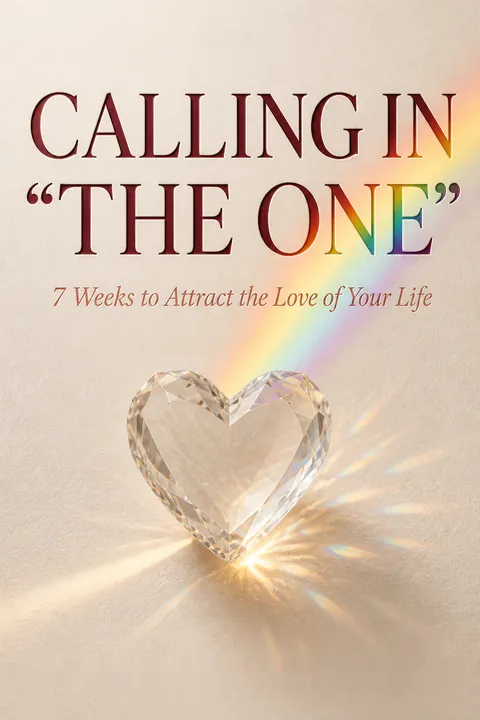
Calling in The One is a relationship guide organized as a seven-week course, but its deeper subject is the gap between wanting intimacy and being able to participate in it. Thomas moves from her own history of choosing unavailable men toward a practical sequence: identify old patterns, grieve and release what sustains them, clarify a desired life, and practice the relational capacities that could support it. The memoir gives the process narrative momentum, while journal prompts, meditations, environmental changes, and group exercises turn the argument into repeated action.
The book’s most durable contribution is its change of focus from partner acquisition to relational readiness. It asks whether a person can state needs, receive care, tolerate uncertainty, keep commitments, and end connections that contradict their stated hopes. These are observable capacities, unlike the promise that a destined partner will appear. The advice to seek character and shared purpose rather than a rigid inventory of external traits is also useful, provided it does not replace careful assessment of compatibility and behavior.
Some of the book’s causal language needs qualification. Its claims about attraction, manifestation, and relationships mirroring the self work as spiritual metaphors for attention and choice, but are not established explanations for why people meet or remain single. The idea that people attract mistreatment through self-disrespect can also slide into victim-blaming, especially when applied to abuse. People are responsible for setting boundaries when they can, while responsibility for abuse belongs to the perpetrator. Circumstance, chance, social context, and other people’s independent choices matter too.
The book’s emphasis on introspection is balanced by a recommendation to seek therapy for severe trauma, an important safeguard. Its broad claims about men’s and women’s needs are less universally applicable than its core guidance on communication, respect, and reciprocity. Read most productively, the course is not a guarantee of finding a spouse in seven weeks. It is a structured invitation to build a life in which love can be offered, recognized, and chosen with greater clarity.
Review Summary
Calling in "The One" receives mostly positive reviews for its transformative impact on readers' lives, focusing on self-improvement and healing rather than just finding a partner. Many praise its practical exercises and insights, noting significant personal growth. Some criticize its spiritual language and title, but overall, readers find it valuable for improving relationships and self-understanding. The book is recommended for anyone seeking personal growth, not just those looking for romantic love. Some readers report taking longer than the prescribed 7 weeks to complete the program.
People Also Read







Glossary
Essence Quality
A chosen quality of loveAn Essence Quality is a quality associated with love that a person chooses as the foundation for inner work. Examples in the book include trust, courage, openness, healing, and abundance. The practice is to name a quality, create an affirmation connected to it, and take actions that express it while preparing for a relationship.
spiritual partnership
Mutual support for growthA spiritual partnership is an intimate relationship organized around the mutual development and fulfillment of both people, rather than only economic security, social compatibility, or romance. Partners support each other’s purpose and potential while remaining authentic and distinct. The term describes a demanding ideal of marriage or committed partnership, not a guarantee that partners share the same beliefs.
toxic ties
Draining, disempowering attachmentsToxic ties are relationships or attachments that repeatedly diminish a person’s sense of agency and well-being. The book highlights dynamics shaped by fear, obligation, or guilt, including one-sided caretaking, manipulation, and continued investment in someone unavailable for mutual love. Recognizing a toxic tie calls for examining boundaries and choices, and may mean ending or restructuring the relationship.
Sacred Wound
Pain transformed into contributionA Sacred Wound is a painful life experience understood as part of a person’s history but not as the whole of their identity. Thomas uses the term for a wound that, through healing and reflection, may inform a person’s strengths, empathy, or service to others. The concept does not mean that harm was deserved or that every person must find a positive purpose in trauma.
woundology
Identity organized around injuryWoundology refers to relating to oneself primarily through stories of victimization and pain. In the book, shared suffering can create closeness, but friendships or partnerships may become stuck if their bond depends on keeping one another in a wounded role. Reframing a personal story around resilience can make room for a fuller identity without denying the injury.
visioning
Listening for a possible futureVisioning is a reflective or spiritual practice for sensing what a fulfilled life might look and feel like, rather than merely picturing a specific outcome. The book’s exercise asks what love fulfilled would look like, what might need to be released, and what qualities a person would need to embody. The resulting vision is intended to guide choices, not predict events.
re-parenting
Providing care to oneselfRe-parenting means learning to offer oneself forms of care that may have been missing in childhood, such as encouragement, protection, soothing, attention, and respect for boundaries. In Thomas’s framework, adult romantic partners cannot fully repair early deprivation. Self-care and supportive relationships can help build inner resources, while serious attachment wounds may benefit from professional therapy.
Observer Self
Noticing feelings without reactingThe Observer Self is the aspect of awareness that notices present feelings and bodily sensations without immediately judging, suppressing, analyzing, or acting on them. The book’s exercise asks readers to identify emotions, allow them to be present, and consider what information they might carry. This practice aims to make feelings easier to understand and less likely to dictate automatic responses.
FAQ
What's Calling in "The One" about?
- Seven-week program: The book offers a structured seven-week program aimed at helping individuals attract a loving relationship by focusing on self-awareness and personal growth.
- Transformative journey: It guides readers through introspection, healing past wounds, and setting intentions for love, shifting the mindset from scarcity to abundance.
- Holistic approach: Integrating psychological insights with spiritual practices, it is accessible to anyone seeking to deepen their understanding of love and relationships.
Why should I read Calling in "The One"?
- Practical tools: The book provides actionable steps and exercises that readers can implement immediately to foster a mindset conducive to love.
- Self-discovery: It encourages exploration of past experiences and their impact on current relationships, promoting personal growth and healing.
- Community support: Suggests doing the course with friends or a group, enhancing accountability and motivation through shared experiences.
What are the key takeaways of Calling in "The One"?
- Healing core wounds: Emphasizes addressing and healing past traumas that hinder the ability to love and be loved, crucial for personal transformation.
- Setting intentions: Teaches readers to set clear intentions for what they want in a partner and relationship, vital for manifesting love.
- Creating space for love: Highlights the importance of making physical and emotional space for love, including decluttering and letting go of toxic relationships.
What are the best quotes from Calling in "The One" and what do they mean?
- “Your task is not to seek for love...”: Love is already within us; focus on removing internal obstacles that prevent experiencing it.
- “The world breaks everyone...”: Emphasizes resilience and growth from overcoming adversity, suggesting wounds can become strengths.
- “To give oneself over to love...”: Reflects the transformative nature of love, requiring letting go of old identities and patterns.
How does Calling in "The One" address past traumas?
- Healing process: Provides a framework for addressing and healing past traumas impacting current relationships, essential for a healthy foundation.
- Forgiveness and release: Guides readers through exercises promoting forgiveness and release of emotional burdens tied to past experiences.
- Transforming wounds into strengths: Emphasizes reframing past traumas to use experiences for fostering deeper future connections.
What role does self-awareness play in Calling in "The One"?
- Understanding patterns: Self-awareness helps recognize and understand relationship patterns, especially those from childhood experiences.
- Identifying core beliefs: Encourages exploration of core beliefs about oneself and relationships, which dictate choices and actions.
- Empowerment: Fosters a sense of agency and control over one’s love life by taking responsibility for choices and actions in relationships.
How can I create space for love according to Calling in "The One"?
- Decluttering environment: Suggests physically decluttering living space to make it more inviting for a partner, removing negative items.
- Emotional readiness: Involves letting go of past relationships and emotional baggage that may hinder new connections.
- Setting up for partnership: Encourages preparing homes for a partner, signaling readiness for love through welcoming atmospheres.
What is the significance of emotional literacy in Calling in "The One"?
- Understanding feelings: Involves recognizing and articulating emotions, crucial for healthy communication in relationships.
- Empathy and connection: Enhances ability to empathize with others, fostering deeper connections.
- Navigating challenges: Helps manage emotions effectively, allowing for constructive responses to relationship challenges.
How does Calling in "The One" define love?
- Love as a state of being: Describes love as an expansive state generated from within, not dependent on external circumstances.
- Generosity and compassion: Characterized by willingness to give and support others, and openness to receiving love.
- Connection and interdependence: Emphasizes deep connection and mutual support, moving from a “me” to a “we” perspective.
How can I cultivate self-love according to Calling in "The One"?
- Daily affirmations: Encourages writing and repeating affirmations that reinforce worthiness and capacity to love.
- Emotional literacy: Provides tools to help identify and articulate emotions effectively, crucial for self-understanding.
- Gratitude practice: Regularly acknowledging and appreciating life fosters a positive mindset and enhances self-love.
What role does forgiveness play in Calling in "The One"?
- Healing past wounds: Essential for moving forward and creating space for new love, described as an emotional expansion of the heart.
- Ongoing process: Acknowledges forgiveness may require multiple attempts, aligning with the idea of “seventy times seven” for true healing.
- Restoring personal safety: Important to establish boundaries and ensure personal safety before forgiving, allowing for a healthier emotional state.
How does Calling in "The One" suggest dealing with fear in relationships?
- Identify and name fears: Encourages confronting fears directly, writing them down, and understanding their origins.
- Self-soothing techniques: Provides strategies for calming oneself in the face of fear, allowing for a grounded approach.
- Embrace vulnerability: Highlights importance of being open and vulnerable, as true connection requires emotional risks.
About the Author
Other books by Katherine Woodward Thomas
Download PDF
Download EPUB
.epub digital book format is ideal for reading ebooks on phones, tablets, and e-readers.








