

Key Takeaways
A border poll can unite jurisdictions, not manufacture a common identity.
A vote changes jurisdiction. The book opens at a 1966 Easter Rising commemoration in Belfast. Fifteen-year-old O’Doherty believes the crowd shares a single purpose: completing the struggle for an Irish republic. Then his friend waves the tricolour and chants for Celtic, a Scottish football club, on a GAA pitch where soccer was prohibited. The small contradiction exposes a larger one: people can rally around the same emblem for different reasons.
Belonging is harder. The author’s family crosses religious, political, and national lines. His grandfather served in the Royal Navy, while other relatives cherished Irish republicanism. The book’s conclusion is similarly double-edged: Ireland could become one state through a vote, but that would not automatically make its people one community.
The distinction between a state and a society is the book’s most useful compass. Constitutional change can redraw legal authority, but trust and belonging are made through everyday recognition, shared institutions, and memories that do not disappear on polling day. This helps explain why a vote can be democratically decisive yet socially incomplete. The opening scene also shows how symbols work: they gather people without guaranteeing that those people agree about what the symbol means. That ambiguity is not a defect to eliminate. It is a reality any durable settlement has to accommodate.
Treat Irishness as layered inheritance, not a purity test.
Families cross categories. O’Doherty’s relatives include an Irish-speaking grandmother, a grandfather who served Britain, and cousins who identify as Irish while holding British passports and living in Scotland. One cousin can toast the Queen and still hope for Irish unity. These examples unsettle the idea that Irish and British identities are mutually exclusive or reliably predict a person’s vote.
Purity polices belonging. The author recalls insults such as Castle Catholic, souper, and West Brit, used against people whose views depart from nationalist expectations. Such labels presume that Irishness comes with a single political obligation. The family stories instead show identity as something shaped by ancestry, work, religion, place, and personal choice, sometimes in combinations that inherited categories cannot neatly contain.
The family history makes identity legible as a relationship rather than a sealed container. That resembles the way language and culture travel through migration: people retain attachments while adapting to new places, and the result is not necessarily a diluted version of the original. Yet fluidity should not be mistaken for universal comfort. For some people, British or Irish identification is a hard-won commitment, not a flexible label. The book’s strongest point is narrower and sturdier: no person’s legitimacy can be measured by how closely their choices match a community’s preferred script.
Audit national myths against the lives they leave out.
A nation tells stories. The book challenges the ideal of an ancient, unified Gaelic Ireland that simply awakened to reclaim its freedom. The Gaelic revival promoted Irish language and culture as foundations for independence, while Patrick Pearse imagined a distinctive national spirit. But Irish identity had long been shaped by migration, English-language culture, Protestant communities, and the Anglo-Irish tradition. Romantic images of Ireland as mystical, poetic, and naturally virtuous are also stereotypes, even when Irish people enjoy them.
Omission has consequences. If national history celebrates only rebels, it can exclude people whose families served Britain or whose culture does not fit a Catholic and Gaelic ideal. Revising the story is not an argument against Irish independence. It is a way to ask whether a future Ireland can include people who were written out of the story used to justify it.
Collective stories can create solidarity, but they also decide whose experience counts as representative. This is close to a problem in historical memory: a nation’s public narrative often becomes simpler than the lives it claims to describe. The corrective is not to discard national stories altogether. It is to make them answerable to evidence and to include people whose loyalties complicate the plot. There is a useful caution, too: exposing a myth does not make every competing account equally accurate. Plural history still requires careful distinctions between documented experience, political interpretation, and convenient legend.
Count Irish service in empire alongside rebellion, not outside history.
Irish lives crossed battle lines. O’Doherty finds Irish soldiers in the Napoleonic wars, at Waterloo, in the American Civil War, and in the British Empire’s campaigns in India. Irishmen fought on different sides, including for and against slavery. Some Irish soldiers and officials participated in colonial violence, including the repression of the 1857 Indian rebellion and the aftermath of the Amritsar massacre. Their service does not fit a history in which Ireland appears only as Britain’s victim or opponent.
Motives were mixed. Poverty, limited opportunities, ambition, military tradition, and personal conviction all shaped enlistment. During the First World War, about 10 per cent of Irish men of serving age joined the British Army, compared with 26 per cent of Scots and 24 per cent of Welsh men. These records complicate any claim that one cause united all Irish people.
This history matters because it restores agency without erasing constraint. A poor recruit might choose imperial service as a route out of hardship, while still being part of an empire that harmed others. Neither pure patriotism nor pure coercion captures that tension. The same method can improve debates about national memory: examine what people did, what options they had, and who bore the cost. The book’s account also prevents anti-imperial identity from becoming self-congratulation. Acknowledging participation in imperial violence is not a denial of Irish subjugation; it is a fuller account of how power travels through people.
Treat community labels as clues, not political destinies.
Background is not belief. In Northern Ireland, Catholic and Protestant often function as labels for family or community origin, even when religion no longer shapes a person’s life. Nationalist and unionist are also imperfect shortcuts: not everyone from a Catholic background supports Irish unity, and not every Protestant identifies as British or votes for a unionist party.
One person can be misread twice. Sorcha Eastwood, raised Catholic, recalls being called a Fenian by some Protestants and treated as a Protestant by Catholic schoolmates because of her accent and background. She chose the Alliance Party, which avoids taking a position on the constitutional divide. The story shows how labels can preserve the appearance of two solid blocs while hiding people who do not fit either one.
Political labels are useful when they reveal patterns, such as unequal treatment or voting trends. They become harmful when a statistical category is treated as a complete description of a person. That is a familiar tension in social research: categories make populations visible, but they can also flatten variation within them. The book is right to challenge labels that impose identity from outside. Still, abandoning categories entirely could make discrimination harder to measure. The practical task is to use them provisionally, explain what they capture, and leave room for people to describe themselves differently.
Separate respect for Irish from compulsory performance of Irishness.
A symbol is not fluency. In the 2016 census, 1,761,420 people said they could speak Irish to some extent, but fewer than 7,700 completed their census forms in Irish. A separate survey cited in the book found that many people considered Irish important while most said they never spoke it. These figures point to a gap between cultural attachment and everyday use, not proof that people are lying or that the language does not matter.
Learning can cross old boundaries. Linda Ervine, from east Belfast, took up Irish as an adult and established a language project in a largely Protestant area. Her experience challenges the assumption that Irish belongs only to nationalists. The author questions whether official requirements and patriotic pressure can revive a living language, especially when they turn proficiency into a test of authentic Irishness.
The distinction between symbolic value and practical fluency is important for language policy. A language can carry memory, place, and recognition even when it is not widely used at home or work. That does not make official support pointless; public institutions can create opportunities for speakers and learners. But policy built mainly around symbolic obligation risks alienating people who value the language yet cannot use it. Census self-reports also cannot tell the whole story, since basic conversational ability and professional competence are different things. Respect is best demonstrated by making learning accessible, not by treating it as a loyalty test.
Plan with unionists, without mistaking courtesy for consent.
Unionism has many forms. The book describes people who favour the Union for economic security, others whose British identity is central, and people who are secular, liberal, or open to Irish unity. Sorcha Eastwood resists both nationalist and unionist labels. Trevor Ringland favours the Union but stresses shared island ties. Doug Beattie rejects violence and accepts that a democratic vote could produce Irish unity, while still campaigning for the UK.
Representation must be real. Some discussions about Irish unity relied on friendly or conciliatory speakers rather than unionists who would argue against it. Beattie says he sees little reason to design a political settlement he does not want. That refusal does not remove the need for preparation, but it shows why inclusion cannot be confused with agreement.
A serious planning process needs more than a reassuring image of future reconciliation. It needs people who can state what they fear losing, even when their position frustrates the process. In deliberative politics, listening is not the same as persuading, and participation is not evidence of consent. The book also catches a practical failure: without direct unionist participation, advocates may build plans around assumptions that have never been tested. Still, an invitation cannot compel engagement. A credible process must make space for refusal as well as dialogue, while explaining the consequences of leaving the future undefined.
A border vote cannot settle sectarian conflict or territorial grievance.
Division lives on the ground. The book describes communities that mark territory through flags, murals, painted kerbstones, parades, and separate neighbourhoods. Peace walls still separate some areas even while political debate focuses on removing the border between the two jurisdictions. A constitutional decision would not instantly undo these local boundaries or the memories attached to them.
Repartition exposes the human cost. In 1972, British officials examined a proposal to redraw the border and move populations. Their assessment suggested that hundreds of thousands of people might have to relocate, creating homelessness, upheaval, and likely resistance. The scheme was rejected as impractical and unjust. O’Doherty’s later concern that a unified state could still contain alienated enclaves is a warning about possible risks, not a claim that such a future is inevitable.
The passage from constitutional map to lived geography is easy to underestimate. Political agreements can change sovereignty faster than they can change where people feel safe, who controls local space, or which symbols are experienced as threats. The rejected repartition proposal makes the cost of treating communities as movable pieces unusually clear. At the same time, the book’s scenario of future enclaves is necessarily speculative. Its value lies in identifying a risk that planning should test, not in predicting that renewed violence must follow any particular referendum result.
Vote on negotiated terms, not the romantic word unity.
Details change the decision. A 2021 poll in the Republic found that 60 per cent wanted immediate unity and 62 per cent wanted government planning to begin. Yet only 27 per cent supported changing the flag, 35 per cent changing the anthem, and 41 per cent accepted higher taxes to fund unification. Support for the principle does not automatically extend to the sacrifices or compromises a settlement may require.
The bill is disputed. One cited estimate put the annual UK transfer to Northern Ireland at £14.8 billion, but the figure includes revenues and does not by itself reveal the cost of unity. The treatment of pensions is also contested. Under the Good Friday Agreement, a border poll in Northern Ireland depends on a judgment that a majority may support unity. The author wants voters to see the terms before choosing.
This is a case for informed consent, not delay for its own sake. A referendum asks people to authorize consequences, so a vague aspiration is a poor substitute for a credible account of public services, taxation, pensions, and constitutional safeguards. The gap between support for unity and willingness to change national symbols or pay more is especially revealing: abstract agreement can coexist with resistance to concrete costs. The Brexit experience, which the book invokes, underscores the danger of treating a simple ballot as a complete implementation plan. Even detailed proposals cannot remove uncertainty, but they can make the choice more honest.
Analysis
The book’s central achievement is to separate the question of who governs Ireland from the harder question of who belongs to it. O’Doherty makes that distinction personal before making it political. A childhood scene at Casement Park gives the debate its emotional key: a flag can unite a crowd while its members attach different loyalties and meanings to it. Family history then supplies counterexamples to tidy categories, while accounts of Irish soldiers in imperial wars unsettle the familiar story of a people defined only by resistance.
The method is deliberately sceptical. The author tests ideas such as a unified Gaelic identity, a coherent nationalist community, and an inevitable reconciliation against people whose lives contradict them. This scepticism is valuable because political plans often rely on symbolic shortcuts: that the tricolour will reassure, that Irish-language policy will attract, or that a change in sovereignty will soften old divisions. The book asks readers to examine what these gestures mean to the people expected to accept them.
Its strongest practical implication is that preparation must address both institutional terms and social legitimacy. Voters need clarity about costs, pensions, public services, and constitutional arrangements. They also need to know whether a future state can make room for British identity, northern nationalist experience, and people who do not identify with either traditional bloc. The book is right that a referendum cannot answer every question in advance, but a vote on an undefined destination would be especially risky.
There is a tension in the author’s own approach. His insistence on complexity challenges nationalist simplification, yet some of his scenarios about alienated Protestant enclaves also rely on uncertain projections. Such possibilities should be treated as risks to investigate, not forecasts. The book’s final value is not a recommendation for or against unity. It is a demand that any decision be judged by its actual terms and by the people those terms must persuade.
Review Summary
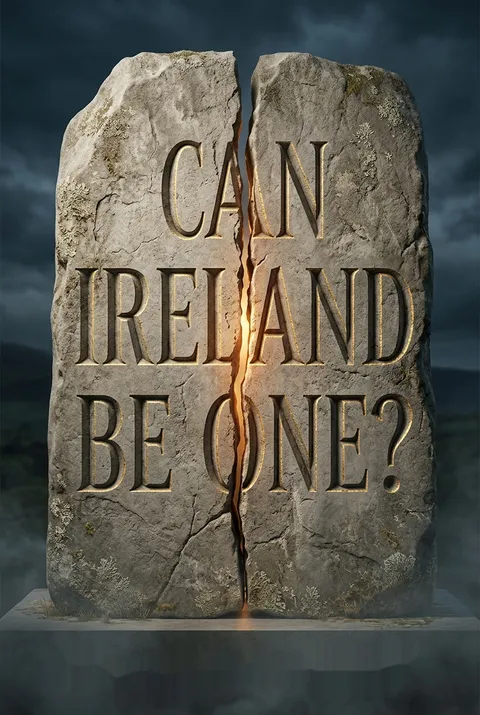
Can Ireland Be One? receives mixed reviews, with an overall rating of 3.98/5. Some readers find it informative and essential, while others criticize its pessimistic tone and perceived bias. The book explores the potential for Irish unification, discussing cultural differences, national identities, and the challenges of creating a truly inclusive united Ireland. Readers appreciate the author's lived experience but note that the book may lack depth in certain areas. Some find it thought-provoking, while others feel it leaves them more confused about the complex issues surrounding Irish unification.
People Also Read




Glossary
Imagined Communities
Shared national belongingBenedict Anderson’s term for nations understood as communities whose members will never know most of one another, yet imagine themselves as sharing a political and cultural identity. The book draws on Anderson’s account of how novels, newspapers, public memory, and commemorations can help create that sense of shared belonging.
border poll
Referendum on Irish unityA referendum in Northern Ireland on whether the region should remain part of the United Kingdom or join a united Ireland. Under the Good Friday Agreement, the British Secretary of State must call one when it appears likely that a majority would vote for unity. The agreement does not specify a precise test for deciding when that likelihood exists.
subvention
UK public funding transferA term used for the money transferred from the UK Treasury to support Northern Ireland’s public spending. The book cites a 2021 estimate of £14.8 billion annually, while stressing that the figure includes revenues raised in Northern Ireland and does not straightforwardly represent the cost of Irish unity. Its interpretation is part of a contested economic debate.
Ne Temere decree
Rule for mixed marriagesA Catholic Church decree concerning marriage that affected the religious upbringing of children in interfaith families. As discussed in the book, Protestant families could feel pressured to raise children as Catholics, a source of grievance and concern about the decline of Protestant communities in the Republic. The issue was especially difficult when challenging the rule risked conflict within families.
Good Friday Agreement
Northern Ireland peace settlementThe 1998 agreement establishing the basis for peace and power-sharing in Northern Ireland and setting out that the region’s constitutional status depends on consent. It provides for a border poll if a majority for Irish unity appears likely. The book emphasizes that the agreement creates a route to constitutional change but does not guarantee social reconciliation or specify every practical term of unification.
Download PDF
Download EPUB
.epub digital book format is ideal for reading ebooks on phones, tablets, and e-readers.








