

Key Takeaways
Treat burnout as a warning about the system, not a flaw in yourself
Burnout is more than fatigue. Petersen distinguishes ordinary exhaustion from burnout: exhaustion says a person has reached their limit; burnout describes reaching it and continuing anyway. Its quieter signs can be numbness, dread, or ordinary errands becoming impossible. She recognizes her own burnout when simple tasks, like mailing a gift, feel beyond reach, while work keeps expanding to fill her days. Rest and a massage offer little lasting relief because the problem is not a single hard week.
The conditions matter. Burnout grows when work, debt, unstable income, and weak safety nets make the future feel fragile. The pandemic did not invent that condition, Petersen argues; it made existing insecurity harder to ignore. The experience differs by race, class, immigration status, and access to family wealth, so one generation’s story cannot stand for everyone’s.
What's striking is the shift from a character judgment to a diagnosis of conditions. That distinction resembles occupational-health models, which examine workload, control, and support rather than treating stress as a private defect. It can help people stop prescribing another productivity system for a problem created by excessive demands. Still, calling burnout structural should not flatten individual differences: similar pressures affect people differently, and some people need immediate clinical support alongside broader reform. The strongest reading holds both scales at once, protecting the person in front of us while asking why so many people reach the same limit.
The safety net your parents lost became the anxiety they taught you
Security was built collectively. After the Great Depression and World War II, unions, public programs, and employer benefits spread risks that no worker could safely carry alone. This period helped expand the middle class, though its gains were uneven and often excluded Black workers, women, and others. As companies and government withdrew protections, households were told to manage more risk themselves, from job training to retirement savings.
Families felt the shift. Private-sector pension coverage fell from 46 percent in 1980 to 16 percent in 2019. Boomers came of age as economic stability weakened, and many responded by focusing on what they could control: their children’s prospects. Their children inherited the lesson that security must be earned through relentless effort, even when hard work no longer reliably delivers it.
This history makes family anxiety legible as an adaptation, not simply a generational personality trait. Political economy research often distinguishes risks shared through institutions from risks assigned to individuals; the latter can make a household’s private decisions feel like constant emergency management. The account also complicates easy blame of parents: many were reacting to genuine insecurity while supporting politics that weakened collective protections. That tension is useful because it explains how people can sincerely want better lives for their children and still pass on habits that make those lives more pressured.
Stop building childhoods like résumés for jobs that may not exist
Preparation became a full-time project. Sociologist Annette Lareau calls a middle-class approach to child-rearing “concerted cultivation”: adults organize children’s schedules around activities, achievement, and skills valued by schools and workplaces. Children learn to negotiate with authority and manage crowded calendars, but may get less unstructured play, independence, and practice choosing what they enjoy.
College extended the same logic. Petersen describes teenagers turning themselves into application portfolios. One high-achieving student, nicknamed “AP Frank,” filled his schedule with advanced classes to reach Harvard and later wrote about feeling treated like a résumé rather than a person. Across schools, grades, clubs, and internships came to seem like investments in future stability. Yet a degree and a polished application could not guarantee the secure jobs families expected.
The useful distinction is not between involved and uninvolved parents, but between preparation that expands a child’s capacities and preparation that narrows life to measurable achievement. Developmental research values both guided learning and self-directed play, which can help children practice initiative and recover from small failures. The pressure to cultivate credentials is also understandable when schools and employers use them as filters. The question is whether every childhood activity must justify itself as future economic advantage, especially when the promised reward is uncertain.
Passion is not compensation; ask whether a calling can pay your bills
Love of work can conceal its price. The promise that a person should pursue work they love can make low pay, unstable hours, and unpaid labor seem like acceptable sacrifices. Petersen calls uncompensated or underpaid work undertaken for hoped-for future opportunities “hope labor.” Internships, freelance assignments, and academic work can all fit the pattern. The worker supplies labor now in exchange for a possibility, not a guarantee.
A calling can deepen the trap. Research on zookeepers found many were highly educated, poorly paid, and reluctant to leave work they saw as morally meaningful. Their commitment could make exploitation feel like a personal test of devotion. Petersen’s counterpoint is not that meaningful work is bad, but that meaningfulness should not excuse inadequate pay, benefits, or boundaries. A decent job can be interesting without consuming a person’s whole identity.
The insight connects to a broader labor-market problem: when a job offers status, identity, or moral purpose, employers may attract more applicants than they need and face less pressure to improve conditions. Passion is a real source of motivation, but it is not a substitute for bargaining power. A practical test is to separate the work’s social meaning from the employment terms attached to it. That separation can preserve commitment while making it possible to ask questions about pay and workload without treating self-advocacy as betrayal.
Look past the job title to who carries the risk
Work was reorganized around disposability. Petersen traces the rise of temporary work, outsourcing, and subcontracting as ways for companies to lower costs and shed responsibility for workers. The “fissured workplace” describes a company keeping its brand and core functions while shifting other jobs to contractors and outside firms. Workers may do essential work on site but receive weaker benefits, less stability, and fewer routes to advancement.
The costs reach everyday life. At Google, the book reports that temporary and contract workers outnumbered direct employees in 2019, often with worse benefits and no paid vacation. Yet Petersen points to companies such as QuikTrip, which paired stable schedules and benefits with strong sales and lower staff turnover. Poor jobs, she argues, are not an unavoidable price of profit; they reflect choices about who gets the gains and who absorbs uncertainty.
The workplace lens redirects attention from individual resilience to the allocation of risk and reward. It also clarifies why a contractor label matters: it can make responsibility harder to locate even when the work is central to a company’s operation. QuikTrip offers a useful counterexample to the claim that better conditions automatically undermine performance, though one successful employer cannot establish that every industry can copy its model unchanged. The broader implication is that labor standards and accountability need to match how work is actually organized, not only how firms describe their workforce.
Your phone sells convenience by turning every spare moment into work
Attention became a commodity. Phones combine practical tools with apps designed to keep people checking, refreshing, and responding. Petersen describes a day interrupted by news alerts, social media, email, and workplace chat, until even a walk or a meal becomes another chance to consume or produce information. Instagram adds a layer of comparison: carefully selected snapshots can make other people’s lives look both more successful and more balanced.
Work follows the device. Tools such as Slack make workplace communication immediate and portable, so employees can perform availability outside office hours. Petersen calls the performance of appearing busy in workplace chat “LARPing your job.” Technology can help complete tasks, but its promise of efficiency often expands expectations instead: work enters the home, while personal errands and online distractions interrupt work.
This account usefully distinguishes a tool’s convenience from the business model shaping its use. Notifications and variable rewards can make checking habitual, while workplace messaging makes responsiveness visible and socially expected. That does not mean every app is inherently harmful or that personal settings are useless. It means self-control operates inside an engineered environment, and people may need both individual boundaries and organizational rules. The deeper measure of digital usefulness is not how many tasks an app compresses into a day, but whether it returns time and attention to the person using it.
Protect leisure from optimization, or it stops restoring you
Free time can become another assignment. Petersen argues that leisure loses its restorative force when every hobby must build a résumé, improve the body, earn money, or signal cultural status. Adults aged 25 to 34 reported about 4.2 hours of leisure daily in 2018, but only about 20 minutes for thinking or relaxing. The category “leisure” can hide scrolling, errands, or activities that feel more like obligations than chosen pleasure.
Unstructured time matters. The book connects shrinking leisure to longer work hours, constant availability, and the decline of social spaces that make gathering easy. In one workplace experiment cited by Petersen, employees moved to a four-day week while keeping pay and meeting output goals; reported productivity rose. The point is not that every person must adopt a particular schedule, but that more hours are not the same as better work or a fuller life.
The distinction between free time and restorative time is important because time-use totals can make a depleted person look well rested on paper. Leisure also has a social dimension: regular clubs, shared spaces, and recurring plans reduce the labor of arranging connection from scratch. Yet unstructured time is not equally accessible. Care responsibilities, disability, shift work, and money constrain who can claim it. Protecting leisure therefore requires more than individual permission; predictable schedules and accessible public spaces help make rest a shared possibility rather than a private luxury.
Parenting burnout is policy failure made intimate, unequal, and exhausting
Care has not caught up with work. Many families are organized as if one adult were always available at home, despite widespread paid employment among parents. Childcare is expensive, school hours rarely match work hours, and US workers lack mandatory paid parental leave. Mothers still perform most childcare in many households, including much of the planning and remembering that can remain invisible even when chores are shared.
The pressure is not evenly distributed. Middle-class parenting standards reward constant supervision, enrichment, and polished displays of family life. Parents with fewer resources may face harsher judgment for making the same practical choices, with race and class shaping who is seen as neglectful. Petersen argues that treating exhaustion as proof of devotion hides the system’s role and turns shared problems into private maternal blame.
The discussion of the mental load adds an important dimension to debates about household equality: dividing visible chores is not enough if one person still notices, plans, delegates, and follows up on everything. This resembles project-management labor, except it is unpaid and often treated as a natural ability rather than work. Family negotiation can improve daily life, but it cannot replace childcare access, leave, and predictable jobs. A useful caution is that families vary; policy should support different caregiving arrangements rather than impose a single model of good parenting.
Trade self-blame for solidarity, then demand protections that make rest possible
Private coping cannot repair public failures. Petersen rejects the idea that productivity apps, better routines, or personal discipline can cure a condition produced by unstable work, debt, unequal care, and constant demands. Individual steps may provide relief, but they cannot make employers provide secure schedules or make childcare affordable. The book’s conclusion is a call to recognize burnout as shared evidence that the social arrangement needs changing.
Solidarity means widening the circle. The burden differs across race, class, disability, immigration status, and family support, so reform cannot stop at helping those already best placed to benefit. Petersen urges readers to resist blaming one another, support collective protections, and use political action to press for change. Her example of Japan, where extreme overwork coexists with low fertility and unequal care, warns that a society can pay a lasting price for treating exhaustion as normal.
The conclusion turns recognition into a political orientation: shared frustration can become solidarity rather than scapegoating. That is a crucial distinction in periods of insecurity, when people may be pushed to blame groups with less power instead of institutions shaping their options. The argument is strongest when it links personal testimony to concrete policy questions. Its open-endedness also leaves a practical challenge: solidarity needs durable forms, such as workplace organizing, civic groups, and coalitions, not just a shared diagnosis. Naming the system is a beginning, not a substitute for building power.
Analysis
Can’t Even is a sociological argument built from personal narrative, historical explanation, and testimony from workers and parents. Its central move is to reinterpret burnout: not as a temporary breakdown in an otherwise healthy life, but as a predictable response to chronic insecurity and demands that exceed the resources available to meet them. The book follows that claim across generations. Postwar institutions spread some economic risks; later political and corporate shifts placed more of them on individuals. Families responded by intensifying children’s preparation for competitive education and work. Many millennials then encountered expensive credentials, insecure employment, and a cultural ideal that fused identity with a supposedly lovable job.
The book’s strongest contribution is connecting experiences that are often treated separately. Errand avoidance, unpaid internships, workplace surveillance, exhausted parenting, compulsive phone use, and leisure that feels like another task become parts of one system of overextension. Its examples make structural arguments tangible, while its attention to race and class resists presenting the white, middle-class millennial experience as universal. It also avoids a simple generational morality tale: boomers’ anxiety helped shape their children, but was itself formed by economic change.
The approach has limits worth keeping in view. “Millennial” covers a large, diverse population, and personal accounts cannot establish that every experience is typical. The book acknowledges this variation, but its sweeping generational frame can still obscure differences in occupation, national context, and access to resources. Its critique also risks making structural explanations feel total, as though individual choices and organizational variation matter little. Yet the account offers counterexamples, including employers that provide better jobs, and insists that different arrangements are possible.
The practical value is not a universal burnout checklist. It is a change in the question. Instead of asking only how a person can become more efficient, ask who benefits from the current arrangement, who bears its risks, and what collective protections would make ordinary life less precarious. Personal boundaries matter, but they are more durable when supported by fair workplaces, public services, and shared care. The book’s final claim is political and ethical: human worth should not depend on endless productivity.
Review Summary
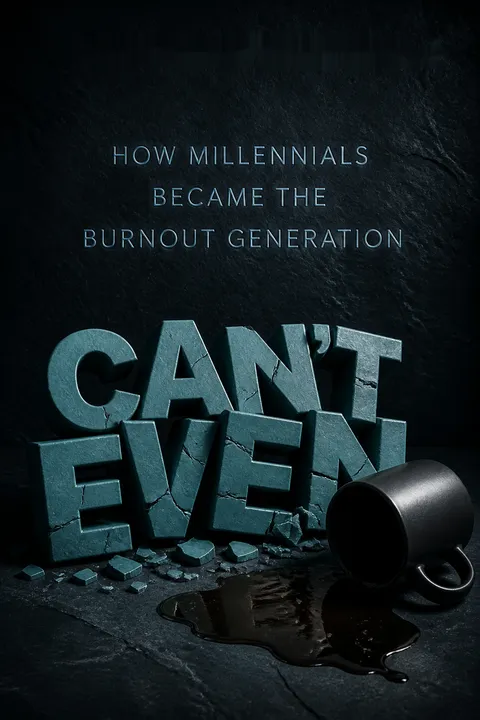
Can't Even explores millennial burnout, tracing its roots to economic shifts, parenting styles, and technological changes. Petersen argues that systemic issues, not personal failings, cause burnout. The book resonates with many readers who see themselves in its descriptions of overwork, anxiety, and constant connectivity. Some critics find it overly focused on middle-class experiences or lacking solutions. Despite mixed reviews, many appreciate Petersen's thorough research and accessible writing style in addressing this widespread issue.
People Also Read





Glossary
Burnout
Overwork without recoveryA state produced by reaching exhaustion and continuing to work or meet demands anyway. In Petersen’s account, it is not simply tiredness after a difficult stretch. It is a persistent condition in which ordinary life feels depleted, accomplishment brings little relief, and the pressure to keep going remains even when a person’s internal resources are spent.
Concerted cultivation
Scheduled, achievement-focused parentingA parenting approach identified by sociologist Annette Lareau, in which adults organize children’s activities and development around skills valued by schools and professional workplaces. Children may learn to negotiate with authority and manage complex schedules, while having less unstructured time to build independence and direct their own play.
Human capital
A person’s economic valueThe idea that a person can be valued according to the future earnings or productive capacity they are expected to generate. Petersen uses the term to explain why education, experience, credentials, and résumé-building can become investments in employability, and why people whose labor is unpaid or less economically rewarded may be treated as less valuable.
Hope labor
Work exchanged for future possibilityUnpaid or underpaid work performed in the hope that it will lead to future employment, recognition, or opportunity. Internships and freelance assignments can function this way when workers accept little compensation in exchange for experience or exposure. The promise is uncertain, while the immediate labor and costs are real.
Precariat
Workers living with chronic insecurityA class of workers whose employment often lacks stability, dependable hours, benefits, clear advancement, or strong collective protections. It includes people in temporary, freelance, gig, and other contingent jobs, as well as people piecing together multiple jobs. Their insecurity affects not only income but also time, status, and control over daily life.
Fissured workplace
Work split across employersA workplace structure in which a lead company focuses on its core business while shifting other work to contractors, subcontractors, franchises, or temporary agencies. Workers may still perform essential tasks for the lead company, but responsibility for their pay, benefits, conditions, and advancement becomes divided among multiple organizations.
The second shift
Paid work followed by unpaid careA term popularized by sociologist Arlie Russell Hochschild for the unpaid domestic work and caregiving many women perform after their paid jobs. Petersen uses it to describe how women’s increased participation in paid work did not bring an equivalent redistribution of household labor, leaving many mothers responsible for two substantial workloads.
FAQ
What's Can't Even: How Millennials Became the Burnout Generation about?
- Focus on Millennials: The book examines the unique challenges millennials face, particularly burnout and economic instability, shaped by societal expectations and cultural narratives.
- Historical Context: Anne Helen Petersen links current work conditions to past economic policies, showing how millennials inherited a flawed system.
- Burnout as Generational: Petersen argues that burnout is a generational issue, deeply rooted in modern work pressures and societal expectations.
Why should I read Can't Even?
- Insightful Analysis: The book provides a thorough analysis of the millennial experience, combining personal anecdotes with research.
- Cultural Reflection: It reflects on cultural narratives shaping millennials' identities and work ethics, offering insights into generational differences.
- Call for Change: Petersen encourages readers to rethink their relationship with work and consider systemic changes to alleviate burnout.
What are the key takeaways of Can't Even?
- Understanding Burnout: Burnout is widespread among millennials, exacerbated by economic instability and unrealistic expectations.
- Impact of Parenting Styles: "Concerted cultivation" parenting has led to over-scheduled millennials, contributing to their burnout.
- Economic Realities: Millennials face economic challenges like student debt and job insecurity, making traditional success paths difficult.
How does Can't Even define burnout?
- Psychological Diagnosis: Burnout was first recognized in 1974, characterized by physical or mental collapse due to overwork.
- Cultural Context: Burnout is a defining condition for millennials, shaped by cultural narratives equating self-worth with productivity.
- Chronic Condition: It's increasingly seen as a chronic condition affecting mental health and personal relationships.
What role does technology play in the burnout generation, according to Can't Even?
- Always-On Culture: Technology creates an “always-on” work culture, blurring work and personal life lines, contributing to burnout.
- Social Media Pressure: Social media exacerbates feelings of inadequacy and competition, increasing anxiety and stress.
- Workplace Surveillance: Technology enables greater workplace surveillance, making employees feel constantly monitored and pressured.
How does Can't Even address the concept of “adulting”?
- Definition of Adulting: "Adulting" is the millennial experience of navigating adulthood, often marked by anxiety and inadequacy.
- Three Types of Tasks: Adulting tasks are categorized into annoying due to inexperience, those requiring money, and unnecessarily complicated ones.
- Cultural Commentary: The cultural narrative around adulting often leads to feelings of shame and failure among millennials.
What does Can't Even say about the impact of parenting on millennials?
- Concerted Cultivation: Parents structure children's lives for success, leading to stress and anxiety as they grow up.
- Pressure to Achieve: This pressure creates a sense of inadequacy and burnout, as millennials feel they must constantly excel.
- Generational Reflection: Parenting styles of boomers have shaped millennials' experiences, leading to a cycle of anxiety and burnout.
How does Can't Even explore the relationship between work and identity?
- Work as Identity: Millennials equate self-worth with work, leading to identity loss outside of jobs and exacerbating burnout.
- Cultural Expectations: Societal expectations reinforce the idea that work should be fulfilling, creating pressure to find “lovable” work.
- Need for Boundaries: Establishing boundaries between work and personal life is crucial to maintaining a sense of self.
What solutions does Can't Even propose for addressing burnout?
- Rethinking Work Culture: Petersen advocates for a cultural shift prioritizing balance and well-being over constant productivity.
- Supportive Work Environments: Companies should prioritize employee well-being, offering fair pay, benefits, and growth opportunities.
- Collective Action: Millennials are encouraged to engage in collective action, like unionizing, to challenge burnout-contributing structures.
How does Can't Even connect the millennial experience to broader societal issues?
- Systemic Problems: Challenges faced by millennials are rooted in systemic issues like economic inequality and worker protection erosion.
- Historical Context: Previous generations’ decisions have shaped the current landscape for millennials, highlighting the need for societal change.
- Call for Change: There is potential for change through collective action and reimagining work culture, encouraging readers to shape a better future.
How does Can't Even address the gig economy?
- Precarious Work Conditions: The gig economy offers flexibility at the cost of job security and benefits, increasing stress and burnout.
- Normalization of Exploitation: Gig work has become normalized, with workers accepting poor conditions due to economic necessity.
- Lack of Support: Gig workers often lack support systems available to traditional employees, making advocacy for better conditions harder.
What are the societal implications of the issues discussed in Can't Even?
- Need for Policy Change: Addressing burnout requires systemic change, including policies supporting work-life balance and mental health resources.
- Cultural Shift: A cultural shift is needed to move away from glorifying overwork and toward valuing rest and self-care.
- Long-term Consequences: Without addressing these issues, society faces long-term consequences like declining birth rates and mental health crises.
About the Author
Other books by Anne Helen Petersen

Download PDF
Download EPUB
.epub digital book format is ideal for reading ebooks on phones, tablets, and e-readers.








