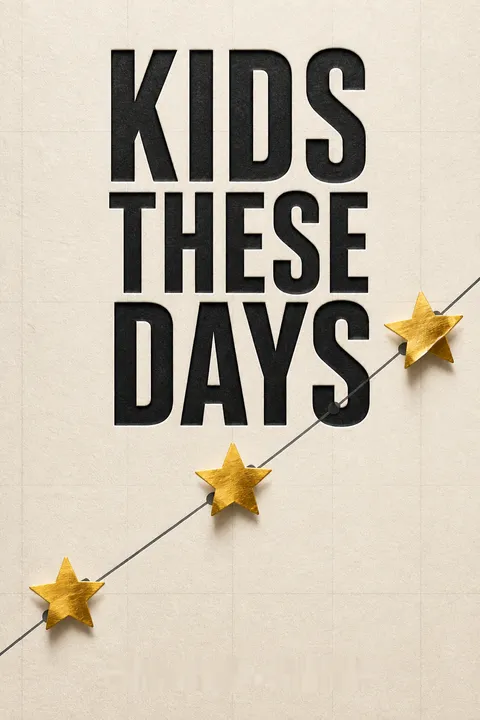


Key Takeaways
Read Millennials as an economic outcome, not a defective personality type
History shapes a cohort. Harris uses “Millennials” mainly for Americans born between 1980 and 2000, while arguing that generations are defined less by neat birth-year borders than by shared historical conditions. His central lens is human capital: a person’s economically valued skills, abilities, and potential future earnings. Seen this way, young people’s competitiveness, anxiety, and constant self-promotion are not simply quirks. They reflect a society that increasingly treats people as investments to be trained and optimized.
Follow the institutions. The book traces that pressure through childhood, college, employment, policing, entertainment, and digital life. Its claim is not that every young person has the same experience, but that institutions have changed the conditions under which a generation grows up. The useful question is therefore not “What is wrong with Millennials?” but “What demands are shaping them, and who benefits?”
What's striking is the shift from personality labels to incentives. It resembles institutional analysis in sociology: behavior becomes easier to explain when the rules, rewards, and penalties surrounding people are visible. The lens also helps explain why apparently contradictory traits, such as ambition and insecurity, can coexist. Still, a generation-wide account can flatten differences in race, class, disability, and region. The framework is strongest when it identifies common pressures without implying that every Millennial responds to them identically.
When technology saves students time, schools often spend it for them
Learning hides labor. Harris calls the concealment of children’s productive effort “pedagogical masking.” Schoolwork is described as learning rather than labor, even though it trains students for future employment. A 2014 kindergarten letter from Elwood, New York, explained that children had to miss their annual play because school was preparing them for college and careers.
Efficiency can mean more work. In the 1958 children’s book Danny Dunn and the Homework Machine, Danny uses a computer to finish assignments faster. His teacher responds by assigning more work, turning a labor-saving tool into an intensification machine. Time diaries cited by Harris found that, from 1981 to 2003, study time for children aged six to eight nearly tripled, while their time at school also increased. The machine changed how quickly work could be done, not who got the saved time.
The homework machine is a compact model of a familiar economic puzzle: productivity gains do not automatically become leisure. Whether efficiency reduces workloads depends on who controls the output and how institutions define success. Developmental research also treats self-directed play as a setting where children practice judgment, negotiation, and self-regulation, not as empty time. The argument should not imply that technology or rigorous learning is inherently harmful. It asks a more precise question: when a tool makes work easier, who decides whether the benefit becomes more output or more free time?
Treat childhood play as development, not a risk to eliminate
Safety became a project. Harris describes parents increasingly organizing play through scheduled playdates, vetted companions, and carefully selected activities. Sociologist Tamara Mose calls the fencing off of shared play spaces “enclosure.” The practice can protect children, but it can also turn play into parental networking and a display of class status. The pressure is not limited to affluent families, since their parenting norms often become the standard others are judged against.
Some risks teach. Researchers cited in the book report that accidental-injury deaths among children under fifteen fell by more than half after the early 1970s, even as adult supervision increased. Psychologist Peter Gray argues that self-directed play lets children test manageable physical and social challenges, including fear, conflict, and cooperation. Harris’s concern is that eliminating every possible risk can also eliminate opportunities to build independence.
The distinction between danger and manageable risk is important. Development requires some situations in which children make decisions without an adult scripting every move. That does not mean earlier childhood was uniformly safer or that every unsupervised setting is appropriate. Risks are unequal, and parents face real consequences when something goes wrong. A more useful standard is proportionality: distinguish credible threats of serious harm from ordinary challenges that children can navigate, and avoid treating total adult control as the only evidence of care.
College debt converts future work into cash for today's institutions
Access arrives as borrowing. Between 1979 and 2014, inflation-adjusted tuition and fees rose 280 percent at public four-year colleges and 197 percent at private ones. The average student debt cited for 2013 was $28,400. Most undergraduates were not carefree residents of campus life: one study found more than 70 percent worked while enrolled, and some worked full time.
The cost is structural. Harris argues that colleges increasingly spent on administration, facilities, and competition for students while relying more heavily on part-time instructors. Federal loans made high prices easier to pay up front, but repayment claims followed graduates into working life. Unlike most consumer debts, federal student loans are difficult to discharge in bankruptcy. Harris calls the conversion of expected future earnings into money available in the present a “student debt time machine.” The borrower carries the obligation even if the degree does not deliver the promised job.
The chapter’s key distinction is between education’s social value and the financial terms on which access is sold. A degree can expand knowledge and opportunity while still being a poor investment at a particular price. That is especially true when employers, institutions, and borrowers do not share the risk equally. The account also cautions against reading rising enrollment as proof that college became affordable. Its figures describe the book’s period, and costs differ widely by institution, aid package, and completion. The underlying question remains useful: who captures the value, and who is left holding the downside?
More productive workers can still become poorer and less secure
Jobs split apart. Economist Arne Kalleberg calls the widening gap between better and worse jobs “polarization.” Routine middle-skill work has shrunk, while growth has concentrated in high-paid analytical jobs and lower-paid service work. Many jobs at both ends demand communication and emotional responsiveness, but do not offer equal pay or security. Harris also uses “precarity” for unstable work marked by unreliable hours, weak protections, and blurred boundaries between work and personal time.
Workers have less leverage. The book reports that union membership fell from 20.1 percent in 1983 to 11.3 percent in 2013. Meanwhile, unpaid internships became common. A 2013 survey found unpaid interns only slightly more likely to receive a job offer than students without internships, and their reported median starting salary was lower. More training and effort did not guarantee stronger bargaining power or better compensation.
This section challenges the assumption that a more skilled workforce must become a wealthier one. The missing variable is bargaining power: productivity describes what workers produce, while wages reflect how the resulting value is divided. Credential growth can even intensify competition when the number of desirable jobs does not expand at the same pace. The comparison between secure union work and unpaid internships makes that shift concrete. Yet the different experiences of high-paid professionals and low-wage workers should not be collapsed into one condition. Both can face insecurity, but they do not face the same degree of hardship or control.
A shrinking safety net can coexist with an expanding control state
Government changed shape. Harris argues that the state did not simply vanish. Public employment declined while outsourcing and security-related work expanded. At the same time, support for poor families weakened. In 2012, 21.8 percent of American children lived in poverty, compared with 9.1 percent of people over sixty-five. The contrast reflects the book’s account of political influence: older people had organized advocates, while children had little direct power.
Schools also police. Zero-tolerance discipline and school policing grew even though research reviewed in the book found little evidence that suspensions improved school climate. The burden fell disproportionately on Black students. Harris connects these practices to broader punitive systems, arguing that some children encounter the state less as a source of support than as surveillance, exclusion, and punishment. The result is a divided state, less protective for some young people and more controlling toward them.
The useful insight is that state capacity is not a single dial marked bigger or smaller. Governments can reduce one kind of provision while expanding enforcement, contracting, or surveillance. This helps reconcile political claims that the state is both withdrawing and intruding. The racial disparities matter because a policy can be formally universal yet produce unequal exposure to punishment. Harris’s structural interpretation is powerful, though outcomes do not by themselves prove a single coordinated intent. Distinguishing institutional effects from the motives of individual teachers or officers keeps the critique both sharp and fair.
The internet lowers entry barriers, but creators finance their own audition
A bedroom can become a studio. Cheap recording and editing tools, YouTube, and music platforms let young creators publish work without first winning a label’s approval. Chicago rapper Chief Keef had released dozens of songs online before a major label signed him, so the company could approach an artist who already had an audience and a public identity. The creator had done much of the work of developing and marketing the act.
The platform keeps the advantage. Harris sees a parallel in college sports, where athletes could spend thirty to forty hours a week on their sport while the NCAA classified them as students rather than paid workers. In both cases, young people supply valuable labor while institutions and platforms control important routes to revenue. The internet makes participation easier, but it also transfers the cost and risk of finding an audience from companies to aspiring creators.
Lower barriers to entry produce a genuine cultural gain: more people can make and distribute work without permission from traditional gatekeepers. The same abundance, however, gives platforms and employers a larger pool from which to select a few winners. This is a winner-take-most dynamic, not simply a story of democratization or exploitation. The comparison with college athletes clarifies how labels around work matter: a person can be producing value while being classified as a student, amateur, or user. The relevant test is not just who can publish, but who controls monetization and bears the cost of failure.
Don't confuse disciplined behavior with a healthy childhood
Distress rose alongside pressure. Psychologist Jean Twenge’s analyses of surveys found that reported anxiety among young people increased substantially across the decades studied. Harris connects that pattern to intensifying schoolwork, competition, surveillance, and expectations of constant availability. Diagnoses of ADHD and use of stimulant medication also rose during the period he examines, as schools and families tried to help children meet demanding performance standards.
The stereotype misses the trend. The book reports that teenagers were having less sex and using less alcohol, tobacco, and most illegal drugs than earlier cohorts, with marijuana as a notable exception. Greater supervision and less free time help explain why public images of reckless, indulgent youth do not fit the evidence. Harris argues that outward compliance can coexist with serious anxiety and depression. Treatment can help individuals, but it cannot by itself explain why so many young people struggle under similar conditions.
This argument separates behavioral conformity from wellbeing. A quiet classroom or a lower rate of teen risk-taking does not establish that children feel secure or have room to develop autonomy. At the same time, long-term survey comparisons have limits: diagnostic definitions, reporting habits, and willingness to disclose distress can change across generations. Those caveats complicate causal claims without erasing the documented pattern. Medication also deserves careful treatment. It can be essential care for a child, even while widespread reliance on it raises questions about whether institutions are adapting to students or asking students to adapt to institutions.
Judge reforms by whether they shift power, not whether they offer another button
The easy fixes loop. In the conclusion, Harris compares familiar routes to change with the toy Bop It, which calls out commands such as twist, pull, or bop. Consumer choices, voting, charitable giving, and protest can all matter, but he argues that none automatically changes the underlying distribution of power. Ethical products can turn politics into a premium purchase. Elections offer limited choices and favor professional candidates. Volunteering may relieve immediate needs without changing their causes.
Expression has limits. Protest can make public discontent visible, but authorities can suppress demonstrations. Harris’s point is not that every individual effort is worthless; it is that cycling through approved actions can create the appearance of change without altering who controls resources or decisions. The book closes by leaving Millennials with responsibility for what they do with their inherited conditions, but without offering a ready-made political program.
The Bop It metaphor is memorable because it captures how reform can become an endless sequence of actions that substitute for leverage. A stronger evaluation asks whether a tactic builds durable organization, broadens bargaining power, or changes control over resources. That criterion can value electoral work, mutual aid, and protest when they contribute to lasting capacity, rather than dismissing them categorically. The book’s skepticism is useful as a warning against symbolic fixes, but its lack of a concrete alternative is a real limit. Diagnosis can clarify the stakes; collective strategy still has to be built.
Analysis
Kids These Days is a historical argument about how American institutions produce the kind of people the economy can use. Its unifying idea is that children’s preparation is work, even when adults call it education, enrichment, or opportunity. That labor accumulates as human capital, but the returns are not guaranteed to flow back to the person who invested the time. The book connects school competition to student debt, insecure employment, surveillance, and mental distress, showing how each can appear to be a separate problem while reinforcing the others.
The book’s strongest move is to replace generational caricature with a material account. The homework machine is more than a charming literary reference: it introduces the recurring pattern in which efficiency permits higher output rather than less work. The same pattern appears in colleges that charge more while relying on contingent instructors, platforms that distribute creators’ work without assuming the cost of developing them, and employers that benefit from workers trained at personal expense. Its account of the state is similarly useful because it distinguishes reduced social support from reduced state power.
The framework is also deliberately polemical. It often interprets institutional outcomes as serving capital, which can make structural patterns legible, but risks making institutions seem more coordinated than the evidence establishes. Cohort comparisons show association and historical change more clearly than they isolate causes. The book’s 2017 statistics should therefore be read as a map of its period, not as a current data report. Class, race, gender, and individual circumstance also shape who experiences the pressures most intensely.
The central tension is that individual advice can remain rational even when the collective result is damaging. A parent may reasonably seek every advantage; a student may reasonably borrow for a degree; a creator may reasonably build an online audience. The book asks readers to notice when individually sensible choices produce a system that weakens everyone’s bargaining position. Its final political challenge is compelling, though unresolved: seeing the machinery is not the same as organizing the power needed to change it.
Review Summary
Kids These Days receives mixed reviews, with many praising its insightful analysis of millennials' economic challenges. Readers appreciate Harris's deconstruction of stereotypes and exploration of how capitalism shapes young people's lives. Some find the book depressing but necessary, while others criticize its pessimistic outlook and lack of solutions. Critics note the author's Marxist perspective and occasional contradictions. Overall, the book is seen as a thought-provoking examination of millennial experiences, though some question its conclusions and methodology.
People Also Read






Glossary
Human capital
Economic value of human abilitiesA way of treating a person’s skills, knowledge, health, and work capacity as an investment that can generate future earnings. In the book, children and students accumulate human capital through schooling and training, often at their own or their families’ expense. The concept also directs attention to who pays for training and who captures the value it produces.
Pedagogical masking
Hiding children’s labor as learningThe process by which children’s productive activity is described as education rather than work. School assignments develop abilities that may benefit the future economy, but the work is not treated like paid labor and students receive no wage or labor protections. Harris uses the idea to make children’s effort visible within a society that officially treats childhood as separate from work.
Polarization
Jobs splitting into opposing tiersA change in the labor market in which middle-skill, routine jobs decline while employment grows at both higher-paid and lower-paid ends. The high end often involves analytical or managerial work; the low end includes service and manual jobs. The expanding gap between these job types weakens the once broader middle and makes workers’ outcomes more unequal.
Precarity
Insecure, unpredictable working lifeA condition of employment marked by insecurity, unreliable hours, weak protections, and difficulty separating work from personal time. It can affect low-wage workers whose schedules change at short notice and professionals expected to remain available beyond formal work hours. In the book, precarity describes a broad shift in the employer-worker relationship, not merely temporary unemployment.
Affective labor
Work using communication and feelingLabor that depends on interpersonal capacities such as communication, empathy, emotional responsiveness, and managing relationships. It appears in roles as different as counseling and customer service. Harris argues that automation has reduced some routine work while increasing the importance of tasks that require workers to use their social and emotional abilities.
Dignity work
Effort to retain social standingSociologist Victor Rios’s term for the work young people do to preserve respect and a place in society while facing stigma and punitive scrutiny. In Harris’s account, working-class Black and Latino youth may have to manage interactions with police and institutions that treat them as likely offenders. This labor is necessary for navigating daily life but is rarely recognized as work.
Juvenilization of poverty
Poverty shifting toward the youngThe historical change in which children and young adults experience poverty at higher rates relative to older Americans. The book contrasts the decline in elderly poverty, supported by programs such as Social Security, with persistent child poverty and weakened family assistance. The term highlights that poverty rates differ not only by age but also by the historical cohort into which people are born.
Student debt time machine
Future earnings spent in the presentHarris’s metaphor for using student loans to turn borrowers’ expected future labor into money available to colleges and related institutions now. Students receive funds for education, while lenders retain claims on future income. Because student loans are unusually difficult to discharge, the anticipated value is secured through obligations that can persist even when a degree fails to produce the expected economic return.
Communicative capitalism
Communication captured for profitPolitical theorist Jodi Dean’s term for a system in which communication, participation, and connection circulate through networks that can be monetized and monitored. Harris applies it to social platforms where users create content and attention while companies control the infrastructure and advertising revenue. Participation can feel expressive and social while also supplying value to platform owners.
Yerkes-Dodson law
Arousal affects task performanceA psychological model describing how performance generally improves as arousal rises, up to a point, after which excessive arousal can undermine performance. Harris uses the model to explain why moderate pressure may increase focus while sustained competition and anxiety can become damaging. It offers a way to distinguish performance gains under manageable stress from the costs of pushing people beyond that range.
FAQ
What's Kids These Days about?
- Focus on Millennials: Kids These Days by Malcolm Harris examines the unique challenges faced by Millennials, those born between 1980 and 2000, shaped by capitalism, education, and parenting.
- Human Capital Concept: Harris introduces the idea of viewing young people as "human capital," emphasizing societal treatment as investments rather than individuals.
- Cultural Critique: The book critiques cultural narratives that misrepresent Millennials as lazy or entitled, highlighting systemic issues contributing to their struggles.
Why should I read Kids These Days?
- Understanding Generational Context: The book provides insight into historical and economic factors shaping the Millennial experience, offering a broader context for their challenges.
- Critical Analysis of Education: Harris critically examines the education system's evolution, focusing on standardized testing over genuine learning, crucial for educational reform discussions.
- Cultural Relevance: The themes are relevant today as Millennials navigate a changing job market and societal expectations, encouraging readers to rethink assumptions about this generation.
What are the key takeaways of Kids These Days?
- Generational Differences: Generational identities are shaped by historical events and societal changes, with Millennials influenced by unique circumstances affecting their behaviors and values.
- Impact of Capitalism: Late capitalism creates a hyper-competitive environment affecting childhood and education, leading to increased pressure and anxiety among young people.
- Role of Parenting: Modern parenting styles, like "helicopter parenting," can stifle independence and contribute to mental health issues.
How does Kids These Days define "human capital"?
- Investment Perspective: Harris defines "human capital" as viewing individuals as investments for future economic productivity, shifting focus from personal development to economic utility.
- Educational Implications: This perspective leads to an education system prioritizing measurable outcomes over holistic learning, treating students as products for the job market.
- Societal Impact: Framing young people as human capital places immense pressure on them to succeed, often disregarding emotional and psychological needs, resulting in increased anxiety.
What role does education play in Kids These Days?
- Standardization Critique: Harris critiques education's standardization, prioritizing test scores over genuine learning, leading to rote memorization over critical thinking.
- Increased Workload: Students face unprecedented homework and academic pressure, linked to societal expectations of high performance, detracting from well-being.
- Preparation for the Workforce: Education is framed as workforce preparation, diminishing the intrinsic value of learning and exploration.
How does Kids These Days address the issue of mental health among Millennials?
- Rising Anxiety Levels: Harris attributes rising anxiety and depression to modern childhood pressures and education, with lack of unsupervised playtime contributing to mental health issues.
- Medication Normalization: Psychiatric medication is normalized in childhood, raising questions about long-term effects of such interventions.
- Cultural Expectations: Societal expectations for success exacerbate mental health struggles, creating a cycle of stress and dissatisfaction.
What does Kids These Days say about the job market for Millennials?
- Polarization of Jobs: The job market is polarized, with high-paying jobs rare and low-wage positions on the rise, creating challenges for Millennials entering the workforce.
- Stagnant Wages: Despite increased educational attainment, wages for young workers have stagnated or declined, contributing to disillusionment.
- Internship Culture: Unpaid internships exploit young workers, reflecting broader economic pressures as Millennials seek to establish careers.
How does Kids These Days explore the concept of risk in parenting?
- Helicopter Parenting: Harris critiques "helicopter parenting," where excessive monitoring hinders children's independence and resilience.
- Risk Elimination Culture: Modern parenting focuses on risk elimination, limiting unsupervised play and leading to a lack of self-confidence and problem-solving skills.
- Impact on Childhood Development: Risk-averse parenting can stifle natural development and exploration, affecting children's ability to navigate adulthood challenges.
What historical trends does Kids These Days connect to the Millennial experience?
- Economic Changes: Harris links the Millennial experience to economic trends like neoliberalism and declining stable jobs, shaping available opportunities.
- Cultural Shifts: Cultural narratives around success have evolved, placing unrealistic expectations on Millennials, influencing their self-perception.
- Generational Comparisons: Millennials face unique challenges compared to previous generations, contextualizing their struggles in a rapidly changing world.
How does Kids These Days address the issue of inequality?
- Wealth Disparities: The book discusses the growing wealth gap, with Millennials facing economic challenges compared to previous generations, exacerbated by student debt and stagnant wages.
- Racial Inequality: Economic and educational policies disproportionately impact marginalized communities, contributing to cycles of poverty and disadvantage.
- Access to Opportunities: Access to quality education and job opportunities is stratified by socioeconomic status, shaping Millennials' experiences profoundly.
What role does mass incarceration play in Kids These Days?
- Systemic Control: Harris connects mass incarceration to social control, marginalizing certain populations, particularly young black men, as a critical aspect of the Millennial experience.
- Impact on Youth: The threat of incarceration affects young people's behavior and opportunities, leading to hopelessness and anxiety.
- Cultural Reflection: Mass incarceration reflects societal attitudes towards race and class, influencing Millennials' perception of their place in the world.
What solutions does Kids These Days propose for the challenges Millennials face?
- Collective Action: Harris advocates for collective action and solidarity among Millennials to address systemic issues like economic inequality and mass incarceration.
- Reimagining Institutions: The book calls for reimagining institutions to better support young people, prioritizing equity and access over punitive measures.
- Cultural Shift: Harris argues for a cultural shift valuing collaboration and community over competition, fostering shared responsibility for a just society.
About the Author
Other books by Malcolm Harris

Download PDF
Download EPUB
.epub digital book format is ideal for reading ebooks on phones, tablets, and e-readers.








