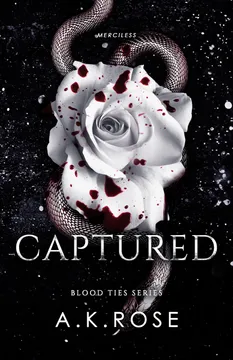


Plot Summary
Skull Masks at Daylight
Camouflaged soldiers storm the truck carrying Helene1 and other women from The Order, the criminal organization that has held them captive. Their commander, Hunter Cruz,3 shoots a guard who has seized Helene,1 then offers her a way out. Helene1 refuses to leave without Riven,2 Kane,4 and Thomas,5 the men she believes are about to be killed.
Hunter3 ignores her demand and drives her to his hidden mountain compound, where he treats the blisters on her feet and gives her clothes. His explanation turns her rescue inside out: he is protecting her from her three former captors, who are also his brothers. Helene1 is physically safe, but her panic and grief leave her unable to trust the man who saved her.3
The rescue is deliberately double-edged. Hunter’s force removes Helene from immediate danger, yet his silence and control over where she goes echo the structures that have already stolen her choices. Her frantic effort to reach Riven, Kane, and Thomas complicates any clean division between captor and rescuer: she longs for the very men associated with her trauma. The scene establishes the novel’s central psychological problem, which is not simply whether Helene desires these men, but whether desire can be separated from coercion, conditioning, and survival.
The Brothers Left Behind
At The Order’s loading dock, Riven,2 Kane,4 and Thomas5 are freed by Hunter’s3 soldiers, but Riven2 learns that Hunter3 has already taken Helene1 elsewhere. Kane4 has been shot, and Riven2 discovers his own shoulder wound only after reaching the compound. He ignores treatment long enough to break into the guard’s cell and demand Helene’s1 location, then learns that Hunter3 neither trusts him nor plans to share information.
While waiting, Riven2 studies online trafficker networks and finds reports that many of The Order’s trained Sons have disappeared. A photograph of two abused boys stirs recognition, suggesting the missing men are part of a larger threat. Riven’s2 rescue has freed him from The Order, but not from the guilt that shaped his role in it.
Riven’s urgency looks like devotion, but the scene exposes its more dangerous fuel: guilt, possessiveness, and the belief that controlling events can undo past failures. He wants Helene immediately, yet Hunter’s refusal forces him to confront the limits of his authority outside The Order. The missing Sons widen the story beyond the lovers’ reunion. Riven’s attention to their disappearance hints that the organization’s violence is systematic, not merely the work of a few obvious villains, and his past complicity may be relevant to what comes next.
The Screens Remember
After waking from a nightmare, Helene1 follows Hunter3 into his command center and finds cameras trained on The Order, her home, and the Cruz brothers’3 properties. One screen holds footage of Kane4 manipulating her while she was drugged and conditioned. The recording makes Helene1 feel exposed and confused by her own physical responses.
She confronts Hunter3 for watching, then asks him to hold her and let her see his face. When a kiss begins to awaken her panic, Hunter3 stops and focuses on what she needs rather than pressing forward. Helene1 is drawn to his strength but cannot yet tell which feelings are truly hers. The footage makes surveillance both a violation and evidence of the abuse she has endured.
The command center turns Helene’s private memory into an external image she cannot easily dismiss. That matters because her distress is not only about what others did to her, but about how her body responded under drugs and coercion. The scene refuses the simplistic idea that desire proves consent. Hunter’s restraint provides a contrast to the footage: he possesses power over Helene, yet chooses not to use it when she falters. His choice does not erase his surveillance, but it begins to establish a different kind of boundary.
A Safe Hand, Not Force
Helene1 tells Hunter3 that Coulter17 and his men, not Riven,2 caused the bruises and terror she carries from her final night at The Order. Still haunted by the assault, she tries to turn herself into an obedient object, offering Hunter3 the kind of sexual control she associates with safety and release. He recognizes that her urge is entangled with drugs and conditioning, and refuses to force her.
Instead, he lets her cling to him until she breaks down and falls asleep in his arms. The following morning Helene1 secretly uses Hunter’s3 phone to contact Vivienne,6 one of her sisters. Hunter3 catches the call, gives their location to Vivienne’s partner,9 London,9 and tells Helene1 her family is coming.
Hunter’s refusal is significant because it interrupts the exchange Helene has learned to expect: submission in return for protection. He does not treat her distress as proof of consent, nor does he demand that she become emotionally clear before offering care. Helene’s contact with Vivienne then shifts the source of safety beyond the men around her. The movement from private comfort to family connection is essential: recovery cannot depend only on a new romantic attachment, even one that behaves more gently than the old systems of control.
Sisters at Gunpoint
London9 arrives with Helene’s1 sisters, Vivienne6 and Ryth,7 and their armed allies. The reunion becomes a standoff when Helene1 declares that she loves Riven,2 despite his role in the men who once harmed her sisters. To explain, she reveals that Riven,2 Kane,4 and Thomas5 rescued her from Coulter’s17 men.
Kane4 then describes their own history: their younger sister, Melody,8 vanished from a playground as a child, and the brothers later found evidence that The Order had taken her. Their attempt to reach her helped draw them into the organization’s violence. Hunter3 argues that both families have the same enemy and proposes infiltrating the final shipment of women. London9 agrees to cooperate, although distrust remains raw on every side.
The reunion makes loyalty a difficult moral problem rather than a simple family virtue. Helene’s love for Riven sounds, to her sisters, like betrayal because they know what his group did to them. Her account of being rescued does not cancel that history, but it makes room for motive and consequence to coexist. The revelation about Melody also reframes the brothers’ cruelty without absolving it: grief and a rescue mission explain their choices, but do not repair the harm those choices caused. Cooperation begins as a practical necessity, not forgiveness.
Desire Without Orders
As the families prepare to strike, Riven2 and Hunter’s3 resentment erupts over Helene1 and the coercive acts Riven2 once committed against her. Kane4 explains that Helene1 responds to domination because she has a personal appetite for it, not because The Order can simply program desire into anyone.
Helene1 decides for herself when and how to engage with the brothers, making clear that the choice belongs to her. The argument does not settle their jealousy or erase the damage between them, but it changes the terms of their intimacy.
Meanwhile, Riven2 keeps investigating the missing Sons and learns they were trained as weapons. Their disappearance, the traffickers’ activity, and the coming shipment now appear connected, giving the planned raid a wider purpose.
This section places sexual agency inside a history that makes agency difficult to read. Helene’s preferences are real, but the people around her must not confuse them with permission to ignore her limits. Her insistence on choosing changes intimacy from a reenactment of The Order’s control into a negotiated act, though the brothers’ jealousy shows how easily old power dynamics can return. The missing Sons also echo the same logic of instrumentalization: The Order has trained people to serve a function, whether as weapons, commodities, or sources of pleasure.
The Truck Re-enters Hell
Hunter’s3 team repairs the bullet-riddled transport truck and plans to pass its rescued women off as a returning shipment. The captured guard calls Coulter,17 who demands proof that Helene1 is alive; Helene1 performs the frightened role needed to keep the plan intact.
Because one rescued woman cannot safely participate, Ryth7 takes her place beside Helene1 in the truck, while London9 and the others follow. Riven2 insists on riding up front so he can kill the driver once they enter the compound. Instead, the truck arrives at a lavish house full of wealthy guests.
Hunter’s3 former operative Kyrell19 has switched sides, and a red-haired woman uses a live image of a threatened family member to force the group inside. She seals them in a gas-filled garage where the words used to condition the Daughters blaze across the walls. A stray shot wounds Ryth.7
The truck plan uses The Order’s own logistics against it, turning women previously treated as cargo into participants in a rescue operation. Yet the strategy depends on Helene performing fear and on Ryth accepting danger, showing how hard it is to oppose a system without borrowing some of its methods. Kyrell’s betrayal and the gas chamber demonstrate that the enemy understands the group’s tactics and psychological vulnerabilities. The conditioning words return as weapons, making the past an active force in the present rather than a memory safely left behind.
The Invitation Was a Trap
While Hunter’s3 group is trapped, Kane4 and Thomas5 infiltrate the mansion separately and discover that the gathering is an auction hosted by Julius Harmon.18 Kane4 recognizes Melody8 among the guests, apparently aligned with Harmon,18 and the brothers’ attempt to escape draws Coulter’s17 guards after them.
Thomas5 grabs a map from a study before they are captured and taken toward the sale. In another room, Helene1 is drugged and prepared for the stage. She sees a man chained behind glass and recognizes Riven,2 while her father, Weylyn King,15 watches from the audience.
Coulter17 bids on Helene1 as the crowd treats her terror as entertainment. The family’s separate routes converge on the auction, where captivity, trafficking, and the brothers’ search for Melody8 become one crisis.
The auction brings The Order’s ideology into public view: powerful guests can purchase people while maintaining the decorum of an elite social event. Helene’s father watching rather than intervening sharpens the betrayal from institutional to familial. Meanwhile, Melody’s presence converts the brothers’ long search into an immediate moral shock. The characters have been pursuing a rescue shaped by an idealized memory of her; seeing her among the perpetrators threatens both that ideal and the explanation they have used to live with their choices.
The Sister Behind the Curtain
Melody8 visits Riven2 while he is chained and tells him she accepted Haelstrom Hale’s16 help after he once rejected her as a child. She now blames her brothers for the suffering they inflicted on other women in their effort to find her, and threatens to let Helene1 be sold. A member of the Sons frees Riven,2 who takes a weapon and runs toward the auction floor.
He reaches Helene1 as bidders prepare to claim her; explosions tear through the room, scattering the guests and disrupting the sale. Riven2 finds Helene1 and helps her escape with Kane4 and Thomas.5 The rescue brings them together again, but Melody’s8 revelation leaves Riven2 facing the possibility that the sister he tried to save did not want to be found.
Melody’s revelation breaks the emotional bargain that has organized Riven’s life: if he can find his sister, the harm done in her name might acquire meaning. Her account does not settle the truth of every motive, but it denies him the comfort of imagining himself as a straightforward rescuer. The auction’s destruction interrupts one immediate sale, not the larger machinery that made it possible. Riven can reach Helene, yet he cannot recover the sister he remembers by force or devotion.
Ryth Behind the Bars
The escape route leads through the mansion’s underground levels, where Riven,2 Helene,1 Kane,4 and Thomas5 find Ryth7 imprisoned and bleeding beside Nick12 and Tobias.13 Carven10 uses explosives to open the cell, and the group pulls Ryth7 free as the tunnels shake from blasts above. They also discover Hunter3 being tortured by Melody’s8 men.
Riven2 attacks the torturer while the others release Hunter,3 who reveals that Melody8 has taken pregnant Vivienne6 toward Hale.16 Another explosion brings down part of the passage, separating Helene1 from the men. Coulter17 captures her, handcuffs her, and detonates a bomb behind them. Riven2 and his brothers survive beneath the rubble, but Helene1 is carried away believing they may be dead.
The underground escape is a succession of rescues that makes the family network tangible: Carven risks an explosive breach for Ryth, and Riven refuses to leave Hunter behind. But every successful rescue opens onto another loss. Helene’s capture is especially cruel because it returns her to the isolation that defined her earlier captivity, while the others cannot know whether she is alive. The collapsing tunnels externalize the fragility of their alliance: they are physically joined in purpose, yet the structure around them keeps forcing separation.
Hale's New Order
Coulter17 takes Helene1 to a fortified estate disguised as a government site. A plane’s departure convinces her that Vivienne6 has been taken away, but inside the house she finds her sister alive. Hale16 arrives with Melody8 and explains the New Order’s plan: use the sisters’ bloodline to create a new generation of controlled fighters and captives.
Weylyn King’s15 name is tied to the project, and nurses prepare to drug the women. Helene1 resists, but the injection leaves her disoriented and vulnerable. Elsewhere, Riven,2 Hunter,3 Kane,4 and Thomas5 climb out of the collapsed tunnels. London’s9 group joins them, and Colt11 senses that the unborn babies are in danger, helping direct the search toward the compound holding Helene1 and Vivienne.6
The New Order makes the body the battlefield on which the organization intends to reproduce its power. Its proposed breeding program joins family lineage to political control, turning pregnancy into a means of manufacturing future weapons. Helene’s earlier sterilization is not a rejection of intimacy but a refusal to place a child inside that system. The contrast between her resistance and the organization’s language of ownership clarifies the stakes: the villains seek not merely to possess individuals, but to design what the next generation will be.
Helene Bites Back
Hale16 leaves Coulter17 to begin the New Order’s procedures on the sisters. Drugged and isolated, Helene1 is forced toward another assault while Vivienne6 struggles against the guards. Helene’s1 conditioning pulls at her, but she recognizes the pattern and fights back, biting Coulter17 badly enough to break his control. She and Vivienne6 attack the men holding them; Helene1 uses a book as a weapon and helps kill Coulter.17
Riven’s2 group reaches the house during the ensuing fight, and the Sons join the attack against the remaining guards. Riven2 finds Helene1 alive, while London9 carries the injured Vivienne6 to medical care. The immediate captors are defeated, but the violence has left both sisters hurt and the organization’s larger project intact.
Helene’s resistance is not a miraculous cure for trauma; it is a concrete choice made while the old conditioning is still active. Her body, previously treated as a site of other people’s control, becomes the instrument with which she stops Coulter. Vivienne’s presence matters because Helene fights not only for herself but for someone she loves. Riven’s arrival supports rather than replaces Helene’s action. The climax therefore grants her agency without pretending that survival erases what was done to her.
The Map Names King
At the hospital, doctors confirm that Vivienne’s6 babies are alive, though an injury requires surgery, and Helene1 visits Ryth7 as she recovers from her gunshot wound. The sisters’ immediate survival offers relief, but the doctors discover that someone has taken biological material from Vivienne,6 evidence that Hale’s16 plans reached beyond the assault.
Helene1 returns with Riven2 and his brothers to Hunter’s3 compound, where they begin to make a shared home and acknowledge the relationship she has chosen.
Then Thomas5 recalls the map he rescued from Harmon’s18 study. The group retrieves it from the mansion’s rubble, where Helene1 recognizes the compound symbol and reads its heading: King’s New Order. They have a possible route to Hale,16 but the book ends before they can strike.
The ending offers emotional shelter without confusing it for victory. Helene has chosen a home among the brothers, and her sisters have survived the night, yet the stolen biological material shows that the antagonists’ project has already crossed into the future. The map gives the group direction but not resolution. Its title implicates Helene’s family history in the machinery she is fighting, leaving her with a new task: to confront the possibility that the evil she opposes is not merely an outside force but something built through her own bloodline.
Analysis
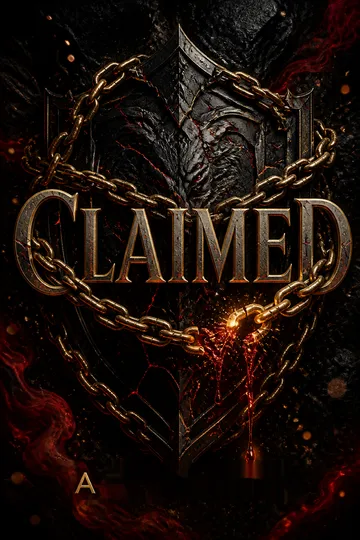
Captured is structured around a conflict between bodily response and personal authority. Helene’s1 attraction to dominance is neither dismissed as a symptom nor treated as automatic consent. The story repeatedly asks who controls the meaning of her response: The Order, which attempts to program and exploit it; the men who love her, who must learn not to assume they understand it; or Helene1 herself, whose choices remain difficult but consequential. Hunter’s3 restraint, Riven’s2 possessiveness, and Kane’s4 clinical explanations offer contrasting models of care, each imperfect.
The family plot deepens that question. Riven2 and his brothers have committed harm while trying to recover Melody,8 so their grief cannot function as moral payment. Helene’s1 sisters likewise have reasons to distrust the men she loves. Alliance arrives before reconciliation, making cooperation a decision under pressure rather than a sentimental cure. The novel’s violence repeatedly threatens to turn protection into possession, especially when characters use force in the name of loved ones. Helene’s1 strongest moments come when she acts for herself and others without surrendering the right to define what she wants.
The conclusion gives the survivors a fragile domestic pause, but withholds a full resolution. Vivienne’s6 babies survive, Ryth7 receives medical care, and Helene1 chooses a shared life with the brothers. Yet the stolen biological material and the map marked King’s New Order show that the enemy’s project persists. The closing movement therefore offers belonging as a resource for resistance, not an escape from danger. Helene1 has found people who will stand with her, but the revelation about her family means the next fight may expose the very history from which she hoped to escape.
People Also Read








Characters
Helene
The defiant eldest sisterHelene is the eldest King sister, trained to survive dangerous situations and protect the people she loves. Years of isolation and a brutal childhood have taught her to hide need behind competence, while her work against The Order has made her dangerous in her own right. She is perceptive about power, but her attraction to control and surrender makes it difficult to distinguish chosen desire from habits shaped by trauma. Helene’s strength is not invulnerability. She wants family, intimacy, and the freedom to decide what happens to her body, even when those needs pull in different directions.
Riven
The guilty eldest brotherRiven is the eldest Cruz brother, an intense and strategic man whose instinct is to take control before anyone else can be hurt. Guilt over his childhood sister’s disappearance has shaped both his pursuit of The Order and his readiness to commit violence in the name of rescue. He is capable of tenderness, but often protects himself with possessiveness and anger. His connection with Helene1 forces him to confront the difference between wanting to save someone and respecting her choices. Riven’s loyalty is fierce, though his shame makes him slow to believe that loyalty can coexist with accountability.
Hunter
The masked protectorHunter is a military commander and the Cruz brothers’2 formidable younger brother. He trusts planning, surveillance, and force because these are the tools through which he has kept people alive. His guardedness comes from old conflict with Riven2 and a deep suspicion of the brothers’ methods. Around Helene1, his physical power contrasts with an unusual caution: he is attentive to the difference between offering safety and taking control. Hunter’s disciplined, taciturn manner conceals a complicated family loyalty and a fear of becoming the very kind of man he fights.
Kane
The clinical middle brotherKane is a doctor and one of the Cruz brothers2, accustomed to reading behavior and explaining it through clinical frameworks. His knowledge can help name the effects of conditioning, but it can also make him overconfident about interpreting other people. He shares his brothers’ history of violence and grief, even as he often tries to mediate between them. Kane is drawn to Helene1 and wants to give her room to define her own needs. His conflict lies in balancing the wish to understand and help with the recognition that care cannot substitute for consent.
Thomas
The watchful priestThomas, called the Priest, is a Cruz brother2 whose religious vocation offers structure in a life marked by trauma. He is physically capable and willing to fight, yet touch and sensory stimulation can overwhelm him. That contrast makes him less comfortable with the group’s sexual intensity than his brothers are, without making him less devoted. Thomas tends to observe before speaking, and his loyalty often appears through practical acts rather than forceful declarations. He seeks a moral framework for choices that have repeatedly placed him inside morally compromised situations.
Vivienne
The fierce middle sisterVivienne is one of Helene’s1 sisters, a sharp-willed woman whose courage often arrives as defiance. She is closely bonded to Helene1 and Ryth7, and her fierce loyalty extends to the people she loves. Vivienne can meet danger with humor or aggression, but those defenses do not make her immune to fear. Her relationship with London9 gives her a source of support without diminishing her own force of character. She is protective, impatient with condescension, and determined to retain authority over her life.
Ryth
The youngest King sisterRyth is Helene’s1 youngest sister, more openly connected to their father than Vivienne6 is. Her gentler manner should not be mistaken for passivity: she can choose danger when she believes the people she loves need her. Ryth’s family bonds are a source of strength, but also make her vulnerable to the conflicts surrounding the Kings and the Cruz brothers2. She is perceptive about the emotional weather in a room and often understands what others are reluctant to say.
Melody
The vanished Cruz sisterMelody is the younger Cruz sister2 whose childhood disappearance shaped her brothers’ lives. She remains a powerful absence in their family story, associated with grief, guilt, and the unanswered question of what happened to her. The brothers remember her through the child they lost, while the person she may have become belongs to a world they cannot fully know. Melody’s place in the story tests the distance between loving someone and believing one has the right to decide what that person needs.
London
Vivienne's protective partnerLondon is Vivienne’s6 partner and a leader among the men who protect her family. He is blunt, strategic, and openly suspicious of Riven2 and the Cruz brothers2 because of their history with The Order. His fierce attachment to Vivienne6 makes him quick to act and difficult to reassure. London’s loyalty is not abstract: it shows in how he positions himself between her and danger. He must decide whether cooperation with former enemies is worth the chance to end the organization threatening both families.
Carven
The precise SonCarven is one of the Sons, a deadly fighter and the twin brother of Colt11. His actions are controlled and efficient, even when the circumstances around him turn chaotic. He is fiercely loyal to his family and especially attentive to his twin, whose distress he works to contain. Carven’s calm does not make him gentle by default; it makes him difficult to read and dangerous to oppose.
Colt
The volatile SonColt is Carven’s10 twin and one of the Sons, trained to respond to danger with overwhelming force. He carries intense emotional and physical reactions that can make him seem more instinct than person, though his bonds with his family remain strong. His loyalty is particularly evident around Vivienne6 and the children she carries. Colt’s volatility reflects the damage done by a system that trained boys to become weapons.
Nick
A watchful family allyNick is part of the Banks family and one of the men who joins the effort to protect the King sisters1. He is observant, steady under pressure, and especially attentive to Ryth’s7 safety. Nick’s presence helps turn the rescue effort into a broader alliance rather than a private conflict between the Cruz brothers2 and The Order.
Tobias
Ryth's fierce protectorTobias is a Banks family ally with a volatile temper and a strong protective attachment to Ryth7. He reacts quickly when she is threatened and is willing to put himself in physical danger for her. His aggression can complicate a carefully planned operation, but it also reflects how personally he experiences the threat to the sisters.
Caleb
A Banks family allyCaleb is one of the Banks men involved in the alliance against The Order. He contributes to the group’s protection and planning, providing another link between the King sisters1 and the network of men committed to their safety. His role is practical and collective, rather than centered on a separate personal conflict.
Weylyn King
The absent King patriarchWeylyn King is Helene1, Vivienne6, and Ryth’s7 father. His long absences and choices have shaped the sisters’ understanding of family, leaving them with different degrees of attachment to him. He is a powerful figure whose decisions carry consequences well beyond the home, and his influence is difficult for his daughters to separate from their own histories.
Haelstrom Hale
The hidden Order leaderHaelstrom Hale is the calculating leader behind The Order, a closed world built on trafficking, coercion, and the use of people as assets. He prefers to operate at a distance, shaping events through loyal subordinates and systems of control. Hale’s power comes not only from his resources but from his ability to make other people carry out his plans.
Coulter
The brutal Order commanderCoulter is a commander within The Order who uses intimidation, sexual violence, and threats as tools of control. He is especially fixated on Helene1 and views possession as a right earned through power. His cruelty is not impulsive alone; he knows how to exploit people’s fears and attachments to make resistance feel dangerous.
Julius Harmon
The wealthy traffickerJulius Harmon is a wealthy figure connected to The Order’s trafficking network. His luxurious surroundings disguise a criminal enterprise in which people are treated as commodities. Harmon represents the respectable surface that allows organized abuse to thrive among the powerful.
Kyrell
Hunter's former operativeKyrell is a member of Hunter’s3 security operation, familiar with the team’s methods and access to its plans. His position makes him a valuable source of practical information and a reminder that trust is fragile inside a group built for covert work.
Guild
Vivienne's devoted bodyguardGuild is Vivienne’s6 bodyguard, a quiet and capable presence who remains focused on her safety. His feelings for her are complicated by her existing relationships, but his protective loyalty is real. He is a reminder that devotion in this story does not always mean possession or romantic entitlement.
Lazarus Rossi
The hospital power brokerLazarus Rossi is a powerful figure who has access to medical protection and security. He is direct, controlled, and accustomed to being obeyed. His family’s resources become relevant when the injured women need urgent care.
Ka Rossi
The poised Rossi allyKa Rossi is Lazarus’s21 wife and an important presence in the medical refuge. Her calm manner contrasts with the violence surrounding the group, and she helps make space for the sisters when they arrive in crisis.
Plot Devices
Daughter conditioning
Control through learned triggersThe Order uses drugs, repeated commands, and carefully staged sexual coercion to train the Daughters to respond to certain cues. The conditioning does not simply create desire from nothing; it exploits vulnerabilities and associations, making Helene’s1 physical reactions difficult for her to interpret. During the book, the same cues are used to disorient her and Vivienne6, including in a sealed room where the words appear on the walls. Helene’s1 resistance depends on recognizing the pattern and choosing what to do, rather than pretending the conditioning has no effect. The device makes consent a central practical question, not merely a romantic theme.
The stolen transport truck
Smuggling the rescuers insideHunter’s3 team repairs the truck used to transport Daughters and plans to present it as a returning shipment. A captured guard’s phone call supplies the destination and helps establish a plausible cover story. The group hides armed rescuers among the women, relying on The Order’s appetite for its captives to distract from scrutiny. The plan draws London’s9 allies and Ryth7 into the operation, but it also exposes the team to a double-cross. The truck turns the organization’s own trafficking route into an entry point, while its failure shows how much the plan depends on a compromised informant and incomplete knowledge of the target.
The missing Sons
A wider threat signalOnline trafficker networks reveal that trained Sons have gone missing, and Riven2 recognizes that the disappearances may connect to The Order’s larger operation. The Sons are not ordinary soldiers but boys shaped into weapons, a fact that changes the stakes of the rescue from stopping one shipment to dismantling a system. Later, Colt’s11 unusual instinct helps the allied group track the danger surrounding the unborn children. The Sons therefore function both as a strategic mystery and as evidence of what The Order has made of its victims. Their presence in the action complicates the boundary between rescued people and dangerous fighters.
The collapsing tunnels
Separation under pressureThe auction house’s underground passages connect holding cells, escape routes, and hidden parts of the estate. Explosions and planted charges cause the tunnels to collapse while the characters are trying to free one another. The setting forces repeated choices between pursuing information, rescuing a family member, and getting out alive. It separates Helene1 from Riven2, leaves Riven’s2 group trapped beneath rubble, and gives Coulter17 an opportunity to carry her away. The tunnels turn the physical structure of the villains’ power into a failing trap, but their collapse does not automatically free anyone. Survival requires cooperation and improvisation.
King's map
A clue to the next strongholdThomas5 takes a map from Harmon’s18 study during the attempted escape, and the map survives the collapse of the estate. The group later retrieves it from the rubble and finds a heading connected to the King family15, along with a symbol Helene1 recognizes from a compound her father once oversaw. This clue changes the meaning of the conflict: the New Order may be rooted in Helene’s1 own family history, not only in Hale’s16 private empire. The map provides a possible destination and a reason for the surviving group to regroup, but it does not identify every force behind the plan or resolve the threat.
Blood Ties Series





Download PDF
Download EPUB
.epub digital book format is ideal for reading ebooks on phones, tablets, and e-readers.








