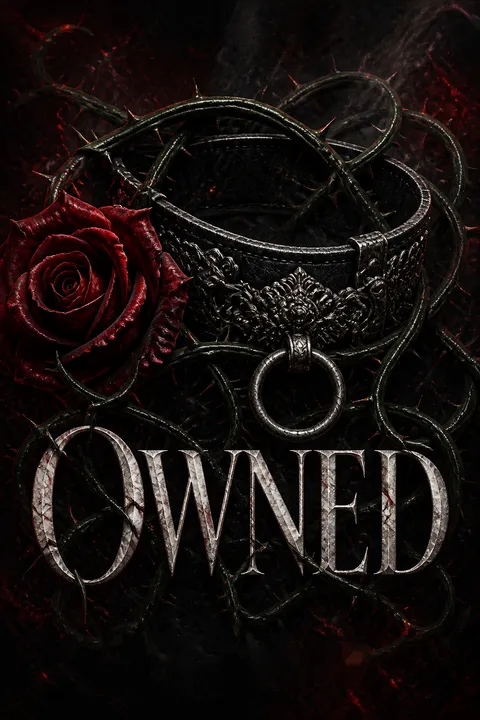


Plot Summary
A Contract With Teeth
Vivienne Evans is being held in London St. James’s house after helping her friend Ryth and Ryth’s brothers escape The Order, a criminal organization that treated girls as purchasable vessels. London shows little tenderness, but a contract forbids him and his associates from touching Vivienne until The Order grants him full ownership.
When a doctor removes her implanted tracker, London secretly has another inserted beneath her breast. Vivienne understands that her captor has not freed her from surveillance; he has claimed the right to watch her himself. Her anger sharpens when she remembers that Ryth escaped while her father, Jack Castlemaine, was taken, leaving Vivienne behind in London’s custody.
The contract turns intimacy into an administrative question, reducing Vivienne to property while making London’s apparent restraint look less like respect than a legal loophole. His replacement tracker exposes the contradiction in his protection: he may be trying to keep The Order from finding her, but he also denies her control over her own body. Vivienne’s fury is therefore not a simple refusal of desire. It is a defense against a system that repeatedly renames captivity as care.
The Console Breaks
Determined to make London release her, Vivienne searches the house for an escape route and finds the twins’ room. She smashes Colt’s prized gaming console, not knowing it helps him manage trauma. Carven, his volatile twin, throws her onto a bed fitted with restraints and begins touching her against her will.
London arrives and pulls Carven away before the encounter escalates, then takes Vivienne back to her room and dresses the wound the doctor left. His careful treatment unsettles her more than another threat would have. London then drives her away from the house, insisting she needs to see a place from her past, while Vivienne tries to decide whether his concern is genuine or another means of control.
The broken console is a small act of sabotage with an enormous emotional cost: Vivienne attacks an object without knowing it is part of Colt’s survival routine. Carven’s near-assault reveals how poorly London’s household can contain its own violence, while London’s intervention complicates the image of him as a uniformly callous captor. The scene refuses easy moral sorting. His care matters, but it does not cancel the surveillance and coercion that make Vivienne’s safety dependent on his choices.
The Scratched Door
London takes Vivienne to the ruined Hale Home, the institution where he found the twins as children. Scratches on a locked door and the decay of the house awaken fragments of Vivienne’s own forgotten childhood. She realizes that The Order began here, and that London paid her foster parents to protect her after she was removed from the institution.
He admits that he could not extract her without drawing attention, though he had known of her for years. Vivienne runs from the house, overwhelmed by the return of memories and by the belief that she belongs nowhere. London catches her and tells her, with rare unguarded force, that he wants her. The admission changes the silence between them, but not the power imbalance.
The abandoned home makes trauma architectural: locked doors and scratches preserve evidence that the adults responsible for the children tried to erase. Vivienne’s recovered memories unsettle her lifelong account of herself as simply unwanted, yet London’s disclosure also reveals how thoroughly he has managed her history from a distance. His confession offers recognition, not freedom. The scene’s emotional force comes from that distinction: being wanted may soothe an old wound, while still leaving the person who names the desire in control.
Jack Is the Bargain
At a guarded storage facility, London keeps Jack Castlemaine in a bare room and presses him for information about Weylyn King, a hidden power figure connected to The Order and the Mafia. London briefly lets Jack hear Ryth on the phone, then ends the call before father and daughter can speak freely. He needs King badly enough to threaten Ryth’s safety, although Jack refuses to cooperate.
London’s other moves show how many dangerous parties are closing in: he visits The Order’s leader, Haelstrom Hale, and promises to recover missing information while concealing his own disloyalty. Meanwhile, London seeks a lead through Creed Banks and a doctor linked to the Rossi family, trying to keep Hale from reaching Ryth first.
Jack and Ryth’s interrupted call gives London leverage but also exposes its limits: proof of safety is not the same as trust. He treats relationships as channels through which information can be extracted, yet Jack’s refusal forces him to confront loyalty that cannot be bought or frightened into existence. London’s dealings with Hale show the same pattern at a larger scale. He survives by performing allegiance while privately trying to redirect the machinery he helped build.
A Key, A Friend, Blood
Vivienne finds a hidden key in London’s bedroom and uses it to enter his study, where she discovers files, a three-million-dollar purchase record, and a card for the storage facility holding Jack. Before she can learn more, she hears Carven carrying a badly injured Colt upstairs after a violent encounter.
Vivienne goes to Colt, ignores Carven’s resistance, and stays when Colt grips her hand and asks her not to leave. Later, London leaves his study accessible and gives Vivienne a computer login. She uses it to reach Ryth through a private messaging system, learns her friend is alive, and promises to tell Jack. For the first time, Vivienne’s captivity contains a connection she chose to protect.
The sequence brings two kinds of intimacy into the same room. The files make Vivienne confront the price attached to her body, while Colt’s injury shifts her attention from escape to care. Her decision to stay is not submission to London; it is a freely chosen response to someone else’s vulnerability. The private message with Ryth further restores Vivienne’s agency. Even inside a monitored house, she can still act as a friend, a role that cannot be reduced to the ownership documents around her.
The Basement's Hidden Purpose
After finding the key, Vivienne searches London’s house and opens the basement door. Beneath a covering, she discovers a machine built for sexual use and realizes it was intended for her. London finds her there, admits his desire, and refuses to remove the tracker or let her leave. He calls her family, a word Vivienne cannot accept from the man who keeps her locked in his home.
Yet when he notices blood on his hand from an earlier confrontation, she recognizes his exhaustion and retreats rather than provoking him further. The discovery does not resolve the contract or explain why London paid so much for her. It does, however, make the physical future he imagines for her impossible to mistake.
The basement turns the house’s hidden architecture into a map of London’s desire: the object is not merely a threat, but evidence that he has planned for a future in which Vivienne’s body is available to him. Calling her family attempts to place her inside a protective bond, yet the locked door and implanted tracker contradict that language. Her reaction holds both attraction and alarm without treating either as consent. The scene makes the novel’s central conflict bodily and concrete: safety offered by a captor remains entangled with possession.
Dinner at the Glass Table
London arranges a private dinner for Vivienne and dresses her in a black gown, then uses the meal to test the desire between them. When she challenges his restraint, he brings her to the table and stimulates her without having intercourse, which the contract still forbids. Colt and Carven return while London is touching her.
Colt, who rarely speaks and has never been with a woman, takes London’s place and brings Vivienne to climax with his fingers. Carven watches but leaves rather than joining them. The encounter shifts the household from a captor and captive toward a fragile, unspoken intimacy among the three men and Vivienne, while making clear that each man responds to her in a different way.
The dinner stages desire as a negotiation conducted under unequal conditions. London controls the setting and the limits, yet Vivienne’s defiance shapes what happens within them. Colt’s participation carries a different psychological weight because touch is new territory for him, not simply another assertion of power. Carven’s withdrawal is equally meaningful: he remains implicated without being ready to enter the intimacy. The scene begins forming a chosen bond, but its beginnings remain complicated by the contract and by Vivienne’s lack of freedom.
A Corpse at Ophelia's Table
London attends a gathering hosted by Ophelia Masters, a powerful woman tied to Hale and to the twins’ childhood suffering. She expects London to serve her sexually as payment for an old debt. Before she can secure that submission, Colt and Carven arrive with Creed Banks’s body and place it before Hale’s guests.
London identifies the corpse as the answer Hale demanded and presents a contract for Vivienne, but Hale postpones signing it. While the men are occupied, Vivienne steals London’s car and drives to the storage facility, hoping to find Jack. London catches her at the gate, strikes her in anger, then immediately recognizes the damage he has done as her childhood trauma resurfaces.
The corpse turns a private bargain into public theater. London uses Banks’s body to satisfy Hale’s demand, but the delayed signature shows that even a dramatic offering cannot secure Vivienne’s future. Ophelia’s claim over London runs parallel to Vivienne’s captivity, suggesting that power reproduces itself through sexual debt as well as contracts. Vivienne’s escape attempt makes her refusal active, while London’s blow exposes the danger in his own control. His regret does not undo the harm, and her body remembers what he would rather believe he is not.
The Storage Yard Run
At the storage yard, Vivienne tells London she wants the truth, not another version of his protection. He carries her back to his car, and their confrontation turns into a charged encounter before a passing vehicle interrupts them.
At home, London punishes the bodyguard who failed to stop her, reminding Vivienne that his anger can reach anyone in his household. She retreats to her room, but the emotional distance does not hold.
During a storm, thunder drives Colt into a trauma response, and Vivienne finds him bound to his bed to prevent him from hurting himself. She releases one wrist, holds him, and the two move from comfort into sex. Their first penetration is frightening and tender, and Colt later learns that Vivienne was also a virgin.
The storage yard is where escape and desire collide most dangerously: Vivienne seeks information, while London answers her challenge with physical force and then nearly crosses the contract’s boundary. The interruption prevents a decisive act, leaving their conflict unresolved. The later storm scene changes the emotional grammar. Vivienne approaches Colt as a frightened person needing comfort, not as an object in a sexual contest. Their shared vulnerability does not erase the coercive household, but it gives intimacy a different source: mutual care rather than ownership alone.
Truth Serum, Steel Cuffs
The Order summons Vivienne and London to process their agreement, but Ophelia arrives and injects Vivienne with truth serum. She questions Vivienne about London’s sexual contact, trying to expose any breach of the preliminary contract.
Vivienne resists the drug’s effects and lies that she took her virginity herself, protecting Colt. When the questioning ends, she slaps London for bringing her into the room and letting the test happen. At home, London takes her to the basement, explains safewords, and asks whether she wants the encounter to continue.
Vivienne agrees, and he uses the machine while she remains restrained, stopping and checking her responses. The contract remains unsettled, but the scene establishes explicit boundaries inside a relationship built on captivity.
The truth serum tries to make the body an involuntary witness, but Vivienne’s lie shows that speech can still be an act of protection. Her slap registers the betrayal she feels toward London, even though he later gives her choices in the basement. Those choices matter, but they cannot make the broader arrangement equal: she is still confined, tracked, and subject to a contract she did not choose. The contrast between coerced interrogation and negotiated sexual play is intentionally uneasy, forcing readers to distinguish local consent from structural freedom.
What London Paid
Carven and Colt pursue a lead on King by confronting the Hellfire Rebels’ leader, but he can offer no direct contact because King operates through anonymous calls. A follower later tells the twins that Macoy Daniels knows London was linked to a killing and intends to expose him. At the same time, London faces Hale, who plays a recording of Ryth’s assault at Killion’s house and warns London that his loyalty is in doubt.
Vivienne then enters London’s monitor room, where Carven plays an old recording from the twins’ childhood. It reveals that London agreed to Ophelia’s sexual demands in exchange for taking the boys away from her. Vivienne understands that his history with Ophelia is bound to the twins’ survival.
The recording changes the meaning of London’s composure. His past submission to Ophelia was not simply an affair or a private weakness; it was a bargain made to rescue children who had been placed in her power. That history helps Vivienne interpret his present danger without absolving the lies and control he directs at her. The parallel investigations also tighten the plot: King remains unreachable, while Daniels and Hale threaten to expose London from different directions. Private secrets are becoming public weapons.
A Night That Changes Them
After facing Hale’s threats, London drinks heavily and returns to Vivienne’s room carrying a diamond anklet he has bought for her. Vivienne questions whether he can desire her while remaining attached to Ophelia, but their argument becomes consensual sex, the first time London fully breaks the contract with her.
The next morning, Vivienne brings him coffee and deliberately distracts him while he asks a hacker to alter digital records linking him to the Rossi family.
London warns Benjamin Rossi that Hale is being given a false trail, setting another criminal conflict in motion. Vivienne’s presence makes London’s work harder to compartmentalize: he must pursue the dangerous plan, yet he increasingly treats her as someone whose attention and judgment matter.
The anklet transforms a purchase from evidence of ownership into a personal gesture, though the underlying language of possession remains. Vivienne’s jealousy gives way to a choice she makes with full awareness of London’s past, and their sex marks a turning point without solving the problem of the contract. The morning after, her playful interference enters his criminal strategy. London’s private and political lives are no longer cleanly separable; desire has become a source of vulnerability precisely because it gives him something he cannot control through surveillance.
Snowfall, Gunfire
London promises Vivienne a visit to the mall so she can experience the Christmas season she missed growing up. He has to leave to meet his hackers, so Carven and Colt take her instead. At the shopping center, armed men attack the crowded Winter Wonderland display and seize Vivienne, demanding Jack Castlemaine’s location.
Colt and Carven fight through the crowd; Vivienne bites, kicks, and escapes into a clothing store, where Colt kills the men threatening him and Carven shoots the remaining attackers. She shields Colt with a shard of broken mirror until Carven reaches them. The twins get Vivienne out alive, but the attackers’ question makes clear that Jack and Ryth are part of the hunt, not merely London’s private bargaining pieces.
The mall is the first place Vivienne experiences ordinary seasonal pleasure, and the attack violently converts that freedom into another struggle over who may claim her. Her response is not passive: she bites an assailant, escapes, and protects Colt when he falls. The brothers’ violence is horrifying but directed toward recovering her. The scene makes family less a comforting label than a set of actions under pressure. It also expands the danger beyond London’s house, proving that keeping Vivienne indoors cannot shield her from the world’s competing powers.
The Burning Gallery
After the mall rescue, Vivienne learns that Ophelia is blackmailing London with a photograph connecting Carven’s vehicle to the warehouse where the twins helped Ryth escape. London has no choice but to go to Ophelia’s apartment. While he is there, Vivienne, Colt, and Carven break into Ophelia’s mansion and find a gallery of paintings based on the boys’ suffering.
Vivienne tears down the portrait of Colt, and Carven sets the room alight. The fire alarm draws Ophelia away before she can force London to submit to her again. London returns home to find the three waiting, shaken but alive. His anger gives way to relief when he realizes they acted to protect him as well as themselves.
The gallery converts the twins’ childhood abuse into an object of wealth and display. Vivienne’s destruction of Colt’s portrait rejects the transformation of pain into someone else’s possession; Carven’s fire extends that refusal beyond the canvas. The act also intervenes in London’s present coercion, showing that the family he has gathered can protect him rather than only receive protection. Their rescue is not clean or lawful, but it reverses the direction of care that has defined London’s authority.
King's Empty Lair
London returns to Killion’s surveillance footage and notices a brief phone signal in the house. With a hacker’s help, he traces its burner address to a hidden apartment filled with monitors and records on the criminal players around them. The apartment is empty, but its files show that King has been watching Hale, London, Ophelia, and Daniels.
A document reveals a permanent possession contract for Vivienne, signed by Hale and naming Macoy Daniels as her owner, despite London’s payment and the interim agreement. Before the men can absorb the betrayal, a tracker shows Daniels moving toward their home. London and the twins rush back, understanding that the earlier mall attack was part of a planned effort to reclaim Vivienne.
The hidden apartment turns surveillance from a tool London uses into a structure that has been watching him in return. King’s absence is itself a form of power: he controls information without appearing in the room. The contract is the sharpest betrayal because it exposes the legal order beneath the apparent negotiations. London believed his payment could protect Vivienne, but Hale had already assigned her elsewhere. Ownership, in this world, is not merely a metaphor; it is a contested document backed by force.
Daniels Takes Her
While London and the twins race from King’s empty apartment, Vivienne wakes to a violent assault on the house. Guild tries to hold the front entrance as armed men break through, and Vivienne runs toward the basement. Ashwood, The Order’s imposing new enforcer, intercepts her before she can hide.
Macoy Daniels waits outside and presents the permanent contract as proof that she belongs to him, then has Ashwood force her into his car. Vivienne fights and calls for London, but London is still on the road. The book ends with Daniels taking her away, leaving the central question unresolved: whether London can reach her before the contract and the men enforcing it become final.
The ending makes the abstract contract brutally literal. Daniels does not need to persuade Vivienne that she belongs to him; he uses a document to authorize the violence that carries her away. Her instinct to reach the basement shows how the house has become both refuge and trap, while London’s absence turns his protective system into a failed promise. The cliffhanger withholds rescue rather than resolution, leaving the reader inside the gap between emotional belonging and legal possession.
Analysis
Owned builds its romance and its criminal plot from the same question: who has the authority to decide what happens to a body? The Order answers through contracts, trackers, and institutional procedure. London answers through surveillance and protection that often resemble captivity. Vivienne answers through resistance, but also through moments of care she chooses to give Colt, Carven, and London. The novel does not make those forms of intimacy equivalent. A safeword can establish a boundary within a sexual encounter, but it cannot erase the fact that Vivienne lives inside a house she did not choose and remains subject to contracts she never signed.
The damaged twins embody different adaptations to trauma. Colt turns inward, relying on silence, routine, and restraint; Carven turns outward, converting fear into violence. London’s history binds him to both, and his bargain with Ophelia reveals the cost of becoming their protector. Vivienne unsettles the roles they have built around survival. She can comfort Colt without treating him as fragile, challenge Carven without reducing him to a monster, and see London’s vulnerability without mistaking it for innocence.
The book’s recurring documents and recordings complicate personal truth. A contract can contradict a spoken promise, while a recording can reveal sacrifices that London has kept hidden. Yet information alone does not free anyone. By the final chapters, London discovers that another signed document has already placed Vivienne in Daniels’s possession, and the men enforcing it reach her before London can return. The cliffhanger makes the novel’s central conflict unresolved by design: emotional belonging has formed, but it cannot yet defeat the machinery that names Vivienne as property.
Characters
Vivienne Evans
The defiant captiveVivienne has survived foster homes, institutional control, and years of believing that no one truly wants her. She meets captivity with sharp humor, sabotage, and a refusal to let other people define what her body means. Her strongest loyalties are to Ryth and, increasingly, to the damaged men around her, but care does not come easily because dependence has usually made her less safe. Vivienne’s desire for London and the twins complicates her resistance without erasing it. She is not simply learning to trust; she is trying to distinguish chosen intimacy from the ownership systems that have shaped nearly every part of her life.
London St. James
The calculating protectorLondon is a wealthy, controlled criminal operator whose authority depends on anticipating other people’s needs and turning them into leverage. He took in Colt and Carven after their childhood abuse and remains fiercely protective of them, while concealing the violence and bargains required to keep them alive. With Vivienne, his attempts to protect blur into surveillance, confinement, and possessiveness. He wants her intensely but struggles to express care without exerting control. His polished restraint is not the absence of feeling; it is a method for keeping fear, guilt, and attachment from making him vulnerable to the people who once commanded him.
Colt
The silent survivorColt is Carven’s twin, a physically formidable man whose silence and careful movements conceal deep childhood trauma. He depends on routines, including his gaming console and restraints used during severe episodes, to keep fear from turning into violence. Colt has often placed himself between danger and his brother, absorbing harm rather than allowing Carven to suffer alone. Vivienne’s directness unsettles him, but her willingness to stay beside him creates a form of closeness that does not demand speech or performance. His tenderness is real, though it exists beside the lethal capacity that years of violence have cultivated.
Carven
The lethal twinCarven is Colt’s twin and London’s adopted son in all but blood. He is blunt, volatile, and quick to meet threats with violence, especially when he believes Colt is endangered. His protectiveness can become its own kind of danger, as Vivienne discovers when she challenges him. Carven understands his brother’s trauma better than anyone and often speaks for him, but that role has also made him accustomed to deciding what Colt needs. His guarded curiosity about Vivienne grows slowly, tested by jealousy, shared violence, and the possibility that protecting someone might require more than intimidation.
Ryth
Vivienne's escaped allyRyth is Vivienne’s closest friend from The Order and the person whose escape first gives London leverage over Jack. Though separated from Vivienne, she remains a source of emotional steadiness through their brief online contact. Ryth’s bond with her father and brothers shapes the choices of several powerful men, but she is not merely a bargaining chip in their conflict. Her effort to survive without exposing her location reflects the practical courage required of someone pursued by both an institution and the criminal world surrounding it.
Jack Castlemaine
Ryth's steadfast fatherJack raised Ryth as his daughter and remains devoted to her safety, regardless of blood ties. Held captive by London, he refuses to give up information about King, even when London uses Ryth’s voice to make the threat feel immediate. Jack’s resistance is quiet rather than physical. He understands that cooperating with London may shift danger rather than remove it, and his unwillingness to be manipulated gives him a measure of dignity inside a room designed to strip it away.
Haelstrom Hale
The Order's predatorHale is the ruthless leader behind The Order, an institution that turns people into property and shields its powerful clients from consequences. London presents himself as Hale’s ally while pursuing his own plan, so every meeting between them carries the risk of exposure. Hale reads loyalty as usefulness and treats threats as a way to make other people prove their value. His control extends through contracts, surveillance, and political connections, making him dangerous even when he is not physically present.
Ophelia Masters
The twins' tormentorOphelia is a powerful, cultivated woman whose elegant public image conceals a history of cruelty toward the boys in her care. She maintains a sexual and political claim on London, expecting obedience because of the bargain that once secured the twins’ safety. Her interest in art does not soften her violence; it gives her another way to turn suffering into something she can own and display. Ophelia understands leverage well, and she uses both private history and public blackmail to keep London within reach.
Macoy Daniels
The Order's opportunistDaniels is a senior figure within The Order who watches London’s movements and looks for ways to exploit what he learns. He is calculating rather than impulsive, relying on records, allies, and the institution’s authority to strengthen his position. His interest in London’s secrets makes him a threat even before he appears directly in Vivienne’s life. Daniels represents the danger of bureaucratic power backed by armed men: a signature can become as consequential as a weapon.
Weylyn King
The unseen power brokerKing is a hidden figure whose identity and location remain difficult to verify. Criminal groups receive his instructions through concealed channels, and even people who have worked with him have little direct knowledge of him. London believes finding King could shift the balance against Hale, while Jack’s silence protects the limited information he has. King’s absence does not make him passive; it allows him to observe and influence several sides without exposing himself.
Guild
London's armed confidantGuild works as London’s steward and security ally, moving easily between the household’s domestic routines and its criminal defenses. He is practical, observant, and willing to challenge London when the latter’s anger threatens the people around him. Guild’s loyalty is grounded in long familiarity rather than fear alone. His presence also reveals how the house functions as a guarded operation, with ordinary comforts maintained alongside surveillance and weapons.
Creed Banks
A compromised intermediaryBanks is a corrupt and vulnerable figure whose connections to The Order, the Rossis, and London make him useful to people searching for leverage. London sees him as a possible source of information and as a way to redirect Hale’s attention. Banks’s position shows how the larger criminal conflict depends on intermediaries who can be bought, threatened, or discarded.
Benjamin Rossi
The Mafia power centerBenjamin Rossi leads a powerful Mafia family and is drawn into London’s effort to redirect Hale’s pursuit. He is wary of London and understands that apparent assistance can conceal a trap. His hostility toward Hale gives London a possible ally of convenience, but their relationship remains transactional and unstable.
Ashwood
The Order's enforcerAshwood is a physically imposing security figure who carries out The Order’s commands with disciplined force. His arrival during Vivienne’s processing signals a shift in the institution’s internal control. He regards people as subjects to be handled, not individuals to be heard, making him an immediate embodiment of the system’s coercive reach.
Leon
The hesitant doctorLeon is a young doctor London hires to remove Vivienne’s original tracker and implant another. His awkwardness and visible discomfort distinguish him from The Order’s medical staff, although he still participates in a procedure Vivienne has not freely chosen. He illustrates how even gentler individuals can be drawn into a system of bodily control.
Lucas DeLuca
The exhausted doctorLucas is an emergency physician whose medical work also brings him into contact with the Rossi family. London questions him about a body connected to the wider conflict, using threats but ultimately letting him go. Lucas’s fatigue and efforts to preserve his own moral boundaries offer a brief contrast to the men who treat violence as routine.
Caleb Castlemaine
One of Ryth's brothersCaleb is one of Ryth’s brothers and takes part in the escape that leaves Jack in London’s custody. He is among the family members London monitors as they try to stay out of The Order’s reach. His connection to Ryth and Jack helps make the Castlemaines more than a set of bargaining pieces.
Tobias Castlemaine
One of Ryth's brothersTobias is one of Ryth’s brothers and is involved in the violent events at Killion’s house. His actions are part of the evidence London uses to understand the escape and its consequences. Like the rest of the Castlemaine family, he is caught between personal loyalty and the criminal powers trying to control their movements.
Killion
The dead attorneyKillion is an attorney connected to The Order whose death sends evidence and suspicion through the criminal network. Recordings from his house give Hale a way to pressure London, while the unanswered questions around his death draw the Rossis and the Castlemaines into the same investigation.
Plot Devices
The Ownership Contracts
Legalized possessionThe Order uses contracts to give the appearance of formal limits to the purchase and use of people. London relies on an interim agreement that restricts sexual contact while he seeks a permanent transfer, but the documents do not give Vivienne meaningful freedom. Later, a hidden permanent contract exposes that Hale has assigned her to Macoy Daniels instead. The paperwork drives the central conflict because it translates the characters’ competing claims into institutional authority, while the novel repeatedly shows that signatures matter only when backed by force.
Trackers and Cameras
Surveillance as controlThe Order’s implanted tracker allows it to locate Vivienne, and London replaces it with his own device while surrounding her with cameras. These tools let him monitor her movements, but they also become a means for Vivienne to understand how closely he watches her. Elsewhere, camera footage and digital records help the characters reconstruct Killion’s death and search for King. Surveillance therefore serves both sides: it protects, threatens, exposes, and eventually leads London toward a hidden opponent who has been watching him too.
Thunderstorms
Trauma made audibleThunder and lightning trigger Colt’s memories of the abuse he endured as a boy, leaving him terrified and sometimes dangerous to himself. The storm also activates fragments of Vivienne’s buried memories from the institution where she was held. When Vivienne enters Colt’s room during a storm, their shared fear becomes the basis of a tender encounter. Weather is not merely atmosphere: it makes the past physically present and gives the characters a reason to seek comfort from one another.
King's Burner Signal
A trail through absenceKing communicates through concealed channels, leaving no reliable face or direct location behind. A brief phone signal visible in footage from Killion’s house gives London a way to trace a burner address to a surveillance apartment. The room is empty when London and the twins arrive, but its records show how closely King has tracked the criminal players. The signal moves the investigation forward while preserving King’s defining advantage: he can shape events without appearing in person.
The Basement Apparatus
Negotiated controlThe machine in London’s basement represents the sexual future he has planned for Vivienne, but its eventual use introduces explicit safewords and checks on her consent. The device allows the story to explore the difference between chosen submission in a scene and the coercion of Vivienne’s broader circumstances. Its meaning remains unstable because London can offer local choices while still controlling her home, movement, and legal status. The apparatus ties desire to the book’s larger struggle over whether ownership can ever be separated from intimacy.
Blood Ties Series







Download PDF
Download EPUB
.epub digital book format is ideal for reading ebooks on phones, tablets, and e-readers.








