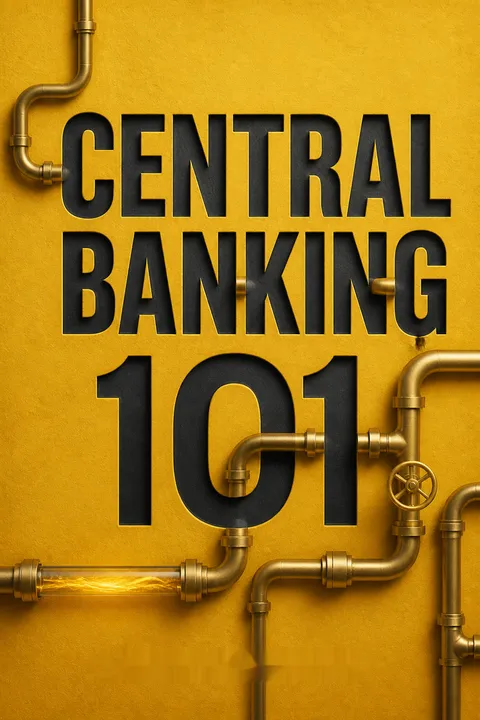


Key Takeaways
Track whether one kind of money can still become another.
Money has layers. The book distinguishes four forms: cash issued by the government, bank deposits owed by commercial banks, reserves held by banks at the Federal Reserve, and Treasury securities issued by the U.S. government. They serve different holders and purposes. A household usually pays with deposits; a bank settles with reserves; a large investor may treat Treasuries as cash that earns interest. Deposit insurance makes ordinary bank balances relatively safe, but a deposit remains a bank's promise to pay.
Convertibility is the test. In normal times, these forms can be exchanged or used to obtain one another. Trouble starts when that link falters. In March 2020, investors rushed to sell Treasuries for cash and found dealers unable to absorb the supply. The supposedly dependable financial-market equivalent of an ATM had jammed.
What's useful here is the shift from asking how much money exists to asking whether people can move between forms of it when they need to. That is a better crisis lens: a system can contain abundant assets and still fail at the point of conversion. The framework also clarifies that money is partly a matter of trust and access, not just a number on a screen. Its categories simplify a complicated system, but they make the key vulnerability visible.
Stop blaming excess reserves for loans banks choose not to make.
Loans create deposits. When a bank approves a $1,000 loan, it records a $1,000 loan asset and credits the borrower's account with a $1,000 deposit. It does not first collect a pile of deposits and lend those exact dollars onward. If the borrower pays someone at another bank, the banks settle the transfer using central bank reserves.
Reserves are not loan fuel. Reserves stay within the central bank system, moving between banks as payments clear. After quantitative easing increased reserves from a few tens of billions to trillions, commentators asked why banks were not lending them out. But loan decisions depend more on regulation, capital, credit risk, profitability, and whether borrowers want credit. A bank can obtain reserves to settle payments; it cannot conjure a sound borrower or a profitable loan.
This distinction prevents a common balance-sheet error: confusing settlement money between banks with credit offered to households and businesses. It also explains why monetary expansion does not mechanically multiply into lending. The constraint is institutional and economic, not a simple shortage of reserve balances. The account should not be mistaken for a claim that lending is unlimited. Capital rules, expected losses, funding costs, and demand impose real limits, even when the accounting entry itself is straightforward.
A safe asset can become unusable when buyers hit balance-sheet limits.
Shadow banks borrow short. Shadow banks are financial businesses that perform bank-like tasks but do not create deposits as commercial banks do. Dealers, money market funds, and mortgage REITs are examples. Many borrow for short periods to hold longer-term assets, earning a spread but risking a run if lenders refuse to renew their funding.
Liquidity can disappear fast. In 2008, investors pulled money from the Reserve Primary Fund after it lost money on Lehman Brothers debt. The fund faced $42 billion in withdrawals in days. In March 2020, dealers were overwhelmed by securities sellers and reached limits on how much inventory they could hold. The Fed bought nearly $2 trillion in Treasuries and mortgage securities, giving dealers room to trade again. The lesson is not that Treasuries became unsafe, but that markets need buyers with capacity.
The account makes financial crises feel less like sudden mass irrationality and more like a chain reaction in funding. When one institution needs cash, its asset sales can lower prices, weaken collateral, and frighten its lenders. The same mechanism can affect instruments widely regarded as safe. Regulation can reduce the chance that a single bank fails, yet restrictions on dealer inventories may also limit market-making capacity under stress. Safety depends on both asset quality and the system's ability to transact.
Follow the dollar offshore to see where U.S. power travels.
Dollars circulate globally. The Eurodollar market means dollar banking and borrowing outside the United States. The book estimates roughly $13 trillion in dollar borrowing by non-U.S. nonbanks, with offshore banking serving companies and institutions that need dollars for trade, investment, or financing. Banks abroad can create dollar deposits through lending, but payments that connect to the U.S. system ultimately rely on U.S. banks and reserve settlement.
Reach brings responsibility. Because dollar payments pass through that system, U.S. sanctions can exclude a person or institution from dollar banking worldwide. The Fed also affects offshore dollar funding. During the 2008 crisis and the 2020 panic, it lent dollars to foreign central banks through swap lines, which then provided funding to banks in their jurisdictions. The dollar gives the United States leverage, while global reliance can pull the Fed into foreign-market crises.
The dollar's international role is not merely a story about prestige. It is infrastructure: trade invoices, bank funding, and investment all depend on a network that is difficult to replace quickly. That creates a two-sided form of power. Access to the network is valuable, and control over its gateways can be used strategically; yet disruptions can travel back to U.S. markets through the same connections. The system's reach is therefore both an advantage and a source of exposure.
Read the yield curve, then inspect the short-term funding pipes.
Rates carry different signals. The Fed has its strongest direct influence over overnight rates. Longer-term Treasury yields reflect expectations about future short-term rates, inflation, the supply of government debt, investor demand, and a term premium, the extra return investors may require to hold longer-dated debt. An inverted curve, where longer rates fall below shorter ones, can signal that markets expect weaker growth and future rate cuts. It is a warning, not a guarantee of recession.
Funding plumbing matters too. The repo market provides short-term loans secured by securities and helps investors turn Treasuries into cash. In September 2019, overnight repo rates jumped from about 2% to above 5%, disrupting other short-term rates. The Fed responded with lending operations. For global dollar demand, a widening FX-swap basis can likewise signal that borrowers are struggling to obtain dollars.
A yield curve is a compressed forecast, but it is not a clean reading of economic expectations: policy purchases, debt issuance, and the premium for holding risk can all move it. The book's emphasis on funding markets adds an important second question: can institutions actually finance the positions implied by their market views? A signal about expected rates and a funding squeeze are different phenomena, even when they occur together. Reading both helps avoid treating every yield movement as a single economic verdict.
QE swaps safe assets for reserves, not automatically for consumer spending.
QE changes portfolios. Quantitative easing is a central bank's large-scale purchase of securities, paid for by creating reserves. When the seller is a nonbank, its commercial bank also credits a deposit. In the aggregate, a Treasury is exchanged for reserves or deposits; the purchase does not itself require the public to spend more on goods and services. The Fed uses QE to put downward pressure on longer-term yields.
Asset prices can react first. Investors who sell Treasuries may seek higher returns in corporate bonds, mortgage securities, or stocks. That portfolio shift can lift financial asset prices, while consumer-price inflation may remain subdued. The first round of QE in 2008 prompted fears of imminent hyperinflation, but that outcome did not arrive. The book argues that QE can support markets and economic activity, while acknowledging that it has not, by itself, reliably delivered central banks' inflation targets.
The distinction between financial prices and the cost of everyday goods is essential. A policy can alter discount rates and portfolio choices without producing an equal increase in wages, purchases, or productive investment. This helps explain why observers can see rising asset prices alongside weak inflation. The transmission is not guaranteed in either direction: households and firms may respond differently as conditions change, and fiscal spending can alter demand more directly. QE is powerful, but it is not a universal inflation switch.
Separate company performance from flows, leverage, and market mechanics.
Prices reflect structure. The book describes how retirement contributions into index funds can direct steady flows toward the largest companies, since those firms occupy larger shares of market-cap-weighted indexes. It also shows how low interest rates can encourage corporations to borrow and buy back shares. Apple repurchased about 20% of its shares between 2015 and 2019; with net income roughly similar across those years, fewer shares helped raise earnings per share.
Leverage magnifies mistakes. In 2020, hedge funds used heavy borrowing to exploit small price differences between Treasury futures and cash Treasuries. When the difference widened during market disruption, some trades faced large losses and forced sales. These examples show why a market price is not always a pure measure of business prospects: flows, financing costs, and trading constraints can move it too.
This is a useful corrective to the idea that markets simply aggregate information about future profits. Trading rules and financing arrangements help determine which investors buy, how much they can borrow, and when they must sell. Still, a flow-based account should not be stretched into a complete explanation of stock performance. Index investing changes the marginal source of demand, but the evidence in any particular company still matters. The practical habit is to ask what forces are shaping the price before treating it as a verdict on fundamentals.
In a panic, the Fed's safety net expands beyond commercial banks.
The crisis perimeter widened. The Fed was built to oversee commercial banks and lend to them when temporary cash shortages threatened otherwise sound institutions. But the 2008 panic exposed runs in money market funds, dealers, securitization vehicles, and foreign banks. Using emergency lending authority, the Fed created facilities to support several of these markets and used swap lines to supply dollars abroad.
Backstops change behavior. During the 2020 panic, the Fed revived crisis-era tools and introduced programs to support corporate borrowing and loans to smaller businesses. The promise of a facility can calm markets even when few loans are taken, because investors know a buyer or lender may be available. The book frames regulation as one response to moral hazard: if institutions expect rescue, they may take greater risks. Stronger rules can limit that danger, but unregulated corners remain vulnerable.
A lender of last resort addresses the speed of a panic: forced selling can destroy otherwise viable institutions before losses are fully understood. But a backstop is also a promise that shapes incentives before a crisis, not just a tool used during one. The author's emphasis on regulation recognizes this tradeoff. A further difficulty is deciding which markets are essential enough to support. Broad access can steady the system, yet repeated rescue may blur the boundary between emergency liquidity and protection from investment losses.
Read Fed signals in order, but start with what is breaking.
Communication has a hierarchy. The book ranks FOMC statements, press conferences, minutes, and the quarterly dot plot among the most important signals. Speeches, trading-desk updates, the Fed's balance sheet, and surveys add context. Statements are carefully worded; minutes reveal more of the debate; press conferences show how the chair explains policy in real time. Each source offers a different view, and none is a promise that conditions will stay unchanged.
The market can change the script. In December 2018, the dot plot suggested several rate increases in 2019. As financial conditions worsened, the Fed reversed course and cut rates. The book advises readers to combine communications with knowledge of the financial system: if funding markets are failing, the Fed's response may depend on that immediate stress more than on a forecast made under calmer conditions.
The method resembles good intelligence analysis: rank sources, distinguish a public forecast from a binding commitment, and update when new evidence changes the situation. The dot plot is especially easy to overread because its visual precision can obscure how conditional each projection is. Fed communication is informative partly because policymakers want markets to anticipate their moves, but emergencies can invalidate the assumptions behind a forecast. The most useful question is not only what officials say, but what constraint they are trying to address.
Judge policy by the inflation average, not each month's 2% reading.
The target changed shape. In 2020, the Fed adopted average inflation targeting: after periods when inflation runs below its 2% goal, it may tolerate a period above 2% so inflation averages around the target over time. It also shifted its employment language toward shortfalls from maximum employment, rather than treating employment above an estimated maximum as an automatic reason to raise rates. The changes reflect difficulty measuring maximum employment and a weaker observed link between unemployment and inflation.
Fiscal choices still matter. The book presents Modern Monetary Theory as the view that a government issuing its own currency is constrained chiefly by inflation, not by a household-style need to balance its budget. Wang accepts much of its description of money creation but warns that treating debt and budgets as irrelevant can remove safeguards on government power. Low rates and central bank bond purchases can support deficit spending, but the inflation outcome is not predetermined.
Average targeting is a response to a credibility problem: a central bank that repeatedly undershoots its goal may need to show that the goal is not a one-way ceiling. It also makes the policy rule harder to summarize, since the relevant average period and tolerance for overshoot require judgment. The book's political caution adds a different dimension to monetary analysis. Fiscal capacity is not only a technical question about currency issuance; it also concerns who decides how public spending is used and how accountability is maintained.
Analysis
The book's most powerful explanatory move is to treat finance as a network of balance sheets and promises rather than as a pile of cash. That perspective connects topics that are often taught separately: a bank loan creates a deposit, an interbank payment moves reserves, a dealer finances securities in repo, and an offshore bank may depend on a dollar swap. Once these links are visible, crisis episodes look less mysterious. The question becomes which promise cannot be converted, rolled over, or settled, and who has the capacity to restore that link.
Wang's experience at the New York Fed trading desk gives the account unusual operational texture. The Fed appears not simply as an interest-rate setter, but as a market participant that gathers intelligence, lends through intermediaries, and shapes expectations. The book is especially strong when it explains why securities usually considered safe can become difficult to sell, and why adding reserves does not compel banks to lend.
The same clarity makes some judgments easier to challenge. The book often presents forceful interpretations of QE, passive investing, and the political meaning of debt. These are valuable hypotheses, but market outcomes have multiple causes, and causal claims should be separated from balance-sheet mechanics. Its data and examples mostly describe conditions through 2020, so readers should treat figures as historical snapshots rather than current measurements. Nor does a lucid account of how money is created settle how much public spending is wise, or how inflation will respond in a particular economy.
The enduring value is methodological. Follow the liability chain, identify the institution that must make the next payment, and ask what happens if its funding disappears. Then distinguish what the central bank can directly control from what it can only influence. That discipline is more durable than memorizing a single crisis-era prediction.
Review Summary
Central Banking 101 receives high praise for its clear explanations of complex financial concepts, focusing primarily on the US Federal Reserve. Readers appreciate the author's insider perspective and the book's accessibility to those with some financial knowledge. Many consider it essential reading for understanding modern monetary systems. While some note its heavy US focus and occasional complexity, most find it an invaluable resource for demystifying central banking operations, market mechanisms, and economic policy.
People Also Read








Glossary
Central bank reserves
Settlement money for banksBalances that eligible institutions hold in accounts at a central bank. In the United States, banks use Federal Reserve reserves to settle payments with one another and can exchange them for physical currency. The public cannot hold these balances directly. The Fed creates or removes reserves through its lending and asset-purchase operations.
Shadow bank
Nonbank financial intermediaryA business or fund that performs banking-like activities, such as lending or holding financial assets funded by borrowing, without operating as a commercial bank that creates deposits. Shadow banks can include dealers, money market funds, and mortgage REITs. They generally lack the same deposit insurance and direct central bank lending access as commercial banks.
Eurodollar market
Offshore dollar financeThe system of dollar banking and capital markets outside the United States. Offshore banks create dollar loans and deposits for foreign companies and institutions, while dollar bonds provide another source of funding. These markets are international in location, but dollar payments can depend on links to the U.S. banking system.
Repo
Collateralized short-term loanA financing transaction in which one party transfers a security for cash and agrees to repurchase it later at a slightly higher price. The security serves as collateral, and the difference in prices functions like interest. Repo allows institutions to borrow against securities, especially Treasuries, and is a major source of short-term funding.
Quantitative easing
Large-scale central bank purchasesA monetary policy in which a central bank buys longer-term securities, such as Treasury bonds or mortgage-backed securities, and pays by creating central bank reserves. The purchases aim to raise security prices and lower longer-term yields. When the seller is a nonbank, its commercial bank also credits a deposit to the seller.
Term premium
Extra return for longer maturitiesThe portion of a longer-term bond yield not explained by the expected path of future short-term interest rates. It is commonly understood as compensation investors may require for tying up money over a longer period and bearing uncertainty about inflation, rates, and market conditions. Its estimated size depends on the model used.
FX-swap basis
Extra cost of dollar fundingAn adjustment to the interest-rate relationship in a foreign-exchange swap, reflecting supply and demand for borrowing one currency against another. When demand for dollars is unusually strong, borrowers may have to pay an additional premium to obtain them. Changes in the basis can therefore help reveal stress in offshore dollar funding.
Forward guidance
Signals about future policy ratesA central bank's communication that it expects to keep its policy interest rate at a specified level, or until stated economic conditions are reached. If markets believe the commitment, expectations of future short-term rates can fall, influencing medium-term borrowing costs even when the current policy rate is already near zero.
Average inflation targeting
Make up for past inflation missesThe Fed's 2020 approach to its price-stability goal. Rather than treating 2% inflation as a ceiling that applies independently each period, the framework allows inflation to run above 2% for a time after periods below target, aiming for an average near 2% over time. The framework leaves judgment about timing and duration to policymakers.
FAQ
What's "Central Banking 101" about?
- Overview: "Central Banking 101" by Joseph J. Wang provides a comprehensive introduction to the foundational aspects of central banking and an overview of financial markets.
- Author's Journey: The author shares his personal journey from law school to working at the New York Fed, offering insights into the financial system.
- Content Structure: The book is divided into sections covering money and banking, markets, and Fed watching, with detailed chapters on each topic.
- Purpose: It aims to demystify central banking for both beginners and more knowledgeable readers, providing a resource the author wished he had when starting his career.
Why should I read "Central Banking 101"?
- Educational Value: The book offers a clear and detailed explanation of complex financial systems, making it accessible to readers with varying levels of expertise.
- Practical Insights: It provides practical insights into how central banks operate and influence the economy, which is valuable for anyone interested in finance or economics.
- Author's Experience: Joseph J. Wang's experience at the New York Fed gives readers a unique insider perspective on the financial markets.
- Comprehensive Coverage: The book covers a wide range of topics, from types of money to crisis monetary policy, making it a thorough resource for understanding central banking.
What are the key takeaways of "Central Banking 101"?
- Types of Money: The book explains different types of money, including fiat currency, bank deposits, central bank reserves, and Treasuries, and their roles in the financial system.
- Money Creators: It details the roles of the Fed, commercial banks, and the Treasury in money creation and the broader financial system.
- Market Dynamics: The book covers interest rates, money markets, and capital markets, explaining how they interact and influence the economy.
- Crisis Management: It discusses how central banks respond to financial crises, including the use of unconventional monetary policies like quantitative easing.
What are the best quotes from "Central Banking 101" and what do they mean?
- "Central banking is very complicated." This quote highlights the complexity of central banking and the need for clear, accessible explanations, which the book aims to provide.
- "The Fed has significant influence on dollar interest rates." This emphasizes the powerful role the Federal Reserve plays in shaping economic conditions both domestically and globally.
- "The misunderstanding is understandable." This reflects the author's acknowledgment of the common misconceptions about central banking and his effort to clarify them.
- "The Fed has in effect become the world’s central bank." This quote underscores the global influence of the Federal Reserve, particularly in times of financial crisis.
What types of money are discussed in "Central Banking 101"?
- Fiat Currency: Government-issued money that is not backed by a physical commodity but by the trust in the government.
- Bank Deposits: Created by commercial banks, these are the most common form of money used by the public.
- Central Bank Reserves: Special money issued by the Federal Reserve, held only by commercial banks, used for interbank payments.
- Treasuries: Government-issued securities that are considered a form of money, especially for large investors, as they are safe and liquid.
How does "Central Banking 101" explain the role of the Federal Reserve?
- Dual Mandate: The Fed aims for full employment and stable prices, using interest rates as its primary tool.
- Market Influence: It influences short-term interest rates and uses quantitative easing to affect longer-term rates.
- Crisis Response: The Fed acts as a lender of last resort during financial crises, providing liquidity to stabilize markets.
- Global Impact: The Fed's policies have significant global implications, affecting international dollar markets and foreign economies.
What insights does "Central Banking 101" provide on financial crises?
- Crisis Management: The book details how the Fed uses tools like quantitative easing and emergency lending facilities to manage financial crises.
- Shadow Banking: It explains the vulnerabilities of the shadow banking system and how they can lead to financial instability.
- Global Coordination: The Fed's role in providing liquidity to foreign central banks during crises highlights its global influence.
- Lessons Learned: The book discusses regulatory changes post-crisis to prevent future financial instability.
How does "Central Banking 101" describe the money creation process?
- Commercial Banks: They create money by issuing loans, which generate bank deposits.
- The Fed: It creates central bank reserves through open market operations and asset purchases.
- The Treasury: Issues Treasuries to finance government spending, influencing the money supply.
- Interconnected System: The book explains how these entities interact to maintain the stability and liquidity of the financial system.
What does "Central Banking 101" say about interest rates?
- Short-term Rates: Controlled by the Fed through the federal funds rate and reverse repo operations.
- Long-term Rates: Influenced by market expectations, inflation forecasts, and the Fed's quantitative easing.
- Yield Curve: The shape of the yield curve provides insights into economic expectations and potential recessions.
- Global Factors: International demand for Treasuries and foreign monetary policies also impact U.S. interest rates.
How does "Central Banking 101" address the concept of quantitative easing?
- Definition: Quantitative easing involves the Fed purchasing longer-term securities to lower interest rates and stimulate the economy.
- Market Impact: It increases the money supply, raises asset prices, and lowers borrowing costs.
- Effectiveness: The book discusses the mixed results of QE in achieving inflation targets and boosting economic growth.
- Global Use: Other central banks, like the BOJ and ECB, have also used QE, with varying degrees of success.
What role do shadow banks play according to "Central Banking 101"?
- Definition: Shadow banks are non-bank financial entities that engage in banking-like activities without creating bank deposits.
- Risks: They are more vulnerable to liquidity crises and bank runs due to their reliance on short-term funding.
- Market Influence: Shadow banks play a significant role in credit creation and financial intermediation.
- Regulatory Challenges: The book highlights the need for better regulation to mitigate the risks posed by shadow banks.
How does "Central Banking 101" explain the Eurodollar market?
- Definition: Eurodollars are U.S. dollars held outside the United States, used in international trade and finance.
- Market Size: The Eurodollar market is vast, with significant implications for global liquidity and interest rates.
- Regulatory Arbitrage: Offshore dollar banking allows banks to bypass certain U.S. regulations, affecting global financial stability.
- Fed's Role: The Fed's policies significantly impact the Eurodollar market, especially during financial crises when it provides liquidity through swap lines.
Download PDF
Download EPUB
.epub digital book format is ideal for reading ebooks on phones, tablets, and e-readers.








