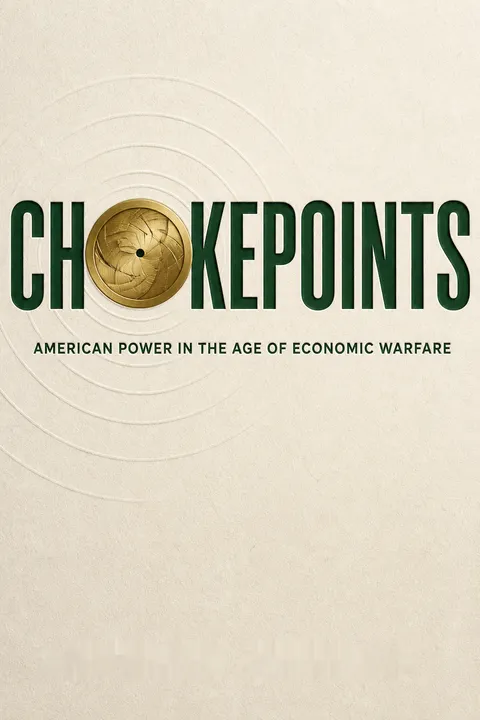


Key Takeaways
Fight through the economic pipes, where control can matter more than force
Power moved beyond geography. For centuries, controlling a narrow passage such as the Bosphorus could starve a rival or enrich an empire. Today, strategic bottlenecks are often invisible: the dollar, payment networks, maritime insurance, and advanced technology. A chokepoint is a vital route or system through which many transactions must pass, so controlling access creates leverage over distant actors.
A regulation can stop ships. In December 2022, Turkey delayed oil tankers at the Bosphorus while officials sought proof that their cargoes complied with the Western price cap on Russian oil. Western firms insured more than 95 percent of oil cargoes. A rule drafted in Washington therefore disrupted traffic thousands of miles away, without a blockade or a warship.
The shift from geographic to infrastructural power is a change in where coercion hides, not a disappearance of coercion. A port closure is visible; a payment restriction or insurance rule looks administrative until trade stops. Network theory helps explain the effect: a system’s central hubs can influence users far beyond their borders. Yet chokepoints are powerful only while alternatives remain costly. Their strategic value depends on dependence, enforcement, and the target’s time to build substitutes.
The dollar's hidden plumbing lets Washington reach transactions without American parties
A foreign deal can touch America. When a Saudi buyer pays an Indian seller, their banks may convert currencies through dollars and route payment through a New York correspondent bank. U.S.-based systems such as CHIPS settle large dollar payments; SWIFT sends banks payment instructions but does not settle the payments. The dollar appears in nearly 90 percent of foreign exchange transactions, despite the United States accounting for less than 10 percent of world exports.
The network grew by design. The dollar’s central role expanded after the Bretton Woods system ended in 1971, as finance globalized and oil continued to be priced in dollars. A 1970s arrangement also encouraged Saudi Arabia to invest oil earnings in U.S. government debt. The result is an economic infrastructure that often gives U.S. authorities jurisdiction over transactions between other countries.
The unusual feature is not simply that the dollar is popular. It is that ordinary commercial decisions repeatedly pass through institutions subject to U.S. law. This resembles platform power: whoever sets the rules for a widely used network can govern access without owning every participant. The arrangement is efficient and convenient, which helps explain its staying power. It also converts private infrastructure into public leverage, raising a difficult question about how much political control users knowingly accept when they choose the easiest payment route.
A chokepoint creates leverage, but pressure alone does not create concessions
History warns against easy victories. Athens barred Megara from its markets in 432 BC, hoping to deter a wider war. Instead, Sparta saw the decree as evidence that Athens had to be defeated. Napoleon’s trade embargo against Britain failed because Britain controlled the seas and other states evaded the restrictions. Economic pressure can punish an adversary, but it can also harden resistance or encourage escalation.
Even severe sanctions have mixed results. The UN embargo on Iraq after its invasion of Kuwait helped cripple Saddam Hussein’s nuclear program. Yet it lasted thirteen years, required costly naval enforcement, worsened civilian hardship, and did not prevent the U.S. invasion of Iraq in 2003. Modern financial networks make sanctions cheaper to impose, but they do not guarantee the targeted government will change policy.
The distinction between inflicting damage and securing a political concession is essential. A state may absorb economic pain if leaders value the disputed objective more than citizens’ welfare, or if pressure strengthens nationalist narratives. A frequently cited 1997 study found sanctions successful in fewer than 5 percent of cases, though such estimates depend on how success is defined and which cases are counted. The useful lesson is not that sanctions never work, but that each campaign needs a plausible account of how pain becomes a specific decision.
Build allied coalitions before sanctions make partners choose sides
Iran and Russia required different diplomacy. The United States could often act unilaterally against Iran because few American firms traded with it. But European companies still invested in Iranian energy, and earlier U.S. threats against them provoked a transatlantic dispute. When Washington targeted Russia in 2014, Europe’s dependence on Russian energy made unilateral action far riskier.
Diplomacy built a coalition. U.S. diplomat Dan Fried formed a contact group of G7 members and other interested countries. Officials shared proposals and economic concerns before leaders had to decide. After the MH17 passenger plane was shot down over eastern Ukraine, Germany backed restrictions on Russian access to Western capital markets and oil technology. Coordination made it possible to impose joint penalties without leaving allies to absorb unequal costs.
Coalition-building is not just a moral signal. It reduces backfill, where one country’s firms leave a market only for competitors in allied states to take their place. It also distributes economic costs and gives leaders political cover to sustain a policy. The trade-off is speed: unanimous or near-unanimous agreement can dilute measures and delay action. The case suggests that preparation matters more than a vague appeal to unity. Partners need a shared understanding of the target, the sacrifice required, and the conditions for changing course.
Use oil revenue as leverage, but account for civilian costs
Iran’s oil money was the pressure point. Financial sanctions had pushed many banks and European energy companies away from Iran, but they did not stop the country from selling oil. In 2011, Congress required sanctions on Iran’s central bank and allowed waivers for countries that gradually reduced oil purchases. Iran’s exports fell substantially. A separate policy trapped oil revenue in overseas accounts, limiting Tehran’s access to more than $100 billion.
Economic pressure opened diplomatic space. Inflation and a collapsing currency intensified public frustration. Hassan Rouhani won Iran’s 2013 presidential election after campaigning for sanctions relief. In 2015, the nuclear agreement traded limits on Iran’s nuclear program for sanctions relief. But food and medicine became harder to import as banks avoided even permitted transactions. Ordinary Iranians bore real costs, despite formal humanitarian exemptions.
This campaign shows how sanctions can work through a political mechanism rather than a simple collapse in output. Economic distress helped make diplomacy more attractive to Iran’s leadership, while the agreement addressed a defined security issue. The humanitarian consequences also reveal a common implementation problem: legal exemptions do not guarantee practical access when banks fear penalties and choose to avoid all transactions. That gap matters ethically and strategically. Civilian hardship can undermine the legitimacy of a policy and deepen the resentment that future diplomacy must overcome.
Precision can limit blowback while giving an adversary time to adapt
Russia was too connected for an Iran-style cutoff. In 2014, Russian firms owed more than $700 billion in external debt, and European economies depended heavily on Russian energy. Blocking the largest banks outright risked financial contagion. Treasury therefore restricted major Russian banks and energy companies from raising new funds in Western capital markets, while export controls targeted technology needed for future oil projects.
The pressure still hurt, but did not reverse the invasion. Falling oil prices compounded the restrictions, and the ruble plunged in 2014. Russia used reserves, capital controls, and closer ties with China to stabilize its economy. Sanctions helped constrain future growth, but Russia kept Crimea and maintained its hold in the Donbas. A narrower blast radius protected allies and markets, while the slower pressure gave Moscow time to adjust.
Precision is a risk-management strategy, not a synonym for effectiveness. It can protect financial stability and preserve allied cooperation, but a measured instrument may be insufficient when the target values its aims intensely. The case also illustrates adaptation: states can build payment systems, diversify reserves, and redirect trade when given time. This resembles an arms race in organizational learning, with each side studying the other’s last move. A sanction plan should therefore assess not only immediate economic damage, but also how quickly the target can reorganize.
Treat advanced technology as strategic infrastructure, not ordinary merchandise
Semiconductors became a second chokepoint. The 2018 U.S. denial order against China’s ZTE cut off access to American components and software, briefly stopping the company’s main operations. President Trump later granted ZTE a reprieve. The episode showed both the reach of technology restrictions and the risk of reversing them for short-term bargaining.
Huawei required a wider rule. An initial U.S. export restriction left loopholes and failed to halt Huawei’s 5G expansion. In 2020, Washington used the Foreign Direct Product Rule, or FDPR, to restrict foreign-made chips produced with U.S. technology. TSMC stopped supplying Huawei, and the United Kingdom, previously reluctant to exclude it, later banned the company from its 5G network. The approach depended on controlling tools and know-how across an international supply chain.
Technology restrictions expose a tension between commercial efficiency and security: a firm’s cheapest supplier may also be a strategic dependency. The episode also shows why rules must match the shape of modern production. A restriction on U.S.-made goods can miss products manufactured abroad with American software or machinery. Yet broad controls can hurt domestic firms, encourage relocation, and spur rivals to develop substitutes. A durable policy therefore needs allied coordination, clear limits, and investment in alternatives, not just a list of prohibited sales.
Cap oil prices through services others cannot easily replace
The 2022 price cap solved a supply dilemma. Russia earned enormous sums from oil, but removing its exports from a tight market could drive prices higher worldwide. The G7 and EU therefore barred Western shipping, insurance, and financing services for Russian oil sold above $60 per barrel. The policy sought to keep oil flowing while reducing Russia’s earnings. The approach relied especially on Western maritime insurance, which covered most tanker cargoes.
Implementation tested the theory. Turkey delayed tankers at the Bosphorus while seeking proof of compliance, creating a shipping queue. After officials resolved the dispute, Russian oil continued to move, often at a discount. The price cap was a service providers’ cartel: participating countries used shared control of essential commercial services to influence the price paid to a major exporter.
The design is notable because it separates a commodity’s physical supply from the price its seller receives. That can soften the usual conflict between punishing an exporter and protecting consumers. But a policy relying on insurance and shipping also depends on intermediaries’ willingness to participate and regulators’ ability to verify transactions. The Bosphorus queue showed that cautious compliance can create the very supply disruption the policy aims to avoid. A chokepoint is useful only when implementation is clear enough that firms do not retreat from the whole market.
Make threats specific before crisis, and prepare to pay their costs
Deterrence failed in 2022. The United States and its allies warned Russia of severe consequences months before the invasion, but they had not settled in advance on exactly what those consequences would be. When tanks crossed the border, leaders faced urgent decisions about banks, technology, and energy while managing inflation and the risk of financial spillovers.
The strongest measure was still improvised. The G7 immobilized much of Russia’s roughly $630 billion in foreign reserves, a move Moscow had not anticipated. Yet the West initially exempted energy payments, allowing Russia to keep earning from oil and gas. The oil price cap took months to develop. The book’s lesson is to prepare options, align allies, and assess domestic costs before a crisis, rather than relying on warnings whose substance remains uncertain.
Deterrence depends on an adversary believing both that a response is possible and that leaders will accept its costs. Surprise can make sanctions more potent after aggression begins, but it is less useful for prevention if the target has underestimated the threatened response. Advance planning also improves estimates of economic spillovers, which may otherwise become an excuse for delay. Still, a more explicit threat is not automatically more credible: public commitments can trap leaders into measures that harm allies or civilians. Clarity must be paired with realistic options and political preparation.
Interdependence, security, and rivalry cannot all be maximized together
The impossible trinity names the central trade-off. Countries can combine deep economic interdependence with a sense of security, or pursue geopolitical competition while limiting dependence on rivals. But in intense rivalry, a tightly connected economy gives each side leverage over the other. Governments and companies respond by diversifying suppliers, building domestic capacity, and trading more with trusted partners.
The dollar remains powerful, but trust is contested. Russia and China have built alternatives to Western payment systems, while calls for trade in currencies other than the dollar have gained attention. These efforts remain limited: the dollar’s deep markets and established infrastructure are hard to replace. Yet sanctions encourage even non-targeted states to reduce exposure. The result is not a clean split into two camps, but a more fragmented economy with countries trying to avoid dependence on either side.
The trilemma is useful because it makes trade-offs explicit instead of treating security as a free addition to globalization. It also explains why defensive policies can look threatening: one state’s effort to reduce vulnerability can convince another that it is being contained. This resembles the classic security dilemma in international relations. The framework is not a mechanical law, however. Trust, institutions, and narrow agreements can preserve interdependence in selected areas. The harder question is which dependencies are tolerable, and who gets to define what counts as strategically essential.
Analysis
The book’s central argument is that modern economic warfare draws power from infrastructure built for commerce, not from a government’s ability to command every company directly. Dollar clearing, maritime insurance, semiconductor tools, and software are consequential because many actors rely on a small number of hubs. The narrative follows the gradual discovery of those hubs, from post-9/11 financial investigations to the Iran campaign, Russia’s invasion of Ukraine, and the technology contest with China.
Its most useful analytical distinction is between economic damage and strategic success. Iran’s financial and oil constraints helped create bargaining leverage for a nuclear agreement, although relief proved difficult to deliver and civilian effects were real. Russia’s 2014 sanctions imposed costs without restoring Ukrainian territory. The 2022 measures immobilized reserves and disrupted trade, but failed to deter the invasion. Across these cases, the same instrument can produce very different political outcomes because leaders value objectives differently, sanctions coalitions vary, and targets adapt.
The account also highlights a paradox: the more effective economic weapons become, the more they encourage others to build alternatives. Yet replacing a payment network is not the same as replacing the dollar’s liquidity, and making chips domestically is not the same as matching the global expertise and equipment that produce them. Adaptation is possible, but uneven and expensive.
The strategic choice is therefore not simply whether to use sanctions. It is whether to plan them before a crisis, coordinate with allies, preserve humanitarian channels, and invest in domestic resilience. Economic coercion can be less destructive than military force, but it is not cost-free or reliably controllable. Its credibility depends on preparedness; its legitimacy depends on proportionality; and its lasting effectiveness depends on whether the coalition using it can maintain trust while accepting sacrifice.
Review Summary
Chokepoints receives overwhelmingly positive reviews (4.36/5 from 953 readers), praised for making complex economic warfare accessible and engaging. Readers describe it as surprisingly readable—like a thriller rather than a textbook—detailing how the US weaponized financial systems, technology, and sanctions against Iran, Russia, and China since the early 2000s. The book traces the evolution from ineffective Hussein-era sanctions to sophisticated chokepoint strategies targeting banks, semiconductors, and oil markets. Reviewers appreciate Fishman's insider access, non-partisan approach, and detailed chronicling of key figures like Stuart Levey. Some note it's highly detailed and best for those interested in geopolitics.
People Also Read



Glossary
Chokepoint
Critical route or systemA chokepoint is a narrow or indispensable route through which essential goods, payments, services, or technologies must pass. Control over it gives an actor leverage over users who may be far away. The book applies the idea both to geographic passages such as the Bosphorus and to economic infrastructure such as dollar payments, maritime insurance, and advanced semiconductor production.
Blocking sanctions
Asset freeze and transaction banBlocking sanctions are a severe U.S. penalty that freezes a target’s property under U.S. jurisdiction and generally prohibits U.S. persons from transacting with that target. Because global banks and companies often need access to U.S. financial infrastructure, the consequences can extend beyond assets physically held in the United States.
Secondary sanctions
Penalties on third-party dealingsSecondary sanctions threaten penalties against foreign banks, companies, or individuals that do business with a primary target of U.S. sanctions. Their leverage comes from forcing a choice: maintain the relationship with the sanctioned target or preserve access to the U.S. market and financial system. The Iran campaigns established them as a major tool of American economic warfare.
Foreign Direct Product Rule
Controls on foreign-made goodsThe Foreign Direct Product Rule, or FDPR, extends U.S. export controls to certain foreign-made products when their production depends on U.S. technology, software, or equipment. The rule became especially important in restrictions on Huawei and Russia, where overseas manufacturers relied on American inputs. It can make a U.S. technology chokepoint influential even when the final product is made abroad.
Service providers’ cartel
Coordinated control of essential servicesThe service providers’ cartel is the price-cap strategy used against Russian oil. Participating governments restrict their firms from providing shipping, insurance, financing, and related services for oil sold above a set price, while permitting services for sales below it. The strategy seeks to reduce Russia’s earnings without removing as much oil from global markets.
Small yard and high fence
Narrow technology restrictionsSmall yard and high fence describes a policy of limiting adversaries’ access to a carefully selected set of technologies considered critical to national security, while maintaining broader economic ties elsewhere. The phrase captures the stated aim of restricting foundational technologies without fully decoupling the U.S. and Chinese economies. The book questions whether the protected technology set can remain small.
Friendshoring
Trade with trusted partnersFriendshoring means shifting some supply chains, production, or economic relationships toward countries considered reliable partners. The aim is not complete self-sufficiency, but reduced dependence on rivals that might exploit a supply or financial vulnerability. In the book, it is part of a broader move from prioritizing low-cost global integration toward secure trade.
Impossible Trinity
Three goals, two compatibleThe Impossible Trinity is the book’s framework for the tension among economic interdependence, economic security, and geopolitical competition. Any two can coexist more readily than all three. When states compete while remaining deeply interconnected, they can exploit one another’s dependencies, prompting efforts to diversify or separate economic relationships and making globalization less stable.
FAQ
What is Chokepoints: American Power in the Age of Economic Warfare by Edward Fishman about?
- Explores U.S. economic power: The book examines how the United States uses economic tools—sanctions, export controls, and financial regulations—to achieve geopolitical objectives without resorting to military conflict.
- Focus on economic chokepoints: Fishman introduces and analyzes the concept of “chokepoints”—critical nodes in global finance and technology that the U.S. can leverage for strategic advantage.
- Case studies and historical context: The narrative is built around key episodes involving Iran, Russia, and China, tracing the evolution of economic warfare from ancient times to the present.
Why should I read Chokepoints by Edward Fishman?
- Insight into modern power: The book reveals how economic statecraft has become central to U.S. foreign policy and global competition, offering a behind-the-scenes look at contemporary geopolitics.
- Timely and relevant analysis: Fishman’s insider perspective and real-world case studies make complex topics like sanctions and export controls accessible and urgent for readers interested in current events.
- Strategic lessons for leaders: The book provides actionable recommendations for policymakers, business leaders, and informed citizens on navigating the risks and opportunities of economic warfare.
What are the key takeaways from Chokepoints by Edward Fishman?
- Economic warfare is powerful: Sanctions and financial controls can inflict significant damage on adversaries, often without military engagement.
- Chokepoints are strategic assets: Control over the U.S. dollar, financial networks, and technology supply chains gives the U.S. immense leverage in global affairs.
- Risks and limitations exist: Overuse or poorly designed sanctions can cause unintended harm, provoke backlash, and undermine U.S. influence, requiring careful calibration and allied coordination.
How does Edward Fishman define “chokepoints” in Chokepoints?
- Critical economic nodes: Chokepoints are gateways or dependencies in global trade, finance, or technology that, if controlled, confer disproportionate power to the controller.
- Examples old and new: Classic chokepoints include the Bosphorus Strait; modern ones are the U.S. dollar, SWIFT, semiconductor supply chains, and maritime insurance.
- Strategic leverage: By targeting these chokepoints, the U.S. can shape global flows of money, goods, and technology to advance its geopolitical interests.
How does Chokepoints by Edward Fishman explain the evolution of economic warfare?
- Historical roots: The book traces economic warfare from ancient embargoes and blockades to 20th-century sanctions and embargoes, highlighting recurring challenges.
- Transformation in the 21st century: Globalization, financial deregulation, and technological advances have created new chokepoints, making economic warfare more precise and potent.
- Modern case studies: Fishman details how these tools have been used against Iran’s nuclear program, Russia’s aggression in Ukraine, and China’s technological ambitions.
What role does the U.S. dollar and financial system play as a chokepoint in Chokepoints?
- Dollar’s global dominance: The U.S. dollar’s status as the world’s reserve currency gives America unique power to impose financial sanctions and control access to global markets.
- Financial infrastructure as leverage: U.S.-based payment systems, correspondent banks, and networks like SWIFT serve as chokepoints that can isolate adversaries from international finance.
- Risks of overuse: Fishman and officials like Jack Lew warn that excessive reliance on dollar-based sanctions could erode the dollar’s central role and prompt adversaries to seek alternatives.
How does Edward Fishman describe the use and impact of sanctions in Chokepoints?
- Sanctions as statecraft: Sanctions are portrayed as a primary tool for deterring and punishing adversaries, with increasing sophistication and precision over time.
- Case studies of impact: The book details how sanctions campaigns against Iran and Russia damaged their economies and influenced political outcomes, such as the Iran nuclear deal.
- Challenges and consequences: Fishman discusses enforcement difficulties, humanitarian impacts, and the risk of adversaries adapting or forming alternative alliances.
What is the significance of technology and semiconductors as chokepoints in Chokepoints by Edward Fishman?
- Technology as leverage: Advanced technologies, especially semiconductors, are identified as critical chokepoints in the U.S.-China rivalry and broader economic warfare.
- Export controls in action: The U.S. has used export controls and rules like the Foreign Direct Product Rule (FDPR) to restrict Chinese firms’ access to cutting-edge chips and equipment.
- Supply chain vulnerabilities: Fishman highlights the concentration of semiconductor production and the strategic importance of securing and diversifying these supply chains.
How does Chokepoints by Edward Fishman analyze the U.S.-China economic rivalry and trade war?
- From engagement to competition: The book traces the shift from economic integration to strategic competition, focusing on trade tensions, tariffs, and technology restrictions.
- Broader geopolitical context: Fishman situates the trade war within a larger contest for technological and economic supremacy, emphasizing the need for a comprehensive U.S. strategy.
- Impact on global supply chains: The rivalry has exposed vulnerabilities and prompted efforts to “friendshore” and secure critical industries.
How did the U.S. and its allies coordinate sanctions against Russia, according to Chokepoints?
- Unified response to aggression: The U.S. and G7 prepared coordinated sanctions packages targeting Russia’s banks, central bank reserves, and technology exports after the 2022 invasion of Ukraine.
- Innovative measures: Actions included immobilizing Russia’s central bank assets and imposing a price cap on Russian oil, leveraging Western control over financial and maritime chokepoints.
- Challenges of unity: Maintaining allied consensus was crucial but difficult, especially regarding energy sanctions and balancing economic impacts on global markets.
What are the main challenges and limitations of economic warfare discussed in Chokepoints by Edward Fishman?
- Unintended consequences: Sanctions can harm civilians, disrupt global markets, and sometimes strengthen adversaries’ resolve or push them toward self-sufficiency.
- Risk of fragmentation: Overuse or unilateral action can fracture the global economic system, prompting adversaries to develop alternatives and undermining U.S. leverage.
- Need for strategic wisdom: Fishman stresses the importance of careful design, multilateral coordination, and balancing economic might with diplomatic engagement.
What recommendations and future strategies does Edward Fishman propose in Chokepoints?
- Permanent economic war council: Fishman advocates for a dedicated, interdisciplinary council to coordinate U.S. economic warfare policy and prepare for future crises.
- Smarter, targeted sanctions: He calls for more precise, multilateral sanctions that minimize humanitarian harm and avoid overreach, with clear objectives and enforcement.
- Investment in resilience: The U.S. should strengthen control over critical technologies, invest in domestic industries, and work with allies to secure chokepoints and maintain global leadership.
Bonus:
What are the best quotes from Chokepoints by Edward Fishman and what do they mean?
- “Maintain as large of a lead as possible”: Emphasizes the U.S. strategy to preserve technological and economic advantages for security and leadership.
- “An invasion is an invasion”: Reflects a clear, principled stance against Russian aggression and the importance of upholding international norms.
- “Without firing a shot”: Captures the essence of economic warfare as a means to exert power and achieve objectives through non-military means.
- “Economic growth was its official mission”: Highlights the dual role of economic policy in promoting prosperity and serving national security interests.
Download PDF
Download EPUB
.epub digital book format is ideal for reading ebooks on phones, tablets, and e-readers.








