

Key Takeaways
Treat total cholesterol as a clue, not a verdict on heart health
One number, two reactions. At a free health screening, a nurse called a young woman healthy because her total cholesterol was 140, despite her very high blood pressure and body-fat reading. When Jimmy Moore’s result came back at 322, the same nurse assumed he was in danger, although he felt well. The scene captures the book’s central challenge: a single lab value cannot summarize a person’s health or determine treatment by itself.
Context changes meaning. Total cholesterol combines cholesterol carried by several kinds of particles. It says little about how many particles are present, what other risk factors exist, or whether disease is already present. Moore argues that clinicians should assess a broader picture rather than react automatically to a threshold such as 200 mg/dL. The story is memorable, but it is an illustration, not proof that high cholesterol is harmless.
The scene exposes a common cognitive error: treating a measurable proxy as if it were the condition itself. In decision science, this is a form of proxy substitution. A laboratory number can be useful without being a complete diagnosis. The book is strongest when it asks what a test can and cannot tell an individual patient. Its limits matter too: one person feeling well, or one patient group having ordinary cholesterol readings, cannot show that cholesterol-related risk is absent. The practical lesson is to interpret numbers alongside history, blood pressure, glucose, smoking, and other evidence.
Remember cholesterol is essential, but blood levels still need context
A necessary molecule. Cholesterol is a component of cell membranes and is used to make steroid hormones, bile, and vitamin D. The book stresses that the body needs it to function, and that the liver produces much of the cholesterol circulating in the blood. It also describes the body’s ability to adjust its own production when dietary cholesterol changes, so food cholesterol does not translate directly into blood cholesterol in a simple, uniform way.
Transport matters. Cholesterol moves through the bloodstream inside lipoprotein particles. The book uses this to challenge the image of dietary fat physically sloshing through arteries like grease in plumbing. That picture is misleading, but the fact that cholesterol is essential does not mean every blood level is equally safe. The authors’ central point is narrower: cholesterol’s function and its measurement should not be collapsed into one simplistic good-or-bad label.
This distinction between biological necessity and clinical risk is useful well beyond cholesterol. Glucose, iron, and inflammatory responses are all essential in the right context, yet can signal trouble when regulation fails. The key question is not whether a molecule is good or bad in the abstract, but how it is transported, regulated, and related to outcomes. The book rightly resists the idea that eating cholesterol directly determines a blood result. It goes too far when it treats that insight as evidence that high LDL-related measures are generally benign. Necessity is not a license to ignore concentration or exposure.
Look for metabolic strain and inflammation, not just one lipid number
Inflammation is part of the story. The book distinguishes acute inflammation, such as swelling after an injury, from chronic inflammation that persists over time. It argues that ongoing inflammation and damage to blood-vessel walls help explain how atherosclerosis develops, rather than treating cholesterol as the sole culprit. It names smoking, high blood sugar, processed carbohydrates, stress, poor sleep, and high blood pressure as possible contributors.
A marker, not a diagnosis. High-sensitivity C-reactive protein, or hs-CRP, is presented as a blood test that can indicate systemic inflammation. The authors recommend considering it alongside glucose, triglycerides, and HDL. They also cite a study of heart-attack patients in which many had LDL levels considered normal. That observation supports checking more than LDL, but it does not establish that LDL is irrelevant or that inflammation alone explains an individual’s risk.
The broader view has real value because cardiovascular disease develops through interacting processes, including lipid transport, vascular injury, metabolism, and immune activity. Inflammation is biologically relevant, and hs-CRP can add prognostic information. But CRP is nonspecific: infection, injury, and other conditions can raise it, and a high result does not identify the cause. Nor does a normal result rule out risk. Treating inflammation as a replacement villain would repeat the same single-marker mistake the book criticizes. Its best contribution is to widen the investigation, not to declare one mechanism the whole explanation.
Ask what your LDL particles and triglycerides reveal beyond LDL-C
The cargo is not the carrier. On a standard lipid panel, LDL-C estimates the cholesterol carried in low-density lipoprotein particles. The book notes that this value is commonly calculated rather than directly measured. LDL-P, by contrast, estimates the number of LDL particles; ApoB is another measure related to the number of potentially atherogenic particles. The authors also describe Pattern A particles as larger and more buoyant, and Pattern B particles as smaller and denser.
Use the basic panel well. The book emphasizes triglycerides and HDL, and suggests dividing triglycerides by HDL as a rough indicator of metabolic health and small-particle patterns. High triglycerides with low HDL can accompany insulin resistance. The authors note that this ratio may not work equally well across populations, including African Americans. These measures can add context, but interpretation depends on the person and should not be reduced to a homemade diagnosis.
The distinction between the cholesterol carried and the number of particles carrying it is central to modern lipid assessment. When particle number and cholesterol content disagree, particle measures can clarify risk. Still, particle size should not distract from particle burden: current evidence gives strong weight to the number of ApoB-containing particles, while the simple large-is-good, small-is-bad split is an incomplete model. A triglyceride-to-HDL ratio can be a convenient clue, not a substitute for evaluating overall risk. The book’s useful instinct is to question what the test actually measures; its weaker move is presenting emerging markers as settled replacements.
Test how food changes your whole risk profile, not one marker
Question the low-fat default. Moore challenges decades of advice that equated heart health with eating less fat and more carbohydrates. He argues that refined grains and sugar can raise triglycerides and worsen patterns associated with insulin resistance, while carbohydrate restriction often improves triglycerides and HDL. The book favors minimally processed foods and natural fats, and warns that some low-fat products replace fat with sugar or refined starch.
Markers are not outcomes. The authors discuss a reanalysis of the Sydney Diet Heart Study, involving 458 men who had experienced a coronary event. The group encouraged to replace saturated fat with safflower oil saw lower cholesterol readings but not improved survival in that analysis. The book uses this to question blanket promotion of omega-6 vegetable oils. Its proposed low-carbohydrate approach may improve several lab values, but better numbers do not by themselves prove fewer heart attacks or longer life.
The most durable dietary insight is to examine what replaces what. Removing fat from a food or diet can lead to more refined carbohydrate, while reducing sugar and heavily processed foods can improve metabolic markers. The book’s historical account of low-fat advice usefully highlights how policy can persist after evidence shifts. Its stronger claims about saturated fat and seed oils need more restraint: a single reanalysis does not establish that all vegetable oils are harmful, and dietary effects depend on the food and replacement pattern. A sound test of a diet considers adherence, health outcomes, and individual response, not a cholesterol change alone.
Judge statins by personal absolute benefit, not fear or slogans
A prescription is a decision. The book objects to prescribing statins automatically because total cholesterol exceeds 200 or LDL-C exceeds 100. It recounts patients who were urged to start medication without discussion of their broader risk, preferences, or possible lifestyle changes. It also describes muscle pain, fatigue, and memory complaints, and cites a study in which 17 percent of participants reported side effects. The authors argue that benefits can be modest for people without prior cardiovascular disease.
Individual risk changes the balance. The book acknowledges that some people may benefit from statins, particularly those with established disease, while arguing that lifestyle should not be ignored. Its presentation is highly skeptical and its side-effect estimates are not a universal prediction for every patient. A treatment decision should compare likely absolute benefit with potential harms for that person. No one should stop or change prescribed medication without discussing it with a qualified clinician.
Absolute benefit is a better basis for shared decisions than a drug advertisement’s relative-risk reduction. The same relative effect can mean a substantial benefit for someone at high baseline risk and a small one for someone at low risk. The book is right to insist that side effects and patient priorities belong in the conversation. However, the evidence base does not support its broad implication that statins generally fail to prevent cardiovascular events. Randomized trials show benefit in appropriately selected patients, with the size of benefit varying by risk. The useful challenge is against automatic prescribing, not against evidence-based treatment.
Investigate why cholesterol changed before trying to force it down
A changed result has causes. The book lists several reasons cholesterol may rise: underactive thyroid function, familial hypercholesterolemia, stress, hormonal changes, micronutrient deficiencies, and chronic infection. It also notes that active weight loss can temporarily alter lipid results. Some people following a low-carbohydrate, high-fat diet see substantial increases in LDL-C or LDL-P even when triglycerides and other markers improve; the authors acknowledge that the long-term meaning of this pattern was unclear in the evidence available to them.
Check the pattern and the timing. The book advises considering thyroid testing and other health factors rather than assuming that a high result automatically calls for a statin. It suggests retesting after weight stabilizes, since measurements during active weight loss may not reflect a lasting pattern. Familial hypercholesterolemia is a genuine inherited condition that can confer high risk and warrants medical evaluation. These possibilities argue for investigation, not for dismissing a concerning result.
This is a strong clinical reasoning principle: a laboratory change can be a signal to search for causes, rather than an isolated target to manipulate. The book’s examples show why timing, medication, genetics, and metabolic state matter. Its discussion of high LDL during carbohydrate restriction is candid about uncertainty, an important counterweight to confident dietary claims elsewhere. Yet uncertainty does not establish safety. Persistent, markedly elevated LDL or ApoB deserves professional assessment even when other values look favorable. A change in diet can be informative, but it is not a substitute for evaluating inherited risk or existing disease.
Use tests and doctors as partners, while questioning oversimplified thresholds
Ask better questions. The book traces low-fat advice to research and policy decisions associated with Ancel Keys and the Seven Countries Study. Moore argues that selective data, institutional momentum, and commercial interests helped turn a contested theory into routine practice. He also notes practical pressures on clinicians, including limited time and little nutrition training. The lesson is not that every doctor is careless, but that guidelines and habits can lag behind research.
Make the visit collaborative. Bring questions about blood pressure, glucose, triglycerides, HDL, family history, and, when appropriate, ApoB or LDL-P. The book discusses coronary calcium scans as one way to look for calcified plaque, but whether that test is useful depends on the person. Seek a clinician who can interpret results and discuss options. Patient education matters, but internet research and self-testing cannot replace medical judgment or individualized care.
The book’s account of scientific inertia is persuasive in one respect: institutions can convert provisional evidence into default practice, then make revision socially and administratively costly. This is a problem across medicine, not unique to cholesterol. But claims of industry influence should be evaluated with the same skepticism applied to official guidelines; incentives can bias dissenters as well as incumbents. The most productive form of patient advocacy is disciplined questioning: What outcome does this test predict? What would change the plan? What are the benefits and harms for this patient? Those questions preserve agency without turning distrust into a treatment strategy.
Analysis
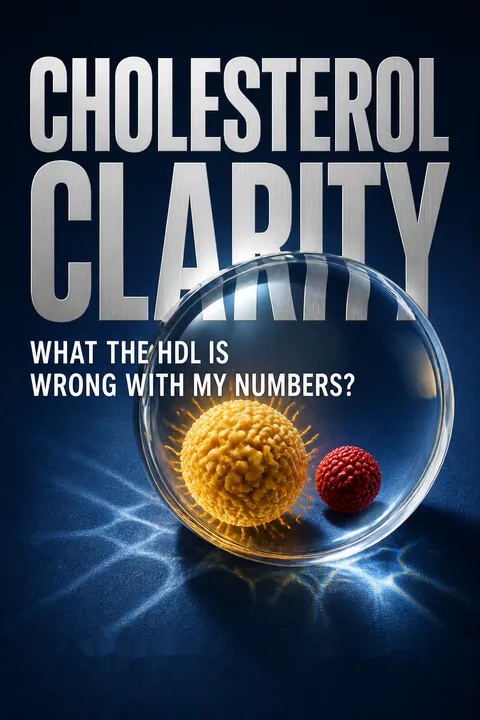
Cholesterol Clarity is a 2013 health argument built around a personal story, interviews with clinicians and researchers, and a practical tour of lipid tests. Its most useful move is to reject the idea that one number, especially total cholesterol, can stand in for a person’s cardiovascular health. It asks readers to look at metabolic health, blood pressure, smoking, glucose, triglycerides, HDL, family history, and the context in which a test was taken. That is a valuable corrective to threshold-driven medicine.
The book’s central weakness is that it often leaps from a valid criticism of cholesterol measurement to a much broader rejection of cholesterol’s causal role. A heart-attack patient having an ordinary LDL result does not show that LDL is harmless; the observation may reflect other risk factors, timing, or limits of the test. Likewise, cross-country comparisons and one reanalysis of a dietary trial cannot settle causation. The book’s own replacement story, centered on inflammation, carbohydrates, and vegetable oils, can become just as reductive as the single-marker story it opposes.
Modern evidence supports a more integrated account. Atherosclerotic disease involves multiple processes, yet genetic, epidemiological, and randomized-trial evidence indicates that exposure to LDL-containing particles contributes causally to disease. Statins reduce cardiovascular events for people whose baseline risk makes treatment worthwhile. That does not make every prescription appropriate, nor does it make side effects or patient preference irrelevant. Absolute risk, expected benefit, competing risks, and patient goals belong in the decision.
The safest value to take from the book is methodological rather than doctrinal: ask what a measurement represents, distinguish a surrogate marker from a health outcome, and demand a transparent account of uncertainty. Its skepticism is most constructive when applied to both conventional guidance and alternative claims. A good clinician-patient discussion can question simplistic thresholds without pretending that high LDL or ApoB is automatically benign. Dietary changes may improve weight, glucose, and triglycerides, but medication decisions should be individualized and made with a qualified professional.
Review Summary
Cholesterol Clarity receives mixed reviews, with an overall positive reception. Readers appreciate the book's information on cholesterol, challenging conventional wisdom about heart health and statins. Many find it eye-opening and potentially life-changing. However, some criticize the repetitive nature of the content and lack of scientific references. The book's promotion of a low-carb, high-fat diet is controversial. While some praise its accessibility, others find the writing style off-putting. Despite these criticisms, many readers consider it an important resource for understanding cholesterol and heart health.
People Also Read





Glossary
Cholesterol-Heart Hypothesis
Dietary fat to artery disease theoryThe theory, as described in the book, that eating saturated fat and cholesterol raises blood cholesterol, which then contributes to atherosclerosis and heart attacks. Moore disputes this account and argues that inflammation, metabolic dysfunction, and other factors deserve more attention. The term names the book’s target, but it should not be mistaken for a complete statement of current cardiovascular science.
LDL-C
Cholesterol carried in LDLLDL-C measures the amount of cholesterol carried by low-density lipoprotein particles. On a standard lipid panel, it is commonly estimated using other measurements rather than directly counted. It is not the same as the number of LDL particles. The book argues that LDL-C alone is an incomplete risk measure; clinical interpretation requires the person’s broader health context.
LDL-P
Number of LDL particlesLDL-P is an estimate of the concentration of low-density lipoprotein particles in the blood. Unlike LDL-C, which measures the cholesterol cargo inside those particles, LDL-P concerns the number of carriers. The book presents particle number as a more informative measure in some cases, especially when LDL-C and particle burden do not align. It is interpreted alongside other risk factors.
ApoB
Marker of atherogenic particlesApolipoprotein B is a protein found on particles that can contribute to atherosclerosis, including LDL and other lipoproteins. Since each such particle carries an ApoB molecule, measuring ApoB can provide an estimate of the number of these particles. The book presents it as a useful alternative or complement to LDL-C, rather than as a stand-alone diagnosis.
Pattern A
Larger LDL particle patternPattern A is the book’s label for a blood-lipid pattern dominated by larger, more buoyant LDL particles. The authors describe these particles as less concerning than smaller, denser particles, particularly when triglycerides are low and HDL is higher. Particle pattern is only one part of cardiovascular assessment and does not, by itself, establish that a person is free of risk.
Pattern B
Smaller LDL particle patternPattern B is the book’s label for a lipid pattern with a greater proportion of small, dense LDL particles. The authors associate it with higher triglycerides, lower HDL, and insulin resistance, and argue that it may signal increased cardiovascular risk. The pattern is a specialized description of lipoprotein distribution, not a diagnosis; the person’s overall risk and clinical history still matter.
High-Sensitivity C-Reactive Protein (hs-CRP)
Blood marker of inflammationhs-CRP is a blood test that detects relatively low concentrations of C-reactive protein, a substance associated with inflammation. The book recommends it as one way to assess inflammatory activity that may accompany cardiovascular risk. Because CRP can rise for many reasons, including infection or injury, the result does not identify a cause or independently diagnose heart disease.
Triglycerides-to-HDL Ratio
Triglycerides divided by HDLThis ratio is calculated by dividing a triglyceride result by an HDL cholesterol result, using compatible units. The book presents a lower ratio as a rough sign of better metabolic health and fewer small, dense LDL particles. It is a screening clue rather than a definitive risk test, and the source notes that it may be less informative in some populations.
Familial Hypercholesterolemia
Inherited tendency toward high LDLFamilial hypercholesterolemia is an inherited condition that affects the body’s handling of LDL particles and can lead to very high LDL cholesterol from early life. The book distinguishes more severe forms inherited from both parents from the more common form inherited from one parent. Suspected cases require appropriate clinical assessment, since this condition can carry substantial cardiovascular risk.
ATP III Cholesterol Guidelines
U.S. adult cholesterol recommendationsATP III refers to the third Adult Treatment Panel report issued through the U.S. National Cholesterol Education Program. Published in 2002, it provided recommendations for detecting and treating high blood cholesterol in adults, including LDL-centered targets. The book criticizes the guidelines as insufficiently current and overly focused on LDL-C, while their historical role helps explain routine clinical practice.
FAQ
What's Cholesterol Clarity about?
- Challenging Misconceptions: Cholesterol Clarity by Jimmy Moore and Dr. Eric Westman challenges the belief that high cholesterol is a primary cause of heart disease, emphasizing its essential role in bodily functions.
- Personal Health Journey: Inspired by Moore's health transformation, the book highlights the importance of questioning conventional medical advice and understanding cholesterol better.
- Empowerment Through Knowledge: The authors aim to educate readers on interpreting cholesterol test results and making informed health decisions without immediately resorting to medications.
Why should I read Cholesterol Clarity?
- Debunking Myths: The book offers a fresh perspective on cholesterol, encouraging readers to rethink its role in heart health and debunking long-standing myths.
- Practical Guidance: It provides actionable advice on dietary and lifestyle changes to improve health, emphasizing nutrition over medication for cholesterol management.
- Expert Insights: Featuring insights from various health experts, the book presents a well-rounded view of cholesterol and heart disease, adding credibility to its arguments.
What are the key takeaways of Cholesterol Clarity?
- Cholesterol is Essential: Cholesterol is vital for hormone production and cell repair, and the body cannot survive without it.
- Inflammation Over Cholesterol: The authors argue that inflammation is a more significant risk factor for heart disease than cholesterol levels.
- Question Conventional Wisdom: Readers are encouraged to challenge traditional views on cholesterol and heart health, particularly the reliance on statins.
What are the best quotes from Cholesterol Clarity and what do they mean?
- "Cholesterol is essential for our bodies to function.": Highlights cholesterol's importance in maintaining health, countering the narrative that it is harmful.
- "The idea of cholesterol being dangerous has become such a deep part of our culture.": Reflects how ingrained misconceptions about cholesterol are, emphasizing the need for education.
- "Your number-one health advocate is you.": Encourages readers to take charge of their health by educating themselves and making informed decisions.
How does Cholesterol Clarity suggest managing cholesterol levels?
- Dietary Changes: Advocates for a low-carb, high-fat diet to improve cholesterol levels, raising HDL and lowering triglycerides.
- Lifestyle Modifications: Emphasizes regular exercise and stress management as crucial factors in maintaining healthy cholesterol levels.
- Avoiding Medications: Cautions against the overprescription of statins, suggesting many can achieve better health through diet and lifestyle changes.
What is the role of inflammation in heart disease according to Cholesterol Clarity?
- Inflammation as a Primary Factor: Chronic inflammation is a significant contributor to heart disease, overshadowing cholesterol's role.
- Cholesterol's Protective Role: Cholesterol responds to inflammation rather than causing heart disease, addressing damage in blood vessels.
- Focus on Root Causes: Advocates addressing inflammation's root causes, like poor diet and lifestyle, rather than just lowering cholesterol levels.
How should I interpret my cholesterol test results based on Cholesterol Clarity?
- Look Beyond Total Cholesterol: Advises against focusing solely on total cholesterol and LDL-C numbers, which can be misleading.
- Importance of Triglycerides and HDL: Highlights triglycerides and HDL cholesterol as critical markers for assessing heart health.
- Advanced Testing Recommendations: Encourages seeking advanced testing for LDL particle size and number for more relevant cardiovascular risk information.
What dietary changes does Cholesterol Clarity recommend?
- Reduce Carbohydrate Intake: Suggests reducing carbs to improve cholesterol levels and overall health, shifting energy sources to fat.
- Embrace Healthy Fats: Advocates including healthy fats like avocados and nuts while avoiding processed vegetable oils.
- Focus on Whole Foods: Recommends a diet rich in whole, unprocessed foods to reduce inflammation and improve heart health.
What is the significance of LDL particle size in Cholesterol Clarity?
- Different Types of LDL: Explains that LDL particles vary, with large, fluffy particles being less harmful than small, dense ones.
- Health Implications: Small, dense LDL particles are linked to higher heart disease risk, while larger particles are generally harmless.
- Testing for LDL Particles: Encourages tests measuring LDL particle size and number for a clearer picture of cardiovascular risk.
How do triglycerides relate to heart health in Cholesterol Clarity?
- Key Indicator of Health: Triglyceride levels are crucial for assessing heart health, with high levels indicating potential metabolic issues.
- Influence of Diet: Carbohydrate intake significantly affects triglyceride levels; reducing carbs can lower them.
- Triglyceride-to-HDL Ratio: Recommends monitoring this ratio as a more reliable heart disease risk indicator than LDL levels alone.
How does Cholesterol Clarity address the issue of statin medications?
- Overprescription Concerns: Argues that statins are often overprescribed, suggesting many can achieve better health through lifestyle changes.
- Potential Side Effects: Highlights potential statin side effects, such as muscle pain and cognitive issues, questioning their risk-benefit balance.
- Empowerment Through Knowledge: Encourages readers to educate themselves about their health and question doctors' recommendations on statin use.
How can I apply the concepts from Cholesterol Clarity to my own health?
- Educate Yourself: Learn about cholesterol and its role in health to make informed dietary and lifestyle decisions.
- Monitor Your Health: Consider advanced cholesterol tests for a clearer lipid profile, guiding your health choices.
- Make Informed Dietary Choices: Implement dietary changes like increasing healthy fats and reducing carbs, monitoring their effects on your health.
About the Author
Other books by Jimmy Moore
Download PDF
Download EPUB
.epub digital book format is ideal for reading ebooks on phones, tablets, and e-readers.








