

Key Takeaways
A republic can keep its forms while its governing machinery quietly fails
A powerful state, thinly staffed. Rome governed an empire of provinces without a permanent civil service, a police force, or a public prosecution service. Private advocates investigated cases, elected officials administered justice, and tax collection was sold to private contractors. Political relationships helped fill gaps that institutions could not cover, but those relationships also made public life vulnerable to corruption and intimidation.
Checks without repair. The constitution divided authority among elected officials, the Senate, and popular assemblies, with vetoes everywhere. It could restrain a would-be king, but it struggled to address land shortages, unequal citizenship, and armies loyal to their generals. Reformers were repeatedly killed, while commanders such as Sulla marched troops into Rome. The system's safeguards could block change more easily than they could resolve the crises driving it.
What's striking is the difference between formal checks and practical capacity. A political system can distribute authority widely yet still fail if nobody can reliably enforce decisions or provide basic administration. Rome's personal networks were an ingenious substitute for missing institutions, but they made public goods depend on private loyalty. That arrangement can work in a small community and become brittle at imperial scale. The book's warning is not simply that too many vetoes paralyze government. It is that safeguards need legitimate paths for adaptation, or power migrates to whoever can act fastest.
Turn outsider status into an advantage by proving public competence
A newcomer with preparation. Cicero came from a landowning family in Arpinum, not one of Rome's dominant political dynasties. As a New Man, he had to build the reputation that aristocrats inherited. He studied law, Greek philosophy, and rhetoric, then entered the courts after years of preparation. His defense of Sextus Roscius, whose property had been seized through Sulla's circle, risked angering powerful men and established Cicero as a bold advocate.
Service became political capital. As Quaestor in Sicily, he arranged a fair purchase of grain for Rome and avoided the customary illegal commission. Later, Sicilians chose him to prosecute their former governor Verres, whose abuses he documented. These cases drew on his skill, but also on personal connections and an expanding client network. His rise shows how a provincial outsider could convert competence into broader support.
Cicero's ascent resembles a familiar route into elite institutions: demonstrate rare expertise, serve constituencies neglected by insiders, and make a record that travels beyond one's home base. His Sicilian administration mattered because it made fairness visible, not merely professed. Yet this was no pure meritocracy. Cicero relied on patrons, family alliances, and clients, while most people had no comparable access to office. The example is strongest when read as a lesson in earning credibility within a network, not as proof that talent alone dissolves entrenched barriers.
In emergencies, defending the state can endanger the rights that define it
The choice Cicero faced. In 63 BC, Cicero uncovered a conspiracy associated with Catilina, who had lost elections and then raised an armed revolt. Evidence against conspirators in Rome included intercepted letters and weapons. The Senate debated whether to execute them or hold them for trial. Roman citizens were ordinarily protected from execution without due process, but the emergency decree known as the senatusconsultum ultimum called on officials to protect the state.
Victory with a legal cost. Cicero supported execution, and the prisoners were killed without trial. The immediate danger receded, and he was celebrated as a defender of Rome. But the decision left him exposed to the charge that he had violated citizens' rights. Clodius later used that vulnerability to drive Cicero into exile. The episode shows how a leader's emergency choice can solve an immediate threat while creating a precedent that opponents can weaponize.
This is the classic emergency-powers dilemma: delay may endanger lives, while bypassing legal protections can make exceptional authority normal. Cicero had a real security problem, and the evidence was serious, but the decision also weakened the principle he claimed to defend. Modern constitutional design often tries to address this through time limits, legislative review, and independent courts. Such safeguards cannot remove judgment from crises. They can, however, make it harder for a successful emergency measure to become a convenient tool against future rivals.
Principled independence preserves integrity, but can leave you politically isolated
An alliance refused. In the late 50s BC, Caesar, Pompey, and Crassus formed a private partnership to advance their interests and bypass Senate obstruction. They invited Cicero to join. He hesitated, then declined because he believed the Republic could still be repaired through its traditional institutions. His refusal was consistent with his commitment to constitutional rule, but it also left him without the protection of the alliance's money, armies, and political machinery.
Isolation became vulnerability. Cicero had already alienated aristocrats who treated him as an upstart. Publius Clodius Pulcher, now a Tribune, pushed through a law targeting officials who had executed citizens without trial. Gangs made Rome dangerous, and Cicero went into exile in 58 BC. His supporters eventually secured his return, but the crisis exposed the gap between being broadly admired and having allies willing to take risks on one's behalf.
The episode separates moral independence from political effectiveness. Refusing a corrupt bargain can preserve self-respect, but it does not automatically create an alternative coalition capable of defending the same principles. Cicero's error was not simply that he held firm. He underestimated how much organized power the alliance could wield and how little protection admiration alone provided. In contemporary terms, principled opposition becomes consequential when it builds institutions and durable constituencies, rather than relying on the hope that personal reputation will deter retaliation.
Rome needed institutional redesign, not merely better men in office
Cicero's balanced ideal. Cicero argued for a mixed constitution, combining executive authority, senatorial leadership, and popular elections. In his account, these elements could balance one another, preventing monarchy, oligarchy, or unchecked popular rule. His writings imagined a wiser version of Rome's inherited system, restored through law and civic virtue.
The crisis was structural. Caesar saw that Rome's old arrangements could not govern an expanding empire amid economic upheaval and armies personally loyal to commanders. He concentrated power and introduced reforms, including changes to the calendar, the Senate, and grain distribution. Those measures could make administration more effective, but they did not restore shared political authority. Cicero kept looking for better conduct within the old framework; Caesar treated the framework itself as part of the problem.
The contrast is between reforming people and redesigning incentives. Cicero's mixed constitution offers a durable insight: power can be checked by distributing it among institutions with different sources of legitimacy. But the ideal he described was not modern democracy. It gave the Senate a privileged role and took little account of groups excluded from political participation. Institutional balance is useful only if the institutions represent the society they govern and can respond to new conditions. Otherwise, stability can become a polished name for preserving an unjust status quo.
Keep your political end steady, but adjust tactics as power shifts
A fixed aim, changing methods. Cicero's central goal was to restore lawful, shared government. His tactics changed with events. He supported Pompey's military commands, tried to draw him toward the Senate, accommodated Caesar after returning from exile, and later joined the campaign against Mark Antony. At the start of the civil war, he delayed choosing sides because he hoped he could still broker peace. When that became untenable, he joined Pompey, then accepted Caesar's pardon after Pompey's defeat.
Adaptation had limits. Cicero defended these shifts as changes of course toward the same destination. Yet his accommodations sometimes weakened his credibility, especially when he publicly supported measures he had privately opposed. His letters reveal the emotional cost: he often felt humiliated by compromise and frustrated by a political role reduced to performance. Flexibility kept him involved, but it could not make his preferred outcome achievable under every balance of power.
Cicero's career illustrates the difference between strategic flexibility and mere opportunism, though observers cannot always tell which is at work. A stable goal can help a leader adapt without losing direction; it can also become a story used to excuse contradictory choices. The useful test is whether a tactical concession preserves the capacity to pursue the goal, or instead strengthens the forces that make it impossible. Cicero often saw the danger clearly but had few instruments beyond persuasion, personal ties, and reputation.
Treat philosophy and writing as public service when office becomes impossible
A second arena for politics. After Caesar's victory left Cicero without meaningful office, he turned to books. He wrote about rhetoric, the state, law, moral duties, religion, and how to endure suffering. In works such as On the State and Duties, he presented Greek philosophy in Latin and connected ethical questions to the conduct of public life. He was not claiming to invent a new philosophical system; he was making difficult ideas available to Roman readers.
Private grief, public thought. Tullia's death in 45 BC devastated him. He withdrew to a secluded coastal property, read philosophical writing on grief, and composed a work of self-consolation. His books did not change Caesar's regime, but they preserved political and moral arguments beyond the careers of the men then holding power. Later readers drew on his political writing and prose.
Cicero's literary work demonstrates that influence need not depend on immediate control of institutions. Writing can preserve concepts, clarify choices, and educate people who are not yet in a position to act. His case also links intellectual labor with coping: studying arguments about grief did not erase his loss, but writing gave sorrow a form he could examine. There is a limit to this consolation. Ideas can outlive a political defeat, but they cannot substitute for organized power when people are being intimidated or killed.
After Caesar's murder, a famous name could not replace a succession plan
The Ides of March solved only one problem. On March 15, 44 BC, conspirators killed Julius Caesar at a Senate meeting. Brutus publicly invoked Cicero as a symbol of recovered liberty, despite having excluded him from the plot. The conspirators had no effective plan for governing afterward. Antony, Caesar's surviving Consul, secured the Dictator's papers and money, while the funeral stirred public anger in Caesar's favor.
Cicero backed a dangerous ally. Caesar's will named his young grandnephew Octavian as heir. Cicero later supported Octavian against Antony, hoping to divide the Caesarian forces and restore the Republic. His speeches, the Philippics, helped rally the Senate, while Octavian gained formal military standing. The strategy helped produce victory at Mutina, but the assassination had not resolved who commanded Rome's armies or how political authority would be transferred.
The conspirators mistook symbolic legitimacy for operational capacity. Removing a ruler can create a brief opening, but governing requires decisions about security, succession, money, and the loyalty of armed forces. Their failure was not simply a lack of courage or principle; it was a failure to coordinate before the moment arrived. Cicero understood the need to act, yet his partnership with Octavian carried its own risk. A coalition against a common opponent can unite people who disagree profoundly about what should replace him.
A tactical victory cannot save a republic if armies choose its rulers
The win at Mutina unraveled. In 43 BC, Senate-backed forces defeated Antony near Mutina. Cicero had driven the political response and believed the Republic could recover. Then both Consuls, Hirtius and Pansa, died within days. Octavian controlled the troops that remained, and the Senate made the mistake of denying him honors and influence equal to those granted to other commanders. He soon turned toward Antony and Lepidus instead.
The final outcome was personal and political. The three leaders formed a new ruling commission and issued proscription lists, marking opponents for execution and confiscating their property. Cicero was among those named. He was killed in December 43, and his head and hands were displayed in Rome. His career had begun as a defense of the Republic and ended with the return of military rule. His writings, however, survived the political defeat and continued to shape later readers.
The sudden deaths of the Consuls show how much Cicero's near-success depended on contingencies no speech could control. Once armies became political actors in their own right, Senate votes could not reliably bind commanders or their soldiers. The outcome does not make Cicero's strategy foolish: it came close to working, and the immediate battlefield victory mattered. It does reveal the limits of a plan that relies on persuading armed rivals to remain subordinate to institutions already losing their authority.
Analysis
Everitt's biography is built around a tension between Cicero's political intelligence and his limited theory of political change. He understands individuals unusually well: Pompey's vanity and hesitation, Caesar's capacity for analysis, Antony's volatility, and the Senate's habits of obstruction. He can read a room, assemble a legal case, and shape public opinion. Yet he repeatedly expects the Republic to recover if sufficiently able people return to its inherited rules. The book argues that this hope is both his moral strength and his strategic weakness.
Cicero is not simply a principled hero betrayed by lesser men. His letters show vanity, anxiety, financial insecurity, social ambition, and a readiness to bend procedure when the Republic seems endangered. That complexity matters because it makes his commitment to lawful government more credible, not less: it is tested against political pressure and personal grievance. At the same time, his decision to execute Catilina's associates and his final campaign against Antony reveal how easily defenders of constitutional order can adopt exceptional methods in its name.
The narrative's richest evidence is the contrast between public speeches and private correspondence. Speeches are performances designed to persuade, while letters expose a man revising his judgments as events unfold. Neither source offers a neutral view. Cicero's letters can misread motives, and his courtroom speeches argue cases rather than simply record facts. Everitt's biography gains force by treating these materials as evidence of both events and character, while acknowledging gaps in the record.
The result is a biography of political failure without a simple lesson that virtue loses or force always wins. Cicero's ideas outlasted the Republic, but his preferred constitution could not address the Republic's changing social and military realities. His life asks a difficult question: can institutions survive when their defenders prize legal continuity but cannot build a workable path to reform? His fate suggests that personal eloquence can expose a crisis, but cannot by itself repair the machinery producing it.
Review Summary
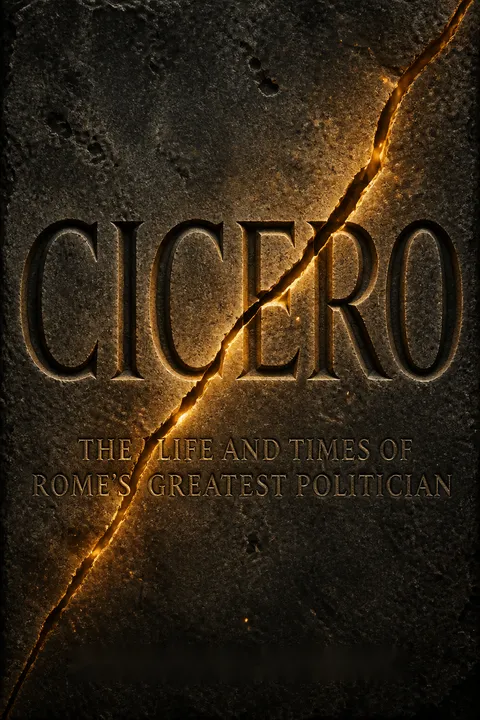
Cicero: The Life and Times of Rome's Greatest Politician by Anthony Everitt is widely praised for its engaging narrative and ability to bring ancient Rome to life. Readers appreciate Everitt's balanced portrayal of Cicero, highlighting both his strengths and flaws. The book is commended for its accessibility to general readers while providing enough depth for those familiar with Roman history. Some critics note occasional speculative elements and a possible bias towards rehabilitating Cicero's reputation. Overall, it's considered a valuable introduction to Cicero's life and the tumultuous period of the late Roman Republic.
People Also Read


Glossary
cursus honorum
Roman officeholding ladderThe sequence of public offices through which an ambitious Roman politician normally advanced. It began with junior roles such as Quaestor and could proceed through Aedile and Praetor to Consul. Offices were generally annual and subject to age and eligibility rules. Following the sequence gave politicians experience and status, but competition for office also encouraged bribery and personal alliance-building.
imperium
Official command authorityThe formal authority held by certain Roman magistrates, especially Consuls and Praetors, to command troops and exercise executive power. It was limited by office, place, and term, and was symbolized by attendants carrying fasces. In practice, the authority could become politically dangerous when a commander retained loyal soldiers or used a provincial command to build personal power.
clientela
Patron-client obligationsA Roman system of reciprocal dependence linking a patron to clients of lower social standing. A patron could offer legal help, advice, food, and access to influential people. Clients returned support, attendance, and political or practical assistance. Because Rome lacked many public services, these durable personal ties helped people navigate society and helped connect local communities to political power.
amicitia
Political friendship networkA relationship between Roman political equals that could include genuine affection but also mutual obligations, favors, and cooperation. It was more formal and politically consequential than the modern idea of friendship alone. Such ties could cross factional lines, connect powerful families, and provide channels for negotiation. The bond could be valuable, but it did not guarantee that interests would remain aligned.
optimates
Senatorial traditionalistsA loose political label for Romans who favored the Senate's authority and the established political order. The optimates were not a modern political party with a fixed membership or unified program. Their interests often aligned with aristocratic families, but politicians could cooperate with them tactically. Their resistance to reform helped preserve inherited privileges and contributed to political deadlock.
populares
Politicians appealing to the peopleA loose label for politicians who used popular assemblies and public support to challenge or bypass the Senate. Populares were not members of a formal party and did not share a single platform. Some proposed measures such as land redistribution or debt relief, while others used popular politics to advance personal careers. The term describes a political approach and constituency, not a unified ideology.
concordia ordinum
Harmony among social classesCicero's political aspiration for cooperation among Rome's main social and political groups, especially the Senate, the equites, and the people. He believed that agreement among these groups could stabilize the Republic and preserve senatorial leadership without ignoring popular pressure. The ideal captured his preference for mediation, but he struggled to turn it into a durable coalition or a practical reform program.
senatusconsultum ultimum
Senate emergency decreeA resolution calling on the Consuls and other officials to protect the state during an emergency. It could be invoked when leaders believed that ordinary procedures were insufficient to meet a threat. Its legal reach was contested, particularly over whether it allowed officials to execute Roman citizens without trial. Cicero relied on it during the Catilinarian crisis, a choice that later exposed him to prosecution and exile.
mixed constitution
Shared, balanced governmentCicero's preferred model of government, combining elements of monarchy, aristocracy, and democracy. In Rome, these corresponded broadly to executive magistrates, the Senate, and popular elections. The parts were meant to restrain one another and prevent domination by a single ruler, elite group, or popular majority. Cicero regarded the model as a refined version of Rome's tradition, though it did not solve the Republic's underlying social and military crises.
Philippics
Speeches against AntonyThe name Cicero gave to his series of political speeches attacking Mark Antony after Julius Caesar's assassination. The title echoed the Greek orator Demosthenes' speeches against Philip of Macedon. Cicero used them to portray Antony as a threat to the Republic, rally the Senate and public, and support the military campaign against him. Their force helped make Cicero a central political actor, but also made him Antony's mortal enemy.
FAQ
What's Cicero: The Life and Times of Rome's Greatest Politician about?
- Biographical Focus: The book chronicles the life of Marcus Tullius Cicero, a prominent Roman statesman, orator, and philosopher.
- Historical Context: It explores the political dynamics of the late Roman Republic, including the crises and civil wars that led to the shift from republicanism to dictatorship.
- Cicero's Influence: The narrative highlights Cicero's contributions to political thought, particularly his ideas on governance and the mixed constitution.
Why should I read Cicero: The Life and Times of Rome's Greatest Politician?
- Engaging Narrative: Anthony Everitt presents Cicero's life in a lively and dramatic manner, making the historical context accessible and engaging.
- Lessons from History: The book offers insights into political machinations that resonate with contemporary issues, highlighting the timeless nature of power struggles.
- Richly Researched: Everitt's thorough research provides a well-rounded portrait of Cicero, valuable for those interested in Roman history or political philosophy.
What are the key takeaways of Cicero: The Life and Times of Rome's Greatest Politician?
- Cicero's Political Philosophy: The book illustrates Cicero's belief in a balanced government, combining elements of monarchy, aristocracy, and democracy.
- The Role of Oratory: Cicero's mastery of rhetoric is emphasized as a crucial tool for political influence and shaping public opinion.
- Crisis and Response: The narrative highlights Cicero's navigation of crises, demonstrating the importance of leadership and moral integrity.
What are the best quotes from Cicero: The Life and Times of Rome's Greatest Politician and what do they mean?
- "Cicero mastered the essence of politics.": This underscores Cicero's understanding of ethical governance and the distinction between authority and power.
- "He came to stand for future generations as a model of defiance against tyranny.": Reflects Cicero's legacy as a champion of the Republic, inspiring later democratic movements.
- "The motives of human behavior do not change.": Suggests that while political contexts evolve, fundamental human motivations remain constant.
How did Cicero's background influence his political career?
- Provincial Origins: Born in Arpinum, Cicero was a "New Man" in Roman politics, which shaped his perspective and fueled his ambition.
- Education and Rhetoric: His education in rhetoric and philosophy provided him with the tools to excel as an orator.
- Clientela Network: Cicero leveraged his family's connections, building a strong clientela crucial for his political success.
What role did Cicero play during the decline of the Roman Republic?
- Defender of the Republic: Cicero positioned himself as a staunch defender of republican values during power struggles.
- Political Maneuvering: He navigated complex political landscapes, often aligning with various factions to maintain stability.
- Influence on Governance: Cicero's writings and speeches articulated the need for a balanced government, influencing future political thought.
How did Cicero's oratory skills impact his career?
- Public Speaking Mastery: Cicero's ability to articulate complex ideas and persuade audiences was pivotal in his rise to prominence.
- Political Influence: His speeches swayed public opinion and influenced legislative decisions, demonstrating rhetoric's power.
- Legacy of Oratory: Cicero's techniques set a standard for future speakers and remain a subject of study in rhetoric.
What was the significance of the Catilinarian conspiracy in Cicero's life?
- Political Turning Point: The conspiracy solidified Cicero's reputation as a defender of the Republic and a capable leader.
- Moral Dilemma: Cicero faced ethical challenges in dealing with the conspirators, balancing security with justice.
- Legacy of Leadership: His handling of the conspiracy showcased his leadership qualities and commitment to the Republic.
How does Cicero: The Life and Times of Rome's Greatest Politician portray Cicero's relationship with Julius Caesar?
- Mutual Respect: The book illustrates a complex relationship characterized by mutual respect despite differing ideologies.
- Political Maneuvering: Cicero navigated the political landscape created by Caesar's rise, sometimes supporting him while critiquing his tendencies.
- Cicero's Dilemma: The tension between Cicero's commitment to the Republic and his interactions with Caesar highlights political challenges.
What philosophical ideas does Cicero explore in Cicero: The Life and Times of Rome's Greatest Politician?
- Natural Law: Cicero argues that law is inherent in the universe, positing that human law should reflect this natural order.
- Role of Oratory: He emphasizes rhetoric as a means of fostering virtue and moral conduct in public life.
- Mixed Government: Cicero advocates for a balanced constitution to safeguard against tyranny and promote the common good.
How does Cicero: The Life and Times of Rome's Greatest Politician address the theme of power and corruption?
- Corruption in Politics: The narrative highlights pervasive corruption in Roman politics, undermining the Republic's values.
- Cicero's Struggle: His efforts to uphold principles in a corrupt environment serve as a central theme.
- Consequences of Power: The book examines how the pursuit of power often leads to moral compromise and downfall.
What lessons can modern readers learn from Cicero: The Life and Times of Rome's Greatest Politician?
- Importance of Civic Engagement: The book underscores the necessity of active participation in politics and upholding democratic values.
- Value of Integrity: Cicero's life serves as a reminder of the importance of moral integrity in leadership.
- Historical Awareness: Understanding Cicero's experiences provides insights into contemporary political challenges.
Download PDF
Download EPUB
.epub digital book format is ideal for reading ebooks on phones, tablets, and e-readers.








