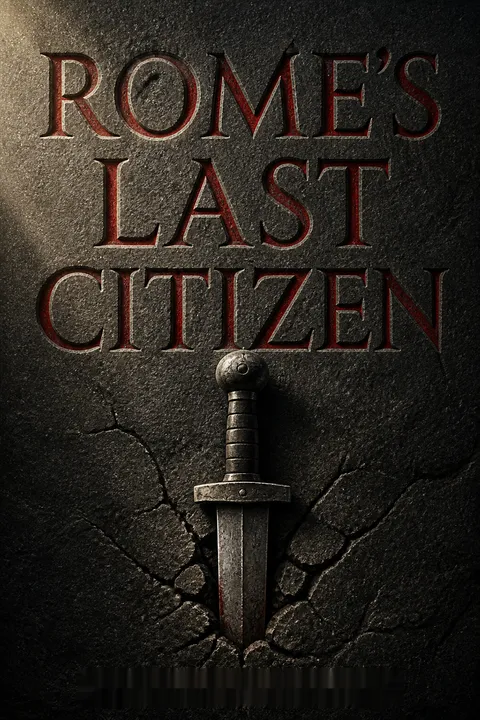


Key Takeaways
Cato's purity made him powerful, then helped make the Republic ungovernable
A living emblem. In 1778, with his army exhausted at Valley Forge, George Washington staged a play about a Roman senator who chose death over submission to Caesar. Cato had become a symbol of liberty. The historical man was less simple: a Stoic, soldier, and aristocrat whose public authority came from conspicuous austerity and refusal to compromise. He could command admiration without holding the highest office, and he treated his own conduct as an argument against Rome's corruption.
The cost of certainty. Cato warned accurately that powerful generals were undermining the Republic. But his all-or-nothing opposition alienated potential allies, including Pompey, and repeatedly blocked political deals. The book's central tension is that Cato fought to preserve republican government while helping make it harder to govern. His example became a beacon for later generations, but in his own time his inflexibility helped clear the way for Caesar.
What's striking is that Cato's influence did not depend on winning office. His disciplined life acted as a kind of public credential, allowing him to shame powerful rivals and define what counted as legitimate. Yet moral authority is not the same as governing capacity. The distinction matters because public life rewards both trustworthy standards and workable agreements. Cato's case is not an argument for abandoning principle; it is a warning that principle without a theory of coalition can become a force of veto rather than a force of repair.
A republic can look mighty while its armies answer to generals
A fragile empire. Rome ruled vast territories, but its political system was built for a much smaller city. Wealth from conquest enriched a few, slave plantations displaced small farmers, and Italians who supplied soldiers were denied full citizenship. Reformers Tiberius and Gaius Gracchus tried to address land and citizenship disputes; both were killed, and their deaths normalized political violence. Cato's guardian, Marcus Livius Drusus, was murdered after proposing citizenship for Italy's allies.
Soldiers with patrons. As the pool of landowning recruits shrank, Gaius Marius opened military service to the propertyless. This solved a recruitment crisis but made soldiers dependent on commanders who could secure land and spoils. Sulla then marched an army into Rome, seized power, and killed thousands in political purges. Later, Pompey and Crassus used their armies to pressure elections. Rome still had offices, laws, and a Senate, but armed loyalty was shifting from the state to individual leaders.
The book makes institutional decay visible through a change in allegiance: soldiers once served a republic, then increasingly relied on commanders for their futures. That shift helps explain why constitutional rules alone could not restrain ambitious generals. The same pattern appears in the contrast between formal authority and practical control: the Senate could issue decrees, but it could not reliably command the men carrying weapons. Cato's alarm was justified, though his preference for restoring an idealized past offered little answer to the material incentives pulling the army apart.
Treat personal virtue as a start, not a substitute for durable reform
Virtue in public. Cato practiced the austerity he preached: he walked rather than rode, shared soldiers' hardships, and refused the usual campaign aide who whispered voters' names to him. As quaestor, the official overseeing Rome's finances, he dismissed corrupt clerks, trained those who had made honest mistakes, and pursued men who had profited from Sulla's executions. His reputation made theft from the treasury harder while he was watching.
Reform without machinery. Cato's oversight depended on his own relentless presence. The moment he left office, a fellow quaestor began forgiving debts improperly, and Cato had to return to stop him. The treasury's underlying routines had not changed enough to survive his absence. His later Cyprus mission raised a similar question: he meticulously sold a king's property for Rome, but the records that could verify every transaction were lost, and the sources leave doubts about whether the required accounting procedures were followed.
Cato's career anticipates a familiar governance problem: integrity at the top can deter misconduct, but it cannot reliably replace institutions that detect and punish it. His personal vigilance produced real results, yet those results faded when he departed. That does not make exemplary conduct worthless. It can establish a standard and expose what ordinary procedure tolerates. The harder question is whether a reformer will convert moral attention into durable rules, staffing, and oversight. Cato excelled at making corruption visible, but his example proved easier to admire than to reproduce.
Compromise can preserve a republic, while purity can isolate its defenders
An offer refused. Pompey returned from the East with enormous prestige, then sought the Senate's approval for his settlements and land for his veterans. He also offered a marriage alliance with Cato's daughter, a conventional way to bind political families together. Cato rejected the proposal, saying he would not be won through the women of his household. He feared Pompey's ambition, but the refusal also discarded a chance to draw Rome's strongest general closer to the Senate.
An opponent made stronger. Cato continued to block Pompey's requests, even after Pompey dismissed his army and sought ordinary political approval. Frustrated, Pompey eventually allied with Caesar and Crassus. Cato's suspicion of Pompey was not baseless, and accommodation carried real risks. But by treating alliance as contamination, Cato helped push Pompey toward the very partnership he feared. His principle protected his personal independence while narrowing the Republic's options.
This episode turns coalition building into a moral test, not merely a tactical one. A marriage alliance could look like corrupt patronage, yet refusing every informal bond left political power to men willing to form them. Cato's concern was that a general should not purchase legitimacy through family connections. The counterpoint is that institutions often depend on relationships before they can enforce rules. The lesson is not that every bargain is wise. It is that refusing to distinguish a limited, accountable compromise from surrender can make the feared outcome more likely.
Meet popular grievances before demagogues turn them into weapons
A real constituency. Catiline drew support from debtors, unemployed city residents, and veterans who believed their land grants had failed them. He promised redistribution and cancellation of debts, proposals that threatened wealthy creditors but appealed to people with few lawful routes to relief. His revolt failed, but it exposed a political crisis the Senate could not dismiss as one man's plot.
A pragmatic turn. As tribune, Cato expanded subsidized grain eligibility from about 40,000 people to as many as 200,000, at a cost of 10 to 15 percent of the budget. The famously frugal conservative backed this measure partly to calm unrest and weaken Caesar's appeal. It offered immediate help without redistributing land or canceling debt. The move shows Cato could respond strategically when pressure demanded it, even though he continued to resist deeper reforms.
The grain policy recognizes that public order cannot be separated from ordinary material insecurity. In the book's account, food subsidies were both welfare and political pressure relief: they helped households while reducing the appeal of revolutionary promises. That is a more complicated picture than a simple contest between principled conservatives and cynical populists. Still, relief can quiet a crisis without resolving its causes. Cato's measure addressed hunger in the city, while land concentration, debt, and dependence on enslaved labor remained part of the larger system that produced instability.
Obstruction can expose danger, but also teach opponents to rule around you
The veto becomes a strategy. Cato repeatedly used long speeches and procedural delays to stop measures he saw as dangerous. He blocked tax-contract relief, Pompey's land proposal, and Caesar's request to claim a triumph before running for consul. The methods were lawful and sometimes exposed self-serving deals. But the Senate also became unable to act, while the people and tribunes remained available as an alternative route to legislation.
A new alliance. Caesar exploited the deadlock. He joined forces with Pompey and Crassus, then took a land bill directly to the popular assembly after Cato's resistance stopped it in the Senate. The resulting alliance concentrated military and political power in three men. Cato's obstruction did not create their ambitions, but it helped make the Senate appear irrelevant and gave Caesar a persuasive story: he had been forced to appeal to the people by an obstinate elite.
Procedural resistance has a double edge. It can slow a dangerous concentration of power, but persistent obstruction can also discredit the institution being defended and encourage rivals to bypass it. That is the distinctive strategic failure here: Cato treated each proposal as a separate threat, while Caesar turned the pattern of blockage into a broader political advantage. Yet the reverse risk matters too. Calling every obstruction destructive can excuse executives who use public frustration to weaken checks. The relevant question is whether resistance preserves a credible path to governing.
A principled death can win the story after losing the state
The last refuge. After Caesar defeated the republican forces in Africa, Cato organized the defense of Utica and urged its leaders not to surrender immediately. He refused overall command because another former consul had the legal claim. When resistance collapsed, Cato helped civilians and senators escape, but would not ask Caesar for mercy for himself. He believed accepting pardon would recognize Caesar's authority.
A death with an audience. Cato read Plato's account of Socrates before attempting suicide. His first wound did not kill him, and when doctors tried to save him, he reopened it. Caesar could have pardoned him, but Cato's death denied Caesar the public image of magnanimity. The episode was neither effortless Stoic calm nor a clean victory: Cato panicked when his sword was missing, injured his hand, and struggled. His final act was also a carefully chosen political statement.
The scene resists easy celebration. Cato's death gave his opposition a powerful symbol, but it also raises the uncomfortable question of whether an act can be both sincere and staged. His choices shaped how others would interpret him, and the account preserves vulnerability alongside resolve. That complexity matters when martyrdom is treated as proof that a cause was right. A person's willingness to die can demonstrate conviction; it cannot by itself establish the wisdom, fairness, or likely consequences of the political program being defended.
Political symbols outlive their meaning, and can serve causes their heroes never endorsed
A reusable Cato. After his death, Cato became a political symbol. Cicero praised him as a model Stoic and republican; Caesar's hostile pamphlet only strengthened his reputation. The poet Lucan made the defeated Cato a moral victor. Christians admired his discipline but condemned his suicide. Dante placed him at the entrance to Purgatory, recasting his commitment to Roman freedom as a figure for spiritual liberation.
From Rome to revolution. In the eighteenth century, Addison's immensely popular play made Cato a household name. Washington staged it for his soldiers at Valley Forge, and American revolutionaries invoked its defense of liberty. But Roman libertas was not modern democratic equality: it largely meant freedom from rule by one dominant man within an aristocratic republic. Later audiences adapted Cato to their own causes, including causes he would not have recognized.
Cato's afterlife shows how political memory works: a vivid person becomes a portable symbol, and each generation selects the parts that fit its struggle. That can preserve neglected questions about power, civic duty, and resistance. It can also conceal the historical limits of the figure being borrowed. The book's most useful distinction is between influence and endorsement. Cato helped shape later language about liberty, but that does not make him a modern democrat, nor does a tradition's appeal to him settle whether its cause is just.
Analysis
This biography is strongest when it treats Cato not as a timeless saint or a stubborn fool, but as a political actor whose virtues had consequences. Its narrative is built around a paradox: Cato's visible integrity gave him unusual authority, yet he often used that authority to block rather than build. His warnings about personal armies, ambitious generals, and constitutional erosion proved prescient. His responses, however, repeatedly narrowed the coalition capable of resisting those dangers. His refusal of Pompey's marriage offer is the clearest hinge: it protected his independence, but helped push Pompey toward Caesar. His later insistence on peace between the generals came only after years of helping make their alliance possible.
The book also challenges a comforting model of reform. Cato's stewardship of the treasury and his prosecutions of Sulla's beneficiaries show that one conscientious official can produce concrete gains. Yet the instant reversion to corrupt practice after his departure reveals how little a personal example can institutionalize. His work in Cyprus sharpens the point: the celebrated austerity of the administrator coexisted with a compromised imperial mission and missing financial records. Virtue does not exempt a public figure from scrutiny; it can make scrutiny more necessary.
The treatment of liberty is equally important. Cato defended Roman libertas, an aristocratic freedom from domination by a single ruler, not universal political equality. Later generations transformed that limited ideal into a symbol for broader movements, from Christian moral debate to American revolution. This transformation is neither simple continuity nor mere distortion. Political traditions survive by being reinterpreted, but every reinterpretation risks making the past endorse values it did not contain.
The book's implicit lesson is therefore double-edged. Leaders need moral independence from power, especially when law is being bent to personal ambition. They also need strategic judgment about when compromise preserves institutions and when it merely launders domination. Cato became Rome's last citizen because he embodied a republic in his own person. That was a remarkable achievement, and a political failure: no republic can safely depend on having only one Cato.
Review Summary
Rome's Last Citizen is praised for its engaging narrative and balanced portrayal of Cato the Younger. Readers appreciate the book's exploration of Roman politics, Stoic philosophy, and Cato's complex character. Many find parallels between ancient Rome and modern politics. While some criticize the authors' interpretations or wish for more depth, most reviewers commend the book for its readability and historical insights. The biography is seen as an excellent introduction to Roman history and a thought-provoking examination of Cato's legacy.
People Also Read





Glossary
mos maiorum
ancestral Roman customThe inherited customs and precedents of Rome's ancestors, invoked as a guide to proper public and private conduct. In Cato's politics, the mos maiorum represented the austere traditions he believed were being corrupted by wealth, foreign influence, and ambitious leaders. Because its meaning was contested, rival politicians could claim that their own policies defended Rome's ancestral way.
optimates
senatorial traditionalistsA loose political tendency among Roman aristocrats who defended the Senate's authority and opposed measures they considered threats from popular assemblies or ambitious leaders. The optimates were not a formal party with fixed membership or a unified program. Cato became their most conspicuous spokesman, though his uncompromising approach often frustrated other senators who shared his concern about Caesar.
populares
politicians appealing to the peopleA loose style of Roman politics that used popular assemblies and tribunes to advance policies presented as serving the people. Politicians associated with the populares supported causes such as grain subsidies, land distribution, or expanded citizenship. The label did not define a formal party or prove a politician's motives were altruistic; elite ambition and popular appeal often coexisted.
cursus honorum
Roman offices in sequenceThe expected progression of public offices for a Roman political career, with rules about eligibility and intervals between positions. Sulla attempted to formalize the sequence and prevent rapid accumulation of office. Generals such as Pompey and Caesar later bypassed or bent these expectations, making the struggle over the cursus honorum part of a larger conflict about whether customary limits could restrain personal power.
Stoicism
virtue as life's secure goodA Greek philosophical school that taught that virtue, guided by reason, was the only true good, while wealth, comfort, pain, and even life itself were secondary. Cato adopted Stoicism as a practical discipline, training himself to endure hardship and control emotion. Its promise of inner independence suited his character, though his grief, anger, and political passions exposed the strain between ideal and practice.
libertas
freedom from one-man ruleA Roman political ideal centered on resistance to kingship or domination by a single powerful citizen. In the late Republic, it was closely tied to the aristocracy's ability to compete for office and influence without one man ending that contest. Cato treated libertas as the essence of the Republic, but it did not mean equal power or modern democratic liberty for all inhabitants.
Tabulae Novae
proposed cancellation of debtsLiterally, new tablets or clean account books, this was the name for proposals to cancel or radically reset debts. Catiline used the promise as part of a broader appeal to debtors and the economically distressed. The policy threatened creditors and established wealth, while its popularity exposed the depth of Rome's financial hardship and the limited credibility of conventional political remedies.
publicani
private tax contractorsBusinessmen or companies who contracted with Rome to collect taxes and other public revenues, often paying the state an agreed sum and keeping collections above that amount. Their work made provincial taxation profitable for private investors but created incentives for aggressive extraction. Disputes over their contracts revealed how economic interests shaped Senate politics and how Cato's strict defense of agreements could damage state revenue.
FAQ
1. What’s Rome’s Last Citizen by Rob Goodman about?
- Biography of Cato the Younger: The book is a detailed biography of Marcus Porcius Cato the Younger, a Roman senator, Stoic philosopher, and fierce opponent of Julius Caesar.
- Political and historical context: It situates Cato’s life within the turbulent final century of the Roman Republic, marked by civil wars, corruption, and the rise of autocratic leaders.
- Themes of liberty and virtue: The narrative explores Cato’s unwavering commitment to republican ideals, his resistance to tyranny, and how his story became a symbol of civic virtue.
- Enduring legacy: The book traces how Cato’s life and death influenced later political thought, literature, and revolutions, making him an icon of principled resistance.
2. Why should I read Rome’s Last Citizen by Rob Goodman?
- Insight into Roman history: The book offers a vivid, accessible account of the late Roman Republic’s political turmoil through the lens of one of its most principled figures.
- Exploration of Stoicism in action: Readers gain a deep understanding of Stoic philosophy as lived by Cato, adding philosophical depth to the historical narrative.
- Relevance to modern politics: The book draws connections between Cato’s legacy and contemporary ideas of liberty, republicanism, and political virtue.
- Engaging storytelling: Rob Goodman combines rigorous scholarship with compelling storytelling, making complex history and philosophy approachable.
3. Who was Marcus Porcius Cato the Younger, as presented in Rome’s Last Citizen by Rob Goodman?
- Stoic senator and soldier: Cato was a Roman aristocrat, soldier, and senator known for his austere lifestyle and fierce opposition to Julius Caesar.
- Symbol of republican virtue: He represented the optimates, defending Rome’s traditional constitution and values against populist leaders and corruption.
- Unyielding political figure: Cato’s refusal to compromise made him both admired and politically isolated, contributing to the Republic’s fall.
- Political martyr: His suicide rather than submission to Caesar cemented his legacy as a symbol of liberty and resistance to tyranny.
4. How does Rome’s Last Citizen by Rob Goodman describe the political environment of the late Roman Republic?
- Turbulent and corrupt: The Republic was powerful but plagued by bribery, scandals, and social inequality, with political institutions in decline.
- Factionalism and violence: The populares and optimates factions vied for power, often resorting to violence, assassinations, and civil war.
- Rise of military strongmen: Generals like Marius, Sulla, Pompey, Crassus, and Caesar commanded personal armies, undermining republican governance.
- Crisis of governance: The Senate became increasingly ineffective, with laws and offices manipulated or ignored, leading to constitutional breakdown.
5. What role did Stoicism play in Cato’s life according to Rome’s Last Citizen by Rob Goodman?
- Guiding philosophy: Stoicism was central to Cato’s worldview, teaching him to value virtue above all and endure hardship with dignity.
- Practical application: Cato used Stoicism as a practical guide for political and personal discipline, not just as an academic pursuit.
- Countercultural stance: His Stoic beliefs led him to reject societal conventions he saw as corrupt, such as bribery and moral laxity.
- Public example: Cato’s embodiment of Stoic ideals made him a model of integrity, though he was sometimes accused of hypocrisy.
6. How did Cato the Younger oppose Julius Caesar and the triumvirate, as detailed in Rome’s Last Citizen by Rob Goodman?
- Political obstruction: Cato used filibustering and legal tactics to block Caesar’s and the triumvirs’ agendas, including land reforms and military commands.
- Moral exemplar: He sought to rally the optimates and the public by embodying republican virtues, even as his influence waned.
- Public protest: Cato’s symbolic acts, such as refusing to swear oaths or accept bribes, were statements of resistance.
- Final resistance: He remained a vocal opponent until the civil war, urging others to resist Caesar’s rise to autocracy.
7. What were Cato’s key political actions and stances highlighted in Rome’s Last Citizen by Rob Goodman?
- Opposition to populism: Cato consistently opposed populist reforms like land redistribution and debt cancellation, seeing them as threats to stability.
- Resistance to powerful generals: He distrusted both Pompey and Caesar, opposing their ambitions and reforms.
- Use of obstruction tactics: Cato pioneered filibustering and other forms of political obstruction to block legislation he opposed.
- Moral rigor in office: As quaestor and tribune, he fought corruption and expanded the grain dole while maintaining his austere principles.
8. How does Rome’s Last Citizen by Rob Goodman portray Cato’s effectiveness as a politician?
- Admired but limited: Cato was respected for his integrity and oratory but often politically ineffective and outnumbered.
- Performance over power: His public acts and speeches were more symbolic than practical, sometimes alienating potential allies.
- Coalition challenges: His refusal to compromise made it difficult to build lasting coalitions with figures like Cicero and Pompey.
- Legacy beyond politics: Despite limited political success, his steadfastness left a powerful legacy that outlasted his defeats.
9. How did Cato’s personal life and character influence his political career in Rome’s Last Citizen by Rob Goodman?
- Temper and austerity: Cato’s volcanic temper and extreme frugality inspired both admiration and ridicule.
- Complex relationships: His marital history, including a controversial arrangement involving his wife Marcia, reflected tensions between personal and political life.
- Philosophical commitment: His Stoic beliefs shaped his public persona and decisions, emphasizing virtue even at personal cost.
- Public example over writing: Cato promoted himself through conduct rather than written works, leaving little direct record.
10. What was the significance of Cato’s suicide in Rome’s Last Citizen by Rob Goodman?
- Ultimate act of defiance: Cato’s suicide at Utica symbolized his refusal to live under Caesar’s rule, embodying his Stoic belief in freedom and virtue.
- Political statement: His death was as much a political act as a personal one, signaling resistance to tyranny.
- Martyrdom and myth: Cato’s suicide was mythologized by contemporaries and later generations as the ultimate sacrifice for liberty.
- Inspiration for future movements: His death inspired later political movements, literature, and revolutions as a symbol of principled resistance.
11. What impact did Cato have on later political thought and culture, according to Rome’s Last Citizen by Rob Goodman?
- Symbol of liberty: Cato became a symbol of republican virtue and liberty, inspiring Enlightenment thinkers and revolutionaries.
- Influence on American founders: His example was invoked during the American Revolution by figures like George Washington.
- Literary legacy: Cato’s story was retold in works like Addison’s Cato: A Tragedy, Lucan’s Pharsalia, and Dante’s Divine Comedy.
- Philosophical debates: His Stoicism influenced later debates on virtue, suicide, and resistance to tyranny.
12. What are the key takeaways and best quotes from Rome’s Last Citizen by Rob Goodman, and what do they mean?
- The cost of political purity: Cato’s refusal to compromise shows the dangers and costs of inflexible idealism in politics.
- Fragility of republics: The book highlights how internal divisions and corruption can erode democratic institutions and lead to authoritarianism.
- Enduring value of virtue: Despite defeat, Cato’s life inspired later generations, emphasizing the importance of integrity and resistance to tyranny.
- Notable quotes: “Cato made a career out of purity, out of his refusal to give an inch in the face of pressure to compromise and deal.” “The victorious cause was dear to the gods; the lost cause, to Cato.” These capture his uncompromising nature and his role as a champion of lost republican ideals.
Download PDF
Download EPUB
.epub digital book format is ideal for reading ebooks on phones, tablets, and e-readers.








