

Key Takeaways
A crucified slave became the West's unlikely moral center
A shocking reversal. In Roman society, crucifixion marked a person as contemptible and disposable. Jesus, executed by that punishment, was proclaimed divine. The claim overturned familiar measures of greatness: power no longer proved virtue, and suffering could command attention rather than scorn. Early Christians first struggled to depict the cross; centuries later, artists showed Christ not as an untroubled victor but as a suffering human being. Medieval viewers were invited to feel compassion for the person on the cross and to imagine that God stood close to the poor and powerless.
A changed moral lens. This reversal did not abolish cruelty or inequality. It did, however, make them harder to regard as morally ordinary. The cross became a continuing challenge to societies that celebrated the powerful while ignoring the people on whose pain their prosperity rested.
The book’s opening move is powerful because it treats an image, not only a doctrine, as a force in history. A public symbol can reorganize who deserves attention and sympathy. The cross does not automatically produce humane institutions; Christian societies repeatedly tolerated the very exploitation their central image condemned. Its influence is better understood as a persistent source of moral friction, one that made injustice newly arguable even when it did not end it.
Treat Western common sense as Christian inheritance, not human nature
A hidden inheritance. The book argues that people in the West can retain Christian-shaped assumptions without believing Christian claims. The idea that conscience should guide law, that the poor possess moral importance, and that church and state occupy distinct spheres all developed within Christian history. Even the familiar categories of “religion,” “atheist,” and “secular” carry meanings formed by that history. The calendar offers a small daily reminder: dating years from Christ’s birth places Christian chronology into ordinary life, whether or not anyone notices.
Not a claim of ownership. The point is not that only Christians can hold these values. It is that their apparent self-evidence has a history. Treating them as timeless human instincts can hide how unusual, contested, and culturally specific they once were.
This distinction between a value’s present reach and its historical origin is essential. An idea can travel far beyond the community that first gave it shape, becoming available to people who reject its original theology. That is not proof the idea is false or exclusively Christian. It is a prompt to ask how apparently universal standards were formed, who was included in them, and who had to struggle to make them real.
Make moral membership wider than tribe, law, or ancestry
Paul’s boundary-breaking claim. The apostle Paul took a Jewish belief in one God and proclaimed that non-Jews could belong to God’s people without becoming Jews. Faith in Jesus, rather than ancestry or full observance of Jewish law, became the basis of membership. In Roman Galatia, this message challenged both local loyalties and the imperial cult, which presented Caesar as a divine ruler. Paul’s message centred on a crucified figure, not a victorious emperor, and offered a shared identity across lines of ethnicity, status, and sex.
A universal promise with limits. Paul’s ideal did not erase every hierarchy. His letters also preserve rules that subordinate women and accept slavery. The importance lies in the tension: a universal moral community was proclaimed, while inherited social arrangements remained difficult to dislodge.
Universal membership is not the same as equal treatment in practice. The gap between Paul’s expansive spiritual claim and his accommodation of existing hierarchies shows how moral change often arrives unevenly. A community can challenge one boundary while preserving another. That tension makes the tradition historically consequential, but also warns against treating inclusive language as evidence that exclusion has already ended.
Ideas endure when institutions teach them and enforce them
Belief needed infrastructure. Early Christians did not spread only through private conviction. They formed churches, preserved teachings, cared for members, and debated which accounts of Jesus were authoritative. Irenaeus defended a shared body of belief against rival interpretations. Later, Constantine summoned bishops to Nicaea, where they produced a creed intended to unify the empire’s Christians. Across centuries, bishops, monasteries, schools, copied books, and local priests carried Christian teaching into daily life.
Unity can become coercion. Once Christianity gained imperial support, institutions that had protected a vulnerable minority could police belief and punish dissent. The same faith that had produced martyrs also built a society in which authorities persecuted people labelled heretics. Ideas acquire reach through organizations, but organizations also decide whose version of an idea counts.
The narrative avoids explaining cultural change as a sudden conversion of hearts. Repeated teaching, local care, texts, and political backing make beliefs durable across generations. Yet institutional success changes the moral problem: a movement that once needed protection can acquire the power to deny it to others. The account therefore treats institutional strength as neither inherently virtuous nor merely corrupting. It amplifies a tradition’s capacity to help and to control.
Turn compassion into institutions, not occasional generosity
Care became organized. Christian communities collected money for widows, orphans, prisoners, the sick, and travellers. In fourth-century Cappadocia, Basil founded a large complex that offered shelter and medical care; his sister Macrina rescued abandoned infants. Their actions expressed a belief that even people society treated as burdens carried divine dignity. This was not simply private kindness. As congregations grew and wealthy members contributed, networks of poor relief became part of urban Christian life.
A standard that judges wealth. Christian charity did not end poverty or slavery. Gregory of Nyssa condemned slave ownership, but most Christians continued to accept slavery as part of social order. The tradition nevertheless made wealth answerable to the needs of the poor, creating a tension between possession and obligation that later generations could intensify.
The move from generosity to organized care matters because a dependable institution can serve people beyond the reach of an individual benefactor. It also changes what a society considers a public responsibility. The book’s examples show both the force and the limitation of charity: it could rescue children and care for the sick while leaving the structures that produced vulnerability intact. Compassion can relieve suffering without yet making its causes unacceptable.
Reform can free people, then build new machinery of coercion
Revolution in the Church. In the eleventh century, Pope Gregory VII asserted that the Church should answer to God rather than to kings. His conflict with Henry IV culminated in the emperor’s humiliating appeal for absolution at Canossa. The reform movement helped separate church from state and strengthened legal institutions. Centuries later, Luther challenged papal authority by insisting that scripture and conscience outranked church hierarchy. Both movements promised liberation from corrupt power.
The cost of purification. Reformers also drew boundaries and punished those they judged impure. The Albigensian crusade, inquisitions, and the execution of heretics show how a campaign to cleanse society could turn coercive. Luther’s appeal to individual conscience likewise helped unleash interpretations he could not control. A demand for freedom can become a demand for conformity when one group claims exclusive access to truth.
The repeated cycle is more revealing than a simple story of progress: reformers challenge an established authority, gain power, and then face demands from people who consider their own reform incomplete. This helps explain why movements of liberation can reproduce the control they opposed. It does not make reform futile. It does make accountability crucial, especially when leaders claim that coercion serves a higher moral purpose.
Read secular rights as inheritance, not neutral inventions
Old ideas in new language. Medieval canon lawyers argued that natural law could override customs and laws that contradicted basic justice. Some concluded that a starving person who took food could not be treated as an ordinary criminal, and that the wealthy had obligations to the poor. These arguments helped shape the later language of human rights. The French Revolution presented rights as universal and independent of religion, while the American republic combined religious liberty with a political order formed by Protestant traditions.
Categories travel too. The book also shows how European officials applied Christian-derived categories to other societies. British administrators framed Hindu practices as part of a “religion” distinct from public life, a division that had no direct equivalent in Indian languages. A supposedly neutral framework can carry the history of the society that created it.
A concept’s origin does not determine who may use it. Rights can become genuinely universal in application even when their historical path is particular. The important caution is against confusing broad adoption with neutrality. Categories such as religion and secular life shape what can be recognized, regulated, or excluded. Their history deserves scrutiny precisely because they now seem like ordinary descriptions rather than inherited ways of organizing society.
Let Christian ideals indict the societies that claim them
Abolition from the margins. Benjamin Lay, a Quaker of small stature and fierce conviction, confronted slave-owning Christians in eighteenth-century America. He condemned the trade in people as incompatible with the belief that all humans were made by God. Most Christians, including Quakers, initially accepted slavery. Lay’s public protests helped push his community toward opposition. Within decades, Evangelicals and other campaigners had turned abolition into a mass cause, and governments began treating the slave trade as an offense against humanity.
Moral progress has a complicated record. The campaign drew on Christian ideas of shared dignity, but it also accompanied empire. British opposition to slavery increased the country’s moral prestige and helped justify further intervention abroad. A principle can challenge its own society while also being used to legitimize power over others.
The abolition story shows how a tradition can supply tools for criticizing its own institutions. That is more persuasive than portraying moral change as either pure hypocrisy or automatic progress. The same campaign could oppose exploitation and expand imperial influence. Its achievements remain real, but they do not excuse the political uses made of them. Universal language becomes most credible when its advocates accept that it applies to their own power too.
Watch anti-Christian revolutions reproduce Christianity's apocalyptic machinery
The old pattern in new uniforms. Marx rejected religion as an illusion that helped the powerful, yet his vision of history still promised a decisive end to exploitation and a classless society. The French Revolution had similarly pursued a purified new order, sometimes through executions framed as necessary justice. Nazi leaders borrowed religious imagery while attacking Christian teachings about human equality and care for the weak. In each case, a movement that rejected Christianity could retain its dramatic structure: a corrupt world, a final struggle, and a remade humanity.
Form does not guarantee substance. The book does not say these movements were simply Christianity in disguise. It shows how familiar patterns of moral certainty and promised transformation could survive the rejection of Christian belief, sometimes with catastrophic results.
The comparison is strongest when understood as a resemblance in political structure, not an assertion that secular ideologies are secretly Christian. Movements can inherit narrative forms without sharing the original theology. A promise to eliminate evil becomes dangerous when leaders identify whole populations as the evil to be removed. The recurring question is not only what a movement believes, but what it permits itself to do in the name of a perfected future.
Read today's culture wars as disputes inside Christianity's afterlife
Inherited morals still collide. Modern arguments about sexual consent, gender, marriage, and equality draw on assumptions shaped by Christian history, even when participants reject Christianity. The #MeToo movement, for example, rests on the conviction that a person’s body is not a powerful person’s property. That principle echoes the Christian insistence that bodies possess dignity, though contemporary advocates may ground it in different terms. Meanwhile, disputes within churches over women’s authority and same-sex relationships reflect tensions already present in Paul’s writings.
No side stands outside history. The book’s closing claim is not that modern values belong to Christians alone. It is that both defenders and critics of Christianity often inherit its moral vocabulary. Recognizing that inheritance can clarify debates without deciding them in advance.
The book’s ending makes cultural conflict less a contest between religious people and a wholly secular world than a dispute over how inherited moral claims should be interpreted. That framing can reveal shared premises beneath sharp disagreement. It should not flatten genuine differences, or suggest that contemporary movements need religious approval to be legitimate. Historical ancestry explains a value’s trajectory; it does not settle its present meaning.
Analysis
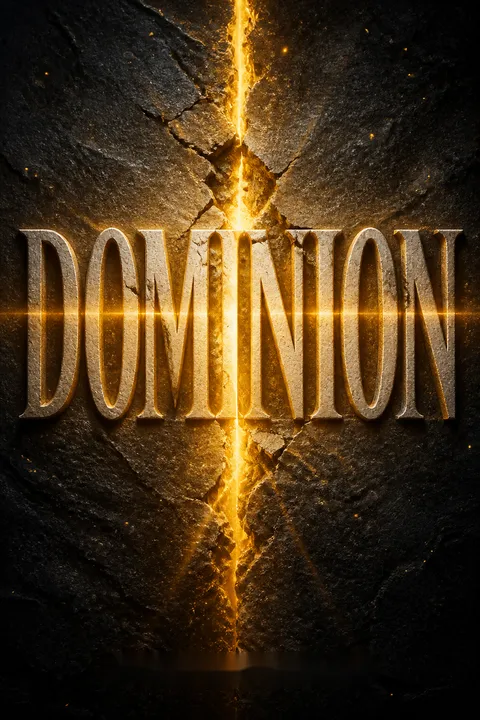
Dominion is not a survey of Christian doctrine so much as an argument about cultural inheritance. Its organizing claim is that Christianity remade Western moral imagination so thoroughly that its descendants often mistake historically formed assumptions for universal common sense. Holland makes this argument persuasive by moving between symbols and institutions: the condemned cross, Paul’s widening of religious membership, the Church’s networks of charity, canon law, revolutionary politics, and modern disputes over rights and sexuality. The book’s long chronology is the method. Similar moral patterns recur in new settings, while the labels change from Christian reform to secular progress.
The strongest insight is that ideas persist through transformation, not simple survival. Christian concepts can be rejected as theology and retained as political or moral commitments. Conversely, Christian institutions can proclaim compassion while enforcing hierarchy or persecution. This prevents the narrative from becoming either a triumphalist history of Christianity or a catalogue of its crimes. The same inheritance can motivate care, universal claims, coercive conformity, or imperial self-justification.
The argument also has limits worth keeping in view. Tracing a value to Christian history does not prove Christianity is its only possible source, nor does historical influence establish present authority. The book’s emphasis on the Latin West can also make a vast and internally diverse history look more unified than it was. Its account is most useful as a genealogy of Western assumptions, not as a claim that all modern moral change is reducible to Christianity. Its lasting challenge is more precise: when a society calls a value universal, ask how it arose, whose interests it serves, and whether it is applied consistently to the powerful as well as the vulnerable.
Review Summary
Dominion explores Christianity's profound influence on Western civilization, tracing its impact from antiquity to modern times. Holland argues that many secular values stem from Christian concepts, challenging assumptions about the roots of human rights and social progress. Readers praise Holland's engaging writing and broad historical scope, though some find his thesis overstated. The book provokes thought on Christianity's role in shaping contemporary morality and worldviews, even among non-believers. While controversial, it offers a compelling perspective on the enduring legacy of Christian ideas in Western culture.
People Also Read


Glossary
saeculum
the temporal worldA Latin term that originally referred to a human lifespan or generation, and later came to describe the changing, mortal world. In the book, it is contrasted with the eternal City of God. This distinction helped shape the Western separation between sacred life and worldly affairs.
reformatio
renewal of church and societyA medieval reforming project that aimed to cleanse the Church of corruption and place Christian life on firmer spiritual foundations. Under Gregory VII, it also asserted the Church’s independence from kings and sought a wider transformation of society. The term describes an ongoing reform movement, not only the later Protestant Reformation.
natural law
morality accessible to reasonThe idea that a moral order exists in nature and can be recognized through human reason or conscience, rather than depending only on written commands. The book traces its development from Stoic thought through Paul and medieval canon law, where it could be used to challenge customs and statutes judged unjust.
correctio
Christian education and reformCharlemagne and his adviser Alcuin used this term for the systematic instruction of the people in Christian belief and practice. It included better-trained priests, wider access to scripture, and the teaching of prayers and creeds. The goal was to make a large and diverse empire more thoroughly Christian.
Christianitas
the Christian commonwealthA term meaning Christendom, used for a community understood as broader than any one kingdom or dynasty. Its prominence grew alongside the papacy’s claim to lead a universal Christian people. It could unite people across political borders while also defining non-Christians as outsiders.
Christianismos
Christian identity and wayAn early Greek term for Christianity, associated in the book with Ignatius of Antioch. It named more than a collection of private beliefs: it described a shared identity and communal way of life. Defining Christianity in this way encouraged Christians to distinguish themselves from Judaism and other forms of worship.
secular
worldly, temporal affairsA term that developed in Christian history to describe what belonged to the changing world rather than to religious life. The distinction helped define separate spheres for church and state, or religious and worldly activity. The book argues that modern uses of the word still carry this Christian history.
Hindooism
a colonial religious categoryA term coined by British observers to describe Hindu traditions as a religion comparable to Christianity. British officials used it to sort practices into a distinct religious sphere, while Indian reformers also used the category to argue over which practices belonged to authentic Hindu teaching. The label reshaped how Hindu traditions were described.
FAQ
What's Dominion: How the Christian Revolution Remade the World about?
- Exploration of Christianity's Impact: The book examines how Christianity has profoundly influenced Western civilization, shaping politics, culture, and social structures throughout history.
- Historical Narrative: Tom Holland provides a chronological narrative, detailing key events and figures that contributed to the Christian revolution, from the early church to modern times.
- Cultural Legacy: The book discusses the enduring legacy of Christian ideas, such as charity, equality, and the sanctity of life, which continue to influence modern beliefs and practices.
Why should I read Dominion?
- Insightful Analysis: Tom Holland offers a compelling analysis of how Christianity has shaped the moral framework of the West, making it essential for anyone interested in history, religion, or philosophy.
- Relevance to Modern Issues: The book addresses contemporary issues by tracing their origins back to Christian thought, helping readers understand the historical context of current societal debates.
- Engaging Narrative: Holland presents history in a compelling and accessible manner, making complex ideas understandable and engaging for readers.
What are the key takeaways of Dominion?
- Christianity as a Revolutionary Force: The book emphasizes that Christianity was not just a religion but a revolutionary movement that challenged existing power structures and moral norms.
- Moral and Ethical Framework: Holland highlights how Christian teachings on love, charity, and the value of the individual have permeated Western thought, influencing everything from law to social justice.
- Cultural Interactions: The author illustrates how Christianity interacted with and transformed various cultures, adapting to local customs while maintaining core beliefs.
What are the best quotes from Dominion and what do they mean?
- “Love, and do as you will.” —Saint Augustine: This quote encapsulates the Christian idea that love should guide moral actions, suggesting that genuine love leads to virtuous behavior.
- “The world has been remade by the Christian revolution.”: This quote encapsulates Holland's thesis that Christianity has fundamentally altered the course of history and shaped modern values.
- “The roots of modernity reached deep into Christian soil.”: This statement suggests that understanding Christianity is essential to grasping the foundations of contemporary society.
How does Tom Holland define the Christian revolution in Dominion?
- Moral Upheaval: Holland defines the Christian revolution as a profound moral upheaval that redefined concepts of justice, charity, and human dignity.
- Cultural Transformation: The author argues that Christianity's spread led to a transformation of cultural values, emphasizing the importance of the individual and the community's responsibility to care for the marginalized.
- Historical Context: Holland places the Christian revolution within a broader historical narrative, connecting it to key events and figures that shaped its development.
How does Dominion address the relationship between Christianity and power?
- Challenge to Authority: Holland discusses how Christianity often challenged existing power structures, particularly in its early years, emphasizing humility and service.
- Integration with Political Power: The book explores how Christianity became intertwined with political power, raising complex questions about the nature of authority and the role of faith in governance.
- Ongoing Tensions: Holland highlights the ongoing tensions between Christian teachings and the exercise of power, suggesting that the struggle for a just society remains a central theme in the history of Christianity.
What role does the concept of charity play in Dominion?
- Foundation of Christian Ethics: Holland emphasizes that charity is a cornerstone of Christian ethics, rooted in the teachings of Jesus and the early Church.
- Contrast with Pagan Practices: The book contrasts Christian charity with the practices of pagan societies, highlighting the revolutionary nature of Christian teachings on compassion and social responsibility.
- Enduring Legacy: Holland argues that the Christian emphasis on charity has had a lasting impact on Western civilization, influencing social policies and cultural attitudes towards poverty and welfare.
How does Dominion explore the concept of human rights?
- Christian Foundations: Holland argues that the modern concept of human rights is rooted in Christian theology, particularly the belief in the inherent dignity of every individual.
- Historical Development: The book traces the evolution of human rights from early Christian teachings to contemporary legal systems, highlighting key moments where Christian values played a crucial role.
- Contemporary Relevance: Understanding the Christian origins of human rights can enrich current discussions about morality and justice.
What criticisms does Holland make about secularism in Dominion?
- Secularism's Roots in Christianity: Holland posits that many secular values are derived from Christian teachings, challenging the notion that secularism is a complete break from religion.
- Moral Vacuum: He warns that a purely secular worldview can lead to moral relativism, where the absence of a divine moral compass results in ethical confusion.
- Historical Amnesia: Holland criticizes the tendency to overlook Christianity's contributions to modern values, arguing that this amnesia undermines a full understanding of history.
How does Dominion connect Christianity to modern social issues?
- Influence on Morality: The book discusses how Christian teachings continue to shape contemporary debates on issues like poverty, justice, and human rights.
- Cultural Legacy: Holland illustrates that many modern social movements, including those advocating for equality and compassion, are rooted in Christian principles.
- Call for Reflection: He encourages readers to reflect on how historical Christian values can inform current societal challenges and inspire positive change.
What is the significance of the title Dominion?
- Biblical Reference: The title refers to the biblical concept of dominion, which implies stewardship and responsibility over creation.
- Cultural Authority: The term reflects the historical authority that Christianity has wielded over Western civilization, shaping societal structures and moral values.
- Contemporary Implications: In the modern context, the title raises questions about who holds power and authority in society, challenging readers to consider the implications of dominion in a pluralistic world.
How does Holland's narrative style affect the reading of Dominion?
- Engaging Storytelling: Holland employs a narrative style that combines historical analysis with storytelling, making the book both informative and captivating.
- Personal Anecdotes: He includes personal anecdotes and reflections, which help to humanize historical figures and events, drawing readers into the narrative.
- Accessible Language: The use of accessible language and vivid descriptions allows readers from various backgrounds to engage with complex historical concepts without feeling overwhelmed.
About the Author

Download PDF
Download EPUB
.epub digital book format is ideal for reading ebooks on phones, tablets, and e-readers.








