Key Takeaways
1. Understand Why People Shop: Desire, Not Just Need
Almost all shopping is for things we do not need.
Beyond basic needs. While we occasionally shop for essentials like food, the vast majority of purchases, both online and offline, are driven by psychological desires rather than strict necessity. Studies show that a significant portion of supermarket purchases are unplanned, and many people buy things they don't need simply to cheer themselves up or express identity. This highlights that shopping is less about "buying" and more about "being."
Identity and social connection. People often buy items to express their personality, establish their identity, or signal their affiliation with a particular group. For example, owning an iPhone can be a badge of belonging to a "tech-savvy group." Retailers like Amazon leverage this by recommending products similar to past purchases, tapping into customers' desires rather than just their needs.
- Identity: Showing off personality, confirming group membership.
- Social: Connecting with others, feeling accepted.
- Emotional: Cheering oneself up, feeling good about oneself.
Shopping for others. A substantial portion of consumer purchases are made on behalf of someone else, such as gifts or household items requested by family members. These "told-to-buy" shoppers are less susceptible to persuasion or additional recommendations, as their focus is on quickly acquiring a specific item. Online stores should accommodate these quick-buy scenarios, allowing for frictionless transactions without unnecessary diversions.
2. Online Shopping is Driven by Control and Perceived Convenience
People prefer online shopping because it offers control and the promise of real choice.
More than superficial convenience. While the 24/7 accessibility of online shopping is a clear benefit, the deeper psychological draw lies in the control and extensive choice it offers. Shoppers perceive online buying as a time-saver, even if interactive features and extensive research often lead to more time spent overall. This perception is influenced by factors like screen color and focused engagement, which can distort our sense of time.
Real choice and availability. Unlike physical stores limited by shelf space, online retailers can offer a "long tail" of products, providing a vast array of niche items that cater to specific desires. This eliminates the illusion of choice often found in bricks-and-mortar stores. Furthermore, online platforms ensure easy availability, allowing shoppers to quickly find what they want in stock, reducing the frustration of waiting or searching multiple locations.
- Time-saving: Perceived benefit, often distorted by engagement.
- Control: Shoppers dictate terms of purchase and delivery.
- Choice: Access to a vast "long tail" of products.
- Availability: Find items in stock instantly across multiple stores.
Delivery on their terms. Online retailers excel at offering flexible delivery options, empowering customers to choose when and where they receive their purchases. This contrasts sharply with traditional retail, where delivery times are often dictated by the store. Services like Amazon Lockers or flexible collection points give customers unprecedented control, enhancing the overall convenience and satisfaction of the online shopping experience.
3. Design for the Information-Seeking, Low-Attention Shopper
The retailer has less than a few seconds to engage a shopper’s attention: one click and they’re gone.
Information is paramount. Modern consumers are information seekers, using the internet to research products extensively before making a purchase. Online retailers must act as publishers, providing detailed product information, usage guides, technical specifications, and customer reviews. This caters to the 90% of online searches that are informational or navigational, rather than purely transactional.
- Detailed content: Background, usage, manuals, technical specs.
- Reviews: Peer opinions, social proof.
- Multimedia: Videos, podcasts demonstrating products.
Adapting to low attention spans. With human attention spans reportedly shorter than a goldfish's, online stores have mere seconds to capture interest. This necessitates clear, intuitive navigation and prominent search facilities. Eye-tracking studies reveal that users scan pages in non-linear ways, often focusing on the top-left, and can experience "change blindness" during saccadic eye movements, making flashing ads ineffective.
- Fast loading: Essential to prevent frustration.
- Clear navigation: Easy-to-use menus and search.
- Strategic layout: Important content in top-left (for left-to-right readers).
Mobile-first imperative. The exponential rise of mobile shopping means websites must be responsive and optimized for various devices. Mobile users often treat physical stores as showrooms, researching products on their phones before buying online. QR codes can bridge this gap, directing customers to specific product information or discounts, but retailers must adapt staff structures and remuneration to avoid internal conflicts.
4. Price is Psychological: Priming and Perceived Value Matter More Than Raw Numbers
The price charged for an item is a relatively minor influence in the decision to buy.
Priming price expectations. Consumer behavior around pricing is often irrational. Companies like Apple can command high prices by priming customers through luxurious store aesthetics and website design, setting an expectation of premium value. Conversely, discount stores prime customers for low prices with functional, no-frills presentations. The environment, visual cues, and even the perceived company of other buyers all influence price perception.
The subtle art of numbers. The actual digits in a price, and how they are displayed, significantly impact perception. Prices ending in odd numbers, particularly 7, are often perceived as lower due to psychological rounding-down and the "sound" of the number. The first digit's value is also crucial; £199.99 feels much cheaper than £200 because the first digit is halved.
- First digit: More impactful than subsequent digits.
- Odd numbers: Tend to be rounded down, perceived as cheaper.
- Sound of numbers: Shorter-sounding numbers (e.g., "seven") can feel lower.
Discounting vs. scarcity. While many retailers believe discounts drive sales, research suggests they can devalue products and reduce long-term profitability. Instead, emphasizing scarcity—such as "last few remaining" or limited-time offers—taps into a primal survival instinct, making items seem more valuable and increasing the likelihood of purchase, even at higher prices. Dynamic pricing, while profitable, must be transparent to avoid eroding customer trust and perceptions of fairness.
5. Eliminate Friction to Prevent Shopping Cart Abandonment
Between 60% and 74% of all shopping carts online get abandoned.
Friction points abound. Online shopping cart abandonment is a pervasive problem, with a staggering majority of carts left unpurchased. This is largely due to friction in the checkout process, which often demands excessive information, forces registration, or presents unexpected costs. Unlike physical stores where payment is straightforward, online carts can be cumbersome, slow, and inconsistent across different platforms and devices, especially on mobile.
Hidden costs and payment woes. Unexpected charges for shipping or taxes are major deterrents, causing a significant percentage of customers to abandon their carts at the last minute. Shoppers expect transparent, all-inclusive pricing and a wide array of payment options. Retailers who hide these costs until checkout or limit payment methods risk alienating customers who feel misled or inconvenienced.
- Hidden costs: Shipping, taxes, unexpected fees.
- Limited payment options: Not accepting preferred credit cards or digital wallets.
- Forced registration: Requiring account creation before purchase.
Speed and saving are critical. Slow-loading pages and shopping carts are a significant source of frustration, directly impacting conversion rates and future customer returns. A one-second delay can reduce sales by 7%. Furthermore, the inability to save a shopping cart for later consideration, or the loss of data between pages, forces customers to restart their process, leading to abandonment. The ideal cart is fast, remembers items, and allows for seamless transitions across devices.
6. Exceptional Customer Service is the Ultimate Online Differentiator
The only real differentiator between online stores is the level of customer service provided.
Beyond products and price. In a crowded online marketplace where products and prices are easily comparable, superior customer service emerges as the key differentiator. Companies like Zappos, which prioritize customer experience above all else (e.g., 365-day free returns, personalized interactions), cultivate immense loyalty and word-of-mouth marketing, proving that investment in service yields significant returns.
Speed and personalization. Modern customers expect rapid responses to their queries, with many demanding same-day or even within-the-hour replies, especially on social media. Automated responses, while efficient, often lack the personalization customers crave. True personalization goes beyond addressing someone by their first name; it involves understanding individual needs and tailoring the experience, often requiring human interaction and deep customer knowledge.
- Rapid response: Customers expect quick answers, especially on social media.
- Personalization: Beyond names, understanding individual needs.
- Human touch: Direct conversations, empathy, and problem-solving.
Surprise and care. Random acts of kindness, such as unexpected gifts with an order, can create a powerful "reciprocity effect," making customers feel valued and fostering positive associations. Conversely, cost-cutting measures like removing printed manuals can lead to customer dissatisfaction and increased support calls. Ultimately, customers want to feel cared for, and a business's actions—demonstrating genuine concern and responsiveness—speak louder than any platitudes on a website.
7. Leverage Social Proof and Sharing to Build Community and Trust
Social networking sites frame people’s expectations of how other websites should work.
The social imperative. Humans are inherently social, driven to connect, share, and seek validation from their peers. This innate desire extends to online shopping, where social networks heavily influence expectations for how websites should function. If an online store doesn't facilitate social interaction or sharing, it risks falling short of customer expectations and losing engagement.
Sharing as self-expression. People share purchases not just to brag, but to connect with others, confirm their identity, and express emotions. Retailers should encourage sharing by making it easy to post purchases on platforms like Facebook, Twitter, and Pinterest. Content that is emotionally arousing, novel, and helps people connect with their friends is most likely to be shared, amplifying word-of-mouth exposure.
- Emotional arousal: Content that evokes happiness, humor, etc.
- Novelty: Unique or different products.
- Connection: Facilitating sharing with friends, not just broadcasting.
Platform-specific engagement. Each social media platform serves a distinct psychological purpose. Facebook is ideal for brand engagement and community building, while Twitter is often a hub for real-time complaints, demanding immediate responses. Pinterest, being highly visual, is a dream for product-focused retailers, and Google+ can be leveraged for demonstrating expertise through features like Hangouts. A strategic approach, tailoring content and interaction to each platform's strengths, is crucial for effective social media marketing.
8. Build Trust Through Transparency and Professionalism
Trust is a gut instinct.
Combating online fraud. The prevalence of fake and fraudulent online shops has made consumers inherently wary, making trust a paramount concern. Shoppers actively look for signals of legitimacy, such as visible phone numbers, physical addresses, and clickable email links prominently displayed on every page. These simple cues reassure customers that the business is real and accessible, fostering initial confidence.
The power of social proof. Once a site's legitimacy is established, customers seek social proof—evidence that others trust and value the store or its products. Star ratings and customer reviews are critical for this, providing third-party validation. However, retailers must manage these carefully, prioritizing positive reviews and being aware of the growing problem of fake or paid reviews. Despite skepticism, the sheer presence of reviews still influences purchasing decisions at a subconscious level.
- Visible contact info: Address, phone, email on every page.
- Trade/professional logos: Demonstrating credentials.
- Security badges: SSL certificates, payment processor logos.
- Customer reviews: Prioritize positive ones, manage fakes.
Instinctive assessment. Trust is often a "gut instinct," formed within fractions of a second as the brain processes a complex array of visual and emotional cues. A website's overall aesthetic, design, and professionalism contribute significantly to this subconscious assessment. The design must match customer expectations for the products being sold; a luxury item on a cheap-looking site creates cognitive dissonance, eroding trust.
9. Avoid Unethical Marketing Tactics That Undermine Trust
If you feel in your heart that something isn’t right, then it almost certainly isn’t.
The pitfalls of "freebies." Many online marketers mistakenly believe that offering numerous "free bonuses" or "buy one, get one free" deals will boost sales. However, psychological research indicates that freebies can devalue both the bonus item and the core product in the customer's mind. While they might offer short-term turnover, they often harm long-term profitability and brand perception, as people mentally assign a lower value to items given away.
Scams and deceptive practices. The internet is rife with scams, from fake prize notifications that install malware to "we can help you" pop-ups that exploit obedience to authority. These tactics, while sometimes effective for fraudsters, erode overall consumer trust in the online environment. Legitimate businesses should avoid such practices, as they contribute to a general climate of suspicion and can lead to negative associations with their brand.
- Freebies: Devalue products, reduce long-term profitability.
- Prizes: Can reduce risk-taking behavior, not always effective for sales.
- Pop-ups: Annoy users, often blocked, reduce respect for business.
- Squeeze pages: Low conversion rates, create "overjustification effect."
Honesty and positive emotions. Exaggerated claims, promises of instant wealth, or attempts to stimulate envy through displays of luxury lifestyles are counterproductive. Such tactics trigger negative emotions and cognitive dissonance, making potential customers skeptical and less likely to buy. Instead, ethical online retailers should focus on transparency, substantiated claims, and fostering positive emotions like humor and satisfaction, which are more conducive to building genuine customer relationships and sales.
10. Create an Obvious, Simple, and Secure Online Store
Make it obvious what you’re selling.
Instant clarity is key. In a world of fleeting attention, an online store must immediately communicate what it sells and what kind of shopping experience it offers (e.g., "buy now" vs. "information-rich"). Clear visuals, concise messaging, and intuitive categorization are essential to prevent visitors from leaving within seconds. This instant recognition caters to both utilitarian shoppers seeking quick purchases and information seekers looking for relevant content.
Streamlined shopping process. The ideal online store prioritizes simplicity and convenience throughout the entire purchasing journey. This means minimizing clicks from product selection to payment, using single-column forms for data entry, and providing a robust, fast search facility that covers all website content, not just products. A clearly visible and easy-to-use returns policy further enhances customer confidence and simplifies the process.
- Minimal clicks: Aim for two clicks from product to payment.
- Simple forms: Single-column for ease of use.
- Comprehensive search: Covers products and information.
- Visible returns policy: Builds trust and confidence.
Secure and trustworthy environment. Security is non-negotiable. A perfect online store prominently displays security signals like "https" in the URL, padlock symbols, and logos from SSL certificate providers (e.g., GeoTrust, Verisign). Beyond technical security, transparency about physical security measures for customer data and clear contact information (address, phone, email) on every page reinforces trustworthiness and professionalism, addressing customers' gut instincts about legitimacy.
11. Embrace Continuous Change and Omnichannel Integration
Businesses who want to thrive in this fast-moving retail environment need to be open to change and to learning from both online and offline experiences.
The relentless pace of change. Online shopping is a rapidly evolving phenomenon, with constant shifts in technology, consumer demographics, and expectations. Businesses that resist adapting to these changes, often due to fear of complexity or internal inertia, risk being outmaneuvered by more agile competitors. The "hype cycle" of new technologies means that retailers must continuously experiment and learn, rather than waiting for trends to stabilize.
Beyond multichannel to omnichannel. Traditional "multichannel" approaches, where online and offline operate as separate entities, are insufficient. The future demands an "omnichannel" strategy, recognizing that customers interact with a retailer across multiple touchpoints simultaneously (e.g., researching on a tablet in a physical store). This requires seamless integration and a unified customer experience, blurring the lines between online and offline.
- Adaptability: Essential for survival in a dynamic market.
- Omnichannel: Integrated customer experience across all touchpoints.
- Technology adoption: Leveraging new tools like virtual fitting rooms, IoT.
Learning from all channels. Successful retailers will learn from both online and offline strengths. Physical stores can transform into "showrooms" with web connectivity, expert staff, and interactive displays, offering personalized service that complements online convenience. Conversely, online stores can adopt offline principles like building strong brands and fostering human connection. The goal is an "everywherechannel" approach, providing a complete, flexible, and customer-centric package of services that caters to individual requirements and builds lasting loyalty.
Last updated:
Review Summary
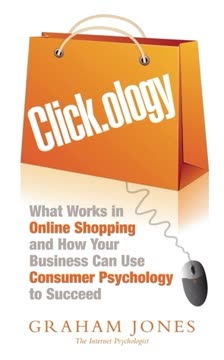
Click.ology receives a 3.73 rating from readers who find it informative and valuable for understanding digital marketing and online shopping psychology. Reviewers appreciate its practical advice, thorough citations, and compelling case studies like Meat Pack's location-based marketing campaign. The book is considered an easy, fun read recommended for those operating or planning online stores. However, some critics note portions feel outdated or contain unnecessary information. Most readers found substantial useful content backed by solid research and references.