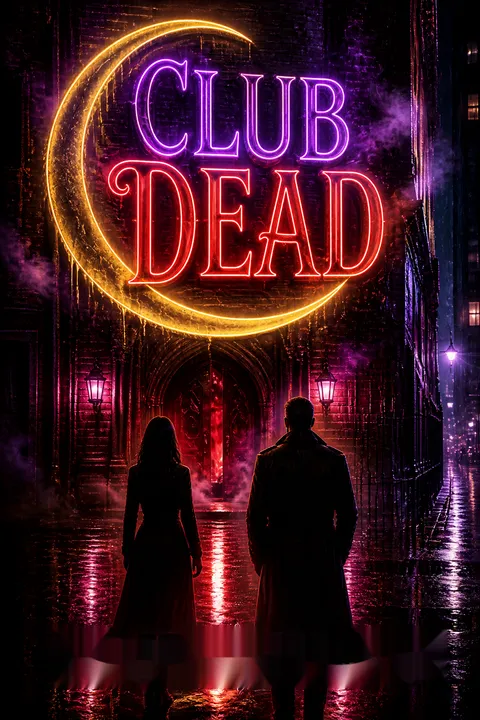


Plot Summary
Bill Closes the Screen
After a long shift at Merlotte’s, Sookie Stackhouse expects affection from Bill Compton, her vampire boyfriend. Instead, she finds him absorbed in a hidden computer project and unwilling to explain his work for the queen of Louisiana. His indifference hurts more than the secrecy.
Before she leaves, Bill gives her instructions in case he fails to return, including where he has hidden his computer and disks, then claims he is traveling to Seattle. Sookie recognizes the lie but cannot make him tell her the truth. His sudden distance leaves her imagining that their relationship has ended, while his warning plants a practical fear beneath the heartbreak: Bill expects danger.
The opening makes emotional neglect function as evidence. Sookie is not simply hurt that Bill is distracted; she notices that he has concealed a project, prepared for his own disappearance, and chosen a false destination. Her telepathy often gives her access to other people’s unspoken thoughts, but it cannot help with the person she loves, because vampire minds are closed to her. The relationship’s imbalance is therefore built into the mystery: Bill controls the relevant information, while Sookie must interpret his behavior without it. His contingency plan is both an act of care and a reminder that he has excluded her from decisions affecting her life.
Bubba Guards the Door
The next night, Eric sends Bubba, a mentally impaired vampire with a famous former life, to guard Sookie at work. A man in a wolf-emblem vest attacks her in Sam Merlotte’s office, but Sookie dodges him and Bubba crushes his throat. The man’s car contains tape and gags, proof that the assault was planned.
Afterward, Pam arrives with the news Sookie feared: Bill never reached home from Mississippi and is missing. He had been expected the previous night, though Sookie was never told. Eric’s warning that Bill may be dead compounds the revelation that he lied about Seattle. Sookie leaves the bar with her grief sharpened into anger and a question she cannot answer.
The attack turns private betrayal into a public emergency. Sookie’s first danger is bodily, and Bubba’s intervention shows how dependence on supernatural allies can save her while leaving her exposed to their rules and secrets. The assailant’s equipment establishes that she was targeted, not randomly threatened. Pam’s disclosure then changes the meaning of Bill’s earlier precautions: his secrecy may have anticipated a real risk, but it has also denied Sookie the chance to prepare. Her anger is not displaced by fear. The two emotions coexist, making her eventual decision to search for Bill neither simple loyalty nor uncomplicated romance.
Lorena’s Name Surfaces
At Sookie’s house, Eric, Pam, and Chow explain that witnesses in Mississippi saw Bill taken from an airport hangar after confusion over two identical vampire coffins. The apparent kidnappers serve Russell Edgington, Mississippi’s vampire king, and may want information from Bill’s secret project. Eric then reveals the personal complication: Bill went to meet Lorena, a vampire from his past, and became enthralled with her again.
He had planned to return and arrange money for Sookie before ending their relationship. Hurt, Sookie nevertheless accepts Eric’s proposal to investigate Jackson, where human employees may know where Bill is held. Eric’s sheriff position and the queen’s undisclosed deadline make the search dangerous for both of them.
This disclosure refuses to let Sookie’s rescue mission rest on a comforting version of love. Bill may be alive, but he has also chosen secrecy, renewed an old attachment, and considered settling Sookie’s future without consulting her. Eric’s plan makes her emotional injury useful to vampire politics: her human appearance and telepathy can reach people the vampires cannot question directly. The arrangement is coercive, since Eric invokes threats to Sookie, Bill, and himself, yet Sookie negotiates a condition of her own. Her demand concerning Lorena is less a strategy than an attempt to make betrayal carry a cost.
Alcide Takes the Road
Eric’s contact, Alcide Herveaux, arrives at Sookie’s home and explains why he must help: vampires hold a gambling debt owed by his father, and calling it in could ruin their surveying business. Alcide is a werewolf, not a vampire, and takes Sookie to Jackson in his truck. His directness and ordinary warmth contrast with the undead court she is entering.
He describes the local network of werewolves and shapeshifters, including a gang hired by vampires, and warns that Eric may put political advantage ahead of Bill’s safety. In Jackson, Alcide gives Sookie his spare bedroom and arranges a visit to his sister’s salon, easing her lack of money while preparing her to pass as his date at Club Dead.
Alcide offers a different kind of supernatural life: work, family obligation, and physical warmth rather than the vampires’ elaborate hierarchy. Yet his apparent normality is also compromised by debt, secrecy, and the fact that Eric can compel his cooperation through his father’s finances. Sookie’s financial insecurity matters here; accepting a salon visit is not decorative luxury but a moment of welcome she rarely receives. The developing attraction between them complicates the mission without replacing its purpose. Alcide becomes both a possible partner and a person whose livelihood Sookie’s search could endanger.
Russell’s Club Invitation
At Club Dead, a hidden nightclub for supernatural patrons, Sookie and Alcide encounter Debbie Pelt, Alcide’s former girlfriend, and Russell Edgington, the Mississippi king. Debbie needles them, while Sookie uses Alcide’s private knowledge to answer her with confidence. Later, a human beside a vampire thinks about Bill being kept awake during daylight, a particularly cruel way to torture a vampire.
Before Sookie can learn more, a werewolf gang member grabs her and injures her shoulder. Alcide and the goblin doorman, Mr. Hob, intervene; Russell disciplines the gang and welcomes Sookie back. Debbie burns Sookie’s silk wrap, but Alcide replaces it, a kindness that deepens their uneasy attraction.
Club Dead is not merely a venue but a social system where supernatural rank governs access, violence, and even the treatment of human guests. Sookie’s telepathy lets her uncover Bill’s torment, but her knowledge is partial and dangerous: she cannot read vampires, and the humans around them are trained to serve their interests. Russell’s polished intervention demonstrates power through manners as much as force. Meanwhile, Debbie’s attack on Sookie’s clothing turns romantic jealousy into a public contest, and Alcide’s replacement gift offers tenderness without resolving the danger. Sookie is learning to perform confidence while remaining alert to who controls the room.
A Corpse in Alcide’s Closet
The following day, Sookie and Alcide discover the werewolf from the club stuffed into a closet in Alcide’s apartment. His neck is broken, and the close fit of the building’s security makes it hard to see how the body got inside. They fear the police would learn about Club Dead and assume Alcide killed him, so they wrap the corpse in a shower curtain, carry it through the building, and abandon it on a remote hunting road.
Alcide admits that Debbie still has a key to his apartment, but neither can explain the murder. During the cleanup, the two acknowledge their attraction and imagine a possible future, then accept that Sookie must continue searching for Bill.
The corpse turns the mission into a problem of complicity. Sookie and Alcide choose concealment over law not because they are indifferent to violence, but because the supernatural community’s secrecy makes ordinary justice seem unavailable and dangerous. Their shared labor produces intimacy, though not innocence: they knowingly take part in hiding a killing they did not commit. The dead man’s unexplained presence also plants a mystery that the immediate romance cannot solve. Alcide’s lingering connection to Debbie and Sookie’s attachment to Bill keep their tenderness provisional, grounded in the recognition that desire does not erase existing obligations.
The Stake at Club Dead
On the full-moon night, Sookie returns to the club with Alcide and meets her old friend Tara, who is dating vampire Franklin Mott. After their dance draws attention, Sookie reads the thoughts of a human near the bar and realizes he is preparing to stake Betty Joe Pickard, Russell’s second-in-command.
She grabs the attacker’s arm and warns the room, but his companion, former anti-vampire leader G. Steve Newlin, escapes. The would-be assassin drives the stake into Sookie’s side. Russell’s people take her to his mansion, where a human doctor sedates her and vampire Ray Don removes the stake and helps heal the wound. Eric stays beside her as she recovers.
Sookie’s telepathy creates a moral choice with immediate bodily consequences. She could remain anonymous and protect herself, but she acts before she can calculate the cost, placing a vampire’s life ahead of her own safety. The attack also exposes the limits of her usual strategy: knowing what someone intends does not give her the strength to stop it without help. At Russell’s mansion, care and captivity sit close together. His household heals her, yet she is now inside the territory of the very power structure connected to Bill’s disappearance. Survival grants access, but it does not make her secure.
Bubba Finds the Cell
While Sookie recovers at Russell’s mansion, Bubba appears and explains that he followed her there. Eric orders him to search the estate without trying to free anyone; Bubba returns having found Bill in a former stable room, chained with silver and guarded by vampires. One woman has been cutting him with a knife.
With sunrise approaching, Eric obtains a large Lincoln and prepares a route out, while Bubba slips away to hide for the day. Sookie plans to leave Russell’s compound under the excuse that she is returning to Alcide’s apartment, then reach the stable after the vampires sleep. The full moon may keep the werewolf guards absent or exhausted, giving her a narrow opening.
Bubba’s apparent limitations become a practical advantage: he can move through the estate without attracting the scrutiny given to Eric, and his literal obedience carries him to the one fact the others need. The rescue plan is improvised around incompatible bodies and schedules. Vampires sleep by day, werewolves answer the moon, and Sookie must move between both vulnerabilities while injured. Eric’s blood has already strengthened her, but the plan depends less on power than on timing, concealment, and the willingness to act without certainty. The mansion’s orderly surface now contains a specific destination: a torture room in the stable.
Lorena Falls to the Stake
At dawn, Sookie reaches the stable and finds Bill barely conscious, wrapped in silver chains and too weak to escape alone. She retrieves the keys with a pair of torture-room pincers and works the chains from his burned skin. Lorena enters before they can leave. She mocks Sookie and claims Bill had chosen her, then lunges.
Sookie uses the same stake that wounded her, driving it through Lorena’s chest. Shaken, she hides the body in the covered swimming pool, wraps Bill in a blanket, and half-carries him to the Lincoln. Bill collapses into the trunk as the daylight overwhelms him. Sookie drives away, passes the guarded gate, and reaches Jackson, but her rescue is not yet safe.
The rescue makes Sookie’s agency inseparable from violence. She must remove chains that cause Bill pain, then kill the vampire who has tortured him, all while preserving enough composure to get him beyond the compound. Lorena’s taunt tries to reduce Sookie to a disposable human, but the encounter is decided by Sookie’s timing and the stake in her possession. The act does not arrive as triumphant justice; Sookie is frightened by what she has done even as she continues the escape. Her competence is real, but it is costly, and the body she hides becomes another secret she must carry.
Locked in the Lincoln
Sookie parks the Lincoln in Alcide’s dark garage and falls asleep after hours of fear. When she opens the trunk to check on Bill, someone shoves her inside and slams the lid. Bill wakes badly injured and desperately hungry. He drinks from Sookie before recognizing her, then assaults her sexually in his confusion and hunger; she struggles until he stops.
After Eric and Alcide free them, Sookie learns Bill had protected her identity despite being tortured. In the apartment, Bill explains the secret project: a computer directory of vampires, their histories, aliases, and abilities, powerful because it could expose even those who want secrecy. Sookie leaves for home without Bill, unwilling to settle their relationship while so hurt.
The trunk compresses rescue into a scene where Sookie’s devotion does not protect her from harm. Bill’s attack is not a romantic reunion; his hunger and disorientation explain the danger but do not undo the violation. His refusal to identify Sookie under torture offers evidence of loyalty, yet it cannot cancel his earlier deception or the damage he causes after waking. The directory gives the crisis a political scale: information about a hidden population can become an instrument of surveillance and control. Sookie’s decision to leave holds both truths at once, recognizing Bill’s sacrifice without allowing it to decide what she owes him.
The Net at the Gas Station
On the drive back to Bon Temps, Eric stops for fuel while Sookie visits the restroom. Two armed men enter the convenience store and ask the clerk about a blond woman traveling with a vampire. Sookie slips out through the back, finds the clerk’s shotgun, and discovers a silver net in the robbers’ truck. Eric has been caught in it, struck, and left outside, but he frees himself and rejoins her.
When the robbers begin beating the clerk, Sookie returns through the front and fires into the ceiling. The threat makes the men reveal that the Hounds of Hell gang hired them to seize Eric and Sookie over Jerry Falcon’s disappearance. Eric compels them to forget the encounter, and they escape before police arrive.
The convenience-store episode reverses the familiar rescue pattern. Sookie does not wait for Eric to protect her; she finds a weapon, assesses the room, and intervenes when the clerk is being beaten. Her choice is grounded in responsibility rather than romantic loyalty, since the clerk is a stranger being harmed because of their pursuit. Eric’s vulnerability under the silver net briefly levels their relationship, while his glamour restores an asymmetry of power once the danger passes. The gang’s explanation connects the current pursuit to the unexplained corpse in Alcide’s apartment, but it does not identify who killed Jerry or why.
Violence Reaches Home
At Sookie’s house, men in gang vests ambush her before she can enter safely. They demand Eric and beat her while he escapes the first assault into the woods. Eric returns with Bill, and the two vampires kill the attackers before they can continue. Bill explains that he negotiated with Russell for his car and freedom, then hurried after Eric and Sookie when the gang’s plan became clear.
The attackers had used computer information to find Sookie’s home, linking the danger to the same appetite for intelligence that drives Bill’s directory. Eric and Bill tend Sookie’s injuries, while the vampires’ cleanup crew removes the bodies. The violence is over, but Sookie wakes battered in her own house.
The home invasion makes the cost of supernatural entanglement literal: Sookie’s private refuge becomes a site of organized retaliation. The gang’s use of computer information echoes the vampire directory, joining two forms of surveillance that differ in scale but not in their ability to make a person findable. Eric and Bill’s violence saves Sookie, yet their intervention does not restore the home to innocence; the bodies must be removed, and she bears the injuries. Bill’s return shows loyalty through action, but the narrative does not let rescue erase the earlier rupture. Sookie remains the person whose body absorbs the consequences of decisions made by powerful men.
The Door Belongs to Sookie
As Sookie recovers, Jason brings her mail and finds the driveway newly graveled, work Eric arranged after hearing her financial worries. Alcide visits with her suitcase; he admits Debbie asked him to kill Sookie, but he refused and is trying to sever their bond.
Bubba then reveals that he killed Jerry Falcon after following Sookie from the club and catching him breaking into Alcide’s apartment. The mystery of the closet corpse is solved, though its consequences remain.
Bill returns to finish the queen’s directory project, and Pam confirms the queen has been asking for it. When Bill and Eric quarrel in Sookie’s house, she revokes both their invitations and realizes the hidden computer files are inside, beyond anyone’s reach unless she lets them in.
The ending restores Sookie’s authority in a modest but decisive form: control of her own door and of the information stored beneath her house. Her final leverage is not superior strength or political rank, but the domestic boundary vampires cannot cross without invitation. The driveway repair reveals Eric’s attention to a need Sookie had voiced in anger, complicating her refusal without invalidating it. Bubba’s explanation resolves the corpse mystery through a character others underestimate, while leaving Sookie to reckon with the danger his obedience created. She does not announce a permanent romantic choice. Instead, she claims the right to pause, exclude, and decide for herself.
Analysis
Club Dead treats intimacy as a problem of information and consent. Sookie can hear the private thoughts of humans, but the vampires closest to her remain unreadable; she must judge them through omissions, choices, and consequences. Bill’s hidden directory gives that asymmetry political force. A record of vampires promises knowledge, but the same knowledge could become a map for surveillance, coercion, or violence. The plot repeatedly tests who gets to know what, and who bears the risk when powerful people keep secrets.
Sookie’s loyalty is not presented as passive devotion. She searches for Bill even after learning he may leave her, bargains with Eric, and continues into Russell’s territory despite the threats. Yet her rescue does not end in uncomplicated reunion. Bill’s hunger leads him to hurt her, and his earlier betrayal remains part of the relationship even after she learns he protected her identity under torture. The story lets love and anger occupy the same room without forcing either to cancel the other.
The supernatural hierarchy makes personal favors expensive. Alcide helps because his father’s debt gives Eric leverage; Eric needs Sookie partly because war would cost his territory; Russell’s hospitality coexists with imprisonment and torture. Even the human and supernatural factions that claim order depend on threats and secrecy. Against these systems, Sookie’s most durable authority is small and domestic. She controls her own house, her own work, and, finally, the invitation to cross her threshold. Her independence is not a clean escape from dependence, since she still needs help and protection. It is the right to decide when help becomes possession, and when a person who has hurt her must leave.
Review Summary
Club Dead receives mixed reviews, with some praising its humor, character development, and introduction of werewolves. Readers appreciate the evolving relationships and Sookie's growing independence. However, criticisms include slow pacing, problematic handling of sexual assault, and inconsistent character behavior. Many enjoy Eric's increased role and Alcide's introduction but dislike Bill's actions. The book is seen as an improvement over previous installments, with more action and romantic tension, though some find it less engaging than earlier entries.
People Also Read





Characters
Sookie Stackhouse
Telepath with a backboneSookie is a waitress in Bon Temps who hears human thoughts but cannot read vampires. That gift has made ordinary intimacy difficult: she often knows what people want before they say it, and rarely finds the privacy others take for granted. She is practical about money, loyal to her family and friends, and more capable under pressure than her modest life suggests. Her humor and manners help her navigate rooms where she is outmatched, but they do not make her compliant. Sookie wants affection without losing self-respect, and her choices are shaped by the tension between helping people she loves and refusing to be treated as someone else’s possession.
Bill Compton
A guarded vampire loverBill is a Civil War veteran turned vampire who works within Louisiana’s vampire hierarchy. His measured manner and preference for privacy make him difficult for Sookie to understand, especially because her telepathy cannot enter his mind. He is capable of tenderness and practical care, but he often decides what others need to know without asking them. His attachment to Sookie exists alongside old histories and obligations she cannot see. Bill’s defining conflict is between the intimacy he offers and the secrecy he considers necessary, a contradiction that leaves the people closest to him unsure where devotion ends and control begins.
Eric Northman
Ambitious vampire sheriffEric is the powerful sheriff of Louisiana’s Area 5 and co-owner of Fangtasia. He is strategic, physically imposing, and comfortable using charm, intimidation, or favors to get cooperation. His interest in Sookie mixes genuine protectiveness with sexual desire and political calculation, and he rarely pretends those motives are simple. Eric understands that survival in vampire society depends on managing obligations as carefully as enemies. He can be unexpectedly attentive to Sookie’s practical needs, yet his loyalty has limits when his position or territory is at stake. His confidence makes him dangerous, but his directness gives Sookie clearer terms than she receives from Bill.
Alcide Herveaux
Werewolf surveyorAlcide is a large, warm, plainspoken werewolf who works for his family’s surveying company. He enters Sookie’s life because vampires hold his father’s gambling debt, but he treats her with more candor than the supernatural court does. Alcide values family, work, and loyalty, though his attachments can pull him toward people who bring out his worst instincts. His attraction to Sookie grows from respect as well as physical chemistry, and he recognizes her toughness without mistaking it for invulnerability. He offers a glimpse of ordinary companionship, but his own unresolved relationship history and obligations make that possibility uncertain.
Russell Edgington
King of MississippiRussell is the long-established vampire ruler of Mississippi, a courtly host whose gracious manners sit alongside absolute authority. He protects the order of his territory and expects both vampires and supernatural workers to respect its rules. Russell’s control is visible in the way people defer to him, but he also understands the value of hospitality and public appearances. His mansion and club offer Sookie access to a world she must read carefully, not trust. He treats power as something maintained through spectacle, punishment, and negotiation, and his composure makes it difficult to tell whether a courtesy is kindness or a calculated display.
Lorena
Bill’s old vampire loverLorena is a vampire from Bill’s past whose presence unsettles his relationship with Sookie and draws him into Mississippi’s political orbit. She has a history with Bill that Sookie can only piece together from other people’s disclosures. Her manner can be cutting, and she knows how to use intimate knowledge as leverage. Lorena represents the force of an old attachment: familiarity can feel like destiny to the people caught inside it, even when it makes them vulnerable to manipulation. Her appearance makes Bill’s private history impossible for Sookie to ignore.
Pam
Eric’s sharp lieutenantPam is Eric’s second-in-command and a co-owner of Fangtasia. Her precise speech, dry humor, and cool attention make her difficult to intimidate. She can be blunt when others would soften the truth, though her loyalties remain rooted in the vampire structure she serves. Pam has enough regard for Sookie to bring her information and participate in the search, but she never forgets the difference between a human and a vampire. Her practical intelligence gives her a clear view of danger, while her sardonic manner keeps emotional exposure at a distance.
Bubba
A famous, fragile vampireBubba is a vampire whose former fame remains recognizable to some people, though the transformation left him with serious cognitive impairment. He is easily distracted, literal-minded, and dependent on clear instructions, yet he is also loyal and physically formidable. The vampire community moves him between regions because his behavior draws attention, a practice that treats his vulnerability as a management problem. Sookie responds to him with patience rather than mockery. His presence complicates the assumption that intelligence alone determines usefulness or courage.
Tara Thornton
Sookie’s outspoken friendTara is Sookie’s friend from high school, an independent woman who can be both brash and loyal. She enters Club Dead on a date with Franklin Mott, unaware of the risks Sookie is navigating. Tara has a history of hardship that has made her resilient, but she still seeks excitement and affection on her own terms. Her warmth toward Sookie offers a rare point of familiar human connection in a room governed by supernatural power. She is not easily frightened away from someone she cares about.
Sam Merlotte
Sookie’s shifter bossSam owns Merlotte’s, where Sookie works, and is a shape-shifter who generally takes the form of a collie. He is protective of his staff and willing to shelter Sookie when danger reaches the bar. His friendship with her is affectionate but not romantic in the simple way she once imagined. Sam understands supernatural secrecy from the inside, yet he remains grounded in the practical demands of running a business and making a living.
Jason Stackhouse
Sookie’s impulsive brotherJason is Sookie’s brother, a handsome and impulsive man whose charm often outruns his judgment. He and Sookie share the loss of their parents and the upbringing their grandmother provided. Though he is not always emotionally perceptive, he cares about Sookie and wants to know who is in her life. His practical help and blunt concern provide a family tie outside the vampire and werewolf worlds.
Debbie Pelt
Alcide’s possessive exDebbie is a shapeshifter and Alcide’s former girlfriend, a confident woman whose jealousy turns openly hostile when she sees him with Sookie. She is socially polished and capable of reading what other people value, but she uses that insight to wound rather than reassure. Her connection to Alcide is marked by attraction and conflict, making her presence a risk to both his judgment and Sookie’s safety.
Betty Joe Pickard
Russell’s second-in-commandBetty Joe is a vampire who serves as Russell’s second and handles business on his behalf. Her old-fashioned clothes and brisk manner make her memorable, but she is far from harmless. She is attentive to the duties of her position and capable of swift violence when someone threatens her or her people. Sookie’s actions bring them into contact at a moment when political rank and personal survival become difficult to separate.
Franklin Mott
Tara’s vampire dateFranklin is a polished vampire with a franchise business and a romantic interest in Tara. His smooth manners help him move comfortably through the club’s social world. He is attentive to the rules around humans and supernatural guests, but his priorities remain those of a vampire court. His presence gives Tara a route into the club and gives Sookie another familiar face in an unfamiliar setting.
Talbot
Russell’s devoted companionTalbot is Russell’s human companion, handsome and intelligent, with a clear awareness of the danger surrounding his lover. He explains how fear and punishment preserve the secrecy of Club Dead. His devotion to Russell gives him a place within a vampire household, though that position depends on a power he does not share.
Mr. Hob
Goblin doormanMr. Hob is the goblin who admits guests to Club Dead and enforces its rules. Small, irritable, and unexpectedly strong, he represents the club’s supernatural boundaries in physical form. His authority is practical rather than ceremonial: he keeps disorder from crossing the threshold.
G. Steve Newlin
Anti-vampire preacherG. Steve Newlin is a former leader of the Brotherhood of the Sun, a militant organization opposed to vampires. His appearance at Club Dead brings organized human hostility into a room where vampires usually control the terms of danger. He is driven by conviction and notoriety, making his presence a threat even before Sookie recognizes him.
Janice Herveaux Phillips
Alcide’s welcoming sisterJanice is Alcide’s sister, a confident salon owner who quickly makes Sookie feel welcome. She knows about her family’s supernatural life and protects that confidence. Her practical kindness gives Sookie a glimpse of the family community Alcide comes from.
Plot Devices
Sookie’s telepathy
Finds truth in thoughtSookie hears human thoughts, which lets her identify an attacker’s plans, locate information about Bill’s torture, and detect a would-be assassin at Club Dead. The gift is selective: vampires are unreadable to her, and supernatural beings such as werewolves are harder to interpret than ordinary humans. This makes telepathy a source of evidence rather than an all-purpose solution. It can expose motives, but Sookie must decide what to do with what she hears, and acting on it may reveal her ability to people who could exploit it.
The vampire directory
Turns records into leverageBill’s secret computer project gathers vampire names, aliases, histories, photographs, and abilities. What begins as a personal research project becomes valuable because it could help vampires locate one another, including those who prefer to remain hidden. The directory motivates Bill’s secret assignment, draws the attention of rival powers, and gives the story a political question larger than a single kidnapping: who should possess information that makes a secret population legible? The files’ location also matters, since Bill has hidden them where Sookie can control access.
Vampire hierarchy
Makes favors dangerousVampires are organized into kingdoms and areas, with kings, queens, and sheriffs competing to maintain authority. Bill’s work for the queen of Louisiana puts Eric in a difficult position because the sheriff was not told the project’s purpose. Russell’s control of Mississippi shapes the search for Bill, while the risk of war pressures Eric to use Sookie rather than launch an attack. This hierarchy turns personal relationships into political liabilities: a missing vampire, a hidden computer project, or a favor owed can threaten entire territories.
Vampire blood
Strength with a bondWhen Sookie takes Eric’s blood after being wounded, she heals and gains unusual strength, helping her carry Bill and escape Russell’s compound. The benefit has a cost: vampire blood can create a supernatural connection and give the donor heightened awareness of the recipient. Its effects also encourage overconfidence, so Eric warns Sookie not to mistake increased power for invulnerability. The device makes rescue physically possible while intensifying the personal and erotic complications between them.
Invitation and thresholds
Makes home a boundaryVampires cannot enter a private home without an invitation, a rule that makes hospitality a form of power. Sookie’s farmhouse can shelter her from supernatural intrusion only while she controls who is welcome. The rule first complicates how she protects herself, then gives the ending its sharpest practical consequence: she can revoke access to Bill and Eric. Her home is not merely a safe setting, since attackers can still enter by ordinary means, but the invitation rule allows Sookie to set one boundary the vampires must obey.
FAQ
Synopsis & Basic Details
What is Club Dead about?
- Sookie's search for Bill: The story centers on Sookie Stackhouse's desperate attempt to find her missing vampire boyfriend, Bill Compton, after he is kidnapped.
- Vampire politics and intrigue: Sookie navigates the complex and dangerous world of vampire politics, encountering new supernatural beings and uncovering hidden agendas.
- Personal growth and independence: Sookie's journey is also about her personal growth and independence, as she learns to rely on herself and assert her independence in the face of betrayal and danger.
Why should I read Club Dead?
- Intriguing supernatural mystery: The book offers a compelling blend of mystery, suspense, and supernatural elements, keeping readers engaged with its twists and turns.
- Complex character relationships: The novel explores the complexities of relationships, particularly Sookie's evolving feelings for Bill and her growing connection with Alcide.
- Strong female lead: Sookie is a resilient and resourceful protagonist, making her a compelling character to follow as she navigates a dangerous world.
What is the background of Club Dead?
- Vampire integration into society: The story is set in a world where vampires have revealed their existence and are attempting to integrate into human society, leading to political and social tensions.
- Supernatural hierarchy: The novel introduces a complex hierarchy of supernatural beings, including vampires, werewolves, and shifters, each with their own rules and power structures.
- Louisiana setting: The story is set in the American South, specifically Louisiana and Mississippi, with the unique cultural and geographical elements of the region adding to the atmosphere.
What are the most memorable quotes in Club Dead?
- "You didn't see what you just saw.": This quote, spoken by Bill to Sookie, highlights the secrecy and deception that permeate their relationship and the vampire world.
- "I have a secret assignment.": This line, also from Bill, foreshadows the events that lead to his kidnapping and sets the plot in motion.
- "He was going to drive into Bon Temps, phone us at Fangtasia to let us know he'd made it home, and meet with us tonight.": This quote reveals Bill's planned return and the lie he told Sookie, emphasizing the betrayal she feels.
What writing style, narrative choices, and literary techniques does Charlaine Harris use?
- First-person perspective: The story is told from Sookie's first-person point of view, allowing readers to experience her thoughts, feelings, and reactions directly.
- Conversational tone: Harris uses a conversational and often humorous tone, making the story accessible and engaging, even when dealing with dark themes.
- Foreshadowing and suspense: The author employs foreshadowing and suspense to create tension and keep readers guessing about the true nature of events and characters.
Hidden Details & Subtle Connections
What are some minor details that add significant meaning?
- Bill's computer activity: Bill's intense focus on his computer and the image of a distinguished man foreshadow his secret assignment and the complex vampire politics at play.
- The Bellefleur's sudden wealth: The Bellefleur family's mysterious inheritance hints at a connection to the supernatural world and foreshadows their later involvement in the plot.
- Bubba's grooming: The detail of Bubba's carefully groomed appearance highlights the influence of vampire fans and the strange dynamics of the vampire community.
What are some subtle foreshadowing and callbacks?
- Bill's warning about a hiding place: Bill's instructions to Sookie about a hidden computer and disks foreshadow his kidnapping and the importance of his secret project.
- The mention of Seattle: Bill's lie about going to Seattle is a callback to his past with Lorena, hinting at the true nature of his secret assignment.
- The wolf's head insignia: The wolf's head insignia on the dead man's vest foreshadows the involvement of werewolves in the plot and the danger Sookie faces.
What are some unexpected character connections?
- The connection between Alcide and Eric: Alcide's debt to Eric and their shared history reveal the complex web of relationships within the supernatural community.
- The link between Sookie and Lorena: The revelation of Bill's past relationship with Lorena creates a surprising connection between Sookie and her rival.
- The bond between Sookie and Janice: Sookie's unexpected connection with Alcide's sister, Janice, highlights the importance of female friendships and support.
Who are the most significant supporting characters?
- Pam: As Eric's second-in-command, Pam plays a crucial role in the vampire world and provides Sookie with a complex and sometimes humorous ally.
- Alcide Herveaux: Alcide's role as Sookie's protector and guide into the supernatural world makes him a significant character, and his personal struggles add depth to the story.
- Bubba: Bubba's unique perspective and actions, though often unpredictable, have a significant impact on the plot and highlight the complexities of the vampire community.
Psychological, Emotional, & Relational Analysis
What are some unspoken motivations of the characters?
- Bill's desire for power: Bill's secret project and his involvement with the vampire queen suggest a hidden desire for power and influence within the vampire world.
- Eric's possessiveness: Eric's protectiveness of Sookie and his desire to have her reveal a possessive nature that goes beyond a simple alliance.
- Debbie's jealousy: Debbie's actions are driven by a deep-seated jealousy and possessiveness towards Alcide, revealing her insecurity and manipulative tendencies.
What psychological complexities do the characters exhibit?
- Sookie's internal conflict: Sookie struggles with her feelings for Bill and her growing attraction to Alcide, highlighting her internal conflict between loyalty and desire.
- Bill's divided loyalties: Bill's conflicting loyalties to Sookie and the vampire queen reveal his internal struggle and the moral compromises he is willing to make.
- Eric's emotional detachment: Eric's emotional detachment and manipulative behavior mask a deeper vulnerability and a desire for connection.
What are the major emotional turning points?
- Sookie's realization of Bill's betrayal: The moment Sookie learns about Bill's planned departure and his relationship with Lorena marks a major emotional turning point, leading to her feelings of betrayal and hurt.
- Sookie's encounter with the dead werewolf: The discovery of the dead werewolf in Alcide's apartment forces Sookie to confront the violence and danger of the supernatural world.
- Sookie's decision to end her relationship with Bill: Sookie's final confrontation with Bill and her decision to end their relationship mark a significant emotional turning point, highlighting her growing independence.
How do relationship dynamics evolve?
- Sookie and Bill's relationship deteriorates: Sookie and Bill's relationship deteriorates due to his lies and betrayal, leading to a loss of trust and intimacy.
- Sookie and Alcide's bond strengthens: Sookie and Alcide's relationship evolves from a forced alliance to a genuine connection, marked by mutual respect and attraction.
- Sookie and Eric's complex dynamic: Sookie and Eric's relationship remains complex, with a mix of attraction, manipulation, and a shared understanding of the supernatural world.
Interpretation & Debate
Which parts of the story remain ambiguous or open-ended?
- The true nature of Bill's project: The exact details and purpose of Bill's secret project remain somewhat ambiguous, leaving room for speculation about its significance.
- The identity of Bill's betrayer: The identity of the person who revealed Bill's secret project to the queen is never explicitly stated, leaving room for interpretation.
- The future of Sookie's relationships: The ending leaves the future of Sookie's relationships with Bill and Alcide open-ended, allowing readers to speculate about her romantic future.
What are some debatable, controversial scenes or moments in Club Dead?
- Sookie's reaction to Bill's betrayal: Sookie's initial reaction to Bill's betrayal, which includes a mix of hurt and anger, can be seen as both understandable and controversial.
- The violence at Club Dead: The graphic violence at Club Dead, including the death of the werewolf, can be seen as both shocking and necessary to highlight the dangers of the supernatural world.
- Sookie's use of Eric's blood: Sookie's decision to take Eric's blood, despite her reservations, raises questions about her agency and the power dynamics within the vampire world.
Club Dead Ending Explained: How It Ends & What It Means
- Sookie's assertion of independence: The ending emphasizes Sookie's decision to reclaim her independence and distance herself from the vampires, symbolizing her personal growth.
- Open-ended future: The open-ended nature of the ending leaves room for speculation about Sookie's future relationships and her role in the supernatural world.
- Themes of self-reliance: The ending reinforces the themes of self-reliance and the importance of making choices that align with one's own values and desires.
About the Author
Other books by Charlaine Harris



Download PDF
Download EPUB
.epub digital book format is ideal for reading ebooks on phones, tablets, and e-readers.








