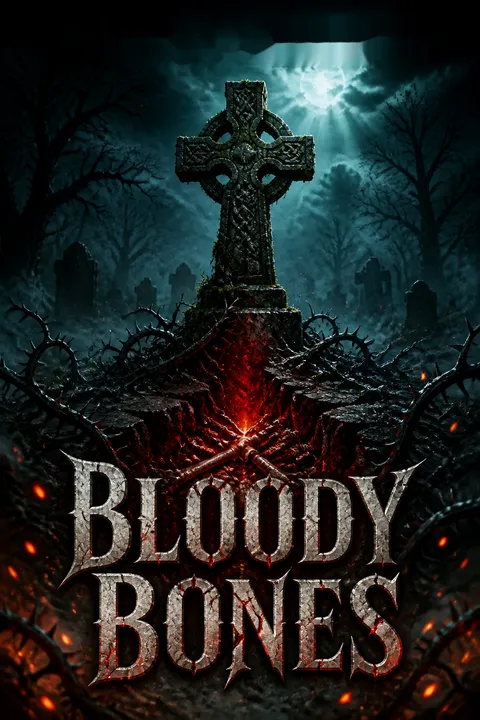


Plot Summary
The Cemetery Bid
Animator Anita Blake’s boss, Bert, shows her photographs of a cemetery mangled by construction equipment near Branson, Missouri. A law firm wants every body raised so the dead can identify themselves and settle a land dispute.
They are roughly two centuries old, their bones mixed, and Anita cannot promise she can raise them all. Bert has bid aggressively because other animators cannot do the job. He wants to protect his nearly-as-skilled employee John Burke from another client’s preference for Anita, so he sends trainee Larry Kirkland instead.
Before leaving, Anita visits Richard Zeeman, the werewolf science teacher she is dating. Their attraction is strong, but their relationship is complicated by Jean-Claude, a vampire who has forced Anita to date them both rather than risk Richard’s death.
The job begins as a commercial problem, but its terms expose the story’s deeper unease: the dead are being treated as legal evidence, and Anita’s unusual power is being priced like specialized equipment. Bert’s business instincts and Anita’s professional pride make her accept a task whose risks neither has measured. Her visit to Richard adds a second kind of pressure. She is already negotiating intimacy under threat, so the assignment begins with her trying to preserve agency in both work and love.
A Mountain Under Oath
The client’s representative, Lionel Bayard, flies Anita and Larry to the Ozarks, where senior partner Raymond Stirling oversees the resort project. Stirling dislikes Anita’s clothes and bluntness, then tries to have her inspect the graves alone with him.
On the damaged mountaintop, she finds bones scattered across the ground and realizes daylight prevents her from sensing them properly. Stirling admits he has invested his fortune and other people’s money in the development.
He asks Anita to make the dead deny being Bouviers, even if they are. She refuses, telling him that the zombies will identify themselves truthfully. Before they can discuss the dispute further, Anita receives a police page and learns that three bodies have been found nearby.
Stirling’s request makes the land dispute a test of whether expertise serves truth or whoever can pay for it. Anita refuses not because she is indifferent to the money, but because the dead cannot be made into compliant witnesses. The exposed bones also give the mountain a bodily presence, as if construction has already violated the place before the supernatural danger appears. Her police work interrupts the contract, establishing that she will not reliably subordinate one obligation to another.
Three Bodies in Leaves
At a wooded hollow, Anita examines three mutilated young men. Their wounds suggest a blade too large and swift for an ordinary attacker, while the missing body parts resemble the sites vampires use to feed. Larry vomits but remains with her.
Sergeant Freemont of the Missouri Highway Patrol dismisses Anita’s expertise until Anita learns that an earlier teenage couple was killed nearby in a similar way. The missing hand, throat cuts, and damage to the faces strengthen her suspicion that a vampire is disguising its feeding.
Freemont had blamed the first murders on the girl’s ex-boyfriend and withheld the link between cases. Anita warns that the attacker may have exceptional mind control, then leaves with the photographs and a promise to assist, despite Freemont’s insistence that she stay out.
Anita’s advantage is not mystical certainty but a willingness to begin with the possibility that the impossible is real. Freemont’s earlier theory is plausible enough to delay recognition, while her pride makes that delay harder to correct. The bodies also unsettle Larry’s romantic idea of monster hunting; the work is physical, nauseating, and morally consequential. Anita’s warning about mind control shifts the problem from identifying a killer to questioning whether any witness, including a trained officer, can trust their own perception.
Lovers' Night at Bloody Bones
Rather than return directly to the construction site, Anita takes Larry to Bloody Bones, the Bouviers’ remote bar, to question its owner. Magnus Bouvier makes the patrons appear more beautiful and desirable through glamor, a form of fey magic he presents as a consensual Friday-night indulgence.
Anita recognizes the power and warns him that it is illegal when used without consent. His sister Dorcas, who disapproves of the practice, watches the bar. Magnus admits he cut down the trees near the road during a drunken rampage, an unsettling match for the cleanly severed trunks Anita and Larry found.
He says his family will not sell their land, but offers no convincing explanation. When police report another vampire victim, Anita gives Magnus’s name to Detective Dolph Storr as a possible suspect.
The bar makes consent difficult to separate from enchantment: patrons may enjoy the altered evening, but Magnus controls the conditions under which they experience desire. Anita’s resistance marks her as an unusually difficult subject to manipulate, though it does not make her immune to danger. The cut trees connect his private excess to the murders without proving guilt. Her decision to tell Dolph is a practical act of risk management, but it also puts Magnus’s hidden identity in the hands of authorities with little reason to protect him.
Ellie on the Pink Bed
In the town of Monkey’s Eyebrow, Sheriff David St. John asks Anita to examine seventeen-year-old Ellie Quinlan, found dead in her bedroom. The marks on Ellie’s body suggest a vampire lover, not a stranger forcing entry.
Anita tells the sheriff that Ellie likely invited the vampire inside and may rise as a vampire herself, so she persuades him to delay her parents’ request to stake her. Ellie’s brother Jeff confirms that their dog barked when someone arrived, then again when Ellie stopped answering.
He also reveals that Ellie’s boyfriend, Andy, disappeared two weeks earlier with his car. Their father had forbidden the relationship. Anita suspects Andy was turned into a vampire and returned to Ellie, then learns that Jeff has vanished from the house.
Ellie’s room forces Anita to distinguish sexual choice from consent to death, a distinction the grieving adults struggle to face. The family’s religious fear makes staking seem like rescue, while Anita’s experience makes it an irreversible killing. Jeff’s account turns small domestic routines, a barking dog and a locked bedroom, into investigative evidence. The missing boyfriend supplies a motive and a likely connection, but the case now includes a living child in danger, making delay more costly than uncertainty.
The Woods Take Their Due
Anita leads St. John, Larry, and two state officers into the woods to find the vampire before it relocates. Several vampires ambush them. Anita kills one while it attacks Larry, but Deputy Coltrain is cut down by a sword-wielding figure.
A mind-controlled Officer Granger aims at Larry, forcing Anita to shoot him. Another vampire breaks Officer Wallace’s arm, and the attackers escape. At the Quinlan house, a second creature kills Beth St. John, while the vampire who murdered Ellie takes Jeff.
Anita recognizes an ancient force among the attackers and realizes the group is far beyond the local police’s experience. Feeling responsible for the boy, she calls Jean-Claude, the Master of the City in St. Louis, and asks him to help her reach Branson’s vampire master.
The hunt turns Anita’s expertise into a form of command, but command cannot guarantee survival. Her decision to shoot Granger is especially costly because she must treat a colleague as a lethal threat before she can know whether he is acting freely. The attack punishes the officers’ institutional confidence and Anita’s own inability to protect everyone. Her guilt over Jeff is not proof that the deaths were hers to prevent, yet it becomes the emotional engine that draws Jean-Claude into a dangerous political conflict.
The Graveyard Answers
Before dawn, Anita returns to the ruined cemetery with Larry to begin the work Stirling hired her for. She discovers she can sense the scattered dead without raising them, and Larry can feel the cold field of her power.
When he joins her, several angry ghosts appear and their combined ability reaches far beyond Anita’s usual range. Magnus arrives and begs them not to raise the dead. Stirling has brought Beau, the foreman, armed with a shotgun, and threatens Magnus for trespassing.
Anita points her own gun at Beau and stops the confrontation from becoming a shooting. She leaves without raising anyone. In the moonlight, she recognizes that some remains are nearly three centuries old and include Indigenous ancestors, not just the European family graves Stirling described.
The cemetery’s power is collaborative: Larry’s presence expands Anita’s reach, but it also awakens forces they do not understand. That makes mentorship a practical danger rather than a sentimental subplot. Magnus’s urgency and Stirling’s armed response reveal that both men know more than they have disclosed, yet their competing motives remain opaque. The Indigenous remains further complicate the clients’ tidy legal story. The land is not merely a parcel contested by two families; its history exceeds the paperwork meant to settle ownership.
A Coffin Missing at Dawn
Jean-Claude arrives at Anita’s hotel before sunrise, bringing werewolf Jason as part of his show of strength. His coffin has disappeared from the airport, apparently taken by Branson’s master as a warning against entering without permission.
Anita refuses to let the delay distract her from Jeff, while Larry resents being treated as a novice after surviving the hunt. The trio must wait through daylight, and Jean-Claude sleeps in Anita’s room without his coffin.
When morning comes, Anita watches his body become completely still and cold, a sight that sharpens her conflicted attraction to him. Dorcas later visits, looking for Magnus. She wants Anita’s help finding her brother, but distrusts the police and warns that the local supernatural conflict involves more than the murders.
Jean-Claude’s missing coffin makes political etiquette tangible: a rival can inconvenience him by controlling the place where he must sleep. Anita’s insistence on urgency collides with the slow procedures of vampire diplomacy, while Larry’s anger reveals that protection has begun to feel like condescension. Watching Jean-Claude become inert unsettles the erotic tension between them by making his death literal rather than metaphorical. Dorcas’s appeal adds another layer of obligation, asking Anita to help someone whose secrets she has already exposed.
Janos Sets the Terms
Jean-Claude takes Anita, Larry, and Jason to the lair of Serephina, Branson’s master vampire, where they encounter Janos, an ancient servant with power greater than Jean-Claude expected. Janos stages a cruel test using two human women as leverage.
Larry volunteers to take a whipping, while Jason submits to the vampires’ sexual demands to spare the women. When Janos’s followers torment Jason with their decaying forms, Anita prepares to intervene. Jean-Claude challenges Janos, and Anita challenges the younger vampire Ivy, whose anger gets the better of her.
Ivy throws Anita across the room, breaking the truce. Anita shoots the attacking vampires while Larry fights beside her. Jean-Claude collapses after Janos defeats him, and Anita feeds him her own blood, then allows Jason to give more.
The test exploits the difference between formal consent and coercion. Janos can claim the women volunteered, but their fear and the threatened punishment make that claim morally hollow. Larry and Jason respond in sharply different ways, each accepting a cost to protect strangers. Anita’s intervention breaks the rules that Jean-Claude hoped would keep them safe, yet those rules were already being used to stage harm. Saving Jean-Claude then requires the intimacy she has resisted: her blood becomes both emergency medicine and a bodily bond.
Serephina's Borrowed Motherhood
Magnus leads the injured group before Serephina, who commands ghosts and offers Anita the illusion of her dead mother’s love. The memory nearly draws Anita into her arms, but Anita breaks the spell by using pain to anchor herself. Serephina agrees to help find Jeff, though Anita does not trust her motives.
Back at the hotel, Jean-Claude explains that the rotting forms of Janos and his companions are real, not illusions, and confides that he was abused as a child and used as a whipping boy. Their frankness changes the distance between them; Anita kisses him, then watches him succumb to daylight.
After waking from a dream carrying her mother’s perfume, Anita refuses to seek a false warrant against Serephina. She meets Dorcas, who takes her and Larry to the hidden mound where the Bouvier family guards an imprisoned creature.
Serephina’s attack works because it offers not power or pleasure but the childhood safety Anita lost when her mother died. Anita survives by recognizing that longing is not evidence of truth. Jean-Claude’s account of his past complicates her habit of categorizing him as a predator, even as his body’s daylight death keeps that danger visible. Her refusal to manufacture a legal pretext shows that moral restraint is not passivity. She will fight Serephina, but she will not invent a crime to make the fight easier.
The Barrow's Secret
At the mound, Dorcas finds Magnus feeding on the imprisoned Rawhead and Bloody Bones, a fey creature held beneath a Celtic cross and bluebells. Their ancestor bound it after it slaughtered members of the Indigenous community he had married into, then used its blood to strengthen the family’s magic.
Magnus has secretly renewed that bargain for years, gaining power but allowing the creature to call to him. Dorcas condemns him, and Anita realizes the ancient being may be connected to the killings. She agrees not to tell the police until she can assess the prison herself.
Magnus warns that raising the cemetery dead could break the wards, but Dorcas believes a limited raising may help the Bouviers protect their land. Anita prepares to raise only a few bodies, while Serephina’s interest in Magnus and his borrowed immortality grows clearer.
The mound reveals that family inheritance here is not a gift but a recurring debt. The Bouviers’ magic depends on a violence their descendants have tried to contain, and Magnus has revived the bargain for personal power. Dorcas’s horror shows that kinship does not erase accountability. Anita must weigh a promise to protect the creature’s prison against a duty to expose a possible killer. The plan to raise only a few dead seems cautious, but it rests on a landscape already saturated with older, competing rites.
Blood Closes the Circle
Anita and Larry return to the mountaintop with goats, ritual tools, and a plan to raise three of the oldest dead. They combine their power, using blood from one goat and cuts on their own arms to form a circle. Before Anita can close it, Ivy attacks and knocks away her gun.
Anita drives a crucifix against Ivy, then kills her with the machete. Ivy’s blood spills across the unfinished boundary, completing it. The cemetery answers with far more power than Anita intended: bones assemble, flesh returns, and nearly twenty dead rise as coherent people.
The force beneath the mound breaks free while Anita struggles to pull the spreading power back into herself. She commands the newly risen dead to live, then sees Stirling, Bayard, and Ms. Harrison emerge with guns.
The ritual’s failure is not a lack of skill but a collision of systems: Anita and Larry’s shared power meets blood magic already embedded in the land. Ivy’s attack supplies the final blood by accident, turning a defensive killing into the mechanism of release. Anita can redirect the resulting power, but cannot prevent its first consequence. The dead rise as people rather than disposable bodies, making the coming violence harder to treat as a simple fight between humans and monsters.
The Client Turns Killer
Stirling opens fire on the newly risen Bouviers, then shoots Bayard when the lawyer refuses to keep attacking. Anita orders the dead to shield her and Larry. When Ms. Harrison fires at them, the zombies overwhelm her; Anita stops the attack before it kills her.
Stirling circles behind Anita and threatens her with his .45. Larry distracts him, giving Anita room to disarm him and break his arm. She then sends the zombies back underground.
Janos arrives at the hilltop with Jeff, alive but held as a hostage, and reveals that Serephina has been directing the larger scheme. Anita gives up her weapons rather than risk Jeff’s life. Stirling begs her to save him from the vampires he helped empower, but Anita refuses to intervene when they feed on him.
Stirling’s violence strips away the respectable language of development and contract. He is willing to kill both the dead and his own employee when they cease to serve his plan. Anita’s control of the zombies is necessary for survival, but her choice to halt them before they kill Ms. Harrison marks a limit she will not surrender, even under fire. Jeff’s return appears to offer relief, yet his use as leverage shows that he remains inside the vampires’ power. Stirling’s fate forces Anita to confront the difference between justice and revenge.
Immortal Blood
After Jean-Claude arrives with reinforcements, the group accepts Serephina’s demand to attend her gathering rather than risk Jeff. At her lair, they find Ellie newly risen and Xavier, the ancient vampire who took Jeff.
Serephina intends to drink from Rawhead and Bloody Bones, hoping its longevity will make her immortal. She attacks Jean-Claude, but Anita and Larry use their crosses to interrupt her power. The creature emerges from its prison, and Xavier reveals that he is fey-blooded and wields cold iron, the weapon capable of killing it.
When Serephina breaks her bargain, Rawhead and Bloody Bones turns on her and wounds Magnus. Anita and Xavier join forces to kill the creature. Xavier then refuses to release Jeff, and Janos takes Larry hostage, forcing Anita to surrender herself to Serephina.
The gathering converts every earlier secret into immediate leverage: Jeff is a hostage, Ellie is a consequence of the vampire’s recruitment, and the creature’s blood is the prize. Serephina’s desire to escape mortality mirrors the human developers’ fantasy that land and money can be secured permanently. But the bargain she breaks gives Rawhead and Bloody Bones a reason to retaliate. Xavier’s cold iron exposes how incomplete Anita’s knowledge has been. Even after the creature falls, the victory is unstable because Serephina can still use Anita’s attachment to others against her.
Fire at Bloody Bones
Serephina traps Anita in her coffin and uses the image of Anita’s mother to keep her subdued. When Anita wakes, she escapes into daylight and reaches the door, but Magnus tries to force her back inside. Anita cuts herself, smears blood on Ellie, and raises the newly dead girl long enough for her to seize Magnus.
Both vampires burn in the sun. Anita reaches the police, obtains help, and returns with a warrant as officers prepare to burn the lair. Serephina again invades Anita’s mind, this time making her beg to stop the fire; Larry recognizes the deception, and the officers restrain Anita until the building is consumed.
Jean-Claude and Jason survive, but Jeff and Ellie are lost. Anita recovers in hospital, carrying injuries, nightmares, and a more intimate, still uneasy bond with Jean-Claude.
Anita escapes by turning the very abilities that made her dangerous into tools of survival: her blood awakens Ellie, and daylight completes what violence alone could not. The final fire is not a clean emotional victory. Serephina’s use of Anita’s mother leaves her trapped between resisting manipulation and feeling its grief as real. The loss of both Quinlan children defeats the story’s rescue fantasy, while Larry’s recognition of the deception shows how much he has learned. Anita ends alive, but innocence and certainty are not restored.
Analysis
Bloody Bones repeatedly asks what it means to call someone a monster, then refuses to let the answer stay simple. Anita kills vampires for a living, raises corpses for clients, and can wield the dead as force, yet she insists that the people she protects remain more than tools or evidence. Her refusal to falsify the cemetery’s testimony and her decision to stop the zombies before they kill Ms. Harrison show that ethical limits matter most when keeping them has a cost. The novel does not make her morally pure; it makes her responsible for choices whose consequences cannot be neatly undone.
The book’s competing forms of power are also competing accounts of consent. Magnus’s glamor gives patrons an experience they may welcome, while Serephina’s ability to imitate Anita’s mother targets a need too intimate to dismiss as mere trickery. Janos exploits formal rules to disguise coercion, and Stirling treats money as permission to reshape both land and people. Against these forces, Anita’s practical habits, asking questions, checking bodies, carrying weapons, become ways of defending judgment itself. Yet even good procedure fails when the dog door goes unguarded or an ancient vampire can cloud perception.
The cemetery and the Bouvier mound make history active rather than settled. The developers’ legal claim cannot erase Indigenous remains or the violence that produced the family’s inherited magic. The dead return not as neutral records but as people who can resist, suffer, and act. That revival gives the novel its sharpest contradiction: Anita’s gift can restore identity, but it can also unleash powers beyond her control. The conclusion offers no clean restoration. Jeff and Ellie are lost, Anita survives with guilt and trauma, and her relationships with Richard and Jean-Claude remain unresolved. Survival is real, but it is not the same as being made whole.
Review Summary
Bloody Bones receives mixed reviews, with ratings ranging from 1 to 5 stars. Fans praise the dark tone, action-packed plot, and character development, particularly for Jean-Claude. Critics dislike Anita's arrogance and rudeness. The book introduces fae elements and explores vampire politics. Some readers find the multiple storylines engaging, while others feel they're confusing. The relationship drama between Anita, Jean-Claude, and Richard continues to be a focal point. Overall, readers appreciate the series' creativity and world-building but have varying opinions on Anita's character.
People Also Read


Characters
Anita Blake
Animator and vampire hunterAnita raises the dead for a living and works as a legal vampire executioner, skills that place her between police procedure and supernatural danger. She is observant, blunt, and practiced at treating fear as information rather than a command. Her sense of responsibility can become punishing: she holds herself answerable for dangers she could not fully foresee. Anita resists being controlled, yet her feelings for Jean-Claude and Richard expose competing desires for safety, freedom, and intimacy. Her growing willingness to recognize personhood in some monsters does not make her less dangerous. It makes her more deliberate about when violence is necessary and what it costs.
Jean-Claude
Master vampire suitorJean-Claude is the Master of the City of St. Louis, an elegant vampire who treats influence and presentation as carefully as other people treat weapons. He is drawn to Anita, but his desire is entangled with possession, politics, and the supernatural bond between them. His courtly manner can conceal calculation, while his past gives his sophistication a more vulnerable origin than Anita expects. He understands the rules governing vampire territory and uses them to protect his standing, though his plans are not always transparent. Around Anita, he meets an unusually stubborn resistance that both frustrates and fascinates him.
Richard Zeeman
Teacher with a wolfRichard teaches science at a junior high school and is also a werewolf, a fact he keeps from the people who might use it to exclude him. Warm, principled, and openly affectionate, he offers Anita a more ordinary kind of intimacy than Jean-Claude does. His belief in fairness sometimes collides with the compromises her work demands. Their attraction is real, but so are the strains created by Anita’s relationship with Jean-Claude and the dangers surrounding them.
Larry Kirkland
Apprentice animator hunterLarry is a young animator training under Anita while completing his education in preternatural biology. Curious and attentive, he learns by watching what she does, then tests whether he can do it himself. His moral instincts are generous, sometimes to the point of recklessness, and his desire to become a vampire hunter is not a passing fascination. Anita’s protectiveness keeps him safe but also risks limiting his growth. He wants to be trusted with the real work, including its danger, rather than treated as a child who can only observe.
Raymond Stirling
Ambitious resort developerStirling is the senior partner financing an exclusive resort in the Ozarks. He is controlling, proud, and accustomed to making people adapt to his timetable. His investment has consumed more than money; he sees the development as proof of his judgment and personal power. He treats Anita as both a tool he needs and an unpredictable person he cannot easily manage. His polished business manners do little to hide how fiercely he guards his ambitions.
Lionel Bayard
Nervous junior partnerBayard is the law firm’s junior partner and the intermediary between Anita and the resort’s investors. He is meticulous about paperwork and eager to satisfy his powerful superiors, but he is less secure when events move beyond legal language. His habit of smoothing his tie and consulting his memos reveals a man seeking safety in procedure. He can recognize when a situation has crossed a line, even when speaking up carries a cost.
Magnus Bouvier
Glamoured bar ownerMagnus runs Bloody Bones with his sister, Dorcas, and possesses the fey gift of glamor. Charming and sensuous, he knows how to make others see what they most want, yet Anita’s resistance unsettles him. His confidence shades into recklessness, particularly when power and desire are involved. He regards the land and his family’s history as more complicated than a simple offer of money can resolve. His charm makes him difficult to read, and his secrets place him at the center of dangers he does not fully control.
Dorcas Bouvier
Fey sister and guardianDorcas is Magnus’s sister and co-owner of Bloody Bones. More restrained than her brother, she disapproves of using magic to manipulate patrons and takes her family’s inherited responsibilities seriously. Her visions give her access to information that ordinary investigation cannot provide, but they do not make trust easy. She is proud, direct, and protective of the land, even when family loyalty puts her in conflict with Magnus.
Serephina
Branson's vampire masterSerephina rules the vampire territory around Branson and commands a presence built on age, supernatural force, and careful theatricality. She can summon ghosts and perceive the private needs that make people vulnerable. Her long life has not freed her from fear; it has taught her to treat mortality as an enemy to outwit. She expects deference from those who enter her domain and regards human law as a constraint whose value must be weighed against vampire power.
Xavier
Ancient vampire predatorXavier is an unusually dangerous vampire whose movements and influence exceed what Anita expects from the undead. He is connected to the killings near Branson and to the local vampire hierarchy. His calm manner makes his violence more unnerving, and he operates with a patience that suggests long experience. Xavier understands how fear and appetite can be used to control others, and his presence forces Anita to reconsider what she knows about vampire abilities.
Janos
Ancient vampire enforcerJanos serves Serephina and carries himself with the authority of someone who has survived several centuries. His gaunt appearance and precise speech contrast with his appetite for cruelty. He understands vampire rules well enough to exploit their technical boundaries, turning etiquette into a weapon. Janos is dangerous not only because of his strength, but because he can make coercion appear orderly.
Jason
Werewolf in Jean-Claude's circleJason is a young werewolf in Jean-Claude’s circle who is used to taking direction from more dominant supernatural figures. He is irreverent and provocative, but his humor does not erase the vulnerability beneath it. His willingness to endure discomfort for others surprises Anita, who initially assumes he is motivated mostly by appetite and self-interest. He is still learning what kind of power he is willing to claim for himself.
Dolph Storr
Preternatural police commanderDolph leads the Regional Preternatural Investigation Team and regularly calls on Anita’s expertise. He is practical, blunt, and protective of his people, while recognizing that ordinary police training cannot answer every supernatural threat. His trust in Anita is earned through work rather than sentiment. He also understands the political costs of bringing a civilian specialist into a case.
Sergeant Freemont
Highway Patrol investigatorFreemont is the state investigator initially responsible for the Branson murders. She is competent and proud of her authority, wary of outside specialists who might take credit for her case. Her first explanation for the killings is shaped by ordinary criminal patterns, but she is capable of listening when evidence defeats that explanation. She wants to solve the case herself and protect her officers, even when those aims conflict.
David St. John
Local sheriff and husbandDavid St. John is the sheriff of Monkey’s Eyebrow and Beth’s husband. He knows the small community he polices and has personal ties to the family at the center of the case. When confronted with a vampire crime, he is frightened but determined to act. His instinct to protect his people makes him receptive to Anita’s advice, though he has little experience with the supernatural dangers she describes.
Beth St. John
Sheriff's steadying partnerBeth is David St. John’s wife and a calm presence in the aftermath of Ellie Quinlan’s death. She comforts the grieving family and performs small practical tasks when there is little else she can do. Her composure is not indifference; it is a way of holding the room together while others struggle. She is one of the few people in the investigation whose authority comes from care rather than law or supernatural power.
Jeff Quinlan
Grieving teenage brotherJeff is Ellie Quinlan’s younger brother, observant and more self-possessed than his parents expect. He understands the strained history between Ellie and their father, and he can recognize details adults overlook. His loyalty to his sister shapes how he interprets her relationship with Andy. Beneath his intelligence and guarded manner, he remains a teenager confronting a danger no family should have to name.
Ellie Quinlan
Teenage sister at the centerEllie is a seventeen-year-old student from a devout family who is secretly involved with Andy, a boyfriend her father disapproves of. Her carefully prepared appearance and schoolwork complicate her parents’ picture of her as simply a good girl led astray. She has private desires and relationships her family cannot fully see. Her story places Anita between the legal definition of death, the family’s faith, and the possibility of an unwanted supernatural transformation.
Ivy
Young master vampireIvy is a young vampire in Serephina’s circle, quick to challenge and eager to prove her authority. Her confidence often outruns her judgment, especially when Anita refuses to be intimidated. Ivy’s volatility makes her a revealing contrast to the older vampires around her, whose power depends on patience and control.
Kissa
Vampire guard and courtierKissa serves in Serephina’s household and is assigned to guard people the master wants controlled. She is striking, disciplined, and difficult to read. Her position depends on loyalty, but the hierarchy around her is unstable enough that obedience does not guarantee security. Kissa’s presence shows how the vampire court makes its members both agents of power and subjects of it.
Plot Devices
Necromantic power
The dead become witnessesAnita can sense and raise the dead, calling a corpse back into a state where it can sometimes answer questions. The work is constrained by age, bodily condition, available power, and the circumstances of a burial. In this story, a scattered cemetery makes ordinary methods uncertain, while Larry’s ability to combine power with Anita expands what she can reach. The device gives the land dispute a supernatural solution, but it also creates the possibility of waking forces that earlier generations tried to contain.
Fey glamor
Desire distorts perceptionFey glamor alters what people perceive, making them appear more beautiful, obscuring actions, or encouraging a desired response. Magnus uses it at Bloody Bones to change how patrons see themselves and one another. Anita’s resistance makes her useful and dangerous to the fey, but the protection is not absolute against every supernatural power. The device keeps uncertainty alive: a person may be consenting, confused, or manipulated, and the characters must determine which without assuming that their own senses are reliable.
Crosses and protective rites
Faith creates a barrierAnita’s vampire-hunting practice combines weapons with religious protections. Crosses can burn or repel many vampires, while holy objects placed at entrances can help protect a home from an invited vampire. The protections have limits: some powerful vampires can overcome them, and an overlooked entrance can undo the precautions. Their practical effect depends on knowledge and circumstance, not on a guarantee that good intentions will keep everyone safe.
The Bloody Bones pact
Inherited power carries a debtThe Bouvier family’s fey abilities originate in an ancestor’s binding of Rawhead and Bloody Bones, a creature whose blood was used to strengthen the family. The creature was imprisoned beneath a mound protected by several traditions, and the family inherited responsibility for maintaining that prison. Magnus renews the dangerous connection for his own power, while Serephina sees the creature as a possible route beyond mortality. The pact links the land dispute, the murders, and the family’s magical history.
Anita Blake, Vampire Hunter Series


About the Author
Download PDF
Download EPUB
.epub digital book format is ideal for reading ebooks on phones, tablets, and e-readers.








