

Plot Summary
Peggy Smitz Vanishes
December is a slow season for Anita Blake, an animator who raises the dead and executes vampires, so her boss sends her an unusual client. George Smitz says his wife, Peggy, has been missing for two days. She is a lycanthrope, and he fears that reporting her disappearance will expose her and ruin her butcher shop.
Anita cannot investigate missing people, but she persuades her friend Ronnie Sims, a private investigator experienced with preternatural cases, to see him. George leaves with Ronnie’s contact information, while Anita is already late for a date with Richard Zeeman. His worry about their two children stays with her. She also decides her boss must stop assigning her cases she cannot handle.
The case begins with a conflict between the need for help and the need for concealment. George’s fear is not irrational: the law may protect lycanthropes, but social suspicion can still cost them work and family stability. Anita’s referral to Ronnie shows both professional boundaries and moral unease. She does not abandon the missing woman, but she also cannot yet recognize the larger danger surrounding her. The detail about George’s children gives the request an emotional weight that his secrecy cannot erase.
A Date Interrupted
At the Fox Theatre, Anita and Richard share a tender evening until Jean-Claude, the city’s master vampire, appears after the crowd has gone. He needles Richard about a succession fight with Marcus, the werewolf pack leader, and reveals that Richard may have to kill Marcus or be killed himself. Richard has concealed the danger from Anita, insisting it is his business.
Her beeper interrupts their argument with an urgent call from Detective Sergeant Dolph Storr: a body has been found in the woods, and the police suspect a preternatural attack. Anita leaves the men behind, angry at Richard for keeping her ignorant and unwilling to trust Jean-Claude’s reasons for stirring the conflict.
The date turns intimacy into a test of what each person considers protection. Richard withholds information to shield Anita, but his silence also denies her the choice to judge the danger for herself. Jean-Claude uses that omission to undermine their relationship, making jealousy inseparable from genuine political knowledge. Anita’s departure for work is more than a plot transition: faced with two men trying to define what she may know, she chooses the responsibility she understands, even while the emotional consequences follow her.
Gretchen’s Warning
Outside the theatre, a blond vampire named Gretchen uses her power to dominate a traffic officer, then turns it on Anita. Anita resists the attempt to cloud her mind and keeps her gun ready, forcing Gretchen to explain that she wants Jean-Claude left alone. Anita refuses to claim him and says she would gladly avoid him, but Gretchen reads desire as rivalry.
Jean-Claude arrives and rebukes Gretchen for disobeying his instruction to stay away. Her distress strips away her carefully human appearance, exposing a corpse-like face and fangs before she flees into the night. Anita refuses Jean-Claude’s apology and drives toward the murder scene, now carrying a fresh threat from a vampire who believes she is in the way.
Gretchen’s threat grows out of a painful misreading: she treats Anita as a rival because she cannot imagine Jean-Claude’s attention being unwanted. Her power over the officer reveals how easily supernatural force can pass as ordinary authority, while Anita’s resistance marks her as unusually difficult to control. Gretchen’s loss of composure makes her devotion visible, but it does not make her harmless. Anita’s refusal to accept Jean-Claude’s apology preserves her independence, though it cannot prevent his private entanglements from becoming her danger.
Teeth in the Snow
At a snowy clearing near St. Ambrose Monastery, Anita finds county Sheriff Titus blocking the Regional Preternatural Investigation Team from examining the victim. After a deputy points a gun at her, city detective Clive Perry and Dolph defuse the confrontation and win Anita access to the body.
The corpse has been mauled and partly eaten, but tooth marks, huge claw wounds, and fresh scars on an overhanging branch tell Anita this was no bear attack. A shapeshifter waited above the victim and struck deliberately. Titus admits that a rogue shifter killed five people in the county years earlier, then confesses he had hoped this would be a bear. The discovery changes the call from an animal scare into a murder investigation.
The crime scene establishes that institutional resistance can be as dangerous as ignorance. Titus protects his jurisdiction by dismissing supernatural evidence, while his deputy turns that dismissal into a physical threat. Anita’s examination depends on reading details officials would rather ignore: teeth instead of claws, a body moved after death, and damaged bark above the clearing. Her conclusion does not identify the attacker, but it changes the category of the event. What the sheriff hoped to contain as wildlife becomes an intentional killing.
Irving Names the Pack
Back at her apartment, reporter and werewolf Irving Griswold explains why Richard has not told Anita the whole story. Richard once had Marcus at his mercy in a pack fight, but refused to kill him; now Marcus still rules, and the contest remains dangerous. Irving also says Marcus wants to meet Anita and has forbidden lower-ranking pack members from contacting her.
He is caught between that order and Richard’s prohibition, so Anita promises him protection in exchange for straight answers about lycanthrope life. When Irving admits Marcus expects to meet that night, Anita agrees only if Irving attends. Her decision draws her directly into a pack dispute that Richard had tried to keep outside their relationship.
Irving’s position reveals how hierarchy can turn ordinary communication into a risk. He is both a reporter and a member of the pack, yet his earlier work has made other shapeshifters distrust him. Anita’s protection offers him a way to approach her, but pack custom gives that act consequences neither of them fully understands. Her decision to meet Marcus is driven by loyalty to Irving and concern for Richard, not by a wish to join the pack. Still, entering their system means their rules will begin to shape her choices.
Blood at the Cafe
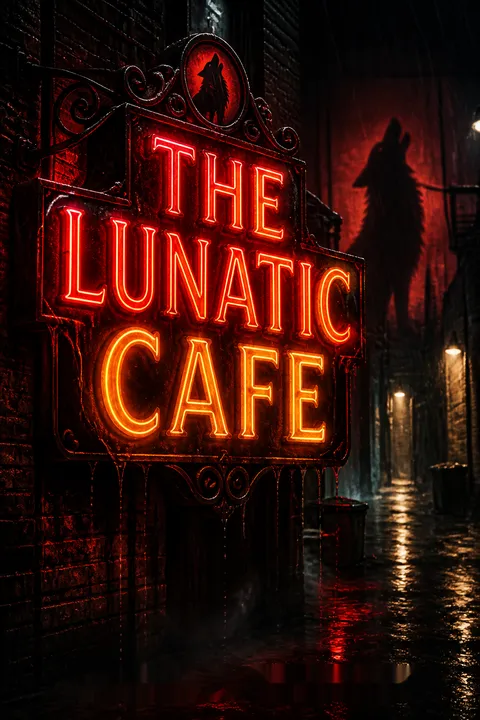
At the crowded Lunatic Cafe, Anita sees that its friendly patrons are largely shapeshifters. Marcus asks her to help with a problem but insists Irving leave and allows his bodyguard, Alfred, to search her. Anita bargains for Irving’s safety under pack law and sends him away protected. When she refuses Marcus’s claim to authority, Alfred grabs her throat.
Later, Alfred charges again to seize her hidden backup pistol, and Anita shoots him with a silver round. Marcus mourns the man but acknowledges that he helped force the confrontation. Gabriel and another shifter feed from Alfred’s blood, triggering a violent frenzy that nearly overwhelms the room. Marcus hands Anita a folder and has Kaspar Gunderson escort her out.
The meeting makes the pack’s hierarchy tangible through bodies: who may search whom, who can command an enforcer, and what happens when a human refuses those claims. Anita’s killing of Alfred is a defensive act, yet it cannot be separated from Marcus’s decision to press the confrontation. The blood frenzy complicates any easy distinction between civilized society and animal appetite. Marcus tries to control the room by asserting leadership, but the crisis exposes how little control his authority guarantees once desire and violence spread among the pack.
Eight Names on Paper
At 5:35 in the morning, Anita reads Marcus’s folder and finds eight missing lycanthropes, with Peggy Smitz listed among them. The disappearances have left no bodies, signs of violence, or reliable witnesses. Marcus believes other shapeshifters may speak more freely to Anita than to a pack leader, though he also directs her toward people he regards as political rivals.
She realizes George did not know Peggy was one of several missing people and tells Ronnie the case is more than a single absent wife. Ronnie emphasizes the need for photographs and begins checking possible leads. Anita also contacts Edward, the bounty hunter she notices at the Cafe, because she needs to know why he is in town.
The folder transforms a personal plea into a pattern, and the shift changes what counts as responsible action. Anita can no longer treat Peggy’s absence as a private marital crisis. Yet the missing people belong to a community that has reason to distrust police and outsiders, so the obvious investigative route is also politically fraught. Marcus’s list is useful but not neutral: it directs suspicion toward his rivals. Anita must take information from a leader she does not trust while resisting his attempt to control what the information means.
Promises Before Dawn
During a workday crowded with unwanted assignments, Anita meets Elvira Drew, a polished writer seeking a wererat for a book, and Kaspar, who asks her to raise two ancestors so a witch can identify the source of his curse. Bert has accepted both clients without consulting her, reinforcing her sense that other people keep deciding what her work should include.
Richard then calls, and Anita arranges to meet him after work. Their conversation begins with the fight over his secrecy and turns toward what it would mean to marry a lycanthrope. Richard says he wants a life with her; Anita, moved by his sincerity and attraction, accepts. Almost at once, she recognizes that desire has outrun her understanding of what he is.
The proposal places Anita’s private longing beside the professional habit of managing risk. She can assess a weapon, a corpse, or a client’s request more readily than the cost of sharing a life with someone whose nature she has not witnessed. Richard’s openness is a real change from his earlier concealment, but it does not solve the question raised by that concealment. Her yes is neither a settled promise nor a mere mistake. It is an attempt to imagine happiness before fear has finished making its case.
The Film’s Second Ending
Edward shows Anita a recording made during a sexual encounter between a woman and two shapeshifters. One man is Alfred; the masked participant changes into a wolf-like creature, and the scene ends with the woman being killed and eaten. Edward explains that the victim’s father hired him to find the men. Anita cannot give him Alfred, who is already dead, but asks Richard to see the footage.
Richard recognizes the pack’s involvement in erotic films and admits Raina pressured him to participate, though he refused. The violence in the recording excites him as well as horrifies him, and he lets Anita feel the power of his beast. She realizes that accepting his proposal without understanding this part of him was premature.
The film collapses the boundary between performance and violence. What begins as sexual spectacle is revealed to include an actual death, making the viewer’s gaze part of the horror. Richard’s reaction forces Anita to confront not simply what he can become, but what he may desire when his instincts rise. His honesty matters, yet it arrives through evidence that has already made the truth impossible to soften. Anita’s doubt is therefore not prejudice alone; it is a response to discovering that intimacy requires knowledge she did not previously possess.
Gretchen Strikes Back
After speaking with Louie Fane, a wererat and Richard’s friend, Anita crosses the Washington University campus and is ambushed by Gretchen. The vampire knocks her down, steals her guns, and pins her before Anita drives a knife into her throat. Louie attacks Gretchen in rat form, but she throws him off and bites his neck.
Anita cannot risk shooting through him, so she tells Gretchen that Richard has proposed and that she accepted. The news persuades Gretchen to spare Louie, but she orders Anita to tell Jean-Claude before dawn and takes Anita’s weapons as leverage. Anita finds Louie breathing, carries his injured body away from the police, and calls Richard to arrange lycanthrope medical care.
Gretchen turns Anita’s romantic uncertainty into a weapon, forcing her to state a commitment before she knows whether she can keep it. The tactic works because Gretchen understands that Anita’s attachment to Richard is real, even when Anita is frightened by what that attachment requires. Louie’s intervention shows that loyalty carries bodily consequences in this world, while Anita’s refusal to abandon him extends the same protection she offered Irving. Her survival depends on improvisation, but the attack leaves her choices increasingly entangled with other people’s demands.
The Coffin’s Lesson
At Guilty Pleasures, Anita delivers Gretchen’s message to Jean-Claude while nursing her injuries and trying to keep Richard away from a confrontation. Jean-Claude learns that Gretchen attacked her and strips the vampire of strength until she can barely move. He places Gretchen in a coffin and seals her inside, a punishment meant to reassert his mastery.
Anita objects to the prolonged humiliation but does not stop him. With Gretchen contained, Jean-Claude threatens Richard, then offers to leave him unharmed if Anita gives him a chance to court her. She agrees to date him for a limited period, hoping his promise will keep the two men from killing each other. The arrangement gives Anita time, but not peace.
Jean-Claude’s intervention protects Anita while displaying a form of power that is itself frightening. His control over Gretchen is intimate and absolute, and Anita’s pity does not erase the vampire’s attempt to kill her. Their bargain reveals how little room she has to make a romantic choice without political consequences: Jean-Claude frames courtship as an alternative to violence against Richard. Anita accepts time rather than affection, using an agreement as a temporary barrier between two dangerous men.
The Predators’ Parlor
After Jean-Claude’s meeting, pack alpha female Raina and the sexually provocative shifter Gabriel enter his office with Kaspar. Raina explains that Kaspar’s unusual ability to change form makes him useful for testing performers in the pack’s erotic films. Gabriel attacks Anita, who stabs him through the stomach; he treats the wound as pleasure until Raina stops her from killing him.
Raina then pressures Kaspar to transform for their amusement, revealing how the pack exploits his curse. At home, Jean-Claude and Richard argue over Raina’s films and their competing claims on Anita. When she touches both men, their powers merge through her body in a startling surge of magic. She forces them apart and withdraws her invitation to stay.
The scene connects the pack’s private entertainment to coercion: Kaspar’s difference makes him valuable to Raina, but not safe from her. Gabriel’s response to being stabbed further unsettles Anita’s moral instincts, since pain and desire do not map onto ordinary human expectations. The later surge between Richard, Jean-Claude, and Anita makes their triangle more than romantic. Their powers can interact through her, suggesting that her body is not merely the object of competing claims but a force capable of changing their balance.
A Skin in the River
During the night, Dolph summons Anita to a river where an enormous snakeskin has been found draped over rocks. While Sheriff Titus’s deputy Aikensen mocks her, Anita approaches the skin and discovers a pearl embedded in its head. Something surfaces beneath it: a man-shaped naga, skinned but still alive.
The creature clings to Anita as the divers retreat, and Aikensen nearly shoots them both before Titus disarms him. Anita identifies the naga as a guardian of pearls and rain, then helps the paramedics get him ashore. At the hospital, the injured man, Javad, manages to tell Anita and Dolph that witches drugged and skinned him. His description of a woman’s ocean-colored eyes gives them a lead.
The river discovery turns an apparently isolated supernatural curiosity into evidence of organized harm. The pearl identifies the victim as something outside the familiar categories of wolf, vampire, or ordinary animal, while his survival makes the violence more disturbing rather than less. Aikensen’s reckless gun handling again places a civilian and a victim in danger. Anita’s willingness to enter the water and protect Javad gives the case a new direction: a living witness can connect the missing shapeshifters to someone who is collecting skins.
The Yellow Living Room
The next morning, Ronnie brings Anita photographs of George with another woman and reports that he recently bought silver bullets. Richard also tells Anita that Jason, a young werewolf, has disappeared. They confront George at his yellow-filled home, where he first performs the grief of a worried husband.
Ronnie shows him the photographs, and his anger threatens to become physical. Raina then enters wearing only a revealing teddy and uses her claws to frighten him into admitting he shot Peggy.
He directs them to her body in an outdoor shed, but denies knowing Jason. Anita concludes that George killed his wife for personal reasons, not as part of the disappearances. She also recognizes that the naga’s skin may be part of a witch’s attempt to imitate shapeshifting.
The Smitz case resolves one absence without resolving the larger pattern. George’s affair gives Ronnie evidence, but Raina’s intimidation produces the confession and confirms that conventional grief can be convincingly performed. The distinction matters: adultery, murder, and the disappearance of lycanthropes are not automatically one conspiracy. Anita’s deduction about the naga’s skin shifts her attention toward a magical method rather than a single predatory animal. The case keeps widening, but each new answer narrows the possible motives.
Ocean-Colored Eyes
At the hospital, Javad identifies his attackers as witches and describes the woman who drugged him by her ocean-colored eyes. Anita recognizes the detail as a match for Elvira Drew, the writer who came to Animators, Inc. seeking a wererat interview. Richard reports that Louie missed his classes and may have gone to meet her, so Anita shares the missing-shifter pattern with Dolph and goes to Elvira’s house.
Elvira refuses entry without a warrant. Anita breaks a spell on a basement door, draws the police inside by shouting, and discovers a huge wolf and black leopard attacking Dolph and Detective Zerbrowski. She shoots both creatures, then finds Louie drugged and restrained. Elvira is arrested, but Jason remains missing.
Anita’s recognition of Elvira’s eyes converts a descriptive fragment into actionable evidence. The decision to share the disappearances with police marks a shift from protecting the shapeshifter community’s secrecy to preventing further harm. That shift is not uncomplicated: Anita breaks the law to reach the basement, and the cost is immediate violence against the officers beside her. Elvira’s arrest appears to close the kidnapping method, but Jason’s absence prevents the case from feeling complete. Louie’s rescue confirms Anita’s instincts, while the missing young wolf keeps the danger active.
The Deputy’s Last Betrayal
Elvira admits to taking the skins of a werewolf, a wereleopard, and the naga, though she denies knowing about all the disappearances. A naturalist at the Audubon Center, Samuel Williams, later reports hearing hyenas near the woods, suggesting another missing shapeshifter may be nearby. When Anita calls back, Aikensen answers Williams’s phone and threatens him.
Anita reaches the scene with Richard and Edward, only to find Williams and two officers dead in the snow. Richard’s grief nearly gives way to his wolf, while Edward prepares for a fight. Kaspar then calls with news that he has found Jason and asks Richard to come. The three men head to Kaspar’s house, unaware that the swanlike shapeshifter has arranged a hunt.
The violence exposes Aikensen as more than a prejudiced deputy: his access to police information and authority has made him a threat to witnesses. Williams’s death destroys the possibility of a quiet resolution and tests Richard’s ability to hold grief and appetite in the same body. Kaspar’s call offers apparent relief at precisely the moment Anita most needs it. The structure uses that relief as a trap, showing how trust can be manufactured through a genuine act of help before its deeper motive is known.
The Hunters’ Cave
At Kaspar’s isolated home, Sheriff Titus and Aikensen seize Anita, Richard, and Edward at gunpoint. Kaspar reveals that he has been selling shapeshifters to wealthy hunters because he envies the forms they can take. Below the house, they find Jason caged and weakened, then lock Richard and Edward in a second cage.
Anita is placed with Jason as bait, while the men wait for the full moon to force his transformation. Jason resists even as his instincts rise, and Edward works on the lock until one hunter catches him. Richard’s attempt to offer himself instead shows how deeply he wants to protect Anita, but Kaspar refuses to trust the power inside him. The captives are left with the hunt closing in.
Kaspar’s betrayal is rooted not in fear of shapeshifters but in envy of their freedom to inhabit another body. His curse has made him feel denied, and he converts that grievance into a market in other people’s vulnerability. The hunters treat transformation as entertainment and the captives as property, extending the book’s concern with spectacle into literal captivity. Richard’s offer to take Jason’s place is loving but strategically useless. His protective instinct risks surrendering the only advantage they may have: the hunters’ belief that they control the situation.
The Cage Breaks Open
When a hunter returns and threatens Edward at the lock, Anita creates a distraction that lets Edward turn the rifle on the captors. The gunfight kills Titus, Carmichael, and the other hunters, while Anita stabs Aikensen after he opens her cage. Jason reaches the verge of changing and drinks from Anita’s wounded arm, but warns her to run before his control fails.
Richard transforms enough to stop Jason from attacking her, then takes the keys and leads the young wolf away through the tunnel. Anita leaves with Edward as police arrive. The escape saves the survivors, but it does not recover all the missing shapeshifters. Kaspar has vanished, and Anita’s decision to kill Aikensen will remain a point of conflict with Richard.
The climax reverses the hunters’ arrangement: the people confined as prey become the agents who dismantle the hunt. Anita’s choices remain morally costly. She kills Aikensen not in the immediate exchange of fire but after he has opened the cage, making her act a form of deliberate judgment for Williams and the murdered officers. Richard’s transformation is finally visible as both danger and protection. His control over Jason does not make him human; it shows that his humanity lies partly in what he can restrain.
Penguins and a Swan
Afterward, Edward uses the name Ted Forrester and avoids prison, while Anita and the injured police receive attention for surviving the hunters. She gives Dolph and Zerbrowski boxes of silver bullets and warns Gabriel and Raina that further snuff films will bring Edward after them.
Marcus claims Alfred acted alone in the filmed murder; Anita doubts him. Edward later sends her a swan skin and explains that a witch has lifted Kaspar’s curse, a job for which Marcus paid him.
Richard gives Anita a penguin toy and a gold cross, Jean-Claude sends a glass penguin sculpture, and Anita returns his attention with an antique cameo. The missing-shifter mystery is only partly answered, but her private relationships and the curse plot settle into an uneasy truce.
The gifts bring the story back to domestic objects without pretending that domesticity has made the danger disappear. A cross is both Richard’s practical protection and a sign of the ordinary faith Anita had failed to reach for during Gretchen’s attack. The penguins preserve her private, childlike refuge amid the work of killing and investigation. Meanwhile, Marcus’s payment to Edward turns a supernatural rescue into another piece of political bookkeeping. Anita ends with affection, doubt, and unresolved losses rather than a clean victory.
Analysis
The novel repeatedly asks who is allowed to define a person as human, dangerous, or disposable. Anita’s work depends on distinctions: vampire or shapeshifter, illness or inherited condition, murder or animal attack. Yet the people who claim authority often blur those categories for convenience. Sheriff Titus calls a deliberate killing a bear attack; Marcus calls domination leadership; the hunters call captive bodies sport. Anita’s expertise matters because she insists on looking closely, but her certainty is tested whenever she encounters a form of power she has not yet understood.
The book’s supernatural communities are not unified moral alternatives to human society. They reproduce hierarchy, exploitation, secrecy, and prejudice, while also offering forms of loyalty and care unavailable to outsiders. Irving’s plea for protection, Louie’s rescue of Anita, and Richard’s effort to restrain Jason show that solidarity can cross danger without erasing it. At the same time, the erotic films, stolen skins, and captive hunt make the body a contested territory: a source of pleasure, identity, livelihood, and violence.
Anita’s romantic uncertainty is therefore part of the main plot rather than a side story. Richard represents a possible ordinary life, but the film and his exposed power complicate her belief that love can be separated from the monstrous. Jean-Claude offers a different intimacy, shaped openly by appetite and control. Anita cannot resolve this by declaring one man human and the other a monster, because both destabilize that division. Her growth lies less in reaching a final choice than in recognizing the cost of pretending she already understands. The ending grants survival and partial justice, not full closure: several disappearances remain unresolved, Kaspar’s fate changes offstage, and Anita’s account of justice still divides her from Richard. The final gifts leave affection intact without making it simple.
Review Summary
The Lunatic Cafe receives mixed reviews, with ratings ranging from 2 to 5 stars. Readers appreciate the action, supernatural elements, and Anita Blake's character development. However, some criticize the rushed relationship between Anita and Richard, as well as the emerging love triangle with Jean-Claude. The book explores shapeshifter culture and introduces new creatures. While some readers find the series addictive, others express frustration with Anita's personality and the excessive focus on her clothing. Despite these criticisms, many fans continue to follow the series for its unique blend of urban fantasy and romance.
People Also Read










Characters
Anita Blake
Animator and vampire hunterAnita raises zombies for a living and serves as a legal vampire executioner, giving her expertise in the supernatural and a daily familiarity with death. Small, armed, and stubborn, she relies on preparation and close observation rather than physical strength. Her humor often keeps fear at a manageable distance, but her rules are not simple bravado: she is determined to protect herself and the people who trust her. Her relationships with Richard and Jean-Claude expose a less settled side of her, especially when desire asks her to accept forms of intimacy she does not yet understand. She is compassionate without being gentle about danger, and her professional certainty can coexist with profound personal uncertainty.
Richard Zeeman
Anita’s idealistic werewolfRichard is a junior-high science teacher and Anita’s boyfriend, a warm, thoughtful man who loves the outdoors and musical theater. He is also a powerful werewolf caught in a struggle over leadership of his pack. His instinct is to protect people by keeping frightening facts to himself, a habit that becomes a serious fault when Anita needs the truth to make her own choices. Richard believes violence should be limited, even when the people around him use power ruthlessly. His gentleness is genuine, but it does not cancel the animal force he carries. The contrast between his ordinary kindness and his supernatural authority makes him both appealing and difficult for Anita to understand.
Jean-Claude
Master vampire of St. LouisJean-Claude rules the city’s vampires with polished manners, commercial instinct, and a taste for theatrical dress. He is drawn to Anita and uses wit, seduction, and strategic information to keep her attention, though he rarely admits how much he wants from her. His courtesy can make him seem safer than he is; beneath it lies a supernatural authority capable of frightening control. He understands the political pressures Richard faces and uses that knowledge both to warn Anita and to unsettle her relationship. Jean-Claude is neither a simple romantic alternative nor a straightforward villain. He makes danger beautiful, then asks whether beauty is enough to justify trust.
Edward
Anita’s lethal bounty hunter friendEdward is a professional bounty hunter who specializes in supernatural targets and treats danger as both work and intellectual challenge. He is disciplined, difficult to read, and unusually frank about his capacity for violence. Anita trusts his competence but never forgets that he keeps secrets and enjoys knowing more than she does. Their friendship rests on mutual respect rather than softness; each recognizes the other as someone who could be formidable under the right circumstances. Edward’s detached manner conceals a precise code about whom he will hunt and why. He is one of the few people Anita can call when a threat requires skill beyond ordinary police procedure.
Ronnie Sims
Anita’s investigator friendRonnie is Anita’s closest friend and a private investigator accustomed to cases involving the preternatural. Practical, observant, and more socially confident than Anita, she knows how to gather evidence and ask questions without confusing courage with expertise. She takes George Smitz’s missing-wife case after Anita recognizes it falls outside her own specialty, then finds evidence that changes the investigation. Ronnie’s loyalty is not passive: she challenges Anita’s judgments about Richard, encourages her to seek information rather than retreat, and still respects Anita’s final decisions. Her friendship gives Anita a human point of reference in a world where even intimacy can involve supernatural power.
Marcus
Controlling wolf pack leaderMarcus leads the local werewolf pack and presents himself as a disciplined administrator who wants shapeshifters united under one authority. He is politically shrewd, protective of the pack’s secrecy, and convinced that centralized power would make the community stronger. His control is not merely a matter of title: pack law shapes who can speak, who can offer protection, and who must obey. Marcus can recognize courage and reason, but he tends to treat people as pieces in a wider struggle. His ambitions place him in conflict with Richard, whose reluctance to kill or dominate makes Marcus see him as a threat to stability.
Raina Wallis
Seductive alpha wolfRaina owns the Lunatic Cafe and is the alpha female of the local wolf pack. She is sensual, strategic, and comfortable using beauty, intimidation, or violence according to what will move a situation in her favor. Her power includes unusual control over her own appearance, reinforcing her capacity to treat identity as something she can shape. Raina supports Marcus when it serves her interests, but her obedience is selective rather than submissive. She helps create and manage the pack’s erotic film business, revealing a willingness to turn other people’s bodies into entertainment. Anita sees her as clever, dangerous, and difficult to shame.
Irving Griswold
Werewolf reporter and intermediaryIrving reports for the St. Louis Post-Dispatch and is also a werewolf, a dual identity that has cost him trust inside his community. He is sociable and quick-witted, but his humor does not conceal the risks he faces under pack hierarchy. Irving approaches Anita because he needs someone strong enough to protect him from competing orders. He is resourceful about human relationships and understands Anita’s instincts better than Richard sometimes does.
Louis Fane
Wererat and biology professorLouis, usually called Louie, teaches biology at Washington University and is a trusted friend of Richard. His academic knowledge makes him a useful source on animal tracks and shapeshifters, but his deeper value comes from his steady loyalty. He is thoughtful, patient, and willing to help Anita even when doing so exposes him to danger. His ordinary scholarly life contrasts with the violence surrounding the pack.
Kaspar Gunderson
Reserved antique dealerKaspar is an antique dealer with an unusually controlled presence among shapeshifters. He moves between their community and the human world without sharing the same appetites or social rank. His manners are courteous, but his reserve makes it difficult to know what he believes or what he is willing to do. Anita treats him as a possible source of information, while his own history gives him a complicated relationship to transformation and belonging.
Gretchen
Jealous vampire of Jean-ClaudeGretchen is an old vampire whose devotion to Jean-Claude has hardened into possessiveness. She is skilled at using supernatural influence and can present a convincing human appearance, but intense emotion can break that disguise. Her confidence rests partly on age and power, making Anita’s resistance both surprising and infuriating to her. Gretchen is dangerous, yet her longing is painfully sincere, a combination that prevents her from being reduced to a simple schemer.
Detective Sergeant Dolph Storr
Leader of the spook squadDolph leads the Regional Preternatural Investigation Team and regularly calls Anita when a case exceeds ordinary police expertise. Large, blunt, and disciplined, he can command a tense scene without confusing authority with knowledge. He values procedure but is willing to challenge local officials when their territorial pride obstructs an investigation. His trust in Anita is earned through repeated work, not easy deference.
Detective Zerbrowski
Dolph’s irreverent partnerZerbrowski is a detective on Dolph’s team, known for teasing humor and a disorganized personal style. Beneath the jokes, he is committed to his colleagues and willing to enter danger for them. His affection for his wife, Katie, is visible in the care he takes with their anniversary, making his domestic life a counterweight to the team’s grim work.
Gabriel
Predatory pack provocateurGabriel is a leather-clad shapeshifter who treats danger, pain, and sexual provocation as sources of pleasure. He enjoys testing boundaries and watching others lose control, making him volatile even when he is joking. His behavior reflects the pack’s most unsettling capacity to turn appetite into spectacle. Anita recognizes that his confidence is not merely bravado, and keeps her weapons close around him.
Jason
Young wolf learning controlJason is a young werewolf still learning to manage the instincts and physical force that come with his condition. He is affectionate and impulsive, sometimes unable to separate attraction from the hunger that rises near transformation. Beneath the instability is a capacity for restraint: he struggles against harming people even when his body and senses are changing. His vulnerability makes him a target for those who see shapeshifters as entertainment or prey.
Elvira Drew
Polished writer of shapeshiftersElvira is a well-dressed writer researching a book about shapeshifters. She knows how to present herself as charming and professionally curious, and her striking appearance helps her draw people into conversation. Anita initially treats her request for a wererat interview as a question of privacy and consent. Elvira’s polished manner makes her intentions difficult to read, sharpening the unease that surrounds her research.
Peggy Smitz
Missing lycanthrope and butcherPeggy is George Smitz’s wife, a lycanthrope who runs the specialty butcher shop she inherited from her father. She has built a family and a livelihood while keeping her condition private, knowing public prejudice can make both fragile. Her absence brings the hidden pack crisis into Anita’s work through a client who fears the police as much as he fears the unknown.
George Smitz
Worried husband with secretsGeorge is a broad, hardworking man who approaches Anita because his wife Peggy has vanished. He is anxious about protecting his family and the butcher shop, and he distrusts the consequences of involving police in a lycanthrope matter. His appearance of plainness encourages others to read him as straightforward, though Anita learns that grief and honesty are not always the same thing.
Rafael
Authoritative Rat KingRafael rules the wererats and carries authority without the rigid display Marcus favors. He is composed, perceptive, and able to command attention through presence rather than volume. His concern for the rat community includes refusing to let its members be drawn into the pack’s erotic films. Rafael’s leadership offers Anita a contrast to Marcus’s more coercive model.
Stephen
Richard’s loyal wolf companionStephen is a werewolf who works as a stripper at Guilty Pleasures and is loyal to Richard rather than simply obedient to Marcus. His slender, youthful appearance can make him seem less capable than he is, but he understands the dangers of the pack’s hierarchy. He helps Anita navigate the vampire club while balancing his own obligations to Richard and Jean-Claude.
Samuel Williams
Audubon Center naturalistWilliams is a caretaker and biology researcher who studies barred owls near the murder scene. Careful, educated, and attentive to animal behavior, he notices evidence others dismiss. His scientific curiosity makes him a valuable witness in a case where familiar explanations prove unreliable.
Deputy Aikensen
Aggressive county deputyAikensen is an armed deputy whose insecurity turns quickly into bullying. He resents city investigators and directs particular hostility toward Anita and Perry. His willingness to use authority as intimidation makes him a threat even before the larger conspiracy becomes clear.
Sheriff Titus
Territorial county sheriffTitus is the longtime sheriff of St. Gerard County, protective of his jurisdiction and dismissive of expertise that challenges his assumptions. He prefers familiar explanations and expects others to accept his authority. His old-fashioned manner masks a capacity for calculated action.
Alfred
Marcus’s imposing bodyguardAlfred serves as Marcus’s enforcer, using his size and speed to make the pack leader’s authority physical. He is obedient and intimidating, but his willingness to follow orders places him in direct conflict with Anita’s refusal to be controlled.
Officer Holmes
Conscientious county officerHolmes is a county deputy who recognizes that the killing near the nature center may involve preternatural forces. She acts on evidence rather than waiting for approval, putting her in conflict with officials who would rather dismiss the possibility.
Plot Devices
Marcus’s Missing-Person Folder
Turns absence into a patternMarcus gives Anita a typed list of eight missing lycanthropes, including Peggy Smitz. The list links George’s private worry to a wider crisis, while its carefully selected names also reveal Marcus’s political suspicions about his rivals. It gives Anita a starting point but not a trustworthy explanation. Her work depends on testing the list against Ronnie’s photographs, Louis’s knowledge, the police investigation, and the evidence found at the river and Elvira’s house. The folder keeps the central mystery active even when other threats, including pack politics and Gretchen’s pursuit, threaten to pull Anita away from it.
The Skin and Pearl
Connects supernatural victims to magicThe enormous snakeskin in the river appears at first to be a strange animal remnant. The pearl embedded in its head helps Anita identify the skinned victim as a naga, a supernatural being associated with pearls. Javad’s survival and testimony transform the skin into evidence: witches drugged and skinned him, and he saw a woman with ocean-colored eyes. That description points Anita toward Elvira Drew. The skin also suggests a method for imitating shapeshifting, widening the investigation from ordinary lycanthrope violence to a magical operation built around stolen bodies.
The Snuff Film
Turns erotic spectacle into evidenceEdward’s recording begins as footage of a sexual encounter among shapeshifters, then reveals a woman being killed and eaten. Alfred’s recognizable face connects the film to the Lunatic Cafe, while the masked participant’s transformation exposes the physical reality behind the pack’s erotic productions. The recording also forces Richard to acknowledge his community’s films and confronts Anita with the desires and dangers he has hidden from her. It serves both as evidence in Edward’s hunt and as a rupture in Anita’s understanding of what intimacy with Richard could mean.
Pack Protection
Makes loyalty a binding obligationIn the pack’s customs, asking a dominant member for protection recognizes their standing and can bind the protected person to help with that member’s conflicts. Irving uses the custom to ask Anita for safety from Richard, believing her friendship will protect him. The request unexpectedly places Anita inside the pack’s hierarchy despite her being human. Marcus tries to exploit the implication, while Anita insists on defining what her protection means. The device turns a personal promise into a political act and shows how social rules can exert force even on someone who does not accept the community’s authority.
The Full Moon
Raises the cost of lost controlThe approaching full moon intensifies the danger surrounding young shapeshifters and makes Jason’s captivity more urgent. His transformation can bring hunger, strength, and loss of control, which the hunters exploit by confining him with Anita and trying to provoke a change for their amusement. Richard’s status as an alpha wolf is defined partly by his ability to control his own beast and restrain another wolf. The lunar cycle therefore works as a deadline, a source of bodily vulnerability, and a test of whether control can be taught or imposed.
Anita Blake, Vampire Hunter Series








About the Author
Download PDF
Download EPUB
.epub digital book format is ideal for reading ebooks on phones, tablets, and e-readers.








