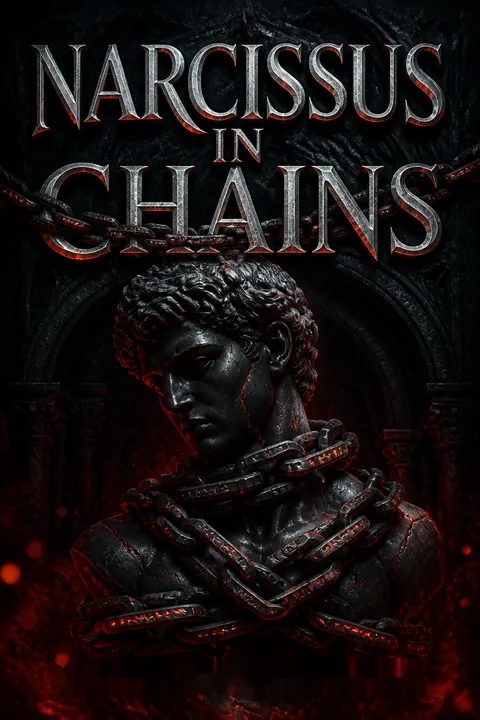


Plot Summary
Six Months of Silence
Anita Blake, an animator and vampire executioner, has spent six months avoiding Jean-Claude, the Master of the City, and Richard, the werewolf Ulfric she still loves. During her friend Ronnie's birthday celebration, Gregory calls from Narcissus in Chains, a club where Anita's vulnerable wereleopard pard goes to seek partners.
A stranger takes the phone and reveals that Gregory, Nathaniel, and other leopards have been seized. Gregory's scream confirms the danger. Anita is supposed to be on vacation, but she has inherited responsibility for the leopards and knows no one else will rescue them. The call forces her back into the supernatural politics and unfinished relationships she has tried to outrun.
Anita's return to action begins not with a monster appearing in the street but with a responsibility she cannot delegate. Her six months of avoidance have been an attempt to control desire and recover a stable sense of self; Gregory's distress makes that private project morally secondary. The birthday setting sharpens the contrast between ordinary human time and the urgent obligations of supernatural power. Anita's decision also reveals the cost of her role as protector: she feels accountable even when she lacks the authority, experience, or emotional support that the job requires.
The Call Reopens Everything
Ronnie urges Anita to involve the police, but Anita knows that shapeshifter disputes are normally handled within their own groups. She refuses to take Ronnie into a fight where hesitation could get her killed, then calls Jean-Claude for the club's location and local intelligence.
Their conversation exposes what Anita has learned during her absence: the incomplete marks binding her to Jean-Claude and Richard leave all three vulnerable, and her magical shields cannot permanently repair them.
She agrees that the three must willingly join their auras, though she remains frightened of losing herself. Jean-Claude agrees to meet her and bring backup. Anita chooses not to call Richard, fearing his reluctance to take violent action could endanger the leopards.
The choice to call Jean-Claude is both tactical and intimate. Anita permits dependence where the immediate danger demands it, yet still tries to control the terms by excluding Richard and insisting on saving her people first. Her fear is not simply of supernatural power; it is of intimacy that might erase the boundary between obligation and consent. Jean-Claude's explanation turns the marks from romantic complications into shared physical vulnerability, making her hesitation consequential for everyone involved. The scene shows how Anita's self-protection can resemble courage while also leaving others exposed.
Marks Merge in Public
At the neutral club, Jason guides Anita past the line and Jean-Claude explains that the leopards are being guarded upstairs. Narcissus, the werehyena owner, takes Anita's gun because weapons are forbidden on his territory.
Anita lowers her shields and touches Jean-Claude, then Richard arrives unexpectedly and kisses her with the force of their unresolved bond. With the shapeshifters watching, Anita, Jean-Claude, and Richard join their auras through touch and desire.
The power nearly knocks them unconscious, but the marks close and their energies begin flowing between them without physical contact. Anita can now sense their feelings and draw on both vampire and wolf power. The union restores their defenses, but it also makes privacy and separateness much harder to maintain.
The public setting matters because the joining is at once a private surrender and a political announcement. Anita cannot control who witnesses the event, and the crowd's response confirms that their intimacy has consequences beyond the three participants. Richard's sudden appearance disrupts her plan to keep the encounter practical, bringing emotional history into a ritual she already fears. The merged marks make connection less dependent on deliberate touch, turning intimacy into a continuing condition rather than a choice made moment by moment. The scene's exhilaration therefore carries an immediate cost: Anita gains power while losing some control over where her self ends.
A Hyena's Price
Narcissus confirms that his guards have kept the captives from further harm, but he will not let Anita storm the upstairs room. In his black, chain-filled bedroom, he reveals that the former Master of the City once sent Jean-Claude to him under coercion, and that Jean-Claude endured years of sexual exploitation.
Richard nearly injures Narcissus when the revelation ignites his anger, giving the werehyena grounds to revoke their safe passage. Narcissus then demands a political voice and renewed gifts from the wolf and rat leaders.
He also reveals that the leopards were once among those gifts, and that their old alpha, Gabriel, shared them with him. Anita refuses to surrender any of her people. Asher offers himself to Narcissus in exchange for a favor, creating a way to leave for the rescue.
Narcissus's bedroom makes power visible as an arrangement of bodies, restraints, and negotiated limits. Jean-Claude's history complicates Anita's view of him as a masterful seducer: he has also survived coercion by learning to make necessity look like choice. Richard's protective anger risks turning the rescue into another contest of dominance, while Narcissus converts that mistake into political leverage. Anita's refusal to barter a leopard shows a different model of authority, one grounded in responsibility rather than possession. Asher's offer exposes an unresolved wound of his own, suggesting that service can be a chosen act, but not a simple or emotionally neutral one.
Blades in the Leopard Room
Anita enters the upstairs room with a small escort and finds Gregory chained, injured, and gagged. The clan leader Coronus has mistaken the leopards for the swanmanes he came to seize. Nathaniel hangs nearby with knives and swords embedded in him; his healing body has grown around the blades. When Coronus's snake shifters attack, Anita fights with a boot knife and a sword taken from the wall.
She nearly kills Coronus before her allies stop her. Anita refuses to leave three captive swanmanes behind, even though Coronus insists they belong to him. The fight leaves Anita badly wounded, and Gregory's claws pierce her as he protects her. She loses consciousness while the group carries the survivors away.
The rescue strips away the comforting language of safe clubs and consensual play. Nathaniel's body has been turned into a prison for weapons, while Gregory's submission leaves him unable to protect himself from people who mistake his limits for permission. Anita's violence is effective, but it also frightens her: she raises a sword with an ease that seems to come from somewhere beyond her own memory. Her choice to save the swanmanes extends her responsibility beyond her own group, even while she is physically failing. The episode forces her to confront how protection can demand both restraint and decisive brutality.
A Beast Takes Hold
Anita wakes several days later, badly wounded but rapidly healing, in a room crowded with naked wereleopards. Their Nimir-Raj, Micah Callahan, explains that he entered Anita's territory because Elizabeth had invited him to replace her as the pard's leader. Gregory's claws may also have infected Anita with lycanthropy; her fever and healing resemble a shapeshifter's, though she refuses to accept the possibility.
Micah uses his ability to heal her arm, but the exchange of power awakens an unfamiliar hunger. Anita feeds on Micah's blood and desire, then weeps at what she has done. She learns that Richard has taken Gregory into wolf custody, while his pack debates whether Anita can remain its lupa.
Anita's recovery is not a return to her former self. Her body heals through a community she has not fully accepted, and Micah's care exposes a new appetite that joins physical need to supernatural power. Her refusal to believe she is changing is a familiar defense, but the evidence is now embodied in fever, strength, and hunger. At the same time, Richard's decision to take Gregory transforms the romantic triangle into a political crisis. Anita must interpret her altered body while confronting the possibility that the people she loves can become obstacles to the safety of those she protects.
The Vampire in Custody
Anita leaves Micah's makeshift hospital for the St. Louis police station, where Jean-Claude has been held on suspicion of murdering her. Officers recoil when she walks in alive, and Dolph demands to inspect her wounds because their rapid healing seems impossible.
He is furious that Jean-Claude remains a vampire and is disturbed by Anita's relationship with him. Zerbrowski helps release Jean-Claude before dawn, though he recognizes that Anita trusts the vampire in a way she does not trust most people.
The encounter also exposes Dolph's private distress: his son plans to marry a vampire, and Dolph fears losing the possibility of grandchildren. Anita leaves with Jean-Claude, carrying both the danger of her changing body and the cost of his influence over her.
The police station brings Anita's supernatural transformation into a human institution that wants evidence it can classify. Her survival does not reassure the officers; it makes her body a new mystery and Jean-Claude an easy suspect. Dolph's hostility is not merely professional prejudice, since fear for his family has made vampires a personal threat. Zerbrowski's perception of Anita's tenderness toward Jean-Claude complicates her reputation as an unfeeling killer. The scene contrasts two forms of care: the institution's demand to inspect and explain, and the imperfect intimacy that allows Anita to accept help without surrendering her judgment.
Belle's Hand in the Hunger
At the Circus, Anita's ardeur overwhelms her caution. She feeds on Nathaniel's desire, then joins Jean-Claude, Asher, Jason, and Nathaniel in an erotic feeding that briefly lets the old lovers share a power they once knew with Belle Morte. Belle reaches through the bond, takes control of Anita's sight, and stirs her beast and hunger.
Anita uses her necromancy to force Belle out and binds the connection against further intrusion. In the struggle, Anita bites Jason and swallows a piece of his flesh, then vomits it up. Jean-Claude tells her that the ardeur may require frequent feeding and reveals that Damian, her vampire servant, has been locked in a coffin for months after going mad and killing humans.
The ardeur collapses categories Anita has relied on: sex, feeding, consent, and violence begin to overlap, and her moral vocabulary struggles to keep pace with her body. Belle Morte's intrusion reveals that power can travel through inherited bonds without permission, while Anita's necromancy offers a counterforce that belongs to her alone. The shared feeding also briefly repairs a bond between Jean-Claude and Asher, but it does not settle their grief or Anita's discomfort. Damian's confinement adds another cost to her absence: relationships left unattended do not remain safely paused; they deteriorate under the pressures of power and dependence.
Damian in the Box
Jean-Claude admits that he sealed Damian in a cross-wrapped coffin after the vampire lost control and killed a couple. Because Anita's necromancy has become Damian's strongest bond, Jean-Claude could no longer command him safely, and he feared letting him loose among civilians. Anita is furious that Jean-Claude concealed the situation, but accepts that Damian may need careful, specialized care to survive release.
She leaves the Circus to deal first with Gregory and the wolf pack. At home, the wereleopards and their allies gather, including Micah's pard and the swan king Donovan Reece. Anita's unresolved obligation to Damian now runs alongside the urgent effort to reclaim Gregory and the growing suspicion that her own body is changing.
The coffin turns absence into an ethical problem. Jean-Claude's decision is defensible as containment, but his secrecy denied Anita the chance to understand her own power and Damian's dependence on it. Anita's anger is sharpened by the knowledge that her withdrawal affected more than the two men she avoided. The scene also establishes the novel's recurring bind: every available choice protects someone by endangering someone else. Anita cannot repair every relationship at once, so she must rank obligations under pressure, a form of leadership that offers no clean moral victory.
A Queen Claims Her Pard
At Anita's house, Micah offers to take over the leopards, while Elizabeth arrives with Caleb and mocks Anita's authority. The others discover bite marks on Nathaniel and demand to know who marked him. Anita admits that she did, but Micah's kiss and their shared power make the attraction between them unmistakable. Micah says he believes they are a destined Nimir-Ra and Nimir-Raj pair.
Elizabeth attacks Anita, then dismisses the warning that Anita may truly become a shapeshifter. Anita shoots Elizabeth with lead rounds, lets her heal, then uses silver to make clear that future betrayal could be fatal. Her own leopards accept the lesson, and Micah's group begins to treat Anita as a genuine alpha rather than a temporary caretaker.
The shooting marks a change in Anita's leadership style, but the scene is not a simple victory of fear over kindness. Elizabeth has repeatedly challenged authority and neglected Nathaniel's safety; Anita's restraint has been read as weakness, leaving the group vulnerable. Violence restores a boundary that words have failed to enforce, yet it also troubles Anita because she recognizes Elizabeth's likely desire to die. Micah's claim of a fated bond offers belonging at precisely the moment Anita is least able to evaluate it freely. The scene exposes how intimacy and authority can reinforce each other while making consent harder to disentangle.
Two Pards Become One
Before entering the wolf lupanar, Anita meets Rafael's wererats, Donovan's swans, and Micah's leopards. As the gathered wereleopards form a circle, power travels from Anita and Micah through both pards, creating a group bond that neither leader intended to forge so quickly.
Anita feels the others' memories and sees Gregory bound in a bone-lined pit. Richard arrives and recognizes the bond between Anita and Micah. He welcomes the allies but warns that she must still win Gregory back from the wolves.
The gathering shows the assembled shifters what cooperation can feel like, while also making Richard's political failures more visible. Anita enters the lupanar knowing that her relationship with Micah has become public and that the wolves may be divided against her.
The group bond turns an abstract proposal for cooperation into a felt experience: each shifter becomes legible to the others, including private fear and old injury. Its power is not built by law or command but by shared presence, which contrasts with the brittle hierarchy Richard is trying to reform. Yet the bond also creates responsibility before anyone has negotiated its terms. Anita and Micah do not simply choose each other; their connection pulls entire communities into mutual obligation. Richard's arrival makes the emotional and political consequences inseparable, as his glimpse of their bond deepens both his grief and his awareness of what his pack lacks.
Raina Finds the Oubliette
At the lupanar, Richard explains that Gregory is accused of killing the pack's lupa and that Anita must prove herself worthy of him. Jacob, the ambitious new Geri, supports the charge. Anita calls Raina's munin for help, and the former lupa shows her a secret oubliette where Gregory lies chained among bones. Raina's memories also reveal how she tortured prisoners there.
Overwhelmed by the vision, Anita lashes out and punches Richard, setting the rival factions surging toward a fight. Richard halts the crowd and allows Anita to proceed. The revelation makes clear that the pack's new democratic rules have not erased its old cruelty; they have instead left responsibility diffuse while Gregory suffers in the dark.
Raina functions as both guide and contamination. Her memory gives Anita the information needed to find Gregory, but it also transmits the bodily knowledge of abuse and pulls Anita toward a violence she cannot fully control. The assault on Richard is therefore not just an angry gesture; it demonstrates how inherited power can make the past act through the present. The oubliette is a physical record of the pack's political history, a place where leaders hid violence from ordinary view. Anita's discovery forces Richard to face the gap between his humane intentions and what his authority has permitted.
Gregory's Deafening Prison
Richard and Anita descend into the oubliette together and find Gregory hog-tied, deafened by silver-tipped plugs, drugged, and injured by chains that have eaten into his wrists and ankles. Gregory is terrified even of the people rescuing him. Richard helps remove the gag and restraints while Anita cradles him, then the two lift him out in a harness.
Richard reveals that Jacob knew where Gregory was and had access to the methods used. He orders Jacob imprisoned in the same hole, but refuses to repeat the old torture. Anita argues that everyone involved must face consequences or the pack will split into civil war. Richard remains torn between his ideals and the need to make his authority credible.
The rescue makes the costs of political indecision brutally concrete. Gregory's injuries are not an unintended side effect; they are the result of a system in which authority has been divided without eliminating coercion. Richard takes responsibility for failing to know what happened in his name, while Anita insists that remorse alone cannot repair the structure. Their disagreement is not between compassion and cruelty, but between different accounts of what compassion requires: restraint toward the guilty, or decisive protection for those still at risk. The scene deepens their intimacy even as it shows why love cannot settle their political conflict.
The Beast Is Called
Back home, Dr. Lillian warns that Gregory's sedatives may leave him permanently deaf unless his leopard form can emerge before the drugs wear off. Anita first calls Raina to heal him, but the munin's memories overwhelm both her and Gregory, and the attempt fails. Richard returns and demonstrates how he can call a wolf's beast from its body.
Though the process is violent, Anita uses the shared marks to seize Gregory's dormant leopard and pull it through the drugs. His transformation clears the damage, and Gregory confirms that he can hear again. The rescue restores him physically, but Richard's demonstration leaves Anita newly aware of how much power their bond can exert over living bodies.
Anita's success depends on learning from Richard without surrendering her own judgment. Raina's method fails because it turns healing into a repetition of sexualized violence; the wolf's transformation instead gives Anita a technical model she can adapt. Her power can restore Gregory, but it can also tear the beast from a body, making the distinction between care and coercion dangerously thin. The healing therefore brings relief without uncomplicated triumph. Anita has saved someone she loves by using a forceful technique, and she must now accept that her new authority carries risks no amount of good intention can erase.
Richard's Shame
After Gregory recovers, Richard tells Anita that Louisa, a newly changed wolf he sponsored, transformed during sex with her husband and killed him. Richard had respected the couple's wish to wait until marriage and had not prepared Louisa for the danger of losing control during orgasm.
Grieving and blaming himself, he admits that Jacob will likely kill Sylvie in a challenge for the pack's second position. He asks Anita to become Bolverk, the Ulfric's agent for necessary evil. Anita says she can do what Richard cannot, though the task will cost her. They comfort each other and make love, briefly setting aside the political divide that neither can solve.
Louisa's tragedy gives Richard's idealism a human cost without making his motives foolish. He wanted to honor a couple's convictions, but failed to prepare them for a bodily danger that belief alone could not control. His grief opens a path toward a more ruthless form of leadership, yet he asks Anita to carry the violence he cannot integrate into his own identity. Anita accepts because she values the pack's survival, not because she enjoys becoming an instrument of power. Their lovemaking is a genuine reconciliation of feeling, but it cannot make their incompatible moral strategies disappear.
Love, Then Refusal
The next morning, the ardeur rises while Anita and Richard are alone. She feeds on his desire, and he experiences the hunger directly for the first time. Richard could let his beast answer the ardeur and protect his control, but he instead closes the marks and allows Anita to feed.
Afterwards he refuses to become her regular source of sustenance, insisting that he will not be treated as food. Anita asks who she is supposed to turn to, but he cannot accept the new demands of her nature or his own. He leaves, ending their romantic relationship. Nathaniel and the leopards gather around Anita after she breaks down, offering the physical comfort Richard could no longer give.
The breakup is not caused by a lack of desire. Richard and Anita still want one another, but desire now exposes incompatible ideas of personhood. Anita experiences feeding as a need she must manage; Richard experiences it as a threat to his identity as a man and a leader. His refusal is understandable, but it leaves Anita to find another arrangement and confirms that love cannot substitute for consent. The leopards' wordless care offers an alternative form of intimacy, one built from communal presence rather than exclusivity. Anita's grief is real, yet she begins to distinguish love from a relationship that cannot continue.
Gunfire at Home
After hours of exhausted sleep, Anita's home is attacked by armed snake shifters who take Caleb hostage and demand her. Anita, wererat bodyguards Claudia and Igor, and the wereleopards fight back; Igor is killed and Claudia is wounded, while the attackers leave several bodies behind. Police question the survivors, and Dolph presses Anita for information she still cannot safely disclose.
When leaders of several shifter groups arrive to discuss missing members, Anita recognizes a pattern: a cobra king, a werelion, a weredog, and a bear queen have vanished. She gives the police permission to connect the cases and realizes the attack on her home is part of a larger campaign against supernatural leaders.
The attack punctures the fragile safety of Anita's home and makes coalition politics a matter of survival rather than theory. The death of Igor gives the conflict a cost among people who came to protect her, while Claudia's wound reminds Anita that accepting help does not make others expendable. The missing leaders reveal that the violence is organized and selective, aimed at the people who hold groups together. Anita's decision to tell the police what she can marks a pragmatic shift: secrecy may protect a community in the short term, but it can also prevent investigators from seeing the pattern in time.
The Hyena's Ambush
Narcissus summons Anita to his club with information about the missing lion king, and she arrives at dawn with her allies. The werehyena guards are terrified and refuse to explain why Narcissus is withholding information. When Anita insists on keeping her weapons, a firefight erupts: Claudia's replacement, Bobby Lee, and Anita shoot their way out as werehyenas swarm the Jeep.
Nathaniel drives through the attack while Anita kills the men climbing through the windows. They escape with Bacchus, a wounded hyena, who reveals that Chimera has seized Narcissus and other leaders. Zeke then tells Anita that Chimera has also targeted Micah's pard and intended to take over Richard's wolves through Jacob.
The ambush exposes the danger of treating supernatural neutrality as a guarantee of safety. Narcissus's club, once a refuge between rival groups, has become a prison because its leader is compromised and its guards are coerced. Anita's refusal to surrender her weapons proves lifesaving, but the escape costs Igor's earlier protection and leaves more bodies behind. Bacchus and Zeke complicate the moral map: they are participants in Chimera's system, yet also victims trying to escape it. Anita must decide whether to trust former enemies without allowing urgency to erase the need for scrutiny.
Orlando's Hidden Face
Anita returns to Narcissus in Chains with Zeke and agrees to confront Chimera, hoping to free Micah, Cherry, and the captured leaders. Chimera appears to want her as a mate, but his changing moods make negotiation impossible. He removes his hood and reveals himself as Orlando King, the celebrated monster hunter whose lycanthropy drove him to gather multiple animal forms.
His identity explains his knowledge of St. Louis's supernatural groups, but not the cruelty of the person now controlling his body. Chimera leads Anita into a dark room crowded with injured, chained men and threatens them to make her comply. Anita refuses to panic, though she cannot see where Micah or Cherry is being held.
Orlando's reveal overturns the public story of moral conversion. The hunter who seemed to have learned sympathy after surviving a monster attack has instead become a composite of fear, hatred, and power. His multiple forms make the body itself a disputed territory, while his fractured identity lets him describe violence as both protection and personal freedom. Anita recognizes that explanation does not absolve him. The dark room strips her of the visual control on which she relies, forcing her to use breath, touch, and discipline to avoid panic. Her resistance is strategic, but it is also a refusal to let fear dictate the next action.
Life Taken, Power Shared
Chimera reveals Micah and Cherry chained and injured, then shifts into his lion form and attacks. Anita draws on a power learned in New Mexico: she drains life and magical force from him, and the energy flows through her to Micah, her leopards, and the wolves. Micah and Cherry heal, the captive men transform and break their chains, and Richard's badly wounded pack regains the will to fight.
Anita then releases Orlando's remaining life, ending the threat but killing the man beneath Chimera. The surviving groups unite in relief and grief. Richard, restored but horrified by what Anita has done, leaves rather than accept the power she used to save him and the others.
The climax makes power both the instrument of rescue and the source of moral injury. Anita does not merely defeat Chimera; she takes his life force and distributes it through a community whose survival depends on her will. The act repairs bodies and restores collective courage, but Richard experiences the same power as a further loss of humanity. Their disagreement is no longer theoretical: one believes survival can justify an irreversible act, while the other cannot accept what survival asks him to become. The ending refuses to make victory clean. Anita saves the people she loves, yet the cost includes Orlando's death and Richard's emotional departure.
Epilogue
Anita becomes Bolverk for Richard's pack and executes Jacob, though Richard spares Paris. She does not change into a leopard at the full moon; leopards are her animal to call, while Damian is bound to her as a vampire servant. She and Micah continue their relationship, and she remains Jean-Claude's human servant. Nathaniel becomes her pomme de sang, helping her manage the ardeur.
The shifter leaders form a coalition, and the rescued lion king's pregnant mate continues her pregnancy. Richard remains apart from Anita, unable to accept what either of them has become. At home or beneath Jean-Claude's silk sheets, Anita wakes with Micah beside her and accepts that her life will not return to its old shape.
The epilogue offers functional resolution rather than a return to normal. Anita gains formal authority, but it is authority defined by her willingness to perform violence that Richard cannot bear. Her relationships also become less exclusive and more negotiated: Micah, Jean-Claude, and Nathaniel occupy different roles shaped by love, power, and need. The coalition answers the isolation that enabled Chimera's rise, although it cannot restore the lives already lost. Anita's refusal to change at the full moon distinguishes lycanthropy from the deeper transformation she has undergone. She accepts a life organized around supernatural obligation, not because it is simple, but because denying it has become impossible.
Analysis
Narcissus in Chains is structured around the collision of intimate dependence and political responsibility. Anita begins by trying to control her attachments through absence: she avoids Jean-Claude and Richard, refuses to decide between them, and hopes that distance will keep her human identity intact. Gregory's kidnapping makes that strategy untenable. Every subsequent development makes connection more consequential: the marks merge, the ardeur requires care, Micah's pard bonds with Anita's, and Damian's survival depends on a magical tie she did not know she had formed.
The novel repeatedly tests the difference between consent and submission. Nathaniel's vulnerability makes his desires difficult for Anita to interpret; Jean-Claude's past shows how coercion can be disguised as seduction; and the captives in Chimera's club reveal how domination destroys the meaning of obedience. Anita's own authority is not innocent. She shoots Elizabeth, pulls Gregory's beast into the world, and drains Orlando King's life to save her allies. These acts protect people, but they also show that benevolent motives do not make power harmless.
Richard and Anita embody competing moral responses to leadership. Richard wants rules that reduce cruelty, yet his reforms leave dangerous gaps and his reluctance to punish gives ambitious opponents room to act. Anita distrusts abstract ideals when people are bleeding in front of her. Her decision to become Bolverk accepts a burden Richard cannot carry, but it does not prove that her harder approach is cost-free. The novel resists a simple verdict: the humane leader can fail through hesitation, while the ruthless protector can become frighteningly comfortable with violence.
The coalition offers a possible alternative to both isolation and conquest. Its members cooperate because danger has shown them their shared interests, not because one species has submitted to another. Anita's new life remains unstable: she loves Richard, chooses Micah, stays bound to Jean-Claude, and feeds through Nathaniel. The resolution is therefore not romantic closure or moral purification. It is a provisional arrangement in which care, desire, power, and obligation must be negotiated again each day.
Review Summary
Narcissus in Chains marks a turning point in the Anita Blake series, introducing new powers and sexual elements that divide readers. Some praise the expanded world-building and character development, while others criticize the shift from urban fantasy to erotica. The book explores Anita's evolving relationships, new supernatural abilities, and political dynamics among vampires and shapeshifters. Despite mixed reactions, many fans appreciate the complex plot and Hamilton's writing style, though some feel the series loses focus on its original premise.
People Also Read




Characters
Anita Blake
Reluctant supernatural leaderAnita raises the dead for a living and works as a vampire executioner, bringing a practical, often ruthless intelligence to supernatural crises. She trusts preparation, weapons, and clear rules because they give her a measure of control in a world that repeatedly violates ordinary limits. Beneath that discipline is a fierce attachment to people she has promised to protect, including those she does not fully understand. Her difficulty accepting intimacy is connected to a deeper fear of being absorbed by other people's needs and powers. Anita is not simply opposed to violence; she is troubled by the moment necessity begins to look like appetite, and by how easily she can cross that line.
Jean-Claude
Master vampire and loverJean-Claude rules the vampires of St. Louis through grace, strategic patience, and a cultivated command of desire. His theatrical elegance is not merely decoration; it allows him to manage fear, attention, and political allegiance. He genuinely loves Anita, but he also needs the power of their bond to protect himself and his territory. Centuries of coercion have taught him to turn vulnerability into performance, so his kindness and manipulation can be difficult to separate. Jean-Claude is willing to negotiate where force would be simpler, yet the pressures of leadership make him capable of choices that Anita finds morally unforgivable.
Richard Zeeman
Idealistic werewolf kingRichard is the Ulfric of the local werewolf pack and a schoolteacher who wants his supernatural community to become more humane and democratic. He values fairness because he fears that power without moral limits turns people into the monsters they claim to govern. His ideals are sincere, but he can mistake restraint for a complete solution, even when people under his protection need decisive action. Richard's struggle with his wolf nature is also a struggle over identity: he wants love without surrendering the human self he values. His relationship with Anita exposes both his tenderness and the limits of his capacity to accept change.
Micah Callahan
Gentle leopard kingMicah leads the Maneater wereleopard pard with a calm presence that can conceal deep strain. His delicately built appearance contrasts with the certainty and strength of his authority, and he is attentive to the needs of the vulnerable members under his care. He offers Anita partnership without insisting on a single arrangement, though his own pard's troubles make his promises more complicated than they first appear. Micah's patience is not passivity; he can act decisively when someone is threatened. He is drawn to Anita through both desire and a supernatural bond, and his quiet compassion often makes him appear more transparent than he really is.
Nathaniel
Vulnerable leopard companionNathaniel is a wereleopard whose past abuse has left him unusually vulnerable to dominant personalities. He has worked as a stripper and learned to read other people's wants before his own, but Anita's insistence that he make choices for himself has begun to change that habit. His submission is real, yet it does not mean he lacks insight or a will of his own. Nathaniel offers steady companionship and practical care, often noticing emotional truths others overlook. Anita tends to see him as someone to protect, which can make her underestimate his adulthood and the complexity of what he wants.
Asher
Scarred vampire secondAsher is Jean-Claude's second in command, a centuries-old vampire whose body bears severe scars from holy-water torture. He hides the damaged side of his face behind hair and clothing, though the remaining beauty is striking. His relationship with Jean-Claude is shaped by an old love, shared grief, and the unresolved loss of their human companion, Julianna. Asher uses wit and seduction to protect himself, but bitterness can break through the performance. He is perceptive about desire and power, and his willingness to help others often carries an emotional cost he does not openly name.
Gregory
Submissive leopard brotherGregory is a wereleopard and one of the dancers in Jean-Claude's club. Gentle and deeply submissive, he has difficulty asserting his own safety, a vulnerability that grows out of the abuse and coercion he has endured. He is devoted to his fellow leopards and trusts Anita to come for him even when circumstances make rescue seem unlikely. Gregory's relationship with his twin brother Stephen gives him a connection outside the unstable politics of the pard. His history shows why submission cannot be treated as blanket consent: he needs other people to recognize limits he may be unable to defend himself.
Ronnie Sims
Anita's skeptical best friendRonnie is a private investigator and Anita's closest human friend. Practical, outspoken, and protective, she distrusts Jean-Claude because she sees him as a vampire first and a lover second. Her blunt advice comes from genuine concern, but it also reflects the difficulty of understanding a life in which human moral categories no longer provide easy answers. Ronnie wants Anita to have a safer, more ordinary future, and she is not afraid to challenge her friend's choices. Their growing distance shows how affection can persist even when two people no longer share the same assumptions about danger.
Narcissus
Werehyena club ownerNarcissus owns Narcissus in Chains, a neutral club where shifters and people involved in dominance and submission can meet. He is a werehyena leader, a skilled political negotiator, and a man who uses theatrical dress to assert the freedom to define himself. His interest in power is practical: he wants his people treated as political equals without being dragged into every conflict. Narcissus can be playful and provocative, but he is more calculating than his manner suggests. He understands the value of favors, hospitality, and negotiated boundaries, and expects others to recognize that neutrality is itself a form of power.
Chimera
Shapeshifting pack usurperChimera is a violent leader whose ability to assume multiple animal forms makes him a threat to groups that believe their boundaries will protect them. He uses fear, torture, and promises of power to make other shifters obey. His identity and motives are fractured, and he shifts between different voices and emotional states, sometimes presenting himself as a protector even while he harms the people around him. Chimera is frightening not only because he is physically powerful, but because he can turn a legitimate desire for safety and unity into a justification for domination.
Orlando King
Veteran monster hunterOrlando King is a prominent bounty hunter known for tracking dangerous supernatural beings. He survived a near-fatal attack that left him scarred and altered his relationship to the creatures he once hunted. His public reputation rests on experience, discipline, and a willingness to confront threats that frighten other people. The tension between his professional identity and his changed circumstances makes him a figure whose beliefs are tested by the very world he studies. He understands the language of monster hunting, but that knowledge alone cannot settle questions of belonging or responsibility.
Rafael
Strategic wererat kingRafael rules the wererats with political intelligence and a strong sense of obligation. He remembers favors and expects debts to be honored, but his loyalty is not limited to formal treaties. He understands that alliances are fragile when leaders confuse authority with personal control, and he often sees political consequences before Richard does. Rafael's history as a husband and father gives him a quieter vulnerability beneath his confidence. He can be blunt about the cost of love and leadership, yet he remains willing to risk his people when a debt of honor demands it.
Jason
Jean-Claude's playful werewolfJason is a werewolf who serves Jean-Claude as a bodyguard, companion, and trusted blood donor. His teasing manner often disguises a serious need to be valued for himself rather than as an entertaining supernatural novelty. He is physically affectionate and enjoys provoking Anita, but he can also recognize when her control is failing and when a joke would be cruel. Jason's loyalty is shaped by long service and genuine friendship. He offers a different kind of intimacy from the dominant men in Anita's life, one based more on acceptance and uncomplicated desire.
Cherry
Nurse and leopard allyCherry is a wereleopard and a nurse, combining practical medical skill with a deep knowledge of her pard's emotional needs. Her difficult past has made her suspicious of easy promises, but she trusts Anita because Anita consistently protects the leopards without demanding that they earn her care. Cherry can offer comfort without mistaking it for weakness, and she often helps Anita understand what the group needs. Her relationship with Zane is marked by growing affection and playfulness. She represents the kind of intimacy Anita has learned to accept: physical closeness that is not automatically sexual.
Zeke
Wolf turned reluctant enforcerZeke is a werewolf held in an altered form and forced to serve a more powerful shifter. His animal body limits how others see him, even though his judgment and loyalties remain human. He understands the cost of resisting a violent leader because he has already watched people he cares about suffer for disobedience. Zeke's approach to survival can look like complicity, but he continues to search for a way to stop the system controlling him. He is cautious about trust and knows that a revolt without a plan may simply replace one tyrant with another.
Elizabeth
Defiant wereleopardElizabeth is a wereleopard whose grief over Gabriel's death has curdled into hostility toward Anita. She is provocative, sexually confident, and willing to challenge the person leading her pard. Beneath that defiance is a refusal to accept the vulnerability of her position or the responsibilities that come with dominance. Elizabeth's antagonism puts other leopards at risk, especially Nathaniel, but she is not simply cruel; she is also someone whose anger has become a shield against loss. Her character tests whether Anita can lead people she dislikes without confusing discipline with revenge.
Jacob
Ambitious wolf challengerJacob is a recently arrived werewolf who quickly rises to the position of Geri, a high-ranking place in Richard's pack. He is a capable fighter, an opportunistic political thinker, and a believer that authority should be tested rather than accepted. Jacob recognizes the weakness in Richard's new democratic structure and knows how to turn dissatisfaction into a challenge. His ambition is not hidden, but his motives are more complicated than simple lust for power. He represents the danger of reform without a stable method for dealing with those willing to exploit its openness.
Dolph
Hardened police commanderDolph leads the Regional Preternatural Investigation Team and prefers procedure, discipline, and clear distinctions between human and monster. His imposing presence can intimidate witnesses, but he is also an experienced investigator who takes responsibility for his officers. Dolph's beliefs are under strain from personal changes in his family, particularly the choices of his adult sons. His hostility toward vampires is rooted in fear and prejudice, yet the story shows that his anger is not abstract: he is trying to protect a future he believes may be slipping away.
Merle
Micah's wary bodyguardMerle is a wereleopard bodyguard with a large, scarred frame and a blunt sense of what danger requires. He distrusts easy optimism because he has seen good intentions fail to protect people. His loyalty to Micah is deep, but he is slow to trust Anita as a leader, partly because he worries about what will happen if her authority proves weaker than she believes. Merle's caution is not cowardice; it is the discipline of someone who has survived by anticipating harm. He serves as a counterweight to Anita's confidence and Micah's willingness to hope.
Raina
Predatory wolf memoryRaina was the former lupa of Richard's pack, a powerful and sexually sadistic leader whose influence persists through the memories Anita can summon. She treats desire as a means of control and enjoys pushing people past their limits. Raina is not a benign ancestral guide: her help comes with demands, and her recollections can overwhelm the person receiving them. Yet she has a complicated connection to the pack and can recognize political weaknesses that others miss. Her presence forces Anita to distinguish between learning from a violent past and repeating it.
Belle Morte
Ancient vampire powerBelle Morte is one of the most powerful vampires in the world and the source of an influential bloodline. Her gifts connect sex, desire, and political control, allowing her to reach descendants through supernatural bonds. She is beautiful, strategic, and accustomed to getting what she wants from people who fear or admire her. Belle's power is not limited to physical proximity, which makes her influence difficult to resist. She treats relationships as sources of leverage, but the people bound to her are not merely passive extensions of her will.
Sylvie
Wolf pack secondSylvie is Richard's Freki, his second in command, and a strong werewolf with a practical understanding of pack politics. She can be stylish and gentle in private, but she is capable of swift, intimidating action when someone threatens the group. Sylvie has suffered under earlier leaders and remembers what unchecked power can do to vulnerable pack members. Her loyalty to Richard does not prevent her from seeing the weaknesses in his choices. She represents a form of authority grounded in competence and care, though she cannot always persuade Richard to use it decisively.
Donovan Reece
Independent swan kingDonovan Reece is the newly arrived king of the swans, an unusually autonomous group of shifters with a long history of resisting other clans' control. He is polished and proud, but his confidence is tempered by genuine concern for the vulnerable swanmanes under his protection. Reece believes in taking responsibility for his people, even when doing so puts him in danger among predators. His initial caution around Anita reflects both political mistrust and a leader's instinct to weigh every alliance. He is willing to revise his assumptions when her actions prove more reliable than reputation.
Gina
Abused leopard survivorGina is a tall, wary wereleopard who has been hurt by someone she once trusted. She reacts to power with defensiveness because vulnerability has repeatedly been used against her. Her fear can look like disdain, but it is a survival strategy rather than a settled judgment of Anita. Gina's experience gives her an understanding of coercion that the others may overlook, and her loyalty to Micah is shaped by the risks he has taken for his pard. She wants safety without being treated as helpless, a difficult balance in a group governed by dominance.
Damian
Ancient vampire dependentDamian is an ancient vampire whose connection to Anita's necromancy has become unusually powerful. He is not a master vampire, but his age gives him strength and a long history within Jean-Claude's territory. Damian's desire to serve Anita unsettles him because he cannot always refuse a direct command, and he fears what that dependence means. He is both dangerous and vulnerable: centuries of power have not made him immune to the loss of control or the need for a trusted connection. His relationship with Anita challenges the usual boundaries between vampire hierarchy and necromantic command.
Plot Devices
The Married Marks
Power through shared bondsAnita, Jean-Claude, and Richard carry marks that connect them as a triumvirate, but the bond remains incomplete until they willingly merge their auras. The joined marks strengthen their defenses and let their powers flow between them, while also making feelings and hungers harder to keep private. The device links the romantic plot to the political one: their connection can stabilize vampire and wolf leadership, but it also exposes all three to one another's vulnerability. Later, Anita's ties to Micah's pard and the wolves extend this idea of connection beyond the original trio. The marks ask whether intimacy can remain consensual when power makes separation difficult.
The Ardeur
Hunger that demands intimacyThe ardeur is a supernatural hunger inherited from Jean-Claude's vampire line. It can be fed through desire and sexual energy, but refusing it makes the need more disruptive and harder to control. Anita experiences it as a force that can blur appetite, affection, and consent, especially when she is near people she already desires. Feeding gives her power and relief, but it also creates emotional and physical obligations to the people who help sustain her. The ardeur therefore functions as more than an erotic complication: it makes Anita confront the difference between need and choice, and forces her to negotiate boundaries with her partners rather than assume that self-control will solve everything.
The Munin
Memory with a living costThe munin are ancestral spirits available to certain shapeshifters, and Anita can call them because her necromancy gives her unusual access to the dead. Raina, the former lupa, is particularly close to Anita and can lend her memories, knowledge, and power. Her assistance is never neutral: Raina's appetite for cruelty and sexual domination can overwhelm Anita and make past abuse feel immediate. The munin help Anita locate Gregory and eventually understand the pack's history, but they also test her control over her own body. The device makes memory more than information. It is a force that can teach, injure, and tempt the living person who receives it.
Neutral Ground
Rules that constrain conflictNarcissus in Chains is a club shared by people from different supernatural groups, protected by the werehyenas' claim to neutrality. Weapons are forbidden, outside armies cannot enter, and visitors are expected to respect the club's rules. That arrangement initially limits Anita's options, forcing her to surrender her gun and negotiate rather than simply fight her way to the captives. Later, the club's apparent safety is exposed as fragile when Chimera turns its own guards and politics against one another. The device shows that neutrality is not the same as justice or protection. Rules work only while the people with power remain willing to enforce them.
The Shifter Coalition
Cooperation across animal linesThe werewolves, wererats, leopards, swans, lions, bears, and werehyenas usually defend their own kind and avoid taking responsibility for one another. The repeated disappearances of group leaders reveal how that isolation can be exploited. Anita's alliances begin as personal favors and urgent rescue efforts, then develop into a practical agreement to share information and protect members across groups. The collective bond between Anita and Micah's leopards gives this cooperation a supernatural dimension, while the coalition gives it a political one. The device challenges the assumption that solidarity requires a single ruler: the groups can coordinate without surrendering their separate leadership.
Anita Blake, Vampire Hunter Series










About the Author
Other books by Laurell K. Hamilton
Download PDF
Download EPUB
.epub digital book format is ideal for reading ebooks on phones, tablets, and e-readers.








