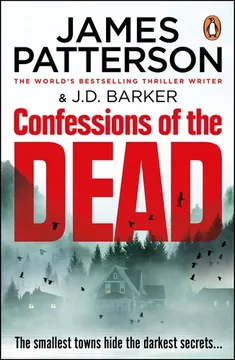


Plot Summary
Prologue
The story opens as a sealed interview recorded after the disaster. Special Agent Beatrice Sordello questions Deputy Matt Maro inside a double isolation chamber while armed guards watch and a priest waits nearby. Matt is injured, shaken, and unable to explain why his town has become a killing ground.
An unnamed report writer warns that the events are still unfolding and that the evidence will overturn what the reader thinks is real. The frame places the narrative between testimony and catastrophe: Matt must reconstruct a single Sunday, but his account cannot yet explain the forces that have already changed its ending.
The interview frame makes recollection itself part of the threat. Matt is asked to turn an impossible day into a reliable sequence, yet his own perceptions are already compromised. The sealed booth suggests public-health danger, while the priest and armed guards imply that the crisis has exceeded ordinary law. The report writer’s caution also establishes a limit on knowledge: this is not a mystery promised a tidy solution so much as testimony from inside a reality that keeps breaking its own rules.
The Girl at the Diner
Deputy Matt Maro spends Sunday breakfast at the Stairway Diner with Gabby Sanchez, the waitress he loves, and Roy Buxton, the town drunk he keeps trying to help. Addie Gallagher, Matt’s former lover, appears pregnant and revives old tensions. Then a naked teenage girl stands in the doorway, unable to speak.
Matt covers her with his jacket, but before he can learn who she is, crows dive into the diner windows in a killing swarm. The birds shatter glass, shred cars, and attack patrons until Matt fights them off. When the flock vanishes, dead birds and a greasy black residue remain across Main Street, and the girl watches Matt as if she knows him.
The ordinary town is established through intimate obligations before the uncanny arrives: Matt cares for Buck, loves Gabby, and cannot escape his history with Addie. The girl’s silence interrupts those familiar social scripts, while the crows turn a public gathering into an improvised shelter. Matt’s instinct to protect her precedes any explanation, giving the crisis a moral center before it has a name. The residue left by the birds also matters: the violence is not merely spectacle, but evidence that the town’s natural order has been altered.
The Tatum House
Across town, Lynn Tatum wakes exhausted, resents her husband Josh’s absence, and tries to work her debt-collection shift while her children, Gracie and Oscar, fight and make a mess. Mixing prescribed medication with sleeping pills, she grows numb and increasingly violent. She bruises Gracie, dislocates Oscar’s shoulder, and turns on the children in their bathroom.
When Josh returns, he finds Lynn and both children dead in the water-filled tub and calls the sheriff’s office in panic. Matt reaches the house, discovers the bodies, and finds Josh outside in grief. He cuffs Josh while the sheriff orders him to preserve the scene, leaving Matt to wonder whether Josh is a bereaved husband or a killer.
Lynn’s domestic breakdown is rendered through specific pressures, including precarious work, medication, marital resentment, and the noise of children, without making any one factor a complete explanation. Her violence becomes horrifying precisely because it occurs inside routine caregiving. Matt’s arrival converts private tragedy into an evidentiary problem: the bodies suggest a crime, but Josh’s distress does not settle guilt. The uncertainty also prepares a later reversal without erasing the children’s suffering. The novel asks the reader to distinguish explanation from excuse, especially when systems and relationships have already failed the people they were meant to support.
Main Street Goes Quiet
As Matt brings Josh away from the Tatum house, elderly Norman Heaton suddenly attacks his wife, Eisa, with a meat tenderizer, displaying strength his age and frailty should not allow. Matt stops him with a taser, but Eisa then beats Norman to death in front of witnesses.
At the library, Sheriff Ellie Pritchet catches librarian Arwa Gilmore trying to burn children’s books; after Ellie restrains her, head librarian Edgar Newton calmly severs his own fingers with a paper cutter. Meanwhile, phones, radios, internet, and outside services fail. Sally Davie’s calls to the station multiply into reports of assaults, fires, theft, and injuries. The town’s violence is no longer isolated, and its usual channels of help are closing.
The attacks invert familiar roles without warning: a frail husband becomes powerful, a frightened wife becomes lethal, and a trusted librarian turns destruction into a duty. Newton’s self-injury is especially chilling because it is not a conflict between people but a person acting against his own body. The failure of communications then removes the civic infrastructure that might contain these incidents. The horror is therefore social as well as supernatural. Hollows Bend’s small-town closeness, usually a source of protection, becomes a dense network of witnesses who cannot coordinate help or trust what they see.
Danny’s Last Date
Hannah Hernandez and her boyfriend, Danny Jones, abandon a traffic jam for a private moment in his car. Before they can leave, a bullet passes through the window and kills Danny. Malcolm Mitchell, a former classmate, forces Hannah into his car and drives her to the abandoned Pickerton house, where he binds her and describes a history of abducting girls.
Elsewhere, Gabby’s daughter Riley hears scratching in the kitchen drain and spots a small gray creature swimming in her cereal bowl. She resets the garbage disposal, sends it down the pipe, and destroys something there, but the threat feels larger than one creature. Two young lives are now caught in separate versions of the same day’s unraveling.
Hannah and Riley encounter danger in places that should feel private and manageable: a parked car and a family kitchen. Malcolm’s attack exposes violence that predates the town’s sudden crisis, while Riley’s creature suggests that the disturbance reaches into infrastructure and water. The juxtaposition prevents the supernatural plot from absorbing ordinary predation. Hannah is endangered by a human who has cultivated entitlement and secrecy; Riley faces something she cannot identify or report. Their different forms of vulnerability become important later, when the story asks who is guilty, who is harmed, and who can be protected.
The Morgue Door
The sheriff’s station fills with residents arguing, injured, and demanding help. At the funeral home, Matt finds coroner Gerald Furber locked inside a body drawer, frost-covered and bleeding from his attempts to claw free. Gerald says the dead are angry with him, hinting at his misconduct with corpses, then bolts from the building in terror of a woman Matt cannot see.
Matt abandons the pursuit when Gabby reports that Riley is missing. Back at the station, a crowd presses in, and a girl from Riley’s school arrives with her brother and another boy, accusing Riley’s family of witchcraft and forcing their way into her home. The adults cannot protect everyone, and fear is becoming a weapon.
Gerald’s escape carries the town’s buried misconduct into the open, though Matt still interprets the episode as a possible hallucination. That reasonable explanation feels increasingly inadequate beside the physical frost, blood, and panic. The station, supposed to be a stable center, instead becomes overcrowded and combustible. The children’s confrontation with Riley shows how quickly uncertainty turns into scapegoating: people fill gaps in knowledge with inherited prejudice. The episode’s shifting threats also pressure Matt’s priorities. He must choose between investigating the impossible and responding to the people he loves, and every choice leaves another danger unattended.
Names Beneath the Skin
When Matt questions the silent girl, she cannot or will not identify herself. He notices names written across her arms, some marked through, including people already dead. Touching her causes Matt to relive a drunken encounter with Addie, a memory that exposes his betrayal of Gabby.
Before he can understand the vision, someone reports that the library is burning. Ellie’s earlier attempt to stop Arwa has ended with Arwa engulfed in flames, while volunteer firefighter Ed McDougal is killed when a fire engine bursts out of its station.
Main Street burns without functioning equipment. The girl’s markings now seem tied to the deaths around them, but Matt cannot tell whether she is warning him, causing them, or recording something already decided.
The names turn the girl’s body into a ledger, but the novel withholds what its accounting means. Matt’s vision of Addie shifts the crisis from public catastrophe to private guilt, making the girl’s touch feel both invasive and diagnostic. The fire then destroys the town’s capacity to respond collectively. Arwa’s death and Ed’s crushing by the engine are not merely casualties; they show that even rescue systems have become dangerous. Matt’s uncertainty is ethically productive: he does not know whether the girl is a threat or a witness, yet he must act before the crowd makes that distinction for him.
Malcolm’s House of Flies
At the Pickerton house, Hannah sees bare footprints leading from a frost-covered bedroom where a tree branch has broken through the roof. Malcolm investigates the impossible room, touches the icy branch, and returns changed, with frost on his hand and a new cruelty in his voice. He threatens Hannah and offers survival only if she submits to his abuse and lets him record it.
Hannah pretends to comply, then topples a grandfather clock onto him, takes his phone and screwdriver, and runs into the woods. Malcolm pursues her with an axe. She reaches a high electrified fence and soldiers, but they shoot Malcolm and then shoot Hannah before she can explain herself. Her escape fails at the boundary of the town.
Hannah’s brief reversal depends on perception rather than strength: she reads Malcolm’s self-absorption, performs compliance, and uses his confidence against him. The cold branch appears to intensify his violence, linking human cruelty to the larger breach without excusing what he chooses to do. Her arrival at the fence should mean rescue, but armed men kill her before they can hear her account. The scene collapses two kinds of danger into one: the predator inside the woods and the institution guarding the perimeter. Hannah’s death exposes containment as a procedure that can mistake a victim for a threat.
The Water Tower Test
Riley leaves the station with Evelyn and Robby Harper and Mason Ridler, the children who first accused her. Robby’s knowledge of the town’s water system leads them to the locked tower, where he tests a sample and finds ordinary readings. He then compares it with water collected in a hidden cave; the strips register almost nothing.
Riley’s arm keeps acquiring names, including Buck’s, and the group brings the evidence to his cabin. Buck is skeptical until they show him the markings. He recognizes Emily Pridham’s name, then asks how children know about the girl who vanished with his girlfriend decades earlier. The children have not solved the cause, but they have connected Riley’s strange markings to an old disappearance.
The children turn fear into investigation, using access, observation, and Robby’s precise memory where the adults have relied on rumor. Their test results do not prove that water is the cause, but they reveal a meaningful difference and give the group a concrete question to pursue. Riley’s changing skin makes her both evidence and target; she cannot simply set the mystery aside. Buck’s reaction joins present danger to a local history long treated as an unsolved tragedy. The episode also changes the children’s relationships: former antagonists must cooperate because none of them can explain what is appearing on Riley’s body.
Emily’s Missing Years
Ellie discovers that the silent girl resembles Emily Pridham, Buck’s girlfriend who disappeared in 1987. Buck explains that crows once surrounded Emily at an oak near the Pickerton house, then closed around him after the ground seemed to take her. For decades he tracked crimes across New England and found Hollows Bend eerily calm at the center of a widening pattern.
Ellie’s own touch-triggered vision of a botched robbery from her youth confirms that the girl can expose buried memories. When Ellie brings the girl to Buck, he fires at her; instead of falling, she bursts into crows. She later appears again in town, unharmed. Buck’s history now points toward the oak, while the girl’s nature defies ordinary identification.
Buck’s apparent drunken obsession is reframed as a long, imperfect attempt to preserve evidence that no one else believed. His maps transform an intimate loss into a pattern, though the pattern does not yet explain itself. Ellie’s vision complicates her confidence in official records: she is forced to confront her own past rather than merely investigate others. Buck’s shotgun test makes the girl’s nonhuman nature undeniable, but it does not make her intentions clear. The episode turns the town’s history into active terrain. What was dismissed as a missing-person case now appears connected to the same force disturbing the present.
The Roadblock Comes Home
Matt finds Route 112 blocked by spike strips and unseen snipers, with abandoned cars marking failed escape attempts. Back in town, Stu Peterson gathers armed residents and uses the chaos to seize authority. Sally is shot when Matt drives Gabby, Riley’s empty seat, the silent girl, and the detained Josh away from Stu’s men.
At Ellie’s house, Matt finds Ellie injured and learns that soldiers have fenced the valley; surveillance devices also hide in the house. Meanwhile, Cody Hill builds an explosive vest and a second bomb, then advertises a nine o’clock emergency meeting. Stu’s group captures Matt, Gabby, and Addie and marches them to the middle school, where Cody’s flyers have drawn nearly the whole town.
The perimeter converts geography into a prison, while the local armed group supplies its own explanation for the confinement. Stu’s authority grows because frightened residents want decisive action, not because he has earned their trust. Matt’s failed attempt to move his companions to safety costs Sally her life and leaves him captured. Cody’s plan exploits the same appetite for assembly: a meeting promises answers, but it also gathers targets in one room. The hidden microphones add another layer of helplessness, showing that even private refuge is monitored. Together, these events make the town’s collapse both imposed from outside and accelerated by its residents.
Judgment at Nine
At the middle school, Stu tells residents that the silent girl can reveal their place in the crisis. When she touches Keith Gayton, the crowd sees him kill a man for meth, and Stu executes him. He then asks her to reveal Josh’s guilt; Matt sees Josh drown Lynn and the children, clearing the earlier uncertainty about their deaths.
Cody is exposed with his explosive vest and a second device, but he has already hidden the bomb under the bleachers. Marcie Holden triggers its remote after Cody invokes the sexual abuse Malcolm inflicted on her. The school erupts in a blast. Matt shields Gabby and Addie as the roof and gym collapse, while the town’s public tribunal becomes a mass-casualty event.
The girl’s visions change judgment from rumor into witnessed memory, but Stu turns that knowledge into execution rather than accountability. The crowd receives certainty at the cost of due process and human restraint. Josh’s guilt corrects Matt’s earlier uncertainty, yet the revelation arrives too late to restore the family or repair the investigation. Cody’s bomb then exposes how easily a public demand for order can become the setting for another person’s revenge. Marcie’s choice is shaped by a history of being disbelieved and exploited. The climax links moral exposure to violence, asking whether truth can serve justice when the people receiving it are already governed by rage.
The Lake Below
At the Pickerton house, the fallen oak has punched through the floor and opened a widening shaft into a frozen cavern. The crows attack Ellie, Buck, and the children, but clear a path for Riley. When Evelyn touches the branch, frost takes her, Ellie, and Mason, and all three fall into the opening. Buck, Riley, and Robby descend after them and find a black-stained frozen lake holding the town’s trapped residents.
Emily appears beside Rodney Campos, while Buck’s lost girlfriend remains beneath the ice. She tells Riley that the girl’s role is to comfort the innocent. Buck refuses to leave Emily again and steps into the water. Around them, the cavern begins to break apart, drawing the town toward its next catastrophe.
The descent makes the town’s hidden structure physical: its history is not only mapped on Buck’s walls but held under the ground. The frozen lake gathers victims and perpetrators together, refusing the clean separation the living tried to impose. Riley’s role differs from Emily’s because she represents those caught in other people’s harm, not an authority empowered to punish. Buck’s choice is an act of love, but it is also a surrender to the place that has organized his life around absence. The collapsing cavern makes the revelation urgent: understanding the system does not guarantee anyone can escape it.
A Town Already Dead
After the blast, Matt awakens in Sordello’s isolation chamber, where she shows him records of the residents’ real deaths. Matt died in Albuquerque in 1947 after Gabby discovered his affair with Addie; Gabby killed him, killed Addie, then took her own life. Stu died by suicide in 1964, Josh was executed in 1992, and Cody died while making a bomb in 2003.
Sordello explains that the town is a purgatory caught in a changing loop, and that a tree opened a breach between its frozen lake and the living world. The explosion widened it. Riley appeared briefly in the real world but vanished. As Matt begins fading, Sordello urges him to remember enough to stop the cycle.
The revelation reorganizes the novel without erasing the immediate events. Hollows Bend’s cheerful routines were not a living community interrupted by horror; they were a punishment repeatedly mistaken for ordinary life. The residents’ crimes recur in altered forms, so familiar conflicts become instruments of continued suffering. Riley’s distinction as an innocent matters because the afterlife is not morally uniform. Sordello’s records offer evidence, but evidence alone cannot break the loop, especially as Matt loses his hold on the living world. The novel’s central question shifts from what caused the catastrophe to whether recognition can change a cycle built to repeat.
Epilogue
The final scene returns to the Stairway Diner on another bright autumn Sunday. Matt recognizes neither the danger nor the history around him; he sees Gabby working, Buck at the counter, and Beatrice Sordello reading The Divine Comedy.
Addie approaches, and Sordello slips Matt a note warning that the day’s events will return unless they set things right. The opening has begun again, but this time the warning has entered the loop. The novel ends on a narrow possibility: Matt may not remember, yet someone inside the cycle does.
The reset makes the ending less a solution than a change in the conditions of repetition. Matt returns to his familiar life, including the same relationships and tensions, but Sordello’s note supplies information that did not exist in the previous pass. The book’s final hope is procedural rather than triumphant: a warning might alter the next sequence if it can survive long enough to be understood. The Divine Comedy is no decorative reference here; it gives the characters a map for punishment while the reset tests whether knowledge can become action.
Analysis
Confessions of the Dead begins as a small-town disaster story and steadily reveals that its central catastrophe is not merely an invasion of the living by the supernatural. Hollows Bend is already a moral enclosure. Its residents repeat ordinary routines while carrying histories they cannot remember, and the day’s violence makes those histories visible through visions, names, and bodily transformation. The novel uses the town’s familiarity as camouflage: the diner, sheriff’s station, library, water tower, and school are recognizable civic spaces, then become stages where care, authority, and public trust fail.
The book’s sharpest ethical distinction is between guilt and innocence, but it refuses to make judgment easy. The silent girl can expose wrongdoing, yet Stu Peterson’s executions show how quickly revelation becomes vigilantism. Matt’s conflicting loyalties make him a useful center for this problem. He is neither a detached investigator nor a clean moral authority. His history with Gabby and Addie matters because private betrayal and public violence belong to the same moral world, though they are not equivalent harms. Riley, by contrast, represents people caught in consequences they did not choose, and the story gives her curiosity and courage rather than treating innocence as helplessness.
The recurring structure turns consequence into a trap. The real-world records reveal that the people of the town have died, but the final reset suggests that factual knowledge does not automatically produce repentance or escape. Sordello’s warning may alter the next cycle, yet the story ends before showing whether Matt can act on it. This unresolved ending makes memory the novel’s scarce resource. The characters need more than proof of what they have done. They need the capacity to remember it, accept responsibility, and respond differently before the loop turns their old failures into new catastrophes.
Review Summary
Confessions of the Dead receives mixed reviews, averaging 3.41/5. Many readers enjoy its Stephen King-like atmosphere, set in the small town of Hollows Bend, where mysterious events spiral into chaos. Praised for fast pacing, multiple POVs, and an unexpected ending, fans of horror find it compelling and unputdownable. Critics, however, feel it borrows too heavily from King's work, find the ending disappointing or confusing, and note the numerous character perspectives make emotional connection difficult. Overall, horror enthusiasts tend to love it while traditional Patterson fans feel let down.
Characters
Matt Maro
The conflicted deputyMatt is Hollows Bend’s deputy, a local man whose sense of duty is braided with personal loyalties. He loves Gabby and cares about her daughter, Riley, yet his history with Addie and his desire to avoid painful choices weaken his confidence in his own integrity. He is protective, quick to act, and accustomed to solving problems within a small community where everyone knows everyone. When the town’s institutions fail, Matt has to make decisions without reliable backup, while questioning whether his instincts are still his own. His struggle is not simply to become a stronger officer. He must learn whether acknowledging guilt can coexist with protecting others, especially when judgment itself becomes dangerous.
The silent girl
The unremembered strangerThe teenage girl enters Hollows Bend naked, silent, and apparently without memory, drawing the attention of Matt and the townspeople. Her calm gaze unsettles those who want a simple explanation for her presence, and her body bears evidence that seems connected to the town’s unfolding crisis. She offers little conventional information, yet those who touch her encounter memories they would rather avoid. The girl functions as both a mystery and a test: people project innocence, guilt, danger, or salvation onto her before they understand what she is. Her stillness is not passivity. It makes others reveal themselves in the space where an answer should be.
Sheriff Ellie Pritchet
The town’s iron sheriffEllie inherits a long local law-enforcement tradition and carries its obligations with dry humor and practical discipline. She knows the families, roads, and old cases of Hollows Bend, and she expects evidence to matter more than rumor. That confidence is tested when the crisis produces events beyond ordinary investigation and her own memories become part of the evidence. Ellie is protective without being sentimental, but her attachment to procedure can become a burden when the town’s systems stop working. Her relationship with Matt is both professional and familial in its trust. She wants him prepared to lead, even as she recognizes that neither of them can rely on the old rules alone.
Gabby Sanchez
Riley’s fierce motherGabby works at the Stairway Diner and raises Riley while building a relationship with Matt. She is observant, generous with customers, and practiced at keeping her own hurt out of public view. The rumors surrounding Matt and Addie press on an older wound from a previous relationship, making trust difficult even when she wants to believe him. As Riley’s safety becomes uncertain, Gabby’s tenderness sharpens into anger and a willingness to defend her child by force. Her character brings the crisis into the intimate scale of motherhood: she must decide whom to trust, how much risk to accept, and whether love can survive when words and messages may be manipulated.
Riley Sanchez
The watchful daughterRiley is Gabby’s ten-year-old daughter, imaginative, independent, and eager to prove she can handle being alone at home. She initially treats the scratching in the sink as a problem she can solve herself, then faces classmates who mistrust and threaten her. Riley is frightened but not helpless. She observes details, argues back when adults or older children dismiss her, and follows evidence even when it takes her beyond safety. Her changing arm makes her the center of events she cannot explain, while her bond with Gabby gives her a reason to keep searching for a way home. Riley’s courage grows through choices made under pressure, not through an absence of fear.
Roy Buxton
The haunted town drunkKnown as Buck, Roy Buxton survives on odd jobs, diner breakfasts, and years of heavy drinking. Matt sees him as lonely and stubborn, but Buck’s private life contains a grief he has never managed to outlive. He is wary of help and prefers to disappear into the mountain rather than accept other people’s concern. His knowledge of the woods and his years of collecting crime records make him more perceptive than the town’s familiar joke suggests. Buck’s affection for Emily Pridham remains the emotional center of his life, shaping his habits and his search for meaning. Beneath his roughness is a man still trying to understand a loss no official account could explain.
Hannah Hernandez
The threatened young womanHannah is a high-school student, Danny’s girlfriend, and a young woman who looks forward to the ordinary milestones of their relationship. She is affectionate and attentive, but not merely defined by romance; when danger arrives, she watches for openings and acts on them. Her sense of what is fair and what she deserves becomes crucial when an attacker tries to make her feel powerless. Hannah’s storyline exposes the difference between an inexplicable supernatural disturbance and the all-too-human violence that takes advantage of secrecy. Her experience also shows how easily adults and institutions can fail a young person who needs protection, even when she makes a determined effort to seek help.
Malcolm Mitchell
The predatory dropoutMalcolm left school and works at a local muffler shop, keeping largely outside the attention of classmates and law enforcement. He has watched Hannah from a distance and mistakes private fixation for a relationship that entitles him to her. His ability to plan and conceal his intentions makes him more dangerous than his unremarkable public presence suggests. The flies and other unnatural details surrounding him blur the boundary between his own cruelty and the town’s wider disturbance, but they do not create his choices. Malcolm embodies a familiar form of predation that thrives when victims are isolated and their accounts can be doubted.
Stuart Peterson
The armed power brokerStu is a former special-forces soldier and a familiar community figure who likes to take charge. He speaks with the confidence of someone who believes that order must be imposed before it can be debated. His military experience gives him practical authority during the emergency, while his need for control turns neighbors into followers and dissent into a threat. Matt has known him long enough to distinguish his usual civic involvement from his more dangerous instincts, but the crisis strains that distinction. Stu’s public persona is built around responsibility and protection, making his decisions all the more consequential when the town is frightened and looking for someone to lead.
Addie Gallagher
Matt’s unresolved pastAddie returns to Hollows Bend carrying a pregnancy and a history with Matt that neither of them can treat as harmless. She is bold, flirtatious, and determined to rekindle an intimacy he says he has left behind. Her teasing often presses precisely where Matt feels least certain, and she recognizes that his avoidance can disguise desire as decency. Addie’s presence strains Matt and Gabby’s relationship, but she is also vulnerable in a town where private information becomes public currency. She wants to be chosen rather than kept at the edge of someone else’s life, though her tactics often intensify the conflict she hopes to resolve.
Josh Tatum
The grieving accountantJosh runs a small accounting business and shares a strained household with Lynn and their children. His absences and domestic conflict feed local gossip, especially rumors that he is involved with a neighbor. After the family tragedy, he presents himself as a devastated husband and father, leaving Matt to assess him through both evidence and long familiarity. Josh is intelligent enough to understand how suspicion works and defensive enough to resent being treated as a suspect. His relationship with Matt reaches back to childhood, making the deputy’s task harder: personal memory offers context, but it cannot replace investigation.
Lynn Tatum
An exhausted motherLynn works remotely as a debt collector while managing two young children and a troubled marriage. She is tired, resentful, and increasingly dependent on prescribed medication to get through the day. Her work asks her to press vulnerable people for money, while her home offers little relief from noise, financial strain, and suspicion about Josh. Lynn’s perspective reveals how numbness can feel like a practical tool before it erases empathy and restraint. The story treats her distress as real without simplifying the harm that follows. She is a person under pressure, not a diagnosis that can explain every action.
Sally Davie
The station’s steady voiceSally is the sheriff’s office dispatcher, an experienced woman who can manage ringing phones, scattered paperwork, and difficult callers at once. She has raised a family through loss and treats the work of dispatch as an essential part of law enforcement, not a lesser role. Her familiarity with the town helps her recognize how quickly the emergency is expanding, and she keeps records even as the station fills with frightened residents. Sally’s bluntness is matched by a durable sense of responsibility. When the deputies are away, she becomes the connective thread between a failing system and a community that still needs someone to answer.
Robby Harper
The pattern-finding childRobby is Evelyn’s younger brother, an autistic boy with an exceptional memory for facts and an interest in systems, tools, and puzzles. He recalls technical details about the water tower, knows how to test samples, and can focus on a problem when the people around him are overwhelmed. His knowledge is not magic, and the story does not reduce him to a collection of savant abilities; he is a child with preferences, limits, and a close bond with his sister. Robby often notices connections before others do, while still needing the group to take his observations seriously.
Evelyn Harper
The guarded instigatorEvelyn is a schoolmate who bullies Riley and comes from a difficult home. She is sharp-tongued, quick to challenge others, and accustomed to using aggression to control a situation before it can control her. Her relationship with Robby is protective and sometimes impatient; she knows his strengths but can speak about him as if she alone has the right to define them. Evelyn initially approaches Riley with suspicion, yet she is also capable of organizing a group and acting when adults are absent. Her toughness serves as armor, though glimpses of uncertainty reveal how much she is trying to manage without reliable adult support.
Mason Ridler
The taunting older boyMason is a large seventh grader who carries a baseball bat and uses mockery to establish rank among younger children. He teases Riley and Robby, but he is not immune to fear or the need for company when the crisis becomes real. His competitiveness can obstruct the group’s work, while his strength and willingness to follow Evelyn help them move through dangerous places. Mason’s behavior reflects the social power games of school carried into an emergency. As the usual rules collapse, he has to decide whether he will remain the person who ridicules others or become a useful member of the group.
Cody Hill
The wounded schemerCody is an eighth grader who has been bullied and ignored at school. He turns that humiliation into a private plan for revenge, researching explosives and imagining a public spectacle that will finally make people look at him. The town’s emergency gives him cover and an audience, feeding his belief that notoriety can repair years of powerlessness. His attraction to Marcie Holden complicates the fantasy: he wants recognition from someone whose own suffering he thinks he understands, but he treats her as part of his design. Cody’s intelligence is real, yet resentment narrows it into a tool for destruction.
Gerald Furber
The isolated coronerGerald runs the family funeral business and prefers the quiet of the dead to the demands of the living. His professional access to bodies gives him a role in the town’s most private transitions, while his awkward isolation makes it easy for others to overlook the boundaries he crosses. Gerald appears meticulous and self-contained, but his fixation on particular corpses exposes a disturbing gap between professional care and personal entitlement. His presence adds an uncomfortable question to the story: who is trusted to handle the dead, and what happens when that trust is abused?
Arwa Gilmore
The censorious librarianArwa is a longtime librarian whose strict ideas about children’s books have put her at odds with head librarian Edgar Newton. She is accustomed to presenting her beliefs as reasoned conclusions and becomes hostile when institutional process frustrates her. Her insistence on deciding what others may read gives her conflict with Newton a sharp ideological edge. Arwa’s role shows how an ordinary dispute can become dangerous when conviction loses its restraint.
Edgar Newton
The bookish head librarianEdgar has spent decades running Hollows Bend’s public library and cares deeply about its collection. Tall, thin, and exact in his speech, he can seem more at home among books than people, but he takes his responsibility to the institution seriously. His disagreement with Arwa over children’s titles reflects a commitment to access rather than unquestioned tradition. Edgar’s calm demeanor makes the library’s crisis especially unsettling, because the familiar figure who should preserve order is caught in an event that defeats ordinary explanation.
Norman Heaton
The brittle old husbandNorman is a longtime resident, retired hunter, and husband to Eisa. He has spent decades treating her talk as background noise and preserving his own routines, especially his meals and sports reading. His irritability is familiar to those around him, but his self-image remains tied to the younger, stronger man he remembers being. Norman’s episode exposes the resentment that can accumulate inside a marriage when one person stops listening and mistakes silence for peace.
Eisa Heaton
Norman’s talkative wifeEisa has been married to Norman for nearly five decades and fills their shared home with conversation, plans, and domestic routines. Her talkativeness irritates him, but it also reveals how much of their marriage depends on her keeping daily life moving. She is not simply a foil for his silence; she has her own opinions and a capacity to act when threatened. The contrast between the couple’s long familiarity and sudden danger gives their household scenes an especially intimate tension.
Rodney Campos
Peterson’s violent lieutenantRodney is one of Stu Peterson’s armed associates and carries himself with the confidence of someone accustomed to intimidation. He speaks openly about force and treats other people’s fear as entertainment. His relationship with Stu is practical rather than warm: he follows the group’s command structure while looking for opportunities to advance his own interests. Rodney’s presence makes clear that an emergency can attract people who do not want order so much as permission.
Marcie Holden
The isolated schoolmateMarcie is a high-school student whose private ordeal leaves her withdrawn from activities she once enjoyed. Her classmates and adults do not fully understand what happened to her, and the silence around it makes her vulnerable to other people’s interpretations. Cody recognizes her pain but sees it through his own desire for revenge, while she has to make decisions under pressure without being given reliable support. Marcie’s story underscores the cost of treating a young person’s suffering as gossip or a problem best left alone.
Plot Devices
The silent girl’s markings
A living ledgerNames appear beneath the girl’s skin and itch as the day’s violence unfolds. Some are crossed out, while others become inflamed before their bearers face a crisis. The markings draw Riley and the adults into a shared investigation, but their meaning remains uncertain until the girl reveals memories through touch. The device makes guilt visible without making it simple: a name identifies someone, yet the audience must still learn what the person has done and what judgment should mean.
The black crows
A supernatural warningThe crows first crash into Hollows Bend’s diner and Main Street, leaving wreckage and black residue. They recur around the Pickerton house, the oak, and the silent girl, sometimes attacking people and sometimes making a path for Riley. Their behavior links the town’s visible disasters to the breach beneath the mountain. Because the birds act in coordinated waves, they function both as a physical threat and as a moving sign that something unseen is directing attention toward the old tree.
The water samples
A child’s investigationRiley’s creature in the sink prompts the children to inspect the town water system. Robby compares tower water with a cave sample, finding that one registers almost nothing on the test strips. The result gives the children a practical lead and supports their suspicion that the town’s water is abnormal, although it does not conclusively establish the source of the crisis. The samples translate an enormous supernatural problem into something a child can test, compare, and carry to an adult who might know the town’s history.
The perimeter fence
A town-sized prisonSpike strips disable cars on Route 112, while snipers prevent Matt from reaching the road’s crest. Soldiers and workers later build a high electrified fence around the valley and block communication with the outside world. The barrier makes escape seem possible only at the cost of entering armed control, and it allows the townspeople to interpret containment as either rescue or conspiracy. Its scale also signals that the crisis is larger than local law enforcement, even as the characters cannot learn who built it or why.
The frozen lake
A map of punishmentThe fissure beneath the Pickerton house opens into a cavern containing a black-stained frozen lake. The residents appear trapped beneath its surface, while Emily and the silent girl describe different roles connected to guilt and innocence. The lake gives physical form to the novel’s Dantean framework and explains why the town’s violence feels cyclical. It also raises the central moral question: whether the dead are being judged, endlessly punished, or held in a system that the survivors might still change.
About the Author
Other books by James Patterson



Download PDF
Download EPUB
.epub digital book format is ideal for reading ebooks on phones, tablets, and e-readers.








