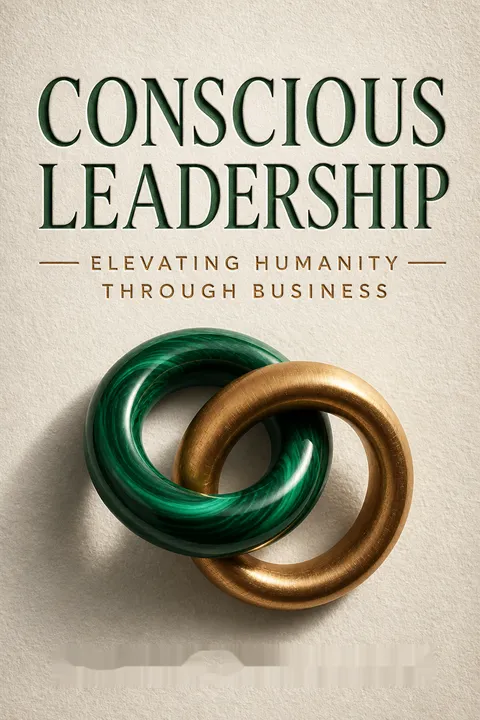


Key Takeaways
Treat leadership as inner work, not a title or a set of tactics
A crisis became a mirror. In 2001, John Mackey faced possible removal as CEO of Whole Foods after devoting too much attention to an online venture that failed. Visiting a store brought him back to the people and purpose he had lost sight of. He also saw his own part in the crisis: by not fully taking responsibility for leading, he had left a vacuum others could fill. The board kept him, but the experience demanded a change in how he led.
Growth is part of the job. The book defines conscious leadership as deliberate development of character, responsibility, and awareness, not simply effective execution. Mackey says Whole Foods grew from about $1 billion in annual sales to more than $19 billion after the leadership team changed. His central claim is that organizations cannot become more conscious than the leaders shaping them.
The opening story gives leadership development a practical test: does a leader accept responsibility for the conditions that made a crisis possible, or blame only the people around them? This resembles the learning organization idea, in which an institution improves by examining its own assumptions rather than treating failure as an isolated mishap. The emphasis on inner work is valuable because authority magnifies habits of character. Still, personal growth alone cannot repair flawed incentives or governance. A mature account of leadership joins self-examination with structural changes that make better behavior easier to sustain.
Let purpose grow from real value, then keep it practical
Purpose can emerge. The book treats higher purpose as the broader good an organization creates through its ordinary work, not a slogan added to its marketing. Whole Foods began with a commitment to natural food. Lovesac founder Shawn Nelson initially wanted to build a furniture business, then developed a stronger environmental purpose around durable, adaptable designs that could reduce waste. The authors argue that purpose often becomes clearer through experience rather than appearing fully formed at the start.
Ideal needs a market. Mackey’s first store, Safer Way, excluded many popular products in pursuit of dietary purity and struggled to attract enough customers. After it became Whole Foods Market and broadened its offer, it found greater reach. Purpose must guide decisions, but a business also has to serve customers and earn revenue. Leaders can keep purpose present through stakeholder input, visible reminders, and people empowered to champion it.
This account avoids the comforting myth that a founder discovers one perfect mission and simply follows it forever. Purpose here is closer to an evolving organizational hypothesis: the company learns what good it can create, then tests whether people value it. That links mission to product-market fit without reducing purpose to sales. The tension matters because lofty language can conceal weak practice. Stakeholders should be able to point to choices, tradeoffs, and measurable effects that demonstrate the mission. Otherwise, purpose risks becoming a reputational asset detached from the work itself.
Replace battlefield leadership with service, care, and demanding support
Metaphors shape conduct. War, jungle, and winner-takes-all sports language can make colleagues seem like enemies and kindness look like weakness. The authors propose seeing a business as a community of people who depend on one another. At Whole Foods, meetings end with voluntary appreciations, giving colleagues a routine way to recognize useful contributions. The book also describes commercial real estate broker Jonathan Keyser, who shifted from aggressive selling to systematically helping clients, coworkers, and even competitors. Referrals grew as those relationships matured.
Love has several forms. In this workplace context, it means generosity, gratitude, appreciation, care, compassion, and forgiveness, not romance. It can also mean challenging people to meet higher standards. Servant leadership expresses love through service: a leader earns authority by helping others succeed, rather than relying only on rank.
The community metaphor changes the strategic question from how to defeat a rival to how relationships can create durable value. This connects with research on social capital: trust and reciprocal help can make cooperation more productive, especially when work depends on repeated interactions. Keyser’s story is persuasive because service is shown as a long-horizon business practice, not mere niceness. Its limits deserve attention: service can be exploited, and praise can feel manipulative when power is unequal. Care therefore works best alongside boundaries, honest feedback, and accountability.
Make integrity visible in metrics, incentives, and inconvenient truth
Conscience needs mechanisms. Ramón Mendiola, CEO of Costa Rica’s Florida Ice & Farm Company, responded to stakeholder concerns about alcohol use, waste, water, and emissions by setting measurable goals. He tied 40 percent of senior executives’ performance scorecards to social and environmental results, rather than treating responsibility as a charitable side project. The company met its stated environmental targets, became water positive, and increased strategic social investment while continuing to grow.
Integrity has several parts. The book connects it to truth-telling, honor, authenticity, trustworthiness, and courage. At Ford, CEO Alan Mulally challenged executives who were presenting a uniformly positive picture while the company was losing billions. A leader must make it safe to report bad news, and must also be willing to hear it. Integrity includes aligning personal values with organizational responsibilities, even when they do not produce identical choices.
Mendiola’s compensation change illustrates a key insight from organizational behavior: people take priorities seriously when systems reward them, not merely when leaders announce them. The example also suggests a useful audit question: which values are actually embedded in budgets, promotion criteria, and executive pay? Metrics can focus effort, but they can also invite gaming or narrow attention to whatever is easiest to count. A credible integrity system therefore combines measurable targets with transparent methods, qualitative feedback, and willingness to revise goals when the measure distorts the purpose.
Negotiate for three wins, including the health of the wider system
Look beyond the table. Win-win-win means seeking a good outcome for oneself, the other party, and the larger community affected by the exchange. After the September 11 attacks stalled travel, Expedia executive Cheryl Rosner arranged flexible, zero-interest loans for small hotel partners. The hotels survived, Expedia gained favorable terms for its new Hotels.com service, and employees and the travel industry benefited as business returned.
Map the connections. In 2017, facing pressure from activist investors, Whole Foods considered several options before merging with Amazon. Mackey presents the acquisition as a solution that benefited customers through lower prices and better delivery, protected the grocery chain’s identity and suppliers, and gave shareholders a premium. The book calls for systems thinking: examining how choices affect connected stakeholders over time. If trust fails and a mutually beneficial deal cannot be reached, walking away is preferable to accepting a deal designed to exploit one side.
The three-part lens is a practical safeguard against confusing the immediate negotiating parties with everyone who bears the consequences. It also resembles mechanism design, the study of arranging rules so that participants can pursue their interests while producing better collective outcomes. The hotel loan example shows how a crisis can reveal interdependence that routine transactions hide. Yet not every conflict has a solution that benefits all parties equally, and claims of universal benefit can obscure who absorbs costs. Leaders should name the affected groups and test the distribution of gains and losses rather than simply label a deal a win for everyone.
Build conditions where ideas connect, then convert them into value
Innovation is social. The authors use the term scenius for creative achievement that grows from a community or scene, not just a lone genius. Thomas Edison relied on a talented team, and Whole Foods encouraged stores to develop ideas locally. A successful mochi dessert bar, created by team members at one location, spread across the company. Leaders can support this process through autonomy, healthy competition, incentives for useful ideas, and protected space for experiments.
Ideas need delivery. Xerox PARC produced technologies including the graphical user interface, but other companies turned important ideas into successful products. Innovation means creating something that solves a problem or improves life, then making it work in practice. The authors also urge humility: useful ideas may come from competitors or the edges of an industry. A leader’s contribution may be to recognize, fund, and operationalize an idea rather than invent it personally.
Treating innovation as a property of interactions shifts attention from heroic personalities to the architecture of collaboration: who can share ideas, test them, and learn without excessive permission-seeking? This fits network theories of creativity, where recombination across people and disciplines produces novelty. The book also correctly distinguishes invention from adoption. A brilliant prototype has little social value if it never reaches users. Decentralization, however, can generate fragmentation. Organizations need ways to preserve local experimentation while sharing what works and maintaining standards that protect customers and other stakeholders.
Think in decades, but update plans as exponential change unfolds
Do not spend tomorrow. Halla Tómasdóttir warned that Iceland’s boom was built on rapid borrowing and acquisitions rather than durable value. Her investment firm took a more cautious, long-term approach and was better positioned when the financial crisis hit. The book distinguishes finite games, with a near-term winner, from an infinite game, where the task is to keep an organization healthy enough to continue adapting.
Growth can fool intuition. In the chessboard-and-rice story, each square doubles the previous amount, so early growth looks small while later totals become enormous. Moore’s law describes a similar pattern in computing, where transistor counts roughly doubled over periods of about two years for decades. Leaders should consider how technologies and markets may develop, not just how they look today. They should also change course when evidence contradicts their forecasts.
Long-term thinking is not the same as confidently predicting a distant future. Its more defensible form is maintaining options: investing in capabilities, avoiding fragility, and updating beliefs as evidence arrives. Exponential curves explain why early signals can be easy to dismiss, but they do not guarantee that every technology will scale or that growth will continue at the same rate. The authors’ own emphasis on course correction is essential. Scenario planning and small experiments can help leaders prepare for several plausible futures without mistaking a compelling forecast for certainty.
Build teams through fit, candor, coaching, and fair second chances
Teams outperform lone stars. The book argues that leaders need to recruit people who complement their strengths, invest in internal talent, and bring in outside perspectives when needed. Whole Foods aimed to fill about 75 percent of leadership roles internally while keeping external hires above 20 percent. Its experience suggests that a strong résumé cannot compensate for poor cultural fit.
Safety enables candor. Google’s Project Aristotle studied 180 teams and identified psychological safety as the strongest predictor of team effectiveness in its analysis. Psychological safety means people can ask questions, admit mistakes, and raise difficult issues without expecting humiliation. Good leaders also give timely feedback and allow people to recover from a poor promotion when possible. Mark Dixon struggled as a store leader, returned to a previous role, learned from the experience, and later became a senior regional leader.
The team practices connect sound selection with the less glamorous work of making it possible to speak honestly after hiring. Psychological safety is not comfort at all costs; teams still need clear expectations and accountability. The distinction matters because organizations sometimes mistake harmony for trust, even when people are quietly withholding concerns. Internal promotion can build commitment and preserve institutional knowledge, while outside hiring can disrupt stale assumptions. The useful question is not which approach is best in general, but what combination supplies continuity, needed expertise, and healthy challenge.
Protect your energy as deliberately as you protect company assets
Rest supports judgment. Investor Stanley Druckenmiller credited a four-month break with helping him see an opportunity he might otherwise have missed. The book presents revitalization as an operating requirement, not a reward reserved for after success. Tony Schwartz’s model groups personal energy into physical, emotional, mental, and spiritual dimensions. It also describes work in roughly 90-minute periods of focused effort followed by renewal as a useful rule of thumb, not a universal law.
Build a replenishing routine. The authors emphasize adequate sleep, nourishing food, movement, meditation, time outdoors, hobbies, and limits on digital interruptions. They cite a study in which 96 percent of senior leaders reported some degree of burnout, with one-third describing it as extreme. The larger point is that a leader’s attention and stamina are finite. Regular pauses help preserve the judgment and relationships that sustained work requires.
The chapter’s strongest contribution is to treat recovery as part of performance rather than its opposite. Cognitive science supports the broad idea that attention fatigues and that sleep is central to memory and decision-making. The 90-minute rhythm is best understood as a planning prompt, not a biological timer that applies equally to every person or task. Recovery is also partly organizational: workloads, staffing, and norms around availability can make individual self-care ineffective. Leaders influence those conditions, so personal energy management should not become a way to blame exhausted employees for systemic overwork.
Keep learning until experience becomes judgment, not merely expertise
Adults can keep developing. Benjamin Franklin left school at ten but pursued books, writing practice, and a peer group devoted to mutual improvement. The authors use his example to argue that learning continues through adulthood and can reshape both skill and character. They recommend seeking mentors, studying beyond one’s specialty, and practicing unfamiliar skills, which can help leaders remain open rather than overconfident.
Make the inner visible. The book describes the subject-object relationship: growth involves gaining enough distance from an emotion or assumption to observe it and choose a response. Instead of being consumed by anger, a leader can notice anger arising. It also calls for cultural intelligence, the capacity to recognize constructive values and harmful tendencies across traditional, modernist, and progressive worldviews. This broader perspective helps leaders navigate disagreements without assuming that one group’s values explain everyone.
The movement from reaction to observation is a compact account of metacognition, the ability to notice and evaluate one’s own thinking. That capacity supports emotional regulation and better learning because it creates room between impulse and action. Broad learning also helps leaders connect ideas across domains, though generalism does not replace the deep expertise needed for technical decisions. Cultural intelligence is most useful when treated as a discipline of interpretation rather than a claim to stand above politics. Leaders still need to make choices, but they can make them with a clearer view of competing values.
Analysis
The book’s organizing claim is that business leadership begins inside the leader and becomes consequential through organizational systems. Its nine qualities move from purpose, love, and integrity to strategy, people, and personal development. The structure matters: values are not presented as private virtues alone. They become credible when translated into decisions, incentives, team norms, and relationships with stakeholders.
Its most useful corrective is to reject false binaries. Purpose need not displace profit, competition need not exclude cooperation, and support need not eliminate challenge. The repeated emphasis on managing interdependent tensions makes the book more practical than a simple catalogue of admirable traits. Its case studies also give the framework texture, from Mackey’s own leadership crisis to Mendiola’s environmental targets and the Whole Foods acquisition by Amazon.
The argument is strongest when it identifies mechanisms: link social goals to compensation, make bad news safe to report, and preserve room for local experimentation. It is less conclusive when it assumes that voluntary exchange usually benefits all parties or that a company’s intrinsic purpose is inherently positive. Markets can create value while imposing costs on workers, communities, or the environment. Stakeholder language alone does not establish that those costs are fairly distributed. Measurement, public accountability, and independent scrutiny are necessary complements to a leader’s intentions.
The book also blends empirical claims, business anecdotes, and spiritual language. That breadth is part of its appeal, but readers should distinguish evidence about team processes from philosophical claims about purpose or cultural evolution. Taken as a practical leadership philosophy rather than a validated universal formula, its core message is compelling: personal character sets direction, organizational design gives it leverage, and sustained reflection helps correct the inevitable gap between stated values and lived behavior.
Review Summary
Conscious Leadership receives mixed reviews, with an average rating of 3.73 out of 5. Some readers praise its insights on modern leadership, emphasizing continuous learning, self-care, and stakeholder consideration. Others find it unoriginal or ego-centric. Positive reviews highlight the book's practical approach to leadership theories and its focus on purpose-driven business. Critics argue that it lacks originality and depth. The book's discussion of cultural intelligence and worldview shifting is noted as a unique contribution. Overall, readers appreciate its emphasis on ethical, value-centered leadership.
People Also Read







Glossary
Conscious leadership
Intentional, developmental leadershipA leadership approach that treats the role as an ongoing practice of awareness, responsibility, and personal development. Conscious leaders connect people to organizational purpose, consider the effects of decisions on stakeholders, and work to align their conduct with their values. The book presents it as relevant beyond business, including government, nonprofits, and education.
Stakeholder integration
Aligning stakeholder interestsAn approach to business that considers the connected interests of groups affected by or involved with an organization, rather than treating shareholder returns as its only responsibility. The book distinguishes primary stakeholders, such as customers, employees, suppliers, investors, communities, society, and the environment, from secondary stakeholders, such as media, regulators, activists, and competitors.
Win-win-win
Mutual and community benefitA decision-making strategy that seeks a positive outcome for oneself, the other party, and the wider community affected by an exchange. In business, the third win often concerns other stakeholders. The approach calls for candid communication and creative problem-solving, while recognizing that a leader may need to decline a deal that depends on one party losing.
Polarity theory
Managing interdependent oppositesA framework for handling pairs of desirable qualities that cannot simply be reduced to one preferred choice. Examples include cooperation and competition, flexibility and structure, or idealism and pragmatism. Each side offers benefits and carries risks. Leaders manage the tension over time, seeking the advantages of both while limiting the downsides of either.
Scenius
Collective creative intelligenceA term used for creative achievement that emerges from a community, scene, or network rather than from an isolated individual alone. People exchange ideas, refine one another’s work, and create conditions that amplify individual talent. The book applies the concept to creative cultures and companies that support collaboration and experimentation.
Adjacent possible
Reachable next opportunitiesA concept from complexity theorist Stuart Kauffman describing the realistic possibilities available just beyond the present situation. It distinguishes achievable next steps from leaps that require too many missing capabilities or conditions. As people or organizations act, the boundary of what is possible shifts, opening new opportunities that were previously out of reach.
Infinite game
An open-ended ongoing endeavorA way of understanding activities without a final endpoint or permanent winner. In business, the aim is not simply to defeat a competitor in a short contest, but to build an organization capable of continuing, adapting, and creating value over time. The book contrasts this orientation with finite games that have fixed rules and a clear finish.
Cultural intelligence
Integrating competing value systemsThe capacity to understand and work across different cultural worldviews without treating one group’s values as the only legitimate ones. The book distinguishes traditional, modernist, and progressive value frames, each with constructive strengths and possible pathologies. Culturally intelligent leaders seek to recognize what is valuable across these perspectives while addressing conflict with care.
Subject-object relationship
Observing inner experienceA developmental concept describing the ability to view a feeling, belief, or impulse as something one experiences rather than as the whole self. For example, noticing anger as it arises creates more room to choose a response than being completely identified with the anger. The book presents this distance as a key to self-awareness and growth.
Project Aristotle
Google team effectiveness studyGoogle’s internal study of 180 teams, described in the book, which examined conditions associated with team effectiveness. The account highlights psychological safety as the leading factor: team members can take interpersonal risks, ask questions, acknowledge mistakes, and raise concerns without expecting humiliation. Meaningful work, clear roles, and reliability also appear among important team conditions.
FAQ
What is Conscious Leadership: Elevating Humanity Through Business by John Mackey about?
- Core focus on conscious leadership: The book explores how leaders can elevate humanity through business by embracing conscious capitalism, integrating purpose, love, and integrity into business practices.
- Leadership as inner journey: It emphasizes leadership as a path of personal growth, character development, and ethical responsibility, not just business success.
- Serving all stakeholders: Mackey advocates for organizations that create value for customers, employees, suppliers, communities, and the environment—not just shareholders.
- Practical frameworks and tools: The book provides actionable models and principles for transforming both leaders and organizations.
Why should I read Conscious Leadership by John Mackey?
- Fresh approach to leadership: The book challenges traditional profit-driven models, offering a purpose-driven, values-based alternative grounded in Mackey’s experience at Whole Foods Market.
- Actionable insights and tools: Readers gain practical strategies for leading with love, integrity, and long-term vision, applicable across industries.
- Addresses modern challenges: It responds to the need for leaders who can navigate complexity, rapid change, and cultural polarization with humility and purpose.
- Personal and organizational growth: The book supports both individual transformation and the creation of more conscious, resilient organizations.
What are the key takeaways from Conscious Leadership by John Mackey?
- Purpose-driven leadership: Successful leaders start with a clear, higher purpose that guides decisions and inspires stakeholders.
- Love and integrity as foundations: Leadership rooted in appreciation, care, compassion, authenticity, and courage builds strong, resilient organizations.
- Long-term and exponential thinking: Balancing short-term demands with a long-term vision and understanding exponential change is critical for innovation and sustainability.
- Continuous team and personal evolution: Hiring for culture, fostering psychological safety, and committing to lifelong learning are essential for thriving teams and leaders.
What are the nine distinguishing characteristics of conscious leaders in Conscious Leadership by John Mackey?
- Vision & Virtue: Conscious leaders put purpose first, lead with love, and act with integrity, setting the ethical tone for their organizations.
- Mindset & Strategy: They seek win-win-win solutions, innovate, create value, and think long term, balancing idealism with pragmatism.
- People & Culture: They evolve their teams, revitalize their own energy, and commit to continuous learning and growth, fostering adaptability and resilience.
How does Conscious Leadership by John Mackey define and emphasize the role of purpose in leadership?
- Purpose as “true north”: Purpose unifies and energizes people, guiding ethical and practical decision-making for both individuals and organizations.
- Dynamic and evolving: Purpose is a living process that deepens over time; leaders must continually discover, cultivate, and reaffirm it.
- Purpose powers profit: Mackey argues that profit follows value creation rooted in purpose, challenging the idea that purpose and profit are at odds.
- Alignment and inspiration: A clear purpose inspires stakeholders and aligns organizational efforts for greater impact.
What does it mean to "Lead with Love" according to Conscious Leadership by John Mackey?
- Love as a business virtue: Love encompasses generosity, gratitude, care, compassion, and forgiveness, and should be operationalized in the workplace.
- Community over competition: The book critiques metaphors like “war” or “shark tank,” advocating for business as a community built on mutual care.
- Servant leadership: Leaders prioritize serving others, fostering trust, loyalty, and high performance through genuine care and support.
- Culture transformation: Leading with love creates a more humane, effective, and resilient organizational culture.
How is integrity characterized in Conscious Leadership by John Mackey, and why is it essential?
- Supreme leadership quality: Integrity involves truth-telling, honor, authenticity, trustworthiness, and courage, even when it’s difficult or unpopular.
- Personal and organizational alignment: Leaders must align their personal values with the organization’s purpose, requiring ongoing commitment and humility.
- Shadow work: Integrating unconscious aspects of oneself prevents self-sabotage and fosters authentic, transparent leadership.
- Foundation for trust: Integrity builds trust with all stakeholders, which is essential for long-term success.
What is the “win-win-win” solutions concept in Conscious Leadership by John Mackey?
- Triple-win mindset: Beyond win-win, conscious leaders seek solutions that benefit the business, stakeholders, and the broader community or ecosystem.
- Challenging zero-sum thinking: The book encourages moving past win-lose mentalities to find creative, ethical outcomes for all parties.
- Practical tools: Leaders are advised to ask, “Is anyone losing?” and use systems thinking and open communication to ensure mutual benefit.
- Sustainable success: Win-win-win solutions create lasting value and strengthen relationships across the business ecosystem.
How does Conscious Leadership by John Mackey address innovation and value creation?
- Innovation as economic engine: The book credits innovation as the primary driver of societal wealth and progress over the past 250 years.
- Value creation for all: Leaders are urged to focus on creating real value for customers and stakeholders, with profits as a byproduct.
- Culture of creativity: Building a culture that incentivizes creativity, healthy competition, and recognition of ideas is essential.
- Continuous improvement: Leaders should encourage “piling idea on idea” to drive ongoing improvement and adaptation.
What is the “adjacent possible” concept in Conscious Leadership by John Mackey, and why is it important?
- Definition: The “adjacent possible” refers to the space of near-term, achievable future possibilities adjacent to current reality.
- Pragmatic innovation: Focusing on what is immediately possible helps leaders avoid overreaching and create sustainable progress.
- Strategic application: Leaders use this concept to anticipate trends, invest wisely, and innovate within realistic boundaries.
- Expanding opportunities: Each step into the adjacent possible reveals new opportunities, fueling ongoing growth and adaptation.
How does Conscious Leadership by John Mackey recommend building and evolving effective teams?
- Hiring for culture and potential: Prioritize emotional intelligence, character, and cultural fit over charisma or presentation skills.
- Psychological safety: Foster trust so team members feel safe to be vulnerable, take risks, and share ideas, which drives collaboration and performance.
- Ongoing development: Provide clear goals, regular feedback, and invest in leadership training and mentorship.
- Compassionate management: Address underperformance with candid feedback and compassion to maintain team health and morale.
How does Conscious Leadership by John Mackey approach continuous learning, personal growth, and revitalization?
- Lifelong learning: Leaders are encouraged to pursue ongoing self-improvement through reading, skill development, and self-reflection.
- Multiple intelligences: Cultivating emotional, social, cultural, and spiritual intelligence is essential for navigating complex environments.
- Energy management: Practices like meditation, rest, and digital fasting help leaders sustain energy, focus, and creativity.
- Inner work: Developing self-awareness and spiritual growth deepens leadership impact and aligns actions with purpose and love.

Download PDF
Download EPUB
.epub digital book format is ideal for reading ebooks on phones, tablets, and e-readers.








