

Key Takeaways
Treat luck as partly trainable: widen your attention, action, and connections
Luck has practical levers. The authors do not claim that chance disappears. Their central idea is that people can improve their odds by noticing opportunities, acting on them, and staying open to unexpected help. Gay Hendricks recalls deciding, as a teenager, to see himself as lucky. Soon afterward, he found and returned a coin dealer’s briefcase, which held valuable collectibles. The owner later sent him a coin collection as thanks. The timing felt significant, though it could not prove that his decision caused the event.
Attention changes what appears. Psychologist Richard Wiseman’s newspaper experiment, as described here, gave readers a message stating that the paper contained 43 photographs. People who identified as lucky were more likely to notice it while counting pictures. The useful lesson is behavioral: a narrow search can hide openings that were already there.
What's compelling is the shift from luck as a mysterious verdict to luck as a set of probabilities people can influence. The newspaper example points to selective attention: what a person scans for affects what they notice, and what they notice can shape their next move. That is a credible mechanism for becoming more opportunity-rich without invoking supernatural forces. The distinction matters. A returned briefcase may follow a lucky mindset, but it does not establish that mindset caused the coincidence. The strongest version of the argument is modest: people cannot schedule chance, but they can make themselves more available to it.
Rewrite inherited bad-luck scripts without turning self-awareness into self-blame
Commitment redirects attention. The first step is to choose, sincerely, to participate in changing one’s relationship with luck. Hendricks recommends writing that commitment, saying it aloud, and sharing it with another person. The point is not that a sentence magically changes circumstances. It makes an intention concrete and gives it a chance to guide choices.
Notice the old loop. Hendricks describes repeating the same painful argument with a partner until he recognized the recurring pattern of concealment, blame, and reconciliation. The authors call entrenched assumptions about being unlucky personal barriers. They suggest meeting those beliefs with benign observation, meaning gentle attention without condemnation, then distinguishing past influences from present choices. A timeline exercise asks readers to consider when the feeling began and whether it echoes family attitudes. The intended result is ownership without shame, not a claim that people consciously chose every hardship they face.
Naming a repeating pattern can restore agency because it turns an apparently random sequence into something a person can examine and interrupt. That resembles cognitive approaches that identify automatic thoughts before testing them. The authors' nonjudgmental stance is especially useful: self-criticism often consumes energy without supplying a workable alternative. Still, the claim that people are committed to outcomes such as loneliness or illness can overreach. Circumstances, discrimination, health, and other people's behavior also shape outcomes. Awareness is best used to locate available choices, not to assign responsibility for every painful result.
Treat shame as a learned burden, not proof you deserve less
Shame attacks identity. The authors distinguish guilt, which concerns an action, from shame, which makes a person feel fundamentally defective. Hendricks traces his own shame to family experiences and later discovered that it registered as physical sensations. He proposes noticing those sensations without trying to force them away, allowing the body to relax, and bringing self-compassion to the places that feel constricted.
Make room for choice. One client had inherited money from a father who repeatedly called him incapable with finances. After his father died, the son spent much of the inheritance, apparently acting out a damaging belief he had absorbed. Counseling helped him separate his father's judgment from his own present identity. The book describes shame as material that can be redirected toward abundance. More cautiously, the practical value is that reducing shame may help people feel more deserving of support and able to make considered decisions.
The distinction between guilt and shame is psychologically useful: regret about a particular act can guide repair, while a global sense of defectiveness can make change feel impossible. Body awareness may help some people recognize distress before it becomes an automatic reaction. The metaphor of turning shame into a magnet for fortune is best read as motivational imagery, not a demonstrated force attracting money or opportunity. Shame can also arise from abuse, stigma, or ongoing danger, so reflection is not a substitute for safety, trusted support, or skilled care when distress is severe.
Choose goals that energize you and create value beyond yourself
Test what you want. The authors define luck-worthy goals as meaningful, energizing, and beneficial to both the person pursuing them and others. They recommend asking what more money or free time would actually make possible, then checking whether a goal feels genuinely alive rather than inherited from someone else's expectations. Their Heart Meditation asks readers to picture each goal and notice whether it brings a sense of expansion or contraction.
Make contribution concrete. Katie Anderson wanted to build a business around conserving water. Her company offered apartment owners savings while reducing water use. In one early project, the team retrofitted 218 units and cut the complex's next water bill by 44 percent. Anderson's purpose helped her attract employees, customers, and financing, though the story also shows practical work: she learned the trade, completed projects, and made repeated sales. The goal gave effort direction and made its wider value legible to others.
A goal with a public benefit can strengthen motivation and make collaboration easier: prospective partners can see why the work matters beyond its founder. The authors' three-part test also helps distinguish a personally meaningful ambition from a socially approved but unwanted one. The caution is that altruism does not guarantee success, and a goal need not solve a major social problem to be worthwhile. A small, sustainable contribution can be more realistic than attaching moral grandeur to every ambition. The useful test is whether the aim fits the person and creates value someone else can recognize.
Make more openings for luck through brave, repeated action
Novelty creates encounters. The authors urge readers to break routine, try unfamiliar activities, and remain receptive to unexpected invitations. A different route or conversation can expose someone to people and ideas that their usual pattern excludes. They also recommend taking manageable risks, such as asking for an opportunity, rather than waiting until fear disappears.
Ask before settling. Carol Kline had been offered research and writing work on a pet-themed anthology. During a call, she asked to be made a coauthor instead. The request felt risky because the editor could refuse, but it led to negotiation and a role that helped launch further writing work. The authors also recommend helping others when personal efforts stall. Giving attention, introductions, or practical assistance can loosen self-absorption and build reciprocal relationships, although generosity is not a guaranteed transaction.
Repeated action matters because opportunity usually requires contact with other people, information, and institutions. A single brave request can change the available options, while small experiments make a life less dependent on one narrow route. This is not a case for indiscriminate risk-taking: the value of a bold move depends on its costs, reversibility, and likely upside. Nor should generosity be treated as a covert investment strategy. Its most reliable returns may be social connection and a broader sense of purpose, not an eventual favor or financial reward.
Spend less time rehearsing grievance, more time with growth-minded allies
Social habits spread. The authors ask readers to notice relationships organized around shared complaints and victim stories, where each person reinforces the other's sense of powerlessness. Hendricks describes changing his perspective after complaining about a large tax bill: his wife pointed out that the payment reflected a financially successful year. He also reviewed his contacts to see which conversations repeatedly returned to grievance.
Choose support deliberately. The recommendation is not to abandon everyone who disagrees or struggles. It is to spend more time with people who encourage growth and to reduce exposure to relationships that repeatedly undermine it. A virtual mentoring group helped Sara Laamanen, who felt isolated after moving to a small town, test decisions and make changes in work and living arrangements. Accountability partners, mentors, and peer groups can provide encouragement and useful challenge, even when supportive people are not nearby.
A social circle supplies more than companionship; it also shapes which actions feel normal, possible, or embarrassing. Peer groups can provide accountability and reality checks that solo determination lacks. The authors' attention to shared grievance is valuable, but complaint is not always destructive: it can identify injustice, invite solidarity, or help someone seek redress. The question is whether a conversation moves toward understanding or keeps everyone in a fixed victim role. Healthy support does not require relentless positivity. It combines honest recognition of difficulty with room to imagine and attempt alternatives.
Use your body, values, and intuition as a practical navigation system
Find a workable pace. The authors call a speed that feels present, grounded, and unforced the essence pace. Hendricks tells of hurrying through an airport after a delayed flight, then slowing his breathing and moving with more ease. At the gate, he spoke calmly with the agent just as an extra first-class seat became available. The story illustrates how composure can affect interactions, not a rule that calmness earns upgrades.
Listen, then assess. The authors' internal GPS combines bodily cues, intuition, and integrity, meaning alignment between values and behavior. Carol Kline's story of singer Cydney Davis shows an unexpected opportunity emerging after Davis followed her love of children and music. Another account describes a soldier who delayed returning to a post after a strong inner warning, then learned that a rocket attack had destroyed it. Intuition can be useful, but it should be weighed alongside evidence and risk.
The body's signals can supply information that deliberate reasoning has not yet organized, while values help filter choices that look attractive but feel misaligned. Slowing down can also widen attention and reduce reactive decisions. The vivid military story, however, is a dramatic anecdote, not evidence that every strong hunch predicts danger. Intuitions can reflect experience, but they can also reflect fear, bias, or incomplete information. A sound practice is to notice the signal, ask what might explain it, and check it against observable facts when time allows.
Feel the loss, then ask what else might be true
Gratitude is not denial. The authors distinguish gratitude, a feeling of thankfulness, from appreciation, the active practice of noticing and expressing value. Their Radical Gratitude practice asks people to feel their real response to a setback, then gently consider whether anything else can also be true. It does not require pretending that pain is good or suppressing grief, anger, or fear.
Widen the frame. Writer David Cain describes failing to find a nearby parking space. Instead of staying angry, he noticed that he could walk, that his neighborhood felt safe, and that carrying groceries was manageable. The shift changed his experience of an ordinary frustration without changing the inconvenience itself. The authors also suggest a quick reset during a spiral: pause, recall something genuinely appreciated, and take several slow breaths before deciding what to do next.
Gratitude can act as attentional rebalancing: it does not erase the negative event, but it prevents that event from becoming the only available evidence about a person's life. The authors wisely distinguish this from spiritual bypass, in which positivity is used to avoid feeling. The practice is most credible when it expands perspective rather than dictates a required emotion. In severe loss or structural hardship, gratitude cannot repair the underlying conditions. It may support coping, but it should never be used to silence a legitimate demand for help, justice, or change.
Analysis
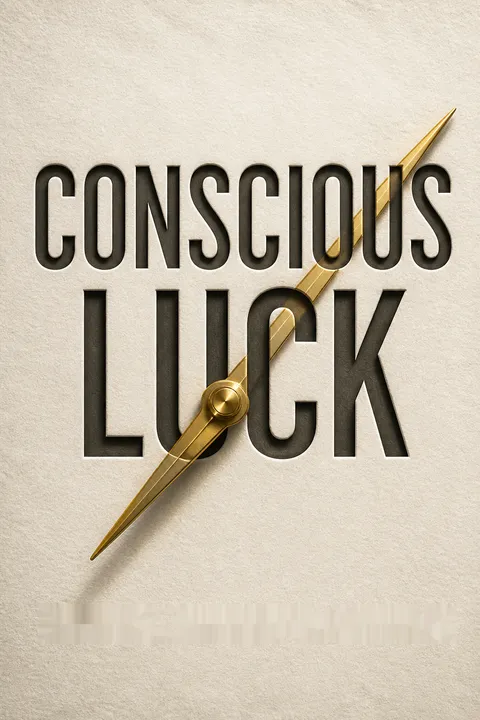
Conscious Luck is most persuasive when luck means improved exposure to opportunity, not control over fate. Its eight-part model moves from inner expectations to observable conduct: a person commits to a new orientation, loosens inherited assumptions, clarifies goals, acts more boldly, builds supportive relationships, pays attention to intuition, and practices gratitude. Across these steps, the book's stories serve as miniature causal maps. A request leads to a conversation, a new contact leads to a project, or a pause creates room to notice another option. The stories make the proposed behaviors memorable, even when they cannot establish that a mindset caused a fortunate outcome.
That distinction matters because the authors sometimes slide between psychological mechanisms and spiritual claims. Increased attention, persistence, social support, and willingness to ask can plausibly change which opportunities someone encounters and how they respond. The claim that shame or altruism attracts abundance is harder to test and should be understood as metaphor or personal belief, not a reliable law. Anecdotes selected after success also omit people who took comparable risks without receiving a break. The book itself acknowledges a random component, but its most confident language can make uncertainty seem more controllable than it is.
The framework is therefore strongest when paired with a structural account of luck. Personal habits matter, but so do health, money, discrimination, caregiving demands, geography, and access to influential networks. Saying that someone is unconsciously committed to hardship risks converting a tool for agency into an accusation. A more humane reading asks: which part of this situation can the person influence, and what support or change requires other people or institutions?
Read this way, Conscious Luck offers a practical discipline for staying alert, purposeful, and connected without promising that every setback conceals a reward. Its most durable contribution is not a method for commanding fortune. It is a way to avoid adding preventable blindness, isolation, or self-condemnation to the uncertainties that already belong to life.
Review Summary
Conscious Luck receives mostly positive reviews, with readers praising its practical approach to cultivating a lucky mindset. Many find the book inspiring and easy to follow, appreciating the personal stories and actionable advice. Some readers note that while the concepts aren't entirely new, the presentation is engaging and motivational. Critics mention that certain sections feel repetitive or superficial. Overall, readers appreciate the book's emphasis on gratitude, positive thinking, and taking bold action to create opportunities for luck in one's life.
People Also Read







Glossary
Conscious Luck
Practices that improve one's oddsThe authors' approach to becoming more available to favorable outcomes through deliberate expectations, useful goals, action, relationships, intuition, and gratitude. It does not eliminate chance. Its practical premise is that people can influence how often they encounter opportunities and how effectively they respond to them.
VLP
Very Lucky PersonAn abbreviation for Very Lucky Person, the identity Hendricks invites readers to adopt as part of a deliberate commitment to changing their relationship with luck. The term is intended to focus attention and behavior, rather than establish that a person can control random events.
Benign observation
Gentle, nonjudgmental noticingThe practice of noticing an unwanted thought, feeling, or recurring behavior without condemning it or trying to forcibly erase it. The authors argue that accepting the pattern as present makes it easier to release its hold and choose a different response.
Luck-worthy goals
Meaningful, energizing, generous aimsGoals the authors describe as personally meaningful, enlivening, and beneficial to both the person pursuing them and other people. They contrast these aims with urgent to-do items or ambitions adopted mainly to meet someone else's expectations. Their goal-checking exercise asks whether an aim feels genuinely compelling and has value beyond the self.
Conscious Luck Heart Meditation
A body-based goal checkAn exercise for evaluating goals by imagining each one and noticing bodily responses, especially in the chest and heart area. A sense of expansion, excitement, or energy is treated as a sign that the goal may be personally meaningful; contraction or flatness suggests revising or setting it aside.
Essence pace
A grounded, present paceThe authors' term for moving at a speed that allows a person to stay physically comfortable, emotionally grounded, and attentive to the present. It can be fast or slow. The key distinction is whether the person remains at ease rather than being driven by anxious rushing or distraction.
Internal GPS
Inner guidance for decisionsA metaphor for using bodily sensations, intuition, and personal values to help navigate choices and timing. The authors encourage people to notice internal signals rather than relying exclusively on analysis or outside approval. Those signals can inform decisions, but they are not guaranteed predictions and should be considered alongside evidence.
Radical Gratitude
Finding gratitude amid difficultyThe practice of acknowledging a difficult feeling and then asking, with curiosity rather than obligation, whether anything about the situation can also be appreciated. It is not meant to deny pain, force positivity, or imply that harmful events are good. Its purpose is to widen perspective while remaining emotionally honest.
Good-luck conspiracy
A supportive growth networkThe authors' phrase for a group of relationships that encourages development, celebrates progress, and helps people pursue meaningful aims. The term contrasts with social circles organized around repeated grievance or defeat. A supportive network may include friends, mentors, peers, or virtual groups.
FAQ
What's "Conscious Luck" about?
- Overview: "Conscious Luck" by Gay Hendricks and Carol Kline is a self-help book that explores the concept of creating your own luck through intentional actions and mindset shifts.
- Core Idea: The book presents eight secrets that aim to help readers change their fortune by altering their attitudes and behaviors towards luck.
- Structure: It is divided into two main parts: foundational secrets that focus on core shifts in mindset and daily living secrets that involve practical, everyday actions.
- Goal: The authors aim to empower readers to take control of their luck, suggesting that luck is not just a random occurrence but something that can be cultivated consciously.
Why should I read "Conscious Luck"?
- Empowerment: The book offers tools and insights to help you take control of your life by changing your luck, which can lead to greater success and happiness.
- Practical Advice: It provides actionable steps and exercises that you can incorporate into your daily routine to improve your luck.
- Inspiring Stories: The book includes real-life stories and examples that illustrate how the principles of conscious luck have worked for others.
- Holistic Approach: It combines psychological, spiritual, and behavioral perspectives, making it a comprehensive guide for personal development.
What are the key takeaways of "Conscious Luck"?
- Luck is Changeable: Luck is not just a matter of chance; it can be influenced by your mindset and actions.
- Eight Secrets: The book outlines eight secrets that help you consciously create luck, including making a commitment to be lucky and transforming shame into a magnet for abundance.
- Daily Practices: Incorporating daily practices like taking bold actions and expressing gratitude can significantly enhance your luck.
- Community and Support: Surrounding yourself with a supportive and positive community, or "lucky tribe," is crucial for sustaining your luck.
What are the eight secrets to intentionally change your fortune in "Conscious Luck"?
- Commitment to Luck: Make a conscious commitment to being a very lucky person (VLP).
- Release Barriers: Identify and release personal barriers to good fortune, such as limiting beliefs and shame.
- Transform Shame: Convert feelings of shame into a magnet for abundance and luck.
- Luck-Worthy Goals: Set goals that are deeply meaningful and beneficial to both you and others.
- Bold Actions: Take consistent, bold actions to create opportunities for luck.
- Lucky Tribe: Surround yourself with people who support and celebrate your growth and success.
- Right Place, Right Time: Learn to be at the right place at the right time by following your internal guidance.
- Radical Gratitude: Practice radical gratitude and appreciation to expand your capacity for luck.
How do the authors define "Conscious Luck"?
- Intentional Luck Creation: Conscious Luck is the idea that you can intentionally create your own luck through specific actions and mindset shifts.
- Mindset and Behavior: It involves changing your core beliefs about luck and incorporating daily practices that attract good fortune.
- Empowerment: The concept empowers individuals to take control of their lives by understanding that luck is not entirely random.
- Holistic Approach: It combines psychological, spiritual, and behavioral elements to provide a comprehensive framework for improving luck.
What is the significance of "luck-worthy goals" in "Conscious Luck"?
- Meaningful Goals: Luck-worthy goals are those that are deeply meaningful to you and align with your passions and values.
- Benefit to Others: These goals should also benefit others, creating a ripple effect of positive impact.
- Attracting Luck: Setting luck-worthy goals gives luck a reason to visit, as they align with the natural order of the universe.
- Heart Meditation: The book includes a "Conscious Luck Heart Meditation" to help you identify and prioritize these goals.
How can "transforming shame" improve your luck according to "Conscious Luck"?
- Shame as a Barrier: Shame is identified as a significant barrier to luck because it makes you feel undeserving of good fortune.
- Physical Sensation: The book suggests that shame is stored in the body and needs to be acknowledged and released.
- Magnet for Luck: By transforming shame into a magnet for abundance, you can open up new pathways for luck to enter your life.
- Practical Exercise: The authors provide a step-by-step process to help you transform shame into a positive force.
What role does "radical gratitude" play in "Conscious Luck"?
- Core Practice: Radical gratitude is considered the most powerful of the eight secrets for creating Conscious Luck.
- Beyond Positivity: It involves finding something to appreciate in every situation, even challenges and struggles.
- Expanding Luck: Practicing gratitude expands your capacity for luck by shifting your focus from victimhood to appreciation.
- Emotional Balance: It helps you stay centered emotionally and physically, allowing you to navigate life's ups and downs with grace.
How does "Conscious Luck" suggest you find your "lucky tribe"?
- Positive Influence: A lucky tribe consists of people who support and celebrate your growth and success.
- Victim Stories: The book advises distancing yourself from those who engage in victim stories and negative thinking.
- Body's Intelligence: Trust your body's signals to identify who makes you feel uplifted and who doesn't.
- Community Building: Actively seek out and build relationships with people who share your positive outlook and goals.
What are some of the best quotes from "Conscious Luck" and what do they mean?
- "Luck is what happens when preparation meets opportunity." This quote, attributed to Seneca, emphasizes the importance of being prepared to seize opportunities when they arise.
- "Sell your cleverness. Invest in wonder." A quote from Rumi, suggesting that being open to new experiences and perspectives can lead to greater luck.
- "You change your luck the moment you make a conscious commitment to being lucky." This highlights the power of intention and commitment in creating your own luck.
- "The winds of grace are always blowing, but it is you that must raise your sails." This quote underscores the idea that luck is always available, but you must take action to harness it.
How can "Conscious Luck" help me overcome fear and take bold actions?
- Fear as a Barrier: Fear is identified as a significant barrier to taking bold actions, which are necessary for creating opportunities for luck.
- Breath and Awareness: The book suggests using deep breathing and awareness to manage fear and stay centered.
- Twenty Seconds of Courage: It introduces the concept of "twenty seconds of insane courage" to help you take decisive actions.
- Supportive Community: Being part of a supportive community or "lucky tribe" can provide the encouragement needed to overcome fear and take risks.
About the Author
Other books by Gay Hendricks





Download PDF
Download EPUB
.epub digital book format is ideal for reading ebooks on phones, tablets, and e-readers.








