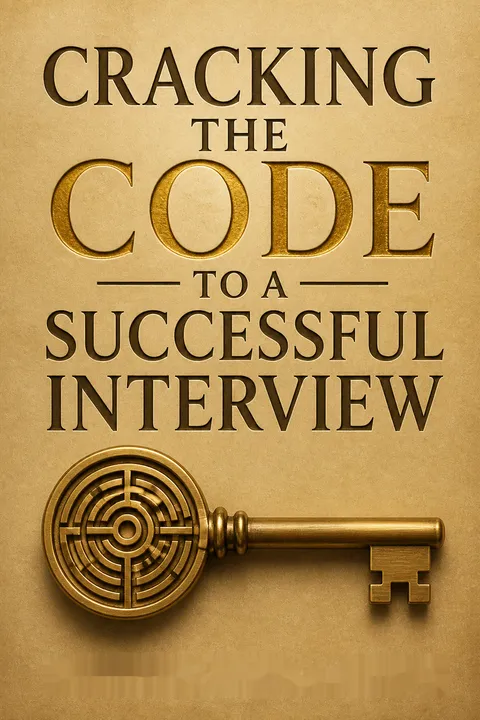


Key Takeaways
Lead the interview by answering the risks behind the questions.
The interview has an invisible agenda. Evan Pellett argues that managers are not only following their prepared questions. They are also trying to judge whether a candidate can deliver results, work well with others, and be trusted to repeat past success. He calls these unspoken concerns the “questions behind the questions.” His REAPRICH method is an eight-part way to address them proactively: present results with energy and a constructive attitude, explain the process behind those results, show relationship skills, ask the interviewer thoughtful questions, close by seeking a next step, and connect with the person behind the role.
The point is not to recite a script. It is to give the interviewer relevant evidence before the conversation wanders or an important concern goes unaddressed.
The method treats an interview as a problem of uncertainty: the employer has limited time and wants evidence that a hire will perform and fit the team. That is a useful lens because it shifts preparation from memorizing answers to selecting evidence for the decision at hand. The framework is grounded in Pellett’s recruiting experience, but his claims of scientific validation are stronger than the evidence described here. A repeatable professional method is not automatically a scientifically tested one, and interviews vary widely across industries and managers.
Prove your value with six to ten achievements, not a life story.
Lead with evidence. Pellett recommends preparing six to ten concise achievements that can be presented in about ninety seconds. Look for measurable outcomes, recognition, difficult projects completed, money saved, new business won, or a contribution that distinguished you. A result can come from work, school, volunteering, or sport, especially for someone early in a career. Put the strongest evidence first, rather than making the interviewer dig through a chronology to find it.
Deliver it with conviction. Energy and attitude shape how results are received. Practice aloud until the summary sounds natural, not memorized, and adapt the intensity to the organization. Confidence should make the evidence easier to hear, not inflate it. The author’s advice is to take responsibility for setbacks and discuss learning without blaming colleagues or circumstances.
This is a practical form of evidence-based self-presentation. Specific outcomes make claims easier to evaluate, while rehearsal helps a candidate retrieve them under pressure. The emphasis on numbers is strongest when candidates can explain how those numbers were measured and what they personally contributed. Otherwise, metrics can become a polished form of ambiguity. High energy may help in some settings, but equating enthusiasm with competence risks favoring extroverted performance over quieter, equally capable candidates. Clear evidence should carry the case.
Make impressive results credible by showing the method behind them.
Explain how the work happened. Results alone may leave a manager wondering whether they came from skill, luck, or a method that would not translate to a new team. Pellett’s “process” step is a brief account of the choices, systems, and habits that produced an achievement. A recruiter, for example, can explain how employee referral programs and targeted outreach helped reduce recruiting costs. The aim is to show both integrity and a repeatable approach, not to claim that every past success can be copied exactly.
The book also treats creativity as practical problem-solving. One hiring manager chose a candidate who had built a car between school terms over applicants with more advanced degrees, because the project demonstrated initiative and the ability to make something work. A process story can reveal capabilities a credential alone cannot.
Explaining method turns a résumé claim into a causal account: what the person did, why it mattered, and what could transfer. That resembles behavioral interviewing and the broader practice of examining mechanisms rather than outcomes alone. It also gives interviewers material to probe. The car-building anecdote makes creativity tangible, though a single memorable project should not outweigh job-relevant evidence or specialized qualifications. The most persuasive process stories connect a candidate’s choices to the actual demands of the role.
Show that your relationships create trust, collaboration, and business value.
Make relationships concrete. Hiring managers want to know whether someone can build working connections, maintain them through difficulty, and bring useful contacts or partnerships to an organization. Pellett advises candidates to identify several relevant relationships and explain briefly how each began, what it taught them, and how it connects to the role. One writer he coached described a long relationship with a mentor who later hired her into editing despite her lack of direct editorial experience. Condensed into a short account, the story showed both professional growth and a credible network.
An internal referral can help, but investigate first: the person’s reputation matters, and friendship does not guarantee a strong reference. The author’s broader principle is to treat people at every level with respect, because colleagues, assistants, customers, and leaders all affect how work gets done.
This approach recognizes that organizations run on cooperation as well as individual output. A network is more than a list of influential names; it can demonstrate that a candidate knows how trust is earned and maintained. The distinction matters because name-dropping can sound transactional, while a concise account of mutual work shows substance. Still, access to influential networks is uneven. Candidates without prestigious contacts should not mistake that disadvantage for a lack of relationship skill. Examples from teams, service, school, or peer collaboration can show the same capacity.
Ask questions that reveal the job and connect your strengths to it.
Turn curiosity into useful evidence. Prepare several questions about the work, the team, and what success would look like. Pellett suggests asking what distinguishes strong performers or where a new hire could help during the first few months. Research first, so the questions do not ask for information already available on the company website. Listen carefully, then connect the answer to a relevant achievement or skill.
The author calls this “preclosing”: inviting the interviewer to picture how the candidate’s experience could address a specific need. For instance, after learning about a coming implementation, a candidate might ask where their relevant technical experience could be most useful. The exchange should feel like genuine exploration, not a disguised sales pitch. Good questions also help candidates assess whether the job is right for them.
Questions can do two jobs at once: signal preparation and improve the candidate’s own decision-making. That balance is important. An interview is not only a performance before an evaluator; it is also a brief, imperfect chance to inspect the role and the manager. Connecting a skill to a stated need makes the discussion concrete, while an overly eager preclose can imply that the candidate has already accepted the employer’s framing. Curiosity is most credible when it leaves room for the answer to change the candidate’s view.
Ask directly for the next step, then resolve the hesitation.
Make the decision discussable. Pellett treats closing as a sequence, not one dramatic demand. A candidate can begin by asking what happens next, then, if the conversation supports it, ask whether the interviewer sees a reason not to move forward. If a concern emerges, address it with relevant evidence. A manager may be uncertain about a skill that the candidate simply has not mentioned; a direct question can surface that gap while there is still time to clarify it.
The approach is especially relevant for sales roles, where asking for a commitment is part of the work, but any candidate can ask about timing and next steps. Read the interviewer’s cues: when the meeting is clearly ending, thank them and leave rather than pressing for one more answer. Follow up with a specific, courteous note.
Directness reduces ambiguity for both sides. In negotiation, people often avoid asking clear questions because they fear seeming pushy, yet that avoidance can leave solvable concerns hidden. The useful version of closing is therefore diagnostic: ask, listen, and respond, rather than trying to force a yes. The technique also needs cultural and situational judgment. Some hiring processes prohibit interviewers from making immediate commitments, and a candidate cannot infer rejection from a cautious answer. Asking for the process is broadly useful; demanding an offer is not always appropriate.
Treat every small preparation detail as evidence of how you work.
Remove avoidable distractions. Research the company, its competitors, and the people conducting the interview. Know why the role interests you. Plan an appropriate outfit, bring clean copies of your résumé, and arrive early enough to settle in and check your appearance. Pellett recounts candidates losing credibility through preventable lapses, from repeated lateness to visibly careless presentation. He also describes a salesperson whose rude treatment of a scheduling assistant reached the hiring manager and ended the opportunity.
The lesson is not that appearance determines ability. It is that interviewers may treat small behaviors as clues about preparation, judgment, and respect. Avoid criticizing former employers, oversharing personal problems, or being dismissive to anyone you meet. Afterward, send a brief thank-you to people involved and follow up if the agreed timeline passes.
Preparation is partly logistical and partly social. Arriving ready reduces the chance that nerves or a missing document will distract from stronger evidence, and courtesy toward staff reflects how a candidate treats people without decision-making power. At the same time, the book documents a real weakness in hiring: judgments about shoes, clothing, and grooming can become proxies for class, culture, disability, or conformity. Candidates can control avoidable details, but employers should not confuse polish with competence or use subjective style preferences as a substitute for job-related criteria.
Design your résumé for a six-second scan, not a patient reader.
Put the strongest proof first. The book cites a 2012 article reporting that recruiters spent an average of about 6.25 seconds on an initial résumé review. Pellett’s response is to make the top of each job entry carry the evidence: lead with results, then include the process or relationships that help explain them. Awards and performance rankings belong beside the relevant role, not buried at the end. Education can move lower unless advanced credentials or academic experience are central to the position.
Keep bullets brief and specific. “Responsible for accounts” tells a reader little; a clear result, such as winning new accounts or finishing a project under budget, gives them a reason to keep reading. The résumé and spoken results statement should reinforce one another, so neither presents a different version of the candidate.
A résumé is a compressed attention problem. The advice to front-load evidence fits how people scan dense documents, but the six-second figure is an average reported in one article, not a universal law of recruiter behavior. Applicant tracking systems, role seniority, and recruiter workload all affect what gets noticed. Still, the design principle holds: make relevant evidence easy to locate. Concision should not erase context, however. Strong bullets identify the scale of an achievement and the candidate’s role, not just a striking number.
Change careers by proving excellence before someone grants you experience.
Build evidence where you are. Career changers should identify skills that transfer from their current work and show a record of success, rather than presenting themselves only as beginners in the new field. New graduates can draw on academic projects, sports, student leadership, part-time jobs, and volunteering. Pellett recommends researching target organizations, seeking relevant volunteer work, and asking experienced people for informational conversations.
He calls a concise outreach message a “power voicemail”: it states a relevant achievement, explains the interest in the recipient’s field, and asks for a brief conversation. One applicant pursuing an entry-level sales job sent a concise career case with candy in the envelope. The gesture won a meeting, and the candidate was hired despite a weaker résumé than some competitors. The story illustrates initiative, not a guarantee that novelty will overcome every qualification gap.
The chapter’s strongest insight is that experience is partly demonstrated through action, not merely accumulated through job titles. Volunteering, projects, and informed outreach can give an employer a direct sample of motivation and reliability. This resembles portfolio-based hiring, where work products supplement credentials. The candy anecdote is memorable precisely because it is unusual, but copying the stunt could feel intrusive or violate workplace policies. The transferable lesson is to create value and make a specific, respectful request, not to assume that conspicuous gestures reliably open doors.
Keep your word, protect confidence, and become useful beyond your job description.
The offer is a beginning. Pellett urges employees to keep commitments, communicate early when a deadline is at risk, and offer a revised plan instead of disappearing. He advises discretion about personal information and avoiding gossip, which can damage trust long after the original conversation. To grow inside an organization, look for useful work beyond the narrow job description, build relationships across teams, and learn from mentors. Reliability is not a single heroic effort; it is a pattern others can plan around.
The book also links performance to managing one’s inner state. It recommends practicing interview responses, writing down commitments, visualizing a desired outcome, and using meditation, prayer, exercise, or quiet time to manage stress. These practices can support steadier action, though no one technique suits everyone.
This extends interview preparation into reputation management. Reliability lowers coordination costs: colleagues can make plans when they trust that a commitment will be met or renegotiated promptly. Discretion also protects professional relationships, although privacy should not be confused with silence about misconduct or unsafe conditions. The book’s personal practices offer a menu rather than a universal prescription; meditation, exercise, and visualization may help some people regulate stress, while others need different supports. Its more questionable suggestion that employers prefer physical fitness should not be treated as a fair measure of job capability.
Analysis
Pellett’s central move is to recast the interview from a test the candidate endures into a conversation the candidate can help structure. The REAPRICH sequence gives anxious job seekers a practical alternative to memorizing answers: state evidence, explain how it was produced, show how one works with others, ask informed questions, and seek clarity about next steps. Its strongest contribution is not a secret psychological code, but a disciplined way to make relevant evidence visible before the meeting is over.
The book’s recruiter anecdotes make abstract advice memorable. The candidate who neglects basic preparation and the applicant whose unusual outreach earns a meeting illustrate two different forms of signaling: careless behavior can undermine a strong résumé, while initiative can help a weaker one get noticed. These stories are useful as possibilities, not predictions. A single hiring manager’s reaction cannot establish a general rule, and the claim that REAPRICH has been scientifically validated is not supported by controlled evidence in the text.
A modern reading also needs to separate job-relevant signals from inherited hiring biases. Concise achievements, transparent methods, and respectful communication can improve an interview. Yet polished clothing, extroverted energy, physical appearance, and access to influential contacts may reflect resources or cultural expectations as much as competence. The framework works best when candidates adapt its presentation to their own temperament and the actual role, while employers evaluate evidence against consistent criteria.
The book’s practical arc extends beyond getting an offer. Research, rehearsal, and a concise résumé prepare the candidate to present a coherent case. Keeping commitments and protecting trust then sustain that case inside the organization. The deepest lesson is that career advancement depends not only on what someone has done, but on whether others can quickly understand the contribution, believe it, and imagine working with the person who made it.
Review Summary
Cracking the Code to a Successful Interview receives mixed reviews. Some readers find it helpful, praising its actionable advice and insider perspective. Others criticize it for being too sales-focused, repetitive, and occasionally outdated. The book's strengths include interview preparation tips and the REAPRICH framework. However, some readers feel the author's self-promotion and generic advice detract from its value. Overall, it's seen as potentially useful for early-career professionals or those new to interviewing, but less beneficial for experienced job seekers.
People Also Read



Glossary
REAPRICH
Interview preparation sequencePellett’s named framework for proactively presenting a candidate’s case in an interview. Its eight components cover achievements, energetic and constructive presentation, work methods, professional relationships, questions for the interviewer, a direct effort to advance the hiring process, and personal connection. The sequence is intended to address employer concerns while helping candidates avoid relying solely on answers to questions they are asked.
questions behind the questions
Unspoken hiring concernsThe underlying judgments Pellett believes hiring managers make alongside their prepared interview questions. They include whether a candidate can produce results, explain how those results were achieved, work effectively with others, and be trusted to succeed in the role. The candidate may not hear these concerns stated directly, so the book recommends addressing them with relevant evidence.
preclose
Test a potential fitA conversational technique in which the candidate uses the interviewer’s description of a need to explore how their experience could help. Rather than waiting until the end to ask for an offer, the candidate invites the manager to picture a specific contribution. It is meant to clarify fit and create momentum, while remaining distinct from pressuring the interviewer to make an immediate decision.
power voicemail
Achievement-led outreach messageA concise voicemail intended to get a target employer or professional contact to agree to a conversation. It briefly names a relevant achievement, explains the caller’s interest in the person or organization, and makes a clear request for a meeting or follow-up. Pellett presents it as a way to begin a relationship, particularly for career changers and people seeking opportunities through direct outreach.
subtle defiance
Unconscious self-sabotagePellett’s term for behavior that quietly undermines a person’s own goal, sometimes because preparation feels uncomfortable or failure feels easier to control than uncertainty. Examples in the book include arriving late, neglecting practice, or failing to honor commitments. The idea is that recognizing these patterns can help a candidate replace avoidance with deliberate preparation.
FAQ
What's "Cracking the Code to a Successful Interview" about?
- Interview Mastery: The book is a guide to mastering the interview process, offering insider secrets from a top-level recruiter, Evan Pellett.
- Eight-Step Process: It introduces an eight-step process called REAPRICH, designed to help candidates take control of interviews and stand out.
- Unconscious Questions: The book reveals the "questions behind the questions" that hiring managers unconsciously need answered.
- Career Success: It aims to equip readers with skills to secure their desired job and advance their careers.
Why should I read "Cracking the Code to a Successful Interview"?
- Insider Knowledge: Gain insights from Evan Pellett, a seasoned recruiter with extensive experience in hiring for top companies.
- Practical Strategies: Learn actionable strategies to improve your interview performance and increase your chances of getting hired.
- Confidence Building: The book provides tools to boost your confidence and reduce interview anxiety.
- Career Advancement: It offers guidance not just for job seekers but also for those looking to advance within their current roles.
What are the key takeaways of "Cracking the Code to a Successful Interview"?
- REAPRICH Method: The eight-step process includes Results, Energy/Enthusiasm, Attitude, Process, Relationships, Interviewing the Interviewer, Closing, and Humanity.
- Preparation is Crucial: Thorough preparation and understanding of the company and role are emphasized as critical to interview success.
- Self-Presentation: The importance of presenting oneself with energy, enthusiasm, and a positive attitude is highlighted.
- Relationship Building: Building and maintaining professional relationships is key to long-term career success.
What is the REAPRICH method in "Cracking the Code to a Successful Interview"?
- Results: Focus on your achievements and how they differentiate you from other candidates.
- Energy/Enthusiasm: Demonstrate passion and excitement during the interview to engage the interviewer.
- Attitude: Maintain a positive attitude and show resilience in the face of challenges.
- Process: Explain the methods and processes you used to achieve your results, showcasing your problem-solving skills.
How can I apply the REAPRICH method from "Cracking the Code to a Successful Interview"?
- Prepare Results Statements: Develop concise statements highlighting your key achievements and practice delivering them with enthusiasm.
- Research the Company: Understand the company’s culture and tailor your energy and attitude to fit.
- Practice Interviewing Skills: Conduct mock interviews to refine your process explanations and relationship-building techniques.
- Ask Insightful Questions: Prepare questions for the interviewer that demonstrate your interest and knowledge about the company.
What are some common interview mistakes according to "Cracking the Code to a Successful Interview"?
- Lack of Preparation: Failing to research the company and role can lead to missed opportunities to impress.
- Negative Attitude: Speaking negatively about past employers or experiences can create a poor impression.
- Poor Presentation: Inadequate grooming or inappropriate attire can detract from your professionalism.
- Failure to Close: Not asking for the job or next steps can leave the interviewer uncertain about your interest.
How does "Cracking the Code to a Successful Interview" suggest handling tough interview questions?
- Be Honest: Provide truthful answers while framing them in a positive light.
- Use REAPRICH: Draw from your results, process, and relationships to answer questions confidently.
- Stay Positive: Avoid negative language and focus on what you learned from past challenges.
- Prepare Examples: Have specific examples ready to illustrate your skills and experiences.
What are the best quotes from "Cracking the Code to a Successful Interview" and what do they mean?
- "The interview is the key to success at all levels." This emphasizes the universal importance of mastering interviews for career advancement.
- "Success is often more a matter of grit and hard work than skill." Highlights the value of perseverance and effort over innate talent.
- "Be so persuasive, impressive, and confident that illogical biases are swept aside." Encourages candidates to focus on their strengths to overcome potential biases.
- "Practice is the best of all instructors." Stresses the importance of preparation and practice in achieving interview success.
How does "Cracking the Code to a Successful Interview" address self-sabotage?
- Awareness: Recognize self-sabotaging behaviors such as procrastination or negative self-talk.
- Visualization: Use visualization techniques to build confidence and reduce fear.
- Preparation: Thorough preparation can help manage anxiety and improve performance.
- Positive Mindset: Cultivate a growth mindset to overcome setbacks and focus on success.
What advice does "Cracking the Code to a Successful Interview" offer for new graduates?
- Highlight Achievements: Emphasize any academic or extracurricular successes on your résumé.
- Network: Build relationships with professionals in your desired field through internships or informational interviews.
- Be Persistent: Don’t be discouraged by initial rejections; continue to pursue opportunities.
- Volunteer: Gain experience and demonstrate your work ethic by volunteering in your field of interest.
How can "Cracking the Code to a Successful Interview" help with career changes?
- Transferable Skills: Identify and highlight skills from your current career that apply to your new field.
- Research: Investigate potential employers and industries to target your job search effectively.
- Networking: Leverage existing relationships and build new ones in your desired industry.
- Volunteering: Offer your time to gain experience and make connections in your new field.
What are some additional strategies for success mentioned in "Cracking the Code to a Successful Interview"?
- Stress Reduction: Incorporate practices like meditation or exercise to manage stress and maintain focus.
- Continuous Learning: Read books and attend seminars to enhance both personal and professional growth.
- Health and Fitness: Maintain a healthy lifestyle to boost energy and mental clarity.
- Visualization: Regularly visualize positive outcomes to reinforce confidence and motivation.
Download PDF
Download EPUB
.epub digital book format is ideal for reading ebooks on phones, tablets, and e-readers.








