

Key Takeaways
Start with one stone and notice what the ritual changes in you.
A personal beginning. The author describes a period of work stress, chronic pain, and disconnection from family life. During a rare free afternoon, she bought gemstone beads and began making jewelry. The careful, absorbing activity brought calm and focus, reminding her of earlier experiences with crystals and prompting a deeper practice. Her story offers a starting point: handle a stone, pause, and notice thoughts, emotions, and physical sensations without insisting on a particular result.
Experience is not proof. The book encourages curiosity instead of endless research or fixed expectations. That is useful as a reflective exercise, but the author's experience cannot show that the stones caused the change. The craft itself, the quiet time, and focused attention could also have contributed.
The story's strongest practical insight is that an object can help make a pause tangible. Holding a stone while crafting or sitting quietly gives attention a physical anchor, much as a familiar song or cup of tea can mark a transition into a calmer activity. That benefit does not require a supernatural explanation. The distinction matters: personal experience can make a practice meaningful, while controlled evidence is needed to establish a specific healing effect. Curiosity is productive when it includes curiosity about ordinary explanations, too.
Separate a crystal's documented physics from its claimed healing powers.
Real electrical effects. The book describes piezoelectricity, in which mechanical pressure on certain nonconducting crystals, including quartz, creates an electrical charge. It also discusses tourmaline's pyroelectric effect, in which temperature changes produce electrical current. Quartz's precise oscillations have practical uses in technologies such as watches and radios.
A different kind of claim. The author uses entrainment to explain how a crystal's vibration might influence a person's energy. In her account, entrainment means that two systems with different rhythms move toward synchrony. The established electrical behavior of some minerals does not demonstrate that holding them heals anxiety, pain, or other conditions. The book's metaphysical explanation should be understood as a belief system, not as a conclusion established by the technology examples.
This distinction allows the reader to appreciate mineral science without asking it to prove more than it does. A quartz oscillator's measurable frequency explains why quartz is useful in a clock; it does not show that a quartz stone changes a person's emotional state through the same mechanism. A ritual may still help through attention, expectation, or relaxation. Those are plausible pathways, but they are different claims and deserve different kinds of evidence. Keeping the categories separate makes the practice more intellectually honest, not less personally meaningful.
Choose by need, color, and feel, not price or trend.
A compact starter set. The author recommends clear quartz as a versatile all-purpose stone, smoky quartz for transforming negativity in her system, and citrine for confidence and prosperity. She adds seven others, including rose quartz for love, amethyst for intuition, and black tourmaline for protection. The point is not to buy everything, but to begin with stones that feel useful and manageable.
Three selection routes. The book suggests matching a stone to its listed properties, choosing by color, or noticing how a particular stone feels in the hand. It also assigns energetic roles to six crystal lattice systems. Those structural categories have mineralogical meanings, while their healing correspondences are the author's metaphysical interpretation. The author argues that price and branded names do not make a stone more effective.
This approach resists the familiar consumer trap of treating expense as evidence of efficacy. It also gives beginners a simple way to narrow a vast range of choices without needing a large collection. Color and tactile preference can make an object easier to remember and use, but neither establishes a medical property. A sensible purchase can therefore be judged by ordinary criteria: whether it is appealing, affordable, accurately labeled, and suitable for the intended reflective practice.
Give the stone a clear intention and a repeatable moment of attention.
Make the practice concrete. The author recommends deciding what quality to focus on, such as patience or courage, then expressing that aim as a present-tense affirmation. To program a stone, she suggests holding it in the dominant hand, picturing the intention as light, and directing that image toward the crystal for several minutes. A mantra, or repeated word or phrase, can help keep attention on the same aim.
Meditation can be simple. The book does not define meditation as emptying the mind. It can mean sitting comfortably, looking at a crystal, and returning attention to an affirmation. The author suggests starting with five minutes and extending the session if useful. She also recommends dropping rigid expectations about what a session should produce.
This is a clear example of turning an abstract goal into a brief, repeatable routine. In behavioral terms, the stone can act as a cue: seeing or holding it reminds the person to pause and practice a chosen response. The benefit may come from that repeated attention rather than from energy being stored in the object. Present-focused affirmations can also feel false when they contradict someone's circumstances, so a more credible intention may be a direction of effort, such as practicing patience, rather than a claim that a problem is already solved.
Match the ritual to the feeling you actually need to work through.
Specific practices, not one cure. The book's crystal prescriptions pair a concern with a stone, a placement, and a simple exercise. For anxiety, the author suggests holding sodalite, breathing calmly, and imagining worry leaving the body. For regret, she recommends rose quartz at the heart while repeating a self-forgiveness intention. For difficult boundaries, she suggests pausing before agreeing to a request and using labradorite as a prompt to consider whether the request fits one's limits.
Treat the map as reflective. The book links feelings and concerns to chakras, which it describes as energy centers connecting physical and nonphysical aspects of a person. These correspondences are part of its spiritual framework, not a clinical diagnostic system. The exercises may help organize reflection, but the text does not establish that a particular stone treats a mental or physical disorder.
The practical strength here is the conversion of a broad emotional label into an action: breathe, name the feeling, consider a boundary, or practice self-compassion. Such steps are more useful than treating a stone as a cure because they give the person something observable to do. The limitation is that serious anxiety, trauma, addiction, or depression may need professional assessment and evidence-based care. A crystal ritual can be a personal supplement, but it should not delay treatment or imply that distress reflects a failure to manage one's energy.
Let grief move through; do not demand that a stone remove it.
Support without erasure. The author presents Apache tears, a form of obsidian, as a stone for people grieving. She explicitly says it will not make grief disappear; instead, the suggested practice is to carry the stone or keep it nearby while allowing the loss to be felt. The book similarly advises letting anger be experienced rather than forcibly suppressed, especially when the emotion is temporary.
Change has no fixed timetable. The author says responses to crystal work may be subtle, delayed, or different from what someone expects. That is a reminder not to judge a practice by whether it creates an immediate emotional shift. For grief in particular, the stone can function as a tangible reminder to make space for mourning, while support from trusted people or professionals remains important when needed.
This is among the book's more grounded emotional messages: grief is not a defect to be switched off. A physical object can serve as a private signal to pause, remember, or let an emotion be present without immediately arguing against it. That kind of ritual may support meaning-making, but grief does not follow a universal sequence or respond predictably to a tool. The useful test is whether the practice helps someone engage with loss while staying connected to support, not whether it promises to move them toward acceptance on schedule.
Build a crystal grid around one intention, not a crowded collection.
A simple arrangement. A crystal grid is an intentional layout of several stones meant to focus attention on a particular aim. The author's basic design places a focus stone at the center, adds surrounding stones to amplify the chosen quality, and optionally uses outer stones to mark a boundary. For a creativity grid, she names citrine as the central stone and amethyst as the surrounding stones.
Shape adds symbolism. The book uses geometric forms such as circles for unity, squares for earthly concerns, and triangles for connections among body, mind, and spirit. It encourages putting a grid somewhere relevant, such as a desk or bedside area, and cleansing the stones periodically. The design can be simple; its purpose is to make an intention visible and keep it in mind.
A grid can be understood as a designed reminder rather than a proven energy amplifier. Its arrangement externalizes a goal, much like a vision board or a workspace organized around a task. That can help attention return to an intention without requiring a complex collection or elaborate ritual. The risk is that symbolic complexity can become a substitute for action. A creativity grid, for instance, is most useful when it reminds someone to make something, not when arranging stones becomes the entire project.
Check a stone's hazards before using water, salt, or any elixir.
Some stones are fragile or hazardous. The book warns that salt and water can damage stones such as amber, calcite, malachite, opal, and selenite. It also lists minerals that may contain substances harmful to people, including cinnabar, which contains mercury, and malachite, which contains copper. It advises against using crystals internally, washing hands after handling some stones, and never substituting crystals for care from a qualified health professional.
Choose the safer route. The author describes making crystal-infused water but also warns that some crystals are unsafe for elixirs. That combination makes the practice a poor beginner experiment. Avoid drinking water that has been in direct contact with a mineral, and check reliable mineral-safety information before handling unfamiliar stones. For cleansing, the book offers alternatives such as sound, moonlight, or smoke, while noting that some people prefer not to use every method.
The safety guidance is essential because attractive, polished stones can still contain toxic materials, and some minerals are damaged by ordinary household substances. The book's own cautions sit uneasily beside its recipe for crystal water. The safest interpretation is to keep stones out of drinking water and baths unless their material and treatment are known to be suitable. This is a case where a spiritual practice gains nothing from avoidable exposure. Clean hands, careful storage, and ordinary medical care are more reliable safeguards than a stone's supposed energetic qualities.
Buy the ordinary mineral, not the mystique attached to its label.
Names can inflate prices. The author notes that some sellers market familiar minerals under distinctive or trademarked names. She gives examples such as amazonite sold as Amazon Jade and clear quartz marketed as Azeztulite, and argues that the generic mineral may offer the same properties within her framework for less money. She also stresses that an inexpensive stone such as quartz can be as useful as a costly one.
Shop deliberately. When possible, the author prefers to handle stones before buying, compare prices, ask vendors questions, and check online seller reviews. She distinguishes naturally formed stones from laboratory-created ones, while noting that both retain crystalline structure. Rather than assuming that natural, rare, branded, or expensive automatically means better, she recommends choosing a stone that fits the buyer's needs and budget.
This consumer advice is unusually practical for a book centered on metaphysical claims. Unfamiliar labels can create an aura of rarity that makes comparison difficult, so asking for a mineral's common name is a basic form of due diligence. Buyers can also ask whether a stone has been dyed, heat-treated, or lab-created. These questions do not settle questions about healing, but they improve transparency and reduce the chance of paying a premium for marketing rather than a meaningful difference.
Analysis
This is both a beginner's field guide and a personal invitation into a spiritual practice. Its narrative engine is the author's recollection of feeling depleted, then finding unexpected calm while stringing gemstone beads. From that experience, the book builds outward: first explaining what stones are, then how to select and care for them, and finally how to use them in rituals aimed at common emotional concerns. The result is accessible and unusually hands-on. Readers are given specific options, from carrying a stone to creating a grid, rather than being asked to master a large body of theory before trying anything.
The most durable value is not the claim that stones heal through vibrations. It is the structure of attention the book makes available. Choosing an object, naming an intention, and repeating a brief ritual can help someone pause and reflect. In that sense, the crystal can operate as a reminder or focus object. The book's emphasis on noticing experience without demanding a particular result can also encourage self-observation. Those benefits do not establish that a mineral transmits a healing frequency into the body.
The book's scientific references need especially careful boundaries. Quartz's piezoelectric behavior and tourmaline's pyroelectric behavior are real physical properties with technological applications. They do not demonstrate effects on grief, anxiety, prosperity, or spiritual growth. Nor does the language of energy in physics automatically support the book's metaphysical model. A reader can respect the author's experience while recognizing that personal testimony, technological examples, and clinical evidence answer different questions.
Its prescriptions are best used as optional reflective practices, not diagnoses or treatment plans. The author does include safeguards against substituting crystals for healthcare, and her practical warnings about toxic or water-sensitive minerals deserve attention. The advice about buying generic stones and resisting price-based claims is also sensible. Overall, the book is most helpful when read as a guide to symbolic ritual and mindful attention, with its healing claims treated as beliefs rather than established medical facts.
Review Summary
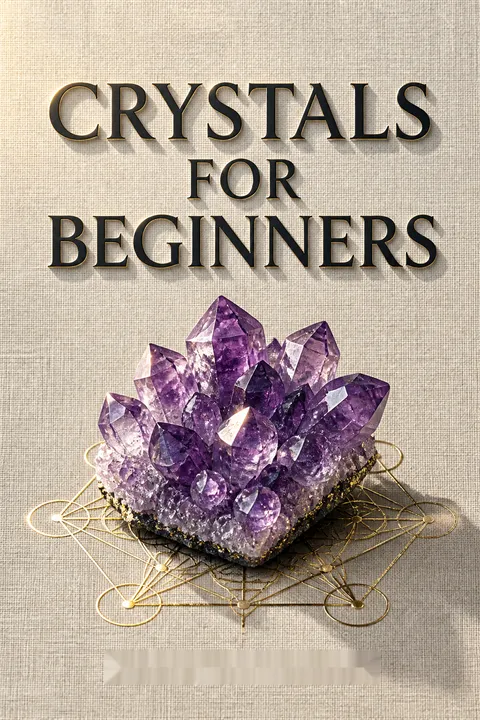
Crystals for Beginners receives mostly positive reviews, praised for its accessibility and comprehensive introduction to crystal healing. Readers appreciate the detailed information, beautiful images, and practical advice. Some skeptics found it interesting despite doubts about crystal energy. Critics note a lack of scientific basis and caution against using crystals as medical alternatives. Overall, reviewers find it a helpful guide for those curious about crystal healing, though opinions on effectiveness vary.
People Also Read


Glossary
Entrainment
Rhythms moving toward synchronyThe book uses entrainment to mean the tendency of one vibrational system to influence another until their rhythms become more alike. It applies the idea to human responses to other people and to crystals. The concept is also used in established contexts such as biological rhythms responding to cycles of light, but the book's claim that crystals entrain human energy for healing is not established by those examples.
Crystal system
A crystal's lattice categoryMineralogically, a crystal system classifies crystals according to the geometry and symmetry of their internal structures. The book describes six systems: hexagonal, isometric, monoclinic, orthorhombic, tetragonal, and triclinic. It assigns each system a metaphysical role, such as manifestation or protection. Those energetic associations are the author's framework, not standard conclusions of mineralogy.
Crystal grid
Stones arranged around an intentionA crystal grid is an intentional arrangement of several stones, usually organized around a central focus stone. The book describes surrounding stones as amplifiers and optional outer stones as sources of intention or boundaries. Grids may use symbolic geometric shapes, including circles, squares, triangles, and spirals. The arrangement functions within the author's spiritual practice as a way to focus energy and intention.
Chakra
A spiritual energy centerThe book defines chakras as energy centers connecting physical experience with mental, emotional, and spiritual aspects of a person. It describes seven main chakras along the body's central axis, each associated with a color and particular concerns, such as security, creativity, self-esteem, love, communication, intuition, or spiritual connection. These descriptions belong to spiritual traditions and are not a medical map of the body.
Cleansing
Clearing a stone's energyCleansing is the book's term for clearing unwanted energy from a crystal so it can return to its preferred energetic state. Suggested methods include moonlight, sound, sage smoke, or placing stones in a quartz cluster. The book recommends cleansing crystals when they are new, after heavy use, or regularly during ongoing practice. It cautions that salt and water can damage certain minerals.
Charging
Adding intention to a crystalCharging means directing a chosen intention toward a crystal. The book suggests holding the stone in the dominant, or giving, hand, visualizing the desired quality, and imagining that intention moving into the stone. A present-focused affirmation may accompany the visualization. In the book's framework, charging is optional and is meant to focus the crystal's use on a specific purpose.
Giving hand
The dominant handThe giving hand is the hand the book associates with sending energy outward from the body, usually the dominant hand. Some exercises use it to direct an intention into a crystal or to hold a stone while focusing on an outward action. This distinction is part of the author's energy-work instructions, not a standard physiological distinction.
Receiving hand
The nondominant handThe receiving hand is the hand the book associates with taking energy into the body, usually the nondominant hand. Several practices place a stone in this hand while a person meditates, visualizes, or repeats an intention. The giving and receiving roles are conventions within the author's spiritual method rather than established properties of the hands.
FAQ
What's "Crystals for Beginners" about?
- Introduction to Crystals: The book serves as a practical guide for those new to the world of crystals, focusing on their healing properties and how to incorporate them into daily life.
- Healing Power: It explores the unique vibrational energies of crystals and how they can facilitate healing for the body, mind, and spirit.
- Practical Applications: The book provides basic information and practical applications to help readers experience the powerful shifts crystals can provide.
- Comprehensive Guide: While it is an introductory guide, it also touches on deeper knowledge for those interested in expanding their understanding of crystals.
Why should I read "Crystals for Beginners"?
- Beginner-Friendly: The book is designed for those who are new to crystals, offering a straightforward and accessible introduction.
- Holistic Approach: It emphasizes the importance of balance in body, mind, and spirit, making it relevant for anyone seeking holistic well-being.
- Practical Advice: Readers will find practical tips and strategies for using crystals in everyday life, making it easy to apply the concepts.
- Personal Experience: The author shares her personal journey with crystals, adding authenticity and relatability to the guidance provided.
What are the key takeaways of "Crystals for Beginners"?
- Understanding Crystals: Learn about the different types of crystals, their properties, and how they can be used for healing.
- Energy and Vibration: Discover how crystals interact with human energy fields and the concept of entrainment.
- Practical Use: Gain insights into starting a crystal collection, cleansing and maintaining crystals, and using them for specific purposes.
- Personal Growth: The book encourages readers to explore their intuition and personal experiences with crystals for self-discovery and healing.
How does Karen Frazier suggest starting a crystal collection?
- Mindful Selection: Choose crystals that resonate with you personally, as they may be calling to you for a reason.
- Basic Collection: Start with versatile "workhorse" crystals like clear quartz, smoky quartz, and citrine, which are useful for various energetic issues.
- Shopping Tips: Visit crystal shops or shows to physically handle crystals and feel their energy before purchasing.
- Intuition-Based Choices: Trust your intuition when selecting crystals, as your needs and resonances may change over time.
What are the "10 Crystals for Everyone" according to Karen Frazier?
- Amethyst: Known for intuition and insight, it helps with stress, anxiety, and connecting to higher realms.
- Black Tourmaline: Offers protection and grounding, absorbing negativity and promoting self-confidence.
- Carnelian: Enhances courage, willpower, and creativity, while also providing protection against envy.
- Citrine: Promotes prosperity, self-esteem, and clarity of thought, making it a powerful manifestation stone.
- Clear Quartz: A versatile crystal that amplifies the properties of other stones and aids in concentration and protection.
How does "Crystals for Beginners" explain the concept of crystal energy?
- Vibrational Energies: Crystals have unique vibrational energies that can affect the energy fields around them, including human energy fields.
- Entrainment: The book explains how crystals can synchronize with human energy through a process called entrainment, influencing mood and well-being.
- Electric Effects: Some crystals, like quartz, exhibit electrical effects such as piezoelectricity, which are used in technology and can be harnessed for healing.
- Experiencing Vibration: Readers are encouraged to hold crystals and observe their sensations, allowing personal experiences to guide their understanding of crystal energy.
What are some myths about crystals that Karen Frazier addresses?
- "It's All in My Head": The book emphasizes experiencing sensations rather than rationalizing them, encouraging readers to trust their experiences.
- "Crystals Can Harm": Frazier explains that intention and mindset play significant roles, and approaching crystals with positive intent is unlikely to cause harm.
- "Spiritual or New Age": Crystals can be used by anyone, regardless of spiritual or religious beliefs, as they are tools for personal growth and healing.
- "Expensive Crystals Are Better": The effectiveness of a crystal is not determined by its price but by how it interacts with an individual's energy.
How does "Crystals for Beginners" suggest using crystals for healing?
- Body, Mind, Spirit: Crystals can help balance energies in the body, mind, and spirit, addressing physical ailments, emotional issues, and spiritual growth.
- Cleansing Crystals: Regular cleansing is essential to maintain a crystal's vibrational energy, with methods like moonlight, sound, and sage recommended.
- Programming Crystals: Readers can program crystals with specific intentions to enhance their healing properties, using visualization and affirmations.
- Practical Tips: The book offers various ways to use crystals, such as making elixirs, wearing them as jewelry, or placing them in specific areas for energy balance.
What is the significance of crystal colors in "Crystals for Beginners"?
- Color and Energy: The color of a crystal affects its energetic and healing impact, with each color having specific vibrational energies and properties.
- Chakra Correspondence: Colors correspond to different chakras, aiding in balancing and healing specific energy centers in the body.
- Choosing by Color: Readers are encouraged to select crystals based on color to address particular conditions or energetic needs.
- Color Guide: The book provides a color guide to help identify crystals and understand their associated healing properties.
How does Karen Frazier recommend cleansing and maintaining crystals?
- Regular Cleansing: Crystals should be cleansed regularly to clear away unwanted energies, using methods like moonlight, quartz beds, or sound.
- Avoiding Damage: Some crystals can be damaged by salt or water, so alternative cleansing methods are suggested for delicate stones.
- Programming and Intention: After cleansing, crystals can be programmed with specific intentions to enhance their effectiveness in healing practices.
- Storage Tips: Proper storage, such as wrapping crystals individually or keeping them away from sunlight, helps maintain their physical and energetic integrity.
What are crystal grids, and how are they used in "Crystals for Beginners"?
- Purposeful Arrangement: Crystal grids are arrangements of multiple crystals with the intention of creating powerful energy focused on a specific goal.
- Sacred Geometry: The book explains how using sacred geometric shapes in grids can enhance the power and focus of the crystals' energies.
- Grid Examples: Examples of simple grids, such as those for forgiveness or creativity, are provided to guide readers in creating their own.
- Placement and Intention: Grids can be placed in areas where their energy is needed, and readers are encouraged to set clear intentions for their use.
What are some practical tips for crystal shopping according to Karen Frazier?
- Grounding Before Shopping: Ground yourself before entering a crystal shop to avoid feeling disoriented by the energy.
- Ask Questions: Engage with knowledgeable staff or vendors to learn more about the crystals and their properties.
- Intuitive Selection: Pay attention to which crystals draw you in and trust your intuition when making selections.
- Avoid Impulse Buys: Take your time to compare prices and ensure you're choosing the right crystal for your needs.
About the Author
Download PDF
Download EPUB
.epub digital book format is ideal for reading ebooks on phones, tablets, and e-readers.








