

Key Takeaways
Use crystals as focused ritual objects, not proven medical treatments
A personal turning point. Frazier traces her practice to a visit with a doctor who also used energy healing. The practitioner placed a green stone on her chest and a blue one at her throat. Frazier says she cried during the treatment, then woke with her persistent throat pain gone and a renewed sense of clarity. She interpreted the experience as emotional and spiritual release, and crystals became part of her daily meditation and healing work.
Keep the claim in view. The book presents crystals as tools for emotional, mental, and spiritual change, and sometimes as support for physical symptoms. It also says they should not replace qualified medical care. Its account of one person’s relief is meaningful as personal testimony, not proof that stones treat illness.
The most useful reading separates the practice from the proposed mechanism. Holding a stone can make an intention tangible, much as a keepsake can cue memory or a ritual can create a pause for reflection. Such effects may support attention and emotional regulation without establishing that a crystal emits healing energy. The distinction matters most when symptoms persist: a meaningful experience can accompany recovery, but it cannot identify the cause of pain or rule out medical conditions.
Use the chakra map to turn vague distress into a focused question
A seven-part map. Chakras are energy centers in the book’s spiritual model, each associated with a body region, color, and area of life. The root is linked with safety and belonging; the sacral with creativity and sexuality; the solar plexus with identity and self-esteem; the heart with love and forgiveness; the throat with truth and communication; the third eye with insight; and the crown with spiritual connection.
Color guides selection. Frazier recommends matching a stone’s color and assigned properties to the chakra being addressed. For example, she pairs blue stones such as sodalite with throat-related communication, and yellow stones such as citrine with solar-plexus concerns. A person might lie down, place a chosen stone on the relevant area, and visualize energy flowing freely.
This map works as a vocabulary for reflection: a communication problem prompts a different question from a feeling of insecurity. Color and body placement can also make an abstract concern easier to hold in mind. The limitation is that the book’s chakra associations are spiritual beliefs, not established anatomical structures or diagnostic categories. A useful application is to treat the map as a prompt for self-inquiry, while avoiding conclusions about what causes a physical or psychological symptom.
Make preparation a repeatable ritual for directing attention
Three steps frame the work. Frazier recommends cleansing a crystal, charging it, and programming it before use. Cleansing is intended to clear accumulated energy. Charging means restoring energy, often through sunlight, moonlight, or visualization. Programming means assigning an intention, such as calm or courage. The book suggests repeating these steps after regular use, and often weekly for crystals kept in a grid.
Prepare the person and place, too. A quiet, comfortable area with fewer distractions can help signal that it is time to focus. Meditation, prayer, or a mantra can clarify what the session is for. The practices need not involve clearing the mind completely: guided imagery, mindful breathing, movement, and affirmations are all offered as alternatives. Some stones are damaged by water or salt, so cleansing methods must suit the mineral.
Preparation resembles a behavioral cue: a consistent setting and sequence can make it easier to shift from distraction into deliberate attention. Naming an intention also turns a broad wish into something observable, such as speaking calmly in a difficult conversation. That practical value does not depend on accepting that a stone stores or loses energy. The safety note is important, too. Ritual instructions should not override basic material knowledge, since water, salt, heat, or handling can damage some minerals.
Choose stones by attraction, then check what you are actually buying
Selection is personal. The book recommends noticing which stones attract the eye, then holding a candidate in the nondominant hand and observing physical sensations, emotions, and thoughts. A pleasant or neutral response is treated as a better fit than discomfort. Price and size matter less than a sense of connection, and inexpensive tumbled stones can be a practical starting point.
Appearance can mislead. Frazier warns that some stones are synthetic, dyed, heat-treated, or sold under trademarked names that may raise the price. Citrine, for instance, is sometimes heat-treated amethyst; howlite may be dyed to resemble turquoise. Ask a seller about treatment and origin, especially when a specific mineral matters to the buyer. The book’s five-stone starter set includes clear quartz, amethyst, citrine, rose quartz, and smoky quartz.
The touch test can be understood as a preference check rather than a measurement of compatibility between invisible energies. That is still useful: choosing an object that feels personally salient can make a routine more engaging. The shopping advice also has value beyond spiritual practice because mineral names, treatments, and marketing claims affect price and durability. Buyers benefit from distinguishing a stone’s geological identity from claims about what it can do emotionally or therapeutically.
Pair each stone with a specific emotional practice, not a vague wish
The remedy is a sequence. Across the book’s many emotional concerns, the recurring pattern is to name the issue, choose an intention, use a stone, and add a brief practice such as breathing, visualization, or journaling. For anxiety, Frazier suggests a calming mantra and visualization while holding a stone; for grief, she advises allowing feelings to arise rather than forcing them away. For indecision, she recommends quiet attention to impressions and writing them down.
The stone supplies a cue. The same crystal can be assigned different roles across different practices, while a combination may link distinct aims. For example, amethyst is repeatedly associated with calm or intuition, and rose quartz with love or self-compassion. These are the book’s symbolic associations, not clinical prescriptions. Frazier presents the remedies as ongoing support, not instant cures.
Specific rituals can create a small gap between feeling an impulse and acting on it. A breath, a written observation, or a moment of imagery can make an emotion easier to notice without immediately obeying it. This overlaps with basic skills used in mindfulness and self-monitoring, though the book attributes additional effects to crystals. A good test is whether the practice helps someone identify a next step. If distress intensifies or disrupts daily life, a stone-based routine is not a substitute for professional support.
Build a crystal grid as a visible reminder of one clear intention
A grid gives intention a shape. Frazier defines a crystal grid as several stones arranged in a geometric pattern and assigned a purpose. A basic arrangement uses a central stone surrounded by smaller stones at even intervals. The book recommends cleansing and charging the stones first, choosing a pattern, then tracing imagined lines between the stones and the center. Grids may be left in place and refreshed regularly.
Match the arrangement to the aim. One example places citrine at the center with six clear-quartz points directed outward, as a prosperity symbol. Another uses rose quartz arranged around a central stone in an infinity-like pattern to represent lasting love. Frazier describes grids as amplifying and directing crystal energy. Their practical use can also be understood as making an intention visible in a room.
A grid is a striking example of how spatial design can keep a goal present without relying on memory alone. Its pattern can function like a personal reminder: each glance renews attention to the intention attached to it. The claimed amplification of energy is not established by the instructions themselves, and symbolic numerology should not be confused with evidence of increased effect. The simplest grounded benefit is that an arranged object can prompt reflection or action.
Treat paired problems as connected, while keeping their causes distinct
Some struggles overlap. The book devotes a section to combinations such as addiction and self-control, fear and courage, grief and comfort, and stress and peace. Its rationale is that a person rarely experiences one difficult feeling in isolation. A combined practice can therefore address more than one aim: in the fear-and-courage exercise, for example, a person notices fear, then visualizes courage while focusing on the solar plexus.
Look beneath the label. Frazier also encourages readers to consider what may accompany a problem. She notes that addiction can coexist with grief, anger, or past abuse, and that apparent laziness may reflect exhaustion, fear, or lack of inspiration. This makes the remedies less like a catalogue of stones and more like prompts to ask what else is happening. The book advises professional help for serious conditions, including addiction, trauma, and self-harm.
The paired approach reflects a useful principle from systems thinking: one difficulty can be reinforced by another, so addressing only the visible behavior may miss important context. It also resists reducing a person to a label. Still, connected concerns do not always share a single cause, and a symbolic chakra explanation should not replace careful assessment. The strongest use of this section is as a prompt to explore patterns and seek appropriate support, not as a diagnosis.
Use the stone profiles as a reference, but let care and context lead
A field guide, not just a ritual book. The profiles cover 99 stones and describe appearance, origins, colors, suggested uses, chakra associations, and placement. They help readers compare similar-looking materials and consider how a stone might fit a practice. The book also explains common forms: rough stones, tumbled stones, points, clusters, geodes, slabs, and wands. For instance, it presents points as directional tools and clusters as objects for a room.
Handle minerals appropriately. The profiles repeatedly flag softness, brittleness, and cleansing restrictions. Selenite and gypsum should not be soaked; some other stones may be scratched or harmed by salt or water. Frazier recommends cleansing frequently used stones, but careful storage and mineral-specific handling matter in ordinary physical terms as well. The author’s spiritual associations are best read as a personal-use system, not verified properties of the minerals.
The reference format makes the book easy to use selectively: a reader can start with an emotional aim or a mineral already on hand instead of following a single prescribed path. Its concrete attention to mineral composition and care is valuable, especially where it prevents damage. The profiles also mix geological description with metaphysical claims, so readers should keep those categories separate. A stone’s hardness and sensitivity can be checked materially; claims about its effect on mood require a different kind of evidence.
Analysis
This book is both a spiritual memoir and a practical catalogue. Its organizing promise is that a reader can translate an emotional concern into a repeatable ritual: select a stone, connect it to an intention, and focus through meditation, visualization, or an affirmation. That structure gives a 99-stone reference and more than 200 remedies a usable logic, rather than leaving them as an unranked list of attractive minerals. The author’s account of her own relief from throat pain supplies the narrative invitation, while the remedy entries supply the method.
The adaptation’s central interpretive task is to preserve the method without presenting its metaphysics as established science. The book invokes energy, vibration, Einstein, chakras, and traditional healing systems, but the existence of physical energy does not establish that crystals can alter a human energy field or treat illness. Nor does one person’s improvement establish the cause of the improvement. This distinction is not a dismissal of the experience. Ritual, expectation, sensory attention, and meaning can shape how a person experiences a moment, even when the proposed mechanism is unverified.
The practical material is most defensible when read as structured reflection. Choosing a stone can mark a pause; a mantra can direct attention; journaling can reveal recurring concerns; and a dedicated space can reduce distraction. Those practices can sit alongside evidence-based care, as the author’s disclaimers recommend, but they must not delay it. This is particularly important for addiction, depression, trauma, eating disorders, and self-harm, all of which may require qualified treatment.
The book is strongest as an accessible spiritual toolkit with a detailed mineral reference and a broad vocabulary for inner life. It is weakest when symbolic associations are presented as causal explanations or when crystals are credited with physical healing. Readers can retain its rituals, imagery, and prompts while remaining discerning about claims. That distinction preserves the book’s practical invitation without asking belief to do the work of evidence.
Review Summary
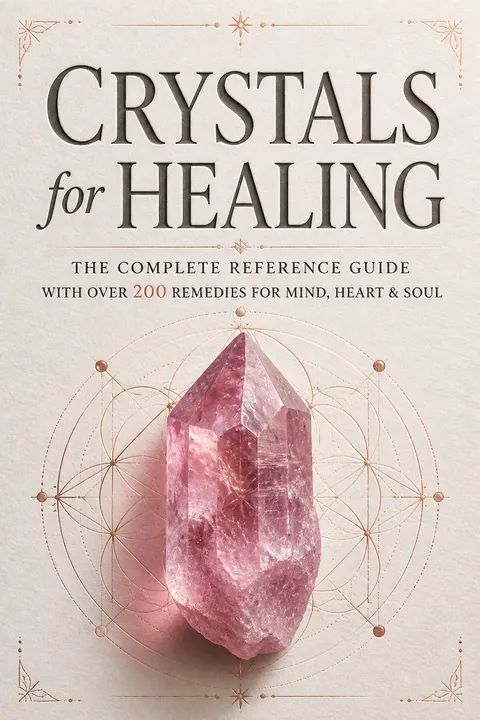
Crystals for Healing receives an overall rating of 4.37 out of 5, with most readers praising it as an excellent beginner's reference guide. Reviewers highlight its user-friendly organization, crystal profiles with images, chakra guidance, and over 200 remedies. Many appreciate the meditations, crystal grids, and practical placement instructions. While some note it lacks depth for experienced crystal users and others mention formatting issues in the e-book version, the majority recommend it as an accessible, well-structured starting point for anyone exploring crystal healing.
Glossary
Chakra
Body-based energy centerIn the book’s spiritual model, a chakra is an energy center associated with a body region, color, and set of emotional or spiritual qualities. The book emphasizes seven main chakras, from the root at the base of the spine to the crown at the top of the head, and suggests matching stones to a chakra’s color and concerns.
Crystal grid
Patterned arrangement of stonesA crystal grid is a group of at least four crystals arranged in a chosen pattern and assigned an intention. The book commonly places a larger or distinct stone at the center, with smaller stones spaced around it. Frazier describes grids as a way to amplify or direct crystal energy, and recommends cleansing and charging the stones before arranging them.
Cleansing
Clearing accumulated energyCleansing is the book’s term for clearing energy believed to have accumulated in a crystal through contact with people, places, or use. Suggested methods include salt water for suitable stones, smoke, placement in a quartz cluster, or energy work. The appropriate method depends on the mineral, since water or salt can damage some crystals.
Charging
Restoring a crystal’s energyCharging means restoring energy to a crystal after cleansing so it can, in the book’s framework, function at its highest level. Frazier suggests placing stones in sunlight or moonlight for several hours, or using visualization to imagine light passing through the body and into the stone. Charging is a metaphysical practice, not a scientifically measured change in a mineral.
Programming
Assigning a crystal intentionProgramming is the practice of directing a crystal toward a chosen purpose, such as calm, courage, or clearer communication. In the book, it follows cleansing and charging and is performed by focusing on the desired quality, often through visualization. The term describes a spiritual intention-setting ritual, not a change to the crystal’s physical properties.
Law of Attraction
Thoughts draw similar outcomesThe book uses the Law of Attraction for the belief that a person attracts circumstances corresponding to their thoughts, words, actions, and focus. It applies this idea to goals, abundance, luck, and positive thinking. The principle is presented as a spiritual belief, not as an established scientific law, and the book also urges readers to take action toward their aims.
Higher self
Inner spiritual guidanceThe higher self is the part of a person that the book describes as connected to spiritual purpose and higher consciousness. Frazier presents meditation, dreams, intuition, and quiet reflection as ways to hear its guidance. The term belongs to the book’s spiritual vocabulary and is not offered as a clinical or anatomical concept.
About the Author
Download PDF
Download EPUB
.epub digital book format is ideal for reading ebooks on phones, tablets, and e-readers.








