

Key Takeaways
Turn real anxieties into symbols readers can safely approach.
Fiction gives fear a shape. King’s central claim is that horror translates hard-to-name anxieties into monsters, hauntings, and imagined disasters. A child watching Earth vs. the Flying Saucers in 1957 heard that Russia had launched Sputnik during the film. The news abruptly changed the aliens on screen into symbols of a real threat: America’s confidence that it led the world had cracked. The monster story did not erase that fear, but gave it a form the audience could experience together.
A controlled nightmare. King sees horror as a pressure valve: people enter a fictional nightmare, release some fear, and return to ordinary life with the nightmare contained. He favors the word understand over face. The story makes a fear legible through symbols, not necessarily something a reader must confront directly.
What's striking is the movement between private feeling and public symbol. A monster can make anxiety shareable without requiring an audience to agree on a political diagnosis. That resembles the way metaphor helps people discuss experiences that are difficult to state plainly. The pressure-valve claim is persuasive as an account of some readers' pleasure, but it should not be mistaken for a universal psychological effect. A fictional encounter may comfort one person, intensify fear in another, or simply entertain. The book is strongest when it describes horror as an artistic possibility, not a guaranteed therapy.
Build dread around what minds cannot see, not what effects show.
Absence can terrify. King argues that an unseen threat often gives the audience more room to imagine than a fully displayed monster. In Robert Wise’s The Haunting, knocks and bulging doors make Hill House frightening, yet the force inside is never clearly revealed. The audience supplies its own worst possibility. Radio horror could exploit this especially well because listeners heard the door, the footsteps, or the scream without seeing what caused them.
Reveal with care. Arch Oboler’s radio play about a dentist ends as a drill starts, leaving listeners to imagine where it will go. King contrasts this with screen horror, where a revealed creature can bring relief as well as fear: once the audience sees the threat, it can measure it. The challenge for a filmmaker is to reveal enough to satisfy, without making the unknown feel smaller.
This account anticipates a basic feature of perception: incomplete information invites the mind to generate explanations, often drawing on personal fears. The audience becomes an active maker of the scare, not merely its recipient. Yet withholding is not automatically more powerful than showing. A visible monster can remain disturbing when the film has made its presence meaningful, while endless ambiguity can feel evasive. The practical lesson is not to hide everything, but to manage the audience's certainty. Suspense grows when viewers know enough to worry and too little to feel safe.
Read each monster as a snapshot of its era's fear.
History haunts the monster. King reads horror as a record of the anxieties surrounding its creation. In The Thing, an alien creature arrives in a film shaped by early Cold War fears. The military response is decisive, while a scientist's hope of communicating with the creature is treated as dangerous appeasement. The film's conflict reflects an era in which compromise with an enemy could seem more frightening than force.
Symbols keep changing. King also considers Don Siegel’s Invasion of the Body Snatchers, which audiences and critics interpreted through different political fears, and the 2004 Dawn of the Dead remake, whose fast-moving zombies resonated with anxieties about relentless attackers after September 11. The creature need not have been designed as a precise political allegory. The same monster can gather new meanings as audiences bring new fears to it.
The book offers a useful model of cultural reading: a horror film can register its moment even when its creators did not consciously plan a social message. That distinction matters because interpretation is collaborative. Filmmakers provide images, while audiences connect them to events they already fear. The method also has limits. Reading every monster as a political symbol risks flattening a film's craft, humor, or sheer sensory force. King's strongest readings allow both possibilities: the creature can work as a frightening presence in its own right and as an accidental echo of public anxiety.
Make the impossible believable by grounding it in ordinary lives.
Reality earns investment. King praises horror that first makes its people and surroundings feel credible. In The Blair Witch Project, handheld footage, unknown performers, and an ordinary forest make the lost filmmakers seem less like polished movie characters and more like people in trouble. King notes that the film was made for under $100,000 and earned about $250 million. Its low-budget look was not a handicap to overcome. It helped create the feeling that the events might be real.
People carry the terror. King makes a similar point about The Descent: the women's resentments and secrets make their encounters with underground creatures matter. Expensive effects cannot substitute for audience concern. If viewers care about the people, the danger gains emotional weight; if they do not, even elaborate gore may feel like a parade of tricks.
The emphasis on believable people connects horror to a broader principle of storytelling: stakes are emotional before they are spectacular. A threatened character matters when the audience can imagine ordinary life from that person's point of view. Found-footage style can strengthen this effect, but it is still a crafted illusion, not raw access to reality. Low cost alone does not produce authenticity, and high production value does not destroy it. The useful test is whether a film's form supports its situation. The camera should feel as limited, unstable, or ordinary as the characters' world requires.
Choose the medium that leaves the audience room to imagine.
Each medium sets expectations. King remembers radio drama as a form with unusual power because it supplied sound but no fixed image. Listeners had to create the scene themselves. He recalls hearing a radio adaptation of Ray Bradbury’s Mars Is Heaven as a young child and being frightened enough to sleep near the light. Orson Welles’s War of the Worlds broadcast also showed how convincingly radio could present invented events as immediate reality.
Reality changes with technology. King argues that audiences accept different visual conventions in different eras. A studio-built Central Park in the 1942 film Cat People could once pass as convincing, but later viewers might notice the artificial setting instead of fearing the stalking cat. Radio avoids that particular problem, while film can use light, movement, and image to create its own strengths. No medium is inherently scarier; each has a different path into the audience's imagination.
The idea of a medium-specific reality is a useful corrective to claims that one format is simply more immersive than another. Sound can leave visual space open, while film can make gesture, light, and composition carry meaning that dialogue cannot. Audience habits also change: a once-credible set can become conspicuously artificial as visual literacy develops. This does not make older work worthless; it changes the conditions of its effect. Creators benefit from understanding not only what a medium can show, but what audiences have learned to notice.
Use horror's moral clarity without pretending it is morally harmless.
The norm is on trial. King describes horror as conservative in one sense: stories often punish people who cross a boundary and restore a familiar order. Yet the genre also lets audiences experience anger, violence, and mob judgment by proxy. Night of the Living Dead makes that tension vivid when a child kills her mother and begins eating her. The scene violates a profound taboo, but the film's horror does not neatly tell viewers what to feel about every act of violence.
Order has a cost. The Stepford Wives turns the ideal of domestic normality into a nightmare, while Carrie gives a humiliated girl power to destroy the social world that has brutalized her. These stories question whose comfort is protected by the norm. Horror can reassure audiences that evil is punished, but it can also expose the violence involved in deciding who counts as normal.
This tension is among the book's most valuable insights. Horror can condemn disorder while simultaneously inviting audiences to enjoy transgression, revenge, and the destruction of an outsider. That contradiction makes the genre morally interesting, not automatically immoral. It also demands scrutiny: stories that define abnormal bodies or behaviors as monstrous can reinforce the very exclusions they dramatize. King's examples often reveal how fragile social order is, though the restoration of normality is not always examined from the perspective of those whom that order marginalizes.
Match each scare to its register: terror, horror, or revulsion.
Three distinct effects. King separates three common ways horror works. Terror relies mainly on what the audience imagines. In The Monkey’s Paw, a knock at the door is frightening because readers picture what the final wish may have brought back. Horror adds something physically wrong to the scene, as in stories of corpses returning to pursue the living. Revulsion aims at the body's gag reflex, as with the chest-bursting scene in Alien.
Choose the tool deliberately. King does not claim that one effect is artistically superior in every case. If a writer cannot make the audience fear an unseen threat, the story can show something disturbing; if that fails, it can try to disgust. The distinction helps creators identify the response they want rather than relying on an undifferentiated pile of blood and noise.
The categories make a compact craft tool because they identify different routes into the audience: anticipation, visual violation, and bodily disgust. They also help explain why a film can be frightening without showing much and why a graphic scene can provoke nausea without creating suspense. The boundaries are porous, however. A single image can trigger all three responses, and viewers differ in what they find frightening or repellent. The framework works best as a diagnostic vocabulary for choices, not as a rigid ranking of artistic quality.
Treat talent as raw material, then sharpen it through deliberate work.
Craft is practiced. King rejects the idea that a writer's subject can be explained by a single childhood wound. He compares talent to raw material that needs honing through sustained work. His own route into horror included finding his absent father's books in an attic, including a collection by H. P. Lovecraft. That encounter helped reveal the particular direction his imagination might take, but reading and writing repeatedly developed the ability.
Find the direction. King recalls accompanying his Uncle Clayt as he searched for groundwater with an applewood dowsing rod. Years later, drillers found water within a few feet of the marked spot. For King, the memorable part was the sensation of locating something hidden. He uses that moment as a metaphor for discovering where talent wants to go. Practice can refine ability, but it cannot dictate the writer's deepest subject or guarantee success.
The distinction between capacity and direction is more subtle than the familiar advice to work hard. Practice can make technique more reliable, while early encounters with books, mentors, or problems can reveal what a person wants to pursue. The dowsing story gives that discovery an unusually concrete image. Still, effort is not the whole explanation of achievement. Time, access to books, supportive teachers, money, and luck shape who gets to practice and whose work gets noticed. King's model is most persuasive when craft is treated as necessary, not sufficient.
Use horror to rehearse mortality and return grateful to ordinary life.
Death becomes imaginable. King recalls finding a dead cat as a child and watching its body change as it decayed. The children examined it with horrified curiosity, trying to understand what death did to a living thing. He sees horror stories as an adult version of that encounter: a chance to look at death in fictional form without having to explain the afterlife or turn the experience into philosophy.
The return matters. In King's account, horror's deepest subject is mortality, the moment when the monsters finally get their victim. But the story ends while the reader is still alive, back in ordinary surroundings. The contrast can renew attention to health, companionship, and safety. The genre's final value is not simply the shock of seeing death, but the imaginative freedom to approach it and then leave the nightmare.
The child's curiosity in the dead-cat story complicates the idea that horror is simply a taste for cruelty. It can be an attempt to understand what adults often conceal or soften. Fiction provides distance, form, and an ending, which can make frightening material more approachable. That does not mean horror reliably resolves grief or fear, and it should not be confused with clinical treatment. Its more modest achievement is still significant: it gives people images and language for thinking about vulnerability, while preserving the distinction between an imagined danger and an immediate one.
Analysis
Danse Macabre is part criticism, part cultural history, and part memoir. Its organizing claim is that horror is not merely a procession of monsters. It is a symbolic language through which audiences experience fears that are personal, historical, and difficult to name. King's strongest evidence comes from contrasts: a childhood matinee interrupted by Sputnik, the Cold War assumptions in The Thing, radio's invisible terrors, and later films whose credibility depends on ordinary people and recognizable settings. The result is less a complete history than an insider's map of how horror works across books, film, television, and radio.
The book's most productive contradiction is its account of horror as both conservative and anarchic. Stories often punish transgression and restore order, yet the audience is invited to enjoy violence, revenge, and the collapse of everyday rules. King's readings of Carrie, The Stepford Wives, and zombie films show that the norm being restored may itself be unjust. This gives horror a double function: it can reassure, but it can also reveal the fear and aggression hidden inside respectable social life. That tension matters more than any simple claim that horror is either healthy or corrupting.
King's craft criticism is strongest when it stays close to specific effects: the unseen threat, the ordinary setting, the changing plausibility of cinematic conventions, and the difference between suspense and disgust. His historical interpretations are sometimes speculative, and he acknowledges that a film's subtext can emerge by accident or be imposed by later audiences. That openness is a strength, though it means his readings are arguments rather than final explanations. The book's memoir passages, from Sputnik to the attic discovery of Lovecraft, demonstrate that criticism is also personal memory. Horror becomes legible through the critic's own fears, tastes, and cultural moment, making the book itself an example of the interpretive process it describes.
Review Summary
Danse Macabre is a non-fiction book by Stephen King exploring the horror genre from 1950-1980. Readers appreciate King's conversational tone and insightful analysis of influential works across literature, film, and television. Many find it an engaging read, though some note its dated references and occasional verbosity. The book offers valuable recommendations and provides a deeper understanding of horror's cultural significance. While primarily aimed at genre enthusiasts, it serves as an illuminating examination of fear in popular media, showcasing King's passion and expertise.
People Also Read

Glossary
phobic pressure points
Fears stories activateKing's term for the fears a horror story locates and presses, from individual phobias such as spiders or enclosed spaces to anxieties shared across a society. A successful story can use a fictional monster or event as a symbol for these fears, allowing audiences to recognize them without presenting them as ordinary fact.
set of reality
A medium's plausibility boundaryThe assumptions audiences use to decide what feels believable in a story or performance. These expectations change with experience and technology. A theatrical set that once seemed convincing may look artificial to later viewers, while radio listeners may accept an imagined setting because the medium provides no fixed visual image.
myth-pool
Shared store of storiesKing uses this term for the body of stories, monsters, and images that circulate through a culture and become familiar even to people who have not read the original works. Figures such as Frankenstein's creature and Dracula grow beyond their books through films, comics, and everyday reference, becoming common imaginative material.
Bad Place
A space that turns hostileKing's name for the haunted or dangerous setting that makes a familiar location feel threatening. A Bad Place can be a house, hotel, or other environment whose history or uncanny effects put its occupants under pressure. Its force comes partly from violating the expectation that home is a place of safety.
Apollonian and Dionysian
Order and unruly impulseKing uses these terms as contrasting forces in horror. Apollonian life represents order, reason, restraint, and familiar social rules. Dionysian force represents chaotic appetite, violence, and impulses those rules suppress. Horror often begins when the latter disrupts ordinary life, though its stories may also question whether the existing order deserves restoration.
terror
Fear built by imaginationIn King's distinction among horror's effects, terror is fear produced chiefly by anticipation and mental images rather than by a directly displayed spectacle. A sound behind a door or an unexplained knock can provoke terror because the audience imagines what may be there. The effect depends on uncertainty and the audience's own imaginative participation.
horror
Fear shown as physical wrongnessKing uses horror for the response to something visibly or physically disturbing, such as a corpse that returns or a body changed beyond normal limits. Unlike terror, which relies mainly on imagined possibilities, horror places an upsetting image before the audience. The categories can overlap, but this term emphasizes the shown violation.
revulsion
Disgust's bodily responseKing's term for horror's most physically reactive register, which aims to produce disgust or a gag reflex through graphic or revolting material. He cites scenes such as the chest-bursting moment in Alien as examples. Revulsion can be crude spectacle, but it can also complete a scare when a story has made the audience care about the people involved.
new American gothic
Inner fears made architecturalA critical description King applies to modern gothic fiction in which a confined setting reflects characters' inward fears, self-absorption, or damaged relationships. A house or other enclosed space becomes more than a location: it intensifies psychological pressure and can seem to mirror the people inside it. King connects this pattern to works such as The Haunting of Hill House.
FAQ
What's Danse Macabre about?
- Exploration of Horror Genre: Danse Macabre is Stephen King's examination of the horror genre, focusing on its history, themes, and cultural significance. It covers various forms of horror, including literature, film, and radio.
- Personal Insights: King shares personal anecdotes and experiences that shaped his understanding of horror, making the book both informative and autobiographical.
- Cultural Commentary: The book serves as a commentary on American popular culture, particularly in the late 20th century, and how horror has evolved over time.
Why should I read Danse Macabre?
- Insightful Analysis: Readers gain a deeper understanding of what makes horror effective and why it resonates with audiences. King’s insights into the psychological aspects of fear are particularly compelling.
- Comprehensive Overview: The book provides a thorough overview of horror literature and film, making it a valuable resource for fans and aspiring writers alike.
- Engaging Writing Style: King’s conversational tone and personal anecdotes make the book enjoyable to read, even for those who may not typically engage with literary criticism.
What are the key takeaways of Danse Macabre?
- Horror as Reflection: King posits that horror reflects societal fears and anxieties, serving as a mirror to the human condition.
- Importance of Imagination: The book highlights the role of imagination in experiencing horror, suggesting that those with vivid imaginations are often drawn to the genre.
- Cultural Cycles: King discusses how horror movies and literature often rise and fall in popularity, correlating with societal issues and cultural shifts.
What are the best quotes from Danse Macabre and what do they mean?
- Symbolic Horror: “A good horror story is one that functions on a symbolic level.” This quote emphasizes that effective horror transcends mere scares, tapping into deeper fears and societal issues.
- Coping Mechanism: “We take refuge in make-believe terrors so the real ones don’t overwhelm us.” King suggests that horror serves as a coping mechanism, providing a safe space to confront fears.
- Awareness of Fragility: “The imaginative person has a clearer fix on the fact of his/her fragility.” This reflects King’s belief that those who engage with horror are often more aware of their vulnerabilities.
How does Stephen King connect horror to personal experiences in Danse Macabre?
- Childhood Memories: King shares anecdotes from his childhood, such as his fear of the dark and fascination with horror films, illustrating how these experiences shaped his understanding of fear.
- Influence of Family: He discusses the impact of his family dynamics, particularly the absence of his father, on his perception of horror.
- Creative Process: King reflects on how his own experiences with fear and trauma inform his writing process, suggesting that personal struggles can lead to powerful storytelling.
How does Danse Macabre address the evolution of horror films?
- Historical Context: King provides a historical overview of horror films, tracing their development from early silent films to contemporary works.
- Cultural Reflection: He emphasizes that horror films often mirror societal anxieties and cultural shifts, noting how different eras produce distinct horror themes.
- Art vs. Exploitation: King distinguishes between horror films that are artistically significant and those that are purely exploitative, advocating for a balance between entertainment and substance.
What role does imagination play in horror according to Danse Macabre?
- Imagination as a Tool: King argues that imagination is crucial for both creating and experiencing horror, enhancing the emotional impact of the story.
- Healthy Outlet: Engaging with horror can be a healthy way to process fears and anxieties, providing a safe space to explore darker themes.
- Connection to Reality: Horror stories often reflect real-life fears, and the imaginative process helps readers confront these fears in a controlled manner.
How does Danse Macabre relate horror to societal fears?
- Reflection of Anxieties: King argues that horror often reflects societal fears, serving as a commentary on contemporary issues.
- Coping Mechanism: Engaging with horror allows individuals to confront their fears in a safe environment, providing a means of coping with real-world anxieties.
- Cultural Cycles: Horror trends often rise and fall in cycles, correlating with societal events and shifts, highlighting the genre’s adaptability.
How does Stephen King define horror in Danse Macabre?
- Emotional Experience: King defines horror as an emotional experience that taps into our deepest fears and anxieties.
- Connection to Reality: Horror is rooted in reality, often reflecting real-life fears and societal issues, making it relatable and impactful.
- Exploration of the Unknown: Horror serves as a way to explore the unknown and the inexplicable, leading to a greater understanding of ourselves.
What role does ambiguity play in horror according to Danse Macabre?
- Enhancing Suspense: Ambiguity enhances suspense by leaving certain elements unexplained, keeping readers engaged with the story.
- Encouraging Imagination: It invites readers to use their imagination to fill in the gaps, leading to a more personal connection to the story.
- Creating Unease: Ambiguity can create a sense of unease that is essential to effective horror, evoking feelings of discomfort and dread.
How does Danse Macabre address the morality of horror fiction?
- Moral Responsibility: King discusses the moral responsibility of horror writers to explore complex themes and societal issues.
- Reaffirmation of Norms: Horror often reaffirms societal norms by punishing characters who violate moral codes, providing a sense of order.
- Exploration of Human Nature: Horror fiction allows for an exploration of human nature and morality, leading to a deeper understanding of ourselves.
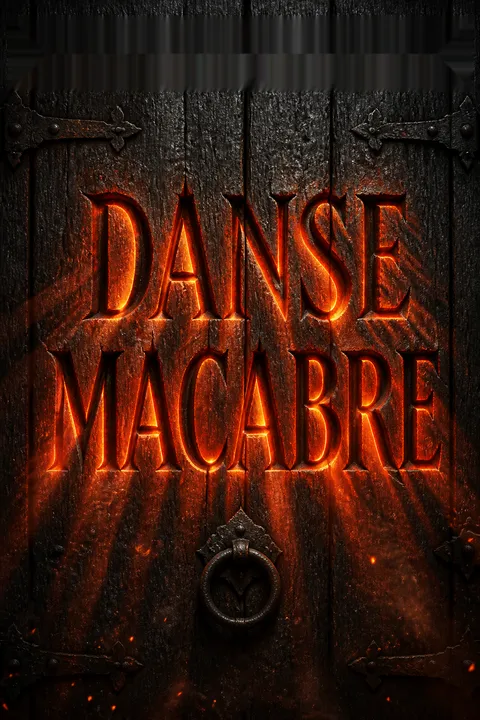
What is the significance of the title Danse Macabre?
- Symbol of Death and Fear: The title refers to the medieval allegory of the Dance of Death, symbolizing the inevitability of death.
- Cultural Reflection: It reflects the cultural fascination with death and the macabre, suggesting that horror stories allow us to confront our fears.
- Connection to the Genre: The title establishes a connection to the broader tradition of horror literature, exploring historical and cultural aspects of horror.
About the Author
Other books by Stephen King



Download PDF
Download EPUB
.epub digital book format is ideal for reading ebooks on phones, tablets, and e-readers.








