

Key Takeaways
Read the zenana as a political institution, not a prison of idle wives.
A world with its own work. The zenana was the household space occupied by royal women, relatives, servants, and dependents. European visitors often imagined it as a sealed chamber of sexual rivalry, but the book shows a busy community where women learned, managed staff, raised children, advised rulers, organized ceremonies, and sometimes shaped policy. Its members were not all wives, and their influence did not depend only on access to the emperor. The older women, in particular, could command respect through their lineage, experience, and political judgement.
Visibility is not the same as power. Women might be screened from public view yet still hear court proceedings, communicate through trusted intermediaries, or act as guardians of the emperor’s household and dynastic interests. This does not make the zenana free of hierarchy or constraint. It does make the familiar picture of women as idle prisoners inadequate.
The distinction between visibility and agency is valuable well beyond Mughal history. Institutions can exclude people from formal public stages while depending on their labor, expertise, and informal influence. The zenana makes that hidden infrastructure unusually vivid. At the same time, the most powerful women described here belonged to a ruling elite with wealth and kinship advantages unavailable to most women. Their achievements complicate a stereotype, but cannot stand in for the experience of women across Mughal society.
Follow the women as the empire moves, and watch their power change.
From tents to walls. The early Mughal household, called the haraman, travelled with the ruler and included women, children, servants, and relatives. In Babur and Humayun’s unsettled years, women rode alongside the men, endured flight and battle, and helped make a home wherever the family stopped. Khanzada Begum, Babur’s sister, even undertook a diplomatic journey across dangerous terrain in old age. As the empire stabilized under Akbar, a more enclosed zenana emerged, with walls, departments, guards, and rules.
No single harem lasted. The book traces changing conditions across roughly two centuries, not a timeless institution. Greater security and wealth brought more settled courts and tighter seclusion, but women retained different kinds of influence. Mobility, authority, and access varied with the ruler, the political moment, and a woman’s standing in the family.
This changing household can be read as political geography: power depends partly on who can travel, gather information, and reach decision-makers. In early periods, movement exposed women to physical danger but also kept them close to events. Later walls offered protection and prestige while limiting some forms of access. The trade-off resists a simple story of either progress or decline. It also warns against treating a royal institution as fixed just because later observers gave it one familiar name.
Recover women's writing before accepting the emperor's version of history.
A woman's account changes the picture. Gulbadan Begum, Babur’s daughter and Humayun’s sister, wrote the Humayun-nama at Akbar’s request. Her account preserves family life that official histories often pass over: journeys, quarrels, grief, marriages, and the practical work of keeping a household together. It also records Babur’s care for his female relatives and the central role of older women. Gulbadan’s writing is especially valuable because she was a participant and observer, not merely a later court commentator.
Silence can be manufactured. Under Akbar, royal women increasingly disappeared behind formal titles rather than personal names. Court histories praised their chastity while saying little about their individual lives. Women’s letters, poetry, seals, buildings, and portraits offer other evidence. The book uses these fragments to restore identities and to challenge European accounts that filled gaps in knowledge with fantasy.
The method resembles source criticism in any field: ask who made a record, for whom, and what the record was designed to conceal or celebrate. Gulbadan’s proximity gives her account unusual texture, but it does not make it complete or neutral. Her memories were shaped by family loyalty and the purpose of her commission. Reading her beside official chronicles, objects, and buildings produces a richer history than treating any single source as transparent truth.
Treat kinship, marriage, and mediation as tools of Mughal rule.
Family ties carried political weight. Timurid rulers relied on women to preserve alliances, settle disputes, and maintain dynastic memory. Khanzada’s forced marriage to the Uzbek ruler Shaybani Khan secured Babur’s escape from a siege, though at great cost to her. After her return, her family honored her sacrifice rather than treating her as dishonored. Later, she was entrusted with missions to reconcile rival princes. Other women, including Dildar Begum, challenged sons whose rebellions threatened the dynasty.
Marriage was rarely just romance. Alliances joined families and reinforced claims to rule. Humayun’s courtship of the young Hamida Banu took place while he was a dispossessed ruler, and his stepmother helped negotiate the match. Women could influence who married, counsel princes, or appeal to a ruler on behalf of a relative. Their interventions mattered, but they worked within a system where succession could bring exile, captivity, or death.
Kinship here operates like a diplomatic network: trust, obligation, and access travel through relationships as well as offices. Women could broker peace precisely because they were embedded in several branches of a family at once. That position could also make them bargaining instruments, as Khanzada’s experience shows. The book’s strongest stories hold both truths together: women exercised political judgement, while the dynastic system could demand painful sacrifices from them.
Wealth made royal women traders, patrons, and builders, not merely dependents.
Money created room to act. Mughal women received allowances and land grants, inherited property, collected revenue, and traded through agents. A jagir was a grant of land revenue assigned to support its holder; it could make a woman financially powerful without giving her direct control of a modern-style territory. Maryam-uz-Zamani, Jahangir’s mother, traded in indigo and owned the large ship Rahimi, which carried both cargo and Hajj pilgrims. When Portuguese forces seized it, Jahangir retaliated against their trade and religious institutions in Mughal territory.
Patronage made power visible. Women used their resources to support charity, build mosques, gardens, inns, and tombs, and leave a public record of their authority. Jahanara’s income included revenue from Surat, and her building projects helped shape Shahjahanabad. Wealth did not erase court dependence, but it gave some women practical leverage and a durable way to act beyond the household.
This is an important reminder that economic agency is not limited to holding a formal office. Revenue streams, commercial networks, and control over expenditure can influence politics and public space. The Rahimi episode also shows how trade and sovereignty overlapped: an attack on a royal woman’s ship became an affront to imperial authority. Still, the women’s economic reach rested on an extractive empire and exceptional rank. Their autonomy was real, but neither broadly distributed nor separate from imperial power.
Noor Jahan's power grew from precedent, wealth, and governing skill.
Not a sudden exception. Mehr-un-Nisa, later known as Noor Jahan, entered Jahangir’s court as a widow and became his chief wife. She issued imperial orders, had coins struck in her name, sponsored buildings, traded, and influenced appointments and policy. Her authority drew on her own abilities and resources, but also on a tradition of powerful Mughal mothers, sisters, and senior women. The book argues that European observers often mistook this established female influence for an inexplicable weakening of the emperor.
Power had practical forms. Noor Jahan helped manage Jahangir’s health, organized major ceremonies, and used gifts and patronage to sustain alliances. Her wealth and access made her a crucial interlocutor for the English ambassador Thomas Roe, who learned that trade negotiations required her support. After Jahangir’s death, Shah Jahan stripped away her public authority and melted her coins. Her rise and removal show how much of her power depended on the imperial court.
Noor Jahan’s career demonstrates that political authority can be exercised through a combination of resources, relationships, and administrative competence, even without the title of sovereign. It also exposes the limits of narratives that attribute a woman’s influence to sexual fascination or a ruler’s weakness. Yet exceptional visibility can obscure the system that enables it. Noor Jahan had unusual wealth, family connections, and an emperor’s confidence; her success should not be mistaken for equal access to power across the zenana.
A throne without primogeniture turned sisters into political strategists and rivals.
Succession split the family. Mughal inheritance did not automatically pass to the eldest son. Princes competed for the throne, and their sisters could influence alliances and information. Jahanara supported her father, Shah Jahan, and her brother Dara Shikoh. Roshanara backed Aurangzeb, helping him gather intelligence from the court. When Shah Jahan fell ill in 1657, the brothers moved toward war. Aurangzeb defeated Dara, imprisoned their father, and became emperor. Jahanara then remained with Shah Jahan in confinement, while Roshanara rose in Aurangzeb’s court.
Shared identity did not mean shared interests. The sisters’ choices reflected affection, ambition, and different readings of danger. Jahanara’s influence could help restore Aurangzeb to favor earlier in his career, but she could not persuade him to spare Dara. Roshanara’s alliance brought her power, though not lasting equality with the new ruler. Their story shows the zenana as a political arena, not a united sisterhood outside the struggle for rule.
The succession conflict shows how informal actors can become central when formal rules leave outcomes uncertain. Sisters had access, intelligence, and influence, but the same family ties that enabled those assets also made their fortunes vulnerable to a brother’s victory. The episode resists the comforting idea that women naturally formed a unified bloc against patriarchal power. Their agency included strategic disagreement, and their choices had consequences for other women as well as for the empire.
Mughal women shaped the empire's public culture, not just its private life.
Buildings made claims. A charbagh is a formal garden divided into four parts, drawing on an idea of paradise. Mughal women sponsored gardens, mosques, inns, and tombs that joined Persian, Central Asian, and Indian forms. Jahanara helped shape Shahjahanabad through its central market, a caravanserai, a public bath, and a large garden. By 1650, women had commissioned fourteen of the city’s nineteen major structures, according to the book. Their architecture served civic needs and advertised their place in the dynasty.
Culture was a shared inheritance. Women also wrote Sufi works, supported scholars, and influenced courtly dress and ceremony. Jahanara’s spiritual writings asserted a place for a woman in a tradition that refused her the formal role of spiritual guide. Noor Jahan’s artistic choices shaped later Mughal architecture, including features that Shah Jahan used in the Taj Mahal. These women were not ornaments to imperial culture; they helped produce it.
Architecture is political because it organizes movement, gathers communities, and makes a patron’s authority visible across generations. Jahanara’s projects joined private resources to public infrastructure, complicating any clean divide between domestic life and governance. The same is true of religious patronage: spiritual identity could be personal devotion and a claim to dynastic legitimacy at once. The book’s numbers are striking, though buildings alone cannot reveal how ordinary residents experienced the city or its power.
When imperial power collapsed, colonial violence erased women's work and its evidence.
Decline changed the household. Under Aurangzeb, Zeb-un-Nisa, a poet and patron, was imprisoned after supporting her brother’s rebellion. Zeenat-un-Nisa became the last Padshah Begum, overseeing a court whose resources and reach were shrinking. She built a mosque in Shahjahanabad, one of the final major structures commissioned by an imperial woman there. Their stories show that cultural and political influence persisted even as the empire weakened, but under increasingly severe constraints.
Conquest also attacked memory. After the 1857 uprising, British forces destroyed many buildings in Shahjahanabad, including structures associated with Jahanara and other Mughal women. Libraries and collections were dispersed, and the court’s authority was reduced to a shadow. The loss was not only architectural. When records, objects, and the spaces that carried women’s names disappeared, later generations inherited a distorted account of who had shaped Mughal life.
The ending links political defeat to the destruction of evidence. A building is not just a monument; it can preserve a patron’s name, priorities, and place in public life. When such sites are demolished and archives dispersed, historical absence can look natural, though it was produced by power. The account also invites care with scale: colonial violence was decisive, but the book’s own evidence shows that erasure began earlier through courtly anonymity and selective record-keeping.
Analysis
The book’s central intervention is not simply to add notable women to a familiar sequence of emperors. It changes the unit of analysis. Instead of treating the zenana as a private enclosure beside the real machinery of empire, it shows the household itself as a political institution, whose membership, mobility, wealth, and visibility changed with Mughal fortunes. That shift makes several familiar episodes look different: Khanzada’s coerced marriage becomes both an act of dynastic exchange and a sacrifice later honored; Maryam-uz-Zamani’s ship becomes an instrument of commerce and a test of sovereignty; Jahanara’s buildings become public claims to authority rather than decorative indulgences.
The book also makes historical method part of its argument. Gulbadan’s memoir, women’s seals, buildings, and European travel accounts do not offer one seamless record. Their disagreements reveal the forces that shaped what could be said. Court historians could praise royal women while withholding their names; European observers could record women’s influence while filtering it through fantasies about the harem. Recovering women therefore requires reading gaps and genres, not merely collecting facts. The approach is persuasive because it makes evidence visible and explains why certain lives remain difficult to reconstruct.
Its most useful tension is between exceptional agency and structural limitation. Some women commanded ships, estates, patronage, and access to rulers. Their position depended on imperial wealth, rank, and family connection, and the same succession system that created political openings could expose them to coercion, exile, or imprisonment. The book largely keeps this contradiction in view, though its focus on elite women cannot represent the lives of most women in the empire. That limitation is also a productive boundary: the history concerns how royal women helped build and maintain an imperial order, not a general account of gender equality.
The narrative’s long arc is especially effective. It moves from a mobile family in Central Asia to a monumental court in Shahjahanabad, then to the dismantling of Mughal power and memory. Women’s histories do not simply rise as the empire grows or vanish when it declines. Their forms of influence shift, and the surviving evidence shifts with them. The result is a history of empire told through the people who made its household, culture, and memory possible.
Review Summary
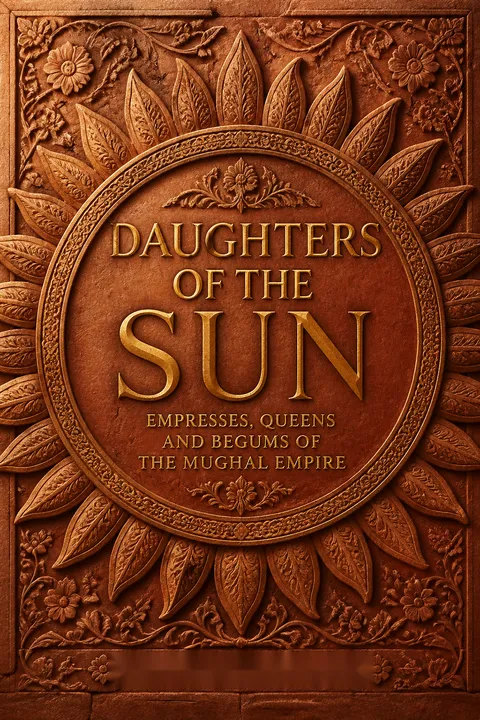
Daughters of the Sun is a well-researched book that sheds light on the lives of Mughal women, challenging stereotypes and revealing their power, influence, and contributions. Readers appreciate the author's vivid writing style and the new perspective on Mughal history. While some found parts repetitive or lacking in depth, most praise the book for its illuminating content on lesser-known female figures. Many reviewers express surprise at learning about the agency and accomplishments of Mughal women, finding the book both educational and engaging.
People Also Read









Glossary
zenana
Royal women's householdThe residential and organizational space associated with royal women and their households. In the book, the zenana is not simply a place for wives: it includes relatives, dependents, servants, and specialized staff, and its structure changes over time. It could be mobile and relatively porous in early Mughal years, then become a more enclosed, regulated complex under later rulers.
haraman
Mobile royal householdA term used for the early Mughal family and household that travelled with the ruler. It included women, children, servants, and other dependents, rather than only wives. In Babur and Humayun’s unsettled period, the haraman moved through campaigns, exile, and resettlement, helping sustain family ties and a sense of Timurid identity.
Padshah Begum
Highest-ranking imperial womanA prestigious title generally held by one woman at a time in the Mughal court. It could be given to a mother, sister, daughter, widow, or, in exceptional cases, a wife of the emperor. The title reflected standing, authority, and the ability to command respect, rather than an automatic position reserved for the emperor’s principal wife.
jagir
Land-revenue grantA grant assigning the revenue from a specified area to an individual. Mughal women could receive jagirs as part of their income, alongside allowances, gifts, and other property. Such grants could give women substantial financial resources, although they did not necessarily mean direct ownership of land or independent administration of the territory.
farman
Imperial order or decreeAn official written command issued by the emperor or, in some cases, by a powerful woman at court. Farmans could direct officials, confirm privileges, or authorize actions. The ability of women such as Noor Jahan to issue them signaled a striking degree of political authority, since the form was closely associated with imperial rule.
charbagh
Four-part formal gardenA planned garden divided into four sections by paths or water channels, associated with Persianate and Islamic garden design and an image of paradise. Mughal rulers and women patrons used charbaghs for pleasure, ceremony, and burial complexes. In India, the form was adapted through local materials, plants, and building traditions.
urdubegis
Armed women palace guardsWomen who served as guards within the Mughal zenana and near the emperor’s private apartments. The book describes them as physically strong, armed, and responsible for protecting both the ruler and the women’s quarters. Their role complicates the assumption that the zenana was guarded only by men or that its residents lacked organized security.
FAQ
What is Daughters of the Sun by Ira Mukhoty about?
- Focus on Mughal women: The book explores the lives, influence, and legacies of fifteen remarkable women of the Mughal Empire, from Babur’s invasion in 1526 to Aurangzeb’s death in 1707.
- Challenging stereotypes: It revises colonial and European misconceptions about the Mughal harem, revealing a dynamic, powerful, and complex female world.
- Historical and cultural context: Mukhoty situates these women within the Timurid legacy, Mughal imperial ambitions, and the evolving socio-political landscape of India, drawing on rare sources and women’s writings.
Why should I read Daughters of the Sun by Ira Mukhoty?
- Unveiling forgotten histories: The book brings to light the overlooked stories of Mughal women who were pivotal in empire-building, diplomacy, and cultural patronage.
- Correcting myths: Mukhoty dismantles Orientalist and colonial myths about the harem, offering a nuanced understanding of gender and power in Mughal India.
- Rich narrative and scholarship: Combining meticulous research with vivid storytelling, the book offers a fresh perspective on Mughal history through the lens of its women.
What are the key takeaways from Daughters of the Sun by Ira Mukhoty?
- Women’s agency and power: Mughal women exercised significant political, economic, and cultural influence, often acting as powerbrokers, patrons, and diplomats.
- Complexity of the zenana: The women’s quarters were vibrant centers of education, governance, and cultural production, not just places of seclusion.
- Impact of colonial narratives: European and colonial misrepresentations have long obscured the true roles and achievements of Mughal women, which Mukhoty seeks to reclaim.
What is the significance of the term "zenana" in Daughters of the Sun by Ira Mukhoty?
- Cultural specificity: "Zenana" refers to the women’s quarters in Mughal India, distinct from the generalized and often inaccurate European term "harem."
- Dynamic institution: The zenana was an industrious, well-ordered world where women played roles in governance, education, and social life.
- Evolution over time: It transformed from a mobile, tented household to a large, enclosed palace complex, reflecting the empire’s growth and changing needs.
How does Ira Mukhoty describe the early Mughal women and their lifestyle in Daughters of the Sun?
- Nomadic and resilient: Early Mughal women, like Aisan Daulat Begum and Khanzada Begum, lived peripatetic lives, traveling on horseback and enduring hardships alongside men.
- Political and familial sacrifice: Women like Khanzada Begum made significant sacrifices, such as being left as hostages to secure the dynasty’s safety.
- Active participation: These women were involved in political negotiations, family alliances, and even accompanied emperors on military campaigns.
Who were some of the most powerful Mughal women featured in Daughters of the Sun by Ira Mukhoty?
- Khanzada Begum: Babur’s sister, who became a revered matriarch and diplomat after sacrificing her freedom for the dynasty.
- Hamida Banu Begum: Humayun’s wife and Akbar’s mother, who endured exile and was later sanctified as Maryam Makani.
- Maham Anaga: Akbar’s foster mother and political powerbroker, who managed imperial affairs and patronized architecture.
- Noor Jahan and Mumtaz Mahal: Both are situated within a continuum of powerful women, with Noor Jahan’s political savvy and Mumtaz Mahal’s enduring legacy highlighted.
What was Noor Jahan’s significance in the Mughal Empire according to Daughters of the Sun by Ira Mukhoty?
- Political authority: Noor Jahan, Jahangir’s chief queen, wielded extraordinary influence, issuing royal farmans and having coins struck in her name.
- Cultural patronage: She was a skilled markswoman, patron of architecture, and innovator in court fashion and textiles.
- Economic and diplomatic power: Noor Jahan controlled trade routes, owned ships, and negotiated with European powers, playing a key role in the decline of Portuguese dominance.
How does Daughters of the Sun by Ira Mukhoty portray Mumtaz Mahal and her legacy?
- Beloved consort: Mumtaz Mahal was Shah Jahan’s favorite wife, known for their deep love and her role as mother to influential children.
- Influence through family: She managed the zenana and royal affairs, bearing fourteen children in nineteen years and shaping the next generation.
- Enduring legacy: Her death inspired the construction of the Taj Mahal, symbolizing both Shah Jahan’s ambition and her lasting memory.
What role did Gulbadan Begum play in Mughal history according to Daughters of the Sun by Ira Mukhoty?
- Chronicler and historian: Gulbadan Begum authored the Humayun-nama, providing a rare first-hand account of early Mughal women’s lives.
- Family matriarch: She bridged generations, preserving the Timurid legacy and offering intimate insights into the zenana.
- Religious and social leader: Gulbadan undertook the Hajj pilgrimage and engaged in acts of charity, demonstrating the active roles Mughal women played.
How does Daughters of the Sun by Ira Mukhoty describe the Mughal zenana and the role of women within it?
- Complex, vibrant community: The zenana was a “city unto itself,” with palaces, bazaars, gardens, and workshops, housing thousands of women.
- Political and economic agency: Women, especially padshah begums, influenced imperial affairs, trade, and patronage, supervising court rituals and managing estates.
- Cultural hub: The zenana was a center for music, poetry, and arts, with women sponsoring poets and musicians despite later restrictions.
What were the interactions between Mughal women and European powers, especially the English and Portuguese, as discussed in Daughters of the Sun by Ira Mukhoty?
- Trade and diplomacy: Noblewomen like Maryam-uz-Zamani and Noor Jahan owned ships and conducted trade with the Middle East, Africa, and European powers.
- Conflict and negotiation: The Portuguese seizure of Maryam-uz-Zamani’s ship led to a diplomatic crisis, shifting favor towards the English at the Mughal court.
- Cultural exchange: European goods and art influenced Mughal tastes, and Mughal women played key roles in these cross-cultural interactions.
What are the best quotes from Daughters of the Sun by Ira Mukhoty and what do they mean?
- On Noor Jahan’s power: “Noormahel fulfills the observation that in all actions of consequence in Court, a woman is not only always an ingredient, but commonly a principal drug of most virtue.” This highlights her central role in Mughal politics and diplomacy.
- On Jahanara’s spiritual ambition: “When a woman becomes a man in the Path to God, she is a man and one cannot anymore call her a woman.” This asserts Jahanara’s challenge to gender norms in spiritual authority.
- On the decline of the empire: “Dil ki basti bhi Sheher Dilli hai; Jo bhi guzra usi ne loota” (Delhi alone is a city of love; all those who have passed through it have looted it). This poetic lament captures the loss and nostalgia for the Mughal capital’s former glory.
Download PDF
Download EPUB
.epub digital book format is ideal for reading ebooks on phones, tablets, and e-readers.








