Plot Summary
Lavender and Lies
In the tranquil Scottish village of Lochdubh, Mrs. Margaret Gentle, an Englishwoman with a penchant for lavender and gracious manners, is universally adored—except by local constable Hamish Macbeth. Beneath her genteel exterior, Hamish senses something manipulative and cold, a feeling dismissed by the villagers who see only her generosity and charm. When Mrs. Gentle's influence threatens Hamish's beloved police station, he finds himself at odds with both his superiors and the community. The stage is set for a clash between appearances and reality, as Hamish's instincts warn him that Mrs. Gentle's arrival will bring more than just afternoon teas and charitable donations to Lochdubh.
The Wedding That Wasn't
Facing eviction and the loss of his pets, Hamish concocts a plan to marry Ayesha, Mrs. Gentle's beautiful foreign maid, to solve both their problems—her immigration status and his job security. Their arrangement is strictly practical, but the village buzzes with gossip, and Hamish's old flames, Priscilla and Elspeth, are stung by the news. Mrs. Gentle, ever the manipulator, seizes control of the wedding, restoring her social standing but sowing discord. On the wedding day, Ayesha vanishes, leaving behind her belongings and a suitcase stuffed with cash. The villagers descend on Mrs. Gentle's home for the abandoned reception, and Hamish is left with more questions than answers, his relief at the wedding's collapse tempered by a growing sense of unease.
Disappearances and Discoveries
As Hamish investigates Ayesha's disappearance, he uncovers a web of lies. The woman he intended to marry is not who she claimed to be; her real identity is Irena, a Russian woman with a shadowy past. The discovery of her expensive clothes and a forged passport deepens the mystery. Meanwhile, Mrs. Gentle's sudden generosity toward Irena, followed by threats and blackmail, hints at secrets lurking within the castle's walls. When Irena's body is found hidden in a trunk in the castle cellar, the case shifts from a missing person to murder, and Hamish's own involvement in the forged documents puts him at risk.
Two Deaths, One Castle
The village is rocked when Mrs. Gentle herself is found dead at the foot of the cliffs, strangled and thrown over. The investigation intensifies, with suspicion falling on Irena, now believed to be both victim and perpetrator. The castle, perched precariously on the edge of the sea, becomes a symbol of the family's crumbling façade. Hamish, haunted by guilt and suspicion, must navigate a tangle of motives—money, revenge, and long-buried family secrets—while the Gentle family's dysfunction comes to light. The dual deaths force the villagers and police alike to question how well they truly knew the gentle lady of Lochdubh.
The Russian Connection
Inspector Anna Krokovsky arrives from Moscow, bringing with her a new perspective and a steely resolve. She reveals Irena's past as a high-class prostitute entangled with the Russian mafia, raising the stakes and expanding the pool of suspects. Anna's presence unsettles Hamish, both professionally and personally, as she probes the weaknesses in his investigation and his character. Together, they explore the possibility that Irena's murder is linked to her past, but the evidence increasingly points back to the Gentle family. The investigation becomes a chess game, with Anna and Hamish each bringing their own methods and vulnerabilities to the table.
Family Secrets Unveiled
The Gentle family reunion, intended to discuss the will, is revealed to be a hotbed of resentment and rivalry. Irena's blackmail attempts, overheard threats, and the shifting terms of Mrs. Gentle's will provide ample motive for murder. Hamish and Anna interrogate each family member, uncovering alibis, lies, and a history of emotional cruelty. The discovery of a tape recording of Mark Gentle threatening his aunt seems to break the case, but Hamish remains unconvinced. The family's secrets—illegitimacy, jealousy, and betrayal—bubble to the surface, but the true killer remains elusive, hidden behind layers of performance and deception.
The Woman in the Phone Box
Witnesses recall seeing a tall woman in a headscarf and dark glasses making a phone call from the village box on the morning of the murders. The search for this woman leads Hamish to a discarded bicycle and a trail that winds through the village and the surrounding moors. The amateurish attempt to frame someone with a wire across the castle stairs and a bomb in Hamish's kitchen suggests a killer both desperate and cunning. The investigation becomes a race against time, as Hamish realizes the murderer is still at large and willing to kill again to protect their secret.
The Amateur and the Professional
As the investigation stalls, Hamish's instincts tell him that the murderer is not a professional but someone playing a dangerous game. The failed attempts on his life—booby traps, bombs, and kidnapping—are marked by a blend of theatricality and incompetence. Meanwhile, the police hierarchy, distracted by politics and personal vendettas, leaves Hamish increasingly isolated. His relationships with Anna, Priscilla, and Elspeth are strained by the pressures of the case and his own emotional confusion. The line between performance and reality blurs, both in the investigation and in the village's amateur production of Macbeth, where the killer may be hiding in plain sight.
Danger in the Highlands
Forced into hiding after a bomb nearly kills him, Hamish is sent to a remote village, but the killer tracks him down, setting a deadly trap. A staged fire and a booby-trapped van nearly end his life, but Hamish's quick thinking saves him. The attempt on his life confirms that the murderer is someone close, someone who believes Hamish knows more than he does. The sense of danger escalates, and Hamish realizes that the only way to catch the killer is to draw them out, even if it means risking his own life and reputation.
The Play's the Thing
The village's production of Macbeth becomes a focal point, with the role of Lady Macbeth taken by the enigmatic author Harold Jury. Hamish, struck by the actor's small feet and uncanny performance, begins to suspect that the killer is hiding behind a mask—literally and figuratively. The play's themes of ambition, guilt, and madness mirror the real-life drama unfolding in Lochdubh. As the curtain falls, Hamish's suspicions crystallize, and he sets out to unmask the true murderer, knowing that the final act will be deadly.
The Unmasking of Lady Macbeth
Hamish's investigation leads him to the shocking discovery that "Harold Jury" is actually Cyril Edmonds, Mrs. Gentle's illegitimate son, a skilled actor and a vengeful psychopath. Cyril, driven by a lifetime of resentment and abuse, orchestrated the murders with chilling precision, using disguise and deception to evade suspicion. In a tense confrontation, Cyril confesses his crimes and flees, pursued by Hamish through a raging storm. The castle, symbol of the family's secrets, collapses into the sea, taking Cyril with it and bringing the cycle of violence to a dramatic end.
The Final Storm
The storm that destroys the castle also marks the end of the case. The bodies are recovered, and the village begins to heal. Hamish, battered but unbowed, reflects on the cost of justice and the fragility of peace in the Highlands. The police hierarchy, eager to move on, buries the scandal, and Hamish is left to pick up the pieces of his personal and professional life. The villagers, ever resilient, return to their routines, but the memory of the gentle lady and the darkness she brought lingers in the mist and the waves.
Aftermath and New Beginnings
In the wake of the murders, Hamish faces new challenges—political machinations, personal betrayals, and the ever-present threat of losing his place in Lochdubh. A failed attempt to frame him for kidnapping, orchestrated by his nemesis Blair, is narrowly averted. The village's rhythms reassert themselves, with weddings, gossip, and the slow return of trust. Hamish, wiser and more guarded, finds solace in his animals and the landscape he loves. The story ends with a sense of hard-won peace, but the knowledge that in the Highlands, danger and deception are never far away.
Characters
Hamish Macbeth
Hamish is the heart of Lochdubh—a tall, red-haired constable with a deep love for his village, his animals, and the simple rhythms of Highland life. His unambitious nature masks a sharp intelligence and a keen intuition for human nature. Hamish's relationships are marked by longing and missed opportunities, particularly with Priscilla and Elspeth, whose affections he cannot quite claim. Psychologically, Hamish is both vulnerable and resilient, haunted by self-doubt but driven by a fierce sense of justice. Over the course of the story, he is tested by betrayal, danger, and the threat of losing everything he holds dear, emerging wiser but more wary of the world's duplicity.
Mrs. Margaret Gentle
Mrs. Gentle is the embodiment of English gentility—gracious, elegant, and seemingly benevolent. Yet beneath her lavender-scented exterior lies a woman skilled in manipulation, emotional cruelty, and self-preservation. Her relationships with her children are fraught with control and resentment, and her interactions with the village are calculated to maintain her image. Psychologically, Mrs. Gentle is driven by a need for power and validation, masking her insecurities with charm. Her past, including an illegitimate son and a history of social climbing, ultimately leads to her downfall, as the secrets she tried to bury resurface with deadly consequences.
Irena (Ayesha Tahir)
Irena, masquerading as Ayesha, is a Russian woman fleeing a life of exploitation and danger. Her beauty and vulnerability make her both a victim and a manipulator, using her wits to survive in a hostile world. Her relationship with Hamish is transactional but tinged with genuine fear and longing for safety. Psychologically, Irena is marked by trauma, resourcefulness, and a capacity for both deception and hope. Her attempts at blackmail and her entanglement with the Gentle family set the stage for her murder, making her both a catalyst and a casualty of the story's central mystery.
Cyril Edmonds / "Harold Jury"
Cyril is the illegitimate son of Mrs. Gentle, a master of disguise and performance. His life has been shaped by abandonment, abuse, and a burning desire for revenge. As "Harold Jury," he infiltrates the village, orchestrates the murders, and manipulates those around him with chilling skill. Psychologically, Cyril is a classic psychopath—charming, intelligent, and utterly remorseless. His need for recognition and his obsession with his mother drive him to acts of violence and deception, culminating in a final confrontation that reveals the depths of his madness and the tragic consequences of a life lived in the shadows.
Priscilla Halburton-Smythe
Priscilla is Hamish's former fiancée, a woman of beauty, intelligence, and reserve. Her relationship with Hamish is marked by mutual attraction and frustration, as both struggle with their inability to connect on a deeper level. Priscilla's emotional distance is both a shield and a source of regret, as she watches Hamish's life unfold from the sidelines. Psychologically, she is self-sufficient but secretly vulnerable, longing for connection but afraid of disappointment. Her involvement in the village play and her interactions with Hamish reveal a woman caught between past and future, tradition and change.
Elspeth Grant
Elspeth is a journalist with a complicated history with Hamish. Her intelligence and drive set her apart, but her romantic life is marked by disappointment and longing. Elspeth's relationship with Hamish is a dance of attraction, rivalry, and missed chances, complicated by her own insecurities and ambitions. Psychologically, she is both resilient and sensitive, using her work as a shield against vulnerability. Her role in the investigation and her support for Hamish highlight her loyalty and her struggle to find a place in a world that often undervalues her.
Inspector Anna Krokovsky
Anna is a Russian police inspector whose arrival brings a new level of intensity to the investigation. Her methods are rigorous, her demeanor cool, and her personal life a mystery. Anna's interactions with Hamish are marked by mutual respect and cultural friction, as she challenges his assumptions and exposes his vulnerabilities. Psychologically, Anna is driven by a need for control and a fear of emotional entanglement, shaped by her experiences in a harsher world. Her presence forces Hamish to confront his own limitations and the complexities of justice in a globalized world.
Detective Chief Inspector Blair
Blair is Hamish's nemesis within the police force—a man consumed by jealousy, ambition, and resentment. His efforts to undermine Hamish are relentless, ranging from bureaucratic sabotage to outright criminality. Psychologically, Blair is insecure and deeply threatened by Hamish's competence and popularity. His descent into alcoholism and his eventual attempt to frame Hamish for kidnapping reveal a man at war with himself and the world. Blair's actions serve as a dark mirror to Hamish's integrity, highlighting the corrosive effects of envy and the dangers of unchecked power.
Jimmy Anderson
Jimmy is Hamish's friend and ally within the police force, providing support, humor, and a steadying influence. His relationship with Hamish is one of mutual respect and camaraderie, tempered by the realities of police politics. Psychologically, Jimmy is grounded and adaptable, able to navigate the shifting allegiances and pressures of his profession. His role in the investigation is crucial, offering both practical assistance and emotional support as Hamish faces mounting dangers and betrayals.
The Gentle Family (Andrew, Sarah, Kylie, Mark, John, Twinkle)
The Gentle family is a study in dysfunction—siblings and relatives bound by blood, money, and mutual suspicion. Each member harbors secrets, grievances, and ambitions, their relationships marked by rivalry, jealousy, and emotional neglect. Psychologically, they are products of Mrs. Gentle's manipulations, struggling to assert their identities and claim their share of the inheritance. Their interactions with Irena and with each other provide a microcosm of the story's themes: the corrosive effects of secrets, the dangers of unchecked ambition, and the longing for love and acceptance.
Plot Devices
Disguise and Performance
The central device of the novel is the use of disguise—literal and metaphorical. Cyril's transformation into "Harold Jury" allows him to infiltrate the village and commit murder undetected, while Irena's assumed identity as Ayesha enables her to escape her past and manipulate those around her. The village play, Macbeth, serves as a meta-commentary on the themes of ambition, guilt, and the blurring of reality and performance. The motif of acting—whether on stage, in social roles, or in criminal deception—underscores the novel's exploration of truth, identity, and the masks we wear.
Red Herrings and Misdirection
The investigation is marked by a series of red herrings—suspects with plausible motives, misleading clues, and amateurish attempts to frame others. The wire across the stairs, the bomb in Hamish's kitchen, and the mysterious woman in the phone box all serve to distract both the characters and the reader from the true killer. The narrative structure, with its shifting perspectives and layered revelations, keeps the reader guessing until the final unmasking.
Family Secrets and Inheritance
The Gentle family's inheritance is both a motive for murder and a symbol of the destructive power of secrets. The shifting terms of Mrs. Gentle's will, the revelation of an illegitimate son, and the family's history of emotional cruelty create a web of suspicion and resentment. The castle, perched on the edge of the cliffs, becomes a metaphor for the family's precarious position—beautiful on the surface, but undermined by rot and instability.
Setting as Character
The Scottish landscape is more than a backdrop; it is an active force in the story. The isolation of Lochdubh, the wildness of the moors, and the relentless weather create an atmosphere of tension and vulnerability. The castle's collapse into the sea is both a literal and symbolic climax, erasing the physical evidence of the crimes and underscoring the impermanence of human schemes.
Foreshadowing and Irony
The novel is rich in foreshadowing—Hamish's early warnings about Mrs. Gentle, the recurring references to performance and deception, and the villagers' blind trust in appearances. Irony abounds, as the "gentle lady" proves to be anything but, and the amateur detective outwits both the professional police and the professional killer. The interplay of expectation and reality is a constant source of tension and dark humor.
Analysis
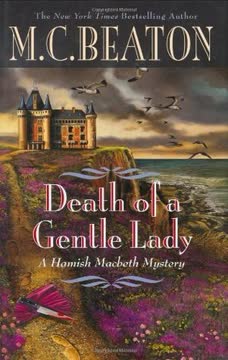
M.C. Beaton's Death of a Gentle Lady is a masterful exploration of the dangers lurking beneath the surface of civility and tradition. Through the lens of a murder mystery, the novel interrogates the nature of identity, the corrosive effects of secrets, and the thin line between performance and reality. The story's emotional arc is one of disillusionment and resilience: Hamish Macbeth, the quintessential outsider, must navigate a world where appearances deceive and trust is a rare commodity. The novel's use of disguise, both literal and psychological, reflects the ways in which individuals and communities construct and defend their narratives, often at great cost. The collapse of the castle is a fitting metaphor for the destruction wrought by denial and repression, while the village's return to routine suggests the enduring power of community and the possibility of renewal. Ultimately, the book is a meditation on the necessity of skepticism, the value of intuition, and the enduring human need for connection and belonging—even in a world where gentle ladies may not be so gentle after all.
Last updated:
Review Summary
Death of a Gentle Lady follows Scottish constable Hamish Macbeth as he investigates murders in Lochdubh. Readers praise the humor, Scottish setting, and beloved characters, awarding it 3.84/5 stars. Hamish attempts a marriage of convenience to help a Russian maid and save his police station, but the bride is murdered on their wedding day. The mystery involves blackmail, prostitution, and interference from his nemesis, Inspector Blair. While some criticize formulaic plots and Hamish's stagnant love life, most find it an entertaining cozy mystery with witty moments and charming Highland atmosphere.