

Plot Summary
The Bucket at Braikie
Lochdubh constable Hamish Macbeth is already unsettled by a cutting letter from reporter Elspeth Grant, whose return to the Highlands revives his regret over their uncertain past. Then he must endure the cleaning services he won in a church raffle: Mavis Gillespie, a loud, intrusive maid who treats his police station as her own.
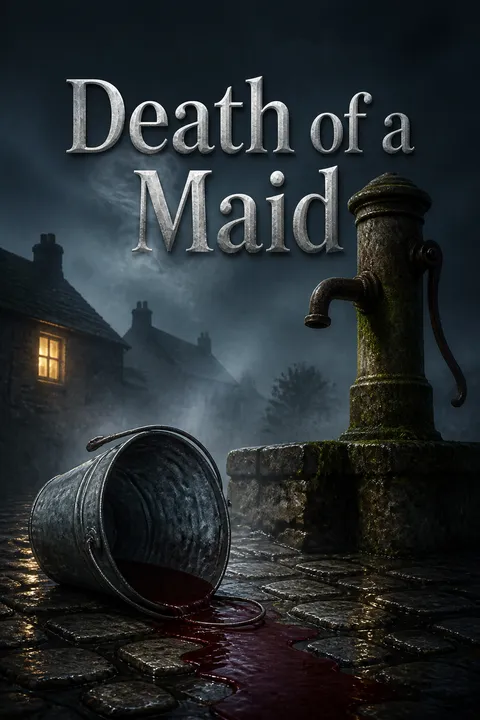
Hamish escapes for a walk, learns where else Mavis works, and returns to find she has taken Elspeth’s letter from his table. The next morning he drives to Braikie to confront her. At Professor Sander’s house, he finds Mavis dead beside the garden pump, her bucket and mop nearby. A bloody mark on the bucket makes him suspect murder, not accident.
The story begins with two intrusions into Hamish’s carefully protected solitude: Elspeth’s letter and Mavis’s cleaning. His response to both is avoidance, a comic habit that also leaves private information exposed. The murder turns that domestic irritation into a professional obligation. The bucket matters because it is both Mavis’s working tool and a familiar instrument of intimidation in the lives around her. A village object becomes evidence, but its ordinariness also obscures how deliberately someone has used it.
A Husband’s Relief
Detective Chief Inspector Blair initially calls Mavis’s death an accident, but the pathologist confirms that someone struck her with her own bucket. Hamish tells Mavis’s husband, who responds with laughter rather than grief and explains that she had beaten him with the same bucket.
He is ill with stomach cancer, has no car, and could not have reached the scene. Hamish also learns Mavis controlled the household money and kept her husband from seeing his daughter, Heather.
At the bank, he discovers that Mavis held twenty thousand pounds, much of it deposited in cash, although she earned her living cleaning. Her home contains none of the expected financial papers. Hamish suspects blackmail and begins to see every employer as a possible target.
The husband’s reaction complicates the conventional expectation that bereavement must look like sorrow. His laughter carries relief from years of coercion, but it does not make him a plausible killer. Hamish reads that distinction correctly and follows the money instead. Cash deposits and missing records suggest an economy built on secrecy, yet the evidence is still circumstantial. The case’s central question shifts from who could have wielded the bucket to what Mavis knew, and why her employers tolerated her bullying.
Clients Under Scrutiny
Hamish questions Mavis’s employers and discovers how widely she had crossed the line between cleaning and snooping. Mrs. Wellington resented Mavis’s interference, while Mrs. Barret-Wilkinson reacts coldly to news of the murder and refuses to explain her movements.
Fiona Fleming, a wealthy widow, becomes furious when Hamish asks about her rumored affair with married doctor Dr. Renfrew. Neighbour Flora Samson repeats Mavis’s suspicion that Fiona may have pushed her husband, Bernie, down the stairs, though police records call his death accidental.
Hamish also learns Mavis had threatened a bakery owner with health inspectors unless she supplied cream cakes. A solicitor reveals that Mavis left a sealed packet for Flora, raising the possibility that her secrets outlived her.
Mavis’s clients show how the same intrusion can produce radically different fears. Some have real vulnerabilities, others merely dislike being watched, and Hamish must not confuse embarrassment with motive. Flora’s gossip supplies leads while distorting them, making local knowledge both indispensable and unreliable. The packet intensifies the mystery because it suggests Mavis planned for something to survive her, but its contents remain unknown. Her power seems less like a single blackmail scheme than a private system of leverage tailored to each person.
The Packet Burns
Flora collects Mavis’s packet from the solicitor, then leaves it inside her house while she goes shopping. Someone sets the house ablaze, apparently fearing what the documents might expose. Hamish reaches the fire as the flames consume the rooms, but spots Flora alive in Braikie and brings her back.
She confirms that the packet contained old letters and photographs, not money, and that it has probably burned. The blaze deepens Hamish’s fear that Mavis’s secrets are dangerous enough to provoke another attack. He returns to the solicitor and retrieves Mavis’s financial papers, but the records explain her savings without revealing what she knew. The missing packet becomes the case’s most urgent absence.
The fire converts a piece of evidence into a threat without letting the reader see what has been lost. Flora’s survival briefly relieves the danger, but it does not restore the packet or answer why someone acted so quickly. Hamish’s investigation becomes a race against destruction, while the absence of the papers gives the unseen offender room to control the story. The episode also exposes a weakness in institutional procedure: a will’s contents are treated as harmless until the investigation recognizes that information can be more dangerous than money.
A Body at Sea
Flora is later found dead in her room at an old people’s home, which has been searched and torn apart. The pathologist finds no violence and concludes she died of a heart attack, but Hamish believes fear and the search for Mavis’s packet may have overwhelmed her. That night, fisherman Archie Maclean finds a young woman in a drifting rowing boat.
The body is Shona Fraser, the television researcher assigned to follow Hamish. A bloodied tyre iron lies near Shona’s car, and her keys remain in the ignition. Hamish realizes she was struck, dragged to the waterfront, and pushed into a boat whose rope was cut. Her notebook shows she had planned to meet him that evening, but she never reached the station.
The apparent chain of violence expands the mystery beyond Mavis’s immediate circle. Flora’s death is not established as murder, an important distinction in a case where suspicion keeps multiplying. Shona’s killing, by contrast, is unmistakably deliberate: the tyre iron, the abandoned car, and the drifting boat all imply someone improvising after an attack. Her death gives the investigation a second victim and makes Hamish confront the cost of leaving a message unanswered. The journalist’s notebook preserves intention, but not the crucial information she meant to share.
The Village Keeps Score
Hamish tests the theory that Mavis’s money came from blackmail rather than luck. Miss Creedy, who ran church bingo, admits that Mavis forced her to rig the draw after discovering her tourist goods were imported cheaply from China.
Mavis wanted prizes, not a fortune, and Creedy fears disgrace more than prosecution. Hamish lets her repay the money quietly. Other interviews reveal Mavis demanded cream cakes from the bakery owner and once pressured an elderly client for treasured china. During this unsettled stretch, Hamish considers resigning under pressure from his superiors.
Elspeth persuades him to stay, warning that unresolved suspicion would fall on the dead woman’s family and the people she had bullied. Hamish rallies Lochdubh around fisherman Archie when officials threaten his livelihood.
The blackmail proves to be intimate and opportunistic rather than grandly financial. Mavis’s requests, cakes, bingo winnings, household favors, are small enough to seem absurd, yet they let her dictate other people’s behavior. Shame is the mechanism: Creedy’s fear of being exposed sustains the scheme. Hamish’s decision to shield her from public ruin shows his own moral selectivity. He wants truth, but he does not believe every truth deserves the same punishment. Elspeth’s intervention likewise restores his sense of responsibility when institutional disrespect tempts him to abandon the case.
Shona’s Other Investigation
Elspeth discovers that Shona had been researching doctors accused of malpractice, including Dr. Renfrew. He admits Mavis recognized him from a television report about his failure to diagnose a patient’s cancer.
Mavis threatened to publicize the case unless he supplied money and a discontinued arthritis medicine she relied on. Hamish also investigates an unexplained twenty-mile journey in a crofter’s Land Rover on the night Shona died; its owner says the vehicle was cleaned afterward. That raises the possibility it carried the killer, although the evidence is not conclusive.
Meanwhile, Professor Sander remains a suspect because a former student accused him of stealing work for his book on Byron. The investigation now has several plausible secrets, but no clear path from them to either murder.
Shona’s professional research offers a credible route into the local web of concealed wrongdoing, but the connection does not yet identify her killer. Renfrew’s admission confirms Mavis’s leverage while showing that her demands could be practical as well as financial. The Land Rover is a physical clue that may connect the killings, yet Hamish resists treating coincidence as proof. Sander’s alleged plagiarism introduces another tempting explanation, one tied to vanity and reputation. Each suspect has a secret, but the case requires distinguishing what Mavis exploited from what actually caused violence.
Sander’s Last Secret
Hamish tails Professor Sander and catches him meeting a young sex worker in Strathbane. Confronted, Sander admits Mavis discovered the visitor at his home and blackmailed him for money, expensive household goods, and errands.
The professor denies killing her, but Hamish leaves him frightened by the prospect of exposure. A violent storm drives Hamish back to Sander’s house, where he finds the professor hanging in his kitchen beside a note confessing to guilt without explaining which crime.
Blair announces that the case is solved, but Hamish knows Sander’s secret does not account for Shona’s death. He searches Mavis’s old videotapes and finds a recording of a London brothel where a younger Mrs. Barret-Wilkinson appears to be working as a madam.
Sander’s secret seems to solve the puzzle because it explains why he endured Mavis’s presence, but explanation is not proof of murder. His suicide turns shame into a false confession, allowing the police hierarchy to close the case prematurely. Hamish’s refusal to accept that neat ending is a crucial act of judgment. The videotape redirects attention from public respectability to a concealed former life. Technology here does not simply document the past; it makes an identity portable, capable of resurfacing years later in a village far from its origin.
The Woman on Tape
Hamish learns the woman’s name is Crystal Jackson, now Mrs. Barret-Wilkinson, and finds that her Glasgow alibi was false. Her former associate, Bella Robinson, explains that Crystal once managed a high-end brothel.
Bella witnessed Crystal kill a client there, after which the brothel’s owner helped conceal the crime. Crystal later married, divorced, and rebuilt herself as a respectable countrywoman. Hamish concludes that Mavis recognized her on television and used the old murder as leverage.
Shona may have recognized Crystal during her own research, giving Crystal a reason to silence her as well. Hamish and Inspector Mary Cannon arrange to confront Crystal with Bella’s recorded account and the videotape, hoping to provoke a confession before she can destroy more evidence.
Crystal’s reinvention rests on a sharp split between social image and remembered action. Mavis’s power over her does not come from a vague scandal but from a killing hidden behind a respectable marriage. The evidence also gives Shona’s death a plausible motive, linking her work to the danger Mavis had already created. Yet Hamish still has to turn narrative coherence into admissible proof. The planned confrontation is therefore psychological as much as procedural: he is betting that a person who has survived by managing appearances will reveal herself when those appearances are threatened.
The Bulletproof Bluff
Hamish visits Crystal alone and accuses her of killing Mavis and Shona, using Bella’s story and the brothel footage to unsettle her. Crystal finally admits the murders, then shoots Hamish in the chest. He survives because he is wearing a borrowed bulletproof vest; Mary has been listening nearby and rushes in to arrest Crystal.
Crystal kicks Mary and runs toward the sea, but Hamish pursues her into the water and drags her back unconscious. At headquarters, Crystal’s statements give investigators the evidence they need, and the police credit Mary for the arrest. Hamish returns to Lochdubh alive, but Elspeth, angry that he withheld the resolution from her, refuses his attention. Luke proposes, and she accepts.
Hamish wins by combining patience with theatrical risk, but his choice to confront Crystal alone nearly costs him his life. The bulletproof vest is practical preparation, not invulnerability: the shot still leaves him shaken and injured. Mary’s presence makes the trap collaborative, even as Hamish’s pride keeps him at its center. The emotional aftermath is less triumphant. He has solved the murders but repeats an old pattern with Elspeth, assuming closeness without offering trust. Her acceptance of Luke’s proposal makes the cost of Hamish’s indecision visible.
Lochdubh Declares Itself
When Archie learns that officials have ordered his fishing boat decommissioned, Hamish organizes a village protest. To attract national attention, he announces Lochdubh’s independence, persuades residents to build roadblocks, and lets them lock him in his own police cell.
News crews broadcast the spectacle, while the prime minister’s office quickly declares the decommissioning notice a mistake and orders police to stand down. The villagers carry Hamish through town as a hero, though Inspector Cannon considers arresting him for inciting a riot.
This episode does not solve the murders, but it shows how Hamish uses local trust and comic mischief to defend the community. The case’s wider press attention also makes the Highlands a more visible and vulnerable place.
Hamish’s stunt depends on his standing among the villagers: they trust him enough to turn an absurd declaration into a coordinated performance. He exploits the national appetite for spectacle to make a remote fisherman’s loss impossible to ignore. The episode also contrasts two forms of authority. Central government retreats when publicity threatens, while local solidarity supplies the pressure that produces the correction. Hamish’s loyalty is practical rather than ceremonial; he bends procedure not for personal advancement but to protect someone whose livelihood larger institutions can erase with paperwork.
Freddie Comes Through Snow
After Crystal’s arrest, her criminal associate Freddie Ionedes seeks revenge on Hamish. During a blizzard, Gloria Price, a glamorous hotel guest, drugs Hamish’s whisky and helps Freddie and an accomplice carry him to his Land Rover.
They dump him in a snowdrift and try to stage the vehicle as an accident. Hamish had secretly alerted Jimmy and Angela, survives the cold, and follows the pair until Lochdubh residents led by former policeman Willie Lamont block their route.
Hamish arrests Freddie and the accomplice, then charges Gloria for helping them. Scotland Yard questions him afterward and offers promotion; Hamish refuses because he wants to remain the resident constable. He does accept a new Land Rover, the practical reward he has wanted.
The winter attack turns the earlier murders into a continuing consequence rather than a closed case. Freddie’s plan weaponizes Hamish’s familiarity with his own vehicle and the Highlands’ lethal weather, making landscape an accomplice. Hamish survives through preparation and local cooperation, not solitary heroics. His refusal of promotion clarifies that ambition, for him, would mean losing the work he values. The new Land Rover is a modest concession that lets the institution reward him without removing him from the community that helped save his life.
A Wedding Left Waiting
Luke’s proposal to Elspeth turns into wedding plans, but he drinks through his stag party and disappears with a stripper. Elspeth waits at the Glasgow church, then cancels the ceremony and tells the guests to go on to the reception. Luke wakes too late, flees to the airport, and never returns to apologize.
Hamish learns what happened only later, after he has bought a ring and imagined asking Elspeth to marry him; by then, the moment has passed. He does not contact her, and his longing gradually loses its force. Their missed marriage is not caused by a single villain but by accumulated hesitation: Hamish’s delay, Elspeth’s attempt to move on, and Luke’s careless self-indulgence.
The wedding’s collapse exposes how easily romantic choices can become momentum rather than conviction. Elspeth’s acceptance of Luke is partly a response to Hamish’s chronic uncertainty, while Luke’s disappearance confirms that her new commitment was not secure. Hamish’s late purchase of a ring is emotionally sincere but structurally useless: desire arrives after the decision point. The episode resists a simple reunion fantasy. Elspeth’s humiliation belongs to her, and Hamish’s regret cannot retroactively make him the partner he failed to be when she needed clarity.
A Model in the Cell
In spring, London model Tasman Kennedy visits Lochdubh and charms Hamish over lunch. Primed by Freddie’s threats, he suspects she has been sent to lure him and locks her in his cell. The Currie sisters arrive eager to see the famous model, forcing Hamish to recognize his mistake and release her. He explains the attacks, and Tasman forgives him before they visit a waterfall together.
A newspaper photograph of them appears, prompting Hamish to hear that Elspeth’s wedding was canceled, but he still does not call her. Tasman leaves to escape the publicity. The encounter lets Hamish experience attraction without confusing it with a promise, while his refusal to pursue Elspeth confirms that he is not ready to reopen their old uncertainty.
Hamish’s suspicion is understandable after repeated attempts on his life, but it has begun to distort his ability to meet an unfamiliar person without turning her into a threat. Locking Tasman up makes that distortion concrete and forces him to apologize rather than simply retreat. Her forgiveness does not become a romance, and that restraint matters: the scene permits warmth without manufacturing a cure for Hamish’s loneliness. The photograph then places private feeling under public interpretation, while his silence toward Elspeth shows that awareness alone has not changed his habits.
The Highland Games Ambush
At the Braikie Highland Games, Hamish senses danger and spots three armed men moving through the crowd. He takes a deer rifle from a sporting-goods stall, runs to nearby standing stones, and fires, wounding two attackers and forcing the third to surrender. The men are connected to Freddie’s criminal organization, whose members are now being arrested after the earlier attempt.
During the investigation, Hamish spends a night with Constable Pat, but she soon tells him she has a boyfriend and plans to buy a house with him. Hamish accepts the casual encounter without demanding more. The threat has not vanished, but the network behind it is collapsing, and Hamish remains in Lochdubh, still choosing its ordinary duties over promotion.
The ambush makes clear that survival has not ended Hamish’s exposure to violence. His quick response is effective, though it also brings official scrutiny and reminds him that policing never offers a clean boundary between danger and routine. Pat’s brief intimacy contrasts with his unresolved attachment to Elspeth: he can accept companionship when neither person pretends it guarantees a future. The ending’s emotional scale is deliberately modest. Hamish does not conquer loneliness or leave the Highlands; he keeps choosing a local life whose value comes from its daily obligations.
Epilogue
After the trials and the spring thaw, Hamish settles back into the work and solitude he prefers. He and Inspector Mary Cannon wonder what became of the packet Mavis left for Flora Samson. In Toronto, a teenager cleaning his room discovers that packet hidden inside an old magazine.
His great-aunt Flora had asked him to keep it safe and return it when instructed, but she is dead, and he throws the letters and photographs away. The contents remain undisclosed. The case is closed in court, yet its last piece of evidence disappears without ever reaching Hamish.
The final scene denies the detective the complete archive he has spent the novel trying to recover. The packet survives the fire and the murders, only to be lost through a child’s ordinary fear of punishment and a casual act of tidying. Its disappearance makes the ending less about a hidden revelation than about the limits of investigation: truth can exist materially and still remain inaccessible. The Toronto setting also gives Mavis’s local reach an unexpected distance. Her secrets cross an ocean, but no institution can retrieve them once the person who guarded them is gone.
Analysis
The novel treats privacy as a form of social power. Mavis enters homes to clean, a role that grants her access without status, and converts that access into leverage over people who assume respectability will protect them. Her demands are often small, but the coercion is not. A box of cakes, a rigged bingo card, or an expensive television can make a client obey because the real price is exposure. The investigation therefore asks not only who had a motive, but how shame makes people participate in their own silence.
Hamish’s method fits the village he serves. He listens to gossip, notices domestic details, and distrusts explanations that arrive too neatly from higher-ranking officers. Yet his independence has a cost: he withholds information, alienates Elspeth, and sometimes acts alone when collaboration would be safer. The murder plot parallels his personal habits. Both depend on the difference between what people know and what they are willing to say.
Respectability is the novel’s most effective disguise. Crystal’s reinvention, Sander’s academic status, Creedy’s fear of disgrace, and Renfrew’s professional standing all show how social identity can conceal a vulnerable past. The book does not suggest that everyone’s secret is equally serious; rather, it shows how fear makes people respond as if every exposure will destroy them. Hamish’s willingness to distinguish embarrassment from violence gives the story its moral center. He wants the truth, but he also understands that justice requires proportion, not merely revelation.
Review Summary
Death of a Maid receives mostly positive reviews (3.84/5) for its cozy Scottish Highland mystery featuring detective Hamish Macbeth investigating a blackmailing maid's murder. Readers praise the quirky characters, complex plot, and charming setting. Common complaints include an overly long denouement after the mystery is solved, too many subplots and characters causing confusion, and excessive detail about Hamish's pets and romantic entanglements. Many reviewers particularly enjoy the audiobook's Scottish narration. Several note this 22nd series installment works well standalone but benefits from reading earlier books.
People Also Read
Characters
Hamish Macbeth
The village constableHamish is Lochdubh’s tall, red-haired constable, an intuitive investigator who prefers the scale of village life to the rank and anonymity of a larger police force. He notices what others dismiss, listens closely to gossip, and often reaches sound conclusions by following small inconsistencies. His independence can make him perceptive, but it also leaves him isolated from colleagues and inclined to act without permission. He is tenderly attached to his dog and cat, wary of ambition, and uncertain in love. Hamish’s central tension is not whether he can solve crimes, but whether he can accept the responsibilities and emotional risks that come with seeing people clearly.
Mavis Gillespie
The intrusive housekeeperMavis is a feared and widely employed cleaner whose reputation for thoroughness masks a taste for intrusion and control. She treats other people’s private rooms as opportunities to discover what they would rather conceal, then uses their fear of exposure to secure favors. Her demands can be petty, which makes them easy to underestimate, but her power over clients and family members is substantial. Mavis is not driven only by money; she enjoys making people accommodate her. She brings the novel’s central conflict into the most ordinary domestic spaces, where privacy, labor, class, and respectability become entangled.
Elspeth Grant
The reporter who knows HamishElspeth is a Glasgow reporter with a history of affection and frustration with Hamish. Independent, observant, and professionally resourceful, she can connect a local mystery to information Hamish cannot easily access. She is also alert to the cost of being treated as a fallback, and her feelings for him do not erase her need for dependable respect. Elspeth’s decision-making is shaped by a desire to move forward rather than remain suspended in Hamish’s indecision. Her relationship with him gives the investigation an emotional counterpoint: she sees his strengths clearly, but refuses to let them excuse his repeated failure to choose.
Luke Teviot
Elspeth’s fellow reporterLuke is a charming, experienced journalist who accompanies Elspeth to the Highlands. His relaxed manner conceals heavy drinking and an appetite for attention. He is drawn to Elspeth and enjoys the role of her companion, but his reliability does not match his confidence. Through him, the story contrasts Hamish’s hesitation with a more forward, though less dependable, form of romantic pursuit.
Jimmy Anderson
Hamish’s trusted colleagueJimmy is a detective inspector who respects Hamish’s judgment even when their ranks and habits differ. He drinks heavily, speaks plainly, and sometimes acts as Hamish’s bridge to the larger police investigation. His loyalty is practical: he shares information, offers help, and recognizes when Hamish has seen something the official investigation missed.
Detective Chief Inspector Blair
The credit-seeking superiorBlair is Hamish’s ambitious, blustering superior, resentful of the constable’s independence and inclined to claim credit for other people’s work. He combines professional insecurity with a taste for authority, and his conduct often obstructs the investigation. Blair’s presence highlights the gap between rank and competence, as well as the institutional pressures Hamish resists by remaining in Lochdubh.
Shona Fraser
The television researcherShona is a young researcher assigned to accompany Hamish for a television documentary. Curious and quick to judge character, she becomes more interested in Hamish’s actual investigative ability than in the flattering portrait her producers hope to make. Her professional curiosity takes her beyond her assigned role, reflecting both courage and the risks of investigating people who have reason to conceal their past.
Inspector Mary Cannon
The disciplined investigatorMary is a capable police inspector who brings order and authority to an investigation dominated by Blair’s bluster. She recognizes Hamish’s intelligence while insisting that evidence and teamwork matter. Her experience of sexism within the force gives her a sharp awareness of how authority is distributed and abused. Mary’s professionalism makes her an effective ally without making her a passive supporter.
Mr. Gillespie
Mavis’s ailing husbandMavis’s husband is a frail man undergoing treatment for stomach cancer. Years of living under his wife’s control have made him guarded and resentful, though he is relieved to reclaim small freedoms. His circumstances complicate the investigation’s assumptions about grief and motive, while his illness makes him dependent on the very household arrangements that have diminished him.
Heather Gillespie
Mavis’s estranged stepdaughterHeather is Mavis’s stepdaughter, whose marriage ended after Mavis’s interference helped turn suspicion into mistrust. Thin and reserved, she is still affected by the family conflict but is not defined by it. Her ties to both Mavis and her father give Hamish a view of the damage Mavis caused at home, beyond the secrets she gathered from employers.
Tom Morrison
Heather’s former husbandTom runs a garage in Braikie and was once married to Heather. Practical and direct, he believes trust is essential to marriage and resists blaming himself for a relationship damaged by suspicion. His testimony helps clarify how Mavis’s gossip affected people beyond her clients.
Professor Sander
The defensive academicSander is a retired professor whose pride rests heavily on his writing and academic standing. Fussy, pompous, and easily affronted, he treats questioning as an insult. His carefully maintained authority makes him vulnerable to any exposure that could puncture his public image. He represents the novel’s recurring interest in the distance between respectable appearance and private conduct.
Flora Samson
The neighbour who gossipsFlora is an elderly, lonely neighbour who welcomes conversation and trades in suspicion. Her gossip can be cruel and inaccurate, yet it also carries information others would never volunteer. She is drawn to Mavis because the cleaner gives her company and stories, revealing how social isolation can make even a difficult friendship feel valuable.
Fiona Fleming
The volatile widowFiona is a wealthy widow raising two sons in a spotless, carefully arranged home. She presents herself as delicate and proper, but anger breaks through when Hamish questions her private life. Her dependence on appearances makes her both a source of suspicion and a portrait of someone trying to control how others see her.
Dr. Renfrew
The guarded local doctorRenfrew is an established doctor whose professional standing matters deeply to him. He reacts to questions with indignation and relies on his position to discourage scrutiny. His presence links private relationships with public trust, showing how a respected occupation can become a shield as well as a responsibility.
Miss Creedy
The anxious shopkeeperCreedy runs Braikie’s tourist gift shop and is deeply invested in being considered respectable. Her fear of public shame makes her susceptible to pressure, even when the underlying wrongdoing is limited. She is not hardened by deception; she is frightened by the possibility that one compromised choice will define her entire life.
Mrs. Styles
The formidable churchwomanMrs. Styles is a forceful church worker with high standards and little patience for police discourtesy. She is proud of her integrity and expects others to meet the same standard. Her sternness makes her intimidating, but it is not the same as guilt.
Mrs. Wellington
The minister’s outspoken wifeMrs. Wellington is direct, practical, and unimpressed by Hamish’s attempts to charm his way into tea or information. Her perspective on Mavis is grounded in experience rather than rumor. She offers a blunt counterweight to the village’s more theatrical gossip.
Archie Maclean
The threatened fishermanArchie is a fisherman whose boat represents both his livelihood and his identity. He can be emotional and proud, but he is also a capable seaman who notices what others miss. His friendship with Hamish reflects the constable’s close ties to the people whose working lives are vulnerable to distant decisions.
Freddie Ionedes
The criminal power brokerFreddie is a London underworld figure with influence, resources, and a fierce sense of ownership over the people around him. His loyalty is conditional and transactional, and he expects others to obey even when his plans put them at risk. He brings a larger criminal world into Hamish’s remote patch.
Gloria Price
The glamorous hotel guestGloria is a poised, attractive visitor who presents herself as wealthy and independent. Her charm makes it easy for others to underestimate how much calculation may lie beneath her social ease. She adds a note of urban glamour to a snowbound Highland setting.
Tasman Kennedy
The visiting fashion modelTasman is a successful model who visits Lochdubh for a quiet break from the attention of her profession. She is confident, amused by Hamish’s oddness, and accustomed to being watched. Her ease with publicity contrasts with Hamish’s preference for an unnoticed life.
Pat Constable
The forthright young officerPat is a young constable whose confidence and directness unsettle Hamish’s old-fashioned expectations. She is comfortable initiating a casual relationship and equally clear about her own plans. Her independence offers a brief, uncomplicated contrast to Hamish’s romantic indecision.
Plot Devices
Mavis’s bucket
Work becomes a weaponMavis carries her own bucket and mop between employers, making them familiar features of every home she enters. The bucket represents her authority over domestic space, since she uses it to intimidate her husband and, ultimately, it becomes the weapon used against her. Its familiarity helps conceal the violence: the object seems ordinary until Hamish notices the blood and the pathologist confirms the blow. It also binds the crime to Mavis’s work, turning the tools of service into evidence of how thoroughly her private and professional lives have become entangled.
The missing packet
Evidence beyond reachMavis leaves a sealed packet for her friend Flora Samson, suggesting that she anticipated danger or wanted something preserved. The packet is collected, then believed lost when Flora’s house burns. Its disappearance helps drive the investigation toward the people Mavis may have threatened. The epilogue reveals that it survived in Canada, where a teenager eventually throws it away without reading the contents. This device makes evidence itself precarious: the crucial object exists, but its journey and accidental loss prevent it from completing the detective’s account.
The old videotapes
A past identity resurfacesHamish searches Mavis’s collection of recorded television programmes for something she might have used to identify a client. One tape contains footage from a London brothel and shows Crystal Barret-Wilkinson before she adopted a respectable country identity. The recording connects Mavis’s blackmail to Crystal’s hidden past and gives Hamish a lead that ordinary interviews cannot provide. Unlike a witness’s memory, the tape offers an image, but it still requires interpretation and corroboration from Bella Robinson.
Village gossip
Rumour becomes evidenceThe residents of Braikie and Lochdubh trade stories about Mavis, her employers, and one another. Their gossip repeatedly directs Hamish toward useful facts, including Mavis’s bullying and suspicions about Fiona Fleming, but it also turns uncertain impressions into confident accusations. Hamish treats local talk as a map rather than a verdict. The device reflects how a small community can preserve knowledge unavailable to formal records while making privacy almost impossible.
Hamish Macbeth Series






About the Author
Download PDF
Download EPUB
.epub digital book format is ideal for reading ebooks on phones, tablets, and e-readers.








