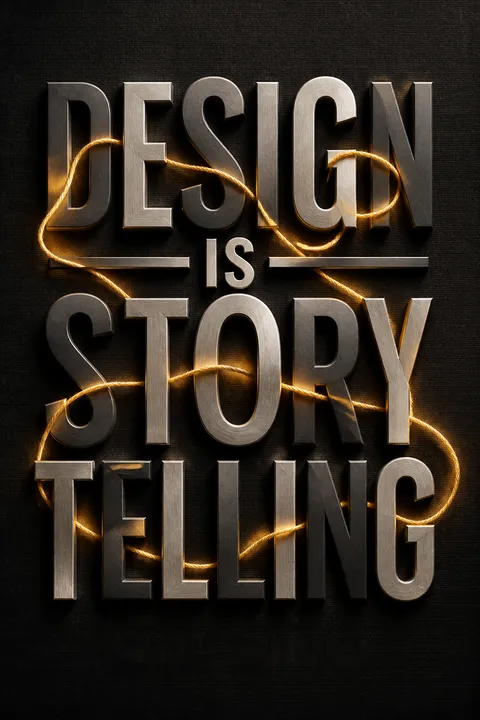


Key Takeaways
Treat designed objects as stories unfolding through use.
Design carries a point of view. A subway sign does more than direct passengers. New York’s clean type and colored route markers also projected a vision of orderly, reliable public life. The signs made a transportation system feel coherent, not merely navigable. Later, designer Yves Béhar adapted their dot-and-color language for free condom packaging, connecting the visual system to a city of movement, intimacy, and risk.
Use is part of the story. A design can communicate through its materials, setting, sequence, and the actions it invites. A product, building, or poster is not just a solution to a brief. It gives people a scene to enter, interpret, and remember.
The book’s useful provocation is that design always communicates more than intended function. A public sign can signal who belongs, what deserves trust, and what kind of institution is speaking. That makes storytelling a practical way to notice hidden values in ordinary objects. It also raises a discipline for designers: meaning cannot be controlled like a script. People bring different histories and associations, so a design’s story is negotiated between maker, object, and user.
Map user actions as dramatic arcs, not static screens.
Build toward resolution. A narrative arc is the shape of action over time: a situation begins, tension or obstacles develop, and the action reaches a consequential ending. The book draws on Gustav Freytag’s model of exposition, rising action, climax, falling action, and conclusion. In design, the same logic can clarify the steps of opening an account, finding a service, or using an app. Each step should move the user toward a goal rather than feel like an isolated screen.
Give actions a reason. A story becomes dull when nothing changes or when its main problem disappears without effort. Designers can ask what question an experience raises, what makes the answer uncertain, and what counts as a satisfying finish. A confirmation sound or clear completion message can close a small action.
Narrative structure is valuable because it forces teams to consider sequence, expectation, and closure, elements that static mockups can hide. It also provides a shared language for discussing where an experience loses momentum. The analogy has limits: not every user wants suspense, and many tasks should be quick, predictable, and repeatable. The arc is best treated as a planning lens, not a mandate to dramatize routine or add friction for theatrical effect.
Storyboard the user's transformation before polishing the interface.
Draw the change. A storyboard is a short sequence of images that makes an action understandable. It helps designers decide how a situation begins, what the user wants, what gets in the way, and what changes by the end. The book recommends reducing a story to a handful of frames, including six, before refining the visuals. One example contrasts a passive chicken struck by a truck with a more active protagonist who halts traffic and guides chicks to safety. The stronger version gives the character agency and makes the outcome matter.
Use three as a quick structure. The rule of threes can make instructions or stories feel easy to grasp: a setup, a development, and a payoff. But the promised simplicity must match the real task. Hiding extra work behind a three-step graphic creates distrust.
Storyboards make consequences visible early, when changing a concept is cheaper than revising finished screens or products. They are also a compact empathy tool: the person in the frame must encounter a real context, not merely operate an abstract feature. The chicken example makes agency central, but designers should avoid assuming every user can overcome a bad system through individual cleverness. Sometimes the strongest design changes the road, not the protagonist.
Use plausible futures to expose assumptions hiding inside today's choices.
Explore more than one future. Scenario planning uses structured stories about possible futures to help organizations reason beyond current expectations. The cone of plausibility starts with the present and widens toward futures that are less certain. A scenario matrix can then pair two uncertain forces and imagine the outcomes in four combinations. The method does not predict what will happen. It reveals how present decisions might matter under different conditions.
Make speculation tangible. Design fiction uses imagined products or prototypes to examine possible futures and their implications. A fictional future garment might offer health benefits while also enabling surveillance. Such an object gives a team something concrete to debate. The point is not always to invent a product for sale, but to make an emerging tension easier to see and discuss.
These methods turn uncertainty from a forecasting problem into a design resource. A team that considers several futures is less likely to confuse its preferred outcome with the inevitable one. Fictional artifacts can make abstract policy questions discussable by showing how they might enter daily life. The caution is that vivid scenarios can still reflect the designers’ blind spots. Including affected communities helps distinguish a genuinely useful possibility from a polished fantasy.
Design the route, not just the product at its destination.
Treat a service as a journey. The hero’s journey is a recurring story pattern in which someone leaves familiar conditions, faces trials in an unfamiliar world, and returns changed. The book uses this pattern to examine places that guide people through a sequence. An IKEA visit, for instance, leads shoppers from staged rooms to a marketplace and then to a warehouse. The route can feel like a labyrinth: a long, guided path that is disorienting without being a puzzle of dead ends.
Stage the whole experience. The experience economy describes offerings designed around memorable events, not only goods or services. At Chipotle, customers watch and help assemble a meal. The transparent sequence gives them a role; a less clearly organized wait can leave customers passive. Layout, staffing, language, and pace all shape the experience.
Mapping the route reveals that a service is made of transitions, waits, choices, and handoffs, not just its central transaction. This is especially useful when a business optimizes its own operations while overlooking how the process feels to customers. Yet participation is not universally desirable. Some people enjoy choosing ingredients; others want a quick, private handoff. Good journey design offers meaningful control without mistaking forced participation for engagement.
Shape emotional peaks and endings, not just friction-free steps.
Track how feelings change. An emotional journey is the pattern of feelings a person experiences while completing a task. A user may begin with hope, meet confusion or frustration, and leave satisfied or disappointed. Mapping these shifts helps teams identify pain points as well as moments worth preserving. The book adapts Kurt Vonnegut’s hand-drawn story graphs to experiences such as finding a course or using a service.
Design the finish. The peak-end rule describes how the most intense moment and the ending can strongly influence a person’s overall memory of an experience. In one pain study, participants preferred a longer procedure that ended with a less unpleasant sensation to a shorter one that stopped at its worst. For designers, a clear, reassuring finish can help make effort feel complete.
This approach corrects a narrow view of usability in which every moment is reduced to friction. Some pauses create anticipation, and a small effort can make a reward feel earned. Memory, however, is not a perfect record of the journey, so an emotionally strong ending cannot excuse serious failures earlier in the process. Journey maps work best when they represent users’ actual experiences, including variation across people, rather than an idealized emotional curve.
Let users teach you what the design problem really is.
Build with people, not guesses. Co-creation is a design process in which users contribute knowledge, judgments, and ideas while a solution is being developed. Designers might use interviews, diaries, sketches, or group exercises to understand a task from the user’s perspective. When Deborah Adler redesigned catheter packaging, nurses showed her that the tools needed to follow the order of use. She also learned that patients were discarding the instructions, so she made them feel more personal and worth keeping.
Represent different needs. A persona is a research-informed archetype that helps a team consider a particular user’s goals, abilities, and constraints. Multiple personas, including people with disabilities or unusually deep expertise, can expose needs hidden by an imagined average user. Personas should summarize real observations, not replace contact with real people.
Co-creation changes users from sources of feedback into experts on the circumstances a design must serve. The catheter example shows how a seemingly small material choice can affect whether crucial information is noticed. Personas help keep distinct needs present during decisions, but they can harden into stereotypes if teams treat a fictional profile as evidence. The strongest use combines concise archetypes with continued observation and conversation.
Direct attention with visual hierarchy, not visual noise.
Shape what stands out. The gaze is the active movement of looking, searching, and selecting information. People do not absorb a page all at once; they move between points of interest. Gestalt principles describe how the mind groups visual elements into perceived wholes. Proximity can make nearby items seem related, while similarity, continuity, and figure-ground contrast help separate groups or create a path. Designers use these patterns to make a map, poster, or screen easier to scan.
Give attention a purpose. Strong hierarchy helps someone find a needed item without forcing them to inspect every element. The book notes that users often ignore irrelevant or generic imagery. A striking picture may attract a glance, but it can also distract from the task. Visual interest should support the information people came to find.
Visual hierarchy is a form of resource allocation: it decides what receives a person’s limited attention and what remains peripheral. Gestalt principles explain why small changes in spacing or contrast can reorganize the meaning of a whole page. The ethical question is not simply whether a design captures attention, but whether it earns that attention. A conspicuous cue can clarify a choice, or manipulate someone into overlooking another one.
Make controls obvious and nudges ethically defensible.
Make action legible. An affordance is a feature that invites or enables an action. A button suggests pressing; a lever suggests moving. Digital interfaces borrow such cues from physical objects, while familiar patterns can persist even after their original technical reason disappears. The QWERTY keyboard, for example, remains familiar despite its roots in mechanical typewriters.
Treat influence as responsibility. Choice architecture means designing the conditions in which people make decisions. Defaults, portion sizes, colors, and the order of options can shift behavior. The book describes how people often accept preselected options and may eat more when portions appear larger. Such cues can help people make beneficial choices, but deceptive tactics, such as hiding cancellation controls or disguising ads, undermine consent.
A well-designed control reduces the gap between intention and action; a well-designed default can also make a beneficial choice easier without demanding constant attention. That is real power, and power makes transparency essential. Designers should ask who benefits from a nudge, whether the person can notice it, and how easily the choice can be reversed. Predictability is not enough if the interface quietly steers users toward the organization’s interests.
Design for touch, smell, sound, and color, not sight alone.
Combine the senses. Multisensory design considers how sight, sound, touch, smell, taste, and bodily movement work together in an experience. A cup of coffee communicates through its logo and shape, but also through its warmth, weight, rim, and material. Those sensations influence how the drink feels and what the brand seems to promise. Packaging, controls, and spaces can support people who rely on senses beyond vision.
Use color with context. Color can carry cultural meanings and influence expectations. In a wine-tasting study, experts used words associated with red wine to describe white wine after it had been dyed red. Color can therefore shape perception, not merely decorate an object. Green packaging may suggest environmental care, but that impression alone does not make a product sustainable.
The sensory approach makes design bodily rather than merely visual. It explains why two technically identical products can feel different when weight, texture, or color changes. It also broadens accessibility: a package legible by touch can support users who cannot rely on printed labels alone. Sensory effects remain contextual, however. Color associations vary across cultures, and pleasant cues can become misleading when branding promises qualities the product does not deliver.
Analysis
Design Is Storytelling makes a compelling case that design is not a static arrangement of forms but an encounter unfolding across time. Its three-part progression, action, emotion, and sensation, moves from what a person does, to how the experience feels, to how perception guides the encounter. This structure gives designers a practical way to connect narrative theory with everyday work, from service flows and packaging to exhibitions and interfaces.
The central metaphor is especially useful because stories make sequence and consequence visible. A user does not encounter a service as an organizational chart; the user experiences a succession of moments, expectations, and decisions. Storyboards and journey maps help teams model these moments before committing to a finished solution. Scenario planning extends the same logic into uncertain futures, while co-creation keeps imagined users from becoming mere characters in a designer’s private script.
The metaphor also has limits. Not every experience needs a dramatic arc, and people rarely follow a single planned path. A designed journey can guide, but over-guidance can become coercive. Likewise, emotional cues and behavioral nudges may improve clarity or accessibility, yet can be deployed to steer attention for commercial advantage. The book’s most durable implication is therefore not that every design should tell a tidy story. It is that designers should account for the actions, interpretations, sensations, and values their work enables.
That perspective makes storytelling both a creative method and a form of accountability. Designers can ask whose goals shape the plot, who has agency, which obstacles are necessary, and whether the ending serves the user as well as the institution. The result is a richer standard for good design: not only does it function, it gives people an understandable, meaningful, and ethically defensible experience.
Review Summary
Design Is Storytelling receives generally positive reviews, with an average rating of 3.97 out of 5. Readers appreciate its visual appeal, practical examples, and accessible introduction to storytelling in design. Many find it useful for beginners or those seeking creative inspiration. Some criticize its lack of depth for experienced designers. The book's structure, covering action, emotion, and sensation, is praised for its clarity. Readers highlight its value in providing vocabulary for communicating design concepts and its potential as a reference tool for various design fields.
People Also Read


Glossary
Narrative arc
Action shaped over timeA narrative arc is the changing shape of a story from its setup through developing action to a consequential ending. In design, it can help teams organize a user experience around a goal, obstacles, and resolution. The model makes sequence visible, helping designers see where anticipation, confusion, or completion occurs.
Hero's Journey
A quest and returnThe Hero's Journey is a recurring story pattern in which a protagonist leaves familiar circumstances, enters an unfamiliar world, faces trials, and returns with changed understanding. Designers can use it to think about how a person moves through a product, service, or place, while recognizing that a guided path should not become a trap.
Scenario planning
Stories about possible futuresScenario planning is a method for exploring several plausible futures rather than predicting a single outcome. Teams identify forces that could shape a situation, combine uncertainties into alternative scenarios, and consider how present choices might play out. The method helps challenge assumptions and consider futures beyond business as usual.
Design fiction
Speculative objects for debateDesign fiction uses imagined products, prototypes, or interfaces to explore possible social and technological futures. These artifacts may suggest promising possibilities or unsettling consequences. Rather than serving only as concepts for production, they make abstract questions tangible and give teams or communities something specific to examine.
Emotional journey
Feelings across an experienceAn emotional journey is the sequence of feelings associated with a person’s interaction with a product, service, or place. Designers map emotional changes alongside the steps of an experience to identify frustration, uncertainty, satisfaction, and other responses. The map can reveal both problems to address and moments that create lasting positive memories.
Peak-end rule
Peak and ending shape memoryThe peak-end rule describes how judgments of an experience can be influenced strongly by its most intense moment and by how it ends. In design, this encourages attention to moments of high emotional impact and to the conclusion of a task. It does not mean that a good ending can erase serious failures throughout the experience.
Co-creation
Users help shape solutionsCo-creation involves users as active contributors to the design process. Through observation, interviews, diaries, workshops, or idea-generation exercises, users share knowledge about their routines, needs, and constraints. Their participation helps designers understand the context of a problem and consider solutions that may not emerge from expert assumptions alone.
Persona
Research-based user archetypeA persona is an archetype representing a particular set of user goals, abilities, circumstances, and behaviors. Design teams use personas to consider how different people might experience a product or service. Useful personas are based on observation and research; they support thinking but should not be treated as substitutes for contact with actual users.
Gestalt principles
Rules of visual groupingGestalt principles describe ways people organize visual elements into meaningful groups and wholes. Proximity, similarity, continuity, closure, and figure-ground relationships can affect how a viewer reads a page, map, pattern, or interface. Designers use these principles to establish hierarchy, clarify relationships, and guide attention.
Affordance
A cue for possible actionAn affordance is a feature of an object or interface that enables or suggests an action. A handle invites pulling, while a button invites pressing. Affordances can be physical or digital, obvious or learned. Their usefulness depends on whether people can perceive what action is possible and understand what will happen when they take it.
Choice architecture
Structure around decisionsChoice architecture is the design of the context in which people make decisions. It includes the order and presentation of options, defaults, and other cues that can influence behavior. Because these choices can steer users, designers should consider who benefits, whether the influence is clear, and whether people can choose differently.
Experience economy
Memorable staged offeringsThe experience economy describes an economic approach that treats memorable events as a distinct offering, beyond raw materials, goods, or services. Businesses and institutions shape sequences of activity, sensory cues, and social interaction to create personal experiences. The concept draws attention to how setting and participation can add meaning to an otherwise ordinary transaction.
Multisensory design
Design across bodily sensesMultisensory design considers how vision, hearing, touch, smell, taste, and bodily movement combine to shape an experience. A product’s material, temperature, sound, or scent can change how it is used and remembered. This approach can also improve access by giving people more than one way to perceive and operate a design.
FAQ
What's "Design Is Storytelling" about?
- Narrative Techniques in Design: The book explores how designers can use storytelling techniques to create engaging graphics, products, services, and experiences.
- Psychology of Perception: It examines the psychology of visual perception from a narrative perspective, helping designers understand how to lead users on dynamic journeys.
- Practical Tools and Concepts: Ellen Lupton provides a toolkit of methods and concepts to amplify the narrative power of design work.
- Educational Resource: The book includes prompts for students and teachers, making it a valuable resource for design education.
Why should I read "Design Is Storytelling"?
- Enhance Design Skills: The book offers practical insights into using storytelling to enhance the effectiveness and engagement of design projects.
- Understand User Experience: It provides a deeper understanding of how narrative elements can influence user experience and perception.
- Inspiration for Creativity: The book is filled with examples and illustrations that can inspire creative thinking and innovation in design.
- Educational Value: With its structured approach, it serves as a useful guide for both novice and experienced designers looking to improve their craft.
What are the key takeaways of "Design Is Storytelling"?
- Storytelling in Design: Design is not just about aesthetics; it's about creating a narrative that engages users emotionally and intellectually.
- User-Centered Approach: Understanding the user's journey and emotional experience is crucial for effective design.
- Multisensory Engagement: Good design engages multiple senses, not just sight, to create a more immersive experience.
- Practical Application: The book provides actionable tools and methods that designers can apply to their projects immediately.
How does Ellen Lupton define storytelling in design?
- Narrative Arc: Lupton emphasizes the importance of a narrative arc, which includes a beginning, middle, and end, to guide the user's experience.
- Emotional Engagement: Storytelling in design should evoke emotions and create memorable experiences for users.
- Action and Interaction: Design should prompt users to take action and interact with the product or service in meaningful ways.
- Cultural and Contextual Relevance: Effective storytelling considers the cultural and contextual background of the target audience.
What is the "Hero's Journey" in design according to Ellen Lupton?
- Classic Narrative Structure: The Hero's Journey is a narrative pattern that involves a hero who goes on an adventure, faces a crisis, and returns transformed.
- Application in Design: Designers can use this structure to map out user experiences, ensuring that they are engaging and transformative.
- Emotional Peaks and Valleys: The journey includes emotional highs and lows, which can be mirrored in the user's interaction with a design.
- Guiding User Experience: By applying the Hero's Journey, designers can create a more compelling and cohesive user experience.
What role does emotion play in design as discussed in "Design Is Storytelling"?
- Emotional Intelligence: Designers need to understand and harness emotions to create designs that resonate with users.
- User's Emotional Journey: Mapping out the emotional journey of users helps in anticipating friction points and offering rewards.
- Empathy in Design: Building empathy with users is crucial for creating solutions that enhance their lives and meet their needs.
- Temporal Nature of Emotion: Emotions change over time, and design should accommodate these shifts to maintain user engagement.
How does "Design Is Storytelling" address the concept of multisensory design?
- Beyond Visuals: Multisensory design incorporates all senses, not just sight, to create a richer user experience.
- Flavor and Texture: The book discusses how elements like flavor and texture can influence perception and engagement.
- Empathic Design: Designers are encouraged to consider how people with different abilities experience their designs.
- Practical Examples: The book provides examples of how multisensory elements can be integrated into everyday products and services.
What is the significance of the "Experience Economy" in design?
- Shift from Products to Experiences: The Experience Economy emphasizes creating memorable events rather than just selling products.
- Theatrical Engagement: Design is seen as a form of theater, where users are engaged in a narrative performance.
- User Participation: Modern experiences are participatory, with users playing active roles in shaping the narrative.
- Economic Value: Experiences add value to products, making them more desirable and often more expensive.
How does Ellen Lupton suggest using color in design storytelling?
- Emotional Triggers: Color is a powerful tool for evoking emotions and setting the mood in design.
- Cultural Significance: Different colors have different meanings across cultures, which designers must consider.
- Color Scripts: Similar to film, color scripts can be used to map out the emotional journey of a design project.
- Practical Application: The book provides guidance on using color to enhance the narrative and emotional impact of a design.
What are some practical tools and methods from "Design Is Storytelling"?
- Narrative Arc and Storyboards: Tools like narrative arcs and storyboards help designers plan and visualize the user journey.
- Emotional Journey Maps: These maps help designers understand and anticipate the emotional highs and lows of user interactions.
- Scenario Planning: This method allows designers to explore different future scenarios and their potential impact on design.
- Co-Creation and Empathy: Engaging users in the design process through co-creation activities builds empathy and leads to better solutions.
What are the best quotes from "Design Is Storytelling" and what do they mean?
- "Design is an art of thinking ahead and predicting possible futures." This quote emphasizes the proactive nature of design, where anticipating user needs and future trends is crucial.
- "A great story does more than represent emotion from a distance. It makes us feel an emotional charge." This highlights the importance of creating designs that evoke genuine emotions rather than just depicting them.
- "Good design connects people through shared experience." This underscores the role of design in fostering connections and building community through common narratives.
- "Designers today produce more than logos and cereal boxes; they create situations that stimulate the mind and body over time." This reflects the expanded role of designers in creating immersive and engaging experiences.
How can "Design Is Storytelling" be used in a classroom setting?
- Educational Prompts: The book includes prompts and exercises that can be used to teach design students about storytelling techniques.
- Project-Based Learning: Students can apply the book's concepts to real-world projects, enhancing their practical skills.
- Discussion and Analysis: The book's content can serve as a basis for class discussions on the role of narrative in design.
- Resource for Teachers: It provides a structured approach to teaching design, making it a valuable resource for educators.
About the Author
Other books by Ellen Lupton

Download PDF
Download EPUB
.epub digital book format is ideal for reading ebooks on phones, tablets, and e-readers.








