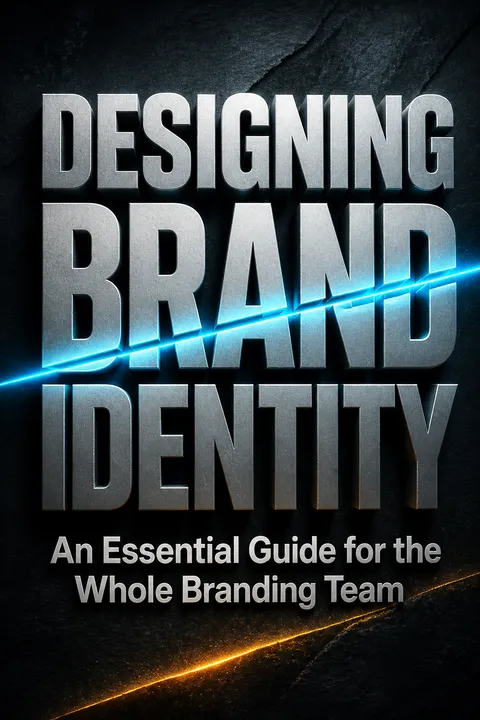


Key Takeaways
Treat the logo as evidence of a brand, not the brand itself.
Perception comes first. A brand is the impression people form about a company, product, or service. The organization can express what it hopes to mean, but customers, employees, and other stakeholders help decide what it actually means. Brand identity is the tangible system people encounter through names, symbols, colors, language, products, and service. It makes an otherwise abstract reputation easier to recognize and remember.
Identity earns its keep. A recognizable brand helps people navigate choices, feel more confident about a purchase, and identify with what they choose. The book stresses that identity is not just a logo: it unifies many separate expressions into a system. A striking mark cannot compensate for an experience that contradicts the impression it is meant to create.
The distinction between reputation and expression is useful because it separates what an organization controls from what it merely hopes to influence. A logo is a signal, while the audience's accumulated experience supplies its meaning. This is closely related to user experience design: an interface may promise simplicity, but the user's actual interaction is the test. The framework also limits magical thinking about redesign. A visual refresh can clarify an existing strength, but it cannot manufacture trust where products or conduct repeatedly undermine it.
Win a distinct place in customers' minds before designing the mark.
Positioning finds the opening. A company needs a reason to be chosen that customers can understand and competitors cannot easily claim. The book describes positioning as the place a brand occupies in a customer's mind, shaped by the offer, price, communication, distribution, and competitive context. The opportunity may come from changing expectations, a new audience, or an overlooked market need, not from making the logo louder.
The category can be reframed. Walmart competes through low prices, while Target sets itself apart by pairing value with design appeal. Sneakers moved from basic athletic footwear toward symbols of health and personal style. These examples show that differentiation often changes what a product means, and what customers consider worth paying for. A brand should demonstrate its difference in the experience, not merely announce it.
Positioning is strongest when it connects an internal capability to a customer priority. That makes it more than a clever sentence: it becomes a filter for product choices, pricing, and communication. The Target comparison is instructive because the contrast is not simply visual. It points to different definitions of value. Yet a distinct position is not automatically a durable advantage. Competitors can imitate visible features, and customer priorities can shift. The strategic test is whether the organization can keep delivering the distinction that made its position credible.
Research what people do, not only what leaders say.
Look beyond the boardroom. The research phase combines interviews, existing business documents, customer studies, and audits of marketing, competitors, language, and intellectual property. Interviewing leaders clarifies ambitions and constraints, but customers, employees, partners, and the public may see the organization differently. Experiencing the product or service from a customer's point of view can reveal problems that polished presentations conceal.
Behavior sharpens the picture. The book distinguishes stated preferences from observed use. Usability testing watches people attempt real tasks, exposing confusion and friction that a survey may miss. At Danish pharmacies, observation and interviews helped the team see that people could relate to the pharmacy as a place for health, not only a destination for medicine. That insight helped shift the experience and identity toward health maintenance.
The strongest research practice here is triangulation: comparing what leaders intend, what customers report, and what people actually encounter. Each source corrects the blind spots of the others. This resembles ethnographic work in anthropology and field research in product design, where context matters as much as stated opinion. Still, observation is not a neutral window. Researchers choose what to watch, whose behavior counts, and how to interpret it. Good research therefore does not replace judgment. It makes the assumptions behind judgment more visible and contestable.
Give the whole organization one clear idea to act out.
Strategy needs a usable center. A brand strategy aligns the organization's vision, business direction, values, and understanding of customers. Its central idea should be simple enough to explain across departments, yet substantial enough to guide decisions. The book calls this shared center a big idea: a unifying concept that informs behavior and communication, not merely a slogan for advertising.
Put agreement on paper. A brand brief records the essential choices, including audience, value offered, competitive advantage, and desired character. Wheeler recommends making it concise, often diagrammatic, and getting senior decision makers to approve it before visual exploration begins. GE's purpose was framed as imaginative problem solving, while Moroccan telecom company Wana built its offer around giving customers more control. In both cases, a clearly expressed idea could guide choices beyond the campaign.
A shared strategic idea works like an organizational decision rule. It reduces the need to debate every application from scratch and lets people in different functions make choices that still feel related. That is especially valuable in large organizations, where marketing cannot personally supervise every interaction. Concision, however, creates a danger: a memorable phrase can sound resolved before the hard trade-offs are. A useful brief should make priorities and exclusions clear, so that employees know not only what the brand favors, but what it will decline.
Design a recognizable visual language, not a lonely symbol.
Recognition is a system. Brand identity can include a name, logotype, symbol, color, typography, imagery, motion, and sound. The book describes a common sequence in which people register shape, then color, then written content. A distinctive visual cue can therefore aid recognition before someone reads the name, but no single mark can express an entire organization.
Meaning gathers through use. A mark may be a word, letterform, recognizable picture, abstract symbol, or emblem that combines name and image. Its associations strengthen through repeated, consistent encounters. The ACLU, for example, returned to the Statue of Liberty, an earlier symbol in its history, and adapted it within a broader identity system. The choice connected a recognizable image to institutional heritage and values, while other materials helped tell the fuller story.
Visual identity operates as a compact memory aid, but recognition and understanding are not the same thing. A familiar color or shape may identify a source without explaining what that source does or believes. The ACLU example works because the symbol gains context from history and a larger communications system. This also suggests a practical design principle: test identity elements at realistic sizes, settings, and speeds of use. A beautiful mark that disappears on a phone screen, a package, or a street sign has failed a functional test, regardless of its conceptual elegance.
Make every customer encounter feel related, without making it identical.
Every contact contributes. A touchpoint is any occasion when someone encounters the organization, from an advertisement or website to a product, invoice, store, or service conversation. Each one can reinforce or weaken the intended impression. The book argues for coherence: experiences should feel like they come from the same organization, even when they use different formats or serve different needs.
Consistency can still move. Vueling, a Spanish low-cost airline, carried its informal personality through staff interactions, online booking, onboard messages, and service details. Tate used changing wordmarks to unite four distinct galleries without making them visually identical. These cases show that standards need both reliable anchors and room for local expression. A brand system should make the next application easier to create while leaving enough flexibility to fit the actual context.
This is a design problem of controlled variation. Too little consistency makes an organization hard to recognize; too much makes it feel mechanical or insensitive to context. The useful question is not whether every touchpoint looks the same, but which underlying cues must remain stable for people to understand the relationship. In service design, the most memorable moments may be human interactions rather than designed artifacts. Standards therefore need to guide behavior and operational decisions, not only the appearance of brochures and screens.
Choose names and brand structures that leave room to grow.
Names are working assets. A name appears in speech, search, legal documents, packaging, and memory. Effective names should be distinctive, understandable, positive in the markets served, and capable of lasting as the business changes. Naming is not simply a creative brainstorm: candidates need linguistic, cultural, and legal screening, followed by testing in realistic contexts. The book warns that an available web address alone does not establish trademark protection.
Organize the portfolio deliberately. Brand architecture is the hierarchy connecting a parent company to its divisions, products, and services. A strong master brand can simplify choice; separate product brands can speak to different audiences; an endorsed approach can combine product identity with parent credibility. FedEx brought several operating companies under a shared name and used service descriptors to clarify what each did, giving customers a more coherent view of a complex business.
Naming and architecture are forms of information design. They help people infer what belongs together, what differs, and where to look next. They also constrain future strategy: a narrow descriptive name can become awkward when the business expands, while a vague name may require expensive explanation. Architecture should therefore be judged from both the company's and the customer's perspective. A structure that looks elegant on an internal organization chart can still confuse buyers. Legal review and customer comprehension are separate tests, and a credible naming process needs both.
Make public values visible in products, sourcing, and employee behavior.
Values need evidence. A brand's claims become believable when they shape how the organization operates. The book presents sustainability as a business concern involving people, the environment, and profit, rather than a decorative message. Aveda connected its Uruku makeup line to collaboration with the Yawanawa community and used recycled materials in its packaging. Herman Miller linked environmental commitments to product design, recycling, facilities, and internal goals.
Visibility raises the stakes. Social media gives customers and employees channels to share both praise and disappointment. That makes a gap between a company's claims and its conduct harder to contain. Certification marks can help customers assess products, but only when their standards are meaningful and understandable. The practical lesson is to make a promise that operations can support, then communicate the proof clearly rather than relying on a green color palette or a charitable association.
Values-based branding is most persuasive when it changes decisions that carry costs, not just messages that carry emotional appeal. Product materials, supply relationships, and employee practices provide more concrete evidence than a campaign alone. This creates a useful connection to governance: a brand promise can function as a public standard against which stakeholders evaluate conduct. There is also a real risk of overclaiming. A single responsible product does not prove that an entire company is sustainable. Clear scope and measurable commitments protect both credibility and the audience's ability to judge progress.
Launch inside first, then govern the system with standards and measures.
Creation is the midpoint. Wheeler organizes the work as a progression from research, to strategy, to identity design, to applications, and finally to ongoing management. The process is meant to protect decisions from being rushed or reduced to personal taste. Small decision-making groups, clear responsibilities, documented approvals, and real-world application tests help teams move without turning every choice into a vote.
Employees make the identity live. Internal communication should explain what the change means and how staff can act on it before external rollout. Standards, templates, online resources, and named brand champions help people use the system consistently. The ACLU persuaded 49 of 50 affiliates to adopt a unified identity, supported by training and practical materials. Measures can track recognition, customer behavior, employee engagement, and implementation efficiency, though the effect of a new identity is difficult to isolate from other business changes.
The process is valuable because it treats implementation as organizational change, not a file handoff. Employees need enough understanding and authority to apply the identity in situations no manual anticipated. The ACLU example shows how practical support can help a distributed organization coordinate without relying on visual rules alone. Measurement deserves particular care: easier production or higher awareness may be useful signals, but neither proves that customers trust the organization or that the offer has improved. The strongest evaluation combines operational measures with evidence about real customer experience.
Analysis
Designing Brand Identity is best understood as a manual for coordinating meaning across an organization. Its subject is not primarily the logo, but the chain of choices that connects business purpose to customer experience: what the company offers, how it explains that offer, how people encounter it, and how the organization preserves coherence as it grows. The book's central contribution is to make this chain operational. It gives strategists, executives, researchers, designers, legal specialists, and internal teams a shared vocabulary and a sequence for working together.
That practical structure is also the source of a tension. Formal process can protect thoughtful work from arbitrary preferences, yet branding includes judgment that cannot be reduced to a checklist. Research may identify customer needs, but leaders still decide which needs to prioritize. Standards can preserve recognition, but rigid enforcement can suppress useful local adaptation. A strong program therefore needs both constraints and accountable discretion: clear principles, named decision makers, and ways to learn from actual use.
The case studies reinforce that identity gains force when it accompanies a substantive change. Apotek reframed its role around health, Vueling translated its personality into service behavior, and Herman Miller connected environmental aims to products and operations. These are more persuasive than visual novelty because the design makes organizational choices easier to perceive. Conversely, a mark cannot rescue a weak offer or unreliable service. The book's most durable lesson is that design amplifies a strategy and makes it legible, but the organization must supply the evidence.
The book dates from a period when websites and social media were becoming central branding forces, so some examples and media assumptions belong to that moment. Its larger method remains useful because channels change faster than the underlying coordination challenge. Organizations still need to know what they stand for, whom they serve, how they differ, and whether each encounter makes those answers more credible.
Review Summary
Reviews of Designing Brand Identity are mixed. Many praise it as a comprehensive guide to branding, with valuable insights and examples. However, some criticize the writing style as dry and jargon-heavy, making it difficult to read. The book's organization and extensive use of lists and quotes receive both praise and criticism. While some find it an excellent reference for branding professionals and students, others argue it lacks depth and practical guidance. Overall, it's viewed as a visually appealing but sometimes overwhelming resource on brand identity.
People Also Read







Glossary
Brand identity
Tangible expression of a brandThe recognizable system through which an organization expresses its brand. It can include names, symbols, typography, color, imagery, language, products, and other sensory or behavioral elements. Unlike reputation, which exists in people's perceptions, identity consists of designed expressions intended to build recognition, convey meaning, and create a coherent impression across different contexts.
Brand architecture
Hierarchy of related brandsThe system that organizes the relationship among a parent organization, its divisions, products, and services. It determines which names and identities are shared, which remain distinct, and how the relationships are shown to customers. A deliberate architecture can make a complex portfolio easier to understand and support growth, acquisitions, and marketing decisions.
Brandmark
Visual identifierA designed visual symbol used to identify an organization, product, or service. Brandmarks can be based on words, letters, recognizable pictures, abstract forms, or combinations of a name and image. They are one element of a broader identity system, not a complete substitute for the brand's strategy, reputation, language, or customer experience.
Touchpoint
Brand encounterAny point at which a person comes into contact with an organization or its offer. Examples include a website, advertisement, product package, store, sign, invoice, or conversation with an employee. Each touchpoint can shape awareness and perception, so teams design them to support a consistent experience while accounting for the needs of the specific context.
Brand brief
Concise strategic referenceA short document that records the essential choices guiding a brand initiative. It typically summarizes the vision, audience, value proposition, competitive advantage, brand attributes, and key stakeholders. Agreement on the brief gives executives and creative teams a shared reference before design begins and helps prevent the project from drifting into disconnected preferences.
Sequence of cognition
Order of visual recognitionThe book's model for how people process visual identity: they register shape first, color next, and written content after that. The model explains why distinctive forms and colors can support fast recognition before a viewer reads a name. It also underscores the importance of testing identity elements in actual media, where size and reproduction affect perception.
Triple bottom line
People, planet, profitA business model that considers social and environmental effects alongside economic performance. In the book, this idea represents a broader account of organizational success than shareholder value alone. It connects a brand's public commitments to decisions about products, materials, suppliers, employees, communities, and profitability, making operational behavior part of what the brand communicates.
FAQ
What's Designing Brand Identity about?
- Comprehensive Guide: Designing Brand Identity by Alina Wheeler is a detailed resource for understanding the branding process, covering everything from brand basics to advanced strategies.
- Target Audience: It is designed for CEOs, brand strategists, designers, and marketing professionals, providing a shared vocabulary and framework for effective branding.
- Structured Approach: The book is organized into three main parts: fundamental concepts, a universal brand identity process, and best practices, making it easy to navigate through branding complexities.
Why should I read Designing Brand Identity?
- Expert Insights: Alina Wheeler offers practical advice and insights from her extensive branding experience, with contributions from various branding experts.
- Actionable Strategies: The book provides strategies applicable to real-world branding challenges, emphasizing understanding customer needs and market dynamics.
- Visual Examples: Rich with visual examples and case studies, it illustrates successful branding efforts, aiding in concept comprehension and application.
What are the key takeaways of Designing Brand Identity?
- Brand Basics: Understanding brand, brand identity, and branding is crucial for building customer relationships, with clear definitions and significance explained.
- Brand Strategy Importance: A strong brand strategy is essential for differentiation in a crowded marketplace, emphasizing clarity in positioning and messaging.
- Process Framework: Wheeler outlines a universal brand identity process, including research, strategy clarification, design, and asset management for a systematic approach.
What is the brand identity process outlined in Designing Brand Identity?
- Five Phases: The process includes conducting research, clarifying strategy, designing identity, creating touchpoints, and managing assets, each building on the previous.
- Research and Analysis: Gathering insights about the organization, market, and competitors forms the foundation for strategy and design decisions.
- Implementation and Management: Focuses on implementing brand identity across touchpoints and managing the brand over time to ensure relevance and effectiveness.
What are some best practices for branding mentioned in Designing Brand Identity?
- Consistency is Key: Maintaining a consistent brand message across platforms is crucial for building trust and recognition.
- Engage Stakeholders: Involving key stakeholders in the branding process leads to better outcomes, with their insights and buy-in essential for success.
- Adaptability: Brands must evolve with changing market conditions, staying relevant by adapting strategies and identities as needed.
How does Designing Brand Identity define brand identity?
- Tangible Elements: Brand identity includes tangible elements like logos, colors, and typography, designed to evoke specific emotions and associations.
- Unified System: It is a system integrating various components to create a cohesive image, reflecting the brand's values and mission.
- Recognition and Differentiation: A strong brand identity fuels recognition and helps differentiate a brand in the marketplace.
What are some common branding mistakes to avoid according to Designing Brand Identity?
- Lack of Research: Failing to conduct thorough research can lead to misguided branding efforts, stressing the importance of understanding the market and customer needs.
- Inconsistency: Inconsistent messaging and visual elements can confuse customers and dilute brand equity, advising a unified approach.
- Ignoring Feedback: Not listening to customer feedback can hinder a brand's ability to adapt and grow, emphasizing responsiveness to audience perceptions.
What are the best quotes from Designing Brand Identity and what do they mean?
- "Design is intelligence made visible.": Highlights that effective design communicates complex ideas clearly, shaping perceptions and experiences.
- "A brand is a person's gut feeling about a product, service, or company.": Emphasizes the emotional connection brands create, going beyond logos and marketing to build trust and relationships.
- "It is never too late to be what you could have been.": Encourages brands to evolve and reinvent themselves, embracing change and pursuing their vision.
How does Designing Brand Identity address the role of social media in branding?
- Brand Engagement: Social media transforms brand-customer engagement, highlighting the importance of authentic interactions and community building.
- Real-Time Feedback: Provides immediate audience feedback, allowing quick adjustments and improvements to branding strategies.
- Content Creation: Emphasizes creating compelling content that resonates with audiences, reflecting brand identity and values while encouraging sharing.
What is the five-phase process outlined in Designing Brand Identity?
- Research and Analysis: Gathering insights about the market, competitors, and target audience to inform subsequent phases and identify differentiation opportunities.
- Brand Strategy Development: Defining the brand's mission, vision, and values, guiding design and implementation of brand identity.
- Design Development: Creating visual elements like logos and color palettes that reflect the brand's personality and resonate with the audience.
How does Designing Brand Identity address brand management?
- Ongoing Brand Governance: Emphasizes managing brand identity over time, including regular audits and updates to ensure relevance and alignment with goals.
- Creating Brand Champions: Discusses the role of employees as brand ambassadors, fostering a culture of ownership and advocacy.
- Measuring Brand Performance: Suggests using metrics to assess branding effectiveness, aiding informed decisions about brand strategy.
How can I apply the concepts from Designing Brand Identity to my business?
- Conduct a Brand Audit: Assess current brand identity effectiveness, identifying strengths, weaknesses, and improvement areas based on the five-phase process.
- Engage Stakeholders: Involve employees, customers, and stakeholders in the branding process for valuable perspectives and ownership.
- Develop a Clear Brand Strategy: Outline mission, vision, and values to guide branding efforts and ensure organizational alignment.
Download PDF
Download EPUB
.epub digital book format is ideal for reading ebooks on phones, tablets, and e-readers.








