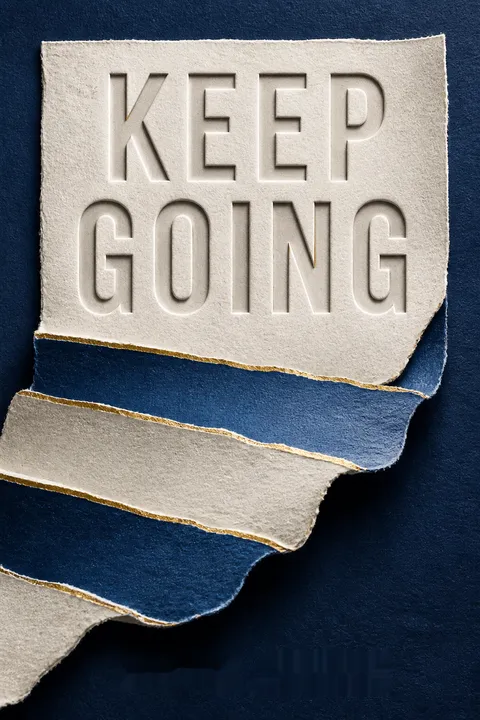


Key Takeaways
Treat creative work as a loop, and make today your practice.
There is no finish line. In Groundhog Day, weatherman Phil Connors wakes up repeatedly to the same February morning. Kleon sees creative work in that loop: every finished project returns its maker to another beginning. Success does not end the work, and failure does not cancel tomorrow's chance to begin again. The practical answer is a daily practice, a repeatable way to show up regardless of how yesterday's work was received.
Today is the workable unit. The past can invite regret, and the future can provoke dread, but neither is as available as the day in front of you. The creative life is built from what a person chooses to do with that day.
The loop is a useful alternative to the career story that promises a final arrival. It shifts attention from status to participation: the work matters because it is done, not only because it leads somewhere. This resembles process-oriented approaches in fields such as sports and craft, where repeated practice develops capacity that a single performance cannot. Still, a daily ideal should not become another standard for self-punishment. Illness, care work, and financial pressure interrupt routines. Returning to the practice matters more than never missing a day.
Build a routine around your actual life, not an artist's mythology.
Borrow principles, not schedules. Mason Currey's collection of artists' routines shows how varied creative habits can be: some worked at night, some early, and some relied on odd rituals. A routine is not a universal recipe. It is a structure fitted to a person's energy, obligations, and available time. A small, reliable work period can matter more than an ideal schedule that cannot survive family life or a day job.
Lists reduce mental drag. Kleon uses task lists to choose what to do next, idea lists to save future projects, and lists of things to avoid to define a creative direction. At day's end, noting what got done and what comes next can make it easier to stop working without carrying the whole day into bed.
A routine works partly by reducing repeated decisions. That is a form of cognitive offloading: when the next step is already chosen, attention can go to the work rather than to negotiating whether to begin. Lists serve the same purpose when they capture unfinished tasks outside the mind. The important qualification is that routine should be an enabling structure, not a measure of personal worth. Its shape needs to change when circumstances change, or the tool becomes another source of guilt.
Protect a daily pocket of silence from screens and other people's claims.
Make room to incubate. A "bliss station" is a protected place or period set aside to disengage from demands and think, practice, or create. It need not be a separate room. A quiet hour at a kitchen table can serve, just as a dedicated workspace can help when the schedule is unpredictable. The point is to make a dependable opening for focused attention.
Delay the world's entrance. Kleon advises against beginning the morning with headlines and notifications. He describes how phone alerts scatter attention before the day has begun, while a morning without them leaves space for reading, stretching, breakfast, or work. An airplane's forced disconnection offers a model: a phone setting can become a deliberate boundary wherever the work happens.
The value of disconnection is not that other people or public events stop mattering. It is that attention needs intervals in which it is not continually redirected. In this respect, a protected creative hour resembles a meeting with oneself: it gives concentration a legitimate place in a crowded day. The risk is treating retreat as a complete solution. Some work depends on collaboration, and staying informed is part of civic life. A boundary is most useful when it makes re-engagement more deliberate, not when it becomes permanent avoidance.
Do the work before claiming the identity, and keep it playful.
Choose the action over the label. Kleon argues that titles such as artist or writer can narrow what someone feels permitted to make. Instead of waiting for recognition, do the activity: draw, compose, teach, or build. The work can lead into unexpected forms, while a fixed identity can make experimentation feel like a threat.
Play loosens the grip of results. Kleon's young son drew with crayons, markers, or chalk and cared more about drawing than preserving the finished picture. Adults can recover some of that freedom by making work they do not intend to sell or show. Kurt Vonnegut suggested writing a poem and then discarding it, so that making itself, rather than an audience's approval, becomes the reward.
The distinction between doing and being is especially useful in creative fields, where identity can become a public performance. Action gives a person room to experiment before deciding what the work means about them. Play also supports exploration because it lowers the cost of failure. Yet play is not the opposite of discipline: serious practice often involves frustration, repetition, and craft. The stronger lesson is to keep outcome anxiety from occupying every part of the process, not to expect all worthwhile work to feel effortless.
Keep part of what you love outside the marketplace.
Not every pleasure needs a price. Kleon worries that people now respond to hobbies by suggesting ways to monetize them. Turning a passion into income can introduce clients, deadlines, and financial dependence into an activity that once offered relief. Even someone who earns a living from creative work can preserve a small part of the practice that is not for sale.
Keep costs low enough to choose. The book recommends deciding what kind of life the work should support, budgeting for it, and drawing boundaries around what will be done for money. A day job may protect creative freedom better than forcing every interest to pay the bills. The goal is not to romanticize poverty, but to avoid making every creative decision answer to income.
This is a sharp counterweight to the familiar instruction to turn passion into a career. It recognizes that economic incentives can reshape an activity, not merely reward it. A private hobby can function as a protected space where taste develops without customer feedback. At the same time, keeping work unmonetized is not equally available to everyone, and paid creative work is not inherently corrupting. The useful distinction is whether earning money leaves room for choices that are not governed entirely by market demand.
Judge creative work by what it gives, not by its numbers.
Metrics are not meaning. Online platforms offer visible counts of clicks, likes, shares, and followers, but those numbers cannot show whether a piece stayed with someone or changed how they saw something. Kleon notes that work he enjoys making may draw little response, while a piece he considers slight can spread widely. Letting the counts direct the next project risks teaching the maker to chase what attracts quick attention.
Make something for someone. When creative work feels hollow, Kleon suggests making a small gift for a specific person. He made robot collages for his son, who was fascinated by robots. Such work reconnects creation with a human relationship rather than an anonymous score. Gifts can also travel further than expected, but their value does not depend on doing so.
The distinction between measurable response and meaningful response is essential in digital culture. A platform count is easy to compare, so it can crowd out slower evidence such as trust, memory, or a conversation changed by the work. Making for a particular person gives feedback a concrete human scale. That approach should not be mistaken for rejecting audiences or data altogether. Metrics can reveal reach, but they cannot decide what deserves to be made or whether the work mattered.
Train attention on the ordinary, then revisit what you noticed.
The everyday is material. Sister Mary Corita Kent transformed familiar advertisements and packaging into prints that made viewers look at ordinary surroundings afresh. She used a simple paper frame, a "finder," to teach students to isolate a small portion of the world and really see it. Kleon's examples range from artists drawing on scraps to cartoonists recording daily life: extraordinary work need not require an extraordinary setting.
Look twice. Drawing slows observation because the hand has to follow what the eye notices. Keeping a diary or revisiting sketches and photographs can reveal recurring interests that are hard to see in the rush of daily life. The record becomes more than an archive. It shows which details a person has repeatedly chosen to notice.
Attention is both a creative resource and a way of forming a life. What gets noticed becomes available for reflection, memory, and expression; what is ignored may remain invisible even when it is close at hand. Drawing is powerful here because it makes looking active rather than passive. Still, attention is not a neutral camera. Habit, culture, and access shape what people can notice. Re-reading records can expose patterns, but it can also reinforce them, so curiosity should include a willingness to look somewhere unfamiliar.
Change your mind where curiosity is safe, and read beyond today.
Uncertainty can do useful work. Kleon argues that creative thinking requires room to test ideas before knowing where they lead. That room may be a journal, studio, or private conversation, rather than a public online feed where every thought can become a performance. Changing a view is not automatically weakness; it can be evidence that thought is still in motion.
Find generous company across time. The book recommends talking with people who listen thoughtfully, even when they disagree, and reading older books that challenge the assumptions of the present. A centuries-old text can make familiar political or personal problems look less uniquely modern. Old books do not settle current questions, but they widen the conversation beyond the voices that happen to dominate today's networks.
This advice connects intellectual openness to the conditions under which ideas are formed. People often need a low-stakes setting to explore a position before they can defend, revise, or discard it. Conversation with respectful disagreement can provide that setting, while historical reading interrupts the illusion that the present is the only imaginable world. Yet privacy alone does not guarantee good thinking, and old texts carry the blind spots of their times. Openness is strongest when paired with scrutiny, not when every inherited idea is treated as wisdom.
Keep tools findable, materials alive, and order flexible.
Prepare for work, not display. Kleon rejects the idea that a creative space must look pristine. He borrows the kitchen practice of "mise en place," meaning preparation and readiness, while arguing that working materials can remain scattered if the arrangement helps the task. A tool hidden under clutter can stop a session, but an orderly-looking room is not automatically a productive or imaginative one.
Tidy when it helps you move. Cleaning can be useful when a person is stuck. Sorting through the studio may uncover an unfinished drawing or an old page that sparks a new direction. Kleon also treats sleep and naps as ways to clear mental space. The point is not to imitate a perfect workspace, but to make the environment ready for the next useful action.
This is a more nuanced account of order than either celebrating mess or demanding tidiness. The relevant question is functional: does the arrangement support retrieval, association, and continued work? Keeping tools accessible reduces friction, while visible materials can create unexpected combinations. The best balance differs by task. A chaotic table may help generate ideas but hinder precise execution, so creative spaces may benefit from shifting between exploratory and production modes rather than obeying one aesthetic rule.
Make art answer to life, not excuse harm.
Talent is not a moral exemption. Kleon calls destructive, celebrated artists "Art Monsters," drawing on a term associated with Jenny Offill. The label points to the myth that cruelty, neglect, or abuse is somehow necessary for great work. The book rejects that bargain: art may help people see their lives differently, but making it does not excuse damaging the lives around the maker.
Count the human cost. If a creative pursuit is adding misery to the maker's life or to other people's lives, it may be worth reconsidering. Kleon points out that a person can contribute through teaching, care, service, or other work instead. The value of a life does not depend on earning the title of artist, and the world needs decent conduct as much as impressive output.
This argument separates the value of an artwork from the moral authority of its maker. That distinction matters because admiration can make audiences minimize harm, especially when exceptional achievement is treated as proof of exceptional character. The book's stronger claim is not that flawed people cannot make moving work, but that suffering should not be romanticized as the price of creativity. Ethical judgment remains complicated: audiences may disagree about harm, responsibility, and what to do with a work. Complexity, however, is no reason to grant artists immunity.
Walk outside until the screen's version of reality loses its grip.
Use the senses to return to the world. Kleon describes a regular family walk as a place where ideas emerge, conversations happen, and the neighborhood becomes visible. He points to writers and musicians who walked to think, including Wallace Stevens and Beethoven. The walk is not just exercise or a productivity trick. It reconnects attention with weather, people, streets, and the small facts that screens flatten into distant abstractions.
Make the walk ordinary and repeatable. Go alone, with a friend, or with a dog. Carry a notebook or camera if a thought or image needs capturing. Kleon also suggests picking up litter, following David Sedaris's example. Moving through a real place can restore a sense of possibility, while contributing a small act of care to it.
Walking combines movement, sensory input, and unhurried thought, which makes it a useful counterweight to attention captured by rapid updates. Its benefits are not limited to producing ideas: noticing a familiar neighborhood can strengthen connection to place and to other people. The book also presents walking as a defense against mediated fear. That claim needs balance, since screens can reveal real suffering that a local stroll cannot. The walk need not replace news or civic action; it can help people meet them with steadier attention.
Let creative work follow seasons, and plant for a longer future.
Progress has quiet seasons. Corita Kent watched a maple tree lose its leaves, endure winter, and return to growth. She saw the tree as a model for creative life: some periods look unproductive from the outside while change gathers underneath. Kleon urges readers to notice rhythms rather than demand visible growth every day. A person's best work may arrive on a different timetable from the one celebrated by lists of young achievers.
Choose what can outlast you. Leonard Woolf once kept planting irises while the radio carried Hitler's speeches, trusting that flowers would outlive the speaker. The example turns patience into an action: tend something worthwhile even when the surrounding moment feels bleak. The book's closing measure is practical and ethical. Spend days on work worth doing, and try to leave the shared world in better condition.
Seasonal thinking offers relief from the assumption that every pause signals failure. It also encourages a longer horizon, in which preparation and care matter even before results become visible. Gardening makes that horizon tangible: the planter cannot command the bloom, only tend the conditions. This is a powerful image, though not every stalled project is secretly growing. Rest can restore capacity, but a person may also need to change direction. Patience is most useful when joined to honest attention about whether the work remains worth tending.
Analysis
Keep Going is a compact creative-life guide built from ten short principles, personal anecdotes, and borrowed wisdom. Its central claim is that sustaining creativity depends less on a grand breakthrough than on shaping ordinary days: establishing a workable routine, protecting attention, playing, noticing, and returning to the work. The Groundhog Day image gives the argument its structure. Creative life repeats, so the answer is not to reach a final state of success but to decide how to inhabit the next day.
The book's distinctive strength is its refusal to separate artistic practice from everyday ethics. It challenges the conversion of every hobby into income, the temptation to let online metrics dictate taste, and the myth that harmful behavior is a mark of artistic seriousness. It also expands the idea of creative material. A walk around the neighborhood, a messy studio, a child's drawing, and a familiar advertisement can all become sources of attention and invention. The reader is asked to see more carefully, not to wait for a more glamorous life.
Its advice is intentionally flexible. Routines are personal, retreat can be an hour rather than a room, and disorder can be useful when tools remain accessible. That flexibility suits readers with different temperaments, though the book's emphasis on personal boundaries can understate how little control some people have over their time, space, and income. Its principles are therefore best read as adaptable aims, not universal prescriptions. A routine should bend to care obligations; monetization may be necessary; and a walk cannot substitute for structural change.
The book's deeper contribution is a humane definition of creative persistence. Keep making, but do not confuse making with status, constant output, or self-sacrifice. The work should make life more perceptible and, ideally, more livable for others. Its practical sequence is memorable: protect time, practice the verb, attend to the ordinary, and keep tending what matters, even when results are not yet visible.
Review Summary
Keep Going receives high praise for its motivational and practical advice on maintaining creativity. Readers appreciate Kleon's relatable style, finding inspiration in his short, impactful chapters. Many consider it a quick yet profound read, perfect for recharging creative energy. The book resonates with artists, writers, and anyone seeking to nurture their creative spirit. While some feel it rehashes previous ideas, most find value in its reminders about disconnecting, making lists, and embracing uncertainty. Overall, readers commend Kleon's ability to distill wisdom into accessible, inspiring content.
People Also Read




Glossary
Bliss station
Protected creative time or spaceA designated place or period for stepping away from news, obligations, and other demands to think, make, or simply experience one's own ideas. It can be a room, but it can also be a regular hour in an ordinary shared space. Its purpose is to provide conditions for creative incubation.
JOMO
Joy in missing outThe pleasure of choosing not to attend or participate in something, even when others appear to be enjoying it. Kleon presents JOMO as a counterweight to FOMO, the fear of missing out, especially the anxiety intensified by seeing other people's activities online. It reframes a declined invitation as a deliberate choice rather than a loss.
Art Monsters
Artists excused for harmful behaviorA term used for artists whose harmful personal conduct is treated as an acceptable cost of their creative achievement. Kleon challenges the familiar myth that cruelty, neglect, or abuse is necessary for important art, or that artistic success absolves its maker. The term asks readers to consider both the work's value and its human costs.
suckcess
Success that feels emptyKleon's term for success measured on someone else's terms, success that seems undeserved, or success that makes the pursuit itself unpleasant. It names the possibility that recognition, sales, or popularity can fail to produce a satisfying creative life. The term contrasts external approval with a person's own sense of what makes a day worthwhile.
mise en place
Prepared and ready workspaceA kitchen practice of preparing and arranging ingredients and tools before work begins. Kleon borrows it as a model for a creative workspace: tools should be easy to find, and the space should be ready for making. This does not require visual neatness. Materials may remain scattered when their arrangement supports the work.
FAQ
What's "Keep Going: 10 Ways to Stay Creative in Good Times and Bad" about?
- Author's Background: Austin Kleon, known for his previous bestsellers "Steal Like an Artist" and "Show Your Work!", offers guidance on maintaining creativity.
- Core Message: The book provides ten simple rules to help individuals stay creative, focused, and true to themselves throughout their lives.
- Non-linear Journey: Kleon emphasizes that the creative life is not a straight path but a loop, encouraging readers to find a daily routine and focus on the present.
- Practical Advice: The book includes tips on disconnecting from the world, paying attention to what matters, and leaving things better than found.
Why should I read "Keep Going"?
- Sustaining Creativity: It offers practical advice for anyone looking to maintain a creative and meaningful life, regardless of their profession.
- Timeless Principles: The book's principles are applicable in both good and bad times, making it a valuable resource for navigating life's challenges.
- Inspiration and Motivation: Kleon's writing is designed to inspire readers to keep creating and find joy in the process.
- Broad Audience Appeal: While primarily for artists and writers, the book's lessons are relevant to entrepreneurs, teachers, students, retirees, and activists.
What are the key takeaways of "Keep Going"?
- Daily Routine: Establishing a daily routine can help defend against chaos and make the most of each day.
- Disconnect to Connect: Sometimes, disconnecting from the world is necessary to connect with oneself and foster creativity.
- Focus on the Process: Emphasize doing the work (the verb) rather than focusing on titles or outcomes (the noun).
- Leave a Positive Impact: Aim to leave things better than you found them, focusing on the worth of your actions.
How does Austin Kleon suggest staying creative?
- Groundhog Day Approach: Treat each day as a new opportunity, similar to the movie "Groundhog Day," where the protagonist relives the same day repeatedly.
- Bliss Station: Create a dedicated time or space for creativity, free from distractions and external obligations.
- Play and Experiment: Engage in playful activities and experiment without worrying about the results to maintain a sense of creativity.
- Ignore Metrics: Avoid getting caught up in numbers and metrics, focusing instead on the qualitative aspects of your work.
What is the "Bliss Station" concept in "Keep Going"?
- Sacred Space or Time: A bliss station can be a physical space or a specific time dedicated to creative work, free from distractions.
- Disconnect from the World: It's a place where you can disconnect from daily obligations and focus on what you are and might become.
- Creative Incubation: The idea is to have a space or time for creative incubation, where something eventually will happen if used regularly.
- Flexibility: If a dedicated space isn't possible, a specific time can suffice, and vice versa.
How does "Keep Going" address dealing with external pressures?
- Say No: Learn to decline invitations and requests that interfere with your creative time and space.
- Ignore the Numbers: Avoid letting online metrics dictate your creative direction or self-worth.
- Focus on Gifts: Make art as a gift for others, which can help reconnect with the joy of creating.
- Leave Things Better: Aim to improve the world around you, focusing on positive contributions rather than making a mark.
What are some of the best quotes from "Keep Going" and what do they mean?
- "Every day is Groundhog Day": Emphasizes the importance of treating each day as a fresh start, focusing on daily routines and practices.
- "Demons hate fresh air": Suggests that getting outside and taking walks can help clear the mind and foster creativity.
- "Art is for life, not the other way around": Highlights that art should enhance life, not detract from it, and should not be pursued at the expense of well-being.
- "Leave things better than you found them": Encourages making positive contributions to the world through creative work.
How does Austin Kleon suggest handling creative blocks?
- Tidy Up: Use tidying as a form of productive procrastination to clear the mind and potentially discover new ideas.
- Make Lists: Create lists to organize thoughts, reduce anxiety, and provide a starting point for creative work.
- Take Naps: Use naps as a way to refresh the mind and potentially spark new ideas.
- Change Your Mind: Be open to changing your mind and exploring new ideas, as uncertainty can lead to discovery.
What role does routine play in "Keep Going"?
- Defends Against Chaos: A routine helps protect against the unpredictability of life and provides structure.
- Maximizes Time: It ensures that even limited time is used effectively for creative pursuits.
- Adaptability: While routines are important, they should be flexible and adaptable to changing circumstances.
- Foundation for Creativity: A consistent routine can serve as a foundation for creative work, allowing for regular practice and exploration.
How does "Keep Going" suggest balancing creativity and monetization?
- Protect Your Valuables: Be cautious about turning every creative pursuit into a source of income, as it can diminish the joy of creating.
- Keep Some for Yourself: Ensure that some aspects of your creative practice remain off-limits to monetization.
- Low Overhead: Maintain a lifestyle that allows for maximum artistic freedom by keeping expenses low.
- Mindful Monetization: Consider the impact of monetizing your passions and whether it aligns with your desired lifestyle.
How does "Keep Going" address the concept of change?
- Embrace Change: Change is a natural part of life and creativity, and being open to it can lead to growth and discovery.
- Off-Brand Thinking: Allow yourself to think and explore ideas without worrying about staying "on-brand."
- Seek Like-Hearted People: Surround yourself with people who are open and thoughtful, rather than just like-minded.
- Learn from the Past: Read old books and learn from history to gain perspective and insight.
What is the significance of "Plant Your Garden" in "Keep Going"?
- Metaphor for Creativity: Gardening is used as a metaphor for nurturing creativity and allowing it to grow over time.
- Patience and Attention: Like gardening, creativity requires patience and attention to flourish.
- Seasons of Creativity: Recognize that creativity has seasons, and different phases require different approaches.
- Hope and Growth: Planting seeds today can lead to future growth and beauty, even in challenging times.
About the Author
Download PDF
Download EPUB
.epub digital book format is ideal for reading ebooks on phones, tablets, and e-readers.








