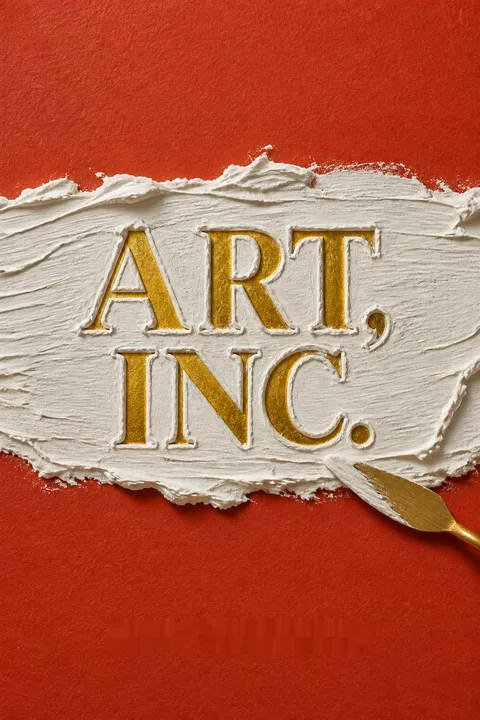


Key Takeaways
Build a business around your art without treating commerce as artistic betrayal.
Art can be a livelihood. Lisa Congdon did not plan to become an artist. At thirty-two, while working as a project manager, she took a painting class and began making work simply because she wanted to. She developed her skills through practice, shared her work online, and gradually built a full-time career. Her path is the book’s central argument: talent matters, but so do persistence, self-belief, and the practical work of finding buyers.
Congdon rejects the idea that selling art corrupts it or that artists must suffer financially to be authentic. Income can support the time and materials needed to keep creating. The aim is not to follow one approved career path, but to build a livelihood that fits both the work and the artist’s values.
What's compelling is the refusal to treat art and commerce as opposing identities. A professional identity can give creative work structure, an audience, and continuity, rather than reducing it to a product. Still, self-identification is a beginning, not proof of market demand. An artist needs both permission to pursue the work and a willingness to learn what buyers, clients, and institutions actually value. Congdon's story makes the first move feel possible without suggesting that belief alone pays the bills.
Find your visual voice by making, risking, and surviving awkward work.
Voice develops through practice. An artist’s voice is the distinctive mix of subject, message, style, and technique that emerges from making work over time. Congdon advises artists to create for themselves, try unfamiliar materials or subjects, and notice what feels authentic. A journal can help surface recurring interests, while time away from other artists’ images can reduce the pull of imitation and comparison.
A painting teacher’s “painting curve” describes the dip many artists experience after a promising start: as a piece develops, it may look confused or worse before it comes together. Working through that uncomfortable middle can build both skill and a more personal approach. Papercut artist Nikki McClure offers a vivid example: she begins by cutting the part that feels most frightening, then finds the rest less intimidating.
The painting curve captures a useful distinction between a bad result and a bad stage in a process. Many forms of skilled work involve periods when progress looks like regression, because new decisions disrupt familiar competence. That does not mean every struggling piece deserves to be finished; revision sometimes means stopping. The stronger lesson is to delay judgment long enough to learn what the difficulty is teaching. Reducing exposure to other artists can help, but sustained study and community also provide models, feedback, and craft knowledge.
Test a few income streams before betting your livelihood on one.
Build a fitting income mix. Artists can earn through original work, print reproductions, commissions, illustration, licensing, teaching, and other routes. Combining several sources can soften the impact when one slows down and keep the work varied. But each stream brings its own administration, so Congdon recommends beginning with one or two and adding more only after learning what they require and whether they suit the artist’s work and values.
Keep a day job while the art business is still developing if it provides useful stability. Esther Pearl Watson combined illustration, paintings, self-published work, and teaching, while noting that variety also consumes time. A gradual transition, based on regular sales or client work rather than hope alone, lets an artist build experience and financial footing before relying fully on art income.
This is a practical application of portfolio thinking: several imperfect revenue sources may be more resilient than dependence on a single buyer or market. Yet diversification is not automatically safer. Every new channel adds coordination, customer service, and context switching, which can crowd out making. The relevant question is not simply how many streams exist, but whether they share assets or audiences. A print, a licensing deal, and a workshop may all extend one body of work, while unrelated ventures can create an exhausting collection of small businesses.
Turn an artistic vision into values, milestones, and small next actions.
Make ambition usable. Congdon’s vision map is a simple planning tool: write a name or business in the center of a page, then branch outward with ambitions for the next three to five years. Examples might include illustrating a book, holding a solo show, or selling work online. The map is a prompt for possibility, not a promise that every goal will remain right.
Next, identify values that should guide decisions, such as working only with companies whose products you respect or making some work affordable. Translate the broad vision into intermediate goals that can be completed over weeks or months, then into tasks small enough to finish in a few hours. For an online shop, that might mean comparing platforms, getting print samples, setting prices, and photographing the work.
The sequence links aspiration to execution without pretending that a five-year plan can predict a creative life. Values act as decision criteria when opportunities conflict, while small tasks turn an abstract ambition into observable progress. This resembles project planning in other fields, where a distant outcome becomes manageable through intermediate deliverables. The map is most useful as a revisable instrument, not a contract with an earlier version of oneself. Goals that no longer fit can be changed without treating adaptation as failure.
Run the business behind your art with records, contracts, and cash reserves.
Make the invisible work visible. Self-employed artists may receive irregular payments and must track income, expenses, invoices, and taxes themselves. Congdon recommends separate business accounts, consistent bookkeeping, and savings for taxes and slow periods. The book suggests setting aside roughly 20 to 40 percent of income for taxes, while noting that the appropriate amount depends on an artist’s situation and should be discussed with an accountant.
Business basics also include checking local rules on licenses and permits, protecting original work through copyright, and documenting finished art at high resolution. A consistent digital filing system makes it easier to respond when a gallery, editor, or client requests images. These tasks may feel distant from art-making, but they protect the work, clarify cash flow, and help an artist act promptly when an opportunity arrives.
Good records are not merely bureaucratic hygiene. They give an artist evidence about which work earns money, when cash is tight, and whether a project is worth repeating. That information can replace vague anxiety with decisions. The book’s tax guidance is specific to its time and US context, so readers should verify current local rules rather than treat the percentage as universal. The broader principle travels well: separate business and personal activity, document agreements, and make future obligations visible before they become emergencies.
Make your work easy to discover, understand, and share.
Promotion is part of the practice. A clear website should show selected work, a short biography, contact details, and a direct way to buy or inquire. Congdon cautions against displaying every piece ever made; thoughtful editing helps visitors understand what the artist does. Blogs and social platforms can show new work and the process behind it, while postcards, newsletters, and in-person conversations reach people who may not follow the same online channels.
Start with one or two platforms rather than trying to maintain them all. Respond to questions, share peers’ work, and balance sales announcements with material that gives an audience a reason to stay connected. A quarterly marketing plan can coordinate a new collection, press outreach, social posts, and events so that promotion is deliberate rather than a last-minute reaction to slow sales.
The book treats promotion as relationship-building, not simply broadcasting. Showing process gives a potential buyer context, while clear descriptions and contact information reduce the effort required to act. This is especially valuable for work whose appeal depends on the artist’s story or method. The caution is that social platforms control reach and can turn attention into a vanity metric. A website and an opt-in mailing list give artists more durable points of contact, while selective posting protects time and concentration.
Price and present art for the buyer, not just the maker.
Connect the work to a market. Print reproductions let buyers access an image at a lower price than an original. Before ordering a large run, consider likely buyers, useful sizes, and whether the image suits a setting or gift. Congdon contrasts a print of Swedish chairs that sold only twice in two months with a fish design that sold twenty copies in a week. The point is not to abandon personal taste, but to test whether a piece has an audience.
For original work, research comparable artists and keep prices consistent across sales channels. Offer different price points where possible, and raise prices cautiously when demand is steady. Include materials, labor, packaging, and overhead in calculations. Product photographs, accurate descriptions, careful packing, clear shipping policies, and prompt replies all shape the buyer’s experience, not just the image itself.
Pricing is both a financial calculation and a signal about how a work is positioned. Comparable sales can prevent arbitrary numbers, while testing demand reveals whether a particular image reaches beyond the artist’s personal circle. The distinction between artistic worth and market price remains important: a slow-selling image is not necessarily a failed work. For products, however, buyer needs are concrete. Clear images, dimensions, and shipping expectations reduce uncertainty, which is especially consequential when customers cannot inspect the object in person.
Treat galleries as partners to qualify, not gates to worship.
Build evidence and relationships. Juried shows, artist-run exhibitions, cafés, and other local venues can help emerging artists develop a record before approaching established galleries. Gallery owners look for a coherent body of work, signs of development, evidence of sales or exposure, and a fit with the artists and collectors they serve. Visit openings, participate in the local arts community, and present a concise, carefully edited portfolio rather than dropping in unannounced.
A gallery relationship is also a business arrangement. Research the gallery and speak with artists it represents. Read representation or consignment contracts for commission rates, insurance, payment timing, exclusivity, and termination terms. A commission of about 50 percent is common in the book’s examples. Written agreements clarify who holds the work, how sales are handled, and what happens if a piece is damaged or sold.
A gallery can provide expertise, access to collectors, and help with presentation and sales, but representation is not a verdict on an artist’s legitimacy. Treating galleries as partners shifts attention from pleading for approval to evaluating mutual fit. That also makes due diligence essential: a respected name is not a substitute for transparent terms or reliable payment. Community participation builds relationships, but it should not be confused with a guarantee of representation. A strong practice and a sustainable route to buyers can exist outside the gallery system.
License specific rights, not your whole future, and negotiate accordingly.
Separate the artwork from its uses. Illustration is art made for a client and a defined purpose, often with art direction, deadlines, sketches, and revisions. Licensing lets a company use existing or newly created art on products, with payment often tied to royalties. These are not the same arrangement, and each needs clear written terms covering payment, use, duration, territory, exclusivity, and credit.
Before agreeing, understand what rights are being granted and whether the contract is a license or a work-for-hire arrangement that transfers ownership. Ask about sales projections, samples, and minimum payments where appropriate. An agent may find clients, negotiate, and handle paperwork, but typically takes a substantial share of fees. Artists working independently keep more income and control, while taking responsibility for promotion, contracts, billing, and client communication themselves.
Rights are not an abstract legal detail; they determine where an image can appear and whether the artist can use it again. Narrow, time-limited grants can preserve future options, while exclusivity may merit higher compensation because it restricts other opportunities. The choice between an agent and independent work is a trade between money, access, time, and control, not a simple test of professionalism. Careful negotiation also protects the creative relationship by making expectations explicit before deadlines and product plans create pressure.
Protect creative capacity by using downtime and refusing unsustainable demand.
Manage the whole career. Slow periods can be used to build a portfolio, update a website, send promotional materials, volunteer, or develop a class. Teaching can provide income while helping artists explain and refine their own process. Residencies offer dedicated time and space, though artists must plan for the practical demands of being away.
Busy periods require a different discipline. Track project deadlines, keep essential supplies stocked, and set criteria for accepting work. Congdon’s own criteria include adequate pay, available time, useful exposure, and alignment with her aesthetic and values; she recommends requiring several of them to be met. Saying no politely can preserve relationships while preventing overwork. Rest, family time, exercise, and sleep are part of maintaining a practice, not evidence that an artist lacks commitment.
The book recognizes a common feature of freelance work: empty calendars and overfull ones are both management problems. Downtime can support capability-building, while limits on new work protect quality and health. Teaching and residencies broaden the practice, but they are not effortless solutions; each requires preparation and may compete with studio time. The useful measure is not maximum activity. It is whether the structure of work leaves enough attention and energy for the art, the business, and the relationships the artist wants to keep.
Analysis
Art, Inc. is best understood as a field guide to building an independent creative livelihood, not as a formula for becoming famous. Its argument moves from identity to craft, from craft to business systems, and from those systems to markets, contracts, and career sustainability. The sequence matters: selling art is presented not as a substitute for making it, but as a set of learnable practices that can preserve the time and independence needed to make more.
The book’s most valuable correction is to the romantic image of the isolated, financially doomed artist. Congdon shows that careers can be assembled from overlapping activities: original work, reproductions, commissions, commercial illustration, licensing, teaching, and exhibitions. That plurality makes the career more adaptable, but it also creates operational complexity. The book is strongest when it insists on starting modestly, aligning choices with values, and treating money, contracts, and administration as real parts of the work rather than embarrassing distractions.
Its practical advice reflects the internet and selling platforms of 2014. Specific services and platform conventions have changed, and legal, tax, and market conditions vary by place and time. The underlying principles remain more durable than the named tools: maintain a clear public portfolio, make buying straightforward, document rights and transactions, and preserve customer relationships. Readers should update the technical details for their own context.
The deeper model is neither pure self-expression nor pure entrepreneurship. It is a feedback loop: create work, share it, learn from audience response, choose opportunities, and protect enough space to keep creating. The artist remains responsible for deciding what success means. A gallery, a viral following, or a large income may matter to one person and not another. The measure is whether the business supports a body of work and a life the artist can stand behind.
Review Summary
Art, Inc. receives mostly positive reviews, with readers praising its comprehensive guide for artists starting their careers. Many find it informative, practical, and well-organized, covering topics from mindset to business aspects. Some criticize it for being outdated or lacking depth in certain areas. Readers appreciate the artist interviews and practical tips, though a few find the language dry. Overall, it's considered a valuable resource for aspiring artists and those looking to turn their passion into a profitable business.
People Also Read

Glossary
Starving artist myth
Art requires financial hardshipThe belief that artists are destined to struggle financially, sometimes paired with the idea that hardship makes their work more authentic. Congdon argues that this belief can discourage artists from promoting, pricing, and selling their work. Her alternative is to treat income as support for a continuing creative practice rather than proof that the art has been compromised.
Thriving artist’s mind-set
Permission to earn from artA way of thinking in which earning money from art, promoting it, and exploring different career paths are compatible with making meaningful work. It replaces assumptions of scarcity and inevitable struggle with a practical focus on creating, sharing, and selling. The term does not mean success is guaranteed; it encourages artists to approach a livelihood as possible and worth actively building.
Artist’s voice
Distinctive creative point of viewThe combination of message, style, subject, and technique that makes an artist’s work recognizably their own. In the book, voice develops through sustained practice, experimentation, and attention to personal interests and values. It can change over time as an artist learns new methods or develops different concerns, so it is a continuing process rather than a fixed signature.
Painting curve
A work’s messy middleA U-shaped description of how a piece of art can feel successful at the beginning, become awkward or disappointing as it develops, and improve again when the artist works through the difficult middle. The idea encourages artists not to abandon a piece solely because it temporarily looks wrong. It describes a possible creative process, not a rule that every work will recover.
Vision map
A map of career ambitionsA visual planning exercise for identifying ambitions for an art career over roughly three to five years. The artist writes a name or business at the center of a page and branches out with statements describing possible goals. The map is meant to make ambitions visible and revisable, and to guide the creation of nearer-term goals and concrete tasks.
Consignment
Selling work on an artist’s behalfAn arrangement in which an artist gives work to a gallery or shop to sell while retaining ownership until a sale occurs. The venue receives a commission from the sale, and unsold work is generally returned to the artist. A written agreement can specify which pieces are held, the dates, insurance, the commission, and how soon payment is due after a sale.
Licensing
Permission to use artworkAn agreement that grants a company defined rights to use an artist’s work, often on products such as stationery, textiles, or home décor. The artist typically retains copyright while allowing use under specified terms. Contracts may address products, exclusivity, duration, territory, and payment through royalties, an advance, or a flat fee. The precise rights granted determine what the artist can do with the work elsewhere.
Kill fee
Payment if a project stopsA contract term specifying the amount an artist receives if a client cancels a project or does not use completed work. The fee may be a stated sum or a percentage of the agreed project payment. It compensates for work already completed and helps clarify financial responsibility before the assignment begins.
Work-for-hire
Client owns commissioned workA contract arrangement in which the client is treated as the author or owner of the commissioned work, rather than merely receiving limited permission to use it. The artist may lose control over reproduction and other uses, depending on the contract. Because it can transfer substantially broader rights than a license, the book advises artists to recognize the clause and understand its consequences before signing.
FAQ
1. What is "Art, Inc.: The Essential Guide for Building Your Career as an Artist" by Lisa Congdon about?
- Comprehensive career guide: "Art, Inc." is a practical handbook for artists who want to turn their creative passion into a sustainable, thriving career.
- Covers business and creativity: The book addresses both the business side (marketing, sales, legal, finances) and the creative side (finding your voice, building confidence) of being a professional artist.
- Step-by-step strategies: It provides actionable steps, real-world advice, and interviews with successful artists to help readers navigate the art world.
- For all career stages: Whether you're just starting out, transitioning to full-time, or seeking to grow your art business, the book offers guidance tailored to various stages.
2. Why should I read "Art, Inc." by Lisa Congdon if I want to become a professional artist?
- Demystifies art careers: The book dispels the "starving artist" myth and shows that making a living as an artist is possible with the right mindset and tools.
- Practical, actionable advice: Lisa Congdon shares concrete steps for building a business, promoting your work, and managing finances, making it accessible for artists with little business experience.
- Real artist stories: Interviews with working artists provide inspiration, diverse perspectives, and proof that different paths to success exist.
- Focus on values and fulfillment: The book emphasizes aligning your art business with your personal values and creative vision, ensuring long-term satisfaction.
3. What are the key takeaways from "Art, Inc." by Lisa Congdon?
- Mindset matters: Adopting a "thriving artist" mindset is crucial—believe in your potential and reject limiting beliefs about art and money.
- Multiple income streams: Diversifying your income (originals, prints, commissions, licensing, teaching) increases stability and creative freedom.
- Business skills are essential: Understanding branding, legal structures, finances, and marketing is as important as making art.
- Community and support: Building relationships with other artists, mentors, and supporters is vital for growth and resilience.
4. How does Lisa Congdon define and debunk the "starving artist" myth in "Art, Inc."?
- Myth as limiting belief: Congdon explains that the "starving artist" myth is a false, romanticized notion that suffering is necessary for good art or that artists can't make money.
- Thriving artist mindset: She encourages artists to embrace abundance, possibility, and the idea that making money from art is not only possible but desirable.
- Practical examples: The book features stories of artists who have built successful, fulfilling careers, proving the myth wrong.
- Action over fear: Congdon provides strategies for shifting from fear-based thinking to proactive, positive action in building an art career.
5. What steps does "Art, Inc." by Lisa Congdon recommend for finding your artistic voice and building confidence?
- Create for yourself: Start by making art that reflects your own identity and interests, not just what you think others want.
- Take risks and experiment: Try new techniques, subjects, and media to push your work in new directions and discover what feels authentic.
- Work through challenges: Embrace the "painting curve"—the messy, difficult middle stage of creating—as essential for growth.
- Limit comparison: Take breaks from the internet and avoid constant comparison to other artists to focus on your unique perspective.
6. What business fundamentals for artists does Lisa Congdon cover in "Art, Inc."?
- Legal structures and licenses: The book explains sole proprietorships, partnerships, LLCs, business licenses, and zoning requirements for artists.
- Financial management: Congdon details how to set up business accounts, track income and expenses, save for taxes, and use bookkeeping tools.
- Branding and communication: She emphasizes the importance of consistent branding, clear communication, and professional presentation (website, business cards, bios).
- Copyright and protection: The book covers how to protect your work legally and the basics of copyright registration.
7. How does "Art, Inc." by Lisa Congdon advise artists to promote their work and build an audience?
- Strong online presence: Create a professional website, keep a blog, and use social media platforms (Instagram, Facebook, Pinterest, Twitter) strategically.
- Print materials: Use postcards, business cards, and print promotions to reach potential clients and collaborators offline.
- Press and publicity: Learn how to pitch to blogs, magazines, and prepare a press kit to gain media attention.
- Word of mouth and networking: Engage in person and online, attend events, and build relationships to expand your reach.
8. What are the main ways to sell art according to "Art, Inc." by Lisa Congdon, and how should artists approach pricing?
- Multiple sales channels: Sell originals, prints, and products through galleries, online shops (Etsy, Shopify, Saatchi Online), art fairs, and wholesale to retailers.
- Print reproductions: Offer digital prints to make your work accessible at lower price points and reach a wider audience.
- Pricing strategies: Start with research—compare similar artists, consider your costs, and price consistently across venues. Begin on the lower end and raise prices as demand grows.
- Commissions and licensing: Take on custom work and license your art for products, with clear contracts and payment terms.
9. How does "Art, Inc." by Lisa Congdon explain the process of working with galleries and exhibiting art?
- Types of exhibitions: Participate in juried shows, group exhibitions, solo shows, and even self-organized exhibitions in alternative spaces.
- Gallery relationships: Approach galleries professionally, research their roster, and build connections through community involvement and networking.
- Portfolio preparation: Present a cohesive, well-documented body of work, along with a CV and artist statement, when seeking gallery representation.
- Contracts and commissions: Understand gallery contracts, consignment agreements, and standard commission rates (often 50%).
10. What does "Art, Inc." by Lisa Congdon teach about illustration and art licensing as income streams?
- Definition and markets: Illustration is commercial art for clients (books, magazines, products), while licensing involves granting rights to use your art on products for royalties or fees.
- Finding clients: Build a portfolio, promote your work online, and reach out to art directors, publishers, and companies directly.
- Contracts and negotiation: Learn to read, negotiate, and understand contracts for illustration and licensing, including rights, exclusivity, royalties, and kill fees.
- Agents vs. self-representation: Consider the pros and cons of working with illustration or licensing agents versus managing your own deals.
11. How does "Art, Inc." by Lisa Congdon address managing the ups and downs of an art career and achieving work-life balance?
- Ebb and flow: Recognize that periods of feast and famine are normal; use downtime for portfolio building, marketing, and personal growth.
- Teaching and residencies: Explore teaching and artist residencies as ways to diversify income, gain exposure, and recharge creatively.
- Organization and boundaries: Use schedules, task managers, and clear criteria for accepting work to avoid burnout and overcommitment.
- Self-care and support: Prioritize health, rest, and supportive relationships to maintain long-term creativity and satisfaction.
12. What are the best quotes from "Art, Inc." by Lisa Congdon and what do they mean?
- "The starving artist myth is just that: a myth." – This quote encapsulates the book’s core message that artists can and should thrive financially and creatively.
- "There is no single ‘perfect’ way to be a successful artist." – Congdon encourages readers to forge their own paths and define success on their own terms.
- "Making good work comes from passion, talent, and hard work." – The book emphasizes that consistent effort and dedication, not luck or suffering, lead to artistic and business success.
- "Saying no to one thing means saying yes to another." – This advice highlights the importance of setting boundaries and making intentional choices to create a balanced, fulfilling career.
About the Author
Other books by Lisa Congdon
Download PDF
Download EPUB
.epub digital book format is ideal for reading ebooks on phones, tablets, and e-readers.








