

Key Takeaways
Turn the quirks you once hid into the signature of your work.
Difference is material. Victore recalls being teased for wordplay, loud singing, and drawing goofy pictures. As an adult, he treats those childhood oddities not as embarrassing leftovers, but as clues to the person and artist he can become. Hiding them may win approval, but it also hides the qualities that make his work recognizable.
Personal can travel. George Lucas repeatedly drew on his own interests in small-town life, escape, and fast cars, reshaping them across films such as American Graffiti and Star Wars. Victore argues that particular experience can create broad connection: an audience may recognize its own longing inside someone else’s specific story. That is a stronger starting point than copying trends or guessing what everyone wants.
What's useful here is the distinction between being relatable and being generic. People often connect through accurately rendered particulars, not through a creator sanding off every rough edge. This resembles how distinctive brands and cultural works become legible: consistent details give audiences something to recognize and interpret. But personal material is not automatically compelling. It still needs craft, context, and attention to the audience. Authenticity is a source of material, not a substitute for making that material clear.
Treat play as a working method, not a weekend reward.
Play improves the work. Victore separates a job’s objective, such as selling a product or completing a brief, from its subjective element: the creator’s imaginative way of doing it. A chef can simply serve a meal, or make the experience surprising and memorable. The playful element is not decoration added after the real work. It can be what makes the work matter to its audience.
Make room for wrong turns. In class, Victore asks students to sketch 100 versions of one idea. The quantity pushes them beyond the first familiar answers and gives unusual ones a chance. He also points to inventions that began in unlikely settings, such as a running coach experimenting with a waffle iron to improve athletic shoes. Creative work tests convention, but play gives experimentation a route forward.
The 100-sketch exercise is a practical form of divergent thinking: generate many possibilities before deciding which deserves refinement. That separation matters because evaluation too early tends to reward the familiar. Play also lowers the social cost of trying, making it easier to discover unexpected options. Still, novelty alone is not quality. A strong creative process alternates exploration with selection, testing, and revision. Rules can constrain imagination, but useful constraints can also focus it.
Begin before perfectionism turns uncertainty into an excuse.
Starting creates evidence. Victore began his design career at 21, after being asked to leave art school, without feeling qualified or prepared. His point is not that preparation is useless, but that waiting for complete readiness can disguise fear as prudence. Beginning gives a person real feedback that planning alone cannot provide.
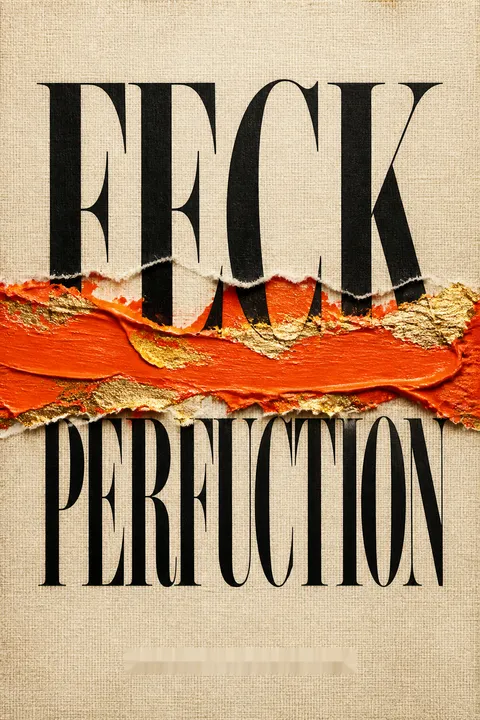
Done beats imaginary. Victore calls his antidote to perfectionism “Feck perfuction,” a deliberately rough reminder to value finished progress over flawless intentions. He describes perfectionism as a brake: it can prevent a project from starting or keep it unfinished through endless adjustment. His ski-patrol story supplies the other half of the lesson. Beginners fall while learning, and treating every fall as proof of failure makes improvement harder. Mistakes are information, not a verdict.
This advice aligns with behavioral approaches that reduce avoidance by making action concrete. A small first attempt can replace speculation with feedback, which often makes the next decision easier. It also challenges a common confusion: high standards and perfectionism are not the same. High standards guide revision; perfectionism can make revision endless. The distinction is especially important when errors carry real costs, such as in medicine or safety-critical design. In those settings, the answer is not careless speed, but staged work with appropriate checks.
Define success yourself, then give your ambition a direction.
Choose your measures. Victore rejects success as a ready-made package of money, status, and conventional milestones. He urges readers to ask whether their work is fulfilling, useful to others, and compatible with health, relationships, and interests. These questions turn success from a public scoreboard into a personal set of priorities.
Plans need renewal. At 19, Victore planned to move to New York, open a studio, and become a leading poster designer within 15 years. He exceeded the milestones, then found himself adrift when the plan had run out. A plan, in his account, is a compass rather than a contract: it helps distinguish fitting opportunities from distractions, but it must be revisited as a person’s life changes. Confidence, too, is something practiced through action, not a prize awarded at the finish.
The strongest feature of this framework is its emphasis on autonomy: goals are more durable when they express chosen values rather than borrowed status markers. It also treats planning as a way to make trade-offs visible. A useful extension is to separate direction from prediction. A plan can name what matters without pretending to forecast every step. Confidence may help someone enter a room or make a request, but posture and optimism cannot control structural barriers or guarantee an outcome.
Build creative momentum with attention, consistency, and room to recover.
Growth needs care. Victore’s uncle taught him to plant and maintain 33 pine trees for privacy at his home. The lesson extended beyond gardening: lasting growth needs affection for the project, focused attention, and repeated care. Victore applies the same idea to craft and business, where enthusiasm without follow-through rarely gets far.
Busy is not progress. He warns that activity can become a substitute for improvement. Sharpening the axe means developing skills, studying, reflecting, and resting before the next push. He also encourages seeking inspiration outside routine, including through walks, exercise, or simply going somewhere other than the desk. The point is not to wait for a muse to do the work. It is to combine regular practice with enough openness and recovery for fresh ideas to appear.
This pairing of discipline and recovery is more sustainable than the familiar image of creativity as either sudden inspiration or relentless hustle. Repetition builds fluency, while breaks can loosen attention from the obvious solution. The tree story also clarifies that growth is cumulative and needs maintenance, not just a dramatic launch. Yet consistency should not become a moral test. Workloads, health, and caregiving responsibilities differ, so a useful practice is one that can survive ordinary disruptions rather than demand perfect attendance.
Take ownership of freedom, but calculate what your boldness costs.
Risk has a bill. To make a political statement about Columbus celebrations, Victore used his own money to print and post 5,000 posters in New York. The money had been set aside for rent, and the choice brought eviction notices and strain on his relationship. He presents the episode as evidence of commitment, while acknowledging that it was not a sound financial plan for every situation.
Agency includes limits. Victore argues that people should not wait indefinitely for permission to pursue meaningful work. He also makes room for practical choices: ask for more time, money, or creative control, and say no when an arrangement erodes self-respect. Freedom is not simply defiance. It includes deciding which costs are acceptable and which compromises are not.
This is a valuable corrective to advice that treats risk as glamorous and costless. The poster story shows that conviction may demand sacrifice, but it also makes the sacrifice concrete: housing security and a partner were affected. In decision theory, a risk is not wise merely because its possible reward is vivid. It needs to be weighed against downside, obligations, and alternatives. The broader case for agency remains strong, especially when boundaries and negotiation create room for creative work without requiring every person to gamble their basic security.
Guard your attention, and stop turning setbacks into self-punishment.
Notice the second hit. Victore uses the Buddhist parable of the second arrow: the first arrow is an unwanted event; the second is the extra suffering added through rumination, blame, or self-attack. A missed train or a mistake may be frustrating, but carrying its anger into the rest of the day spreads the damage. His advice is to acknowledge the event, learn what can be learned, and release the added punishment.
Mind your inputs. The same attention can be captured by an inner critic, self-deprecating talk, or a phone that interrupts quiet thought. Victore urges readers to notice these habits rather than treat them as harmless background noise. He also argues that quirks and imperfections can give a person or a piece of work character, rather than needing to be concealed.
The second-arrow idea distinguishes pain from the response that amplifies it, a distinction also central to cognitive approaches to distress. That does not mean every reaction is freely chosen or that suffering is a personal failure. It means there can be some room to shape the next response, even when the original event cannot be changed. Attention is part of that room. Reducing interruption may support deeper work, but digital tools can also provide access, connection, and accommodation, so deliberate use is more useful than blanket rejection.
Give your work a purpose larger than winning approval.
Serve beyond yourself. Victore describes purpose as a reason to get up and act. He connects it to caring for people, communities, or causes beyond one’s own image. That service need not mean abandoning paid work or making grand sacrifices. Teaching, helping, or even caring for a plant can begin the shift from self-absorption toward responsibility.
Trust enables better work. In a project for the small publisher Do Books, Victore asked for creative freedom in exchange for a modest fee. The publisher agreed to trust his judgment, and that trust encouraged him to make stronger work. The example shows how purpose and professional relationships meet: a creator can bring more care to a project when treated as a responsible collaborator, rather than as a pair of hands following orders.
Purpose can make effort feel connected to consequences beyond personal reward, a useful counterweight to status-seeking. Trust also has practical value: when people have room to exercise judgment, they can take responsibility for outcomes instead of merely obeying instructions. But service should not erase fair compensation or boundaries. A meaningful mission can be used to justify underpayment just as easily as it can inspire excellent work. The healthiest version joins contribution with reciprocity, so care for an audience does not require neglect of the creator.
Learn from others, but let your own judgment choose the next move.
No universal gear exists. At a motocross school, Victore asked a coach which gear to use at a particular point in a race. The coach’s response made the point that no outside authority could supply the right answer for Victore’s exact situation. He argues that people often seek certainty from books, experts, and success stories when what they need is practice and a willingness to decide.
Use experience as material. This is not a case for ignorance or refusing advice. Victore values education, questions, and learning from people who have made the journey. But credentials and other people’s formulas cannot replace personal judgment. He describes himself as having taken an artistic identity before receiving any official permission, and urges readers to test their abilities through action instead of waiting to feel completely legitimate.
The story captures the limits of transferring expertise. A coach can teach principles, but the learner still has to perceive changing conditions and make the call. This resembles the difference between explicit instruction and tacit skill, the kind built through repeated practice in context. Self-trust is strongest when informed by feedback, not when insulated from it. The useful balance is neither blind deference nor reflexive individualism: gather evidence, seek critique, and retain responsibility for the final choice.
Bring your accumulated life into work instead of copying safe answers.
Experience enriches craft. After nearly 20 years teaching design students, Victore noticed that those with varied backgrounds often brought richer material to their work. Students who had studied fields such as nursing or biology could draw on knowledge and life experience that a narrow design education alone might not provide. He encourages learning widely, from arts to practical skills, then letting that knowledge become part of one’s creative instincts.
Make work you can own. Victore tells of an electrician who signed the inside of a fuse box after completing the job, treating skilled labor as worthy of authorship and responsibility. Victore’s own practice of signing work reflects the same principle. A finished piece carries the maker’s choices into the world. Its quality depends not only on technique, but on the breadth of what the maker has noticed and learned.
Interdisciplinary experience can give creative work a wider vocabulary and help it escape predictable solutions. The electrician’s signature makes authorship tangible: it links craft to accountability, not just self-promotion. This also reframes education as more than credential acquisition. Knowledge becomes valuable when it changes what a person can notice, connect, and make. The caution is that broad experience still needs depth. Collecting interests without practice can produce a thin collage; meaningful synthesis requires time with both the material and the craft.
Analysis
James Victore’s book is a collection of short provocations about creative work, identity, and livelihood. Its structure is intentionally more like a studio conversation than a linear argument: stories, jokes, family sayings, and professional lessons accumulate around a central challenge. Stop treating creativity as a decorative hobby or a permission granted by someone else. Use it as a way to make choices, earn a living, and engage with the world.
The most useful tension in the book is between freedom and discipline. Victore celebrates oddness, play, experimentation, and work that ignores convention. Yet his stories repeatedly return to practice, consistency, craft, and responsibility. The message is not simply to break rules. It is to become deliberate enough to know which rules are serving the work and which are protecting a person from exposure. Similarly, trusting oneself does not mean rejecting teachers or evidence. It means using them without handing over the decision.
The book’s force comes from translating abstract encouragement into memorable scenes: a student fearing rent, 5,000 posters printed at personal cost, a planned career that ran out of direction, and trees that needed years of regular care. These examples make creative ambition feel physical and consequential. They also reveal a limitation in its more combative rhetoric. Financial pressure, discrimination, health, and family obligations are not merely excuses, and boldness does not guarantee security or recognition. Victore partly acknowledges this by distinguishing commitment from reckless planning and by emphasizing boundaries.
The adaptation’s practical reading is therefore neither quit everything nor wait until fear disappears. Define what a worthwhile life means, begin in a manageable way, make work that contains something genuinely yours, and keep evaluating the price of continuing. The book is most persuasive when its defiance is read as a demand for authorship, not as a demand for indiscriminate risk. Its deepest promise is that creative agency can be practiced: in what a person notices, what they make, and what they are willing to stand behind.
Review Summary
Feck Perfuction received mixed reviews. Many readers found it inspiring and motivational, praising its direct advice and unique format. They appreciated Victore's encouragement to embrace one's voice and pursue creativity. However, some criticized the book for oversimplifying challenges, lacking actionable steps, and being tone-deaf to privilege. Critics felt it didn't address systemic barriers or provide practical guidance for those with limited resources. Despite this, many found value in its brief, thought-provoking messages and artistic design, considering it a quick read for creative motivation.
People Also Read




Glossary
Feck perfuction
Progress over flawlessnessVictore’s deliberately misspelled name for resisting perfectionism that prevents work from starting or finishing. It does not mean ignoring craft or refusing revision. It means refusing to let an unattainable ideal become a reason to avoid making, completing, and sharing work.
Objective and Subjective
Task and creative approachVictore’s distinction between a job’s objective requirement and its subjective creative element. The objective is what the work must accomplish, such as selling a product or satisfying a brief. The subjective is the creator’s imaginative approach, which can make the result distinctive, engaging, or memorable.
second arrow
Added suffering after painA Buddhist parable Victore uses to distinguish an unwanted event from the extra distress added through a person’s response. The first arrow is what happens; the second is self-punishment, blame, or rumination that prolongs the harm. The concept encourages recognizing mistakes and difficulties without making them worse through avoidable reactions.
god job
Work with creative purposeVictore’s term for a project pursued for its chance to inform, inspire, entertain, or reach an audience with thoughtful work. The label does not mean the work is religious. It marks a project whose creative or public value matters beyond its fee.
money job
Work pursued for incomeVictore’s term for a project whose main remaining value is financial, especially when a client rejects the more ambitious creative direction. He advises recognizing when a project has shifted into this category, completing the agreement, getting paid, and moving on rather than confusing it with work that expresses one’s best ideas.
FAQ
What's "Feck Perfuction: Dangerous Ideas on the Business of Life" about?
- Author's Perspective: The book, written by James Victore, is a collection of lessons and ideas on creativity and living a purpose-driven life. It challenges conventional norms and encourages embracing one's unique voice.
- Core Themes: It explores themes like creativity, fear, action, and purpose, urging readers to break free from societal expectations and pursue their true passions.
- Structure: The book is divided into chapters that focus on different aspects of life and creativity, such as voice, fear, start, action, habits, and purpose.
- Inspirational Yet Challenging: While it offers inspiration, the book is more about challenging readers to introspect and possibly change their approach to life and work.
Why should I read "Feck Perfuction"?
- Challenge Norms: It encourages readers to question societal norms and find their own path, making it ideal for those feeling constrained by conventional expectations.
- Creative Inspiration: The book is a source of creative inspiration, offering insights into how to harness one's unique talents and voice.
- Practical Advice: It provides practical advice on overcoming fear, starting projects, and maintaining momentum in creative endeavors.
- Personal Growth: Readers looking for personal growth and a deeper understanding of their purpose will find valuable guidance.
What are the key takeaways of "Feck Perfuction"?
- Embrace Your Weirdness: The book emphasizes that the traits that made you different as a child are your strengths today.
- Action Over Perfection: Victore stresses the importance of taking action rather than waiting for perfection, as progress is more valuable than unattainable ideals.
- Trust Yourself: Trusting your instincts and opinions is crucial for personal and professional growth.
- Purpose-Driven Life: Living a life aligned with your true purpose leads to fulfillment and happiness.
What are the best quotes from "Feck Perfuction" and what do they mean?
- "You become who you pretend to be." This quote highlights the power of attitude and the importance of embodying the traits you wish to develop.
- "Done is better than perfect." It underscores the value of completing tasks and projects rather than getting stuck in the pursuit of perfection.
- "Creativity is dangerous." This suggests that true creativity challenges norms and can lead to significant change and innovation.
- "Your work is a gift." It reminds readers that their creative output is valuable and can positively impact others.
How does James Victore define creativity in "Feck Perfuction"?
- Dangerous and Pioneering: Victore describes creativity as a dangerous force that challenges norms and leads to innovation.
- Beyond Decoration: Creativity is not just about aesthetics; it's about expressing opinions and making meaningful contributions.
- Personal and Universal: The book suggests that what is personal to you can have universal appeal and significance.
- Essential for Growth: Creativity is seen as a necessary component for personal and professional development.
What advice does James Victore give on overcoming fear in "Feck Perfuction"?
- Face Your Dragons: Victore uses the metaphor of dragons to describe fears that guard the rewards we seek, encouraging readers to confront them.
- Failure as a Teacher: He views failure as an essential part of the learning process and a stepping stone to success.
- Freedom Through Action: Taking bold actions and making decisions without waiting for permission is key to overcoming fear.
- Embrace Bravery and Fear: Victore acknowledges that bravery often comes with fear, and both are necessary for growth.
How does "Feck Perfuction" suggest you find your purpose?
- Self-Discovery: The book encourages readers to explore their unique talents and interests to uncover their true purpose.
- Beyond Self: Finding purpose involves caring for something larger than oneself and contributing to a greater good.
- Align with Passion: Purpose is linked to pursuing work and activities that align with one's passions and values.
- Continuous Search: Victore suggests that finding purpose is an ongoing journey rather than a one-time discovery.
What role do habits play in "Feck Perfuction"?
- Shape Your Life: Habits are seen as powerful forces that shape your professional practices and personal growth.
- Conscious Choices: The book advises readers to consciously choose which habits to keep and which to discard.
- Positive Reinforcement: Developing positive habits can lead to a more fulfilling and successful life.
- Awareness and Practice: Victore emphasizes the importance of awareness and steady practice in forming beneficial habits.
How does James Victore address the concept of perfection in "Feck Perfuction"?
- Perfection as a Hindrance: Victore argues that the pursuit of perfection often prevents progress and completion.
- Focus on Excellence: While striving for excellence is important, it should not come at the cost of action and creativity.
- Progress Over Perfection: The book encourages readers to prioritize progress and completion over unattainable perfection.
- Self-Acceptance: Accepting imperfections in oneself and one's work is crucial for personal and professional growth.
What does "Feck Perfuction" say about starting new projects?
- Just Start: Victore emphasizes the importance of starting projects without waiting for perfect conditions or readiness.
- Momentum is Key: Once you start, maintaining momentum is crucial for success and progress.
- Overcome Inertia: The book highlights the common tendency to stop before starting and encourages readers to overcome this inertia.
- Begin Before Ready: Victore advises that waiting for readiness is a form of self-sabotage and that boldness leads to action.
How does "Feck Perfuction" suggest you deal with criticism?
- Kill the Inner Critic: The book advises readers to silence their inner critic, which often casts doubt and fear over their choices.
- Focus on Strengths: Instead of dwelling on flaws, focus on your gifts and talents to build confidence.
- External Critics: While external criticism is inevitable, it's important to stay true to your voice and vision.
- Defiance and Command: Taking command of your life and choices helps in overcoming both internal and external criticism.
What is the significance of having an opinion in "Feck Perfuction"?
- Essential for Creativity: Having a strong opinion is crucial for creating meaningful and impactful work.
- Voice and Identity: Your opinion is a reflection of your unique voice and identity, setting you apart from others.
- Courage to Share: Sharing your opinion requires courage, as not everyone will agree or appreciate it.
- Audience Connection: A strong opinion helps define your audience and attract those who resonate with your perspective.
Download PDF
Download EPUB
.epub digital book format is ideal for reading ebooks on phones, tablets, and e-readers.








