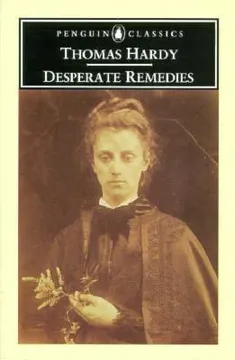


Plot Summary
A Love Left Unexplained
In 1835, young architect Ambrose Graye meets Cytherea Bradleigh, a beautiful young woman whose parents welcome him despite their reduced circumstances. She returns his affection, but recoils when he asks her to marry him, then leaves London without explaining why. Ambrose’s friend can offer only fragments: Cytherea once had an attachment to a cousin, and her mother later inherited an estate.
Ambrose eventually marries another woman, but his first love shapes his melancholy and imprudent decisions. After his wife dies, he names their daughter Cytherea, preserving the name that has haunted him. Decades later, when Ambrose falls from a church spire, his children inherit not comfort but debts and the consequences of his trusting nature.
The first generation establishes the novel’s central damage: an unexplained refusal becomes more powerful than a resolved loss. Ambrose does not merely remember Cytherea; he organizes his later life around an absence whose cause he cannot know. His financial credulity and emotional fixation are not separate flaws, but versions of the same habit of investing hope before testing reality. Naming his daughter after the lost woman carries that unresolved history into the next generation, where private secrecy becomes a force acting on people who never chose it.
The Graye Children Flee
After Ambrose’s fatal fall, Owen and his sister Cytherea discover that their father’s practice never supported the household. He had lost family property through bad loans and risky speculation, leaving debts large enough to draw the estate into Chancery.
Owen’s attempts to continue the architectural business fail, while their neighbours’ gossip makes their poverty feel like a public verdict. He secures temporary drawing work with Mr. Gradfield in the coastal town of Budmouth. Cytherea, educated but without a profession, plans to find work as a governess.
The siblings leave Hocbridge secretly, hoping to build a life beyond its creditors and scrutiny. Owen’s pride drives the departure; Cytherea accepts it because remaining would mean watching their prospects shrink in full view of the town.
The move is a practical escape that exposes how little control the siblings actually possess. Owen frames departure as self-command, yet his decision is shaped as much by humiliation as by economic calculation. Cytherea’s lack of a recognized occupation makes her future especially precarious: education gives her cultural polish but no reliable independence. Their father’s earlier mistakes therefore become a gendered inheritance. Owen can seek work, however poorly prepared; Cytherea must negotiate a labour market that values her appearance and manners while treating her skills as uncertain.
A Boat Reaches Shore
In Budmouth, Owen begins work under Mr. Gradfield and describes the office’s head draughtsman, Edward Springrove, to his sister. Cytherea has already received no answers to her first advertisement, so Edward’s poems and uncertain prospects fill the space left by her imagined future.
They finally meet when Owen is delayed inland during a seaside excursion. Edward reaches the departing steamer in time to explain that Owen has gone to the railway station, then walks with Cytherea to learn that the train she expected no longer stops there.
Their first conversation is slight, but the mutual attraction is immediate. As they row together over the next days, Edward prepares to leave for London. On his last evening in Budmouth, they confess their love and kiss, though he warns that an obstacle remains unexplained.
Their romance begins through anticipation as much as encounter. Cytherea falls for a portrait assembled from Owen’s anecdotes and Edward’s poems, while Edward is drawn to the sister he has heard about but not met. The missed train and delayed return create intimacy through inconvenience, not grand declaration. Yet Edward’s warning introduces an ethical fracture at the moment of emotional union: he knows there is information Cytherea needs, but postpones telling her. The novel makes tenderness and concealment arrive together, so that the happiness of the kiss already contains the conditions for later mistrust.
The Locket in the Lamplight
When Cytherea’s search for work reaches Knapwater House, Miss Aldclyffe hires her despite her inexperience as a lady’s-maid. The first evening is miserable: Miss Aldclyffe criticizes her work, then loses her temper when Cytherea answers back.
During the quarrel, Miss Aldclyffe asks about her father and recognizes that Cytherea is Ambrose Graye’s daughter. Earlier that night, Cytherea has seen Ambrose’s face inside the locket Miss Aldclyffe wears. The two women spend the rest of the night in an uneasy, sudden intimacy, though Miss Aldclyffe’s affection turns jealous when she learns Cytherea loves Edward.
Before morning, Captain Aldclyffe dies. Cytherea stays at Knapwater as Miss Aldclyffe’s companion, partly because grief has bound them together and partly because neither woman can bear another immediate separation.
The locket turns inherited memory into a physical encounter. Cytherea recognizes her father, but the older woman’s volatile tenderness makes the past more difficult to classify than a simple lost romance. Their intimacy is real, yet Miss Aldclyffe’s demand for emotional exclusivity shows that care can become possessive when it is shaped by long isolation. Cytherea’s decision to stay is not a clean act of forgiveness or employment strategy. It is an improvised response to grief, need, and the recognition that both women have been stranded by histories they have not disclosed.
Manston Wins the Stewardship
After Captain Aldclyffe’s funeral, Miss Aldclyffe decides the estate needs a steward and begins arranging for Owen to be excluded from the post. She advertises for a young, unmarried professional, then delays choosing among applicants until she can locate Aeneas Manston, an architect whose name she finds in a professional directory.
The lawyer prefers Edward Springrove, but Miss Aldclyffe selects Manston despite warnings about his temperament and limited country experience. Cytherea first meets him during a thunderstorm near the old manor-house.
He shelters her, plays the organ he has built, and leaves her unsettled by his beauty and intense attention. That evening Miss Aldclyffe learns Cytherea has written to Edward and to Manston, then discovers Edward is engaged to his cousin Adelaide Hinton.
Miss Aldclyffe’s hiring process is less an administrative decision than a private design. She uses the language of qualifications to bring a particular man close, while withholding the motive from Cytherea and the estate’s solicitor. Manston’s first encounter with Cytherea couples aesthetic power with unease: his music and composure influence her before she has grounds to trust him. At the same time, Edward’s engagement transforms the romance from a simple separation into a conflict among desire, promise, and incomplete knowledge. Each character is now acting on a different version of the same situation.
The Inn Burns
Before Manston takes up his post, a letter from his estranged wife reaches Miss Aldclyffe, forcing him to admit he is married. He says the marriage was secret and unhappy, and Miss Aldclyffe insists he bring his wife to Knapwater.
On the appointed day, Manston misreads the train schedule and fails to meet Eunice at Carriford Road Station. A porter guides her to the Three Tranters Inn, where she waits alone. That night a wind lifts sparks from a smouldering garden heap, setting the inn and neighbouring cottages alight.
The landlord is rescued, but Eunice is believed trapped inside. A watch, keys, and two charred bone fragments appear to confirm her death. The disaster devastates Farmer Springrove, whose uninsured cottages are destroyed, and gives the parish a tragedy that will later conceal another.
The fire converts ordinary negligence into a plot mechanism with social consequences. Farmer Springrove’s financial exposure is immediate and material, while Eunice’s apparent death creates a gap in the evidence large enough for other people to exploit. The novel carefully distinguishes what witnesses see from what they infer: a woman arrives, a building burns, and small remains are found, but certainty is assembled by communal expectation. The disaster therefore functions as both catastrophe and false closure. Its cost is paid by several households, yet the ambiguity it produces gives Manston room to reshape their futures.
A Marriage Bought by Pressure
Edward returns to London, while Miss Aldclyffe uses the destroyed cottages’ lease terms to pressure his father and manoeuvre Edward toward marrying Adelaide. She tells Edward that Cytherea has transferred her affections to Manston, then gives him Cytherea’s note about cancelling a meeting, stripped of its context.
Edward believes her account and writes a final rejection. Meanwhile, Owen’s leg becomes dangerously ill, and doctors cannot quickly agree on its cause. Manston first offers help only if Cytherea accepts him, then provides assistance without conditions, making refusal harder.
Miss Aldclyffe warns that the hospital may cost Owen his leg and insists marriage is Cytherea’s practical escape. Exhausted by poverty, worry, and Edward’s apparent betrayal, Cytherea agrees to marry Manston, setting the wedding for Old Christmas.
Cytherea’s consent is shaped by constrained choice rather than romantic conversion. The people around her translate economic vulnerability into advice, pressure, and supposedly benevolent intervention. Miss Aldclyffe manipulates Edward with a true document used to support a false interpretation; Manston’s help for Owen later becomes more generous, but it arrives after he has shown that he can make care conditional. The result is not a simple villain’s coercion, but a system in which the poor woman must decide under manufactured scarcity. Her decision feels rational because every alternative has been made frightening.
The Bride Sees Edward
On the icy morning of the wedding, Cytherea reaches the church with Owen and Manston after a thaw makes the roads passable. Edward is hidden behind a memorial screen and watches her leave the vestry as Manston’s bride. The sight breaks the composure she has maintained, and she cries out that Edward is dying.
Owen rebukes her for exposing her feelings, so she admits she still loves Edward and resolves to honour her marriage. Later, while alone in the garden, she sees Edward across a narrow stream.
He explains that Adelaide has married a wealthy farmer, leaving him free, and that Miss Aldclyffe persuaded him Cytherea loved Manston. He also received the note she had sent Manston, misread as a love letter. They discover how deception and timing separated them, but Cytherea refuses to undo her marriage.
The wedding makes inward feeling visible in the most public possible setting. Edward’s appearance does not create Cytherea’s love; it exposes that her effort to extinguish it has failed. Their later conversation restores the facts but cannot restore the lost moment in which those facts might have mattered. Cytherea’s refusal to flee is an act of agency, though not an uncomplicated one: she chooses to keep faith with a marriage entered under false impressions. The stream gives their reunion a literal boundary, making emotional recognition possible while preventing a practical return.
The Porter Breaks Silence
As Cytherea and Manston prepare to cross to France, railway porter Joseph Chinney confesses that Eunice left the burning inn before the fire and later paid him to conceal her return to the station. Owen reads Chinney’s account to Manston in a Southampton hotel.
Manston appears genuinely astonished, and Cytherea, terrified by the possibility that her marriage is invalid, asks to leave with her brother. Manston allows her to go while insisting he knew nothing of Eunice’s survival.
Edward, who brought the warning to Southampton, waits outside and arranges a room for Owen and Cytherea, then returns to London without forcing himself into their family decision. The new evidence does not prove where Eunice went after the station. It instead leaves Cytherea separated from Manston and uncertain whether she is wife, stranger, or something legally unresolved.
Chinney’s delayed confession demonstrates how conscience may arrive too late to prevent harm but still alter its meaning. His account disrupts a marriage without settling the facts, and the characters respond according to their different thresholds for certainty. Owen protects Cytherea through temporary separation, while Edward restrains his own desire to intervene because he cannot claim authority over her. Manston’s apparent surprise persuades Owen, but the evidence remains incomplete. The novel uses that gap to distinguish emotional trust from legal knowledge: believing a person innocent is not the same as proving the conditions of a marriage.
A Stranger Takes Eunice's Place
Back at Knapwater, Manston advertises for his missing wife and makes inquiries in London, while telling the rector that he hopes to clear his name. He eventually brings Anne Seaway to the estate and presents her as Eunice, claiming she has returned after the fire.
Cytherea, living with Owen, remains frightened that Manston may still have a legal claim over her. Owen’s illness slowly improves, but gossip about Cytherea’s marriage and separation makes recovery feel less like freedom than another public exposure. Edward helps investigate from London.
A poem Manston wrote for Eunice describes her eyes as blue, while Mrs. Morris remembers Eunice’s eyes as black. Cytherea recognizes the discrepancy as a possible clue. The question of identity, once buried beneath the fire’s apparent proof, becomes the centre of the siblings’ effort to establish whether Cytherea is truly free.
The substitute identity intensifies the novel’s concern with how social truth is manufactured. A woman can be accepted as a wife because a household, a name, and a set of expected behaviours support the claim. Cytherea’s danger is not only that Manston might deceive her, but that others may recognize the deception as legally sufficient. Her attention to the poem’s description of eyes shows how intimate detail can challenge public documentation. Yet the clue is fragile, dependent on memory and comparison. The narrative turns ordinary observation into an alternative form of evidence when official records have failed.
The Workbox Yields a Clue
Owen obtains the address of the lodging where Eunice stayed before the fire. Edward traces her possessions from the dead landlord’s neighbour to an auction and then to a pawnshop, finally buying an old workbox. Inside he finds a photograph of Eunice, one of Manston, and a verse in Manston’s handwriting.
The verse again describes blue eyes, deepening Cytherea’s suspicion that the woman at Knapwater is not Eunice. Manston has followed Edward’s search and intercepts the parcel Owen sends, replacing Eunice’s photograph with a portrait of Anne before returning it to the post.
Cytherea sees the mismatch between the poem and the woman’s black eyes; Owen then tricks Anne into looking closely at him and confirms their colour. Anne’s startled reaction and altered appearance convince him that Manston’s supposed wife is an impostor.
The workbox makes the past materially recoverable, but its evidence is vulnerable to interference. Edward’s painstaking route through auction records, a pawnbroker, and a crowded London household contrasts with Manston’s ability to alter a single photograph and redirect interpretation. The blue-eye discrepancy is powerful precisely because it is small and verifiable. Cytherea’s inference is not an intuitive revelation detached from evidence; it grows from remembered description, written verse, and observed appearance. Her reasoning also redistributes authority: the supposedly dependent young woman becomes essential to the investigation because she notices what the men’s legal and professional procedures miss.
A Grave Beneath Leaves
The rector and Edward consult a detective after Owen’s inquiries expose the false wife. Anne discovers Manston’s hidden letters, including Eunice’s account of her separation and a final unfinished message written at the Three Tranters on the night of the fire.
That night Manston secretly retrieves a sack from a bricked-up oven in his workshop and carries it to a pit in the plantation. The detective, Anne, and Miss Aldclyffe follow him separately. When the detective confronts him, Manston strikes him with a spade and escapes into the dark.
The detective and Anne reopen the pit and find a wrapped body. A long hair from the remains matches a hair kept from Manston’s pillow, proving that the grave contains Eunice. Anne is arrested for what she knows, while Manston’s flight makes the hidden murder an active pursuit.
The investigation reaches its proof through converging traces rather than a single confession: a letter, a concealed oven, a body, and matching hairs. Each clue revises an earlier account of the fire, turning apparent death into deliberate concealment. Anne’s discovery of the correspondence gives her a perspective Manston had tried to deny her, while her presence at the burial makes her vulnerable to suspicion despite being a coerced participant in his larger deception. The body beneath old leaves is the novel’s physical answer to years of interpretive uncertainty. It cannot explain motive by itself, but it makes denial impossible.
Manston Reaches Tolchurch
While police search for the fugitive Manston, Edward notices a disguised man moving toward Tolchurch beneath a bundle of straw. He fears Manston will seek Cytherea, who may still be his lawful wife, and runs across the fields to warn her.
Owen has ridden toward town without telling his sister; Cytherea is alone when Manston reaches the farmhouse. She bars the door, but he breaks a window and enters from the back, insisting that she belongs with him. She keeps a table between them until her hair comes loose and he catches her.
Edward arrives through the open window, pulls Manston away, and struggles with him until nearby men seize the fugitive. Cytherea survives the attack, but she cannot celebrate his arrest. Edward tells her that the buried woman was Manston’s murdered wife, and Cytherea admits she cannot grieve for him.
The final physical confrontation converts the novel’s long contest over Cytherea’s consent into immediate bodily danger. Manston’s claim that she belongs to him exposes the logic beneath his elaborate deceptions: he treats marriage as possession and her fear as an obstacle to overcome. Cytherea’s agility delays him, but it does not make her safe; Edward’s intervention and the arrival of other men are necessary. The rescue is deliberately not presented as a romantic reward. Cytherea is exhausted, legally unsettled, and forced to confront the fact that the man she once agreed to marry has become a threat.
Confession, Inheritance, Release
In gaol, Manston writes a confession: after Eunice escaped the inn, he met her at Knapwater, struck her during an argument, and killed her. He hid her body in the workshop oven, scattered bones and her belongings among the fire ruins, then invented the story of her survival and substituted Anne to deflect suspicion.
He dies by suicide before trial. Miss Aldclyffe, gravely ill, tells Cytherea that Manston is her son, born after a youthful betrayal and raised by Eunice; her long-standing plan was to bring him near and see him marry Ambrose Graye’s daughter.
Cytherea forgives Miss Aldclyffe, who dies the next morning. Her will leaves the estate to Manston’s wife, and Cytherea later refuses to benefit through him, allowing the rector to take it and provide a home for her and Edward.
Manston’s confession closes the evidentiary chain but does not redeem him; his explanation makes the murder’s motive intelligible without making it acceptable. Miss Aldclyffe’s revelation reframes her hiring scheme as a distorted attempt to repair two generations of loss by arranging a marriage. Her care for Cytherea and her manipulation of Edward coexist, showing how benevolent feeling can become ethically destructive when it treats other people as instruments of private repair. Cytherea’s forgiveness is not acquittal. Her refusal of the estate asserts a boundary against inheriting comfort through the very deception that injured her.
Epilogue
Fifteen months later, Edward and Cytherea marry at Carriford and make their home at Knapwater. Miss Aldclyffe’s will had left her property to Manston’s wife, so Cytherea could claim it as his widow, but she declines to keep an estate attached to his crime. The rector accepts the property, appoints Edward to manage it, and lets the couple live in the house.
Owen has regained his health and established himself professionally. In the quiet final scene, Edward rows Cytherea across the lake, recalling the first boat ride that began their love, now returned to them without the secrets and coercion that once governed it.
The sequel offers a resolution based not on restoring the old social order but on choosing what to inherit from it. Cytherea refuses the literal inheritance attached to Manston, while accepting a home secured through the rector’s generosity and Edward’s work. This distinction matters: she does not reject material stability, but rejects the fiction that wealth can erase the violence by which it became available. The lake recalls the lovers’ first intimacy, yet the scene now belongs to a marriage entered with knowledge and consent. The ending repairs the opening’s legacy of silence by making shared life possible without reproducing its concealments.
Analysis
Desperate Remedies builds its plot from the distance between what happens and what people believe has happened. Ambrose’s unexplained rejection of Cytherea Bradleigh becomes a family inheritance; the fire seems to settle Eunice’s fate; a note about a cancelled meeting becomes evidence of an affair; and a woman accepted as a wife may not be the person she claims to be. These reversals are not arbitrary surprises. Each depends on characters treating partial evidence as complete because economic pressure, desire, pride, or fear makes certainty convenient.
The novel is particularly alert to the material conditions governing women’s choices. Cytherea’s education cannot protect her from dependence, and her marriage decision is shaped by Owen’s illness, the prospect of poverty, and Miss Aldclyffe’s influence. Her consent is real in the narrow sense that she makes the choice, but the available alternatives have been distorted by other people’s power. The story therefore resists a simple division between romantic freedom and practical wisdom: survival itself can be used as leverage.
Manston’s intelligence makes him dangerous not because he sees more clearly than everyone else, but because he assumes that cleverness gives him ownership of consequences. He can manage a document, a witness, or a household, but cannot make his actions morally disappear. Against this, the investigation depends on ordinary forms of attention: Cytherea remembers a description, Owen compares evidence, Edward follows a workbox through London, and the detective reads physical traces. Justice emerges through cooperation among people who possess different fragments, not through a single heroic insight.
The ending offers repair without pretending that suffering can be reversed. Cytherea and Edward recover the possibility of shared life, but only after the deceptions are named and the inheritance is refused in its original form. The novel’s final moral distinction is between receiving security as a form of possession and building it through acknowledged trust.
Review Summary
Desperate Remedies, Hardy's first published novel, is a sensational Victorian tale combining mystery, romance, and Gothic elements. Readers appreciate Hardy's atmospheric writing, complex characters, and intricate plot, though some find it less polished than his later works. The story follows orphaned Cytherea Graye as she navigates love, secrets, and societal expectations. While not Hardy's best, many reviewers found it an enjoyable and intriguing read, showcasing early glimpses of his literary talent and themes that would become prominent in his later novels.
People Also Read


Characters
Cytherea Graye
The precarious heroineCytherea is Ambrose Graye’s daughter and Owen’s younger sister. Graceful, observant, and emotionally quick, she has been educated without receiving the practical training that would make her independent. Poverty forces her to seek work in unfamiliar households, where her beauty can bring attention but also unwanted assumptions about her character. She is drawn to passionate feeling, yet she is not merely led by it: she watches, remembers, and makes difficult judgments under pressure. Her strongest conflict is between private desire and the material security that a friendless woman must secure for herself. Cytherea’s warmth makes people confide in her, but her instinctive generosity can leave her vulnerable to those who treat affection as permission.
Edward Springrove
The poet with divided loyaltiesEdward is a thoughtful architect and occasional poet, the son of a farmer whose old inn and estate obligations tie him to Carriford. He is drawn to Cytherea’s vitality and responds to her with both tenderness and intellectual companionship. His introspective nature can become indecision: he delays telling her about an existing engagement, then allows other people to interpret her feelings for him. Edward is not a calculating seducer, but his reluctance to face painful consequences helps create them. He is also capable of sustained practical effort, using his architectural training, patience, and loyalty to pursue evidence when Cytherea’s safety is at stake.
Owen Graye
The proud protective brotherOwen is Cytherea’s elder brother, an aspiring architect who shoulders responsibility after their father’s death. His pride makes him acutely sensitive to class condescension, and he would rather accept hard work than appear dependent on richer people. He is practical in temperament, but his limited experience and illness leave him unable to shield Cytherea from every pressure. Owen loves her with a protective intensity that can become overconfident: he believes he can judge which man and which course are safest for her. His investigations later draw on patience and a strong sense of justice, while his devotion to his sister repeatedly forces him to recognize the limits of his authority.
Miss Aldclyffe
The guarded estate mistressMiss Aldclyffe is a wealthy, unmarried landowner whose pride and quick temper make her difficult to serve or understand. Beneath her command of the estate lies a deep hunger for intimacy, sharpened by years of secrecy and regret. She becomes attached to Cytherea and treats her alternately as confidante, dependent, and emotional possession. Her feelings are genuine, but she often confuses helping someone with arranging that person’s life according to her own wishes. Her history connects her to Ambrose Graye and to the estate’s steward, though she keeps the details closely guarded. Miss Aldclyffe’s contradictions make her both a source of refuge and a force of pressure.
Aeneas Manston
The polished stewardManston is a talented architect chosen to manage the Aldclyffe estate. Handsome, self-possessed, and musically gifted, he has a way of commanding attention without appearing to ask for it. His intellect is matched by a belief that strong desire can justify exceptional conduct, and he is skilled at presenting self-interest as necessity or honour. He can be considerate and attentive, particularly when seeking trust, but his generosity is difficult to separate from his need to control circumstances. Manston’s charm makes him compelling to others and difficult to assess, especially when they have only fragments of his past. His central weakness is not lack of intelligence but the conviction that he can manage every consequence.
Eunice Manston
The estranged first wifeEunice is Manston’s wife, an American-born former actress whose insecure circumstances leave her dependent on a husband who has sent her away. She longs for a stable home and continues to hope that their separation can be repaired, even after repeated neglect. Her letters reveal an emotional mixture of hurt, pride, and practical desperation. She is not simply a passive victim: she seeks help, changes lodgings, and tries to make choices despite having few resources. Eunice’s vulnerability is intensified by the social risks attached to being a woman alone, without reliable family or income.
Anne Seaway
The precarious companionAnne is a woman of limited means whose prospects narrow after losing a position as a housekeeper. She has known Manston since youth and is susceptible to the promise of affection and security he offers. Anne is observant, curious, and more capable of independent judgment than her precarious circumstances might suggest. She notices small inconsistencies in his conduct and searches for answers when she suspects he is withholding important facts. Her choices are shaped by economic need, but she is not without moral limits or courage.
Adelaide Hinton
Edward's practical cousinAdelaide is Edward’s cousin and long-standing fiancée, a self-sufficient woman who lives independently at Peakhill Cottage. Practical, steady, and sociable, she regards her relationship with Edward as familiar and secure rather than consuming. She enjoys the routines and authority of her household, and tends to assume that her own understanding of a relationship is shared by the other person. Her self-possession contrasts with Cytherea’s emotional intensity, though neither woman is simply a rival in a contest for Edward.
Ambrose Graye
The trusting architectAmbrose is a gentle, imaginative architect and the father of Owen and Cytherea. He is receptive to beauty and human feeling, but too trusting in both love and money. His inability to move beyond an unexplained romantic loss shapes his later marriage and the household’s financial instability. Ambrose’s affectionate intentions toward his children are real, yet his lack of practical discipline leaves them with debts and difficult choices. His story makes him a source of tenderness as well as a cautionary presence.
Farmer Springrove
Edward's weathered fatherEdward’s father is a farmer, cider-maker, and landlord of the Three Tranters Inn. Kindly, reflective, and accustomed to working alongside his men, he is emotionally close to his son and hopes marriage will give Edward steadiness. His concern for family honour and financial obligation is sincere, but he does not always see how his anxieties shape Edward’s choices. The fire and its consequences place him under severe economic and emotional pressure.
Reverend Raunham
The cautious moral witnessRaunham is Carriford’s rector, a relative of Miss Aldclyffe and a quietly attentive observer of the parish. His clerical standing and practical good sense make him a potential ally when the mystery around Manston becomes serious. He prefers measured inquiry to accusation, but he also understands that neutrality can protect the powerful at the expense of the vulnerable. His concern for Cytherea grows from genuine sympathy rather than a wish to control her.
Mrs. Morris
The loyal housekeeperMrs. Morris is the experienced housekeeper at Knapwater. She is kind to Cytherea and offers a grounded account of the household’s history, staff, and routines. Her recollections later provide a small but important detail that helps Cytherea question what others accept.
Joseph Chinney
The burdened railway porterChinney is a railway porter who encounters Eunice after the fire. Nervous and weak-willed, he accepts money to keep silent, then carries the secret until guilt overwhelms him. His confession arrives late, but changes the course of several lives.
Captain Aldclyffe
The aging estate patriarchCaptain Aldclyffe is Miss Aldclyffe’s elderly father and the former manager of the family estate. His declining health and death change the household’s balance of power, leaving his daughter responsible for decisions she has long avoided.
Plot Devices
The concealed family history
Memory crossing generationsAmbrose Graye’s youthful relationship with Cytherea Bradleigh appears at first to be a private heartbreak whose cause is lost. Its surviving traces, including the name given to Ambrose’s daughter and the image preserved in Miss Aldclyffe’s locket, connect the two women across decades. The hidden history affects hiring, intimacy, and the choices made for Cytherea, while the final disclosure explains why Miss Aldclyffe has so carefully drawn certain people together. This device makes the past active without making it immediately legible. The characters inherit emotional consequences before they possess the facts needed to understand them.
The false evidence of fire
A tragedy disguises a crimeThe burning of the Three Tranters destroys a building and leaves the parish with apparent remains, but not a reliable identification of the dead woman. The watch, keys, and charred bones encourage the community to accept a conclusion before the evidence can support it. That apparent certainty gives Manston time to conceal the real body and later present another woman as his wife. The fire also creates a separate financial crisis for Farmer Springrove, allowing private manipulation to hide inside a public disaster. Its meaning changes as the investigation uncovers what happened before, during, and after the flames.
Letters and likenesses
Private traces challenge public claimsLetters, photographs, poems, and a workbox carry evidence that characters cannot obtain through official channels. Cytherea’s note to Manston is misrepresented to Edward, while correspondence associated with Eunice clarifies where she stayed and what she knew. A poem’s description of blue eyes conflicts with the appearance of the woman claiming Eunice’s name. Manston manipulates the evidence by replacing a photograph, but the attempted alteration itself belongs to the chain of clues. These objects turn feeling into something testable: handwriting, dates, descriptions, and provenance can expose the gap between a plausible story and a true one.
The estate leases
Debt becomes leverageThe leases on Farmer Springrove’s cottages require him to maintain the buildings. When fire destroys them and insurance has lapsed, the terms may leave him liable for a ruinous rebuilding cost. Manston and Miss Aldclyffe use that exposure to influence Edward’s decisions about Adelaide and Cytherea. The leases give emotional manipulation a concrete economic instrument: the family’s poverty is not merely background but a pressure that can be applied by those who control land and legal interpretation. Their presence also makes the fire’s consequences persist after the flames have gone out.
The substituted identity
A name conceals the livingManston’s use of Anne Seaway as a woman presented under Eunice’s identity makes a personal relationship appear legally and socially settled. Clothing, altered appearance, a public name, and carefully managed testimony sustain the deception for a time. The device works because people often trust a household’s accepted account more readily than they verify it. Yet small inconsistencies, especially the eye colour described in Manston’s poem, let Cytherea and Owen test the claim. The false identity is central to the mystery and to the danger surrounding Cytherea’s own marital status.
About the Author

Download PDF
Download EPUB
.epub digital book format is ideal for reading ebooks on phones, tablets, and e-readers.








