


Plot Summary
The City Beyond the Downs
When schoolmaster Richard Phillotson leaves Marygreen for Christminster, eleven-year-old Jude Fawley hears the plan that will shape his life: Phillotson hopes to study there and enter the Church. Jude’s great-aunt Drusilla treats him as a burden, and farmer Troutham beats him for letting rooks eat a little corn. Still, Jude identifies with the birds and cannot bring himself to harm even earthworms.
He climbs to a barn roof, catches a fleeting glimpse of the distant city, and begins imagining it as a home for learning. A crooked doctor promises him Latin and Greek books in exchange for selling remedies, then fails to deliver. Jude finds the grammars elsewhere and discovers that scholarship means years of memorizing, not a secret shortcut.
Jude’s ambition begins not as a practical career plan but as a child’s search for a place where his mind might belong. His tenderness toward the birds and worms is more than a charming trait: it exposes the mismatch between an ethic of care and a world organized around usefulness, whether the farmer’s crop or the village’s judgment. Christminster gathers these longings into one distant image. Because Jude has only hearsay and glimpses to build on, the city becomes less a real institution than a promise he supplies himself.
A Marriage Built on Deception
At nineteen, Jude meets Arabella Donn while she and other women wash pig entrails, and her flirtation draws him away from his books. He abandons his plan to study one Sunday and begins courting her, despite recognizing that their interests scarcely meet.
When Arabella claims she is pregnant, Jude marries her although he has little money and is still an apprentice mason. She later admits she was mistaken, leaving him tied to a marriage founded on a false alarm.
Their differences surface in daily life, then sharpen when Jude must kill their pig and chooses a quick death over the prolonged bleeding Arabella wants for better meat. After he hears her friend helped stage the pregnancy ruse, Arabella leaves for Australia. Jude gives her his savings, then turns back toward Christminster.
Arabella and Jude enter marriage with incompatible measures of security. She seeks a husband and a more comfortable life; he mistakes desire and obligation for lasting intimacy. His choice to spare the pig, even at financial cost, makes visible the same conflict that will recur in his human relationships: tenderness resists systems that treat living beings as resources. Arabella’s deception is consequential, but Hardy does not make Jude merely its victim. He chooses the marriage, and his romantic idealism helps convert a brief attachment into a permanent trap.
Christminster's Closed Gates
After finishing his apprenticeship, Jude walks into Christminster expecting proximity to its colleges to bring him closer to their learning. At night he imagines the city’s former scholars moving through its courtyards; by daylight he finds work repairing their buildings, while the students pass him unseen.
He spots his cousin Sue Bridehead at an ecclesiastical shop, but delays approaching her, then arranges for her to work under Phillotson, now a village schoolmaster. Sue and Jude meet and visit Phillotson together.
Meanwhile, Jude writes to college heads asking how a poor, self-taught worker might enter; only one replies, advising him to remain a mason. Learning that tuition and fees would take decades to afford, Jude drinks, boasts in a tavern, loses his job, and leaves the city.
Christminster’s exclusion works through ordinary procedures rather than a dramatic villain. Jude can restore the college walls and master difficult texts, yet neither effort grants him access to the institution’s credentials. His labor keeps the intellectual world functioning while its members fail to recognize him as a potential participant. The single reply to his letters converts a vague obstacle into a calculation of years and money. Even Jude’s imagined procession of scholars reveals how thoroughly he has internalized the city’s prestige before testing whether it will admit him.
A Pulpit Instead of Oxford
Back in Marygreen, Jude tells a curate that academic advancement no longer matters to him, but he still hopes to serve through the Church. Sue, meanwhile, enters a teacher-training school at Melchester and sends Jude an urgent letter describing her loneliness.
He hurries there, finds her constrained by the institution, and learns that she has promised to marry Phillotson after training. Jude moves to Melchester and studies theology while working on cathedral repairs. Sue’s quick affection unsettles him, but she insists on maintaining limits.
Her unconventional opinions and openness about an earlier friendship with a Christminster student draw Jude closer, while her engagement keeps him silent. The arrangement begins to fracture when Sue is punished for staying out with Jude, and her wish to escape the school turns their friendship into a crisis neither can contain.
Jude’s turn toward ministry is not a clean spiritual conversion. It follows the collapse of his academic dream, and he suspects that ambition may have been disguised as religious calling. Sue attracts him both as a person and as an intellectual companion, but she also unsettles the beliefs he is trying to rebuild. Their intimacy grows inside a system that gives Sue limited choices: training, respectability, and marriage are tightly linked. Jude’s attempt to help her becomes a way to remain near her, a motive he does not fully admit even to himself.
The River Escape
After the training school confines Sue to a room for leaving with Jude, she escapes through a window and wades across the river rather than submit to the punishment. Soaked and shivering, she reaches Jude’s lodging, where he lends her his clothes, warms her, and lets her sleep in his chair while her garments dry.
During the night, Sue explains that a former university friend once asked her to live with him, but she refused the sexual relationship he expected. Her story makes Jude admire her independence even as it stirs jealousy and uncertainty.
At dawn she leaves for a friend’s home near Shaston. The school refuses to readmit her, and its advice that she marry Jude to protect her reputation forces both of them to confront the marriage Jude has concealed.
The river crossing makes Sue’s rebellion physical: she risks cold and injury rather than accept an institution’s authority over her movements. Yet refuge with Jude is not simple freedom. He shelters her without demanding sex, but his desire and her dependence coexist in the same small room. Her account of the earlier university friend establishes a recurring problem: men interpret emotional closeness as a promise of sexual possession, while Sue struggles to define intimacy on her own terms. The school’s response translates her independence into a reputational threat that only marriage can supposedly repair.
The Wedding Jude Witnesses
When Sue returns to Melchester for her belongings, Jude finally admits that he is still legally married to Arabella. Sue is hurt that he withheld the fact while encouraging her affection, though she acknowledges that she cares for him.
She nevertheless proceeds with her engagement to Phillotson, and asks Jude to give her away at the wedding. Jude accepts, then watches her take vows he believes she does not understand and cannot truly desire. Afterward, Sue and Phillotson leave for their honeymoon, while Jude remains alone in Melchester.
Sue soon visits her dying great-aunt Drusilla, tells Jude that life with Phillotson is physically unbearable, and shares a farewell kiss with him. Jude abandons his plan to become a clergyman and burns the theology books he had collected.
The wedding stages a painful contradiction: Jude’s loyalty to Sue makes him participate in the social arrangement that will confine her. His silence about Arabella has already damaged trust, so his grief cannot become a straightforward claim on Sue. Sue’s decision to marry Phillotson is similarly compromised by reputation and her own earlier promise. Afterward, the kiss and Jude’s burning of his books mark a shift in allegiance: he can no longer imagine preaching a doctrine that condemns the attachment he most values. Neither character escapes convention without carrying its injuries into the next choice.
Permission to Leave
Sue tells Phillotson that she cannot endure married life and asks to live apart, preferably with Jude. When Phillotson accidentally enters her room at night, she jumps from a window rather than remain beside him.
The next day he decides that keeping her would be cruel, and gives her permission to leave. Sue joins Jude, and the couple settle together in Aldbrickham without remarrying. The school committee condemns Phillotson for allowing his wife to go, dismisses him after a public dispute, and leaves him with a damaged reputation and little income.
He returns to teaching in Marygreen. Jude and Sue, meanwhile, build a daily life as companions, though they remain anxious that marriage will extinguish the tenderness they have found outside it.
Phillotson’s decision is an act of compassion that the surrounding community interprets as professional misconduct. He recognizes Sue as a person rather than property, but his kindness cannot protect him from the institutions that define a husband’s authority. Sue’s escape from the bedroom window makes the cost of the marriage unmistakable without turning Phillotson into a conventional villain. Their separation also complicates the novel’s moral geometry: the man who relinquishes power suffers materially, while the couple who seek a freer arrangement remain vulnerable to social judgment.
Two Divorces, No Vows
In Christminster, Jude finds Arabella working in a bar and learns that she married an Australian hotelkeeper named Cartlett, though she has left him and returned to England. She eventually asks Jude to divorce her so she can marry Cartlett legally in England.
Jude agrees, and the court dissolves both his marriage to Arabella and Sue’s to Phillotson. Sue and Jude continue living together, but Sue resists another wedding, fearing that legal vows will turn affection into duty. They even abandon a planned ceremony rather than repeat the scene of their previous mistakes.
Arabella later confirms her remarriage to Cartlett. Their new freedom gives Jude and Sue a home together, yet their refusal to make the relationship socially legible leaves them exposed to gossip and future economic penalties.
Legal divorce frees the characters from marriages that have become intolerable, but it does not supply an agreed meaning for the relationships that follow. Jude sees their love as sufficient commitment; Sue fears that formal obligation will destroy its voluntary character. Their hesitation is not simply a rejection of marriage as an idea. It is shaped by lived evidence, including the failures of their first unions and their fear of reproducing the same coercion. Their private freedom remains precarious because law and community still determine who may live together without penalty.
The Boy From Australia
Arabella writes that a boy born during her separation from Jude has been raised by her parents in Australia and is now being sent to him. Jude agrees to take the child, whom everyone calls Little Father Time, and Sue immediately welcomes him despite learning that he may be Jude’s son.
The boy’s solemnity and bleak view of life unsettle the household, but Sue becomes his caretaker and he begins calling her mother. Hoping to provide him a stable home, Jude and Sue try to arrange a marriage.
They retreat from both a registry office and a church ceremony, then eventually marry quietly and tell their neighbors they have done so. Their formal status changes, but their history remains known, and the community continues to treat them with suspicion.
Little Father Time arrives as both a child needing care and a test of the couple’s ideals. Jude argues that responsibility should not depend solely on blood, while Sue’s immediate tenderness makes that principle practical. Their marriage attempt exposes the tension between private conviction and social protection: they want the child to have a recognized home, yet dread the ceremony because of what their previous marriages taught them. Even after they marry, the neighborhood does not grant the clean beginning they hoped for. A legal act cannot erase a history already made public.
A Town Turns Against Them
At the Great Wessex Agricultural Show, Jude and Sue try to give Little Father Time a cheerful day, but the boy cannot stop thinking about how quickly flowers wither. Arabella watches them and recognizes their closeness.
Back in Aldbrickham, neighbors continue to gossip, Jude loses work, and a contractor dismisses him and Sue from repairing a church after people question their respectability. Jude resigns from a mutual-improvement committee when members imply his presence threatens its standing.
Unable to afford the house, he sells their furniture; Sue secretly releases their pet pigeons rather than let them be sold for meat. The couple leave town and spend years moving wherever Jude can find masonry work, until illness weakens him and they decide to return to Christminster.
Respectability functions here as an economic instrument. Suspicion does not merely wound Jude and Sue’s feelings; it removes commissions, allies, and housing until mobility becomes their only defense. Their choices at the agricultural show are tender but also socially visible, while Sue’s release of the pigeons repeats Jude’s childhood refusal to treat vulnerable creatures as mere property. The episode links private ethics to material survival: compassion offers no protection against a community that controls employment and reputation, yet the characters continue to act according to it.
Back to the Forbidden City
For two and a half years Jude and Sue travel for his masonry jobs, keeping away from places where their history is known. At Kennetbridge fair, Arabella encounters Sue selling cakes shaped like Christminster buildings and learns that Jude is ill and that the couple have two young children, with another expected.
She tells Sue she has become a chapelgoer, then later admits she still thinks of Jude. After Jude’s health improves slightly, he asks to return to Christminster, the city he has never stopped imagining as the center of learning.
Sue agrees despite doubting that it will welcome him. Their arrival coincides with the university’s Remembrance celebrations. Seeking lodging in the college district, Sue faces refusals because she has children, while Jude stays separately in a cheap inn.
The nomadic years offer temporary shelter from local judgment, but not security: Jude’s trade and health remain unstable, and Sue must turn domestic skills into income. Arabella’s appearance connects the present to Jude’s first marriage without resolving its emotional residue. His decision to return to Christminster is therefore not a rational recovery of his old plan. It is a return to the place that gave his hopes their shape, even after experience has shown that its doors are closed. The lodging refusals immediately turn that private pilgrimage into another encounter with exclusion.
The Children's Last Morning
Sue finds a temporary room for herself and the children, but the landlady’s husband orders them out by morning. Little Father Time interprets the family’s poverty, Jude’s absence, and Sue’s pregnancy as proof that he and the other children only cause trouble.
While Sue goes to wake them, she discovers that the boy has hanged himself and his two younger siblings. A note blames their presence for the family’s hardship. Jude cuts the children down, but a doctor cannot save them.
Sue collapses under the belief that her candid conversation with the boy helped drive his decision. The funeral draws curious onlookers, and when Sue later tries to uncover the coffins, Jude takes her home. She gives birth prematurely to another child, who is also dead.
The tragedy turns the couple’s private argument about suffering into an irreversible event. Little Father Time converts adult explanations of hardship into a child’s literal verdict on his own existence. Sue’s wish to speak truthfully was meant to respect him, but her words meet a mind already shaped by rejection and despair. The novel does not reduce the deaths to a single cause: poverty, social exclusion, the boy’s temperament, and Sue’s conversation converge. Her self-blame then becomes another pressure, transforming grief into a demand for punishment rather than mourning.
Sue Returns to Richard
After the children’s deaths, Sue’s beliefs reverse. She decides that her life with Jude was wrong and that the children died as punishment for it, though Jude rejects this interpretation. She asks to return to Phillotson and to make their marriage legal again.
He accepts her, and the two are remarried in Marygreen. Sue arrives prepared to treat the ceremony as atonement; Phillotson tries not to impose himself, but she insists on returning to the marital role. Jude, left alone in Christminster, learns what has happened and seeks relief in drink.
Arabella takes him to her father’s house, where she keeps him supplied with alcohol and encourages him to marry her again. In a fog of intoxication and obligation, Jude agrees, repeating the bond he had once escaped.
Sue’s reversal is a psychological response to bereavement, not a newly reasoned conclusion. She turns random suffering into evidence of guilt because guilt offers a structure in which grief can be acted upon. The return to Phillotson allows her to perform penance, while Jude experiences her choice as the destruction of their shared understanding. His own remarriage to Arabella is similarly shaped by weakness and pressure, not renewed love. Both characters seek moral certainty through formal marriage, but the ceremonies intensify rather than settle their emotional conflicts.
The Last Visit to Marygreen
As Jude’s health deteriorates, he asks Arabella to invite Sue, but Arabella refuses; he eventually travels through cold rain to Marygreen himself. Sue meets him in the church and admits that she still loves him, though she insists she must remain with Phillotson. She reveals that their remarriage had been only nominal until after Jude’s earlier visit, when she chose to consummate it as a punishment for her past.
Jude begs her to leave with him, but she refuses and sends him away. The journey leaves him gravely chilled. Back in Christminster, Arabella finds him at the station and leads him home, while Sue, alone in Marygreen, tells Mrs. Edlin that she intends to fulfill her marital duty despite her aversion.
The final meeting strips away the comforting explanations both characters have used. Sue confirms that her return to Phillotson is not evidence of desire; she has made physical submission part of a self-imposed sentence. Jude recognizes that their bond remains emotionally alive, but his appeal cannot undo her conviction that suffering must be answered through obedience. Their separation is therefore not a conventional romantic misunderstanding. It is the collision of two forms of moral response: Jude’s demand that love matter more than form, and Sue’s attempt to make form a vehicle for atonement.
The Bells Outlast Jude
Back in Christminster, Jude grows too ill to work and spends his last weeks recalling the education he could never reach. Arabella, meant to be watching over him, slips away to the university’s boat races and festivities.
As music and cheers carry through his open window, Jude asks for water and calls first for Arabella, then Sue; no one comes in time. He dies while Christminster celebrates its scholars. Arabella returns afterward and arranges for his body to be laid out.
At the coffin, she and Mrs. Edlin discuss whether Sue will attend; Sue does not appear. The university procession and the ignored stone mason end side by side, the institution’s public honors continuing while the man who longed for its knowledge is remembered only by a few people.
Jude’s death makes the book’s central exclusion brutally concrete. The university does not need to reject him again; its celebrations simply proceed within hearing distance of his unattended need. His final calls to Arabella and Sue reveal how dependent he has become on human care, while Arabella’s departure shows the limits of the practical bargain she made with him. The funeral scene gives no reconciliation or public recognition. Instead, the institutions that shaped Jude’s longing remain intact, and only a small circle witnesses the cost of his life among them.
Analysis
Jude the Obscure follows a man whose gifts are real but whose society refuses to convert them into status. Jude can learn languages alone, restore intricate stonework, and think seriously about theology, yet Christminster treats his poverty as a more decisive fact than his ability. His repeated returns to the city show how aspiration can persist after evidence has disproved its promise. He is not simply fooled by ambition; education offers him intellectual life, social mobility, and a vocation, all fused into one ideal he cannot easily relinquish.
Sue’s story makes the novel’s critique of convention more psychologically difficult. She questions marriage as a legal and sexual institution, yet public shame and grief repeatedly drive her toward the very forms she distrusts. Her choices are not presented as a neat triumph of principle or a simple defeat of reason. She is intellectually bold, emotionally responsive, and vulnerable to guilt, often in the same moment. Phillotson’s willingness to release her reveals that humane conduct can conflict with the respectable order, while the punishment he suffers exposes how institutions enforce that order through livelihood and reputation.
The novel also refuses to make love a simple refuge. Jude and Sue find a rare companionship, but they cannot protect one another from class exclusion, economic precarity, or their own contradictory beliefs. Little Father Time’s despair brings those pressures into the home, where adult attempts at honesty and care prove insufficient. The tragedy is not that the characters lack insight. They recognize many of the forces constraining them, but insight does not provide power over them. Hardy’s central unease lies in the distance between understanding a cruel arrangement and being able to live outside it.
Review Summary
Jude the Obscure is Hardy's final and most controversial novel, exploring themes of class, education, marriage, and religion through the tragic story of Jude Fawley. Readers find it emotionally devastating yet beautifully written, praising Hardy's prose and complex characters. Many consider it a masterpiece of literature, though its bleakness and criticism of Victorian society sparked outrage upon publication. The novel's unflinching portrayal of human suffering and societal constraints continues to resonate with modern readers, despite its challenging subject matter.
People Also Read









Characters
Jude Fawley
The self-taught dreamerJude is a working-class mason whose hunger for classical learning and religious service begins when his schoolmaster leaves for Christminster. He studies alone while baking bread and repairing churches, treating education as both intellectual nourishment and a route beyond the limits of his birth. His compassion extends readily to animals and people in distress, but his romantic imagination often makes him mistake a powerful feeling for a durable plan. Jude is reflective without being consistently self-knowing: he can diagnose the barriers around him, yet repeatedly underestimates how poverty, desire, and social convention will shape his choices. His relationship with Sue brings out his tenderness and his need for companionship, while his work reveals a practical skill the institutions he admires fail to value.
Sue Bridehead
The restless nonconformistSue is Jude’s cousin, a teacher and designer whose quick intelligence and nervous independence make her resistant to prescribed roles for women. She values companionship and intellectual exchange, but is wary of sexual expectation and of institutions that turn affection into obligation. Her arguments against conventional marriage are not detached theories; they arise from a sharp awareness of how little freedom women are granted once social respectability becomes the price of security. Sue can be affectionate, teasing, and remarkably perceptive, yet she is also changeable under pressure, especially when shame or grief unsettles her confidence. Her relationship with Jude draws together an unusual closeness of mind and feeling, while exposing her difficulty in reconciling desire, duty, and personal autonomy.
Arabella Donn
The practical survivorArabella is a pig breeder’s daughter who understands courtship as a route to security and approaches social rules with practical flexibility. She is sensual, confident in her appeal, and quick to improvise when money or circumstance shifts against her. Unlike Jude, she does not build her identity around distant intellectual ambitions; she measures choices by their immediate consequences and the prospects they offer. Her bluntness can make her seem callous, especially beside Jude’s tenderness, but she is not simply a caricature of appetite. Arabella recognizes that women with limited resources often have to bargain within systems they did not design. Her relationship with Jude reveals the gulf between his idealism and her realism, as well as the ways both can use marriage to seek a form of safety.
Richard Phillotson
The displaced schoolmasterPhillotson is the village schoolmaster whose ambition to study at Christminster first gives Jude a model for intellectual striving. He is thoughtful, restrained, and more compassionate than the conventions he has inherited, though his limited opportunities have taught him to live within them. His affection for Sue grows from admiration and companionship, but he struggles to understand the distance between his own expectations and her experience of marriage. Phillotson’s conflicts are not those of a tyrant seeking control; they arise from his desire to be decent while remaining part of a society that rewards conformity. His relationship with Jude shifts from formative teacher to rival in love, then becomes entangled with the question of whether kindness can survive public disapproval.
Little Father Time
The solemn childKnown by a nickname that reflects his prematurely grave manner, Little Father Time enters Jude and Sue’s household as a child with a strikingly adult view of hardship. He is quiet, observant, and difficult to interest in the ordinary pleasures adults offer him. His seriousness makes him unusually sensitive to the insecurity surrounding his family, and he listens closely when adults discuss poverty, responsibility, and the future. Rather than treating him as merely quaint or precocious, the novel presents his pessimism as a response to circumstances that children should not have to interpret. His presence tests Jude and Sue’s ideals of care, parenthood, and honesty, while revealing how social instability reaches even the youngest member of a household.
Drusilla Fawley
Jude's stern great-auntDrusilla raises Jude after his parents die and runs a small bakery in Marygreen. Her sharp tongue and insistence that the Fawleys should avoid marriage reflect a family history she sees as a warning. Though she offers Jude a place to live, she treats his aspirations as unrealistic and his dependence as an inconvenience. Her experience makes her more perceptive about the risks of marriage than she admits, but she expresses care through scolding rather than encouragement.
Mrs. Edlin
The candid village allyMrs. Edlin is Drusilla’s neighbor and caregiver, later one of the few people willing to stand by Jude and Sue. She is direct, generous, and skeptical of both fashionable theory and rigid religious judgment. Her long experience gives her a practical understanding of marriage’s costs, but she does not pretend to have a system for fixing other people’s lives. She offers food, shelter, and unvarnished advice when more respectable acquaintances turn away.
Physician Vilbert
The itinerant fraudVilbert is a traveling quack who sells dubious remedies to rural households and presents himself as a learned man. Jude briefly trusts him as a possible source of Latin and Greek books, only to discover that Vilbert values sales more than instruction. He later reappears around Arabella, offering another dubious product. His role links the countryside’s appetite for knowledge and improvement to the opportunists ready to exploit it.
Mr. Donn
Arabella's calculating fatherMr. Donn breeds pigs and treats family life with the brisk practicality of a small tradesman. He supports Arabella’s maneuvering when it suits the household and is willing to make her romantic choices a matter of convenience. His presence helps show the limited economic world in which Arabella learns to value marriage and livelihood. He is not a major strategist, but his commercial habits reinforce her instinct to treat survival as a negotiation.
Cartlett
Arabella's Australian husbandCartlett is an innkeeper in Australia who becomes Arabella’s husband there and later figures in her attempts to establish a secure life in England. His role is largely practical: his public-house and willingness to marry shape Arabella’s choices, while his comparatively conventional expectations contrast with Jude and Sue’s unsettled arrangements. He helps reveal that Arabella’s relationships are strongly influenced by economic security and the prospects of running a business.
Richard Gillingham
Phillotson's pragmatic friendGillingham is Phillotson’s old friend and fellow schoolmaster, a sensible observer who warns him about the professional and social consequences of letting Sue go. He does not share Phillotson’s moral reasoning, but he listens carefully and offers grounded advice. His practical outlook highlights the gap between private compassion and public judgment, especially when Phillotson’s choices threaten his livelihood.
The Christminster friend
Sue's intellectual companionSue’s former university friend is an educated man who shares books and long walks with her, treating her as an intellectual companion. He wants a sexual relationship that she does not accept, and their arrangement ends with his illness and death. Though absent from the main action, his influence helps shape Sue’s skepticism about conventional religion and gender roles. Her memory of him remains part of the private history Jude struggles to understand.
Anny
Arabella's blunt friendAnny is Arabella’s practical friend from the pig-washing days. She helps Arabella interpret courtship as a path to marriage and later keeps in touch with her across changing circumstances. Her advice reflects the frank, survival-minded counsel women share in their limited social world.
Farmer Troutham
The harsh employerTroutham hires Jude to scare rooks from his corn and beats him when Jude lets the birds feed. His punishment teaches Jude how little room the village leaves for compassion when it conflicts with property and profit.
Miss Fontover
The ritualistic shopkeeperMiss Fontover runs the ecclesiastical shop where Sue works in Christminster. She values Anglican ritual and decorum, and disapproves of Sue’s private interest in pagan statuary. Her conflict with Sue helps prompt the young woman to seek a more independent occupation.
Plot Devices
Christminster
The distant gate of learningThe imagined university city organizes Jude’s ambitions from childhood. He first sees it as a glow beyond the downs, then spends years learning languages and saving money in the hope of entering its colleges. On arrival, he discovers that proximity does not grant access: he can repair the buildings while students and masters remain beyond reach. His eventual return shows that the city retains emotional power even after his hopes of admission collapse. Christminster links class exclusion to Jude’s habit of turning an institution into a personal promise.
Marriage and divorce
The law's binding machineryMarriage repeatedly converts temporary feeling, social pressure, and practical need into a legal condition with lasting consequences. Jude marries Arabella after her pregnancy claim; Sue marries Phillotson under the weight of reputation and a prior promise. Divorce later frees both couples legally, but it does not settle what they owe one another or what their relationships mean. The characters repeatedly debate whether affection, sexual partnership, public recognition, or the formal ceremony makes a marriage real. This device drives both plot and psychological conflict by making private choices answerable to law and social convention.
Allusions and scripture
Borrowed language, unstable meaningJude reads classical and religious texts as tools for learning, consolation, and self-understanding. He often applies their phrases to his own life, while Sue questions the authority and interpretation of religious writing. As their circumstances change, the same inherited language can seem hopeful, irrelevant, or accusatory. Their disagreements about scripture and classical thought trace their changing beliefs without supplying a stable answer from outside the story. The device also connects the university’s learning to everyday hardship: Jude possesses fragments of great traditions, but institutions control access to the training and status that would make them count.
Animals and suffering
Compassion tested by necessityJude’s refusal to harm rooks and worms introduces his instinctive sympathy for vulnerable life. Later, his distress during the pig killing contrasts with Arabella’s practical concern for meat and income. Sue’s care for Jude’s pigeons leads her to release them rather than let them be sold. These episodes do not make the characters morally pure; they show how ordinary needs force decisions that injure what someone loves. Animal suffering gives concrete form to the novel’s larger attention to how systems of livelihood and custom demand cruelty from people who would rather avoid it.
Little Father Time
A child mirrors adult despairThe boy’s grave manner and pessimistic interpretations make him a sensitive measure of the household’s instability. Jude and Sue try to offer care, education, and a family place, yet he absorbs the social rejection and material hardship around them. His presence tests their belief that honesty and affection can protect a child from the world’s conditions. His actions precipitate the novel’s most devastating crisis, making this device explicitly tragic rather than merely symbolic.
About the Author



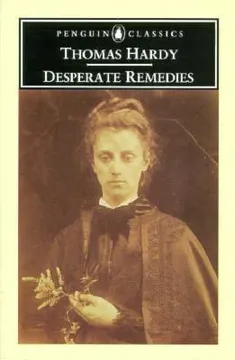

Download PDF
Download EPUB
.epub digital book format is ideal for reading ebooks on phones, tablets, and e-readers.








