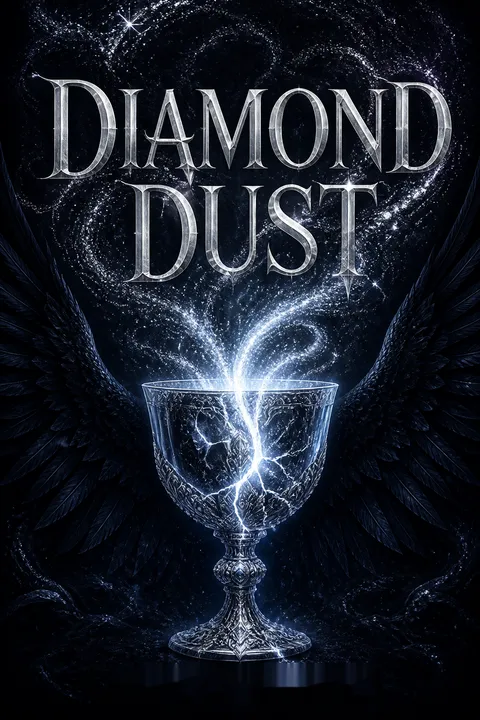


Plot Summary
Daisy Becomes the Champion
Two days after fae seize Daisy from her family, she travels with Tarian, a disgraced prince whose Fallen companions have lost their wings and status. Stormbacks carry them through violent weather toward the Obsidian Court. Their flight leaves Daisy terrified, but Tarian steadies her and explains the imbalance poisoning Faerie.
He plans to enter her in the court games, a political blood sport where nobles use champions as disposable pieces. A human contender will make him look like a fool, buying time for his real work. Daisy recognizes that surviving the spectacle will make her a target, yet she agrees to play along. She has little magic, no map of this world, and a fierce reason to stay alive: her family is still waiting for her.
Daisy’s captivity is not merely a change of setting. It strips away the structures that made her dangerous in the human world: preparation, familiar rules, and trusted backup. Tarian’s proposal turns her apparent weakness into a public role, but it also makes her a political instrument. Their bargain depends on a tension between agency and coercion: she chooses to help, yet the choices available to her have been narrowed by abduction and necessity. Her fear during the flight matters because the story does not equate competence with invulnerability. Daisy can be frightened and still decide what she is willing to risk.
Family Crosses the Fringe
In San Francisco, Lexi blames herself for failing to protect Daisy, while Kieran and their team discover that fae have been crossing portals with little interference. A desperate human has even traded for passage into Faerie, confirming that the crossings reach beyond Daisy’s kidnapping.
Lexi’s spirit-tracking cannot locate Daisy once she passes into the other realm, so the family gathers supplies and crosses anyway. At the fringe, Kieran, Lexi, Zorn, Mordecai, and their allies fight past Celestials who have failed to stop fae traffic.
On the road beyond, Lexi finds spirits stranded in the borderland because no afterlife claims them. She questions dead fae about Daisy’s trail, learning that rival courts want her for the power she can awaken.
The rescue plot enlarges Daisy’s personal danger into a political and metaphysical crisis. The portal station is a concrete sign of institutional failure: commerce has made passage routine while the guardians meant to control it stand aside. Lexi’s spirit magic, normally a reliable means of finding people, fails at the border, forcing her to act without certainty. Her choice to help trapped spirits even while racing to save Daisy reveals that care is not limited to family, though urgency gives it an order. The parallel journeys also create deliberate dramatic irony: Daisy faces immediate threats while her family struggles to understand what kind of world she has entered.
A Diamond Mark Appears
The Fallen take Daisy to the Obsidian Court’s dungeon, where she is shackled and denied basic comfort. After guards consider her for the king, she survives by keeping still and concealing her anger until they leave. Kayla and Lennox then bring her to a mind-shield practitioner, whose painful spell is meant to protect her thoughts.
When the practitioner notices that Daisy’s mark looks like diamond dust rather than ordinary black magic, she kills him before he can expose her. Tarian later visits in the court’s shadow magic, publicly treating Daisy as a possession to preserve their cover. He discovers the bright markings at her nape and warns her to hide them. His protection offers no safety from the court’s wider appetite.
The dungeon teaches Daisy that endurance can be an active tactic. She does not mistake restraint for surrender; she delays violence until it improves her odds, then acts decisively when discovery threatens the plan. The mind-shield scene makes that strategy literal: privacy is a form of survival in a society where powerful fae can enter another person’s thoughts. The diamond mark complicates concealment by making Daisy visible in a new way. Tarian’s staged cruelty is necessary, but it wounds her precisely because their private trust has grown. The court’s rules do not make it just; they make its violence legible enough for Daisy to begin exploiting it.
The Chalice Has a Choice
Tarian’s chamber gives Daisy a brief refuge, but a memory of Princess Elamorna humiliating him exposes the cruelty behind his court persona. Daisy responds with solidarity rather than pity, then tells Tarian what Eldric, a scholar of Faerie’s sacred records, has revealed.
Daisy is the crystal chalice: she can channel power into another, store stolen magic, or weaken a wielder by taking it. Using her power requires her consent, and stopping it could defeat Tarian’s plan to restore balance.
Daisy chooses to help him, knowing that choice may cost her life. Eldric supplies painful devices for training her mental defenses and magic. As Daisy and Tarian share their histories and grow intimate, her commitment becomes personal as well as strategic.
The chalice revelation changes the story’s central question from whether Daisy can survive magic to whether she will consent to wield it. Her power has three morally distinct forms: enabling another, keeping power in reserve, and taking it away. None is automatically benevolent; the decisive safeguard is her ability to choose. That design also challenges Tarian’s habit of treating sacrifice as a foregone conclusion. Daisy’s agreement is not simple obedience, because she understands the danger and retains the capacity to refuse. Their intimacy develops in the same space as their tactical partnership, making trust both emotionally sustaining and politically consequential.
The Court Tests Her Mind
Daisy practices drawing small amounts of magic from the Fallen, learning that a careless attempt can provoke a lethal response. When the noble Glimrey forces his way into her mind, Tarian intervenes and threatens him for probing his supposed toy. The attack proves Daisy’s shield is not yet reliable and that the court suspects Tarian knows more about a bridge to the human world.
In private, Tarian explains how his birth as a seventh son of a seventh son made him dangerously powerful. His family’s fear and a brother’s betrayal left him trapped under the Obsidian king’s magic. Meanwhile, Daisy improves her shielding and learns to make parts of her thoughts vanish from mindgazers, giving the pair a hidden advantage.
Glimrey’s intrusion turns abstract training into an immediate breach: Daisy’s mind is not a safe interior but contested territory. Her emerging ability to hide thoughts marks a shift from merely resisting surveillance to controlling what others can know. Tarian’s history explains why he survives through performance and controlled disclosure. Exceptional power made him a threat before he had the political position to use it safely, so his practiced arrogance conceals vulnerability as much as it intimidates. Their partnership becomes more equal as Daisy acquires information and tools Tarian cannot simply supply. The court’s surveillance and Tarian’s history both show power operating through access, not strength alone.
Daisy Enters the Lion’s Court
Tarian brings Daisy into the Court Hall dressed to attract notice, presenting her as a human toy and his champion. Daisy uses their staged intimacy to unsettle the nobles and disguise how much she understands. When Elamorna attacks her with mind magic, Tarian channels power through Daisy and breaks the assault, alarming the princess.
The king appears with the diamond chalice, and Daisy feels its power answer her presence. At the gathering, corrupted shadows crawl over her and whisper that she does not belong. Tarian redirects her attention before the magic can take hold. Later, the shadows become a direct attack, cutting and piercing Daisy while the court watches. She survives only because Tarian and Faelynn drive the assault back.
The court scene makes performance a weapon, but it also exposes the limits of performance. Daisy and Tarian can manipulate the audience’s assumptions about a human slave, yet the princess can still attack outside the safety of their script. Daisy’s instinctive response to the shadows is especially significant: the threat is not only physical but contagious, aimed at altering her from within. Tarian’s instruction to redirect her attention treats desire and fear as openings through which corruption might enter. The diamond chalice’s response suggests Daisy is connected to the crisis more deeply than she yet understands, while the court’s spectatorship turns her suffering into entertainment.
The Games Turn Bloody
The court games begin with prisoners fighting champions, and the king orders that Daisy be hurt but kept alive. Her first opponent is a larger fae who expects an easy victory. Daisy pretends to slip on the blood-slick floor, then uses a throwing knife, a blow to his groin, and her magical blade to kill him in what looks like a panicked accident.
She returns to the holding area alive, but an attacker ambushes her in the night and breaks her ribs. A mysterious, slight female champion drags him away and quietly protects Daisy. The next day, still injured, Daisy kills the same attacker by throwing knives and driving her transforming blade into his heart. The king then orders her brought to him.
Daisy’s first victory works because she understands that being underestimated is more useful than being admired. She performs incompetence so convincingly that even Tarian initially misreads her, turning the arena’s contempt into cover. The night attack shows that the games extend beyond their formal rules: champions and patrons can arrange violence in advance. The unknown woman’s intervention introduces a second hidden player, one whose motive is unclear but whose actions matter. Daisy’s second fight strips away the comedy of the first. Her body is damaged, and survival now depends on continuing to act through pain rather than waiting for ideal conditions.
The Quiet Champion’s Warning
Before the next bout, the unknown female champion and Daisy share the holding area’s scarce food and water, though neither fully trusts the other. They are paired against each other in the arena. Daisy tries to fight, but the woman moves with uncanny speed and repeatedly outmatches her.
During their struggle, she relays Zorn’s survival teachings and tells Daisy that Tarian cannot free himself without her. She also places Daisy’s weapons within reach. Then she guides Daisy’s own dagger into her body and dies, making the duel appear finished.
Her words leave Daisy with a terrifying deduction: she must reach the king herself. The guards strip away some of Daisy’s weapons and escort her toward the royal chambers, where the king intends to take control of her.
The champion’s apparent betrayal is actually an act of costly instruction. She cannot openly explain her identity or plan, so she uses the language Daisy already trusts: Zorn’s lessons about survival and action. The duel becomes a message delivered through physical risk, not a clean exchange of information. Her death forces Daisy to interpret what she has heard under immediate pressure. The scene also complicates the arena’s moral order: a combatant can be both opponent and ally, and the performance of killing may conceal a deliberate sacrifice. Daisy leaves the ring with no certainty, only a specific responsibility she must test.
The King’s Room Becomes a Trap
The king’s attendants chain Daisy in his private chamber and whip her until her clothes are destroyed, convinced that pain will make her compliant. Daisy endures the beating while hiding the knife the dead champion placed on her back. When the king prepares to use her, Daisy draws the blade, kills his attendants, and attacks him.
She steals at his magic, turning his own power against him, but he keeps fighting despite deep wounds and a severed neck. The corrupted magic animating him prevents ordinary injury from ending his life. Daisy realizes that she must drain the source, not simply cut his body. As the door breaks open and Tarian arrives, she keeps siphoning until the king’s magic fails and his head comes free.
The torture scene strips the conflict to the difference between bodily injury and the deeper source sustaining the king. Daisy survives not because pain is negligible, but because she refuses to let pain define the limits of her action. Her hidden knife, planted earlier by the mysterious champion, converts apparent helplessness into a delayed counterattack. The king’s unnatural persistence clarifies the nature of corruption: it can preserve a body while poisoning the system that gives it life. Daisy’s ability to drain magic is therefore not merely a stronger weapon. It is the only response that reaches the cause rather than the visible symptom.
Tarian Breaks His Cage
As the king’s magic disappears, the corrupted body collapses and Tarian’s obsidian restraints break away. His tattoos turn to diamond dust, his eyes change, and his wings return. He and Daisy then confront Elamorna, who attacks with stolen chalices. Daisy disables their power while Tarian fights the princess; afterward, Daisy drains the magic sustaining her body.
They burn the royal chambers, free servants and slaves, and leave the remaining court to face the consequences of its corruption. Tarian explains that he had planned to restore Faerie’s balance and then offer his life to an ancient Oracle to repay the Fallen for their lost wings. Daisy agrees to help activate the chalices, even though the process is expected to kill her.
Tarian’s release is both literal and symbolic: once the king dies, the marks that enforced his imposed identity give way to the signs of his original power. Yet freedom does not erase what the court did to him or solve Faerie’s wider crisis. Daisy’s role remains essential because she can disable the stolen chalices and finish what Tarian’s restored strength cannot. The aftermath distinguishes punishment from repair: the royal household is destroyed, but servants and slaves are released rather than folded into another regime. Tarian’s plan to die for the realm repeats his old belief that duty must consume the self. Daisy’s next choice is shaped by that belief.
The Chalice Takes Daisy
Daisy and Tarian stand together inside Eldric’s arrangement of chalices. The objects awaken as Daisy enters, and she takes the diamond chalice while Tarian channels the power meant to restore Faerie’s balance. The force overwhelms her body; she can stop it, but doing so would leave the realm’s corruption unresolved.
Daisy dies before she can complete the process, and her soul crosses into the afterlife. Lexi, Kieran, and the rest of Daisy’s family reach the castle as Tarian grieves over her body. The Faerie death god tries to keep Daisy in his domain, but Lexi uses spirit magic and the chalices to reach her. With Kieran, Faelynn, and Jack repairing Daisy’s body, Lexi pulls her soul back across the veil.
The ritual makes consent painfully consequential. Daisy understands the cost and chooses to proceed, but understanding does not grant control over the magnitude of what follows. Her death fulfills the danger embedded in the chalice’s power, while the family’s arrival gives the story a counterforce to solitary sacrifice. Lexi’s rescue does not undo Daisy’s decision; it makes survival possible after the choice has already been made. The scene also turns the book’s competing systems of magic into cooperation: Faerie’s chalices, Lexi’s spirit work, Kieran’s physical intervention, and Faelynn’s healing each address a different part of the crisis.
The Gods Offer a Throne
Daisy returns to her body as Lexi’s team fights the undead forces sent by the death god. Once the family and Tarian’s Fallen escape the castle, the Divine Collective reveals that Tarian and Daisy are fated mates and that the gods had watched, and wagered on, their ordeal.
The gods offer Tarian the Diamond Throne, but Daisy rejects a future that would leave her trapped in Faerie and Tarian ruling amid further bloodshed. Kieran negotiates a different settlement: Tarian may live in the human world with moderated magic, keep his title, and visit Faerie, but he gives up the throne. Some Fallen return to court; seven choose to follow him and guard the portals. Daisy and Tarian leave together.
The gods’ revelation gives cosmic purpose to events without making their manipulation benevolent. They treated suffering as a wager, while Daisy and Tarian experienced its bodily and emotional costs. Daisy’s refusal of the throne is not a rejection of Faerie’s needs; she has already helped save the realm. It is a refusal to let divine destiny dictate what a worthy life must look like. Kieran’s negotiation translates that refusal into institutional terms, including portal guardianship and limits on Tarian’s magic. The resolution thus favors a negotiated relationship between worlds over either conquest or isolation.
Epilogue
Six months later, Tarian and the Fallen have settled into the human world, learning its customs while Kieran works to organize portal guardianship. Daisy keeps her new magic private, choosing to remain publicly identified as a Chester so she can continue moving through human society without becoming another target.
At a family gathering, the former court allies trade jokes with Lexi’s crew, and Tarian tries, unsuccessfully, to improve Lexi’s wardrobe. Daisy and Tarian have built a home together, while Mordecai and the rest of the family remain close. When Daisy’s trap sends Mordecai tumbling, the laughter around the kitchen makes clear that the rescue is over and ordinary trouble has returned.
The epilogue measures resolution through domestic repetition rather than ceremony. Tarian’s place in the family is visible in shared meals, teasing, and his failed effort to advise Lexi on clothes, not in a crown or formal title. Daisy’s choice to conceal her magic is practical self-protection, but it also preserves the identity she values in a society that might resent a power capable of stripping magic away. The final prank on Mordecai restores the mischievous family dynamic that Daisy feared losing. Their peace is not an absence of danger so much as a life they can once again shape together.
Analysis
Diamond Dust builds its romance and its fantasy crisis around the same question: who has the right to decide what another person is for? The Obsidian Court treats champions as disposable, Tarian’s captivity makes him an instrument of royal power, and the gods treat mortal lives as pieces in a wager. The chalice offers a counter-model, because Daisy’s abilities depend on her consent. Power can pass through her, remain with her, or be taken away, but the choice is hers. This makes her agency more than a character trait; it is the story’s governing magical principle.
Daisy and Tarian become partners through reciprocal exposure. He can hear her thoughts, but she gradually learns to establish spaces he cannot enter. She sees his humiliations and his capacity for cruelty, while he sees the fear beneath her practiced competence. Their intimacy grows not because danger magically removes their differences, but because each recognizes the other’s capacity to choose. The romance therefore gains force from negotiation: Daisy does not simply rescue Tarian, and Tarian cannot claim that his sacrifice gives him ownership of her.
The book also distinguishes healing from punishment. Destroying the corrupt royal household ends one source of harm, but it does not automatically mend the realm or settle the human world’s vulnerability. Daisy’s magic can remove corrupted power at its root, while the final bargain creates a practical system for guarding the border. The resolution rejects both total isolation and a return to Faerie’s old hierarchy. Tarian can live outside the throne’s reach, the Fallen can choose where they belong, and Daisy can keep her human identity without exposing every part of herself.
The gods’ revelation does not erase the pain they allowed. Instead, it sharpens the book’s skepticism about benevolent authority: a fate may be meaningful to those who foresee it and still be coercive to those forced to endure it. Daisy’s insistence on bargaining with the Divine Collective is the clearest culmination of her arc. She remains loyal, loving, and willing to risk herself, but she no longer accepts sacrifice as proof that someone else understands what is best for her.
Review Summary
Diamond Dust by K.F. Breene receives overwhelmingly positive reviews (4.6/5 stars) as the conclusion to the Shadowbound Fae duology. Readers praise the fast-paced romantasy featuring unhinged FMC Daisy and sarcastic MMC Tarian, whose chemistry and banter captivate throughout. The story follows Daisy navigating deadly fae court games while her found family from the Demigods of San Francisco series fights to rescue her. Reviewers highlight the witty dialogue, strong character development, morally grey protagonists, direct communication between leads, and satisfying HEA ending that perfectly wraps up this spin-off series.
People Also Read





Characters
Daisy
The tactical humanDaisy is a human trained by Zorn to assess threats, hide her intentions, and survive without waiting for rescue. She is sharp, irreverent, and emotionally guarded, but her loyalty to her family repeatedly overrides her instinct to keep people at a distance. In Faerie, her lack of familiar magic forces her to study new dangers rather than rely on inherited power. Her bond with Tarian challenges her belief that vulnerability is a liability, while the chalice makes consent and responsibility central to her choices. Daisy’s wit is not a break from danger; it is one of the ways she keeps thinking when others expect her to panic.
Tarian
The exiled Celestial princeTarian is a powerful Celestial prince trapped in the Obsidian Court and forced to use its corrosive magic. He combines rigorous training and political intelligence with a cultivated playboy’s humor, using charm to mask the pain of exile and public humiliation. His remarkable strength made his family and court fear him, so he learned to make himself useful while hiding how much the court could hurt him. Daisy’s bluntness and tactical mind unsettle his usual control. He is drawn to her not only for her power but for her refusal to confuse his dangerous behavior with his whole identity.
Alexis
Daisy’s spirit-walking protectorAlexis, usually called Lexi, is Daisy’s fiercely protective guardian and a Demigod Spirit Walker. She can separate souls from bodies, track spirits, and command the boundary between life and death. Her formidable magic is matched by guilt when she cannot prevent Daisy’s abduction. Lexi often expresses care through action rather than gentle reassurance, and her loyalty extends to the dead as well as the living. She trusts her chosen family to face impossible dangers together, even when she knows her own powers may not work the same way in Faerie.
Kieran
The strategic DemigodKieran is Lexi’s partner and a Demigod whose command of air and water makes him a formidable battlefield presence. He is a planner, a negotiator, and a steadying force for the family, especially when Lexi’s anger threatens to outrun their strategy. Daisy’s abduction sharpens his sense of responsibility, and he leads the team into Faerie despite the risks. His practical intelligence later proves useful not only in battle but in bargaining with gods, where he treats every promise as a structure that must be examined before anyone trusts it.
Mordecai
Daisy’s steadfast brotherMordecai is Daisy’s brother, a wolf shifter whose grief and loyalty are often more visible in his actions than in his words. He has a keen sense for Daisy’s presence and danger, and he joins the rescue because family is a responsibility he will not delegate. His protectiveness can make him quiet and watchful, but his teasing familiarity with Daisy keeps their relationship grounded in ordinary affection. He understands that she is capable of making hard choices, even when those choices frighten him.
Zorn
The ruthless trainerZorn trained Daisy to read danger, use surprise, and keep moving through pain. His methods are severe, but his instruction gives her a practical framework she can adapt when Faerie’s magic makes ordinary tactics unreliable. He is reserved about his own feelings and judges people through what they do under pressure. His protectiveness is real, though rarely soft, and he respects Daisy as a student who can think for herself rather than as someone who needs saving.
Eldric
The keeper of recordsEldric is a member of Faerie’s scholarly order, charged with preserving and interpreting knowledge that may protect the realm. He is brilliant, literal, and absorbed by his chaotic collection of scrolls. His explanations reveal the chalice’s possibilities, but his manner can reduce human beings to curiosities or limited minds. Eldric’s loyalty is to Faerie’s survival and to the rules his order serves, leaving him to guide Daisy without making her choices for her.
Kayla
A watchful Fallen warriorKayla is one of Tarian’s Fallen, a capable fighter whose directness makes her an effective guide to the Obsidian Court’s dangers. She helps Daisy learn how to survive its corridors, food, guards, and mindgazers, while treating her as a person rather than a helpless captive. Kayla’s rough humor sits beside genuine attentiveness, especially when Daisy is frightened or at risk. She trusts practical judgment and expects Daisy to use her own.
Lennox
The Fallen’s steady fighterLennox is a large, formidable member of the Fallen and one of Tarian’s closest allies. He can be patient and even-tempered, but he is quick to protect Daisy when the court threatens her. His steadiness gives the group a counterweight to Tarian’s volatility and Daisy’s sharp improvisation. Lennox is also willing to admit when he has failed to respond well, a small but important sign of the trust the Fallen build with Daisy.
Faelynn
The Fallen healerFaelynn is a healer among the Fallen, skilled in treating injuries and alert to the risks of magical corruption. She supports Daisy through training, combat, and recovery without treating her as fragile. Her quiet manner conceals a willingness to fight when necessary. Faelynn’s healing is practical rather than sentimental: she gives Daisy the chance to continue, while respecting her judgment about when pain should remain as a warning.
Stratow
The stormback guideStratow is an intelligent stormback who helps Tarian’s party travel quickly to the Obsidian Court. He communicates through feelings and images as well as words, and his dry amusement makes him a surprising ally to Daisy. Stratow regards Faerie’s imbalance as an injury to the land itself, not merely a political inconvenience. His kindness does not make him tame; he is a powerful creature with his own judgment and loyalties.
Elamorna
The cruel Obsidian princessElamorna is the Obsidian king’s daughter, accustomed to status, attention, and control. Her fixation on Tarian is sharpened by his refusal to submit to her, and she treats Daisy as a rival and a tool for hurting him. She is politically dangerous because she can turn the court’s rules and her own magic against those she resents. The corruption surrounding her court amplifies her cruelty, but does not erase her agency.
The Obsidian king
The court’s corrupt rulerThe Obsidian king rules through spectacle, appetite, and fear. He treats the court games as entertainment and expects every person beneath him to be available for his use. His body and magic reflect the court’s deepening corruption, though he presents himself as an unchallengeable authority. He is not merely a tyrant with political power; he embodies a system that turns suffering into public amusement and calls that order.
Equilas
A goddess of balanceEquilas belongs to Faerie’s Divine Collective and oversees the balance of its magical order. She is playful and self-assured about arranging events whose consequences fall on mortals and fae. Her perspective is expansive, but that distance can make other beings’ suffering seem like part of a spectacle. Equilas embodies the unsettling gap between divine purpose and human consent: she may believe an outcome serves balance while those living through it experience pain and loss.
Nvran
The Faerie death godNvran governs the Faerie afterlife and regards the passage of souls as part of his domain. He is formidable, competitive, and willing to interfere when a spirit enters his territory. His role places him in conflict with Lexi, whose own duty is to protect and guide spirits. Nvran’s interactions suggest that divine authority may be shaped as much by personal wagers and pride as by any impartial cosmic law.
Hades
Lexi’s irreverent godHades is Lexi’s god and the ruler of the human underworld. He is sardonic, self-interested, and more willing than most gods to bend rules when the people he favors are in danger. His humor does not hide his power, but it does make his motives difficult to separate from his appetite for amusement. He recognizes the importance of Lexi’s bond with Daisy and intervenes when that bond is threatened.
Bria
The sharp-tongued allyBria is part of Lexi and Kieran’s chosen family, an irreverent ally who uses humor to puncture fear and keep the group moving. She can work with spirits and is willing to improvise when conventional plans fail. Bria’s loyalty is expressed in practical help, but she also guards the group’s emotional life through banter. She treats danger as something to face together, not as a reason to stop making jokes.
Gorlan
A proud Fallen fighterGorlan is one of Tarian’s Fallen, a strong and skilled warrior proud of his accomplishments. His confidence and teasing make him part of the group’s lively internal culture, while his loyalty gives that bravado substance. He fights beside Daisy and helps keep her safe in a court where few people can be trusted.
Niall
The Fallen’s quick witNiall is one of the Fallen and Lennox’s brother Darryn’s close companion. He is talkative, playful, and quick to turn tension into teasing, but he takes Daisy’s danger seriously. His humor helps create a sense of family among the exiled warriors.
Darryn
Niall’s watchful brotherDarryn is Niall’s brother and one of Tarian’s Fallen. He is watchful and practical, often alerting Daisy to dangers she cannot yet recognize. His quiet presence contributes to the group’s protective solidarity.
Mia and John
Lexi’s loyal spiritsMia and John are spirits who remain close to Lexi and her family rather than crossing into the afterlife. Mia is curious and attentive to new information, while John often approaches problems as a commander. Their loyalty makes them members of the family despite their separation from the living.
The unknown champion
The hidden arena allyA slight, watchful champion in the court games, she appears physically unimposing beside the fighters around her. Her controlled movements and unusual awareness suggest a deeper skill than her appearance reveals. She pays close attention to Daisy and acts with a purpose Daisy cannot immediately understand. Her presence introduces uncertainty into a contest designed to make every champion seem disposable.
Plot Devices
The crystal chalice
Power with consentThe crystal chalice is a human vessel able to channel, store, or take magic. Daisy can strengthen another being by allowing power to pass through her, keep stolen magic for later use, or weaken a magic user by draining them. These functions make her valuable to rival courts and dangerous to anyone who assumes she is powerless. The essential limit is consent: another cannot use her chalice ability without her agreement, and she can interrupt its use. The chalice therefore acts as both the source of Daisy’s abilities and a test of whether power can be shared without turning a person into a tool.
The mind shield
Privacy under pressureMindgazer magic lets powerful fae enter or inspect another person’s thoughts. Daisy first receives a painful magical shield, then learns to hide thoughts in a mental void that even skilled readers cannot easily access. The defense matters because the Obsidian Court is full of spies and political factions searching for the chalice and the bridge to the human realm. It also changes Daisy’s relationship with Tarian, who can usually hear her unguarded thoughts. The shield is not only protection from hostile intrusion; it gives Daisy a private space in which to decide what she will share.
The fringe and portals
A porous borderPortals connect the human world to Faerie, while the fringe forms a dangerous boundary guarded by Celestials. Fae have increasingly crossed into the human realm because the guardians are failing to stop them. The borderland also traps spirits, since its dead do not pass naturally into either world’s afterlife. Daisy’s abduction sends her beyond the barrier, and Lexi’s rescue party must cross it without knowing whether her powers will work there. The portals connect the two plots and make Faerie’s internal crisis a threat to Daisy’s family and the human world.
Twisted Faerie magic
A living corruptionFaerie’s magic is shared among its people and creatures, so corruption in one part of the realm can spread through the whole system. In the Obsidian Court, corrupted magic distorts minds and bodies, appears as black markings, and empowers shadows and unnatural beings. It can also sustain a body past injuries that should kill it, making ordinary violence ineffective against the king. Daisy eventually learns to trace magic to its source and either remove it or drain it. The device ties private bodily danger to ecological and political damage across Faerie.
The court games
Politics disguised as sportThe court games pit champions against prisoners in public fights, but their real function is political. Nobles use the contenders to settle rivalries, impress the royals, or manipulate alliances, while the king treats their deaths as entertainment. Tarian enters Daisy as a deliberately insulting human champion to buy time and draw attention away from her larger importance. The games expose Daisy to a series of opponents, but they also create opportunities for her to exploit underestimation, observe the court, and meet the mysterious champion who tries to guide her.
Download PDF
Download EPUB
.epub digital book format is ideal for reading ebooks on phones, tablets, and e-readers.








