

Plot Summary
Prologue
An unnamed strategist learns that Emery has awakened without her memories, disrupting a plan already strained by bad timing. He believes Cameron, known to the Fury Squad as Mori, can stir her past back to life, though Cameron is away on punishment.
The strategist considers arranging for General Nolan to give Emery experimental medication, while admitting that his concern for her does not outweigh his pursuit of the pills. His private calculation makes Emery’s recovery sound less like a rescue than a move in a game whose rules she cannot see.
The prologue gives the reader a view of Emery that she herself lacks: someone is treating her memory loss as an opportunity. The strategist’s care is real enough to complicate his motives, but he weighs it against access to Nolan’s medication and proceeds anyway. That mixture of affection and exploitation anticipates the novel’s governing problem: in the Dark Forces, intimacy rarely arrives without someone trying to turn it into leverage. The unnamed voice also creates productive uncertainty. The reader knows a plan exists, but not who controls it or what Emery’s recovered past will cost.
The Girl Without a Past
Thirty-five days after waking from the Under Trials, Emery trains with Fury Squad and knows almost nothing about the life that brought her there. Her pink hair and dry humor make her conspicuous among the hard-bitten soldiers, but she is strongest when fighting.
Cameron, called Mori by the squad, watches her from a distance and responds to her curiosity with coldness. Their commander, Lieutenant Erik, brings Fury to a briefing with General Nolan and Captain Bridger, who assign them a lethal mission to escort hacker Mikah into a desert compound and retrieve a flash drive.
When Nolan offers Emery a place in drug trials, she volunteers because she feels she has nothing to lose. Cameron warns her away from the medication, revealing more concern than he intends.
Emery’s amnesia strips away biography but leaves skill, impulse, and appetite intact. She can fight before she can explain why fighting feels natural, so the Dark Forces’ description of her as a weapon has an unsettling plausibility. Yet her choice to volunteer is not simple bravery. With no remembered relationships to protect, risk seems almost abstract. Cameron’s warning exposes the opposite logic: he knows what the drugs cost and treats her survival as personal, even while acting as though she means nothing to him. The mission gives both characters a reason to stay close and a reason to distrust the institution assigning their roles.
A Braid From Before
While planning the mission, Emery demands a clue to her former self. Cameron braids her hair as he used to, and the familiar pattern brings back a flash of summer warmth, though neither explains their connection.
That night, Emery dreams of Cameron and a bloodied cadet, then wakes with a nosebleed from Nolan’s injection. Cameron treats her carefully before retreating into his usual reserve. Their awkward closeness grows through late-night talks and a fall from a stationary bike that leaves them pressed together, both aware of the desire between them.
Emery borrows Cameron’s poetry and watches him train, while he struggles to keep his distance. The medication dulls her pain, but bloody noses and sleepless dreams begin replacing the ordinary signals her body once gave her.
The braid works because it is both practical knowledge and embodied memory. Emery cannot retrieve a complete narrative, but her hands and scalp recognize a repeated act of care. Cameron’s tenderness briefly makes their shared past legible, then his withdrawal restores the imbalance: he remembers enough to fear what she does not. The medication sharpens that uncertainty. By removing pain, it makes Emery harder to injure in the moment while making her less able to judge what injury means. Desire becomes another unreliable bodily signal, difficult to separate from memory, side effects, and the pressure of living under constant threat.
Pink Hair, Red Hands
During a rare visit to the base’s upper levels, Emery gets a spine tattoo and wanders away from her squad. Two Navy SEALs who have already mocked her hair corner her near the training grounds. When one yanks her braids and the other attacks with a knife, the medication keeps her from feeling the cut. Emery beats both men to death before realizing how much time has passed.
Cameron finds her sitting beside their bodies and carries her away, then uses an old contact to dispose of the evidence. In the night that follows, Emery dreams of her mother and remembers herself cutting a guard apart as part of a family assignment. She wakes with the unsettling knowledge that the violence did not begin with the injections.
The attack collapses the distance between Emery’s present and the self she cannot remember. Her lack of pain lets her continue, but it is her instinctive ease with killing that frightens her afterward. The tattoo she chose as an image of what lies beneath appearances becomes an unintended description of her own recovery: the surface is changing before she understands the structure below it. Cameron’s swift cover-up offers protection, but it also conceals the consequences from her squad and strengthens the secrecy between them. The scene asks whether a person can claim agency over an act when training, drugs, and forgotten history have all shaped the response.
The Under Remembers
Before deployment, Fury returns to its underground training base to collect equipment. A cadet named Damian recognizes Emery and promises they can rebuild their friendship, giving her a rare link to a life she cannot recall.
Nolan then places Emery and Cameron in a VR combat test designed to measure the drugs’ effect on their judgment. The simulation shows Emery familiar faces among enemy soldiers, while Cameron kills them and fights her when she turns on him. She wakes vomiting blood, furious at him and disturbed by the grief the strangers stirred.
Walking through the Under afterward, Emery finds her old bunk by touch, then discovers Cameron alone beneath a shower, shaken by the test. Their confrontation gives way to a kiss and sex, but Cameron withdraws again before explaining their past.
Damian’s recognition offers Emery belonging, but the simulation makes memory feel less like a gift than an ambush. Her body reacts to people her conscious mind cannot name, while the test deliberately turns intimacy into combat. Cameron’s simulated violence is especially difficult to interpret because it resembles both the soldier he has become and the history he is hiding. Their sexual encounter offers closeness without clarity. For Emery, touch supplies a temporary answer to the question of whether she has known him before; for Cameron, it risks restoring a bond he believes he has already damaged. The Under itself becomes a physical archive that remembers what Emery cannot.
Pink Smoke Diversion
Fury establishes a desert camp near the target compound, where Mikah will hack the data-room locks while the squad protects her. Emery suspects the approved diversion will not draw enough guards, and Mikah quietly helps her inspect the compound’s cameras.
When the operation begins, Emery sets off explosives and sends pink smoke across the valley, pulling defenders out of position far faster than Cameron expected. She and Cameron use the smoke to close in, then switch to knives when visibility collapses. Emery spots guards aiming from the building and warns Cameron just before shots hit their cover.
They eliminate the outside defenders, but a bullet has entered Emery’s shoulder without her noticing. The unexpected gunfire from inside triggers the squad’s emergency signal, forcing them to abandon the diversion and enter the compound.
Emery’s improvisation is both an act of competence and a breach of command. She has learned the plan well enough to recognize its weakness, then risks the entire operation by substituting her own judgment. Cameron’s reaction shifts from frustration to exhilaration because he sees her thinking clearly under pressure, not merely following his lead. The pink smoke makes her visible in a world built around concealment, turning a personal signature into tactical misdirection. But the unnoticed wound reveals the cost of the drug’s promise: the squad can keep moving through damage, yet the absence of pain does not mean the body is safe.
The Drive Below
Emery and Cameron enter through a concealed passage and push toward the data room while gunfire spreads through the compound. Emery is stabbed in the back, then discovers a hidden level beneath the lab.
There she finds Kayden dead beneath fallen debris and suddenly remembers Bree, a friend killed during the Under Trials. The recovered memory sharpens her grief, but she keeps moving and joins Cameron and the wounded Erik. Mikah breaks into the safe and secures the flash drive just as Thomas reports enemy vehicles approaching.
Gage and Thomas provide cover from the ridge while Erik leads the survivors toward an exit. Cameron slows to draw fire away from Emery, then a missile strike tears through the field and separates them. Emery hides his injured body before going to seek help.
The mission converts the squad’s abstract risk into particular losses. Kayden’s death lands beside Emery’s recovered memory of Bree, linking the people she has just begun to know with the people the Trials already took from her. The flash drive is obtained, but success does not restore order; it intensifies the danger by bringing reinforcements and forcing the team to divide. Cameron’s decision to hold the enemy’s attention is an act of protection, but Emery’s return for him refuses the assumption that one soldier is expendable for the mission. Their bond becomes a tactical choice with real consequences.
The Executioner’s Father
Wounded and separated from Cameron, Emery is found by a suited stranger named Reed, who recognizes her as the Mavestelli family’s missing executioner. He takes her to a secure room and reveals that he once mentored her. Her father, Greg Mavestelli, arrives and calls her by a childhood name, triggering fragments of her past: a loveless family, criminal work, and the killings Reed taught her to stage.
Greg then shows her footage from the Under Trials. It proves Cameron struck her in the head with a rock after she begged him to stop, causing the memory loss that left her unable to recognize him. Emery remembers their love as well as his attack. Greg promises to take her home, while Cameron is left in surgery.
The recording gives Emery a fact she can trust, but it does not simplify what that fact means. Cameron’s violence is undeniable, yet the footage also returns the love and shared history that make it devastating. Her past with Greg and Reed offers no clean alternative: one treated her as an instrument, the other shaped her into one. Memory does not restore a lost self intact; it returns competing versions of Emery, including the child who wanted another life and the executioner trained to serve a family empire. The scene forces her to judge present attachment alongside a betrayal she cannot dismiss.
Chains and Extraction
Greg keeps Emery at his European stronghold and prepares to use her as his executioner again. When she finds Cameron chained and tortured, she secretly gives him the experimental pills, then tries to return to Greg’s briefing before anyone notices.
A blackout interrupts the meeting, and Fury attacks the building. Emery unlocks Cameron’s restraints as explosions shake the floors; he reveals that Erik is her uncle, a Belerik who has spent years positioning himself against Greg.
Gage reaches them and leads the group through a service route before Greg’s men demolish the stronghold. In a temporary base, Erik explains that he wants control of the Mavestelli network. His ambition unsettles Emery, who begins to suspect that rescue may only be another bid for power.
Emery’s choice to give Cameron the pills reverses their earlier imbalance: this time she takes a dangerous action to keep him alive, despite the risk of discovery. The blackout allows Fury to rescue them, but the operation exposes a new uncertainty about the people Emery had trusted. Erik’s family connection explains his access to Greg’s world, not the full extent of his intentions. His proposal to inherit the empire makes the escape feel provisional. The characters have left one captor’s stronghold only to discover that their rescuers may want the same machinery of control under a different name.
The Promise of Cards
At the temporary hangar base, Emery and Cameron learn that Greg’s network and Nolan’s drug program are entangled. Wraith and Emery overhear Nolan and Erik discussing Fury’s promised release from service, with the Riøt execution squad stationed nearby. Mikah confirms the meaning: no soldier has ever truly earned a discharge.
Commanders tell a squad it has earned its cards, then arrange its death and report the team lost on mission. She also warns that Fury is slated for replacement by Hades. Before returning to headquarters, Mikah gives Emery a concealed phone and asks her to alert a contact if her tracker disappears. The purple dot goes dark shortly after the plane leaves, confirming that Mikah has been killed.
The promised cards turn service into a deliberately managed hope. The lie works because it offers soldiers a future while making each individual death appear like the ordinary cost of their work. Mikah’s discovery changes the squad’s problem from surviving a dangerous mission to escaping an institution that has already written their obituaries. Her death proves that information itself is lethal, and the vanished tracker turns the phone into both evidence and responsibility. Emery receives a warning she cannot use to save Mikah, leaving her with the harder task of acting before command closes the trap around everyone else.
Reed’s Metal Box
Emery tells Cameron what she and Wraith heard, and the pair quietly recruits Wraith and Damian to plan an escape. Cameron contacts Reed, who supplies a device that can disable the trackers before they are removed. Reed cuts out Damian’s and Wraith’s trackers and gives the squad signal blockers for Gage and Thomas, while taking the experimental black syringe Cameron had recovered.
The team cannot yet trust Thomas or Gage with the whole plan, so they prepare to act normally and protect them when the order comes. Training for a HALO jump into the abandoned Italian city of Finis leaves Emery increasingly weak. Cameron sees blood in her eyes and tells her the medication is damaging her body, but neither can safely withdraw from the mission.
The tracker device turns escape from an abstract wish into a technical problem with a narrow solution. Reed’s help is indispensable, yet his willingness to trade assistance for the black syringe keeps his motives unsettled. The squad’s plan depends on carefully rationed trust: Wraith and Damian know the danger, while Gage and Thomas remain outside the conspiracy. Emery’s worsening symptoms expose the cost of that delay. The pills make her useful to command by suppressing pain, then threaten the very body she needs to escape. Every preparation for freedom is therefore undertaken by people whose physical and institutional limits are being engineered against them.
Drop Into Finis
Fury jumps from high altitude into Finis, the ruined Italian city Greg chose as a stronghold. The squad lands scattered, and Thomas crashes hard but remains able to report enemy movement. Emery and Cameron move through the old streets, killing guards as Wraith’s machine gun gives away their position.
Inside a building, a grenade blast injures both partners. Cameron has been shot twice and cannot keep moving, but Erik orders the mission to continue without him. Wraith reaches Cameron and injects the untested black compound, which revives his body while stripping away his restraint.
Emery reunites with Gage and Damian, who have captured a guard able to lead them toward Greg. Cameron, now violently altered, kills Wraith and follows them, turning the rescue operation into a threat from within.
Finis makes the mission’s objective and the squad’s predicament physically inseparable: the ruined city is both Greg’s refuge and the place where command expects Fury to die. Erik’s order to leave Cameron behind exposes the hierarchy beneath the language of loyalty. Wraith’s injection appears to restore a useful soldier, but it does so by intensifying the very loss of control the pills were supposed to manage. Emery’s team gains a guide to Greg even as Cameron becomes dangerous to them. The chapter’s momentum comes from that reversal: every tactical success narrows the space in which the squad can protect one another.
The Black Dose
Cameron catches Emery before she can reach Greg and attacks with the speed and strength of the black compound. Gage and Damian escape across a line between buildings, but Emery stays to confront him. She fills the room with pink smoke, cuts his leg, and tries to reach the man still buried beneath the drug’s violence. Cameron bites her and nearly strangles her.
Emery drives a broken piece of his knife into his back, giving him a moment of recognition. Rather than risk attacking her again, Cameron injects morphine directly into his heart and collapses. Emery believes he is dead until Reed arrives, gives him adrenaline, and sends her onward to finish the mission. Cameron survives, but remains unconscious while she returns to Greg’s hands.
The scene reverses their earlier roles: Cameron once chose violence against Emery, and now she must decide whether to defend herself from the person she loves. The pink smoke, previously a tool for distracting enemy guards, becomes a way to interrupt his drugged perception. Her knife does not defeat the compound; it creates just enough recognition for Cameron to choose his own collapse over further harm. Reed’s intervention preserves that choice from becoming fatal. Yet Emery cannot remain with Cameron. The mission still claims her attention, showing how little room the characters have to grieve even when the person they love is nearly lost.
A Knife for Greg
Cameron wakes, crosses into the neighboring building, and finds Emery bound beside Gage and Damian. Greg has forced the group into a standoff and expects Cameron to submit. Reed, dressed in Dark Forces gear, stands among Greg’s guards, then kills him with a knife before the confrontation can become another execution.
He explains that Erik is waiting outside with Riøt, prepared to eliminate the surviving squad once Greg is dead. Reed gives Cameron an antidote for the black injection and identifies the order that made Cameron attack his own team: command promised him promotion if he returned alone. The squad frees itself, but the revelation leaves little time for reconciliation. They must leave Finis together before Erik’s force closes in.
Reed’s killing of Greg is not a simple rescue or a clean act of justice. It reveals that he has been arranging events toward a larger transfer of power, and that Emery’s safety has mattered within, not outside, that calculation. Cameron’s secret order confirms the institution’s final cruelty: it tried to convert his ambition into the instrument of his friends’ deaths. The antidote saves him from the black compound, but cannot restore trust automatically. The squad’s immediate unity is a decision made under fire, not proof that every injury has been repaired.
Erik Pays the Price
Reed’s men guide the survivors toward an exit while Cameron goes to meet Erik alone. The lieutenant congratulates him for supposedly killing Fury and offers the promotion Cameron once wanted. Cameron pretends to have obeyed, then uses the black syringe against Erik and strikes him with Greg’s cane when the drug begins to take effect.
Erik dies without knowing that the squad has survived. Cameron returns to Emery, who waits with the others, and leaves Finis beside her rather than claim the rank that once defined his future. The escape does not erase the dead or the drugs in their blood, but it ends their obedience to Nolan and Bridger. For the first time, Cameron’s next choice belongs to him.
Cameron’s refusal is made concrete through the very prize he once pursued. The promotion is not merely career advancement; it represents the institution’s ability to reward obedience and disguise murder as merit. By using the black syringe on Erik, Cameron turns the machinery of the command structure against one of its architects, though the act also requires him to kill a man he trusted. His return to Emery gives the choice its emotional meaning: he is no longer organizing his life around approval from a superior. Freedom here is not innocence. It is the ability to choose whom his violence serves.
Epilogue
One year later, Emery, Cameron, Reed, Gage, Damian, and Wraith meet in Madrid to celebrate their new life running the Mavestelli empire. Reed reveals that he maneuvered Emery into taking control because he wants her to prevent the experimental drugs from spreading, while he keeps influence inside the Dark Forces.
Emery accepts on the condition that the drugs and trials end. In a separate report, General Nolan tells the remaining soldiers that Fury died overseas and announces a replacement squad. The official account claims no survivors, though the report cannot confirm whether Cameron and Emery were among the dead.
The ending grants the survivors safety by placing them inside the same underworld they once hoped to leave. Emery’s new authority offers a chance to restrict the drugs, but it also makes her responsible for an empire built on the violence that shaped her. Reed’s plan is protective and manipulative at once, continuing the novel’s refusal to separate care from power. Meanwhile, Nolan’s announcement shows how easily the Dark Forces absorb a lost squad and manufacture another cycle of hope. The final uncertainty about Cameron and Emery’s survival is not just a cover story. It is their first protection from an institution that turns identity into a file and absence into an official fact.
Analysis
The novel’s central conflict is not simply whether Emery and Cameron can survive violence. It is whether they can recognize their own choices inside systems designed to make those choices for them. The Dark Forces turns prisoners into soldiers, assigns them codenames, dulls their pain, tracks their bodies, and promises release it never intends to grant. Greg’s family empire imposes a parallel claim on Emery, training her as an executioner and treating her as an inherited instrument. Neither institution needs its members to be wholly mindless. It only needs to make obedience seem like the safest available option.
Memory loss makes this structure intimate. Emery cannot rely on a coherent account of herself, so she has to compare what others tell her with what her body remembers and what their actions reveal. Cameron’s silence may be protective, but it also deprives her of the knowledge she needs to consent to their closeness. When she learns that he struck her, affection does not erase the injury; it gives her a harder question about whether love can coexist with accountability. Cameron’s growth likewise depends on more than choosing Emery. He has to reject the promotion that would reward him for killing his own team and confront the habits of obedience that made the offer persuasive.
The squad offers an alternative to both family and command, though not an innocent one. Gage, Damian, Wraith, and the others build trust through shared risk, jokes, and practical care. Their loyalty does not undo their violence, but it lets them imagine obligations that are not issued from above. The final escape remains morally uneasy: Emery inherits a criminal empire, and Reed’s plan keeps power in the hands of people who have learned to manipulate it. The ending therefore offers no clean return to normal life. Its narrower hope is that the survivors can use their agency to interrupt the circulation of experimental drugs and refuse the official story written for them.
Review Summary
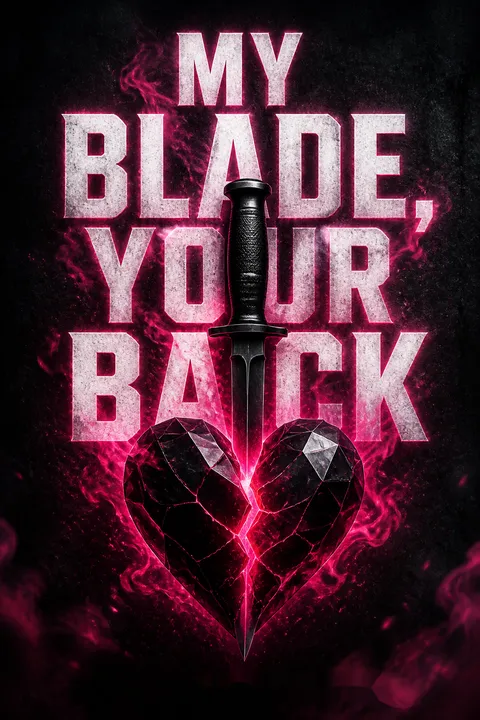
My Blade, Your Back by K.M. Moronova receives mixed reviews averaging 4.27/5 stars. Readers praise the action-packed dark military romance, complex characters, and emotional depth. Cameron and Emery's story continues with amnesia and dangerous missions creating tension. Many loved the suspenseful plot and found family elements. Common criticisms include pacing issues, the amnesia trope feeling drawn out, and the plot being predictable or nonsensical at times. Several readers felt book one was stronger. Fans appreciated connections to "Leave Me Behind" and eagerly await more from this world.
People Also Read










Characters
Emery
Amnesiac executionerEmery is a gifted fighter with long pink hair, a wicked sense of humor, and a past she cannot initially reach. Her missing memories leave her unsure whether her instincts belong to her or to the people who trained her. She seeks connection through practical questions, recovered habits, and the squad she has just joined, especially Cameron, whose distance only deepens her curiosity. Beneath her apparent recklessness is a strong capacity for care: she notices who is overlooked, resists being treated as disposable, and keeps choosing action even when the consequences frighten her. Her central tension is between the person she wants to become and the violence her history has made familiar.
Cameron
Fury’s haunted soldierKnown to his squad as Mori, Cameron is a pale-haired, scarred soldier whose silence conceals volatile impulses and deep shame. He has survived the Dark Forces’ experiments long enough to understand their danger, but he has also built his identity around following orders and earning promotion. Emery unsettles that structure because she sees the humanity he tries to bury, even when he believes distance is the only way to keep her safe. His poetry, careful attention to her hair, and instinct to protect her complicate his reputation as a killer. Cameron’s struggle is not simply to control violence, but to accept that caring for someone cannot be reduced to possessing or protecting them.
Reed
The calculating mentorReed is Emery’s childhood friend and former mentor, an observant strategist with a polished manner and a taste for psychological leverage. He understands her artistic impulses and helped shape her into an executioner, yet his affection does not prevent him from using her in larger plans. Reed’s intelligence makes him valuable and difficult to trust: he knows how to arrange an escape, obtain classified tools, and keep his true purpose obscured. He represents the intimacy of shared history without the safety that history is supposed to provide.
Erik
Fury’s commanding lieutenantErik leads Fury with demanding discipline and the bearing of a soldier who expects his team to survive through preparation. Cameron values his approval, and Emery reads his strictness as evidence that he cares about the squad. His connection to the Mavestelli family complicates the authority he holds within the Dark Forces. Erik’s character sits at the junction of personal loyalty and institutional ambition, where a familiar mentor can still enforce a system that treats soldiers as replaceable.
Greg Mavestelli
Underworld patriarchGreg Mavestelli commands a far-reaching criminal family and sees people in terms of usefulness, loyalty, and inheritance. His polished manners and formal settings do little to soften the threat beneath his authority. Emery’s history is bound to the world he rules, though he does not offer the tenderness she once hoped a parent might provide. Greg’s presence makes family inheritance feel less like belonging than a claim over another person’s labor and identity.
General Nolan
Architect of enhancement trialsNolan oversees the experimental medication given to Dark Forces soldiers and speaks of them with the coolness of a researcher assessing equipment. He values results, stability, and military advantage more than the individual costs paid by his test subjects. His calm presentation makes his ambition harder to challenge, since cruelty appears under the cover of procedure. Nolan embodies the institutional belief that a human body can be improved and spent as long as the data remains useful.
Gage
Fury’s watchful sniperGage is a capable sniper whose easy grin and teasing manner help soften the harsh routines of Fury Squad. His humor is partly a social tool, but his concern for his comrades is genuine, especially when a mission begins to go wrong. He often notices tension before he knows its cause and uses levity to keep the group functioning. Gage gives Emery an early sense of welcome without demanding that she explain who she used to be.
Thomas
Fury’s signalerThomas is Fury’s reliable signaler and an exacting soldier who values preparation, rules, and clear chains of command. His mullet and dry remarks suggest a broader sense of humor than his guarded manner usually permits. He has survived long enough to understand how quickly a mission can turn, so his blunt objections often arise from practical concern rather than cowardice. Thomas represents the stabilizing force of procedure, even when that same loyalty can make it difficult to question authority.
Kayden
Fury’s quiet armorerKayden is a reserved, mechanically minded member of Fury who takes apart and rebuilds his weapons with habitual care. His steadiness balances the squad’s louder personalities, and his dry observations make him an easy companion for Emery. He treats routine as a small territory he can control in a world designed to keep soldiers uncertain. Kayden’s practical focus gives the squad a sense of ordinary life amid constant preparation.
Mikah
Fury’s brilliant hackerMikah is the Dark Forces’ accomplished hacker, tasked with opening systems that ordinary soldiers cannot reach. She is self-possessed, guarded, and proud of the technical work that lets her support field missions without pretending to be a frontline fighter. Her conversations with Emery reveal a person who can be both skeptical and generous with knowledge. Mikah understands that information is a kind of power, and that accessing it can place its holder in danger.
Damian
Emery’s Under friendDamian is a cadet Emery knew before her memory disappeared. His recognition gives her an emotional foothold in the Under and the possibility of rebuilding a friendship rather than merely receiving other people’s accounts of her past. He is hopeful, personable, and eager to belong to a squad, though his confidence can falter when danger becomes immediate. Damian’s presence connects Emery’s current life to the cadets who endured the same brutal training.
Wraith
Fury’s dangerous recruitWraith is a physically imposing soldier with a history of violence and a reputation that makes trust difficult. His bluntness and appetite for danger unsettle Emery, but his survival instincts and flashes of candor make him more complicated than his label suggests. He has learned to treat fear as something to provoke or outrun. Within Fury, Wraith’s presence tests how much room the squad can make for someone whose past offers few easy assurances.
Bree
A remembered trial friendBree is a cadet Emery remembers through fragments before recovering her name. Her fierce loyalty and kindness left a lasting impression, even when Emery could not consciously explain the grief her face stirred.
Bryce
The Under’s poisonerBryce is a cadet connected to Emery’s past in the Under. His quick mind and concealed loyalties make him difficult to read, while his brief appearance in her returning memories helps expose how many forces have been moving around her.
Captain Hans Bridger
Nolan’s senior officerCaptain Bridger oversees high-risk operations and presents command decisions as firm, practical necessities. His attention to mission outcomes and the chain of authority leaves little space for a soldier’s individual limits. He is the senior officer whose presence makes Fury’s assignments feel less like ordinary deployment and more like a controlled test.
Kate
The base tattoo artistKate tattoos soldiers in a hidden corner of the base despite lacking official permission. Warm and irreverent, she treats Emery as a person rather than a classified asset and notices Cameron’s unusual attention to her.
Plot Devices
Emery’s memory loss
A past she cannot nameEmery’s missing memories shape the story’s central uncertainty. She knows how to fight and recognizes emotional traces, but cannot initially place the people or events that formed those instincts. Habits such as braiding her hair and sensory details in the Under return before a clear narrative does. The gaps allow Cameron and others to control what she learns, while making her own body an unreliable archive. As memories return, they do not simply restore her identity; they force her to judge old attachments alongside present evidence.
Experimental death pills
Pain removed, danger concealedThe Dark Forces’ medication suppresses pain and intensifies soldiers’ ability to keep fighting, but its side effects include bleeding, sleeplessness, mental instability, and bodily deterioration. The drugs allow Emery and Cameron to survive injuries that would otherwise stop them, while making it harder to recognize when they need help. Nolan treats the trials as a route to a stronger military force; the soldiers experience that ambition as a threat to their bodies and judgment. The injections and black compound escalate this danger, turning a medical experiment into a weapon that can overwhelm its users.
Neck trackers
Control hidden beneath skinThe Dark Forces implant trackers in their soldiers, using them to monitor location and enforce compliance. Attempting to remove one without the right device can trigger its explosive mechanism. Reed’s small black box makes safe removal possible, while signal blockers conceal the remaining trackers. The devices turn escape into a problem of information and timing: the squad must evade surveillance before it can leave the organization’s reach. Their physical presence also reflects the broader system, which treats soldiers’ bodies as property that command can locate and control.
The earned cards
A promise used as baitThe Dark Forces tell soldiers that exemplary service can earn them cards and release from the organization. The promise gives recruits a reason to endure the Under Trials and continue accepting dangerous missions. Mikah discovers that the apparent path to freedom is a lie: command announces a squad’s release before arranging its elimination and reporting that it died in action. The mechanism turns hope into a tool of compliance and allows the organization to replace one disposable team with another. It is the revelation that makes escape, rather than promotion or honorable service, the squad’s only credible future.
The Mavestelli flash drive
A map to hidden powerFury is ordered to escort Mikah into a desert compound and retrieve a protected flash drive. Its contents connect the mission to Mavestelli’s criminal network and the hidden bases that support it, drawing both the Dark Forces and the Mavestelli family into direct conflict. The drive first appears to be a narrow intelligence objective, but it changes the stakes of the operation by exposing assets that can be used to seize or disrupt an empire. Its recovery also brings reinforcements and helps set the chain of events that leaves Emery and Cameron captured.
About the Author


Download PDF
Download EPUB
.epub digital book format is ideal for reading ebooks on phones, tablets, and e-readers.








