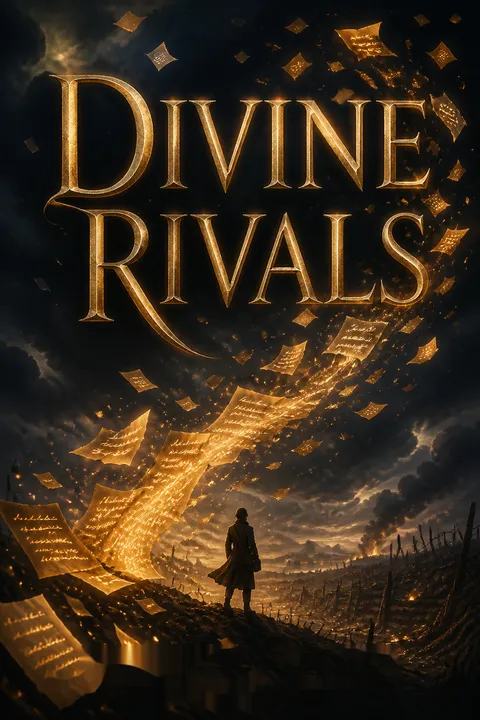


Plot Summary
Prologue
Five months before the story begins, Iris Winnow watches her older brother Forest board a train for the war. He has heard the goddess Enva’s call and is determined to fight, while Iris wants him to stay with her and their mother.
Forest leaves Iris his trench coat and asks her to care for their mother and finish school. He promises to come home before Iris graduates, then disappears into the fog. In a pocket, Iris finds a note telling her how proud he is of her. It is a small comfort against the silence that follows.
The departure establishes the story’s central wound before the war’s larger violence arrives: Iris is left behind, charged with keeping a fragile household intact while someone she loves chooses a cause she cannot share. Forest’s promises comfort her, but they also become measures against which every later silence is judged. The coat makes absence tangible, turning an ordinary object into both protection and a reminder. By beginning with affection and separation rather than battle, the story frames the war as intimate damage first, political catastrophe second.
The Obituary Desk
At the Oath Gazette, eighteen-year-old Iris works through obituaries and classifieds while competing with Roman Kitt for the paper’s columnist position. She wants the promotion because her wages support her and her mother, Aster, whose drinking has worsened since Forest enlisted.
When Iris arrives late, Roman claims the last assignment, an article about missing soldiers. Her boss, Zeb Autry, offers Iris little opportunity and discourages reporting on the war, which he treats as a distant western problem.
A rival newspaper’s report of monstrous creatures near the front gives Iris reason to suspect the disappearances have a grimmer explanation. She begins considering an article that would challenge Oath’s complacency, even though doing so could cost her promotion.
Iris’s professional ambition is not a decorative dream. It is a practical bid for income, independence, and a life beyond domestic crisis. The Gazette’s assignment contest gives her a second arena in which to be judged, but its rules are tilted by class assumptions and political caution. Her interest in missing soldiers grows from personal fear for Forest, yet the newspaper’s reluctance makes that fear a question of public knowledge. The early conflict therefore joins private grief to institutional silence: Iris wants to write well, but she also needs to know what is happening to people the city has chosen not to see.
Letters Through Stone
At home, Iris finds Aster drunk and learns she has sold the family radio. With bills unpaid and no word from Forest, Iris types her anger and fear on her grandmother’s old typewriter, then slips the letter beneath the shared wardrobe door, the place where she and Forest once exchanged notes. The paper disappears. A reply comes back saying the writer is not Forest.
The stranger is Roman, though neither knows the other’s identity yet. He has received Iris’s earlier letters and read about her brother, her work, and the strain at home. Rather than expose her, he answers cautiously. Their exchange begins as a magical accident, but the privacy of the letters lets each reveal feelings neither would risk saying face to face.
The correspondence turns a domestic threshold into a channel for intimacy, but its magic works because Iris believes she is writing to someone she already loves. Roman’s access to her private words creates an ethical imbalance: he knows her before she knows him. His choice not to identify himself preserves the connection while also making it morally uneasy. The letters give Iris a place to shape fear into language, an act of agency when money, family stability, and reliable news are all beyond her control. Their secret bond begins with both comfort and concealment.
Aster’s Empty Room
Iris researches the returned stranger’s question about Dacre and Enva, finding old myths missing from the library’s books. Roman sends her a surviving account: Dacre once unleashed hounds and eithrals while trying to force Enva to join him, and Enva’s music later let her escape his underground realm. Meanwhile, Aster briefly promises to improve, but disappears after a warm dinner and a tender evening with Iris.
A police notice about an unidentified woman killed by a tram sends Iris to Station Nine, where she identifies her mother’s body. Alone in the flat, Iris grieves and writes an obituary for Aster. Roman brings back Iris’s coat and checks on her, but she hides the death from him and returns to work overwhelmed.
The mythology gives Iris a way to interpret the war, while Aster’s death makes loss immediate and unmanageable. The parallel is consequential: Iris is learning that stories can preserve causes and motives that official accounts erase, even as she struggles to record a life she could not save. Her instinct to conceal the death from Roman reflects pride as much as privacy. She fears pity because it might reduce her to hardship rather than recognize her work. Grief also changes the meaning of the letters: they are no longer only a route toward Forest, but a place where Iris can admit what she cannot yet say aloud.
The Columnist’s Choice
Zeb awards the columnist job to Roman for an article about missing soldiers, an article Iris helped him make more humane by urging him to include the families’ pain. Roman asks Zeb to give Iris more time after learning that Aster has died, but Iris refuses the offered bereavement leave and resigns. She decides to go west and search for Forest.
Roman, newly free to choose his own future, refuses his father’s arranged marriage to Elinor Little. His father reveals that Elinor and her chemist father are helping prepare weapons for Dacre, and uses Roman’s guilt over his dead sister to pressure him into obedience. Roman rejects the plan and seeks work as a war correspondent. Iris is hired by Helena Hammond at the Inkridden Tribune.
Both characters reach a point where success as defined by family or employer becomes a form of self-betrayal. Iris leaves a prestigious paper because grief clarifies that the promotion cannot answer her central need. Roman’s refusal is more compromised: his father has trained him to confuse duty with obedience, and guilt over his sister makes resistance feel undeserved. Their choices are not yet declarations of love, but they begin to move toward the same moral ground. Journalism becomes a form of action, not a safe substitute for it, while the weapons plot exposes how elite ambition can turn political fear into complicity.
The Third Alouette
Before Iris leaves Oath, Helena recognizes her grandmother’s typewriter as one of three rare Alouettes, built decades earlier so a sick girl and her friends could exchange writing across distance. Helena sends Iris to Avalon Bluff, eighty kilometers from the front, where host Marisol Torres will shelter her.
On the train Iris meets fellow correspondent Thea Attwood, called Attie, who joined to prove her writing and learn what the war is really doing. Marisol feeds them, explains the town’s defenses, and teaches them three siren signals: hide from nighttime hounds, shelter from daytime eithrals, and evacuate if the front collapses. Iris’s new work begins under a sky that can become dangerous without warning.
The Alouette story supplies a material explanation for the correspondence while linking communication to care across enforced separation. Its history echoes Iris and Roman without turning their connection into simple destiny: the instrument matters because people chose to use it for one another. Avalon Bluff also changes the story’s scale. In Oath, war is a disputed subject; here, the sirens organize sleep, light, and movement. Marisol’s practical instructions and hospitality make safety communal labor rather than an abstract promise. Attie’s presence adds a second young writer whose motives complicate Iris’s: both seek truth, but they arrive with different injuries and ambitions.
The War’s Human Cost
At Avalon Bluff’s converted-school infirmary, Iris searches among the wounded for Forest but instead meets Prairie, a young soldier who will not be interviewed and asks Iris to write to her sister. Iris then offers to write letters for other soldiers, gathering messages of love and homesickness as she records their words.
She sends the letters through the Alouette to Roman, who mails them for her and confirms that his own typewriter is the second in the set. Their exchange deepens as he sends the missing half of the Dacre and Enva myth. Attie travels to the front and returns convinced Enva’s music reveals the truth of Dacre’s attacks. Iris and Attie publish powerful reports that bring the distant war into Oath’s newspapers.
Iris discovers a form of reporting that begins with service rather than extraction. She does not demand testimony from Prairie; she accepts the task Prairie is willing to give her. The letters home transform journalism into a relay between people separated by military logistics, and Roman’s help makes their private correspondence materially useful to strangers. Attie’s return revises the meaning of Enva’s music: what Oath treats as dangerous enchantment may be a means of recognizing a threat the government avoids naming. Together, these episodes argue that truthful witnessing is relational. The reporter does not simply observe suffering; she becomes responsible for what people entrust to her.
Roman Crosses the Field
Roman arrives at Avalon Bluff earlier than expected, walking from a stalled train while an eithral siren sounds. Iris spots him crossing an open field and realizes he does not know the alarm means he must lie still. She runs out, knocks him into the grass, and keeps him motionless until the wyverns pass overhead.
Back at Marisol’s, Roman explains that he left the Gazette and broke his engagement; he has come to report on the war, though Iris suspects he has followed her. Attie recognizes his name from Iris’s published article, and Roman brings copies of both correspondents’ front-page stories. He settles into the room beside Iris’s, and their old rivalry resumes amid shared danger and growing attention.
The rescue reverses their earlier office dynamic. Iris, once treated as the less reliable competitor, now knows the local rules and must keep Roman alive by making him obey. Their physical closeness is produced by danger, not a romantic contrivance, and that matters: care appears as competent action before either can name it. Roman’s arrival also disrupts Iris’s attempt to keep her feelings compartmentalized between the rival at work and the correspondent in her letters. The newspaper pages make their professional connection visible, while his unexplained choice to come west leaves the emotional motive unresolved and keeps suspicion alive.
The Sycamore Trenches
A captain offers one correspondent a place at the front, but Roman insists on accompanying Iris, even riding outside the lorry until she makes room for him. They join Lieutenant Lark’s Sycamore Platoon and learn trench rules before moving toward the front.
Iris records the soldiers’ stories during quiet nights, while she and Roman trade notes and guarded attention. When artillery begins, Roman covers Iris and then pulls her through the trenches as Dacre’s forces advance. A grenade explodes behind them, scattering them and driving shrapnel into Roman’s leg.
Iris helps carry wounded soldiers toward evacuation, but Lark’s platoon is nearly destroyed. In the last lorry back to Avalon Bluff, Lark tells Iris how the platoon’s name came from a home-tree where the soldiers carved their initials, then dies from his wounds.
The trench sequence strips away the glamour of correspondence without diminishing its value. Iris’s notes are made amid rats, hunger, silence, and the possibility that a single movement will expose a soldier to fire. Roman’s instinct to protect her is brave but also entangled with his guilt and his need to matter through sacrifice. Lark’s story of the sycamore gives the platoon a shared origin, but the tree cannot guarantee everyone’s return. His death makes that failed promise concrete. Iris’s work now carries the voices of people who will not be there to revise or confirm what she writes, sharpening her responsibility to represent them carefully.
Carver’s Name
After Roman is treated for his leg, Iris opens his battered bag and finds the letters he has kept, including every message she thought she had sent to a stranger. She realizes Roman is Carver, her anonymous correspondent, and confronts him at the infirmary. Roman admits he recognized her from the first letter but feared she would stop writing if he revealed himself.
Iris is angry that he withheld the truth, especially when he had also kept her early letters instead of returning them. Yet his grief over losing his sister helps her understand why he responded so deeply to her fear for Forest. She leaves before they can settle what the deception means, then spends days helping bury the dead and sorting her feelings.
The revelation does not simply reward the reader with a romantic identity match. It forces Iris to reassess the conditions under which intimacy formed. Roman’s silence protected a bond he cherished, but it also denied Iris the choice to know who was reading her most vulnerable words. Her anger is therefore justified, even though his motives were affectionate rather than predatory. Their shared experience of sibling loss creates recognition, not equivalence: Roman’s guilt and Iris’s abandonment fear remain distinct. The letters have made them close, but only a face-to-face reckoning can make that closeness accountable.
The Hill’s Answer
When Roman returns from the infirmary, Iris visits him and leads him on a slow walk toward the hill where they once ran together. She answers the personal questions he had asked in his final letter, then Roman explains that he left his arranged future and traveled west because he loves her, not to outshine her.
Iris admits she wants both the correspondent she trusted and the rival she knows, and asks Roman to read his confession aloud. They begin to reconcile, but his injured leg reopens when he kneels to propose. Iris gets help and brings him back to the bed and breakfast. The interruption does not erase their choice: Roman asks permission from Attie and Marisol, while Iris decides she will not use pride or fear to keep them apart.
The hill functions as a shared landmark rather than a stage for a sudden cure. Roman’s physical effort makes his declaration costly, but Iris does not accept him because he has suffered for her. She listens, asks for the letter in his own voice, and names the two versions of him she has come to love. That insistence matters psychologically: she refuses to let the anonymity of their correspondence replace the person standing before her. Her movement from suspicion to choice is not the abandonment of self-protection. It is a deliberate risk taken after she has tested whether his actions match his words.
Forest’s Letter
Keegan, Marisol’s wife and a captain, returns as Avalon Bluff prepares to evacuate ahead of Dacre’s advance. She delivers Iris a military letter: Forest survived a devastating battle and later fought in another auxiliary force, though his current position remains unknown. Iris had come west to find him, so she decides to stay and help defend the town rather than leave with Roman.
Roman chooses to remain beside her despite his healing injury. Before the danger closes in, Iris spreads Aster’s ashes across a field, then helps Keegan prepare the residents and learns to drive a lorry. Marisol and Keegan reunite, and Iris, Roman, and Attie help ready the town as Clover Hill burns nearby.
Forest’s survival answers the question that has driven Iris from Oath, but it does not restore the brother she remembers or guarantee that she will reach him. The news makes her choice harder, not easier: she can leave with Roman or remain where the chance of finding Forest is real. Her decision expresses a changed understanding of family, one that includes romantic commitment without allowing it to replace her brother. Spreading Aster’s ashes gives Iris a modest act of completion before the threatened battle. Keegan and Marisol’s reunion offers joy inside emergency, while the burning neighboring town makes clear that refuge is already shrinking.
Vows Before the Siege
As the town braces for attack, Iris and Roman decide not to postpone their marriage. With Keegan officiating, Marisol providing rings, and Attie arranging wildflowers, they exchange vows in the garden and spend the evening with the people who have become their family.
Their celebration is brief and deliberately ordinary: soup, bread, teasing, and the promise to face what comes together. At dawn, the temperature has turned unnaturally cold and eithrals appear over Avalon Bluff without the warning siren.
Bombs strike the town, but Marisol’s bed and breakfast remains standing. Iris, Roman, and Attie emerge into the wreckage to find wounded residents and soldiers. Before they can regroup, the aerial creatures return, dropping unfamiliar metal canisters into the streets.
The wedding does not pretend that commitment makes the war harmless. It gives Iris and Roman a chosen form of kinship at the exact moment their household may disappear. The modest rings and improvised ceremony contrast with the grand arrangements Roman’s father had imposed, making the marriage an act of authorship rather than social advancement. The next morning tests that choice immediately. Marisol’s house survives, but its survival is provisional, and the canisters introduce a danger the town’s established siren system cannot explain. The sequence refuses the fantasy that love grants immunity; it instead shows love as a reason to act and a stake that makes danger more acute.
The Green Cloud
The canisters release poisonous gas, scattering survivors through Avalon Bluff. A masked figure grabs Iris and leads her out of town; through the distorted lenses she mistakes the figure for Roman and resists when he refuses to turn back.
Once she sees the real Roman running after her, she recognizes her rescuer as Forest, who had stolen a uniform and the missing evacuation packs. Forest chokes Iris into unconsciousness when she tries to return to Roman.
She wakes in the woods and learns Forest was fighting for Dacre after the god healed wounds that should have killed him, leaving him bound to Dacre’s service. Forest deserted only after finding Iris’s locket. He takes her east, but she cannot stop searching for Roman, whose fate remains unknown.
The misidentification is more than a suspense mechanism: gas, masks, and battlefield confusion make recognition itself unreliable. Iris chooses Roman once she sees him, even against the brother she has spent the book longing to recover. Forest’s rescue is loving in intention but coercive in method, repeating the story’s recurring problem of care exercised without consent. His service to Dacre reveals how survival can become a debt that captures a person’s agency. Iris’s loyalty to Forest and Roman cannot be neatly reconciled, and her awakening in the woods leaves her with neither the safety nor the reunion she expected.
Home Without Roman
Forest guides Iris back toward Oath while she presses him for answers and fears Roman has been left in the gas. He says his earlier company was destroyed and explains that Dacre’s healing made him fight for the enemy. Iris learns he had watched over her in Avalon Bluff but did not reveal himself until the assault.
Their reunion at the old flat is strained by all they have lost and by the long distance between their choices. Iris finally tells Forest that Aster is dead, and he embraces her. In her room, Iris finds the letter from Roman she left unread before departing Oath. The book ends as she opens it, while the epilogue reveals Dacre has found the wounded Roman and taken him below.
The return to Oath is not a restoration. Iris enters familiar rooms as someone altered by grief, war, marriage, and the absence of the person she chose. Forest is physically present, but his allegiance and silence have made him difficult to recognize as the brother she remembers. The unread letter becomes a delayed act of communication, echoing the opening correspondence while reversing its hope: Iris can receive Roman’s words, but cannot answer from the same place. Dacre’s intervention then makes the separation literal and political. The ending closes Iris’s search for Forest only partially, while opening the more urgent question of what the god will make of Roman.
Epilogue
After his eithrals withdraw from Avalon Bluff, Dacre finds Roman crawling through the grass, badly wounded and near death. Dacre heals him and orders his servant Val to take Roman below. The god sees that Roman is a correspondent, a new kind of captive for his army, and turns east toward Enva.
The epilogue converts the romantic rescue story into a new captivity. Dacre’s healing resembles the intervention that once bound Forest to the god, so Roman’s survival is not uncomplicated relief. The detail that Roman is a correspondent matters: the power to record events, which Iris and Roman used to make distant suffering visible, now attracts an enemy who may exploit that same skill. Dacre’s gaze eastward keeps the divine conflict active even as the human story breaks apart. The ending offers no safe resolution, only a new imbalance of power and a reason to fear what Roman may be forced to write.
Analysis
Divine Rivals asks what truthful attention can do when institutions prefer distance. In Oath, the war is filtered through official caution, class prejudice, and an assumption that danger belongs elsewhere. Iris’s work changes once she leaves the newsroom: she listens to wounded soldiers, writes their letters, and carries their accounts back toward the city. Journalism is not presented as neutral simply because a reporter wears a press badge. It is a practice of choosing whose pain becomes legible, and Iris’s strongest work comes from recognizing the obligations created by listening.
The magical correspondence gives the romance its form and its ethical complication. Iris can be candid because she believes she is writing into absence; Roman’s hidden identity means he receives intimacy before he has earned full trust. His motives are tender, but the concealment still matters. Their eventual relationship becomes credible only when Iris confronts him, names her anger, and chooses to know him as both writer and rival. The letters do not replace embodied trust. They make its limits visible.
Family in the novel is defined by both attachment and burden. Iris tries to preserve the household Forest left behind, then learns that love cannot prevent Aster’s decline or make Forest’s choices simple. Roman’s guilt over his sister makes him vulnerable to his father’s control, while Forest’s survival is entangled with Dacre’s coercion. These histories resist easy moral sorting: grief can make people protective, but protection can also become control. Marisol, Keegan, and Attie offer another model, one built through chosen labor and mutual care.
The ending refuses the consolations of a completed romance. Iris and Roman marry, but the attack separates them almost immediately, and Dacre captures the wounded Roman. Their vows matter not because they secure a future, but because they are a freely chosen answer to a world that repeatedly takes choice away. Joy is brief, vulnerable, and still worth claiming.
Review Summary
Divine Rivals has received mostly positive reviews, with readers praising the beautifully written romance between Iris and Roman. Many found the characters relatable and the story emotionally engaging. The fantasy elements and world-building were criticized by some as underdeveloped, with the book feeling more like historical fiction. The ending left readers eager for the sequel. While some found it overhyped, most reviewers were captivated by the poetic writing and the characters' emotional journey.
People Also Read

Characters
Iris Winnow
The stubborn correspondentIris is an ambitious young writer whose practical intelligence is sharpened by poverty, responsibility, and fear for her missing brother. She takes pride in her work but resents being judged by her interrupted education and working-class background. Her letters let her admit anger and grief she hides in person, while her reporting teaches her to listen before demanding a story. Iris often protects herself with wit and self-reliance, yet her strongest acts come when she risks closeness or steps toward danger for someone else. Her central tension is not between bravery and fear, but between the wish to remain guarded and the wish to be fully known.
Roman Kitt
The rival with a typewriterRoman is a gifted, disciplined young journalist raised to treat achievement and obedience as family duties. His polished appearance conceals grief over his younger sister and frustration with a father who plans his career and marriage for him. At first he sees Iris as competition and underestimates her because she left school, but her writing forces him to revise that judgment. He is attentive to language and often more emotionally perceptive in letters than in person, where pride makes him guarded. Roman’s longing for autonomy and his fear that he does not deserve happiness shape the choices he makes when family expectations conflict with intimacy.
Forest Winnow
Iris’s absent brotherForest is Iris’s older brother, a former horologist’s apprentice whose closeness with her helped shape her sense of home. His enlistment for Enva’s cause leaves Iris with promises, unanswered questions, and a coat that carries his familiar presence. Forest is remembered as protective, affectionate, and drawn to a purpose larger than himself. His choices strain the family bond because Iris experiences his commitment as abandonment, even while she admires his courage. His absence drives Iris’s search and makes the war personal long before she reaches the front.
Aster Winnow
Iris’s grieving motherAster is Iris and Forest’s mother, a former waitress whose warmth and love of poetry once anchored the family. As she struggles with alcohol, she becomes increasingly unable to care for herself or Iris, leaving her daughter to manage the household and its unpaid bills. Aster’s tenderness still surfaces in moments of grooming and reassurance, reminding Iris of the mother she was before grief overtook her. Her purple coat, music, and memories of the diner connect Iris to a happier family life.
Attie Attwood
The fearless fellow writerAttie is a fellow war correspondent who brings wit, curiosity, and a taste for adventure to the dangerous work. As the oldest of six, she knows the pull of family, while her ambition as a writer was wounded by a dismissive professor. She has a musician father and a deep attachment to the violin she can no longer play openly in Oath. Attie wants to see the war directly rather than accept the city’s fearful assumptions. Her friendship with Iris is candid and supportive, giving Iris room to speak about Roman without surrendering her own judgment.
Marisol Torres
The sheltering innkeeperMarisol runs the Avalon Bluff bed and breakfast, where she feeds and shelters correspondents even as the war presses close. Warm and hospitable, she also has firm rules and practical knowledge about the town’s sirens, blackouts, and evacuation plans. Her care is active: she cooks for the infirmary, gives up mattresses, and prepares for danger. Marisol’s devotion to her wife, Keegan, gives her a private source of worry beneath her steady hospitality. She embodies the community Iris finds in the west, a family formed through loyalty rather than blood.
Dacre
The returning Underling godDacre is an Underling god whose return brings violence to the western boroughs. Associated with vitality and healing, he commands hounds and eithrals, using them to terrorize towns and draw Enva into conflict. His wounded pride and desire to control Enva shape the ancient story Roman shares with Iris. Dacre’s power makes mercy difficult to distinguish from possession: the ability to heal can become a means of binding a survivor to his service. He treats mortals as instruments in a divine rivalry they did not create.
Enva
The hidden Skyward goddessEnva is a Skyward goddess whose music inspires people to join the war against Dacre. Oath fears her influence and restricts stringed instruments, while soldiers and correspondents see her as a source of truth about the danger in the west. The surviving myths suggest a more complex history between her and Dacre than the city’s official lessons admit. Enva is associated with music, memory, and the passage of souls, but she remains distant from Iris’s daily life even as her choices shape the war.
Keegan
The front-line captainKeegan is Marisol’s wife and a captain serving near Avalon Bluff. She is decisive under pressure, organizing evacuation and defense while carrying the emotional strain of returning to a town that may soon fall. Her relationship with Marisol is affectionate and frank, shaped by separation and danger. Keegan respects the correspondents’ work but does not mistake them for soldiers, and she gives them practical instructions that may determine whether they survive.
Sarah Prindle
The newsroom allySarah works as an assistant at the Oath Gazette, handling errands and the steady flow of notices, obituaries, and announcements. She is kind to Iris, offers her tea and food, and shares an interest in history and museum work. Sarah is cautious about challenging her employer, but she sometimes voices doubts about the paper’s silence on the war. Her quiet support helps Iris feel less alone in a newsroom that often treats ambition as a contest.
Zeb Autry
The cautious editorZeb runs the Oath Gazette and oversees the competition between Iris and Roman. He recognizes Iris’s writing talent but measures her by punctuality and output, while steering the paper away from direct reporting on the war. His caution reflects a newsroom shaped by political pressure and fear of losing readers. Zeb can offer opportunity, but he does not understand the cost of Iris’s private circumstances until she is already ready to leave.
Elinor Little
The arranged fiancéeElinor is the daughter of chemist Dr. Little and the woman Roman’s father selects as his future wife. Reserved and sharp-eyed, she is more interested in her father’s laboratory than the social role expected of her. She and Roman have little personal connection, and their families’ plans place them in a marriage neither seems to want. Her guarded manner suggests she understands more about the political stakes than she is willing to discuss openly.
Helena Hammond
The war desk editorHelena edits the Inkridden Tribune and recruits correspondents for dangerous assignments near the front. Blunt and observant, she tests Iris’s reasons for applying before giving her equipment, a press badge, and a place to stay. Helena understands that a reporter needs more than courage: she provides procedures, contacts, and a route for sending articles past political restrictions.
Roman’s grandmother
The keeper of old storiesRoman’s grandmother is sharp-tongued, perceptive, and far less impressed by social rank than his father. She keeps the family’s old typewriter and knows its connection to Daisy Winnow. Her stories give Roman access to both the Alouette history and myths about the gods. She challenges him to make his own choices and notices the feelings he tries to conceal.
Lieutenant Lark
The platoon’s storytellerLark leads the Sycamore Platoon, a close-knit group of soldiers from the same farming town. Young and marked by a scar across his mouth, he treats Iris and Roman with care while teaching them how to move and report safely near the trenches. His account of the platoon’s shared home and its namesake tree gives Iris a way to understand the bonds soldiers carry into battle.
Prairie
The soldier’s letter writerPrairie is a wounded young soldier who plays cards with Iris at the infirmary. She refuses to be interviewed but asks Iris to write a letter to her sister, setting the tone for Iris’s more humane form of reporting.
Plot Devices
The Alouette typewriters
Letters across distanceThree rare typewriters were built so a sick girl and her friends could correspond. Iris inherits her grandmother’s third Alouette, while Roman owns the second. Their magical connection sends letters between the two machines despite the distance between Oath and the war front. The letters let Iris and Roman exchange vulnerability before they can speak honestly face to face, and later carry soldiers’ messages home. The device links private intimacy with public service: the same channel that brings two rivals together can also move news and comfort through a failing postal system.
The siren system
Warnings that govern survivalAvalon Bluff relies on distant sirens to warn of hounds at night, eithrals by day, or a retreat of the western front. Each signal requires a different response, from extinguishing lights to sheltering or evacuating. The system gives correspondents and residents practical rules for living beside supernatural warfare. Its failure to sound before the eithrals reach town also creates a dangerous gap between what the community has been taught to expect and what the enemy actually does.
The missing myths
History beneath propagandaIris finds that old books have been stripped of material about Dacre and the eithrals. Roman’s grandfather’s notes and the continuation of a half-remembered myth offer a fuller account of Dacre’s pursuit of Enva and her use of music to escape his realm. These fragments help Iris and Attie question Oath’s claims about the war and understand why its citizens need accurate reporting. The myths do not provide a complete military explanation, but they expose how an edited history can serve fear and political convenience.
Forest’s locket
A token finds familyAster’s gold locket holds portraits of Iris and Forest. Iris carries it west as a link to her family, then loses it in the trenches during the grenade blast. Forest finds it while serving among Dacre’s forces and recognizes it as proof that Iris has reached the front. The object prompts him to seek her and eventually abandon Dacre’s command. Its importance comes from recognition rather than magic: a small inherited keepsake restores a path between siblings after war and silence have separated them.
War correspondence
Witness carried into OathThe Inkridden Tribune’s correspondents send factual reports and personal stories to the paper through sealed packets carried by a train. The arrangement gives Iris and Attie a way around restrictions on war coverage, while their articles make the conflict visible to people who have treated it as distant. Iris also writes letters for injured soldiers and sends them through Roman when ordinary mail fails. Reporting becomes a network of testimony, but the work exposes the writers to the hazards they are documenting.
FAQ
Synopsis & Basic Details
What is Divine Rivals about?
- Rival journalists connect magically: Divine Rivals follows Iris Winnow and Roman Kitt, two young journalists competing for a columnist position at the Oath Gazette. Their rivalry takes an unexpected turn when Iris's letters to her missing brother, sent through a magical wardrobe, mysteriously reach Roman instead.
- War and gods intertwine: The story is set against the backdrop of a war between two awakened gods, Enva and Dacre, which is impacting the lives of mortals. This conflict adds a layer of urgency and danger to the characters' personal struggles.
- Love and loss in wartime: As Iris and Roman navigate their professional rivalry and the war, they develop a complex relationship through their secret correspondence. The story explores themes of love, loss, and the power of words in a world consumed by conflict.
Why should I read Divine Rivals?
- Unique blend of genres: The novel seamlessly blends elements of fantasy, romance, and historical fiction, creating a captivating and immersive reading experience. The magical elements are subtle yet integral to the plot.
- Compelling characters: Iris and Roman are complex and well-developed characters with relatable flaws and strengths. Their evolving relationship is both heartwarming and heartbreaking, drawing readers into their emotional journey.
- Thought-provoking themes: Divine Rivals explores profound themes of war, loss, family, and the power of words. It prompts readers to consider the impact of conflict on individuals and the importance of truth and connection.
What is the background of Divine Rivals?
- Fantasy world with a historical feel: The story is set in a world called Cambria, which has a blend of old-world charm and modern technology. The setting feels reminiscent of early 20th-century Europe, with elements of magic and mythology woven into the fabric of society.
- Political and religious tensions: The war between the gods, Enva and Dacre, has created a climate of fear and division. The political landscape is fraught with tension, as different factions vie for power and influence.
- Cultural emphasis on communication: The importance of newspapers and the power of the written word are central to the story. The characters' roles as journalists highlight the significance of truth and information in a world where propaganda and misinformation are rampant.
What are the most memorable quotes in Divine Rivals?
- "Write me of hope and love, and hearts that endured.": This epigraph from Emily Dickinson sets the tone for the novel, highlighting the themes of love, resilience, and the power of the human spirit in the face of adversity.
- "How can you love this goddess more than me? How can you leave me like this?": This quote captures Iris's internal conflict and her struggle to understand her brother's decision to enlist in the war, revealing her vulnerability and the depth of her love for him.
- "Turn a foe into a friend, and you'll have one less enemy.": This proverb, invoked by Iris, reflects her desire to bridge the gap between herself and Roman, highlighting the theme of overcoming animosity and finding common ground.
What writing style, narrative choices, and literary techniques does Rebecca Ross use?
- Dual POV with intimate narration: The story is primarily told from Iris's perspective, with occasional chapters from Roman's point of view. This allows readers to gain insight into both characters' thoughts and feelings, creating a more immersive and emotionally resonant experience.
- Rich sensory details and evocative language: Ross uses vivid descriptions and sensory details to bring the world of Divine Rivals to life. Her writing style is both lyrical and evocative, drawing readers into the characters' experiences and emotions.
- Subtle foreshadowing and thematic echoes: The novel is filled with subtle foreshadowing and thematic echoes, which add layers of meaning and complexity to the plot. Ross uses recurring motifs and symbols to connect seemingly disparate elements of the story.
Hidden Details & Subtle Connections
What are some minor details that add significant meaning?
- The Alouette typewriter: The typewriter, inherited from Iris's grandmother, is not just a tool but a symbol of connection and destiny. Its unique design and history link Iris and Roman in unexpected ways, hinting at a deeper, magical bond.
- The color purple: The color purple, associated with Iris's mother, is a recurring motif that symbolizes loss, memory, and the enduring power of love. It also hints at the hidden depths of Iris's character and her connection to the past.
- The names of the gods: The names of the gods, Enva and Dacre, are not just labels but carry symbolic weight. Enva, associated with the sky and music, represents hope and inspiration, while Dacre, associated with the earth and fire, embodies destruction and rage.
What are some subtle foreshadowing and callbacks?
- The broken heel: Iris's broken heel in the first chapter foreshadows the obstacles and challenges she will face throughout the story. It also serves as a callback to her initial meeting with Roman, highlighting the evolution of their relationship.
- The mention of eithrals: The early mention of eithrals in the Inkridden Tribune foreshadows their significance in the war and their connection to Dacre. It also hints at the deeper, more dangerous forces at play in the conflict.
- The shared love of writing: The characters' shared love of writing and their unique writing styles foreshadow their connection and their ability to understand each other on a deeper level. It also highlights the power of words to bridge gaps and create bonds.
What are some unexpected character connections?
- Nan's connection to the Alouette typewriters: The revelation that Roman's grandmother was one of the original owners of the Alouette typewriters creates a surprising link between his family and Iris's, suggesting a deeper, almost fated connection between them.
- Marisol's connection to the war: Marisol's hidden connection to the war through her wife, Keegan, adds a layer of complexity to her character and reveals the far-reaching impact of the conflict. It also highlights the sacrifices made by those who are left behind.
- Forest's connection to Dacre: Forest's unexpected allegiance to Dacre reveals a hidden layer of complexity to his character and adds a layer of betrayal to Iris's journey. It also highlights the manipulative power of the gods and the moral ambiguities of war.
Who are the most significant supporting characters?
- Attie (Thea Attwood): As Iris's fellow war correspondent, Attie provides a source of friendship, support, and camaraderie. Her own struggles and ambitions mirror Iris's, creating a bond that is both relatable and inspiring.
- Marisol Torres: As the owner of the B and B, Marisol provides a safe haven for Iris and Attie. Her kindness, wisdom, and resilience make her a source of strength and guidance.
- Lieutenant Lark: As the leader of the Sycamore Platoon, Lieutenant Lark embodies the bravery and sacrifice of the soldiers fighting in the war. His interactions with Iris provide insight into the human cost of conflict.
Psychological, Emotional, & Relational Analysis
What are some unspoken motivations of the characters?
- Roman's desire for validation: Beneath his privileged exterior, Roman is driven by a deep-seated need for validation and recognition. His competitive nature stems from a desire to prove himself, not just to others but also to himself.
- Iris's need for connection: Iris's fierce independence masks a deep need for connection and belonging. Her letters to Forest and her growing bond with Roman reveal her longing for love and acceptance.
- Forest's guilt and desperation: Forest's decision to enlist is driven by a complex mix of guilt, desperation, and a desire to find meaning in a world consumed by war. His actions are motivated by a need to atone for past mistakes and find a purpose beyond his own personal struggles.
What psychological complexities do the characters exhibit?
- Roman's internal conflict: Roman struggles with the expectations placed upon him by his family and his own desires. His internal conflict is evident in his actions, as he vacillates between duty and personal fulfillment.
- Iris's fear of vulnerability: Iris's fierce independence masks a deep-seated fear of vulnerability. She struggles to let down her guard and trust others, a fear that stems from past losses and betrayals.
- Forest's trauma and manipulation: Forest's experiences in the war have left him deeply traumatized and vulnerable to manipulation. His actions are driven by a complex mix of guilt, desperation, and a desire to find meaning in a world consumed by conflict.
What are the major emotional turning points?
- Iris's discovery of Roman's identity: The moment Iris realizes that Roman is also Carver is a major emotional turning point. It forces her to confront her feelings for him and the complex nature of their relationship.
- Iris's mother's death: The death of Iris's mother is a devastating emotional turning point that forces her to confront her grief and her broken promises to her brother. It also serves as a catalyst for her decision to leave the Gazette and seek out her brother.
- The gas attack and separation: The gas attack and the subsequent separation of Iris and Roman is a major emotional turning point. It forces them to confront their fears and vulnerabilities, and it solidifies their bond.
How do relationship dynamics evolve?
- Rivalry to respect: The relationship between Iris and Roman evolves from a fierce rivalry to a grudging respect, and then to a deep and complex bond. Their initial animosity is gradually replaced by a mutual understanding and appreciation for each other's strengths and vulnerabilities.
- Secret correspondence to open communication: The secret correspondence between Iris and Roman allows them to connect on a deeper level, revealing their true selves. As they begin to communicate more openly, their relationship evolves from a hidden connection to a more authentic and vulnerable bond.
- Individual journeys to shared destiny: Both Iris and Roman embark on individual journeys of self-discovery, but their paths are intertwined by fate and their shared experiences. Their relationship evolves from a competition to a partnership, as they learn to rely on each other and work together towards a common goal.
Interpretation & Debate
Which parts of the story remain ambiguous or open-ended?
- The true nature of the gods: The novel leaves the true nature of the gods, Enva and Dacre, somewhat ambiguous. It is unclear whether they are truly benevolent or malevolent, or if they are simply forces of nature beyond human comprehension.
- The extent of Dacre's influence: The extent of Dacre's influence over mortals is left open to interpretation. It is unclear whether he is simply manipulating them or if he has a more profound control over their actions and choices.
- The future of Cambria: The ending of the novel leaves the future of Cambria uncertain. It is unclear whether the war will end, or if the conflict between the gods will continue to plague the mortal world.
What are some debatable, controversial scenes or moments in Divine Rivals?
- Forest's actions: Forest's decision to fight for Dacre, despite his love for his sister, is a controversial moment that raises questions about free will and the influence of external forces. It also prompts debate about the nature of loyalty and betrayal.
- Roman's initial treatment of Iris: Roman's initial underestimation and dismissive attitude towards Iris is a controversial aspect of his character. It raises questions about privilege and prejudice, and it prompts debate about whether he is truly worthy of her love.
- The ending: The ending of the novel, with Iris and Roman separated and the future uncertain, is a controversial moment that leaves readers with a sense of unease and anticipation. It prompts debate about the nature of love and loss, and the possibility of a happy ending in a world consumed by conflict.
Divine Rivals Ending Explained: How It Ends & What It Means
- Separation and uncertainty: The ending of Divine Rivals leaves Iris and Roman separated, with their future uncertain. This ending highlights the unpredictable nature of war and the fragility of human connections.
- Hope amidst despair: Despite the separation and the looming threat of Dacre, the ending also offers a glimmer of hope. Iris's determination to find Roman and her belief in their connection suggest that their love may endure, even in the face of adversity.
- The power of choice: The ending underscores the importance of individual choice and the power of the human spirit to resist manipulation and oppression. It suggests that even in the darkest of times, there is always the possibility of hope and resilience.
Letters of Enchantment Series
About the Author
Other books by Rebecca Ross


Download PDF
Download EPUB
.epub digital book format is ideal for reading ebooks on phones, tablets, and e-readers.








