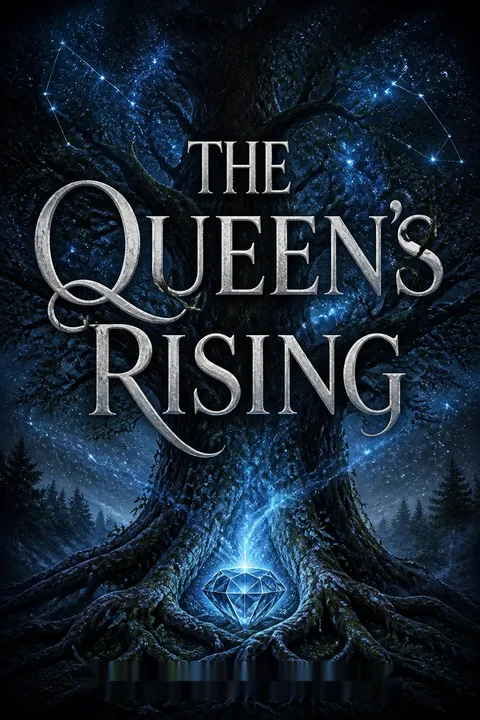


Plot Summary
Prologue
At ten, Brienna Paquet arrives at Magnalia House with her grandfather, longing to learn why she has no father’s name. He refuses to identify the Maevan man, and the Dowager admits Brienna despite her lack of obvious talent in any of the five passions.
A young knowledge master, Cartier, offers her a steadying kindness before she enters the Dowager’s study. Brienna chooses art as her subject, fails a simple drawing test, but wins a place as Magnalia’s sixth arden. She leaves the interview determined to prove that her admission was not charity.
The admission scene gives Brienna two forms of uncertainty that will shape her choices: a concealed ancestry and a place she fears she has not earned. Magnalia promises a self made through practice, while the withheld identity of her father suggests that blood may carry consequences she cannot yet see. Her failed drawing test matters because the Dowager accepts her anyway, leaving Brienna to build a sense of worth without the reassurance of innate talent. Cartier’s brief kindness offers an early model of recognition: someone can see potential before Brienna can name it.
The Unclaimed Arden
Seven years after her admission, seventeen-year-old Brienna is still an arden, an apprentice who has not mastered a passion. She has struggled through art, music, dramatics, and wit before choosing knowledge at fourteen, leaving only three years to catch up with Ciri, Cartier’s naturally gifted student. With the summer solstice approaching, Brienna receives another letter from her grandfather.
He praises her, but again refuses to name her Maevan father and says the man has never sought her. Brienna decides not to ask again. She also carries letters between her arden-sister Sibylle and Francis, a courier who loves Sibylle. Cartier challenges her to trust her own judgment, while Brienna fears her future depends on a patron choosing her.
Brienna’s pressure comes from more than an upcoming examination. Magnalia’s system treats passion as both a skill and an identity, so failure threatens to leave her without a recognized place in either aristocratic or ordinary society. Her repeated changes of discipline make her fear that persistence cannot repair a late start. The father’s refusal deepens that insecurity by denying her a story about where she comes from. Yet Brienna’s clandestine help to Sibylle and Francis shows that she already acts with loyalty and practical courage, qualities not measured by the formal tests she fears.
The Queen in Blue
Oriana, Brienna’s arden-sister and an artist, persuades her to sit for a portrait dressed as Liadan Kavanagh, the first queen of Maevana. Blue woad, armor, and a sword make Brienna feel the pull of her northern heritage. Cartier lends her a book about the Stone of Eventide, the object once bound to the Kavanagh family’s magic.
While waiting to be measured for her solstice gown, Brienna hears a voice speaking in Maevan, then sees the book become new in a stranger’s scarred hands. She enters his memory in 1430: Princess Norah Kavanagh fears her mother’s war magic, and a Maevan lord urges her to bring him the stone. Brienna wakes with no name for the man, only the sense that the past has reached her.
The portrait makes ancestry visible before Brienna understands that ancestry can become an experience rather than a fact. Her blue-painted face connects her to a queen, but the vision complicates the romantic image: the Kavanagh magic can become dangerous when used in war. The book functions less like a source of information than a sensory threshold, shifting Brienna into another person’s perception. Her inherited history is therefore neither a stable family record nor a power she controls. It arrives through contact, leaving her with knowledge she cannot yet verify or explain.
A Solstice Without Offers
At Magnalia’s solstice, Brienna meets three potential patrons, but her nerves unravel her prepared answers. Historian Brice Mathieu catches a mistake in her genealogy, and headmaster Nicolas Babineaux doubts that three years of knowledge study qualify her to teach. Ciri wins the physician Monique Lavoie’s offer; Merei chooses a traveling music consort, while Oriana, Sibylle, and Abree also find patrons.
The Dowager tells Brienna she has received no offers, but asks her to stay through the summer rather than leave as an inept arden. Brienna watches her sisters take their cloaks and depart, including Merei, her closest friend. Cartier leaves too, promising to return when she finds a patron, and gives her a silver pendant to remember him by.
The solstice turns a private fear into a public judgment. Brienna’s errors are real, but the patrons also assess her through narrow expectations: a historian must recite flawlessly, and a teacher must already possess long experience. Her sisters’ success makes the rejection hurt more, because the community that sustained her is now dispersing. The Dowager’s offer keeps Brienna from being formally cast out, yet it cannot replace the friendships she loses in a single morning. Cartier’s pendant and promise give the departure an intimate charge, but Brienna must continue without either his instruction or his protection.
The Stone Beneath the Oak
Alone at Magnalia, Brienna’s cut arm triggers another memory. She becomes the scarred man as he buries the Stone of Eventide in a wooden locket beneath an old oak marked with the initials T.A. When Brienna tells the Dowager, the older woman reveals that Brienna’s father belongs to House Allenach, a powerful Maevan family.
Brienna recognizes that her visions may be inherited memories and that the stone could help restore a queen’s claim against King Lannon. The Dowager offers Aldéric Jourdain as a patron who can use this knowledge, but warns that the mission could put Brienna in mortal danger. Brienna chooses the risky path and insists that her father’s full identity remain secret from Jourdain.
The memory transforms Brienna’s private longing for a father into a political inheritance with immediate danger attached. The oak and the bloodied arm make the past concrete, while the initials offer a clue that can be pursued in the present. Her choice is not simply a response to destiny: the Dowager gives her a safer alternative, and Brienna knowingly refuses it. At the same time, she draws a boundary around the identity she has been denied, insisting that even a useful ally cannot possess every part of her story.
A Patron Called Jourdain
Jourdain arrives at Magnalia and accepts Brienna as his adopted passion-daughter, giving her the cover name Amadine Jourdain. He explains that she must hide her connection to Magnalia and learn to protect the secrets attached to his name.
On their journey to Beaumont, three thieves stop the coach, threaten the driver, scatter Brienna’s books, and steal the pendant Cartier gave her. Jourdain kills the attackers before they can harm her, then returns the pendant.
Brienna questions the violence, but Jourdain explains that the men would have killed them if he had shown restraint. At his home, she meets Luc, Jourdain’s musician son, who welcomes her as a sister. Jourdain and Luc enlist her help in finding a sensory route back into her ancestor’s memories.
The roadside attack dismantles Brienna’s expectation that patronage will resemble the refined support offered at Magnalia. Jourdain’s protection is physical and forceful, and his willingness to kill unsettles her even as it keeps her alive. Her books and Cartier’s pendant become vulnerable objects in the encounter, showing how easily the life she left behind can be damaged. Luc’s warm welcome softens the household, but it does not erase its secrecy. Brienna has gained a family structure before she knows whether she can trust the man who leads it.
The Grim Quill Unmasked
Luc’s riverbank encounter with a ragged stranger exposes that the man is Liam O’Brian, a loyal thane who has searched for Jourdain for years. Brienna pieces together Jourdain’s identity: he is the exiled lord of MacQuinn, one of three leaders whose uprising against Lannon failed twenty-five years earlier.
Jourdain confirms the truth and admits he writes the anonymous political pamphlet called the Grim Quill to build support for Maevana’s return to rule by a queen.
He introduces Brienna to Hector Laurent, a hidden Kavanagh lord, and Yseult, Hector’s daughter and the surviving claimant to the old royal line. Brienna learns that the uprising’s goal is not merely to remove Lannon, but to restore the Kavanagh queen and the country’s lost inheritance.
The reveal gives Jourdain’s guardedness a political history: he is not an isolated benefactor but a survivor whose family and homeland were broken by a failed revolt. His writing offers a different form of resistance from the sword, slowly recruiting belief and resources where open rebellion would invite destruction. Yseult’s presence makes the cause personal and future-facing, but the group has no certainty that the people of Maevana will follow her. Brienna’s knowledge now matters to a collective project, not simply to her own search for belonging.
The Oak in Memory
Yseult offers Brienna sword lessons, and a practice move pulls her into a childhood memory of Tristan, a boy from House Allenach. Tristan’s older brother Oran humiliates him during training, prompting him to flee to the old oak where he hides from pursuit. Brienna recognizes the tree from the memory of the stone’s burial.
She and the exiled leaders plan to exploit Lord Allenach’s annual white-hart hunt: a forged invitation will get one ally to Damhan, while Brienna will travel to Lyonesse and appeal to King Lannon in public. By invoking Jourdain’s name, she hopes to draw the king’s attention while Allenach offers her shelter. The scheme is risky, but it gives the rebels a route into Maevana.
The sword lesson links Brienna’s present body to Tristan’s childhood vulnerability. A simple training error becomes a route through inherited experience, making memory useful only because Brienna can tolerate discomfort and keep observing. The oak is no longer an evocative symbol; it is a navigable location. Her political plan also applies the strategic lesson of her game with Merei: a conspicuous move can conceal a quieter one. Brienna’s growing agency comes from joining skills that Magnalia kept separate, historical recall, bodily practice, and social misdirection.
MacQuinn Before the King
At Lyonesse, Brienna enters King Lannon’s hall dressed as a Valenian noblewoman and witnesses Lord Burke save a mason from execution for carrying a forbidden MacQuinn emblem. She then publicly asks Lannon to admit her adoptive father, naming him as the exiled MacQuinn lord. Lannon mocks her and dictates a humiliating letter, but Lord Brendan Allenach supports the request and offers to host Brienna at Damhan.
Lannon grants Jourdain permission to return and sends Brienna with Allenach. At Damhan, the lord watches her closely, while his suspicious eldest son, Rian, treats her as a threat. Brienna’s appeal has succeeded, but it has placed her inside the household of the very House tied to her hidden ancestry.
Brienna’s performance at court depends on the split between what she knows and what she is permitted to reveal. Her Valenian dress makes her legible to Lannon as a visitor, while her use of MacQuinn’s name deliberately disrupts the king’s control of public speech. The mason’s punishment demonstrates that even a symbol can be dangerous under tyranny. Allenach’s offer solves one logistical problem while creating a more intimate danger: Brienna must now live under the scrutiny of a lord whose interests she does not understand.
Cartier Behind the Crest
At Damhan, Brienna spots a man wearing the crest of the exiled Morgane House and recognizes her former master, Cartier, who is operating under the name Theo d’Aramitz. In a hidden passage behind her room’s tapestry, they meet privately. Cartier explains that he is Aodhan Morgane, raised in Valenia after his father’s failed rebellion, and that he stayed at Magnalia because Brienna asked him to teach her.
His return to the cause brings their emotional bond into the same dangerous world as their political mission. Brienna also discovers Merei among the musicians hired for Allenach’s hunt. The reunion is joyful but must remain concealed: Allenach watches Brienna, and a visible attachment could expose the rebels’ plans.
Cartier’s concealed identity reframes years of emotional restraint without invalidating his role as Brienna’s teacher. He remained at Magnalia partly because she gave him a reason to delay confronting his family’s history, so their relationship has always carried unequal dependencies. Now both must negotiate secrecy as adults and as political allies. Merei’s unexpected presence restores a piece of Brienna’s lost community, but it also increases the number of people who can be endangered by a mistake. Affection is no longer private comfort; it has operational consequences.
The Stone Comes Home
During the hunt, Merei helps Brienna distract Sean, allowing Brienna to ride into the Mairenna Forest and dig beneath the oak marked T.A. She finds the wooden locket and the Stone of Eventide, then hides it under her corset. Later, a message meant to summon her to a meeting triggers another memory of Tristan, but Rian catches Brienna on the parapet before she can leave.
He interrogates her about her missing cloak and her connection to Merei, then stabs her when she cannot satisfy him with her answers. Brienna reaches Cartier through the hidden passage. He stitches the wound, learns that she has recovered the stone, and tells her he has been searching for her since she disappeared from Magnalia.
Brienna’s recovery of the stone is an act of physical labor, not a miraculous inheritance: she rides, digs, hides evidence, and resists the memory’s pull long enough to finish. The victory immediately exposes the cost of secrecy when Rian turns suspicion into violence. Her wound is also a consequence of the constraints placed on her, since a woman moving alone through the castle is treated as an object to be questioned and controlled. Cartier’s care reverses that pressure, but their reunion cannot pause the mission or make the threat disappear.
Allenach Claims His Daughter
While Brienna recovers, Allenach travels to Lyonesse to present Jourdain before Lannon. The king nearly executes Jourdain, but Allenach secures a trial instead and brings Brienna to visit the imprisoned lord and Luc. A letter from Allenach then claims Brienna as his daughter. Jourdain, who believed her father was a lesser Allenach retainer, feels betrayed; Brienna is shaken by the possibility.
Back at Damhan, Brendan explains that he loved her mother, Rosalie, and kept her letters. He reveals that House Allenach possesses the lost Queen’s Canon, the law granting Maevana’s throne to a noble daughter. Brienna pretends to accept his offer to make her queen, hoping to discover the Canon’s location.
The paternity revelation attacks Brienna’s sense of self at the moment she has begun to trust her chosen family. Her father’s claim is supported by her mother’s letters, but the truth does not make Brendan morally safe or emotionally entitled to her. Jourdain’s distress comes from a real fear of losing the daughter he has adopted, sharpened by the violence Brendan inflicted on his family. Brienna’s decision to feign allegiance is therefore both strategic and psychologically costly: she must use the language of belonging while deciding what loyalty means.
The Canon Escapes Damhan
Brendan shows Brienna the Queen’s Canon hidden beneath a hearthstone, and she memorizes Liadan’s law before Cartier’s staged fire draws the lord away. Brienna takes the tablet, a sword, and a rope, then breaks a stained-glass window to escape his locked chambers. Rian intercepts her in the grounds, but the Canon splits his weapon when he strikes her, and Allenach’s wolfhound Nessie kills him.
Brienna escapes with Cartier and Merei. Before riding to Mistwood, they reach printmaker Evan Berne, who copies the Canon so its words can be posted across Lyonesse and rally supporters. The rebels now have both the Stone of Eventide and the law that can challenge Lannon’s claim.
Brienna’s escape depends on a coalition of different kinds of resistance: Cartier creates the distraction, the Canon withstands an attack, and Nessie protects Brienna when the plan nearly fails. The artifacts matter politically because they make the cause reproducible. The stone can restore magic, while printed copies of Liadan’s law allow ordinary people to recognize the claim without needing access to a hidden original. Brienna’s choice to distribute the Canon shifts the rebellion from a secret arrangement among nobles toward a public act of collective memory.
Three Banners at Dawn
At Mistwood, Yseult refuses to wear the Stone of Eventide during battle, fearing that restored magic could become uncontrollable. Brienna joins her, Cartier, and Jourdain beneath the banners of Kavanagh, Morgane, and MacQuinn. An arrow wounds Brienna and triggers Tristan’s final memory: he killed Queen Norah’s mother during a magical war, then stole the stone, while Norah predicted a descendant would undo his crime.
Back in the present, Brienna confronts Brendan. Merei wounds him with an arrow, Sean turns against their father to protect her, and Brendan strikes his own son. Jourdain kills Brendan before he can kill Brienna. Supporters arrive from Lyonesse and House Burke, turning the battle against Lannon’s forces.
The final memory makes Brienna inherit responsibility without making her responsible for Tristan’s original choice. Norah’s prophecy gives shape to Brienna’s life, yet Brienna’s actions remain distinct: she chooses whom to protect and what kind of power should return. Yseult’s refusal to use magic in battle shows that restoring an inheritance does not require repeating its worst precedent. The fight with Brendan then converts the family question into a moral one. Brienna rejects the father who claims her by blood, while Jourdain’s protective act confirms a bond made through care.
The Aviana Cloak
After Lannon’s forces surrender, Yseult takes the Stone of Eventide and magic returns gently. She heals Brienna and saves Sean, then holds Lannon for a public trial. Jourdain brings Brienna home to MacQuinn territory, where she begins to understand that Valenia and Maevana can both be hers. She visits Cartier at the ruined Morgane estate.
There he gives her the blue cloak he made for her years earlier, embroidered with Aviana, a constellation linked to his own. They acknowledge their love, and Brienna proposes building a House of knowledge in Maevana. Cartier agrees to teach there. The ending answers the fear that began at Magnalia: Brienna has not wasted her years of study, and she can shape a place where others may learn.
The resolution does not restore the past unchanged. Yseult heals rather than weaponizes her magic, and the trial leaves judgment to the people rather than to a victorious ruler alone. Brienna’s return to MacQuinn territory gives her family without requiring her to renounce her Valenian upbringing. The cloak completes the apprenticeship she feared had failed, but its meaning has changed: it marks not merely achievement or patronage, but a future she will help build. Her school turns her hard-won education into an institution, converting personal exclusion into expanded possibility for others.
Analysis
The Queen’s Rising makes identity a contested practice rather than a simple inheritance. Brienna is divided between Valenia and Maevana, but the novel does not treat that division as a flaw she must erase. Her education at Magnalia gives her discipline and a language for knowledge; her inherited memories give her access to a history that official power has suppressed. Neither source is sufficient alone. She needs trained interpretation to make the memories useful, and she needs bodily courage to act on what they reveal.
The book also distinguishes bloodline from moral legitimacy. Brendan claims Brienna through biological descent and offers her a crown, but his claim rests on control. Jourdain becomes a father through care, risk, and sustained responsibility. That contrast gives Brienna’s decision its emotional weight: she must reject a powerful inheritance without denying the truth of where she came from. The same distinction shapes the political conflict. Lannon possesses the throne, yet the Queen’s Canon challenges the assumption that possession equals right.
Magic is not presented as an uncomplicated cure. The Kavanagh power once turned destructive in battle, and Yseult’s restraint acknowledges that restoring a tradition can also restore its dangers. Her refusal to use the stone until the fighting ends reframes leadership as the ability to limit one’s own power. The Canon’s circulation through printed copies offers a parallel kind of restoration: political memory becomes stronger when it leaves the hands of nobles and reaches ordinary people.
Finally, Brienna’s unfinished education becomes the basis of her future rather than evidence of failure. She has not mastered knowledge by moving smoothly through a predetermined path; she has learned by changing disciplines, making mistakes, and connecting stories across generations. The House she plans to build extends that hard-won access to others. The novel’s answer to exclusion is not merely to win a place within an old institution, but to make a new one.
Review Summary
The Queen's Rising receives mixed reviews. Some readers praise the beautiful writing, engaging world-building, and strong female friendships. They appreciate the slow-burn romance and political intrigue. Others find the pacing too slow and the plot predictable. Critics note the controversial teacher-student romance and lack of character development. Many consider it an average YA fantasy with potential but lacking originality. Despite divided opinions, some readers highly recommend it, while others feel disappointed by its failure to stand out in the genre.
People Also Read




Characters
Brienna Paquet
The determined late bloomerRaised in an orphanage and admitted to Magnalia through her grandfather’s intervention, Brienna fears she has no natural gift and no secure family identity. She tries several passions before committing to knowledge, where she compensates for lost time with relentless study. Her empathy is practical: she helps friends, listens closely, and notices how histories connect. She is also stubborn enough to act before she feels entirely ready. Brienna’s central psychological tension is between wanting someone else to certify her worth and learning to trust the judgment she has earned herself.
Cartier Évariste
The reserved knowledge masterCartier teaches knowledge at Magnalia with exacting discipline and a deep command of history. His guarded manner can make him seem distant, but he studies his students closely and recognizes Brienna’s attraction to the past. He values mastery built through effort, yet his professional restraint complicates his growing affection for her. Cartier keeps grief and family history sealed behind careful composure, and his tendency to bear burdens alone makes trust difficult. His bond with Brienna challenges the distance he has maintained between duty, memory, and desire.
Aldéric Jourdain
The guarded patron fatherA lawyer with a scarred jaw and a composed exterior, Jourdain offers Brienna a home and patronage under dangerous circumstances. He is protective, politically patient, and accustomed to withholding information until he believes disclosure is safe. His capacity for violence unsettles Brienna, while his care for her is sincere and increasingly paternal. Jourdain has survived loss without abandoning his political convictions. He treats family as a bond created through responsibility, though his fear of losing those he loves can make him controlling.
Yseult Kavanagh
The disciplined royal heirRaised in Valenia after her family’s flight from Maevana, Yseult carries a political inheritance while knowing the southern kingdom’s customs more intimately than her homeland’s. She trains in swordcraft, listens carefully, and tends to weigh the cost of action before committing herself. Beneath her steadiness lies a fear that she is not sufficiently Maevan to command loyalty. Her friendship with Brienna gives both women room to question inherited expectations. Yseult’s leadership is rooted less in entitlement than in her effort to understand the people she hopes to serve.
Luc Jourdain
The generous music masterLuc is Jourdain’s son, a gifted musician whose books and instruments fill the family home. He welcomes Brienna as a sister before she knows how to feel at home there. Warm, teasing, and energetic, he balances his father’s caution with optimism. His musical skill and curiosity help the family investigate Brienna’s memories, while his easy affection offers her a model of kinship without blood ties.
Merei Labelle
The faithful music sisterMerei is Brienna’s roommate and closest friend at Magnalia, an exacting musician whose violin and compositions express what she often cannot say directly. She is perceptive about Brienna’s fears and generous with her time, but her perfectionism can turn every performance into a test of worth. Her friendship gives Brienna a sense of being known without explanation. Merei’s devotion is active: she offers comfort, shares her art, and follows her convictions even when doing so carries risk.
Ciri
The brilliant knowledge ardenCiri is Cartier’s other arden of knowledge, a quick learner with a strong appetite for facts and recognition. She has spent years trying to earn her master’s approval, which makes her sensitive to any sign of favoritism. Her rivalry with Brienna grows from insecurity rather than malice. Ciri’s confidence in her own ability is real, but she must learn to distinguish achievement from exclusive approval.
Brendan Allenach
The powerful northern lordBrendan rules from Damhan and presents himself as a gracious host to Valenian visitors. He is politically shrewd, disciplined in public, and accustomed to exercising authority within his household. His attention to lineage and inheritance shapes how he sees those around him. Brendan’s polished manners make it difficult to tell where hospitality ends and calculation begins. He represents the way power can turn family, history, and affection into claims over another person.
King Gilroy Lannon
The reigning northern kingLannon rules Maevana through intimidation and tightly controlled public rituals. He treats petitions as opportunities to display his authority, and even a forbidden emblem can become grounds for punishment. His political strength depends on keeping the Houses divided and discouraging people from speaking openly about the past. Lannon’s boredom and mockery make his cruelty feel routine rather than impulsive, a feature that helps maintain a climate of fear.
Rian Allenach
The suspicious eldest sonRian is Brendan’s heir, sharp-eyed and openly distrustful of Brienna’s arrival at Damhan. He is quick to read hidden meanings into other people’s behavior and uses intimidation to test whether his suspicions are justified. His authority within the household rests on his position as eldest son, but his aggression suggests that he fears being displaced or deceived.
Sean Allenach
The gentler younger brotherSean is Brendan’s younger son, more courteous and less openly suspicious than Rian. He enjoys the outdoors and is eager to show Brienna the estate, though he remains shaped by his family’s expectations. His gentleness does not mean he lacks conviction; he observes more than he says and is capable of reconsidering where his loyalties belong.
The Dowager
Magnalia's watchful guardianThe Dowager leads Magnalia House and makes an exception to admit Brienna despite doubts about her talent and circumstances. She is disciplined, perceptive, and willing to protect a student beyond the school’s ordinary rules. Her long memory of political danger makes her cautious about what she reveals. She offers Brienna choices rather than disguising the costs, a form of care that respects the girl’s capacity to decide.
Hector Laurent
The exiled Kavanagh lordHector lives under the name Laurent in Valenia and protects his daughter while preserving the history of his House. He is a seasoned survivor, measured in public and attentive to the political risks around him. His concern for Yseult combines paternal care with the burden of preparing her for a life she did not choose.
Liam O'Brian
The loyal returning thaneLiam served Jourdain in Maevana and spends years searching for him after the failed revolt. His loyalty is practical rather than ceremonial: he carries information, understands the political terrain, and helps turn a plan into a route people can actually follow. His return reconnects the exiles to those who remained behind.
Francis
The courier in loveFrancis is a fast, playful courier who asks Brienna to carry letters to Sibylle. His affection for Sibylle makes him a source of gentle comedy and a glimpse of romance beyond Magnalia’s formal rules. He relies on Brienna’s discretion and persistence.
Rolf Paquet
The protective grandfatherRolf raises Brienna after the death of her mother and secures her admission to Magnalia. He cares for her but communicates through omissions, believing that secrecy can shield her from danger. His refusal to name her father leaves Brienna with unanswered questions even as he tries to give her a future.
Oriana
The imaginative portraitistOriana is an arden of art whose paintings help others see the world from an unexpected angle. She is affectionate and persistent, pressing Brienna to take part in a portrait that honors her Maevan heritage. Her creative attention gives Brienna a way to imagine herself beyond her failures at art.
Abree
The irrepressible playwrightAbree studies dramatics and meets anxiety with humor, motion, and elaborate theatrical ideas. She recruits Brienna to help solve plot problems and repeatedly reminds her to enjoy the life they have built together. Her buoyancy makes her a lively counterweight to Brienna’s inward worry.
Sibylle
The poised wit ardenSibylle is an arden of wit who excels at social ease and knows how to manage what others see. She encourages Brienna to wear confidence during the solstice, even when fear is close beneath the surface. Her affection for Francis reveals a softer, more vulnerable side than her public polish suggests.
Norah Kavanagh
The principled Maevan princessNorah appears in Brienna’s inherited memories as a young Kavanagh princess concerned about the danger of battle magic. She studies her family’s history and prefers trained skill and restraint to power used without limits. Her choices echo forward into Brienna’s understanding of Maevana.
Tristan Allenach
The troubled ancestral boyTristan is a boy Brienna encounters through memories connected to her Maevan ancestry. He is bookish, sensitive to humiliation, and eager to escape the harsh expectations placed on him by his older brother. His childhood experiences leave Brienna with intimate access to a past that is neither heroic nor simple.
Evan Berne
The courageous printmakerEvan is a printmaker whose household offers shelter to people connected with Jourdain’s cause. He is frightened by the danger of political resistance but willing to act when presented with evidence that the country’s old law still matters. His craft gives him a practical way to circulate ideas.
Plot Devices
Sensory ancestral memories
The past becomes a mapBrienna enters fragments of an ancestor’s life through sensory links, including a history book, music, and a wound. The memories cannot be summoned reliably, and once they begin they can overwhelm her present awareness. They provide the clues to the Stone of Eventide’s hiding place and eventually reveal the historical choices behind Maevana’s political crisis. The mechanism makes history bodily and partial: Brienna must interpret what she experiences rather than receive a complete account.
The Stone of Eventide
Magic's dormant keyThe ancient stone is bound to the Kavanagh family’s magic and must be worn by a Kavanagh to awaken that power. Its loss coincides with the disappearance of the last queen and the rise of Lannon’s rule. Brienna’s inherited memories guide her to the stone, but she cannot wield its magic herself. Its presence also raises the risk that battle will unleash power in destructive ways, giving Yseult reason to delay wearing it until the fighting is over.
The Queen's Canon
A law hidden in stoneLiadan Kavanagh’s magically carved law says Maevana’s throne belongs to a noble daughter unless the queen and people choose otherwise. The tablet vanishes with the Stone of Eventide, allowing the Lannon dynasty to claim legitimacy. Brendan Allenach hides the Canon in Damhan, while Brienna’s retrieval and Evan Berne’s printing make its words public. The Canon turns an argument about rightful rule into evidence that can be read and shared across the country.
Passion cloaks
Skill made visibleAt Magnalia, students study one of five passions: art, music, dramatics, wit, or knowledge. A patron supports a student after mastery, and a personalized cloak marks the transition from arden to passion. Brienna’s lack of a cloak becomes a visible sign of her unfinished status and a practical problem while she travels under a false identity. The cloak also carries a personal design chosen by a master, connecting public achievement to a private relationship.
Cheques and marques
Strategy through misdirectionThe board game Brienna plays with Merei teaches her to watch for an indirect move that distracts an opponent from a quieter action. Brienna later uses the same principle when she plans to draw Lannon’s attention to MacQuinn’s return while the Kavanagh and Morgane forces enter Maevana. The game gives a concrete model for her political thinking: a bold move can be a decoy, but it leaves little room for error if the opponent sees through it.
The Queen's Rising Series
About the Author
Other books by Rebecca Ross




Download PDF
Download EPUB
.epub digital book format is ideal for reading ebooks on phones, tablets, and e-readers.








